


close
Choose Your Site
Global
Social Media
Views: 218 Author: Gill Transmission Parts Publish Time: 2026-11-26 Origin: Site


Content Menu
● What Is the Difference Between Custom Marine Gears and Standard Catalog Gears?
>> Custom marine gears: manufactured around defined requirements
>> Standard catalog gears: established specifications and repeatable ordering
● Custom Marine Gears vs Standard Catalog Gears: Comparison Table
● How Fit and Tooth Geometry Affect Outboard Gear Reliability
>> Matching external dimensions is not enough
>> Backlash and tooth contact require assembly-level verification
● Materials and Heat Treatment: Compare Specifications, Not Labels
>> "Marine grade" does not define a gear material
>> Corrosion protection is a system issue
● Performance Comparison: Load Capacity, Noise, and Efficiency
>> Custom gears can address a measurable limitation
>> Catalog gears can be the lower-risk choice
● Cost Comparison: Evaluate the Complete Ownership Model
>> An illustrative break-even calculation
● Lead Time, Minimum Orders, and Supply Continuity
>> Catalog availability must be confirmed
>> Custom production needs controlled milestones
● Three Practical Sourcing Scenarios
>> Scenario 1: Routine replacement for a supported outboard model
>> Scenario 2: An obsolete gear with no reliable replacement
>> Scenario 3: Repeated gear damage in demanding service
● A Practical Approval Checklist for Marine Gear Buyers
>> Step 1: Define the application
>> Step 2: Establish the technical baseline
>> Step 3: Specify acceptance evidence
>> Step 4: Validate before volume release
>> Step 5: Control future changes
● Discuss Your Outboard Gear Requirements with Ningbo Gill
>> Are custom marine gears always better than standard catalog gears?
>> Can I replace an outboard gear with a generic catalog bevel gear?
>> Should outboard bevel gears always be replaced as a complete set?
>> Can custom marine gears be manufactured from a worn sample?
>> Do custom gears always require large minimum orders?
>> What information produces a more accurate marine gear quotation?
Choosing between custom marine gears and standard catalog gears comes down to one question: does an existing, verified gear meet your application requirements, or does the application require a different design?
For an established outboard model, a correctly specified catalog replacement can be the most economical solution. For a new transmission, an obsolete component, or a demanding operating profile, custom engineering may offer greater control over fit, load capacity, and long-term supply.
At Ningbo Gill Transmission Parts Co., LTD., our perspective reflects 29 years of specialization in marine transmission components. We recommend comparing complete application requirements—not simply purchase prices or the labels "custom" and "standard."
This guide focuses on outboard gears and related marine transmission components, where mating geometry, installation accuracy, and manufacturing consistency matter as much as individual dimensions.
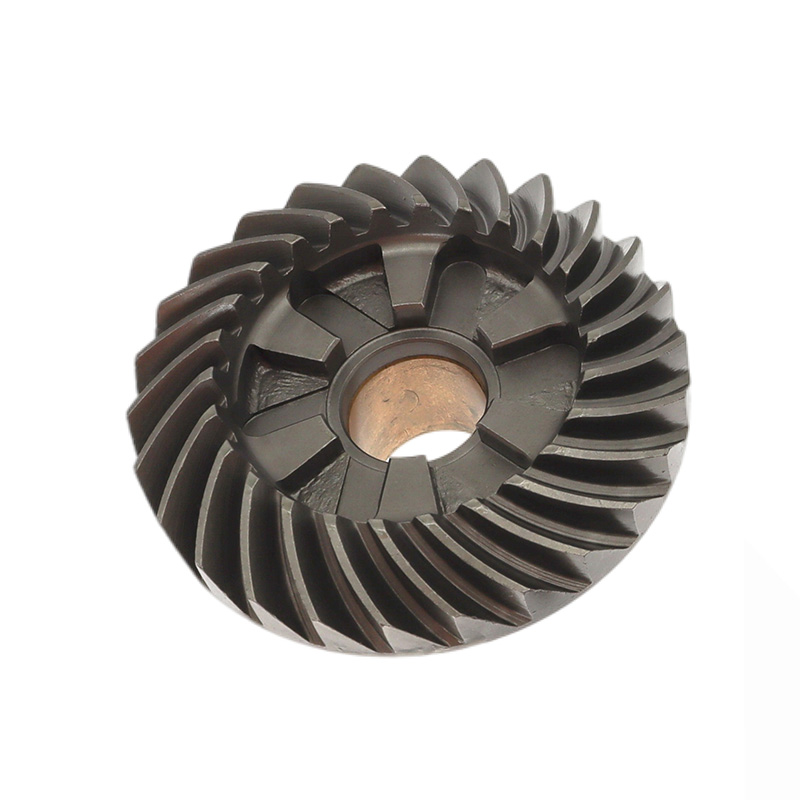
Custom marine gears are developed or manufactured to an application-specific specification. That specification may originate from an approved drawing, an existing assembly, or a new engineering design.
Customization can involve:
- Tooth geometry, tooth count, or gear ratio.
- Bore, spline, hub, and mounting dimensions.
- Material and heat-treatment requirements.
- Tooth finishing and inspection criteria.
- Compatibility with existing shafts, bearings, and housings.
Not every custom project requires completely new tooth geometry. Sometimes the right solution is an established gear design with a modified interface.
Standard catalog gears are offered against predefined specifications or identifiable part numbers. Buyers select an existing product rather than commissioning a new design.
However, two categories must remain distinct:
1. General-purpose stock gears for transmission design.
2. Model-specific catalog replacement gears for existing equipment.
A general-purpose spiral bevel gear is not automatically suitable for an outboard lower unit. A model-specific replacement still requires verification against the correct engine version and assembly requirements.
| Comparison factor | Custom marine gears | Standard catalog gears |
|---|---|---|
| Design flexibility | Application-specific geometry and interfaces | Limited to available specifications |
| Initial expenditure | May include engineering, tooling, and validation | Usually avoids new design expenditure |
| First-order timing | Includes specification and approval stages | Potentially faster when verified stock exists |
| Unit economics | Depends on complexity, quantity, and repeat demand | Often attractive for established applications |
| Performance potential | Can address defined application limitations | Suitable when existing ratings and geometry match |
| Replacement compatibility | Must be established through engineering and testing | Must be verified by specification and application |
| Inspection | Acceptance criteria can be contractually defined | Depends on supplier documentation and product controls |
| Supply continuity | Requires drawing, tooling, and revision management | Depends on supplier inventory and product availability |
Neither route guarantees quality. A well-controlled catalog gear can outperform a poorly specified custom part.
Two gears can share an outside diameter, tooth count, and bore while remaining incompatible.
For bevel gears, compatibility also depends on tooth geometry, mounting distance, shaft arrangement, and mating-member requirements. A gear that physically enters the housing may still produce an unacceptable contact pattern.
This is particularly important when evaluating custom outboard gears from samples. A worn sample should not become the unquestioned definition of the original design.
Before approving either option, establish:
- The correct component identity and revision.
- Gear ratio and mating-component compatibility.
- Shaft and bearing interfaces.
- Mounting references.
- Required backlash and contact-checking procedure.
Backlash is the clearance between mating tooth flanks. It must suit the gear design and assembly conditions.
Insufficient clearance can cause tight operation and heat. Excessive clearance can contribute to impact and noise. Incorrect mounting position can shift tooth contact and increase wear.
Our recommendation is to evaluate the gear inside its transmission system. Do not assume a custom design compensates for worn bearings, housing damage, or incorrect shimming.
Where gears are manufactured or finished as matched sets, preserve their pairing and follow the applicable assembly instructions.
The phrase "marine grade" does not tell a buyer enough about fatigue resistance, hardness, or manufacturing consistency.
A useful material specification identifies the steel grade, heat-treatment condition, and required verification.
Depending on the design, case hardening can provide a hard working surface while retaining a tougher core. However, material selection and treatment must suit the actual loading and tooth geometry.
Custom production allows these requirements to be explicitly defined. Catalog gears can also have suitable materials and treatment, provided the supplier documents them.
Ask both suppliers for equivalent evidence rather than assuming customization means superior metallurgy.
An enclosed outboard gear operates within a lubricated gearcase, not as an intentionally seawater-exposed component.
When water enters that system, changing the gear material alone does not resolve the underlying sealing or maintenance problem.
For a replacement project involving corrosion, investigate the cause alongside the gear specification. Otherwise, a more expensive replacement may encounter the same operating conditions.
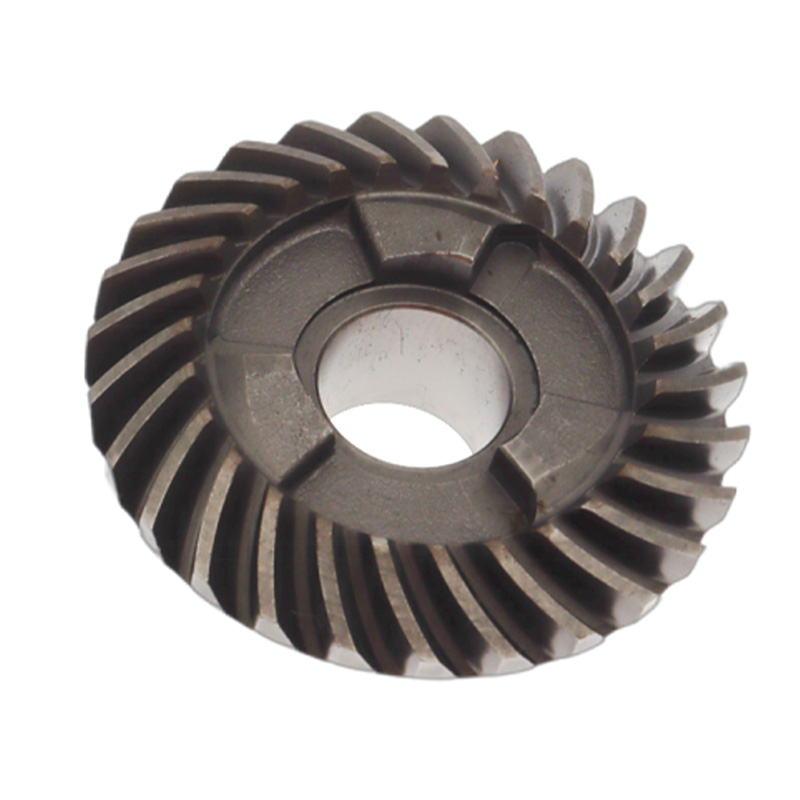
Custom marine gear manufacturing becomes valuable when an existing option fails a defined requirement.
Examples include:
- An unavailable ratio within a restricted housing.
- A shaft interface not supported by catalog products.
- A documented tooth-contact problem.
- A revised operating duty requiring engineering reassessment.
- An obsolete component without a verified replacement.
The objective should be measurable: achieve an approved contact pattern, satisfy a load requirement, or meet a specified noise acceptance limit.
"Stronger" and "quieter" are not sufficient specifications by themselves.
When an established gear already satisfies fit, loading, and service requirements, redesign may add cost without useful benefit.
For maintenance teams, a verified catalog replacement can reduce purchasing complexity and simplify repeat ordering.
For equipment developers, catalog gears can also support early layout work. However, prototype convenience should not replace final application validation.
The lowest quoted gear price is not always the lowest project cost. Equally, customization does not automatically produce savings.
Compare both options across:
- Engineering and drawing preparation.
- Tooling or setup charges.
- Sample production and approval.
- Production unit price.
- Inspection and documentation.
- Assembly adjustments.
- Inventory and replenishment.
- Downtime and rework exposure.
Consider a hypothetical sourcing project—not a Gill quotation or documented customer result.
A custom option requires $3,000 in initial engineering and tooling. Its unit price is $60 below an equally suitable catalog option.
The initial cost difference would be recovered after 50 units, assuming all other costs remain equal.
That calculation does not establish which option is better. Freight, inspection, inventory, and performance differences may change the outcome.
For purchasing decisions, request separate prices for development, samples, and repeat production. This prevents a low recurring price from concealing substantial initial expenditure.
"Catalog item" does not necessarily mean "ready to ship."
Ask whether the required quantity is physically available, whether it matches the approved revision, and whether repeat orders depend on a future production batch.
A fast first purchase can become a supply problem if the supplier cannot replenish the same specification.
A custom project typically adds stages before production release:
1. Requirement review.
2. Drawing approval.
3. Process and tooling preparation.
4. Sample manufacture.
5. Inspection and application validation.
6. Production authorization.
There is no responsible universal lead-time promise. Timing depends on design complexity, process availability, and approval speed.
For ongoing supply, agree on drawing ownership, tooling arrangements, change notification, and reorder planning before committing to volume.
These scenarios illustrate decision logic. They are not presented as verified customer case studies.
The original specification is known, operating conditions remain unchanged, and a documented replacement is available.
A verified model-specific catalog gear is usually the sensible starting point. Confirm compatibility, mating-component requirements, and installation instructions.
The engine remains commercially important, but replacement availability is inconsistent.
Custom manufacturing may help restore supply. However, reverse engineering should examine the mating gears, interfaces, and assembly—not merely copy one damaged component.
Do not begin by ordering a harder gear.
First investigate the failure mechanism, including contact, lubrication, mounting, bearings, and actual operating loads. Customization becomes justified when that investigation identifies a design or manufacturing requirement that the existing option cannot satisfy.
A strong purchasing process uses the same acceptance discipline for custom and catalog products.
Provide the engine or gearbox identification, component number, intended quantity, operating profile, and known service problems.
Supply available drawings, mating components, photographs, and samples. Identify missing information explicitly.
Depending on project risk, request:
- Material identification and traceability.
- Hardness and relevant heat-treatment records.
- Critical dimensional results.
- Tooth-geometry or runout inspection.
- Contact-pattern and backlash verification.
- Sample identification linked to the approved revision.
Not every project requires every test. Requirements should reflect the design and consequences of failure.
An inspection report confirms only what was inspected. It does not automatically establish service life in your application.
Agree on assembly checks and appropriate functional testing before production approval.
Require notification before changes affecting material, manufacturing route, geometry, or approved interfaces. Repeatability matters as much as the first successful sample.
Ningbo Gill Transmission Parts Co., LTD. specializes in the development, production, and sales of outboard gears and related marine transmission components.
Send us your drawing, part number, application details, mating-component information, and estimated annual demand. For existing failures, include photographs and operating history.
Request a specification-based review of whether an established product or custom manufacturing route better fits your project. The objective is a clearly defined component and approval plan—not customization for its own sake.
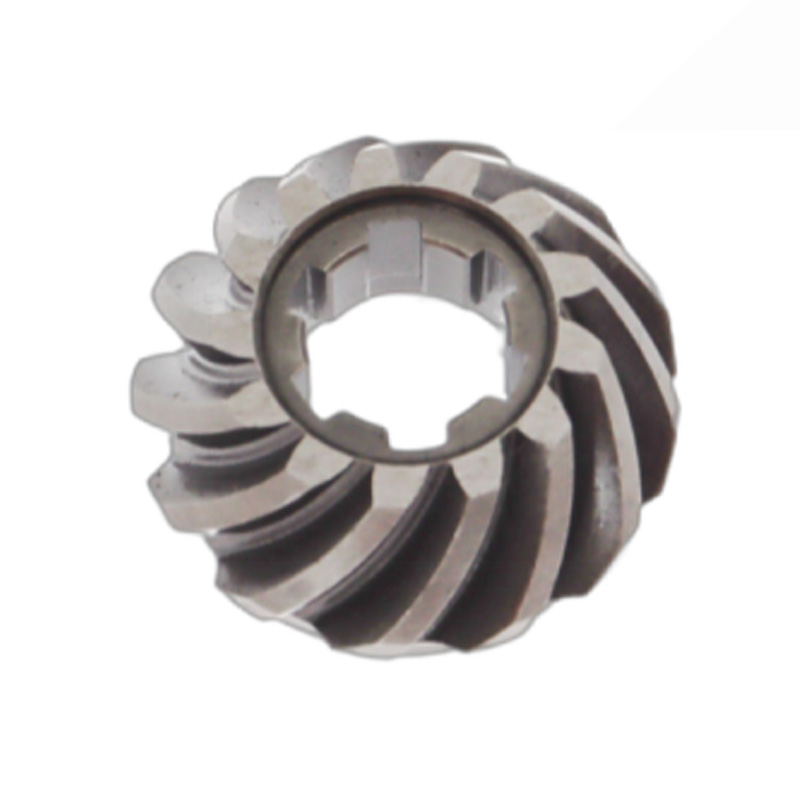
No. Custom gears offer specification flexibility, not an automatic quality advantage. A documented catalog gear that meets the application can be the more economical and lower-risk option.
Not based on appearance or basic dimensions alone. Tooth geometry, mounting position, interfaces, mating compatibility, and application suitability must all be verified.
Follow the applicable service instructions and supplier requirements. Preserve matched sets where specified. Do not assume either universal interchangeability or universal mandatory set replacement.
A sample can support reverse engineering, but wear and damage can obscure the original geometry. Drawings, mating components, and assembly information improve the engineering basis.
No universal minimum applies. Feasible quantities depend on material availability, tooling, manufacturing processes, and inspection requirements. Request separate prototype and production quotations.
Provide drawings or samples, application identification, mating details, quantities, material requirements, acceptance criteria, and delivery expectations. Clearly identify any unavailable specifications.
- Ningbo Gill Transmission Parts Co., LTD., "Custom Gear, Drive Shaft, Propeller Shaft Manufacturer & Supplier in China." Source for the company's stated history, product specialization, and manufacturing capabilities; company statements are self-reported. [gilltransmission]
- Simplexity Product Development, "When Should You Consider Designing Custom Gears?" Source for the comparison framework concerning design flexibility, performance requirements, production volume, and cost. Its general gear examples should not be interpreted as outboard-specific ratings. [simplexitypd]
- KHK, "Bevel Gears," technical catalog hosted by Quality Transmission Components. Source for stock bevel-gear pairing, mounting-distance requirements, backlash, and the effects of mounting errors on tooth contact, noise, and wear. [qtcgears]
- IQS Directory, "Types, Processes, and Applications for Bevel Gears." Supporting background on bevel-gear operation, pairing, backlash, and marine applications. [iqsdirectory]
- Belon Machinery, "Types of Bevel Gears: Straight, Spiral, Zerol, Hypoid & Miter Gears Explained." Supporting manufacturing background on finishing, contact inspection, materials, lubrication, and marine duty. Supplier-authored technical commentary, not independent product certification. [belonmachinery]


