


close
Choose Your Site
Global
Social Media
Views: 222 Author: Gill Transmission Publish Time: 2026-05-21 Origin: Site


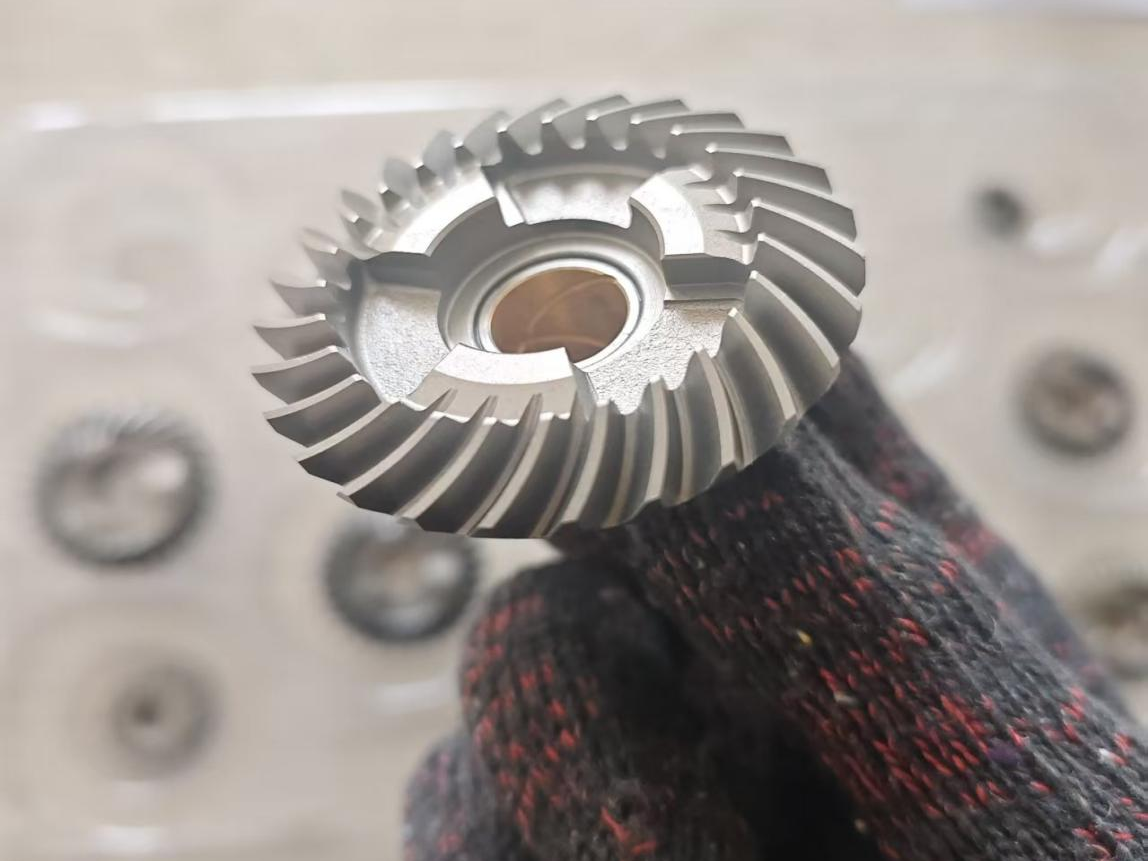
Designing spur gear shapes is one of the most critical steps in building reliable outboard transmissions and marine powertrains. When the tooth profile, hub, web, and rim are not designed correctly, gearboxes become noisy, inefficient, and prone to failure—especially under harsh salt‑spray, vibration, and shock loads. As a manufacturer of outboard gears and marine drivetrain components, I will walk you through how experienced engineers actually think about spur gear shapes in real projects, and how you can apply these principles to your own designs. [khkgears]
- What "design shape" means for spur gears in real engineering work
- Key structural elements: rim, web, hub, and tooth form
- Typical spur gear shapes and where they are used in marine and industrial applications
- How material, load, and manufacturing method influence gear shape
- Practical design steps you can follow on the shop floor or in CAD
- When to choose custom marine‑grade designs instead of catalogue standards
You can treat this as a field‑tested checklist to design or evaluate spur gear shapes, especially for outboard and marine gearboxes.
In gear textbooks, "design shape" usually refers to the overall geometry of a spur gear beyond just the tooth form. It includes: [khkgears]
- Tooth profile and face width
- Rim thickness and diameter
- Web shape and thickness
- Hub diameter, length, and keyway or spline features
- Any weight‑reduction holes, chamfers, or reliefs
For practical engineering, design shape is about balancing three goals:
1. Strength and fatigue life under the intended torque and shock loads
2. Manufacturability and cost with the selected process (hobbing, shaping, forging, casting, powder metallurgy)
3. System integration with shafts, bearings, housings, seals, and lubrication paths
In marine drivetrains and outboard lower units, design shape also needs to account for corrosion, cavitation, and mixed lubrication conditions at low speed and high torque. [khkgears]
> A simple example: two gears with identical module and tooth count can behave very differently if one has a solid web and thick hub, while the other is a thin‑rim, lightened gear with large holes. The "design shapes" are different, even if the basic gear data are the same.
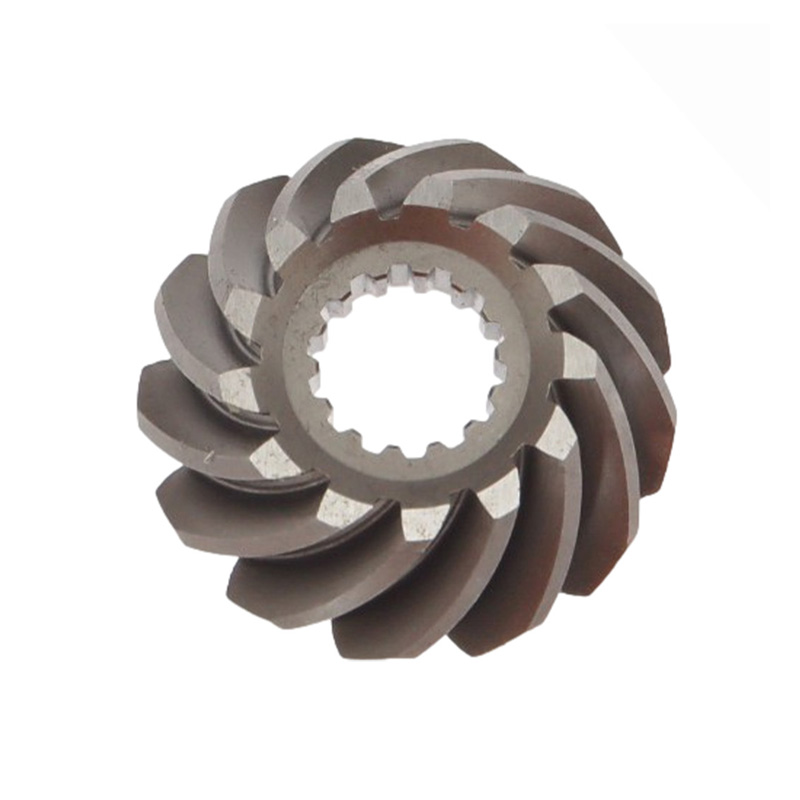
The tooth form (involute profile, pressure angle, addendum, dedendum) is usually determined first. For most industrial and marine spur gears: [khkgears]
- Standard involute tooth with 20° pressure angle is common
- Increased pressure angles (22.5° or 25°) may be used for higher load capacity at the expense of higher bearing loads
- Face width is chosen based on transmitted power, allowable stress, and space constraints
In outboard gears, relatively narrow face widths are often used to keep overall package size compact, so engineers compensate with hardened materials and optimized tooth surface finishing. [khkgears]
After tooth form is defined, the designer shapes the supporting structure:
- Rim: ring section beneath the teeth; too thin and it will deflect or crack, too thick and weight and cost increase
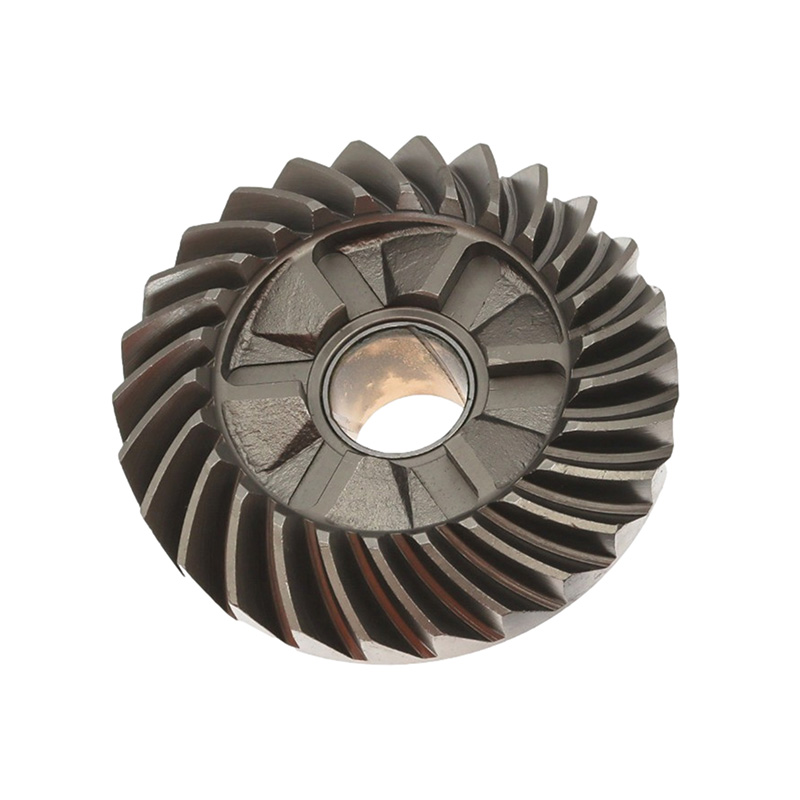
- Web: connects rim to hub; may be solid, spoked, or ribbed
- Hub: central boss that fits on the shaft, usually with a key, spline, or interference fit
A marine gear must often combine a robust hub (to resist shock from prop strikes) with efficient material use to avoid unnecessary rotating inertia. [khkgears]
In practice, engineers repeatedly use a set of "standard" spur gear shapes depending on load, speed, and cost requirements. [khkgears]
Description: A solid disc between rim and hub, with no lightening holes.
Use cases:
- Small module, low‑to‑medium speed industrial machinery
- Marine auxiliary equipment such as winch drives and steering actuators
- Situations where machining simplicity and stiffness matter more than weight reduction
Pros:
- High stiffness, simple to machine
- Good alignment of teeth under load
Cons:
- Heavier than necessary for many applications
UX tip: In an article, place a clear 2D section view or CAD render here to show solid vs spoked design. This helps non‑experts understand the difference at a glance.
Description: Rim connected to hub by spokes or a thin web with cut‑outs.
Use cases:
- High‑speed rotating components where reduced inertia lowers dynamic load
- Automotive and industrial transmissions needing weight reduction
- Larger diameter gears in marine gearboxes where solid shape would be excessively heavy
Pros:
- Lower weight and inertia
- Reduced material cost
Cons:
- More complex stress distribution; needs careful fillet design
- Potential for noise and vibration if stiffness is insufficient
For marine transmissions, a compromise web design is common: thick root fillets, modest cut‑outs, and generous radii to avoid stress concentration around the web holes.
Description: Gear with a relatively long or oversized hub compared with face width.
Use cases:
- Outboard gears where torque transfer and alignment through the hub are critical
- Gears mounted with clamping hubs or tapered shafts
- Assemblies where bearings are located close to the gear and hub interfaces
Pros:
- Improved concentricity and shaft support
- Better torque transfer through key or spline
Cons:
- Longer shaft space required
- Higher material usage in hub region
Outboard gear designers often combine short face width with a long, precision‑ground hub to maintain alignment under fluctuating propeller loads.
Description: Rim thickness significantly reduced to save material.
Use cases:
- Large diameter, low‑load mechanisms
- Servo systems where inertia must be minimized
In marine power transmissions, thin‑rim gears are rarely used for main drive stages because of the high shock loads from propellers and waves. Instead, designers favor thicker rims, even if that increases weight.
While most engineering texts describe spur gear shapes in general terms, marine and outboard systems have a more demanding environment. Based on field experience with outboard gears, here are the design factors that matter most. [khkgears]
Outboard gears experience:
- High torque at low shaft speeds
- Frequent load reversals (forward–neutral–reverse shifting)
- Shock loading from prop strikes and cavitation events
This means:
- Higher safety factors in bending and contact are required
- Hub and web must tolerate misalignment and local overloads
- Rim thickness should be sized cautiously to avoid fatigue cracks
A practical approach is to validate tooth and rim strength using standard gear design formulas, then perform FEA on the web–hub transition for worst‑case off‑design loads.
For marine spur gears, common choices include:
- Alloy steels with carburizing and quenching, followed by grinding for high load capacity
- Nitrided steels when distortion control is critical
- Stainless or corrosion‑resistant alloys for specific marine environments (though often at the cost of lower hardness)
The design shape must allow:
- Sufficient case depth at teeth and fillet
- No excessively thin sections where quench cracking is likely
- Machinable hub and keyway regions after heat treatment
In outboard gears, tooth flanks are often precision ground to reduce noise and heat, supporting higher power density in compact gearcases.
Spur gear shapes in marine gearboxes must maintain oil films over a wide range of speeds and angles. [khkgears]
Good practices include:
- Providing chamfers and oil grooves in the hub and side faces
- Avoiding sharp corners that block oil flow
- Ensuring enough clearance between web and housing to allow splash lubrication
Designing simple oil reliefs in the web not only improves lubrication but also aids oil circulation for cooling, especially during prolonged full‑throttle operation.
In saltwater environments:
- Exposed surfaces, especially the hub end and web cavities, must be protected
- Designers may avoid unnecessary pockets where saltwater or contaminated oil can stagnate
Typical methods:
- Phosphating or special protective coatings on non‑tooth surfaces
- Careful design of drain and breather paths in the gearbox
Here, the design shape is not only a mechanical issue; it also directly influences long‑term durability and maintenance intervals.
This section converts theory into a step‑by‑step approach you can follow for a new gear, especially in a marine or outboard context.
List the key requirements:
1. Required gear ratio, torque, and speed
2. Available space in the gearbox or housing
3. Type of shaft connection (keyed, splined, shrink‑fit)
4. Target noise level and maximum allowable backlash
5. Environment (freshwater, saltwater, industrial, etc.)
Having this requirements sheet minimizes redesign later.
- Choose module, number of teeth, pressure angle, and face width using standard gear design formulas and catalog tables. [khkgears]
- Verify bending and surface durability for the worst‑case torque.
- For marine drives, consider slightly higher face width and harder materials if space allows.
For the first iteration:
- Start with a solid web gear if weight and inertia are not critical
- Choose rim thickness so that rim stress is well below tooth root stress
- Size hub diameter to match shaft and key/spline standards, with sufficient interference or fit
Once the baseline passes initial strength checks, you can add lightening holes in the web if weight or inertia must be reduced.
Before finalizing the shape:
- Confirm that hobbing, shaping, or grinding tools can clear the hub and web
- Ensure that internal radii are compatible with available cutters and grinding wheels
- Verify that heat treatment will not cause unacceptable distortion in thin sections
For high‑precision marine gears, grinding and lapping steps must be considered early to avoid impossible geometries.
- Use FEA to check stresses in the web–hub transition and rim under peak torque and misalignment
- Analyze modal behavior if resonance and noise are concerns
- Build a prototype and test in a controlled environment, monitoring temperature, noise, and tooth contact patterns
Field data from outboard usage—such as teardown inspections after a defined number of hours—are invaluable to refine the final design shape.
To illustrate how these principles come together, consider a simplified case (based on typical marine gearbox practice):
Application: 90–115 hp outboard engine, forward‑neutral‑reverse gearset in the lower unit.
Challenge: Reduce gearbox noise and increase durability without changing the housing envelope.
Baseline design:
- Standard spur gear with solid web
- Medium‑carbon steel, carburized and ground
- Good fatigue life, but noticeable gear whine at cruising speed
Design shape improvement steps:
- Slightly increased pressure angle and optimized tooth micro‑geometry for better load sharing
- Modified web from solid disc to ribbed web, increasing stiffness locally while removing non‑critical weight
- Added small chamfers and oil reliefs near the hub to improve lubrication flow
Results (measured in testing):
- Lower vibration levels at typical cruising RPM
- Reduced surface pitting on tooth flanks after endurance testing
- No adverse effect on bearing loads or overall gearbox temperature
This type of iterative optimization is typical when developing marine‑grade spur gears that must survive thousands of hours of real‑world use.
| Design shape | Typical use cases | Main advantages | Main limitations |
|---|---|---|---|
| Solid web spur gear | General machinery, auxiliary marine drives | High stiffness, simple machining | Higher weight and inertia |
| Webbed / spoked gear | High‑speed, weight‑sensitive transmissions | Reduced weight and inertia, material savings | More complex stress distribution |
| Hub‑dominant spur gear | Outboard gears, shaft‑critical applications | Better shaft support and torque transfer | Requires more axial space and hub material |
| Thin‑rim spur gear | Low‑load, large diameter mechanisms | Ultra‑low weight, reduced material usage | Not suitable for high shock or heavy marine loads |
Standard catalogue spur gears are suitable for many industrial tasks, but in outboard gearboxes and demanding marine transmissions, custom design shapes are often the only way to balance power density, durability, and noise.
You should consider a custom marine‑grade design when:
- The gear operates in a compact, sealed housing with high thermal load
- The system experiences frequent gear shifting and shock loads
- Noise and vibration requirements are strict (e.g., premium outboard lines)
- Corrosion resistance and long service intervals are business‑critical
Specialists in outboard gears can help you select the right combination of tooth geometry, rim/web/hub proportions, and material/heat‑treatment route to meet these requirements efficiently.
If you are designing or upgrading an outboard gearbox, do not treat spur gear design shape as a secondary detail. Every decision on rim thickness, web pattern, and hub geometry directly affects durability, noise, and user satisfaction on the water.
If you'd like engineering support—from preliminary sizing through to prototype and mass production of marine and outboard gears—reach out to our technical team with your current gear drawings, target power range, and operating conditions. We can help you refine the spur gear design shape so your next drivetrain runs smoother, lasts longer, and is easier to manufacture at scale.
Q1: What is the most important factor when choosing a spur gear design shape for marine applications?
The most important factor is the interaction between load conditions and environment—high torque, frequent shocks, and corrosive saltwater demand conservative rim and hub dimensions, robust materials, and careful lubrication design. [khkgears]
Q2: Can I use a lightened, thin‑rim spur gear in a main outboard drive stage?
In most cases, thin‑rim gears are not recommended for primary outboard drive stages because of the risk of rim cracking and excessive deflection under shock loads, even if basic tooth strength appears sufficient in calculations. [khkgears]
Q3: How does web shape influence gear noise in marine gearboxes?
Web shape affects stiffness and natural frequencies; a poorly designed web can amplify vibration and gear whine, while a well‑designed ribbed web can raise stiffness and shift resonances away from typical operating speeds. [khkgears]
Q4: Why do many marine gears use carburized and ground teeth?
Carburizing followed by grinding enables high surface hardness with a tough core, providing excellent pitting resistance and fatigue life while allowing fine surface finishes that reduce noise and improve efficiency. [khkgears]
Q5: When is a hub‑dominant spur gear design necessary?
Hub‑dominant designs are necessary when torque transfer through the shaft–hub interface is critical, when alignment must be maintained under large bending loads, or when the gear doubles as a structural element for bearing support in compact gearcases. [khkgears]
1. KHK Gears – "Design Shapes of Spur Gears."
[https://khkgears.net/new/gear_knowledge/gear-design-procedure-in-practical-design/design-shapes-of-spur-gears.html] [khkgears]
2. Straight North – "How to Combine Technical SEO and Core Content Strategy."
[https://www.straightnorth.com/blog/how-to-combine-technical-seo-and-core-content-strategy/] [straightnorth]
3. Intelegencia – "E‑E‑A‑T and Content Strategy: Building Trust and Authority."
[https://www.intelegencia.com/blog/content-marketing/eeat-and-content-strategy-for-building-trust-and-authority] [intelegencia]
4. WomenTech – "Best Practices for Creating Impactful Content That Showcases Technical Expertise."
[https://www.womentech.net/en-us/how-to/what-are-best-practices-creating-impactful-content-showcases-technical-expertise] [womentech]
5. Power Digital Marketing – "SEO Content Strategy + Technical SEO & Web Design."
[https://powerdigitalmarketing.com/blog/seo-content-strategy-technical-seo-web-design/] [powerdigitalmarketing]
6. Bristol Creative Industries – "A practical guide to E‑E‑A‑T: real-world strategies for content success."
[https://bristolcreativeindustries.com/a-practical-guide-to-e-e-a-t-real-world-strategies-for-content-success/] [bristolcreativeindustries]
7. Fooz Agency – "How to Write Engaging Content for Technology Websites."
[https://foozagency.com/blog/how-to-create-attractive-content-for-a-technology-website/] [foozagency]


