


close
Choose Your Site
Global
Social Media
Views: 269 Author: Gill Transmission Parts Publish Time: 2026-09-25 Origin: Site


Content Menu
● Why a Bent Propeller Shaft Can Damage a Transmission
● How a Bent Shaft Transfers Load Into the Drivetrain
>> 1. Radial Loading on Transmission Output Bearings
>> 2. Coupling Face Stress and Fretting
>> 3. Engine Mount and Alignment Problems
>> 4. Secondary Damage to Bearings and Seals
● Bent Shaft vs. Bent Propeller: Why the Difference Matters
● Signs Your Boat Shaft May Be Bent
● What Causes a Propeller Shaft to Bend?
>> Common Causes of Bent Boat Shafts
● How to Inspect a Suspected Bent Propeller Shaft
>> Step 1: Stop High-Speed Operation
>> Step 2: Inspect the Propeller First
>> Step 3: Check Shaft Rotation
>> Step 4: Measure Shaft Runout With a Dial Indicator
>> Step 5: Check Coupling Alignment
● Can You Straighten a Bent Propeller Shaft?
>> Shaft Straightening May Be Considered When
>> Shaft Replacement Is Often Better When
● How to Protect the Transmission After Shaft Damage
● Practical Maintenance Plan for Boat Owners
>> After a Propeller Strike or Grounding
>> During Seasonal Maintenance
>> Before Long-Distance or Commercial Service
● Expert Perspective: Treat Vibration as a System Signal
● FAQs
>> 1. Can a slightly bent propeller shaft damage a transmission?
>> 2. Will a bent propeller shaft always cause vibration?
>> 3. How do I know whether my propeller or shaft is bent?
>> 4. Can I continue operating my boat with a bent shaft?
>> 5. Can a bent shaft cause a shaft seal to leak?
>> 6. Should the engine alignment be checked after replacing a propeller shaft?
>> 7. Is it better to straighten or replace a bent marine propeller shaft?
Yes. A bent boat shaft can cause transmission damage, especially when the vessel continues operating with shaft runout, vibration, coupling misalignment, or overloaded bearings. The shaft may not fail immediately, but its repeated oscillation can transfer abnormal radial and axial loads into the coupling, gearbox output flange, transmission bearings, engine mounts, seals, and adjacent propulsion components.
For boat owners, captains, repair yards, and fleet managers, the key point is simple: a bent propeller shaft is not only a vibration problem. It can become a drivetrain reliability problem. Early inspection after a grounding, propeller strike, rope entanglement, or unexplained vibration can prevent a relatively contained shaft repair from escalating into transmission work and extended downtime.
At Ningbo Gill Transmission Parts Co., LTD., we have spent 29 years focused on the development, production, and supply of propeller shafts and marine transmission components. In practical service conditions, we have seen that the most expensive failures often begin with warning signs that were initially treated as "normal vibration."
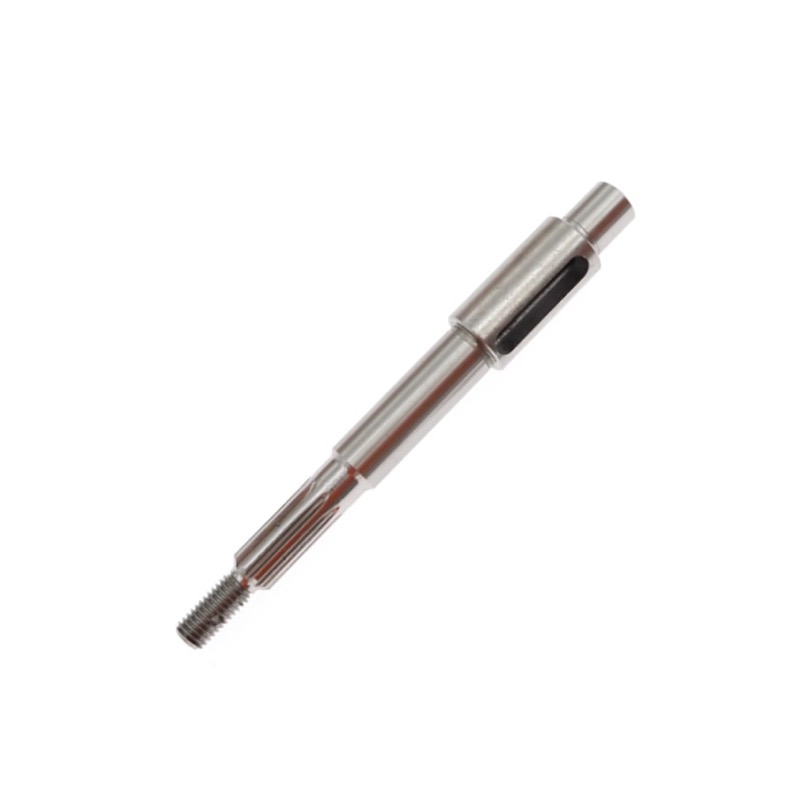
A marine propeller shaft is designed to rotate on a stable centerline. It transfers torque from the transmission to the propeller while remaining correctly supported by bearings, the stern tube, shaft seal, strut, and coupling.
When the shaft bends, even slightly, it no longer rotates concentrically. Instead, it creates a cyclical side-to-side movement known as shaft runout. Every revolution can introduce repeated loading into components that were designed mainly to transmit torque rather than absorb continuous lateral movement.
This is why a bent boat shaft can damage a transmission over time.
The damage path often looks like this:
1. The propeller shaft is bent after impact, grounding, debris contact, towing damage, or a severe propeller strike.
2. The bent shaft rotates with runout rather than on a true centerline.
3. Vibration increases with RPM and may become worse under load.
4. The shaft coupling transmits uneven forces to the transmission output coupling.
5. Transmission output bearings, seals, gears, engine mounts, cutless bearings, and shaft seals experience abnormal stress.
6. Continued operation accelerates wear and may eventually lead to transmission noise, leakage, bearing failure, coupling damage, or shaft failure.
A transmission may still shift and operate normally in the early stages. That does not mean the drivetrain is healthy. The absence of an immediate gearbox failure is not proof that the shaft problem is harmless.
Poor shaft alignment is widely associated with vibration, premature bearing wear, coupling stress, increased fuel consumption, shaft damage, and transmission-bearing failure. In severe cases, the transmission output system can be exposed to loads that it was never designed to carry.
A propulsion shaft should rotate with minimal eccentricity. When it is bent, the shaft's centerline moves in a circular path instead of remaining stable.
This creates several mechanical problems at the same time.
The transmission output shaft and its bearings are typically intended to transmit rotational torque through a properly aligned coupling. A bent propeller shaft can add radial or side loading at the coupling interface.
Over time, this can contribute to:
- Premature output-bearing wear
- Increased bearing noise
- Seal wear or oil leakage
- Excessive movement at the transmission output flange
- Gear contact changes under load
- Accelerated internal transmission wear
The risk increases when vibration is severe, the vessel operates at high RPM, or the shaft is connected to a rigid drivetrain with limited tolerance for movement.
A shaft coupling and transmission coupling must be centered and parallel. If the shaft is bent, the coupling faces may appear acceptable when stationary but become unstable during rotation.
This can cause:
- Coupling-face wear
- Loose coupling bolts
- Fretting corrosion
- Damaged pilot fits
- Repeated alignment loss
- Cracked or distorted couplings in extreme cases
A coupling that changes its measured gap after the shaft is rotated 180 degrees can indicate that the shaft, coupling, or coupling fit is not true. This is a valuable diagnostic clue during inspection.
Some boat owners replace a propeller or adjust the engine mounts because of vibration, only to find that the issue returns. That can happen when the real problem is a bent shaft.
A bent shaft may make it difficult to maintain alignment because it continuously forces the coupling and drivetrain out of their intended centerline during operation. It can also overload flexible engine mounts, causing them to sag, deform, or shift.
Once mounts begin to fail, alignment can worsen further. This creates a damaging cycle:
Bent shaft→vibration→mount wear→greater misalignment→more drivetrain stress
Transmission damage is a major concern, but it is rarely the only consequence. A bent propeller shaft can also affect the entire shaft line.
Potential secondary damage includes:
- Uneven cutless bearing wear
- Stern tube bearing wear
- Shaft seal leakage
- Stuffing box leakage
- Strut stress
- Worn shaft logs
- Propeller hub or keyway damage
- Engine-mount fatigue
- Hull vibration and noise
Uneven bearing wear, leaking shaft seals, and visible shaft wobble are important signs that the problem may extend beyond the propeller itself.
A bent propeller and a bent propeller shaft can produce similar symptoms. Both may cause vibration, reduced speed, unusual noise, and poor handling. However, the repair approach is very different.
| Issue | Bent Propeller | Bent Propeller Shaft |
|---|---|---|
| Main problem | Distorted blades, hub, or pitch | Deformed rotating shaft centerline |
| Common cause | Bottom strike, debris, floating object | Severe impact, grounding, drivetrain shock, shaft handling damage |
| Typical vibration | May change noticeably with propeller repair or replacement | Often remains after propeller repair |
| Visual signs | Curled blades, chipped edges, uneven blade shape | Shaft wobble, uneven rotation, seal leakage, bearing wear |
| Transmission risk | Usually indirect unless impact was severe | Higher risk because cyclic runout reaches the coupling and drivetrain |
| Best confirmation | Propeller inspection, pitch check, dynamic balance | Dial-indicator runout measurement and coupling inspection |
fA damaged propeller should never be ignored. However, replacing or repairing the propeller without checking shaft runout can leave the underlying problem unresolved.
If vibration continues after the propeller has been repaired, balanced, or replaced, the shaft should be inspected immediately. Persistent vibration after propeller service is one of the most common warning signs of a bent propeller shaft.
A bent shaft is not always obvious by eye. Minor runout can still generate major vibration at operating speed.
Watch for these symptoms:
- Vibration that increases with RPM
- Vibration that becomes stronger under acceleration or load
- A propeller shaft that visibly wobbles while rotating
- Uneven resistance when turning the shaft by hand
- A shaft that squeaks, binds, or feels tight during part of a rotation
- New shaft seal or stuffing-box leakage
- Premature cutless bearing wear
- Unusual noise near the shaft log, stern tube, strut, or transmission
- Loose coupling bolts or coupling-face wear
- Repeated engine alignment problems
- Transmission movement that can be seen or felt during operation
- Vibration that remains after propeller repair
A shaft that is visibly wobbling at cruise RPM should be treated as a serious drivetrain warning. Marine survey guidance also identifies transmission movement, abnormal cutless-bearing wear, shaft wobble, and excessive vibration as evidence that alignment or shaft-line problems require investigation.
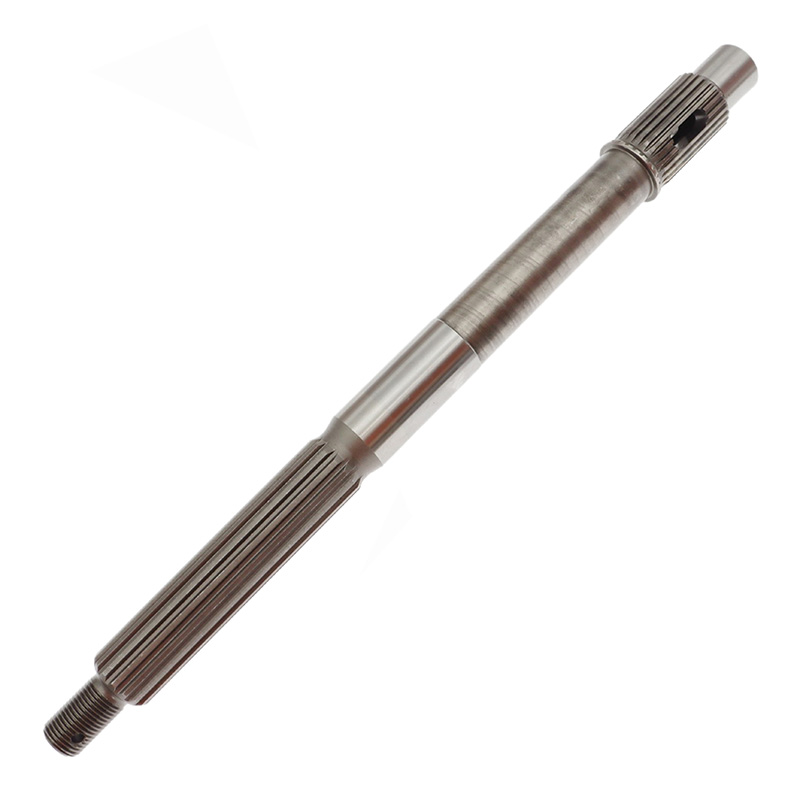
The most common cause is impact. However, a shaft can bend through several different service events.
- Striking rocks, reefs, sandbars, logs, debris, or submerged objects
- Grounding at speed
- Severe propeller strike
- Fishing line, rope, net, or cable entanglement
- Improper lifting or blocking during haul-out
- Incorrect shaft removal or installation procedures
- Poorly fitted couplings
- Major drivetrain misalignment
- A damaged strut or stern tube
- Excessive shaft overhang
- Repeated operation with worn bearings
- Propeller imbalance that remains uncorrected
- High torque loading or sudden reversing loads
Not every impact produces visible propeller damage. A propeller can survive an incident that still bends the shaft or damages the coupling, bearing, keyway, or strut.
For this reason, a post-impact inspection should not stop at the propeller blades. The shaft line, bearings, seal, coupling, and transmission output should be assessed as one connected system.
A professional inspection is the safest option, particularly if the boat has a high-value transmission, twin-engine propulsion system, commercial duty cycle, or heavy-displacement hull. However, boat owners can identify several warning signs before scheduling repair work.
If severe vibration began after an impact or has rapidly increased, reduce RPM and avoid prolonged operation.
Continuing to run the vessel at high speed can increase damage to:
- Transmission output bearings
- Shaft seals
- Cutless bearings
- Coupling faces
- Engine mounts
- Struts
- Propeller hardware
Do not assume that reduced vibration at idle means the problem has disappeared. Shaft-related vibration commonly becomes more damaging as rotational speed rises.
With the boat safely out of the water, inspect the propeller for:
- Bent or curled blade tips
- Cracked blades
- Missing material
- Uneven pitch
- Damaged hub taper
- Damaged keyway
- Loose propeller nut
- Evidence of rope or line contact
If the propeller is damaged, repair or replace it. But do not stop there.
Turn the shaft slowly by hand with the engine secured and the transmission in the appropriate safe condition.
Look for:
- A point where rotation becomes tight
- Squeaking or rubbing
- Visible shaft movement
- Shaft contact with the seal or shaft log
- Changes in clearance around the shaft
Uneven resistance during rotation may indicate a bent shaft, bearing damage, alignment issues, or a distorted coupling.
The most reliable way to confirm a bent shaft is to measure runout using a dial indicator.
A technician typically places the indicator against a clean shaft surface and rotates the shaft slowly. Measurements may be taken at several locations, such as:
- Near the coupling
- Near the stern tube or shaft seal
- Near the strut
- Near the propeller taper
This helps determine whether the shaft itself is bent or whether the issue involves the coupling, bearing, strut, or propeller fit.
Do not rely only on visual inspection. A shaft may look straight but still have enough runout to create harmful vibration and accelerated wear. Dial-indicator measurement is the most dependable confirmation method.
A coupling alignment check should be completed with the boat in its normal floating condition whenever possible, because hull support and loading can change after launch.
A commonly used field guideline is to limit coupling-face misalignment to approximately 0.001 inch per inch of coupling-face diameter, while some transmission manufacturers specify a tighter overall limit. The correct tolerance for a specific installation should always follow the engine, transmission, and vessel manufacturer's requirements.
During the check:
1. Separate the coupling faces as required.
2. Ensure the shaft is correctly supported and not hanging under its own weight.
3. Measure the gap with feeler gauges at multiple clock positions.
4. Rotate the shaft coupling 180 degrees.
5. Repeat the measurement.
6. Investigate any meaningful change in the readings.
If the readings change after rotation, inspect the shaft, coupling, and coupling fit before adjusting engine mounts.
Sometimes. Whether a shaft can be straightened depends on the material, shaft diameter, location and severity of the bend, corrosion condition, prior repairs, fatigue history, keyway condition, and intended vessel service.
A qualified marine shaft shop may assess whether straightening is appropriate. In other cases, replacement is the safer choice.
- Runout is limited
- The shaft material remains in good condition
- There are no cracks, deep corrosion pits, or damaged keyways
- The shaft has not been repeatedly repaired
- The vessel operates in moderate-duty service
- A qualified shop can inspect and verify final straightness
- The shaft has a sharp bend or visible deformation
- There is cracking, corrosion, scoring, or spline/keyway damage
- The shaft has been bent more than once
- The vessel is used commercially or at high load
- The shaft has caused severe bearing, seal, coupling, or transmission damage
- The original material traceability is uncertain
- Precision alignment and long service life are priorities
For commercial vessels and demanding marine applications, replacement is frequently the more predictable long-term solution. A new shaft can be manufactured to the required diameter, material grade, taper, keyway, coupling arrangement, surface finish, and dimensional tolerance.
A shaft repair should be treated as a complete propulsion-line inspection, not a single-part replacement.
After discovering a bent shaft, inspect or service the following components:
| Component | Why It Should Be Checked |
|---|---|
| Transmission output flange | May show abnormal movement, wear, or coupling damage |
| Output seal | Can leak after repeated vibration or side loading |
| Coupling | May have fretting, distortion, worn pilot fit, or damaged bolt holes |
| Engine mounts | Can sag, crack, shift, or lose stiffness |
| Cutless bearings | May wear unevenly from shaft oscillation |
| Shaft seal or stuffing box | May leak or wear because the shaft no longer runs true |
| Strut | Can be bent, cracked, or pushed out of alignment after impact |
| Propeller | May be bent, out of balance, or damaged at the hub |
| Shaft key and keyway | May show impact or torque-related damage |
| Transmission oil | Can reveal contamination, overheating, or metallic debris |
A complete inspection is especially important after a hard grounding or high-energy impact. Replacing only the propeller shaft while leaving a damaged strut, worn bearing, distorted coupling, or misaligned engine mount in place may shorten the life of the replacement shaft.
Preventive inspection costs far less than a transmission rebuild. Use the following routine to reduce risk.
- Stop and inspect the propulsion system as soon as it is safe.
- Avoid returning to normal cruising speed before inspection.
- Check the propeller, shaft, strut, shaft seal, and coupling.
- Measure shaft runout if vibration is present.
- Inspect transmission oil and monitor for leaks or abnormal noise.
- Perform a full alignment check after repairs.
- Inspect propeller condition and security.
- Check for fishing line around the shaft and propeller hub.
- Examine cutless bearings for excessive clearance or uneven wear.
- Look for shaft seal leakage.
- Inspect engine mounts for compression, cracking, corrosion, or movement.
- Check coupling bolts and coupling-face condition.
- Confirm alignment after engine, transmission, shaft, strut, or mount work.
- Verify shaft straightness and alignment.
- Confirm the propeller is balanced and correctly fitted.
- Inspect the transmission output flange and oil condition.
- Carry out a vibration check at idle, mid-range RPM, and normal cruise RPM.
- Document measurements for future maintenance comparisons.
Marine propulsion systems work as a connected assembly. The propeller, shaft, strut, bearings, seal, coupling, engine mounts, engine, and transmission all influence one another.
That is why a bent boat shaft should never be evaluated in isolation.
A technician may find that the shaft is bent, but the root cause could include a damaged propeller, worn cutless bearing, distorted strut, alignment error, or poor coupling fit. Likewise, a repaired shaft may continue to create vibration if the propeller remains out of balance or the engine mounts are weak.
The best repair process is systematic:
1. Identify the event that caused the problem.
2. Inspect the propeller and shaft line.
3. Measure runout rather than relying on appearance.
4. Check bearings, seals, strut, coupling, and mounts.
5. Repair or replace damaged components.
6. Complete final alignment with the vessel in its normal operating condition.
7. Conduct a controlled sea trial and monitor vibration.
This approach protects the new shaft and reduces the chance of recurring transmission stress.
A bent boat shaft can absolutely cause transmission damage. The bent shaft creates runout and vibration that can overload the coupling, output bearings, seals, mounts, and other drivetrain components. The longer the vessel operates with the problem, the greater the risk of expensive and preventable damage.
If your boat has experienced a grounding, propeller strike, unexplained vibration, shaft seal leakage, uneven shaft rotation, or persistent vibration after propeller repair, arrange a professional shaft-line inspection. Do not wait for transmission noise or shifting problems before taking action.
Ningbo Gill Transmission Parts Co., LTD. supplies marine propeller shafts and related transmission components backed by 29 years of manufacturing experience. Whether you need a replacement shaft, a custom marine shaft solution, or technical support for shaft dimensions and application requirements, contact our team to discuss your vessel's propulsion system.
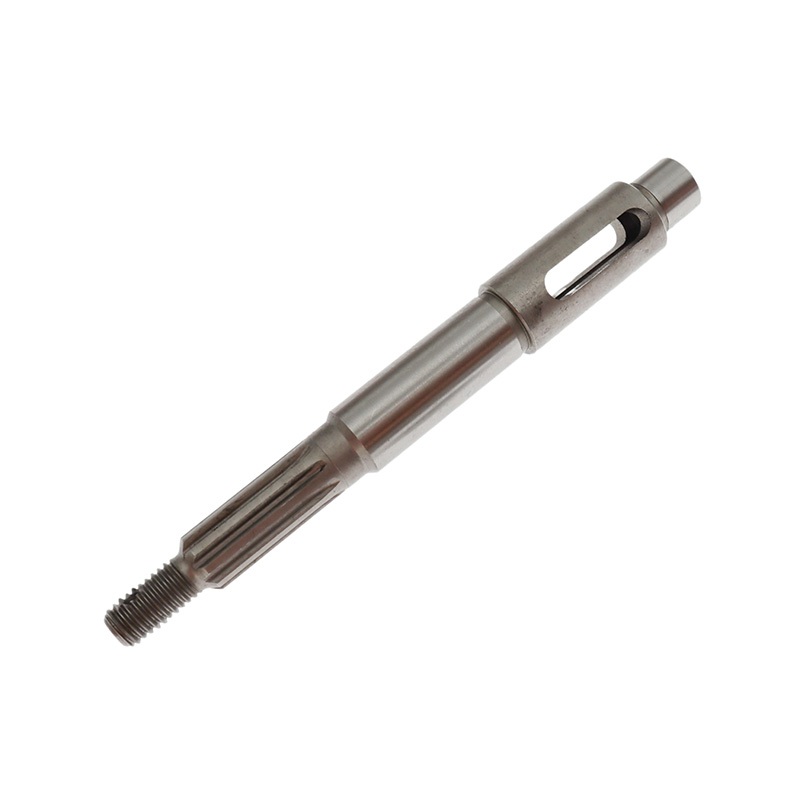
Yes. Even a small amount of shaft runout can create repeated vibration and side loading at the coupling. The damage may develop gradually, but prolonged operation can accelerate wear in transmission output bearings, seals, couplings, engine mounts, and shaft-support components.
Usually, but not always at idle. Vibration often becomes more noticeable as shaft speed and load increase. A minor bend may be difficult to detect at low RPM but become significant at cruising speed.
Inspect the propeller for blade damage, then measure shaft runout with a dial indicator. If vibration continues after propeller repair or replacement, the shaft, coupling, bearings, and alignment should be checked.
It is not recommended. Continued operation can worsen the shaft damage and may cause secondary damage to bearings, seals, couplings, struts, engine mounts, and the transmission. Reduce use and arrange inspection as soon as possible.
Yes. A shaft that does not rotate true can move unevenly through the seal area. This can wear sealing surfaces, increase friction, and lead to leakage at the shaft seal or stuffing box.
Yes. Alignment should be checked after replacing or repairing a shaft, propeller, strut, engine mount, transmission, or coupling. Final alignment is generally performed with the boat in its normal floating condition because hull shape and loading can change after launching.
The right choice depends on the bend severity, material condition, corrosion, fatigue history, shaft dimensions, vessel application, and inspection results. A qualified shaft shop can assess repairability, but replacement is often the more reliable solution for heavily damaged shafts, repeated failures, commercial service, or high-load applications.
1. American Bureau of Shipping. [*Guidance Notes on Propulsion Shafting Alignment*]. Guidance on propulsion shaft alignment procedures and alignment tolerances. [ww2.eagle]
2. DNV. [*Shaft Alignment and Propeller Shaft Aft Bearing Performance: Recent Trends Call for Action*]. Discussion of propeller bending moments, shaft alignment, and aft-bearing performance. [dnv]
3. Steve D'Antonio Marine Consulting. [*The Ins and Outs of Engine and Shaft Alignment, Part I*]. Practical alignment checks, coupling-gap measurement, and diagnostic guidance. [stevedmarineconsulting]
4. *Cruising World*. [*Play It Straight*]. Overview of shaft alignment, vibration, coupling measurement, bearing wear, and transmission-related risks. [cruisingworld]
5. David Pascoe / YachtSurvey.com. [*Engine-Shaft Alignment: Troubleshooting*]. Signs of shaft alignment problems, including vibration, transmission stress, engine-mount movement, and bearing wear. [yachtsurvey]
6. Ningbo Gill Transmission Parts Co., LTD. [*Bent Propeller Shaft vs. Bent Propeller: How to Tell the Difference*]. Practical comparison of bent shaft and propeller symptoms, causes, and dial-indicator inspection. [gilltransmission]


