


close
Choose Your Site
Global
Social Media
Views: 277 Author: Gill Transmission Parts Publish Time: 2026-08-16 Origin: Site


Content Menu
● Quick Answer: What Marine Parts Does AutoZone Carry?
● Marine Products You May Find at AutoZone
● Why Marine Parts Are Different From Automotive Parts
>> Saltwater Changes the Parts Decision
>> A "Fits" Result Is Not Enough
● AutoZone Marine Batteries: A Stronger Category
>> How to Choose a Marine Battery Correctly
● What to Check Before Buying Marine Parts Locally
>> 1. Identify the Exact Application
>> 2. Separate Universal Parts From Engineered Parts
>> 3. Confirm Marine Suitability
>> 4. Inspect the Part Before Installation
● When a Marine Specialist Is the Better Choice
>> Drive Shafts Require Engineering, Not Guesswork
● Practical Example: A Local Fix vs. a Long-Term Repair
● Need a Reliable Marine Drive Shaft Solution?
>> Does AutoZone sell marine parts?
>> Does AutoZone sell marine batteries?
>> Can I buy a bilge-pump switch at AutoZone?
>> Does AutoZone carry boat fuel lines?
>> Can I buy a marine drive shaft from AutoZone?
>> Are automotive parts safe to use on a boat?
>> What information should I provide when requesting a custom drive shaft?
Does AutoZone sell marine parts? Yes, AutoZone sells a limited but useful selection of marine-related products, including marine batteries, maintenance fluids, electrical accessories, fuel-system items, bilge-pump components, and selected Sierra Marine parts. However, it is not a complete source for boat-specific drivetrain components such as marine drive shafts, couplings, propeller shafts, stern-tube assemblies, or engineered transmission parts.
For an urgent replacement, AutoZone can be a practical local option. For safety-critical, high-load, or fitment-sensitive marine components, boat owners, repair yards, and distributors should work with a dedicated marine-parts supplier that can verify drawings, materials, dimensions, and operating conditions.
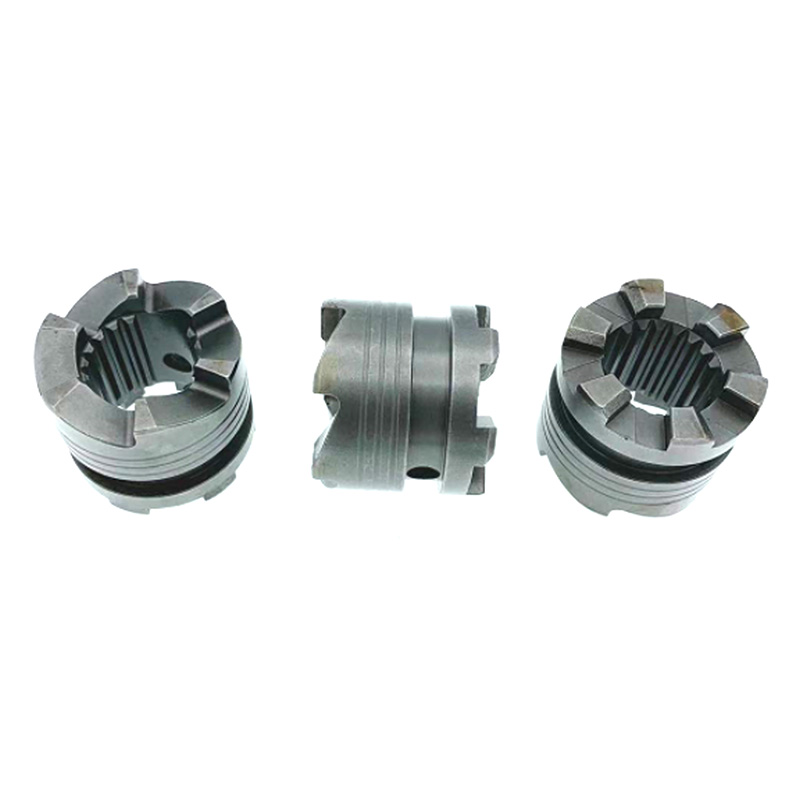
AutoZone's marine offering is strongest in universal maintenance and support products, not in highly specialized vessel components. Its available assortment can vary by location, inventory, and online fulfillment options.
Examples found in its catalog include:
- Marine and RV batteries
- Marine gear lubricant
- Fuel-line assemblies and fuel filters
- Livewell and baitwell drain plugs
- Bilge-pump float switches
- Battery boxes, straps, fuses, and electrical accessories
- Marine protectants, anti-seize products, and corrosion-control supplies
- Selected replacement items from brands such as Sierra Marine and Moeller
That means the answer is not simply "yes" or "no." A more accurate answer is:
> AutoZone can help with common marine maintenance items and selected universal replacement parts, but it is not designed to be a full-service marine-parts distributor.
If your boat is waiting on a battery, lubricant, fuse holder, drain plug, or basic fuel-system accessory, AutoZone may be worth checking. If you need a marine drive shaft or a matched drivetrain assembly, you will likely need a specialist.
The table below helps boat owners quickly understand which purchases are realistic at an auto-parts retailer and which require more technical sourcing.
| Product category | Can AutoZone be useful? | What to verify before buying |
|---|---|---|
| Marine starting battery | Yes | Voltage, group size, cold cranking performance, terminal layout, reserve capacity |
| Deep-cycle marine battery | Yes | Reserve capacity, discharge profile, tray dimensions, charging system compatibility |
| Gear lubricant | Yes | Manufacturer-approved viscosity, marine rating, outboard or sterndrive application |
| Fuel line or fuel filter | Sometimes | Engine brand, hose diameter, connector type, fuel compatibility, inboard or outboard use |
| Bilge-pump switch | Sometimes | Voltage, pump interface, automatic/manual switching requirements, wiring condition |
| Drain plugs and livewell parts | Sometimes | Hole diameter, thread style, sealing method, material suitability |
| Electrical fuses and battery straps | Yes | Amp rating, wire gauge, connector quality, corrosion resistance |
| Marine drive shaft | Usually no | Exact dimensions, spline or flange configuration, material grade, balancing requirements |
| Propeller shaft and coupling | Usually no | Shaft diameter, taper, keyway, coupling bolt pattern, alignment specification |
| Transmission components | Usually no | Gearbox model, torque load, engine layout, vessel operating conditions |
The key difference is fitment risk. A battery or lubricant can often be selected from clear specifications. A drivetrain component may look similar but still be unsafe or unusable if the dimensions, metallurgy, balance, or connection geometry are wrong.
Many boat owners assume that automotive and marine parts are interchangeable because both involve engines, batteries, fuel systems, and mechanical power transmission. In practice, the marine environment introduces additional demands.
Marine components face continuous exposure to moisture, salt, vibration, temperature variation, and long idle periods. These factors increase the risk of:
- Corrosion and galvanic reaction
- Water intrusion into electrical connections
- Seized fasteners and damaged threads
- Premature lubricant breakdown
- Fatigue damage from vibration and shaft misalignment
- Reduced reliability in hard-to-reach onboard systems
For example, AutoZone lists a marine anti-seize product intended to resist salt, moisture, corrosion, and chemical exposure. This is useful for service work, but it does not replace selecting the correct corrosion-resistant hardware or drivetrain material at the start.
For many boat parts, a catalog match should be the beginning of the evaluation—not the final decision.
A marine drive shaft must work with the complete propulsion system, including:
- Engine output and transmission arrangement
- Shaft length and outer diameter
- Splines, flanges, keyways, or universal-joint interfaces
- Allowable torque and rotational speed
- Alignment between engine, gearbox, and driven equipment
- Material selection for freshwater, coastal, or offshore use
- Dynamic balance and runout tolerance
A part that installs physically but does not meet these conditions can lead to vibration, coupling wear, seal failure, bearing damage, or loss of propulsion.
Among the marine-related products available at AutoZone, marine batteries are one of the most established categories. The company offers marine and RV battery options designed around starting power, reserve capacity, vibration resistance, and different operating needs.
AutoZone distinguishes among several battery types:
| Battery type | Best suited for | Main advantage |
|---|---|---|
| Marine starting battery | Starting an engine | Delivers high burst power |
| Deep-cycle battery | Electronics, pumps, trolling motors, accessories | Provides steady power over longer periods |
| Dual-purpose battery | Smaller boats with mixed starting and accessory loads | Combines starting and cycling capability |
| AGM battery | Users seeking lower maintenance and higher performance | Maintenance-free construction and stronger durability characteristics |
Its product guidance lists 12-volt marine battery options with reserve-capacity figures ranging from 140 to 210 minutes across selected categories, and it identifies corrosion and vibration resistance as relevant marine features.
Before purchasing a battery, confirm these five details:
1. Battery role
Decide whether it starts the engine, powers onboard accessories, or performs both jobs.
2. Physical dimensions
Confirm that the battery fits the tray, box, hold-down system, and ventilation arrangement.
3. Terminal configuration
Check terminal type, cable routing, polarity, and clearance around connected equipment.
4. Electrical requirements
Compare marine cranking amps, reserve capacity, and the total power demand of your vessel.
5. Charging compatibility
Make sure the battery type matches your alternator, charger, shore-power system, or solar controller.
For a simple fishing boat, a dual-purpose battery may be practical. For a larger vessel with electronics, bilge pumps, navigation equipment, and separate engine-start requirements, a dedicated starting battery plus a house battery bank is often the more reliable configuration.
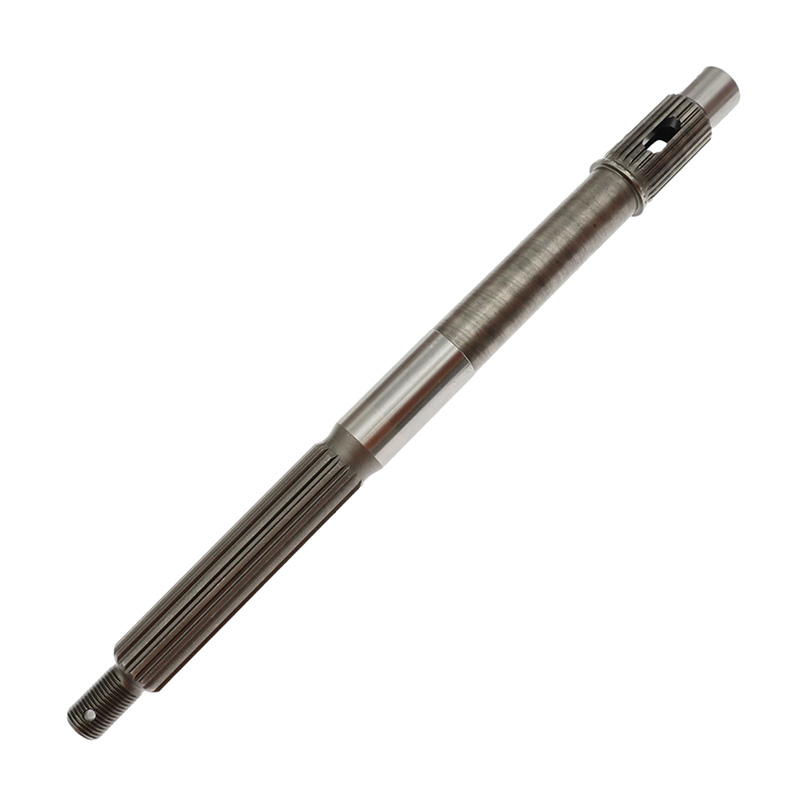
Buying locally can save a weekend trip, but it should not lead to rushed decisions. Use this checklist before you purchase any marine replacement part from an automotive retailer.
Do not search only by a broad term such as "boat fuel line" or "marine pump switch." Collect the details first:
- Boat make, model, year, and hull type
- Engine brand, model, year, and serial number
- Inboard, outboard, sterndrive, or jet-drive configuration
- Existing part number and manufacturer
- Installation photos and measurements
- Operating voltage, hose diameter, thread size, or wire gauge
A complete part number remains the most reliable starting point.
Universal products can be easier to source locally. These include lubricants, cleaners, fuses, battery accessories, some hose products, and selected drain fittings.
Engineered components should receive more scrutiny. These include:
- Drive shafts
- Propeller shafts
- Transmission couplings
- Flexible couplings
- Yokes and flanges
- Bearing housings
- Shaft seals
- Custom splined components
- High-load power-transmission assemblies
For these parts, installation convenience should never outweigh verified compatibility.
A product may be marketed for vehicles, outdoor use, or general mechanical work without being suitable for long-term marine exposure.
Ask:
- Is the product explicitly intended for marine use?
- Can it tolerate moisture, salt spray, oil, and vibration?
- Is the material suitable for the installation environment?
- Does it meet the engine or equipment manufacturer's specifications?
- Does its warranty apply to marine applications?
AutoZone's listed Sierra Marine fuel filter, for example, identifies a 5/16-inch barb, 10-micron filtration, and a limitation stating that it is not for inboard engines. That type of application note matters more than a broad product-category label.
Before opening a sealed system or removing the original part, compare the replacement with the existing component.
Check:
- Overall length and mounting location
- Connector style and orientation
- Thread pitch and sealing surfaces
- Wire terminals and polarity
- Hose inner diameter and clamp position
- Material thickness and corrosion protection
- Included hardware and instructions
If there is any doubt, pause the installation and confirm with the product manufacturer or a marine technician.
AutoZone can be a helpful source for basic supplies, but a marine specialist becomes essential when the part directly affects propulsion, steering, structural integrity, fuel safety, or onboard reliability.
A marine drive shaft transfers power under conditions that can be unforgiving. It must withstand repeated torque loads, rotational forces, vibration, alignment variation, and environmental exposure.
At Ningbo Gill Transmission Parts Co., LTD., our team has focused for 29 years on the development, production, and supply of drive shafts and related marine transmission components. From a manufacturing perspective, the most important question is not, "Can this part be installed?" It is, "Can it operate reliably within the full mechanical system?"
For marine drive-shaft sourcing, we recommend evaluating:
- Material grade and corrosion resistance
- Torque capacity and intended speed range
- Shaft diameter, wall thickness, and overall length
- Spline, flange, yoke, and coupling dimensions
- Welding quality and concentricity
- Dynamic balance requirements
- Runout tolerances
- Surface treatment or coating
- Drawing-based customization capability
- Traceability and production-quality control
A correctly engineered transmission component can reduce vibration, protect connected equipment, and support longer service life. An incorrectly selected shaft may create costly downstream problems even if the initial purchase price is lower.
Consider two common situations.
Situation A: A bilge-pump float switch fails before a weekend outing.
A compatible marine-rated replacement from AutoZone may be a practical solution, provided the voltage, pump connection, and wiring specifications match. AutoZone lists a Sierra Marine automatic bilge-pump switch for 6V, 12V, 24V, and 32V systems, designed to connect with certain Moeller or Johnson Pump units.
Situation B: A vessel develops vibration after drivetrain service.
This is not a "buy the nearest replacement" situation. The root cause may involve shaft runout, coupling wear, alignment, bearing condition, damaged splines, or an incorrect shaft specification. The repair process should begin with inspection and measurement—not an assumption that any visually similar drive shaft will work.
That distinction helps boat owners spend intelligently: use local availability for routine service items, and use specialist verification for components where a failure can compromise the vessel's operation.
For batteries, lubricants, fuses, and minor maintenance items, a local retailer can be a convenient first stop. For marine drive shafts, transmission assemblies, couplings, and customized power-transmission components, choose a supplier that understands the mechanical requirements behind the part.
Send Ningbo Gill Transmission Parts Co., LTD. your drawing, sample, part number, or application details. Our experienced engineering and production team can help evaluate fitment requirements and develop a marine transmission solution built for your operating conditions.
Yes. AutoZone sells selected marine products, including marine batteries, gear lubricants, fuel-system accessories, drain plugs, electrical items, and some bilge-pump components. Availability differs by store and online inventory.
Yes. AutoZone offers marine and RV batteries in starting, deep-cycle, dual-purpose, and AGM categories. Buyers should select based on their engine-starting needs, accessory load, physical battery space, and charging system.
Possibly. AutoZone lists a Sierra Marine automatic bilge-pump float switch. Check voltage, pump compatibility, mounting design, and wiring before purchase.
AutoZone may carry selected marine fuel-line assemblies and filters. Always confirm engine-brand compatibility, hose size, fitting style, and whether the product is approved for inboard or outboard use.
Generally, no. Marine drive shafts and related transmission components often require detailed sizing, material, torque, connection, and balance verification. A dedicated marine transmission-parts manufacturer or supplier is the safer choice.
Some universal products can be suitable, but do not assume that an automotive part is appropriate for a marine application. Verify corrosion resistance, electrical ratings, material compatibility, manufacturer instructions, and the requirements of the boat's engine or equipment.
Provide the original part number if available, technical drawing or samples, overall length, shaft diameter, spline or flange details, engine and gearbox data, torque requirements, operating environment, and required order quantity. Clear photographs of the installation area are also useful.
1. [AutoZone — RV & Marine Batteries]
2. [AutoZone — Sierra Marine Livewell Drain Plug 053075-10]
3. [AutoZone — Sierra Marine Fuel Line 034701-10LPA1]
4. [AutoZone — Sierra Marine Automatic Bilge Pump Switch 053001-10]
5. [AutoZone — Sierra Marine Fuel Filter 033351-10]
6. [AutoZone — Sierra Marine Synthetic Blend Gear Oil 80W-90]


