
Views: 222 Author: Gill Transmission Publish Time: 2026-06-06 Origin: Site


Content Menu
● What Are Double Helical (Herringbone) Gears?
● Why Double Helical Gears Matter in Marine and Outboard Drives
● Core Double Helical Gear Terminology
>> Double Helical–Specific Terms
● Structural Features of Double Helical Gears
>> Tooth Arrangement and Geometry
>> Material and Heat Treatment
● Operational Behavior and Performance Benefits
● Double Helical Gears vs. Other Gear Types
● Design Considerations for Marine and Outboard Applications
>> Load and Torque Requirements
>> Alignment and Assembly Precision
● Lubrication, Cooling, and Maintenance in Marine Gearboxes
● Practical Selection Guide for Outboard and Marine Engineers
>> Step 1: Define Requirements
>> Step 2: Choose Gear Geometry
>> Step 3: Validate Through Simulation and Testing
● Expert Insight: Trends in Double Helical Gear Design
● Application Case: Double Helical Gears in Modern Outboard Units
● Best Practices for OEMs and Marine Engineers
● How a Specialized Marine Gear Supplier Adds Value
● Action‑Oriented Conclusion and Call to Action
● Frequently Asked Questions (FAQ)
Double helical gears, also known as herringbone gears, are cylindrical gears that combine two helical gears with equal but opposite helix angles on the same gear body. [cmgear]
This "V‑shaped" tooth pattern cancels the axial thrust that a single helical gear would generate, delivering smooth, quiet, and highly efficient power transmission in demanding applications like marine gearboxes and outboard drives. [cmgear]
In marine environments, double helical gears are often used in main propulsion gearboxes, high‑load reduction stages, and outboard gear trains where compact size, high torque density, and long service life are critical. [gearsolutions]
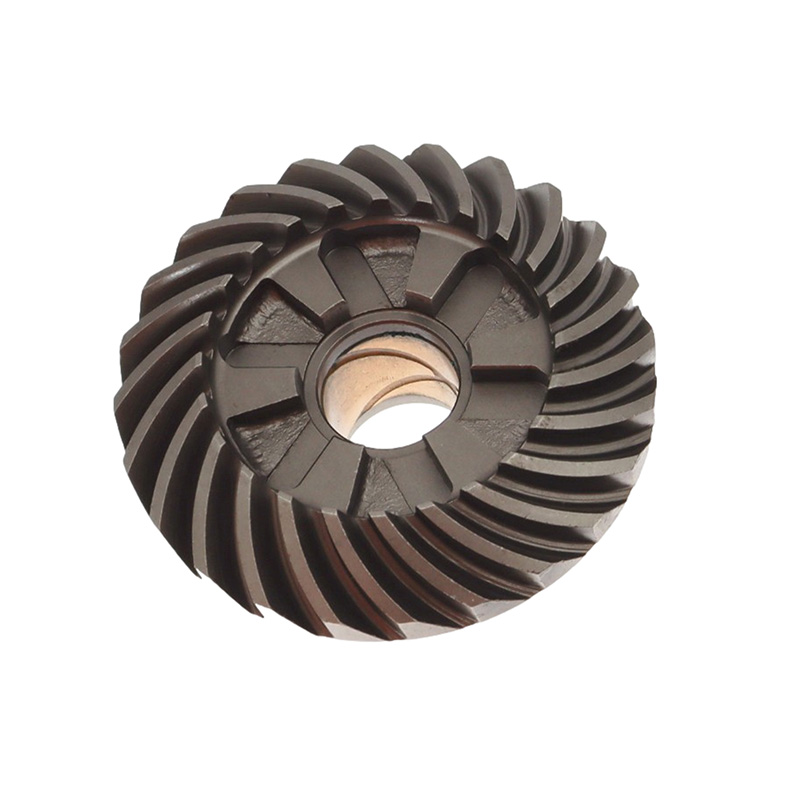
In an outboard unit or marine gearbox, the transmission must handle high torque, fluctuating loads, and continuous operation in a compact housing surrounded by water. [blog.saleslayer]
Double helical gears provide several advantages in this context:
- Axial thrust cancellation: Opposing helix angles balance axial forces, reducing or even eliminating the need for thrust bearings. [cmgear]
- Higher load capacity: Helical tooth engagement increases the contact ratio, allowing more torque to be carried in a smaller package than spur gears. [gearsolutions]
- Reduced noise and vibration: Gradual tooth engagement produces quiet operation, a key benefit for passenger comfort and premium boat brands. [gearsolutions]
For manufacturers of outboard gears and marine accessories, leveraging double helical gear technology can become a strong differentiator in both performance and perceived quality. [blog.saleslayer]
To design, select, or maintain double helical gears correctly, it is essential to understand standard gear nomenclature that also applies to double helical designs. [ptsmake]
- Module (m) or Diametral Pitch (P): Describes tooth size, with module used in metric systems and diametral pitch in imperial systems. [ptsmake]
- Helix angle (β): The angle between the tooth direction and the gear axis; double helical gears use +β and −β on each side. [ptsmake]
- Face width (b): The axial length of the tooth, which is effectively split into two halves for the left‑hand and right‑hand helices. [ptsmake]
- Gap or center groove: The axial clearance between the two helical halves, used to allow tool clearance or oil flow in some designs. [gearsolutions]
- Herringbone center: The mid‑plane of the gear where the left‑hand and right‑hand helices meet; alignment here is critical for smooth operation. [gearsolutions]
Understanding and correctly applying these terms helps engineers communicate requirements clearly with gear manufacturers and ensures consistent quality in marine applications. [ptsmake]
In a double helical gear, the tooth flanks are cut in two bands with opposite helix directions, forming a continuous V‑shape around the circumference. [cmgear]
This geometry achieves:
- Symmetrical load distribution across the two helices
- Balanced axial forces, keeping the resultant thrust near zero
- Higher torsional stiffness, which is beneficial in high‑load marine drives [cmgear]
Designers can adjust helix angle β, module m, and face width b to balance efficiency, load capacity, and manufacturability. [ptsmake]
Because double helical gears operate under high torque and continuous load, marine‑grade designs typically rely on:
- Alloy steels with carburizing and quenching for a hard surface and tough core
- Induction‑hardened tooth flanks in some cost‑sensitive applications
- Corrosion‑resistant coatings or marine‑grade oils to mitigate saltwater exposure [blog.saleslayer]
Careful selection of material and heat treatment is a key factor in gearbox reliability and lifecycle cost. [gearsolutions]
Recent studies on turbo gear units and high‑speed transmissions show that optimized double helical gearing can save weight, reduce assembly space, and increase efficiency, while maintaining or improving load capacity. [gearsolutions]
For marine systems, these findings directly translate into:
- More compact gearboxes that fit tight boat transom spaces
- Lower fuel consumption due to reduced mechanical losses
- Improved durability under variable load cycles typical of real‑world boating [blog.saleslayer]
By tuning parameters such as contact pattern, lead correction, and flank modifications, designers can further reduce vibration and improve load sharing between the two helices. [gearsolutions]
The table below summarizes how double helical gears compare to common alternatives used in marine and industrial applications. [cmgear]
| Gear Type | Axial Thrust | Noise Level | Load Capacity per Size | Typical Marine Use Case |
|---|---|---|---|---|
| Spur gears | None | Medium–high | Medium | Simple reduction stages, low cost drives (ptsmake) |
| Helical gears | Significant | Low | High | Inline gearboxes where thrust bearings are fine (cmgear) |
| Bevel gears | Direction change | Medium | Medium–high | Right‑angle drives, steering systems (ptsmake) |
| Double helical gears | Self‑balanced (low) | Very low | Very high | High‑load marine gearboxes, outboard gears (gearsolutions) |
This comparison highlights why double helical gears are often chosen for premium outboard and propulsion systems where high torque and quiet operation are non‑negotiable. [cmgear]
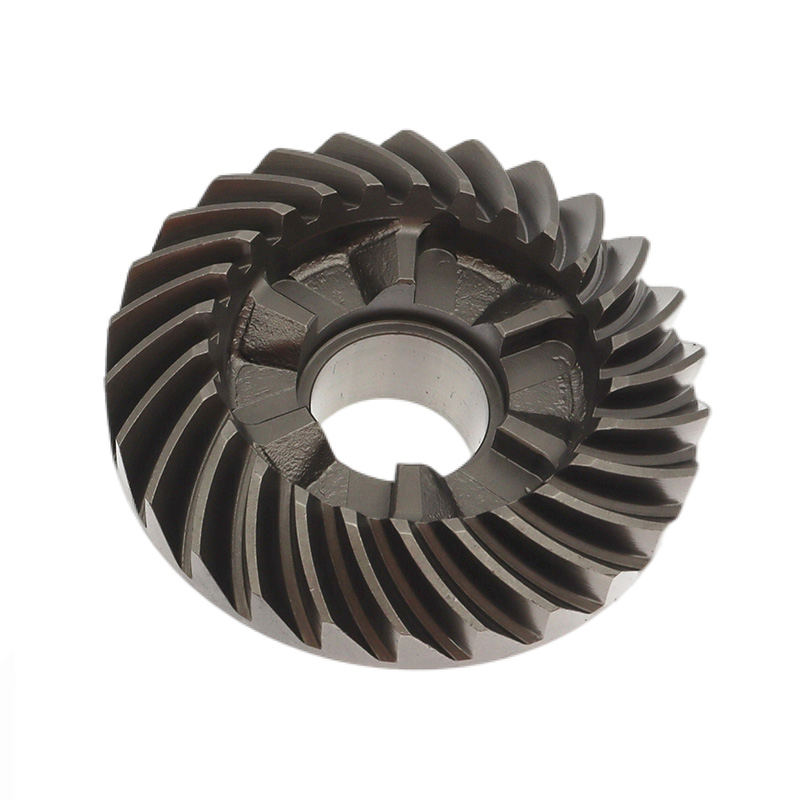
Marine and outboard transmissions must withstand shock loads from wave impacts, rapid throttle changes, and frequent start/stop cycles. [blog.saleslayer]
Key design considerations include:
- Selecting adequate safety factors for bending and contact fatigue
- Minimizing stress concentrations at the herringbone center
- Ensuring robust surface hardness to resist pitting in lubricated contact [ptsmake]
Because double helical gears rely on perfect alignment of both helix halves, any misalignment can introduce unbalanced axial forces and noise. [gearsolutions]
Marine gearboxes should therefore emphasize:
- Precise housing machining and bearing alignment
- Tight control of shaft deflection under load
- Quality control procedures such as contact pattern checks during assembly [gearsolutions]
These practices reduce warranty claims and improve customer satisfaction in the field. [blog.saleslayer]
Marine gearboxes and outboards typically rely on forced lubrication and oil cooling to manage the heat generated in high‑load double helical gear meshes. [blog.saleslayer]
Best practices include:
- Using high‑quality marine gear oil with appropriate viscosity and additive packages
- Designing oil channels that ensure fresh oil reaches the herringbone center and both helix flanks
- Incorporating filtration and condition monitoring to extend oil and gear life [gearsolutions]
From a maintenance perspective, operators should:
1. Monitor noise and vibration trends over time.
2. Periodically check oil condition and wear particles.
3. Inspect gear contact patterns during scheduled overhauls. [blog.saleslayer]
Such proactive practices significantly reduce the risk of catastrophic gearbox failures at sea. [blog.saleslayer]
When selecting double helical gears for an outboard or marine drive system, engineers should follow a structured process. [ptsmake]
- Rated power and torque at input and output
- Desired gear ratio and number of stages
- Space constraints in the gearbox housing
- Environmental conditions (saltwater, temperature range) [ptsmake]
- Select module and helix angle to balance load capacity and manufacturability
- Define face width and gap width between helices
- Coordinate shaft arrangements (center distance, bearing locations) [ptsmake]
- Use finite element analysis or specialized gear software for stress checks
- Evaluate contact patterns and load distribution
- Conduct bench tests and sea trials to validate durability and noise targets [blog.saleslayer]
This systematic approach helps ensure that double helical gears deliver reliable, efficient power transmission in demanding marine environments. [blog.saleslayer]
Recent industry discussions and research highlight several trends shaping modern double helical gear design. [gearsolutions]
- Weight and space optimization: New tooth profiles and materials allow smaller, lighter gearboxes with the same torque capacity. [gearsolutions]
- Digital design and predictive maintenance: Integration of digital twins and condition monitoring helps predict failure before it happens, crucial for ships and commercial vessels. [blog.saleslayer]
- Higher efficiency expectations: With rising fuel costs and environmental regulations, marine operators demand low‑loss gear transmissions that minimize energy waste. [blog.saleslayer]
Manufacturers who adopt these trends can position themselves as technology leaders in both the marine and outboard sectors. [blog.saleslayer]
In a typical high‑power outboard engine, the vertical crankshaft must transmit power to a horizontal propeller shaft via a compact gearbox. [blog.saleslayer]
By using double helical gears in critical reduction stages, manufacturers can achieve:
- Smooth, quiet operation even at high RPM
- Improved torsional stiffness and torque handling within a small housing
- Reduced dependence on large thrust bearings, simplifying the design [cmgear]
For a company specializing in outboard gears and marine transmission components, showcasing such applications helps build trust with OEM customers and end‑users who value real‑world performance. [blog.saleslayer]
To extract maximum value from double helical gears in marine and outboard drive systems, OEMs and engineers should adopt several best practices. [gearsolutions]
- Integrate gear design early: Involve gear specialists in the early stages of gearbox layout to avoid compromises in space or alignment later. [blog.saleslayer]
- Standardize critical dimensions: Work closely with gear suppliers to standardize modules, helix angles, and materials across product lines. [ptsmake]
- Document service procedures: Provide clear instructions and service intervals for inspection, lubrication changes, and contact pattern checks. [gearsolutions]
These steps reinforce reliability and reduce total cost of ownership for fleets and individual boat owners alike. [gearsolutions]
For buyers and engineers, partnering with a specialized supplier of outboard gears and marine transmission parts offers practical advantages. [blog.saleslayer]
- Application‑specific engineering support: Experienced teams can recommend suitable double helical geometries and materials based on real marine duty cycles. [blog.saleslayer]
- Consistent quality control: Certified processes, inspection routines, and testing ensure gears meet strict performance and safety standards. [gearsolutions]
- Flexible production and customization: Ability to adapt helix angle, face width, and heat treatment for different boat types, from small outboards to heavy commercial vessels. [blog.saleslayer]
Such collaboration helps OEMs shorten development cycles and deliver more reliable, quieter, and efficient marine propulsion systems. [gearsolutions]
Double helical (herringbone) gears provide a powerful combination of high load capacity, low noise, and balanced axial forces, making them ideal for marine gearboxes and outboard gear trains. [cmgear]
By understanding their unique geometry, operational behavior, and design considerations, marine engineers and OEMs can build more efficient, compact, and durable propulsion systems that stand out in a competitive market. [gearsolutions]
If you're currently evaluating gear options for a new outboard platform or seeking to upgrade an existing marine gearbox, consider partnering with a specialized double helical gear manufacturer that understands the challenges of real‑world marine environments and can tailor solutions to your torque, space, and noise requirements. [blog.saleslayer]
1. Why are double helical gears preferred over single helical gears in marine applications?
Double helical gears cancel axial thrust by using opposing helix angles, reducing the load on thrust bearings and enabling quieter, smoother operation under high torque, which is critical in marine gearboxes. [cmgear]
2. Do double helical gears always require a center gap?
Not always; some herringbone gears are manufactured with a small center gap for tool and oil clearance, while others have near‑continuous teeth, depending on manufacturing capabilities and lubrication design. [gearsolutions]
3. How do double helical gears impact gearbox efficiency?
Properly designed double helical gears can improve efficiency by optimizing contact patterns and load sharing across both helix halves, reducing sliding losses and allowing for more compact gearboxes. [gearsolutions]
4. What maintenance practices are most important for marine double helical gears?
Key practices include regular oil analysis, inspection of noise and vibration trends, and periodic examination of gear tooth contact patterns during overhauls to detect misalignment or wear early. [gearsolutions]
5. Can double helical gears be retrofitted into existing marine gearboxes?
In some cases, yes, but retrofits must account for shaft spacing, bearing layouts, and housing geometry, so collaboration with a gear specialist is crucial to ensure safe and reliable integration. [ptsmake]


