


close
Choose Your Site
Global
Social Media
Views: 222 Author: Gill Transmission Publish Time: 2026-06-07 Origin: Site


Content Menu
● Driven Gear vs. Driving Gear
● Key Elements of Driven Gear Nomenclature
>> Pressure Angle and Helix Angle
● How Driven Gears Work in Outboard and Marine Systems
>> Torque Transmission in Outboard Gearboxes
>> Reverse and Neutral Functions
● Practical Design Considerations for Driven Gears
>> Materials and Heat Treatment
>> Noise, Vibration and Harshness (NVH)
● Expert Insights: Common Failure Modes and How to Avoid Them
>> Preventive Measures in Operation
● Step-by-Step: How to Specify a Driven Gear for Outboard Applications
>> 1. Define Operating Requirements
>> 2. Determine Gear Ratio and Layout
>> 3. Select Materials and Heat Treatment
>> 4. Finalize Dimensional Nomenclature
● Marine Supplier Perspective: Why Driven Gear Quality Matters
>> Impact on Total Cost of Ownership
>> Supporting Global Supply Chains
● Call to Action: Choosing the Right Driven Gear Partner
● Frequently Asked Questions (FAQ)
A driven gear is the gear that receives torque from a driving gear and transmits it further into the powertrain, and in marine applications it plays a critical role in outboard gear systems and overall drivetrain reliability. Understanding driven gears in depth helps engineers, boat owners and purchasing managers make better decisions about performance, noise, durability and cost in real-world marine environments. [pressbooks.bccampus]
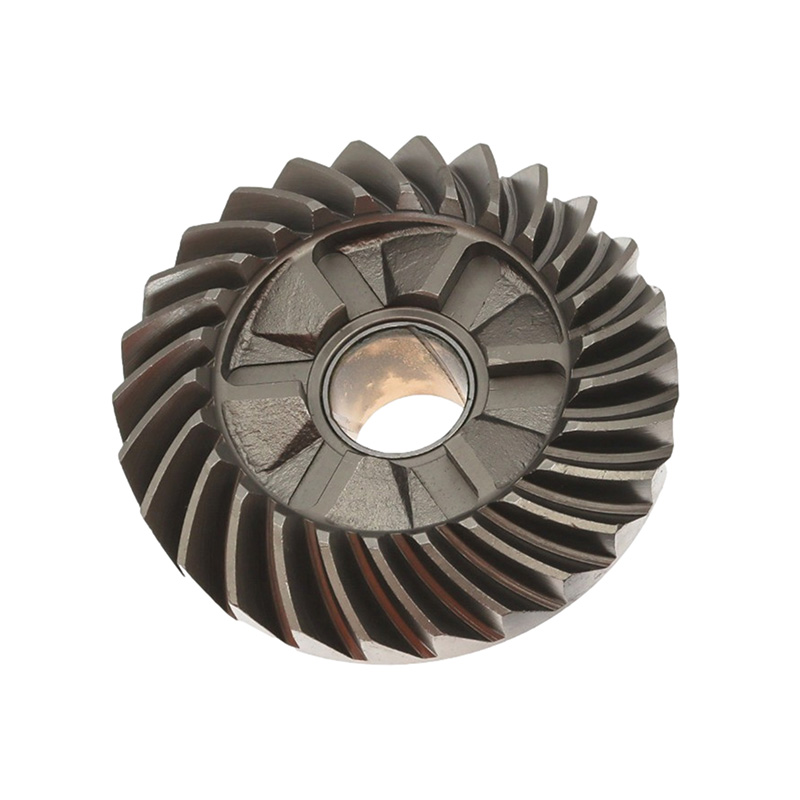
A driven gear is the gear that is rotated by another gear (the driving gear) through meshing teeth, rather than being directly connected to a power source such as an engine or motor. It is part of a gear pair or gear train, where power flows from the driving gear to the driven gear and then into the rest of the mechanism. [pressbooks.bccampus]
In most power transmission systems, the driven gear is mounted on a shaft that connects to downstream components such as propeller shafts, differential mechanisms or auxiliary equipment. By changing the relative size and tooth count between driving and driven gears, designers control the gear ratio, torque multiplication and rotational speed delivered to the load. [pressbooks.bccampus]
Although the names are similar, driving and driven gears play distinct roles in a gear set. Knowing the difference is essential when specifying, operating or troubleshooting marine powertrains and industrial gearboxes. [pressbooks.bccampus]
- The driving gear (also called the input gear) is directly connected to the power source such as an engine, electric motor or crank. [pressbooks.bccampus]
- The driven gear (also called the output gear) is rotated by the driving gear and transmits power further downstream. [pressbooks.bccampus]
Because of this relationship, driven gears typically experience different loading and wear patterns compared to driving gears, especially in high-torque marine applications. In many reduction gearboxes, the driven gear will be larger than the driving gear to increase torque at lower rotational speeds, which is particularly important for outboard propeller performance. [alibaba]
The gear ratio between driving and driven gears is determined by the number of teeth on each gear. A larger driven gear (more teeth) results in reduced speed but increased torque, while a smaller driven gear yields higher speed but lower torque. [pressbooks.bccampus]
In a simple gear pair, the driving and driven gears rotate in opposite directions; when an idler gear is added, the driven gear can be made to rotate in the same direction as the driving gear. These basic relationships underpin both general industrial transmission design and specialized outboard gearboxes for marine use. [alibaba]
Correct nomenclature ensures that engineers, suppliers and customers describe driven gears consistently when specifying or sourcing parts. Technical writing guidelines recommend clearly defining terms before moving into more complex explanations. [pressbooks.bccampus]
The number of teeth on a driven gear is one of its most fundamental parameters, as it directly influences the gear ratio and meshing compatibility with the driving gear. In metric systems, gear teeth are often specified using module (m), which is the ratio of reference diameter to tooth count. [pressbooks.bccampus]
A larger module indicates thicker, more robust teeth that can handle higher loads but may require more space, whereas a smaller module enables compact designs but can reduce load capacity if not engineered carefully. For marine outboard gears, designers must balance tooth strength, compactness and noise characteristics within tight gearcase housings. [alibaba]
Two other important parameters in driven gear nomenclature are pressure angle and helix angle. [pressbooks.bccampus]
- Pressure angle defines the angle of contact between meshing teeth and strongly influences load distribution and sensitivity to manufacturing errors. [pressbooks.bccampus]
- Helix angle applies to helical and spiral gears, defining the angle of tooth orientation relative to the gear axis, which affects smoothness, noise and axial thrust. [pressbooks.bccampus]
Marine outboard gear sets often use helical or spiral bevel gears in part of the drivetrain to minimize noise and vibration while maintaining adequate strength over long service life. Choosing the correct combination of pressure angle and helix angle is therefore critical for both performance and comfort on board. [alibaba]
Face width refers to the axial length of the gear teeth, while overall gear width includes the hub and other structural features. A wider face can distribute load across a greater area, improving durability and reducing contact stress, but it also increases weight and packaging demands. [pressbooks.bccampus]
For compact outboard gearcases, engineers often push the limits of face width within very confined housings, requiring careful selection of materials, heat treatments and lubrication strategies to maintain reliability. When specifying driven gears for replacement, accurately matching face width and overall width is essential to avoid misalignment and premature failure. [alibaba]
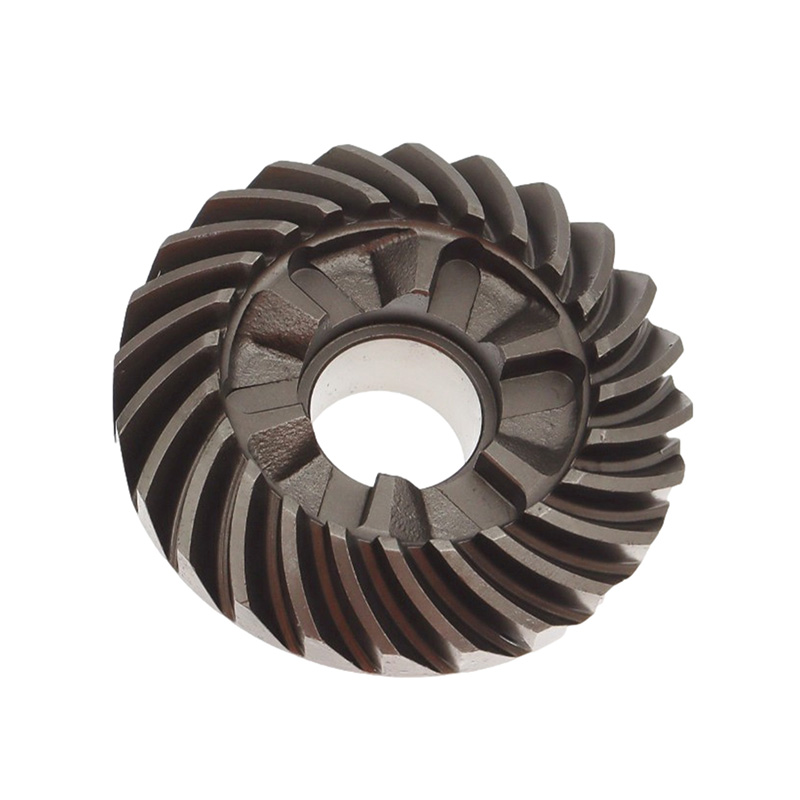
From an industry practitioner's perspective, driven gears are at the heart of marine propulsion systems, especially in outboard motors, stern drives and inboard gearboxes. A typical outboard powertrain uses a vertical drive shaft from the engine, a pinion as the driving gear, and one or more driven gears to convert vertical rotation into horizontal propeller rotation. [alibaba]
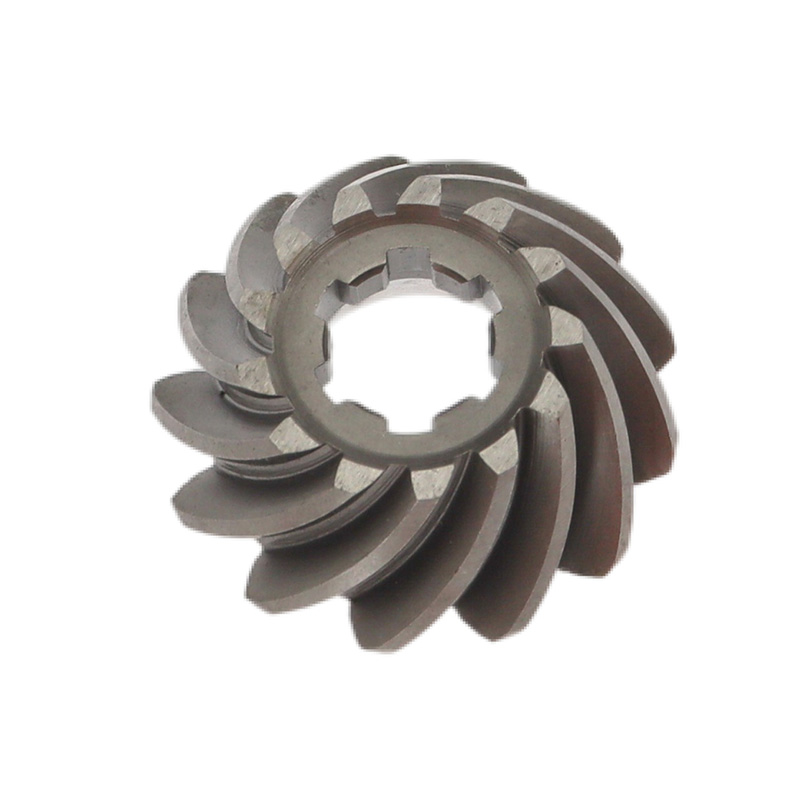
In many outboard engines, the engine crankshaft drives a vertical shaft, which in turn drives a small pinion gear at the bottom of the gearcase. This pinion is the driving gear, engaging a larger driven gear mounted on the propeller shaft, creating a reduction ratio that increases torque at the propeller. [alibaba]
The driven gear in this configuration must withstand high shock loads during rapid acceleration, gear shifting and impact with debris or cavitation events. Because these loads are repeated thousands of times during a season, gear material quality, heat treatment and surface finishing are crucial for durability. [alibaba]
Many marine gearboxes employ additional driven gears or sliding dog clutches to provide forward, neutral and reverse functions. In some designs, a second driven gear is used for reverse rotation, engaged by a shift mechanism that changes which gear transmits power to the propeller shaft. [alibaba]
From a maintenance perspective, the condition of driven gears often determines whether a gearbox can be economically repaired or must be replaced, as pitting, chipping or tooth breakage quickly propagate to other components. Regular inspection of driven gear teeth during oil changes or scheduled maintenance is therefore a best practice recommended by many marine service guides. [mraa]
Designing driven gears for marine and industrial use requires balancing multiple factors: load capacity, efficiency, noise, manufacturability and cost. A technical description should address definitions, components and how the parts work together to achieve the desired function. [blog.marketmuse]
Common materials for driven gears include alloy steels, carburized steels and occasionally stainless steels for corrosion resistance in marine environments. Heat treatments such as carburizing, nitriding or induction hardening are applied to increase surface hardness while maintaining a tough core. [alibaba]
In saltwater service, corrosion-resistant coatings and proper lubrication are critical complements to material selection. Manufacturers in Ningbo and other coastal industrial hubs increasingly combine high-precision machining with advanced heat treatment and surface finishing to produce driven gears that meet international marine standards. [alibaba]
Driven gears rely on adequate lubrication to prevent metal-to-metal contact, reduce friction and control temperature. In marine outboards, the lower unit is typically filled with gear oil that both lubricates and cools the gears as they rotate. [developers.google]
Using the correct viscosity and specification of oil is essential; improper lubricants can lead to accelerated wear, noise and catastrophic failure. Maintenance schedules recommended by engine manufacturers often include periodic oil changes and inspection for metal particles, which can indicate driven gear distress or bearing problems. [developers.google]
End users increasingly expect quiet and smooth operation, especially in recreational boating and high-end commercial vessels. Driven gear geometry, tooth finishing and alignment have a strong influence on NVH characteristics, particularly at mid to high RPM ranges. [mraa]
By optimizing tooth profile, backlash and surface roughness, gear designers can significantly reduce whine and vibration without sacrificing durability. This is a key differentiator for marine component suppliers competing in global markets where customer reviews often highlight noise levels as a major purchasing factor. [mraa]
From the perspective of an engineer working with marine customers, most driven gear issues in outboard and industrial applications fall into a few recognizable categories. Understanding these patterns allows both OEMs and users to implement preventive strategies. [alibaba]
- Pitting and spalling: Surface fatigue due to repeated high contact stress, often linked to inadequate lubrication or overload conditions. [pressbooks.bccampus]
- Tooth chipping or breakage: Result of shock loads from debris impact, sudden gear engagement or misalignment. [alibaba]
- Scuffing and scoring: Caused by boundary lubrication conditions, contaminated oil or insufficient film strength at high load and temperature. [pressbooks.bccampus]
In marine use, water intrusion into the gearcase is a frequent root cause, diluting lubrication and promoting corrosion at the tooth surface. Prompt detection and correction (for example, replacing seals or gaskets) can extend driven gear life significantly. [alibaba]
Based on field experience and service data, several best practices consistently reduce driven gear failures in marine gearboxes: [mraa]
1. Follow manufacturer oil change intervals and use only approved lubricants.
2. Avoid hard gear shifts at high engine speeds to minimize shock loading.
3. Inspect for water contamination during each oil change (milky oil or presence of droplets).
4. Monitor unusual noise or vibration, especially under load, and investigate early rather than delaying service.
For industrial installations, condition monitoring tools such as vibration analysis and oil particle counters can provide early warning of driven gear distress. Applying these techniques systematically aligns with modern predictive maintenance strategies in manufacturing and marine fleets. [blog.marketmuse]
When working with OEMs or aftermarket buyers, a structured approach to specifying driven gears helps ensure fit, performance and reliability. Technical writing best practices recommend clear, numbered steps so readers can easily follow the process. [blog.marketmuse]
Start by capturing the key operating conditions: [blog.marketmuse]
- Input power and speed from the engine or motor
- Desired output speed and torque at the propeller or load
- Duty cycle (continuous, intermittent, shock loading)
- Environmental conditions (freshwater, saltwater, temperature range)
This information clarifies whether you need a high-torque reduction gear, a high-speed gear or a balanced compromise. [blog.marketmuse]
Next, calculate the required gear ratio and decide on the layout (parallel shaft, bevel, hypoid, etc.). For outboard motors, bevel or spiral bevel configurations are common because they efficiently change the direction of rotation from vertical to horizontal within a compact space. [blog.marketmuse]
Choosing an appropriate ratio affects both acceleration and top speed, so designers often evaluate several ratios during prototype testing. In customer-facing documentation, clearly explaining these trade-offs helps buyers understand why a particular driven gear design was selected. [wgcontent]
Based on load, environment and cost constraints, choose a material and heat treatment combination that delivers sufficient surface hardness and core toughness. For marine applications, corrosion resistance and compatibility with gear oils are additional considerations. [alibaba]
Suppliers in established marine manufacturing clusters such as Ningbo often publish typical material and hardness ranges for their driven gears, which can guide initial selection. Custom projects may involve joint engineering to fine-tune these parameters for specific OEM requirements. [blog.marketmuse]
Finally, ensure all key dimensions and nomenclature are documented and agreed: [pressbooks.bccampus]
- Tooth count, module (or DP), pressure angle
- Helix angle (if applicable), face width, bore diameter
- Keyway or spline details, hub length, overall width
Accurate nomenclature not only facilitates procurement and quality control but also supports after-sales service, spare parts stocking and future upgrades. This systematic approach enhances both technical reliability and customer experience, aligning with modern E‑E‑A‑T expectations for clarity and completeness. [wgcontent]
From the standpoint of a marine component manufacturer or exporter, driven gears are not just catalog items—they are critical reliability components that directly impact customer satisfaction. Failures in this area often lead to costly downtime, warranty claims and reputational damage. [blog.marketmuse]
A well-designed driven gear may cost slightly more upfront but can significantly reduce lifetime operating costs by lowering failure rates and extending service intervals. Fleet operators and commercial users often prioritize total cost of ownership (TCO) over initial purchase price, making reliability a key competitive differentiator. [blog.marketmuse]
For exporters and OEM partners, providing detailed documentation on driven gear specifications, testing procedures and quality assurance practices can help win trust in international markets. This includes sharing information about material traceability, inspection methods and compliance with relevant industrial or marine standards. [blog.marketmuse]
Industrial hubs like Ningbo have developed strong ecosystems around gear manufacturing, heat treatment, surface finishing and logistics. This concentration allows suppliers to provide competitive lead times, flexible batch sizes and tailored solutions for different marine and industrial applications. [alibaba]
In an era of complex global supply chains, transparent communication about production capacity, quality control and after-sales support is essential. Detailed, E‑E‑A‑T-friendly technical content on driven gears becomes a strategic asset in this environment, bridging technical, commercial and SEO objectives. [blog.clickpointsoftware]
Whether you are designing a new outboard gearbox, upgrading an existing marine fleet or sourcing components for industrial machinery, the driven gear is a critical part of your powertrain strategy. Working with a specialist manufacturer that combines engineering expertise, marine experience and robust quality systems can help ensure long-term performance and reliability. [blog.marketmuse]
When evaluating partners, look for clear technical documentation, transparent material and process information, and a strong track record in marine and industrial gear applications. Requesting case studies, sample inspection reports and detailed nomenclature sheets will give you confidence that the driven gears you specify will perform reliably in the field. [wgcontent]
1. What is the main difference between a driven gear and an idler gear?
A driven gear transmits power to a load or downstream shaft, while an idler gear primarily changes direction or spacing without significantly altering the overall gear ratio. [pressbooks.bccampus]
2. Why are helical or bevel driven gears often used in marine applications?
Helical and bevel driven gears offer smoother engagement, lower noise and efficient direction changes, making them well suited to compact, high-load marine gearcases. [alibaba]
3. How often should driven gears in an outboard gearbox be inspected?
Most manufacturers recommend inspection during scheduled oil changes or annual service, with more frequent checks for high-hour commercial or rental fleets. [mraa]
4. Can driven gears be reused after minor pitting or wear is observed?
Minor cosmetic marks may be acceptable, but visible pitting, spalling or chipping usually indicates the need for replacement to avoid rapid progression and secondary damage. [pressbooks.bccampus]
1. BCCampus OpenEd, "Technical Descriptions and Definitions – Technical Writing."
https://pressbooks.bccampus.ca/technicalwriting/chapter/technicaldescriptions/ [pressbooks.bccampus]
2. Google, "Search Engine Optimization (SEO) Starter Guide."
https://developers.google.com/search/docs/fundamentals/seo-starter-guide [developers.google]
3. MarketMuse Blog, "Enhancing Your Content Strategy with SEO Best Practices."
https://blog.marketmuse.com/enhancing-your-content-strategy-with-seo-best-practices/ [blog.marketmuse]
4. WG Content, "E‑E‑A‑T for content quality."
https://wgcontent.com/blog/eeat-content-quality-seo-geo/ [wgcontent]
5. ClickPoint Software Blog, "E‑E‑A‑T as a Ranking Signal in AI-Powered Search."
https://blog.clickpointsoftware.com/google-e-e-a-t [blog.clickpointsoftware]
6. MRAA, "A Boat Dealer's Guide to Winning with SEO."
https://mraa.com/a-boat-dealers-guide-to-winning-with-seo/ [mraa]
7. Alibaba Product Insights, "An Overview of Ningbo Marine Gear Box: Standards, Grades, and Mechanical Performance."
https://www.alibaba.com/product-insights/ningbo-marine-gear-box.html [alibaba]


