


close
Choose Your Site
Global
Social Media
Views: 298 Author: Gill Transmission Parts Publish Time: 2026-11-12 Origin: Site


Content Menu
● Forged Marine Shafts vs Machined Shafts: What Are You Actually Comparing?
>> What Is a Forged Marine Shaft?
>> What Is a Shaft Machined from Bar Stock?
● Side-by-Side Comparison of Marine Shaft Manufacturing Routes
● Strength, Grain Flow, and Marine Shaft Fatigue
>> Where Forging Can Provide an Advantage
>> Why Fatigue Depends on More Than Grain Flow
● Corrosion Resistance: Why Manufacturing Route Is Not Enough
>> Comparing Common Marine Shaft Materials
● Machining Accuracy, Surface Finish, and Installation
>> Why a Smooth Surface Is Not the Whole Answer
● Cost and Lead Time: Compare More Than the Purchase Price
>> When Bar-Stock Machining Can Be Economical
>> When Forging Can Improve Manufacturing Economics
● Expert Insight: Compare Evidence, Not Manufacturing Labels
>> Five Documents Worth Requesting
● A Practical Five-Step Marine Shaft Selection Process
>> Step 1: Define the Operating Duty
>> Step 2: Define the Exposure
>> Step 3: Review the Geometry
>> Step 4: Compare Qualified Routes
>> Step 5: Agree on Acceptance Before Production
● Illustrative Application: Replacement Shaft or Demanding Flanged Shaft?
>> A Straight Replacement Shaft
>> A Heavily Loaded Shaft with an Integral Flange
● Discuss Your Marine Shaft Requirements with Ningbo Gill
>> Are Forged Marine Shafts Always Stronger Than Machined Shafts?
>> Can Bar-Stock Shafts Be Suitable for Marine Applications?
>> Does Forging Improve Marine Shaft Corrosion Resistance?
>> Which Route Is Better for Custom Marine Drive Shafts?
>> What Should a Marine Shaft Quotation Include?
>> What Is the Biggest Mistake When Comparing Shaft Suppliers?
Forged marine shafts vs machined shafts is not a simple contest between strong and weak components. Most forged shafts also require precision machining. The meaningful comparison is between shafts machined from purpose-made forgings and shafts machined directly from suitable rolled or forged bar stock.
For buyers, the right choice depends on loading, geometry, material condition, corrosion exposure, and inspection requirements—not the manufacturing label alone.
At Ningbo Gill Transmission Parts Co., LTD., our 29 years of experience in marine-component research, production, and sales shape a practical approach: specification comes before process preference. A reliable marine drive shaft starts with understanding its operating conditions.
This guide explains the differences, identifies common purchasing mistakes, and provides a practical framework for comparing quotations.
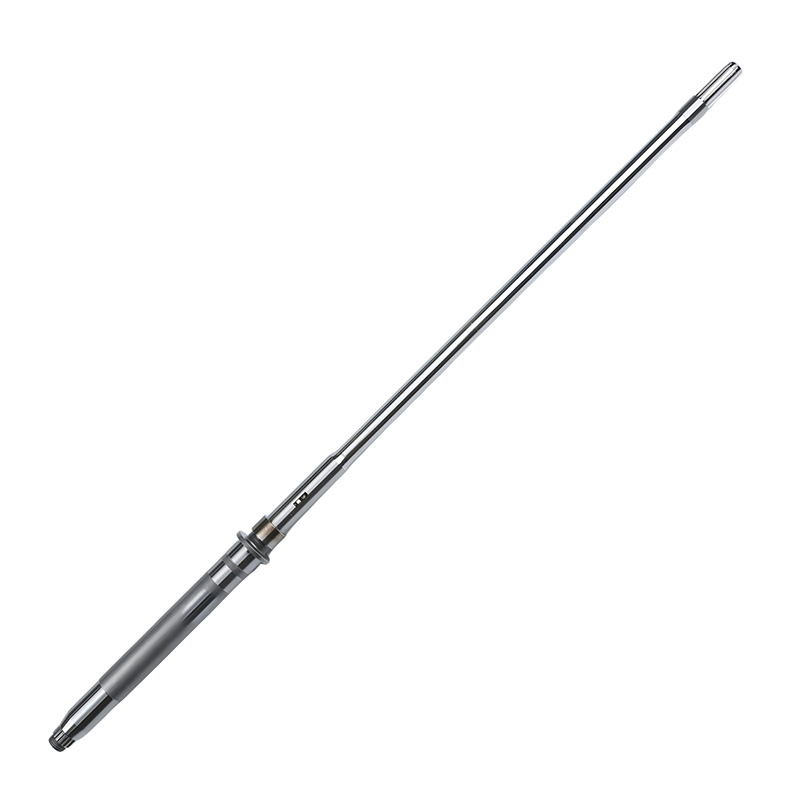
A forged marine shaft begins as steel that undergoes controlled plastic deformation. Depending on component size and geometry, the manufacturer may use open-die or closed-die forging.
The forging is subsequently heat-treated, inspected, and machined to produce its final dimensions.
A typical route includes:
1. Selecting traceable steel.
2. Forging the shaft blank.
3. Applying the specified heat treatment.
4. Rough machining and appropriate inspection.
5. Finishing journals, tapers, splines, or keyways.
6. Verifying dimensions and documentation.
Forging is therefore the blank-production method, not a substitute for precision finishing.
A bar-stock shaft is produced by removing material from an existing round bar or other suitable stock.
That stock has its own manufacturing history. Rolled bar has already undergone substantial deformation, and some machining blanks originate from forgings.
It is incorrect to describe every machined shaft as having an unworked or randomly oriented internal structure.
For this comparison, "machined shaft" means a shaft machined from standard stock rather than from a purpose-made shaft forging.
| Factor | Purpose-made forging plus machining | Standard bar stock plus machining |
|---|---|---|
| Starting geometry | Can approximate stepped or flanged designs | Usually begins with a uniform section |
| Grain-flow potential | Can be developed around selected features | Primarily reflects the stock-production route |
| Fatigue performance | Depends on forging quality, material, design, and finishing | Depends on stock quality, material, design, and finishing |
| Dimensional precision | Established during final machining | Established during final machining |
| Corrosion resistance | Depends mainly on alloy, condition, and environment | Depends mainly on alloy, condition, and environment |
| Initial preparation | May require dedicated process planning or tooling | Often simpler when suitable stock is available |
| Material removal | Can decrease for suitable near-net geometries | Can increase around large flanges or shoulders |
| Best-fit applications | Demanding geometry or justified structural requirements | Straightforward geometry with qualified stock |
Neither route guarantees a better shaft. The finished component must satisfy the same application-specific acceptance criteria.
A properly designed forging process can develop favorable material flow and help achieve the internal soundness and mechanical properties required by the specification.
The potential benefit becomes especially relevant around integral flanges, shoulders, and substantial changes in section.
However, contour-following grain flow is not automatic. A straight open-die forged blank that undergoes extensive machining will not necessarily retain flow following every finished feature.
My recommendation is to ask what the forging process achieves for the particular drawing—not simply whether the supplier offers forging.
Marine shafts experience repeated loading. Torque, bending, vibration, and local stress concentrations can influence crack initiation and growth.
A shaft may satisfy static strength requirements yet remain vulnerable to fatigue if it has:
- Sharp keyway corners.
- Poorly blended diameter transitions.
- Excessive runout.
- Machining damage.
- Corrosion pits.
- Unsuitable alignment or support conditions.
Consequently, a well-specified bar-stock shaft can be more appropriate than a poorly manufactured forging.
Avoid unsupported claims that forged marine shafts always last a fixed percentage longer. Such comparisons require equivalent materials, geometry, loading, surface condition, and test methods.
A forged shaft is not inherently more corrosion-resistant than a shaft machined from bar stock.
Marine shaft corrosion resistance depends on alloy composition, heat treatment, surface condition, seawater exposure, and protection arrangements.
Crevice corrosion deserves particular attention. Bearings, seals, deposits, and overlapping interfaces can create conditions different from those on an openly exposed surface.
| Material family | Potential benefit | Important qualification |
|---|---|---|
| Carbon and low-alloy steel | Practical strength and cost options | Seawater-exposed arrangements require suitable corrosion protection |
| 316 stainless steel | Useful corrosion resistance in appropriate environments | Not universally suitable for immersed, crevice-prone service |
| Duplex stainless steel | Combines strength with improved resistance to localized corrosion | Grade selection and processing must match the application |
| Precipitation-hardening stainless steel | High strength in specified conditions | Heat-treatment condition and environmental cracking risks require review |
The correct question is not merely "Which stainless steel is strongest?"
Ask instead: "Which material condition provides the required strength, toughness, and corrosion resistance in this vessel's actual operating environment?"
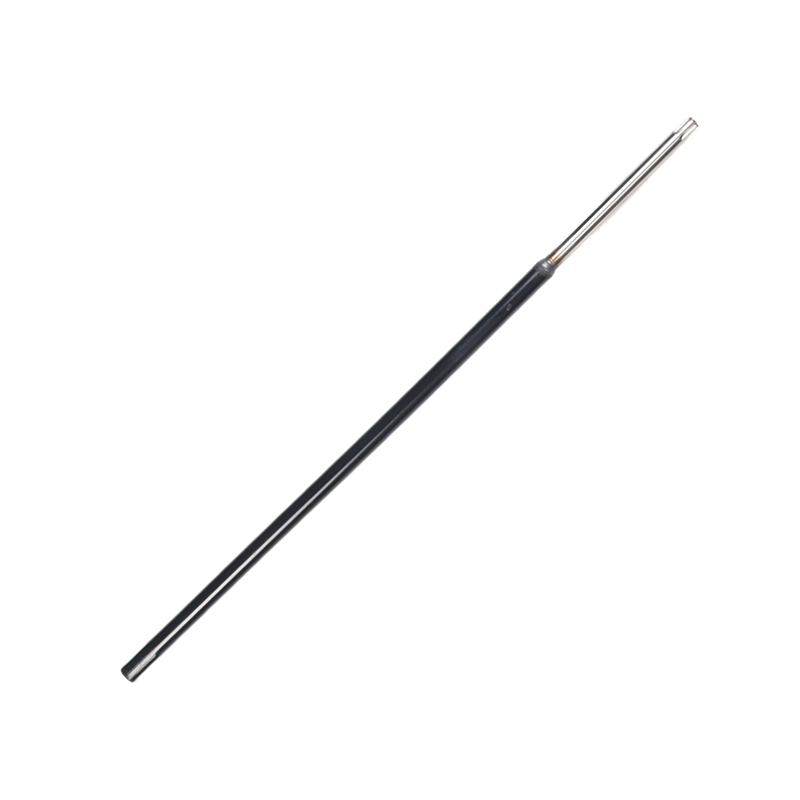
Both manufacturing routes need precision machining.
Critical characteristics may include:
- Bearing-journal diameter and roundness.
- Shaft straightness and runout.
- Taper geometry and contact.
- Spline or keyway dimensions.
- Surface roughness.
- Concentricity between functional features.
There is no universal tolerance suitable for every marine drive shaft. Acceptance limits must come from the approved drawing and system requirements.
A visually polished shaft can still have an incorrect taper, unsuitable geometry, or excessive runout.
Conversely, specifying unnecessarily fine finishes on nonfunctional surfaces can increase cost without improving service performance.
Define surface requirements by function. Bearing journals, sealing surfaces, and highly stressed transitions deserve different treatment from noncontact areas.
A sound procurement specification connects each measurement to the feature it controls.
Machining from suitable stock can be attractive for straightforward shafts, replacement parts, and smaller orders.
Potential advantages include readily available material, fewer blank-production stages, and no dedicated forging dies.
These benefits depend on stock availability. A special alloy, unusual diameter, or demanding documentation package can change the calculation.
Purpose-made forgings can reduce material removal where the design includes substantial flanges or stepped sections.
However, forging does not automatically reduce cost. Open-die and closed-die routes have different setup, tooling, quantity, and scheduling considerations.
For a useful comparison, request quotations covering identical:
- Material grades and conditions.
- Finished drawings.
- Inspection scope.
- Documentation.
- Delivery terms.
- Order quantities.
A lower quotation is not a genuine saving if it excludes essential testing or certification.
One particularly useful industry detail challenges the idea that marine rules recognize only forged components.
IACS Unified Requirement W7, Revision 4, covers hull and machinery steel forgings. Where relevant, its scope also extends to rolled bars intended for machining into simple components.
This does not mean every bar-stock shaft is acceptable. It means acceptance depends on the applicable rules, material route, properties, testing, and component design.
Before approving a critical marine shaft, request:
1. Material identification and chemical analysis linked to the component.
2. Mechanical test results representing the supplied condition.
3. Heat-treatment records where required.
4. Nondestructive examination reports with agreed acceptance criteria.
5. A dimensional report covering the drawing's critical features.
Documentation should describe the actual delivered component or its permitted representative batch.
A generic material brochure cannot establish that connection. Nor does mentioning a classification society prove that a particular shaft has received its approval.
Provide power, shaft speed, expected operating hours, reversal frequency, and relevant transient loads.
Continuous cruising, repeated maneuvering, and impact-prone operation create different design questions.
Identify whether the shaft is enclosed, sleeved, partially exposed, or continuously immersed.
Include water conditions, expected idle periods, and existing corrosion-protection arrangements.
Check minimum sections, shoulders, keyways, splines, and integral flanges.
A purpose-made forging deserves consideration where its shape and material flow offer a demonstrable benefit.
Ask suppliers to explain how each proposed route will meet the same mechanical, dimensional, and inspection requirements.
Do not accept "forged" or "CNC-machined" as a complete technical justification.
Record inspection stages, testing methods, acceptance limits, traceability requirements, and any surveyor involvement.
Resolving these points before manufacturing reduces the risk of an apparently finished shaft becoming an unacceptable delivery.
Consider two hypothetical purchasing situations. These are decision examples, not reported customer projects.
A buyer needs a relatively simple replacement with an approved drawing and readily available, qualified shafting material.
Machining from suitable stock may provide an efficient solution. Priorities include confirming material condition, taper compatibility, straightness, and inspection records.
Specifying a dedicated forging without a demonstrated need may add time or cost.
Another buyer needs a custom shaft with major section changes and demanding cyclic loading.
A purpose-made forging warrants closer evaluation because its preform may reduce material removal and support a favorable material-flow arrangement.
The decision still requires engineering verification. Forging cannot compensate for an unsuitable fillet, incorrect alloy condition, or inadequate fatigue assessment.
Ningbo Gill Transmission Parts Co., LTD. brings 29 years of experience in the research, production, and sales of marine transmission components.
For a meaningful sourcing discussion, send your shaft drawing, material specification, operating speed, power, order quantity, and inspection requirements.
Also identify any mandatory classification requirements at the inquiry stage.
Ask our team to review the manufacturing-route options against your application. The objective is a clearly defined shaft specification and quotation—not an unsupported promise that one process suits every vessel.

No. Most forged shafts are also machined. When comparing purpose-made forgings with bar-stock shafts, strength depends on material grade, heat treatment, section size, manufacturing quality, and verified mechanical properties.
Yes, provided the material route and finished shaft meet the application's requirements. Suitability must be checked against the design, service environment, inspection plan, and applicable classification rules.
Forging alone does not establish corrosion resistance. Alloy selection, processing condition, surface quality, crevice conditions, and corrosion protection remain central considerations.
Simple geometries may favor machining from available stock. Complex stepped or flanged designs may justify purpose-made forgings. Compare both routes using the same performance and acceptance requirements.
Request the material grade and condition, manufacturing route, drawing revision, quantity, inspection scope, documentation, delivery schedule, and exclusions. Any required classification approval should be explicitly addressed.
Comparing price without comparing scope. Two visually similar shafts may differ substantially in material traceability, heat treatment, internal inspection, dimensional verification, and supporting documentation.
- International Association of Classification Societies. *Unified Requirement W7: Hull and Machinery Steel Forgings*, Revision 4, February 2022. Relevant sections include scope, manufacture, heat treatment, testing, inspection, identification, and certification. [Read the document hosted by ClassNK]. [classnk.or]
- Kosmac, Alenka, and Curtis Kovach. *Propelling the Boating World*. International Molybdenum Association, *MolyReview*, 1/2016. Technical background on shaft materials, straightness, residual stresses, machining, fatigue, and operating environments. [Read the article]. [imoa]
- Australian Stainless Steel Development Association. *Corrosion Resistance in Marine Environments*. Guidance on stainless steel selection, pitting, crevice corrosion, and marine exposure limitations. [Read the technical guidance]. [assda.asn]
- Scot Forge. *Marine Propulsion*. Industry manufacturing context covering marine shaft loading, forging applications, materials, and supply conditions. [View the industry overview]. [scotforge]


