


close
Choose Your Site
Global
Social Media
Views: 222 Author: Gill Transmission Publish Time: 2026-04-13 Origin: Site


As a marine transmission engineer working closely with OEM boat builders and aftermarket service shops, I have seen one simple truth repeated on every test bench: outboard gears live or die by their material and heat treatment. In saltwater, under shock loads, at high RPM, a beautifully machined gear made from the wrong steel—or treated with the wrong process—will fail long before its time. [mtvac]
In this guide, I will walk you through the real‑world material and heat treatment choices behind reliable outboard gears, drawing on both shop floor experience at Ningbo Gill Transmission Parts Co., LTD. and widely accepted gear engineering practice. Whether you are a boat OEM, a transmission designer, or a serious marine aftermarket buyer, this article is designed to help you make smarter, lower‑risk decisions. [khkchilun]
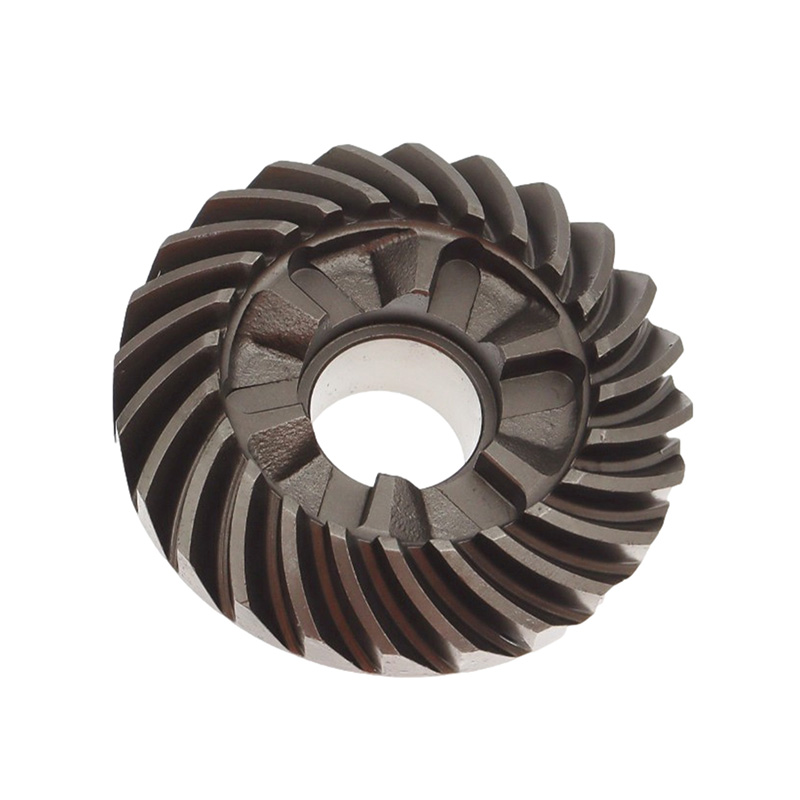
Outboard lower units operate in a harsher environment than most industrial gearboxes. They face: [amtechinternational]
- High torque at low speed during hole‑shot.
- Continuous high‑speed operation at cruising RPM.
- Repeated shifting under partial load.
- Corrosive saltwater and poor lubrication scenarios.
To survive, an outboard gear must combine hard, wear‑resistant tooth surfaces with a tough, shock‑resistant core. The only way to consistently achieve that balance is to select appropriate gear steels and apply precise heat treatment. [mtvac]
For SEO, the key focus phrase we target in this article is "gear materials and heat treatments for outboard gears", supported by related terms like marine gear materials, heat‑treated outboard gears, and boat transmission gear steel woven naturally into the text.
From an engineering and field‑service point of view, good outboard gear materials must deliver four critical properties: [practicalmachinist]
1. Contact fatigue strength
To resist pitting and micro‑spalling at the tooth surface.
2. Bending strength
To avoid tooth root cracking and catastrophic breakage.
3. Wear resistance
To maintain accurate tooth geometry and backlash over thousands of hours.
4. Toughness and impact resistance
To survive gear‑shifts, prop strikes, cavitation, and occasional overloads.
In practice, this leads designers to use alloy steels in the low‑to‑medium carbon range that respond well to carburizing, nitriding, or induction hardening. [khkchilun]
Although different regions use different standards, the engineering logic is the same: use steels that can develop a hard case and tough core. [practicalmachinist]
- Carburizing steels (e.g., 20MnCr5, 16MnCr5, 5120‑type steels)
Widely used for case‑hardened gears because they produce a very hard surface and tough core after carburizing and quenching. [amtechinternational]
- Nickel‑chromium‑molybdenum steels (e.g., 4320 family)
Offer deep hardenability and excellent core strength, often applied when very high torque and shock loads are expected. [mtvac]
- Medium carbon steels (e.g., 1045, 4140, 4340, 8640, 6150 families)
Common choices for through hardening or induction hardening, especially for gears where high strength is needed without extremely deep case depth. [practicalmachinist]
- Special graphitic or alloy tool steels for niche applications
In some industrial gears, graphitic tool steels are explored for inherent lubricity, but this remains uncommon in production marine outboard gears. [practicalmachinist]
In practice, gear manufacturers combine these base steels with controlled heat treatment and grinding to deliver the required tooth hardness, case depth, and residual stress profile. [khkchilun]
From the perspective of a gear manufacturer, heat treatment is where the raw steel becomes a true marine‑grade gear. The most relevant processes for outboard gear heat treatments are: [amtechinternational]
Carburizing is a thermochemical process in which carbon is diffused into the surface of a low‑carbon alloy steel at high temperature. [mtvac]
Typical process path: carburizing → quenching → washing → tempering → shot blasting → inspection. [khkchilun]
- Surface hardness: typically around 55–60 HRC for many carburized gear steels. [khkchilun]
- Case depth: around 1.0 mm for heavily loaded gears, adjusted according to the design load and module. [khkchilun]
This creates a hard, wear‑resistant case over a tough, ductile core, which is ideal for high‑load, high‑cycle outboard gears.
Nitriding introduces nitrogen into the surface at relatively low temperature, often without quenching. [amtechinternational]
- Produces a very hard but thin compound layer with excellent wear and fatigue resistance.
- Causes minimal distortion, which is attractive for high‑precision gears.
However, the thinner effective case depth means nitriding is usually chosen for moderate‑load gears, or where distortion control outweighs the need for a very deep case. [mtvac]
Induction hardening uses localized heating by an alternating electromagnetic field followed by rapid quenching. [amtechinternational]
- Suitable for medium and high carbon steels such as 1045 and 4340. [mtvac]
- Offers selective hardening of the tooth surface or root, with the ability to tailor hardness patterns.
- Process is fast and repeatable, making it attractive for production outboard gears.
Many marine gear manufacturers rely on induction hardening when they want a strong tooth root and robust surface without full case carburizing. [amtechinternational]
Through hardening is a process where the entire gear cross‑section is heated and quenched to develop a uniform hardness. [mtvac]
- Works best with medium and high carbon steels (such as 1045, 4130, 4140, 4340, and 8640). [amtechinternational]
- Simple and cost‑effective, but the lack of a softer core can make gears more brittle in shock conditions.
For outboard gears that often face shock loading, through‑hardened designs must be carefully engineered to avoid brittle failures.
From an application standpoint, not all outboard gears see the same loads or duty cycles. Here is how materials and heat treatments are typically matched to real marine scenarios. [practicalmachinist]
- Typical use: weekend boating, light loads, moderate hours per year.
- Common approach: carburized low‑carbon alloy steel for pinions and gears, focusing on cost‑effective durability.
- Emphasis on quietness, smooth shifting, and adequate life rather than extreme overload capability.
- Typical use: offshore fishing, patrol boats, commercial workboats, high‑speed or heavily loaded operation.
- Common approach:
- Carburizing + deep case hardening for primary gears and pinions.
- Induction‑hardened medium carbon steels in some applications where tooth root strength and quick cycle times are critical.
- Emphasis on extended fatigue life and safety margin under shock loads.
While the gears themselves are usually not stainless, the entire design must account for corrosion protection. [nmma]
- Cathodic protection (sacrificial anodes) and proper sealing are used per evolving marine standards to protect submerged gear housings and related components. [nmma]
- Lubricant selection and maintenance intervals are critical to minimize corrosion‑fatigue issues.
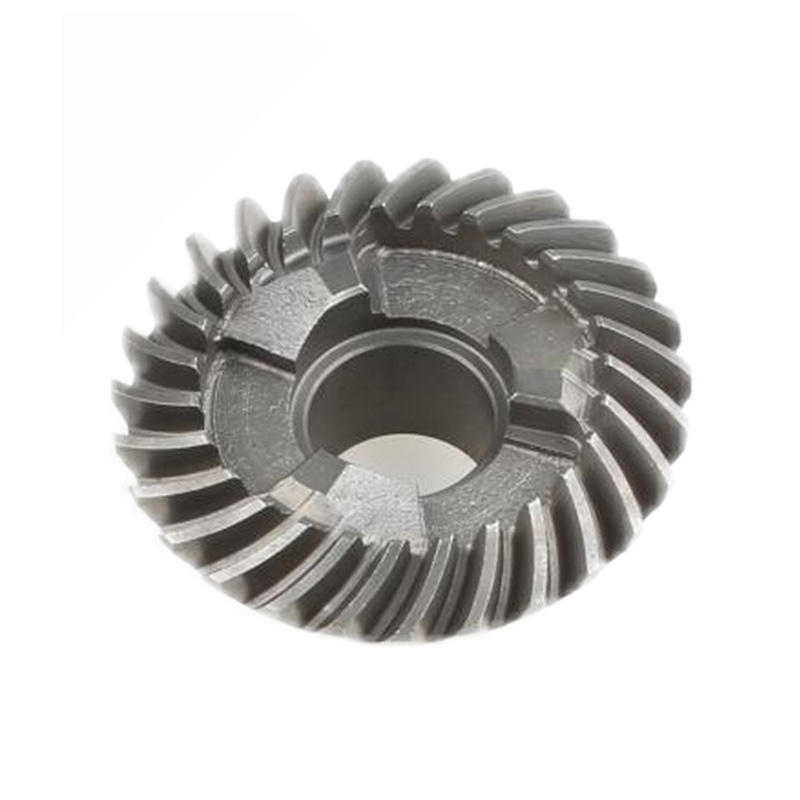
Beyond material and heat treatment, real‑world outboard gear reliability depends on how those gears are integrated into the full drive system.
Key considerations include: [practicalmachinist]
- Tooth geometry: module, pressure angle, and profile modification to handle hydrodynamic load fluctuations.
- Backlash and alignment: tight enough to control noise and impact, loose enough to prevent binding when housings deflect.
- Surface finish: grinding and lapping to reduce micro‑pitting and noise.
- Distortion control: process planning so that heat treatment does not compromise tooth accuracy.
- Inspection and NDT: hardness testing, case depth checks, and crack inspection on critical marine gears.
Manufacturers like Ningbo Gill Transmission Parts Co., LTD. integrate these controls into standardized production flows to ensure consistent performance across batches.
In recent years, marine industry bodies have increasingly emphasized safety and durability standards for boat systems, including drivetrains. [abycinc]
- The American Boat and Yacht Council (ABYC) regularly updates standards that touch boat systems such as electrical, fuel, and mechanical structures. [abycinc]
- The National Marine Manufacturers Association (NMMA) certification program incorporates standards like ABYC E‑2 for cathodic protection systems, which are crucial for protecting metallic components exposed to seawater. [nmma]
While these standards often focus on systems rather than individual gears, serious outboard gear manufacturers design materials, coatings, and protection strategies with these broader marine standards in mind, ensuring that transmission components remain reliable in the certified vessel environment. [abycinc]
When I work with a new outboard gearbox project, the material and heat treatment decision follows a structured but experience‑driven process:
1. Define the real duty cycle
Rated horsepower, expected propeller load, typical RPM band, and environment (freshwater vs. saltwater).
2. Set target life and safety factors
Required hours to first overhaul, acceptable failure modes, and warranty expectations.
3. Select candidate steels
For example, a carburizing steel such as 20MnCr5 for heavily loaded pinions, or an induction‑hardenable medium carbon steel like a 1045/4140‑type for certain gears. [khkchilun]
4. Match a heat treatment route
Decide whether carburizing, nitriding, or induction hardening best fits the distortion tolerance and cost structure. [mtvac]
5. Prototype and test
Run dynamometer tests, teardown inspections, hardness and case depth checks, and field trials in real boats.
6. Iterate on details
Adjust case depth, tempering temperature, or tooth profile corrections based on test results.
This iterative approach allows manufacturers like Ningbo Gill Transmission Parts Co., LTD. to move beyond generic "gear steel" and deliver application‑specific outboard gears that match the real demands of the marine market.
From a buyer's perspective—whether you are an OEM, distributor, or fleet operator—choosing a gear supplier for outboard applications should involve more than just price.
Here is a checklist you can apply:
- Do they clearly specify the gear material grade and heat treatment process in their technical documentation?
- Can they provide hardness and case depth reports for sample gears?
- Do they apply recognized quality control practices, including NDT and dimensional inspection?
- Are their gears used in real marine applications similar to yours?
- Can they support custom gear solutions (e.g., special modules, surface treatments, or coatings) for demanding use cases?
Suppliers who can answer "yes" to these questions are far more likely to deliver durable, low‑risk outboard gears.
The following table summarizes typical options used in marine and outboard gear applications. [practicalmachinist]
| Option | Typical Steels | Process Type | Key Advantages | Typical Marine Use Case |
|---|---|---|---|---|
| Carburized case‑hardened gears | 20MnCr5, 16MnCr5, 4320 families (amtechinternational) | Carburizing + quench | Hard surface, tough core, deep case | High‑load outboard pinions and gears |
| Nitrided gears | Alloy steels suitable for nitriding (amtechinternational) | Nitriding / nitrocarburizing | Very hard thin case, low distortion | Precision gears with moderate loads |
| Induction‑hardened medium carbon gears | 1045, 4140, 4340, 8640 families (amtechinternational) | Induction + quench | Selective hardening, fast cycle, strong root | Production marine gears, mixed duty |
| Through‑hardened gears | Medium/high carbon steels (amtechinternational) | Full quench + temper | Simple process, uniform hardness | Lower‑speed gears, carefully engineered |
If you are designing or sourcing outboard gears, marine transmission components, or replacement lower unit gears, choosing the right material and heat treatment strategy is not optional—it is the foundation of product safety, warranty cost control, and end‑user satisfaction.
Ningbo Gill Transmission Parts Co., LTD. specializes in:
- Application‑specific gear material selection for outboard and marine drives.
- Controlled carburizing, induction hardening, and precision grinding for high‑load gears.
- Custom development support for OEM and branded aftermarket customers.
To discuss your next outboard gear project—or to request sample parts and technical data—contact our engineering team and let us help you build a more durable, competitive marine drivetrain.
Q1: Why not use stainless steel for outboard gears?
Stainless steels generally lack the combination of high core strength and deep case hardenability that carburizing and induction‑hardening alloy steels provide for heavily loaded gears. [khkchilun]
Q2: How hard should outboard gear teeth be?
Many carburized gear teeth in industrial and automotive applications are targeted around 55–60 HRC at the surface, with case depth tuned based on load and module. Exact values for marine use should be defined by the designer according to the duty cycle. [khkchilun]
Q3: Does nitriding work for high‑power outboard gears?
Nitriding offers very hard surfaces and low distortion but usually yields a thinner effective case than carburizing. It can work in moderate‑load marine applications but is less common for the most heavily loaded outboard pinions and gears. [amtechinternational]
Q4: How do marine standards affect gear design?
Marine standards and certification programs, such as ABYC and NMMA, focus on system‑level safety, corrosion protection, and reliability. Gear designers align materials, heat treatments, and protection strategies so transmission components perform reliably under these broader system requirements. [abycinc]
Q5: What information should I ask a gear supplier before ordering outboard gears?
You should request details on material grade, heat treatment process, target hardness and case depth, and available inspection data, as well as references to similar marine applications they already serve.
1. AmTech International – "Best heat treatment for gears?" – overview of through hardening, case hardening, carburizing, nitriding, and applied energy hardening. [amtechinternational]
https://www.amtechinternational.com/gear-heat-treating-services/
2. KHK Gears – "齿轮的材料及热处理 / Materials for gears and heat treatment" – typical hardness ranges and case depths for carburized gears. [khkchilun]
https://khkchilun.com/gearknowledge/introduction-to-gears/materials-for-gears-and-heat-treatment.html
3. Midwest Thermal‑Vac – "Gear Heat Treatment" – common gear materials and induction hardening suitability. [mtvac]
https://mtvac.com/pdfs/gear_heat_treatment1.pdf
4. Practical Machinist – "Material and heat treat selection for gear" – discussion of 4140, 4340, 6150, 8620 and other steels in gear applications. [practicalmachinist]
https://www.practicalmachinist.com/forum/threads/material-and-heat-treat-selection-for-gear.244449/
5. ABYC – "ABYC Publishes Updated Standards for Boat Building and Repair" – notes on updated marine standards across boat systems. [abycinc]
https://abycinc.org/news/supplement65/
6. NMMA – "Latest Recreational Boating Compliance and Standards Updates" – expansion of standards basis to include ABYC E‑2 cathodic protection. [nmma]
https://www.nmma.org/press/article/24731


