


close
Choose Your Site
Global
Social Media
Views: 222 Author: Gill Transmission Publish Time: 2026-04-14 Origin: Site


When you design or select outboard gears and other marine transmission parts, small details in tooth geometry can decide whether a gearbox runs quietly for thousands of hours or fails after one tough season. One of the most important of those details is gear profile shift—a concept that many designers have heard of, but few truly apply with confidence in real-world marine applications. [khkgears]
In this article, I will walk you through gear profile shift from the perspective of someone who has spent years working with outboard gear sets, reduction gears, and marine transmission components at Ningbo Gill Transmission Parts Co., LTD.. My goal is to bridge the gap between textbook theory and the practical decisions you need to make for high-torque, corrosion-prone, shock-loaded marine environments. [parashifttech]
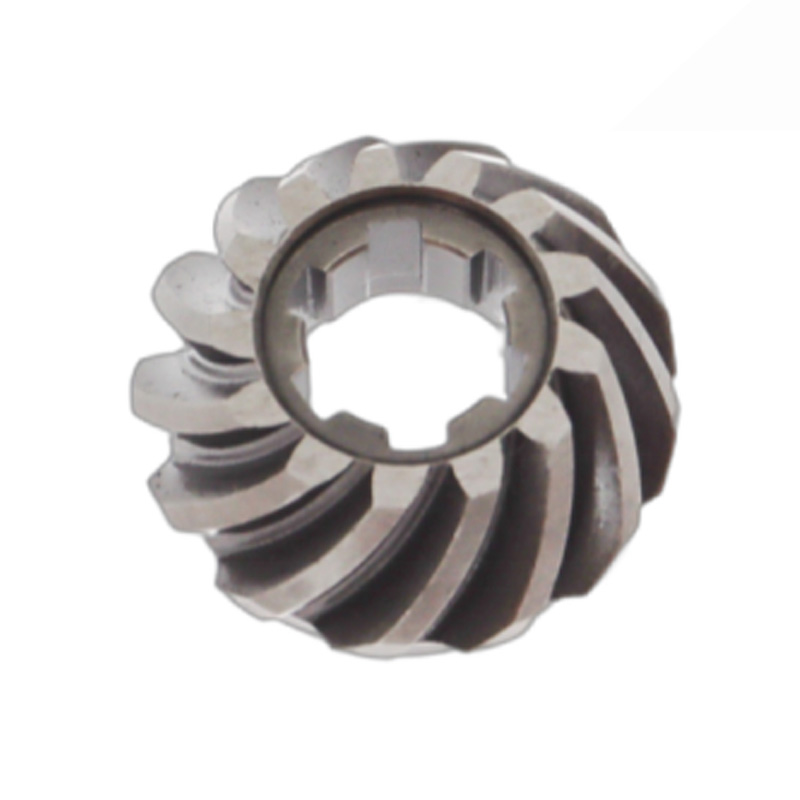
Gear profile shift is a deliberate modification of the standard involute tooth profile by moving the cutting tool radially during gear manufacturing, creating positive, negative, or zero shift. In other words, instead of cutting teeth exactly at the standard reference position, the tool is shifted outward or inward to tune tooth thickness, tooth strength, and meshing behavior. [serpstat]
From a designer's point of view, profile shift is one of the most powerful ways to control: [lseo]
- Tooth root strength and bending safety
- Contact ratio and smoothness of operation
- Backlash for thermal expansion and assembly tolerance
- Center distance flexibility in constrained gearboxes
In marine transmissions and outboard gears, these factors directly affect durability under shock loads, acoustic comfort, and overall efficiency. [digitaldeckhand]
To work with profile shift effectively, you need to understand a few basic parameters. [serpstat]
The profile shift coefficient, commonly written as x, describes how far the cutting tool is shifted relative to the normal module. [khkgears]
- Positive profile shift ( x > 0 ): Tool moves outward, teeth become thicker at the base and narrower at the tip. [khkgears]
- Negative profile shift ( x < 0 ): Tool moves inward, teeth become thinner at the base and wider at the tip. [khkgears]
- Zero profile shift ( x = 0 ): Standard gear with unmodified reference profile. [khkgears]
The magnitude of x is usually chosen in combination for the pinion and gear so that the sum of profile shifts matches design objectives such as required center distance and desired contact ratio. [serpstat]
In standard gearing, the center distance is fixed by the module and tooth numbers. When you introduce profile shift, you gain limited freedom to adjust the center distance without changing the module or the tooth counts. [lseo]
This is particularly useful in compact marine gearboxes, where casting dimensions, bearing seats, and sealing arrangements may be frozen for manufacturing reasons and cannot easily be changed. [tiecas]
From a practical engineering perspective, positive and negative profile shifts behave very differently under load. [serpstat]
Positive profile shift is widely used on pinions and high-speed gears. Benefits include: [lseo]
- Higher tooth root strength: Thicker tooth bases reduce bending stress, which is critical for small pinions in outboard final drives. [khkgears]
- Reduced undercut in low tooth-count pinions: This is essential when you must use small pinions to keep the gear set compact. [lseo]
- Lower sliding at mesh entry, which can improve efficiency and reduce pitting risk when properly lubricated. [khkgears]
However, positive shift also reduces the tooth tip thickness if overused; in harsh marine service, a fragile tooth tip can chip during torque reversals or cavitation-related impact events. [tiecas]
Negative profile shift is often applied to the large gear in a pair to balance the total shift while achieving the desired center distance. Typical effects: [khkgears]
- Increased contact ratio, promoting smoother and quieter operation, helpful for pleasure craft that demand low noise. [khkgears]
- Thinner tooth root, which may reduce bending safety and make the gear more sensitive to misalignment. [serpstat]
- Increased sliding at mesh exit, which can elevate flank wear if lubrication is marginal. [khkgears]
In our own marine gear projects, we use negative shift conservatively, especially for gear sets that must handle frequent gear changes, trolling speeds, and shock loading from waves or debris. [tiecas]
For marine engineers and buyers, the real question is not "what is profile shift?" but "what does it do to my gearbox on the water?" [tiecas]
- Positive shift on the pinion increases root thickness and effectively raises bending strength, allowing for higher torque transmission without increasing module or face width. [lseo]
- Balanced profile shifts across the gear pair help maintain sufficient safety factors against both bending and contact fatigue under continuous heavy load, such as trawling or high-speed cruising. [lseo]
Marine users are sensitive to gear whine and vibration, especially on leisure craft and premium outboard engines. Profile shift influences: [seaitapp]
- Contact ratio: Slight negative shift on the gear and positive on the pinion can raise effective contact ratio and reduce noise. [khkgears]
- Tooth contact pattern: Proper profile shift, combined with crowning and alignment control, leads to broad, even tooth contact—key for quiet operation. [digitaldeckhand]
Profile-shifted gears can exhibit lower sliding velocities in critical zones, improving efficiency when combined with marine-grade lubricants and optimized surface finishes. Less sliding and lower friction also mean lower oil temperature rise, which is important for compact, sealed marine lower units. [digitaldeckhand]
In theory, you could compute an "ideal" profile shift based purely on formulae. In practice, experienced gear engineers combine standards, simulation, and field feedback from boat owners and OEMs. [parashifttech]
For outboard gears and marine transmissions, we begin with: [tiecas]
- Rated and peak torque
- Input and output speeds
- Required reduction ratio and tooth counts
- Available center distance in the housing
- Noise targets (workboat vs premium yacht)
- Lubrication method and oil temperature limits
We then choose: [lseo]
- Module and pressure angle (often 20° for standard involute gears)
- Tooth numbers to meet the ratio and avoid excessive undercut
- Initial guess for profile shift on pinion and gear, balancing total shift and center distance
Modern tools allow us to simulate contact patterns, bending stresses, and vibration. We adjust: [lseo]
- Positive shift on pinions to reduce undercut and raise strength
- Negative or small shifts on mating gears to tune contact ratio and noise
- Total profile shift to match the actual measured center distance of the housing
The final design is always validated by test benches and on-water trials, because real propeller loads, cavitation effects, and hull dynamics are difficult to reproduce perfectly in simulation. [parashifttech]
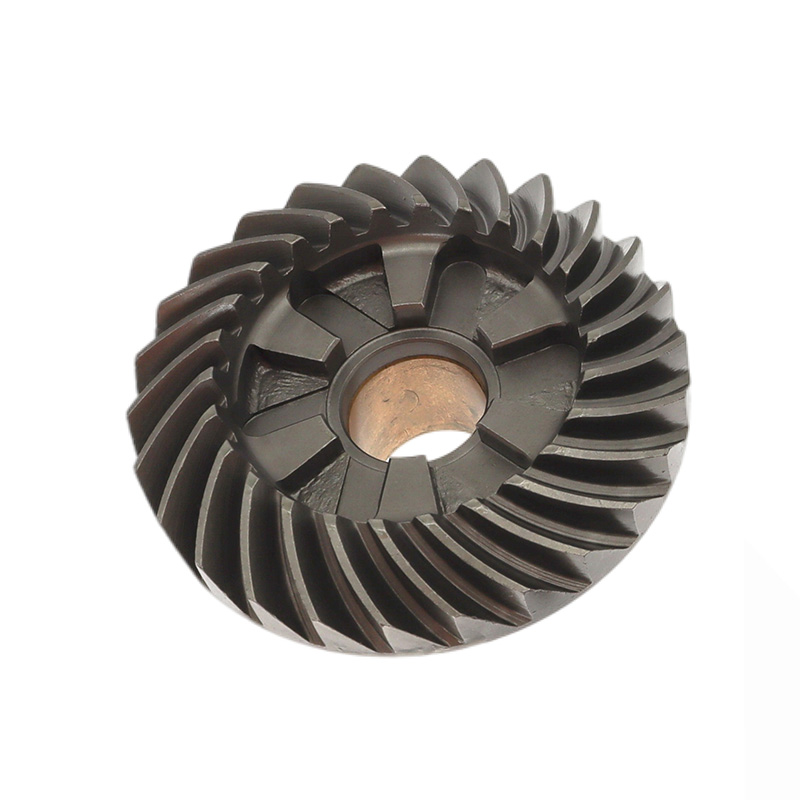
To illustrate how this works in practice, consider a typical outboard final drive using a small pinion and large bevel gear. [tiecas]
- The pinion has a low tooth count and runs at high speed, making it the critical component for bending fatigue and pitting. [lseo]
- Applying a positive profile shift to the pinion reduces undercut, thickens the root, and keeps tooth bending stresses within safe limits without increasing housing size. [lseo]
- The driven gear receives a modest negative or near-zero shift, keeping adequate root strength while increasing contact ratio for smoother, quieter operation. [khkgears]
Over the years, our marine customers have reported that gear sets optimized this way maintain quieter running characteristics even after thousands of shifting cycles and extended operation in corrosive saltwater conditions, provided that oil quality and levels are maintained. [parashifttech]
Even experienced designers can misuse profile shift, especially when trying to push compact gearboxes to carry more torque. [linkedin]
Typical pitfalls include: [serpstat]
- Over‑shifting the pinion to gain strength, which leaves a dangerously thin tooth tip vulnerable to chipping.
- Ignoring manufacturing tolerances and housing deviations; the actual center distance may differ from nominal, making the chosen profile shift less effective.
- Neglecting lubrication realities, assuming perfect oil conditions even when real boats may operate with aerated or contaminated oil.
- Copying catalog values without considering marine-specific loads like propeller impact, reverse thrust, and rapid load reversals.
Avoiding these mistakes requires not only calculation but also experience with real marine failure modes and customer feedback. [parashifttech]
While profile shift is a design parameter hidden deep in CAD models and drawings, its effects are very visible to boat owners, mechanics, and OEMs. From customer feedback across many marine programs, three themes consistently appear: [parashifttech]
- Noise and smoothness: Operators immediately notice whether a new gearbox "whines" or runs smoothly at cruising RPM.
- Durability under harsh use: Charter boats, fishing fleets, and commercial workboats demand gear sets that withstand long hours and frequent docking maneuvers.
- Serviceability and parts availability: OEMs want gear sets that maintain accuracy and surface finish long enough to align with planned maintenance intervals.
Profile shift, when done correctly, supports all three: quieter meshing, better load distribution, and longer life before wear or pitting become critical. [lseo]
In theory, profile shift is a simple numerical parameter. On the shop floor, making that parameter repeatable is an entire discipline. [serpstat]
Marine gear manufacturers must control: [digitaldeckhand]
- Tool wear on hobs and cutters, which can alter effective profile shift over time
- Heat treatment distortion, which affects tooth form and contact pattern
- Gear grinding or honing steps that may modify the intended tooth shape
That is why serious suppliers of outboard gears and marine transmissions invest in closed-loop measurement systems, where manufactured gears are tested, measured, and the data fed back into process adjustments. This is essential for keeping profile shift consistent across batches and over years of production. [digitaldeckhand]
At Ningbo Gill Transmission Parts Co., LTD., our engineering team uses gear profile shift as a key design lever for outboard gears and other marine transmission parts. Based on our experience with multiple global marine OEMs, we follow several principles: [parashifttech]
- Application‑specific tuning: Workboat, fishing, and leisure segments receive different balance of strength vs noise.
- Conservative safety margins: We avoid extreme profile shifts that may look optimal in calculations but risky under real offshore service.
- Close communication with customers: We integrate feedback from failure analyses, warranty data, and field reports into our next design iterations.
- Continuous process control: We monitor production data so that the designed profile shift is what actually ends up in the final gear set.
This combination of theory, manufacturing discipline, and on‑water feedback is what turns profile shift from an abstract parameter into a reliable advantage for marine gear users. [tiecas]
If you are an engineer working on outboard gear sets, marine reducers, or auxiliary drives, you can use the following practical checklist as a starting point. [serpstat]
1. Clarify your priorities: Rank load capacity, noise, efficiency, and size constraints.
2. Select tooth counts: Avoid very low tooth numbers unless you plan appropriate positive shift.
3. Assign total profile shift: Decide the sum of pinion and gear shift so that center distance targets are met.
4. Distribute shift between gears: Use more positive shift on pinion, smaller or negative on the gear, while checking safety factors.
5. Simulate contact patterns: Verify contact ratio, load distribution, and sensitivity to misalignment.
6. Account for manufacturing: Confirm that your suppliers can hold the tolerances required to realize your design.
7. Validate in service: Monitor noise, oil condition, and tooth surface after early operating hours.
When in doubt, working with a supplier that has marine‑specific gear design and testing experience will shorten your development time and reduce risk. [parashifttech]
If you are developing or upgrading outboard gears, marine reducers, or custom marine transmission systems, gear profile shift should not be an afterthought—it should be part of your early design discussions. [tiecas]
Our engineering team at Ningbo Gill Transmission Parts Co., LTD. can support you from concept to validation, including: [parashifttech]
- Application analysis and profile shift optimization
- Prototype manufacturing and test support
- Long‑term production with controlled, repeatable gear quality
To discuss your next marine drivetrain project or to review an existing gear set, contact our technical team and share your torque, speed, and housing constraints—we will help you turn them into a robust, optimized design. [tiecas]
Q1: Is profile shift only relevant for high‑precision industrial gears, or does it matter for marine gearboxes too?
Profile shift is highly relevant for marine gearboxes because it directly affects tooth strength, noise, and efficiency in compact housings that must carry high torque in harsh conditions. [tiecas]
Q2: Can I fix a noisy marine gearbox simply by changing profile shift?
Not always; noise is influenced by housing stiffness, alignment, surface finish, and lubrication, but carefully tuned profile shift can significantly reduce gear whine when combined with good manufacturing and assembly practices. [seaitapp]
Q3: Does increasing positive profile shift always make the gear stronger?
Positive shift improves root strength up to a point, but excessive shift can thin the tooth tip and increase sensitivity to impact and misalignment, especially in high‑load marine drives. [serpstat]
Q4: How does profile shift interact with surface treatments and coatings in marine gears?
Profile shift defines the macro tooth geometry, while surface treatments and coatings manage wear, corrosion, and scuffing; both must be coordinated to ensure the load is carried safely by the treated surfaces. [digitaldeckhand]
Q5: What information should I provide my supplier to get profile shift right?
Share detailed torque and speed profiles, target center distances, space constraints, noise expectations, lubrication details, and any field failure history so your supplier can select profile shift values aligned with real operating conditions. [parashifttech]
1. KHK Gears – "Gear Profile Shift" (original concept reference for standard involute gear theory and profile shift basics). [https://khkgears.net/new/gear_knowledge/abcs_of_gears-b/gear_profile_shift.html] [khkgears]
2. Tiecas – "A Guide to Writing Industrial Blogs | Tips for Manufacturing Content Marketing" (guidance on industrial audience needs and content depth). [https://www.tiecas.com/guide-to-writing-industrial-blogs/] [tiecas]
3. Serpstat – "Article Rewriting: Guide To Boost Your Website Ranking" (best practices for deep rewriting and SEO content improvement). [https://serpstat.com/blog/how-to-rewrite-an-article/] [serpstat]
4. Parashift – "Stand Out in Manufacturing SEO with E-E-A-T" (E‑E‑A‑T strategies for manufacturing companies and use of case studies and expert experience). [https://www.parashifttech.com/blog/stand-out-in-manufacturing-seo-using-e-e-a-t-to-build-real-online-trust-and-growth] [parashifttech]
5. Digital Deckhand – "Technical SEO for Marine Websites" (guidance on technical SEO, crawlability, and marine‑specific website optimization). [https://digitaldeckhand.com/technical-seo-for-marine-websites/] [digitaldeckhand]
6. Sea It App – "Top SEO Strategies for Boat Manufacturers" (recommendations on headings, content quality, and marine SEO context). [https://seaitapp.com/from-leads-to-loyal-customers-building-a-customer-retention-strategy-for-boat-dealers/] [seaitapp]
7. LSEO – "Generative Engine Optimization (GEO) for Manufacturing & Industrial" (guidance on crafting context‑rich, comprehensive content for manufacturing). [https://lseo.com/generative-engine-optimization/generative-engine-optimization-geo-for-manufacturing-industrial/] [lseo]
8. LinkedIn – "Can Rewriting Tools Boost Your Google Rankings?" (advice on fact‑checking, heading structures, and natural SEO optimization). [https://www.linkedin.com/pulse/can-rewriting-tools-help-you-rank-higher-google-lets-find-jahan-bgurc] [linkedin]


