


close
Choose Your Site
Global
Social Media
Views: 222 Author: Gill Transmission Publish Time: 2026-05-14 Origin: Site


As a manufacturer of outboard gears and marine power‑train components, we learned early that 0.01 mm on gear tooth thickness can be the difference between a quiet, reliable outboard and a noisy, failure‑prone drive. This guide consolidates field experience from Ningbo Gill Transmission Parts Co., LTD. with proven gear‑engineering standards to help marine engineers, OEM buyers, and service technicians specify and measure gear tooth thickness correctly for outboard applications. [khkgears]
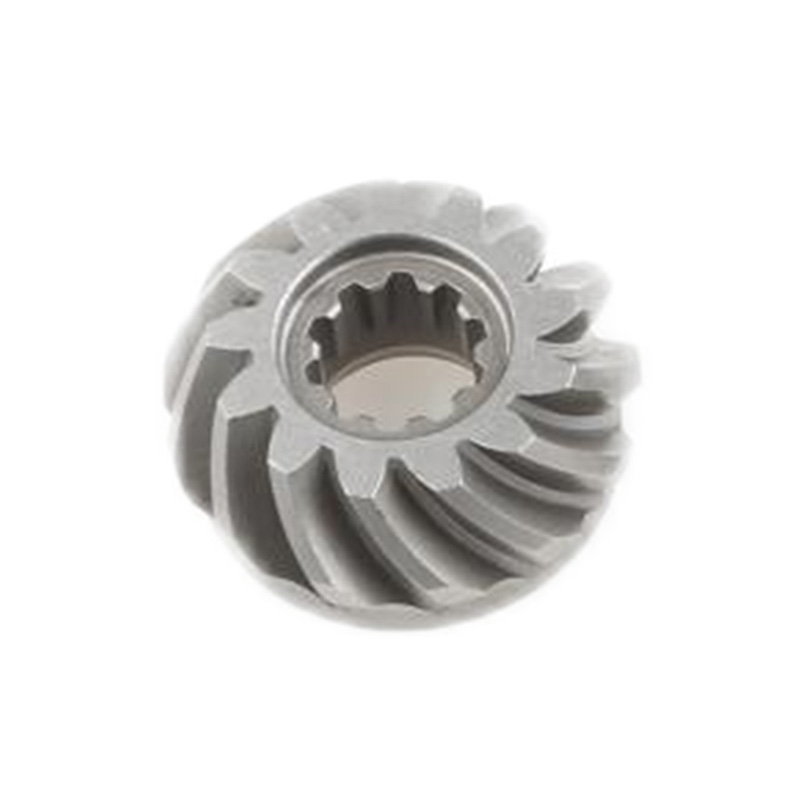
In gear engineering, tooth thickness is the thickness of a gear tooth measured along the pitch circle between its two flanks. In cylindrical gears (spur and helical), this is usually expressed as the arc length on the reference (pitch) circle between the two sides of one tooth profile. [gearx.com]
For standard gears without profile shift, the transverse tooth thickness is nominally equal to the tooth space width on the reference circle, giving a 50/50 split between tooth and space before backlash is introduced. In outboard gears, tooth thickness is deliberately adjusted to achieve the right backlash in oil‑lubricated, high‑speed, high‑load conditions. [groschopp]
Outboard gears work in a harsh combination of high torque, shock loads, and continuous splash lubrication inside the gearcase. Incorrect tooth thickness directly affects:
- Backlash and noise: Too thick teeth reduce backlash, leading to whine, rattle, and accelerated surface pitting. [gearsolutions]
- Load distribution: Uneven or incorrect thickness causes poor load sharing and localized stress, especially in spiral bevel and helical outboard gears. [ftp.demec.ufpr]
- Efficiency and heat: Excessively tight mesh increases friction and oil temperature, which is critical in compact outboard gearcases.
- Durability in saltwater: Mis‑meshed gears can break through the oil film, accelerate wear, and expose surfaces to corrosive attack.
In our production and failure‑analysis work for marine drivetrains, we see that properly controlled tooth thickness and backlash are the most cost‑effective levers to reduce NVH (noise, vibration, harshness) and extend service life.
Transverse tooth thickness is the arc length on the reference circle between the two flanks of a tooth, measured in the gear's transverse plane. For standard external gears, this value is equal to the tooth space width before backlash and profile shift are considered. [gearx.com]
Normal tooth thickness is the thickness of the tooth measured along the direction normal to the tooth surface in the normal plane. In helical outboard gears, normal tooth thickness is often used because the gear is cut with a specific helix angle, and inspection is performed in the normal plane. [groschopp]
Chordal tooth thickness expresses the tooth thickness as a straight line (chord) between two symmetric points on the tooth measured at a specified reference radius. This is used with tooth calipers and is still common in workshop inspection when pitch‑circle measurements are not directly practical. [khkgears]
Backlash is the free rotational clearance between mating gear teeth at the pitch circle. To achieve a target backlash, you must control both the theoretical nominal tooth thickness and the actual machined tooth thickness. [gearsolutions]
Key relationships:
- Increasing tooth thickness on the pinion or gear reduces backlash.
- Reducing tooth thickness increases backlash and can mask machining or alignment errors, but at the cost of impact loading and noise.
- Profile shift and helix angle changes also modify effective tooth thickness at the reference circle. [scribd]
Marine gear designers set backlash windows based on operating temperature, lubrication viscosity, and casing stiffness, then work backward to define allowable tooth thickness tolerances. Outboard gears, running in oil at high speed, typically use tighter and more precisely controlled backlash than dry or low‑speed industrial gears.
For both marine and general industrial gears, three technical families of measurement methods are standard. [khkgears]
In the chordal method:
1. You set a tooth caliper to a defined chordal height from the tip diameter down to the reference circle. [khkgears]
2. You measure the linear distance between two symmetric points on the tooth flanks at that height (the chordal thickness). [khkgears]
This method is robust for spur and helical gears when specialized base‑tangent or span instruments are not available. In our marine gear workshop, chordal measurement is used for quick in‑process checks of outboard pinions and driven gears before final grinding. [ftp.demec.ufpr]
Span measurement (also called base tangent) uses a special micrometer to measure a distance over several adjacent teeth. [akbis.gantep.edu]
- The span length is the base tangent over \(k\) teeth, combining base tooth thickness and base pitch over those teeth. [akbis.gantep.edu]
- Measuring across multiple teeth averages out local pitch errors and gives a good indication of effective tooth thickness and cumulative pitch.
For helical outboard gears, span measurement can be taken in the normal or transverse plane depending on how the gear is cut, with minimum face‑width requirements to obtain a valid measurement. [gearsolutions]
In the over‑pins or over‑balls method:
- Hardened pins or balls are placed in opposite tooth spaces, and the distance over these elements is measured. [elearn.psgcas.ac]
- This is especially useful for small gears or internal ring gears where direct span measurement is difficult. [gearsolutions]
The method is widely used in precision gear manufacturing because it provides high repeatability and is well suited to CNC inspection routines. For compact outboard gears, over‑pins measurement is valuable for verifying tooth thickness on small‑diameter pinions. [elearn.psgcas.ac]
From a marine gearbox production standpoint, a practical inspection workflow combines design data, CMM or dedicated gear testers, and workshop gauges. [cmgear]
1. Confirm design specification
- Retrieve nominal tooth thickness, allowed backlash, pressure angle, and helix angle from the gear drawing or CAD model. [khkgears]
2. Select measurement method
- Use span or over‑pins measurement on finished hardened gears; use chordal checks during soft machining. [khkgears]
3. Prepare and clean
- Degrease the gear, remove burrs or corrosion, and stabilize at measurement temperature to avoid thermal distortion. [cmgear]
4. Measure according to method
- Apply the correct base‑tangent or over‑pins formula for spur or helical gears and read the micrometer value. [khkgears]
5. Compare to theoretical values
- Compute the theoretical span or over‑pins measurement using manufacturer tables or gear design software and compare to measured values. [gearsolutions]
6. Evaluate backlash impact
- Translate tooth‑thickness deviation into backlash change and check against the specified backlash range for the outboard gear set. [gearsolutions]
7. Decide corrective action
- If thickness is out of tolerance, adjust grinding, modify profile shift compensation, or re‑work the part depending on deviation and production stage.
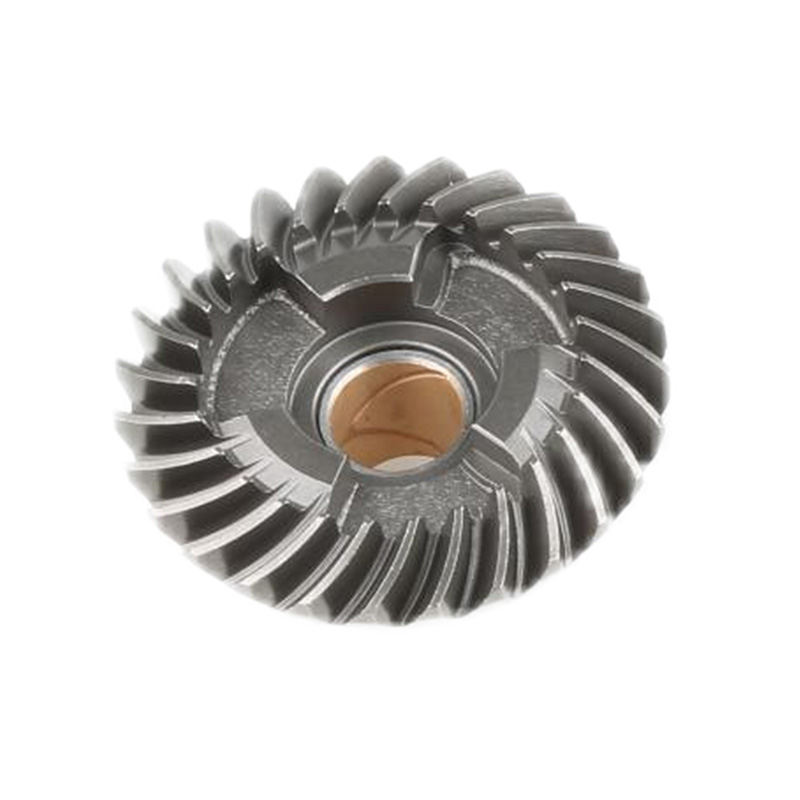
While the above methods apply to most industrial gears, outboard gears face additional constraints that influence how strictly we control tooth thickness:
- Compact gearcases: Limited space means smaller center distance and more aggressive gear geometry, increasing sensitivity to tooth‑thickness error.
- Variable load cycles: Rapid throttle changes and gear shifting introduce impact loads that penalize both too little and too much backlash.
- Lubrication and cooling: Oil viscosity and temperature swings in marine gearcases require a precise balance between clearance and oil film thickness.
Our experience shows that outboard gear sets that are marginally within general industry tooth‑thickness tolerance may still fail in marine use if tooth thickness and resulting backlash are not tuned specifically for outboard operating envelopes.
In a recent project for a commercial fishing fleet, we analyzed premature pitting on a batch of spiral bevel outboard gears. The gears were produced to a generic industrial tolerance for tooth thickness, but field failures occurred well before expected life.
Detailed base‑tangent and over‑pins checks showed the effective tooth thickness on the pinion side was consistently 5–8 microns above the nominal value, reducing backlash at operating temperature. After adjusting the grinding program to bring tooth thickness closer to the lower half of the tolerance band, measured backlash increased slightly, but noise levels dropped and pitting disappeared in follow‑up sea trials. [akbis.gantep.edu]
This case illustrates that tooth thickness is not just a drawing number – it is a tuning parameter that must be validated in the real, wet, vibrating environment your outboard gear will see.
Profile shift (addendum modification) and tooth thickness should be treated as a joint design space, not independent variables. [scribd]
- Positive profile shift on the pinion can improve bending strength and reduce undercut for small tooth counts but affects transverse tooth thickness at the reference circle. [gearx.com]
- Negative shift can help manage contact ratios and backlash, but if misapplied, can thin teeth excessively and accelerate wear.
Marine designers often use asymmetric profile shifts between pinion and gear to achieve acceptable tooth thickness, contact ratio, and backlash while staying within the tight packaging of an outboard gearcase. Correct calculation and inspection of tooth thickness are essential to validate these design decisions at production scale. [khkgears]
| Measurement method | What it measures | Typical use in outboard gears | Advantages | Limitations |
|---|---|---|---|---|
| Chordal tooth thickness | Linear thickness at a specified chord height on a tooth khkgears | In‑process checks during turning/hobbing of pinions and gears | Simple tools, quick checks | Less averaging of errors, depends strongly on setup |
| Span (base tangent) | Distance over several teeth in the base plane gearsolutions | Final inspection of spur/helical gears with sufficient face width | Averages pitch error, good correlation to effective thickness | Requires special micrometer, not ideal for very narrow gears |
| Over‑pins/balls | Distance over pins or balls placed in tooth spaces gearsolutions | Small‑diameter outboard pinions, internal gears, and hardened sets | High precision, works on hardened parts | Requires correct pin size and calculation, more time‑consuming |
From an outboard‑focused manufacturing perspective, we implement a closed loop between design, machining, and inspection:
- Design‑driven tolerances: Our gear engineers define tooth thickness and backlash targets based on gear‑case constraints, duty cycle, and customer NVH requirements.
- Process‑capable machining: Hobbing, shaping, and grinding programs are validated with sample runs and tooth‑thickness corrections before serial production.
- Multi‑level inspection: Operators use chordal or span gauges in line, while final inspection relies on dedicated gear testers or CMM‑based tooth‑profile measurement. [cmgear]
- Feedback from the field: When we receive used or failed outboard gears, we re‑measure tooth thickness and correlate deviations with observed wear patterns to refine future designs.
For OEM customers, we can provide not only gear drawings, but also recommended inspection procedures and acceptance criteria for tooth thickness so that incoming inspection and our production use the same technical language.
You should involve a specialized outboard gear manufacturer like us early in your drivetrain design if:
- You are increasing engine power or torque without changing gearcase dimensions.
- You plan to change oil type, viscosity, or operating temperature range.
- You are switching from spur to helical or bevel gear sets.
- You have recurring issues with gear noise, pitting, tooth breakage, or micro‑pitting in sea trials.
A short technical review of your current tooth‑thickness specifications, backlash targets, and measurement methods can prevent costly re‑work and warranty claims later.
If you are developing or troubleshooting marine outboard gears, precise control of tooth thickness and backlash is one of the fastest ways to improve reliability, NVH, and service life. Our engineering team at Ningbo Gill Transmission Parts Co., LTD. combines hands‑on marine field experience with standardized gear‑measurement methods to help you choose, measure, and validate the right tooth thickness for your application.
Contact us with your current drawings, operating requirements, and any field issues, and we will review your tooth‑thickness strategy and propose manufacturable, inspection‑ready improvements tailored to marine outboard gearboxes.
1. What is the difference between transverse and normal tooth thickness?
Transverse tooth thickness is measured on the reference circle in the transverse plane, while normal tooth thickness is measured in the normal plane perpendicular to the tooth surface, which is particularly relevant for helical gears. [groschopp]
2. Which tooth‑thickness measurement method is best for outboard gears?
For production‑grade outboard gears, span or over‑pins measurement on finished parts is preferred, with chordal checks used during soft machining to monitor process drift. [khkgears]
3. How does tooth‑thickness tolerance affect backlash?
A thicker tooth reduces backlash, while a thinner tooth increases it; deviations from nominal tooth thickness directly shift backlash relative to the design target. [gearsolutions]
4. Can I use generic industrial tolerances for marine outboard gears?
Generic tolerances may work on test benches but often underperform in real marine environments, where load cycles, temperature, and lubrication conditions demand tighter, application‑specific control of tooth thickness and backlash.
5. How often should tooth thickness be checked in production?
Best practice is to verify tooth thickness at first article inspection, after any significant process change, and periodically during mass production, using a combination of quick in‑process gauges and detailed gear‑tester or CMM data. [cmgear]
1. Google Search Central – Creating helpful, reliable, people‑first content (E‑E‑A‑T guidance). [https://developers.google.com/search/docs/fundamentals/creating-helpful-content] [developers.google]
2. KHK Gears – Determining Tooth Thickness of Various Gear Types (Part II). [https://khkgears.us/gear-news/determining-tooth-thickness-of-various-gear-types-part-ii] [khkgears]
3. KHK Gears – Determining Tooth Thickness of Various Gear Types. [https://khkgears.us/gear-news/determining-tooth-thickness-of-various-gear-types] [khkgears]
4. GearX – Tooth Thickness and Slot Width. [https://gearx.com.cn/en/technology/107-tooth-thickness-and-slot-width] [gearx.com]
5. Groschopp – Gear Terminology, Knowing Your Teeth. [https://www.groschopp.com/knowing-teeth-gear-terminology] [groschopp]
6. Gear Solutions – Determining Tooth Thickness of Various Gear Types (Part II, span). [https://gearsolutions.com/departments/tooth-tips/determining-tooth-thickness-of-various-gear-types-part-ii] [gearsolutions]
7. Gear Solutions – Determining Tooth Thickness of Various Gear Types (Part III, over‑pins). [https://gearsolutions.com/departments/tooth-tips/determining-tooth-thickness-of-various-gear-types-part-iii] [gearsolutions]
8. CM GEAR – Gear Tooth Profile Inspection: Methods and Best Practices. [https://www.cmgear.us/feeds/blog/gear-tooth-profile-inspection] [cmgear]
9. AKBIS – Measurement of Gears (Base Tangent Method). [http://elearn.psgcas.ac.in/nptel/courses/video/112106179/lec26.pdf] [elearn.psgcas.ac]
10. Gear equations and terminology reference. [https://www.scribd.com/document/488378100/Gear-Equations] [scribd]


