


close
Choose Your Site
Global
Social Media
Views: 294 Author: Gill Transmission Parts Publish Time: 2026-11-07 Origin: Site


Content Menu
● What Are Genuine Marine Drive Shafts and Cross-Reference Replacement Shafts?
>> Genuine Marine Drive Shafts: Parts Supplied Through the Original Brand
>> Cross-Reference Replacement Shafts: Alternatives Matched to Original Part Numbers
>> First Identify Which Marine Shaft You Need
● Genuine vs Cross-Reference Marine Drive Shafts: Comparison Table
● Compatibility: Why a Matching Part Number Is Not Enough
>> Check the Engine Identity and Installed Assembly
>> Compare Critical Interfaces, Not Just Overall Length
● Materials, Corrosion Resistance, and Service Life
>> "Stainless Steel" Is Not a Complete Specification
>> Do Not Assume Either Category Always Lasts Longer
● Quality Assurance: What Buyers Should Request
>> Build a Shaft-Specific Inspection Package
>> Agree on Limits Before Shipment
● Price, Availability, and Total Installed Cost
>> Compare the Complete Repair Cost
>> Treat Availability as an Application-Specific Question
● Warranty: Compare Written Coverage, Not Assumptions
● A Seven-Step Cross-Reference Shaft Verification Process
>> 1. Establish the Vessel's Actual Configuration
>> 2. Confirm the Original Part Reference
>> 3. Collect Drawings and Measurements
>> 4. Check Material and Treatment Requirements
>> 5. Review Inspection Evidence
>> 6. Confirm Installation Requirements
>> 7. Document Acceptance and Support
● Expert Insight: Diagnose the Failure Before Buying Again
● Which Marine Drive Shaft Should You Choose?
>> Are Cross-Reference Replacement Shafts the Same as Genuine Shafts?
>> Can I Select a Marine Drive Shaft Using Horsepower Alone?
>> Are Genuine Marine Drive Shafts Always Better?
>> Does a Matching Overall Length Prove Compatibility?
>> Will a Replacement Shaft Solve Vibration?
>> What Should I Send When Requesting a Replacement Shaft Quotation?
Choosing between genuine marine drive shafts and cross-reference replacement shafts is not simply a question of brand versus price. For boat owners, repair yards, and marine parts distributors, the right decision depends on verified compatibility, material suitability, manufacturing consistency, warranty terms, and the cost of getting a vessel back into service.
At Ningbo Gill Transmission Parts Co., LTD., our 29 years of experience in marine component research, development, production, and sales shape a practical purchasing principle: verification matters more than a label alone.
Genuine parts offer the original brand's supply and support framework. Cross-reference replacements offer another sourcing route, but their suitability must be demonstrated—not assumed from a matching catalog number.
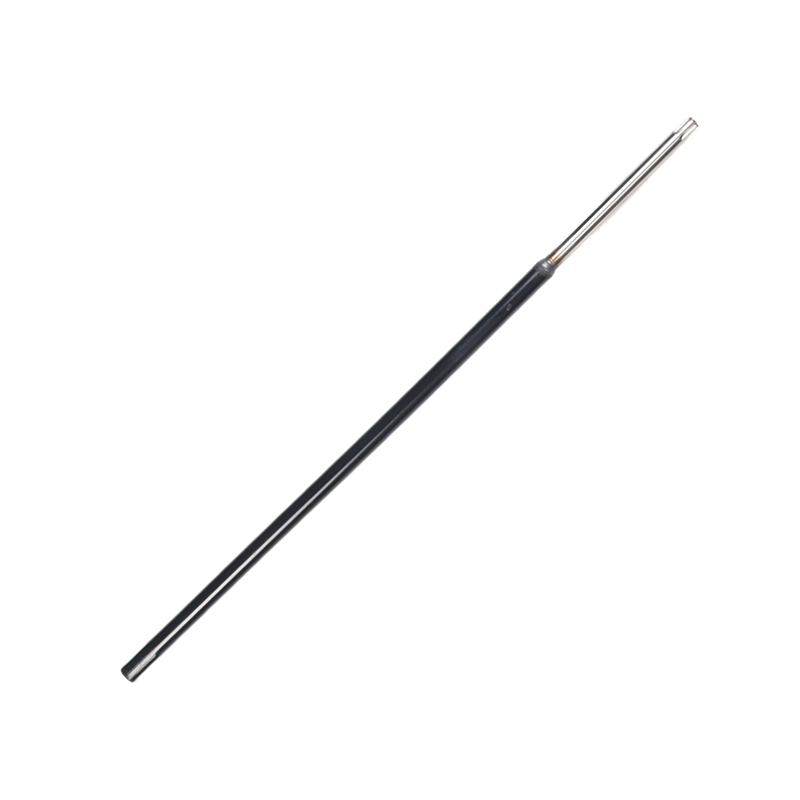
A genuine marine drive shaft is sold under the original equipment brand and specified for particular applications. Buyers typically identify it through the brand's parts catalog, engine identification details, and authorized supply channels.
"Genuine" describes the part's brand and supply status. It does not necessarily mean the engine manufacturer physically machines every shaft itself.
The main advantage is an established route for identifying the specified component, checking part-number updates, and obtaining product support.
However, genuine status does not eliminate selection errors. A shaft ordered for the wrong serial-number range or gearcase configuration can still be unsuitable.
A cross-reference replacement shaft is an independently supplied component listed as an alternative to an original part number or application.
The cross-reference helps buyers locate a candidate replacement. It does not, by itself, prove identical materials, dimensions, heat treatment, durability, or warranty coverage.
A useful distinction is:
- A catalog match identifies a potential application.
- Technical documentation establishes the proposed specification.
- Inspection confirms conformity to the agreed requirements.
An aftermarket replacement is not inherently counterfeit. It becomes misleading when it is falsely presented as a genuine branded component.
"Marine drive shaft" can describe different components:
- An outboard vertical drive shaft transmitting power toward the lower-unit gearing.
- A sterndrive shaft operating within a particular drive assembly.
- An inboard propeller shaft connecting the transmission arrangement to the propeller.
These components have different interfaces and operating requirements. Inboard shaft material guidance should not automatically be applied to an outboard shaft with hardened bearing journals, splines, or a specialized construction.
| Purchasing factor | Genuine marine drive shafts | Cross-reference replacement shafts |
|---|---|---|
| Identification | Original-brand catalog and application information | Supplier cross-reference requiring application verification |
| Fitment confidence | Strong when correctly selected for the actual assembly | Depends on mapping accuracy and dimensional validation |
| Material specification | Established through the brand's specified component | Must be confirmed with the replacement supplier |
| Quality evidence | Brand supply controls and supporting documentation | Supplier-specific inspection and traceability records |
| Purchase price | Obtain an application-specific quotation | May offer savings; compare equivalent specifications |
| Availability | Depends on brand inventory and distribution | Provides another sourcing option; stock varies |
| Warranty | Subject to brand, region, application, and purchase conditions | Subject to the replacement supplier's written terms |
| Best purchasing approach | Verify identity, authenticity, and application | Verify identity, specification, conformity, and support |
Neither category guarantees the lowest installed cost. The meaningful comparison is between correctly specified, documented products available for your actual repair.
Start with the complete engine identification, not horsepower alone.
Yamaha explains that its Primary Identification Number can identify model type, drive shaft length, and production number. Mercury also provides a dedicated parts-finding system.
However, the installed assembly deserves separate attention. A previously modified engine may have a different lower unit or midsection from its original configuration.
For a marine drive shaft replacement, record:
1. Engine brand, model, and complete serial or identification number.
2. Existing shaft part number, if readable.
3. Gearcase or drive assembly identification.
4. Relevant shaft-length configuration.
5. Previous modifications or replacement assemblies.
Ask the supplier to confirm compatibility against this complete information.
Two shafts can look similar while differing at a functional interface.
Depending on the design, compare:
- Overall length and measurement reference points.
- Spline count, profile, and engagement length.
- Bearing-journal diameters and positions.
- Seal-running surfaces.
- Threads, shoulders, grooves, and retention features.
- Coupling, taper, or keyway geometry where applicable.
Photographs help identify obvious differences, but they cannot establish dimensional conformity. Use controlled drawings and appropriate measurements for critical features.
Marine shaft materials must balance strength, fatigue resistance, corrosion performance, and manufacturing requirements.
Published AQUAMET information illustrates why alloy identity matters. AQUAMET 17 is a precipitation-hardening martensitic stainless steel, while AQUAMET 22 is a high-alloy austenitic stainless steel described as resisting pitting and crevice corrosion.
These examples concern marine shafting materials, particularly relevant to propeller-shaft selection. They are not universal substitutes for every outboard or sterndrive shaft specification.
When evaluating replacement marine drive shafts, request:
- Material designation and applicable specification.
- Heat-treatment condition where relevant.
- Hardness requirements for functional surfaces.
- Material traceability appropriate to the purchase.
- Any specified corrosion-protection treatment.
A polished finish cannot establish alloy identity or internal material condition.
A universal claim that genuine shafts always outlast replacements—or that replacements deliver identical service life—requires evidence that is rarely available across all applications.
Service life depends on more than the sales category. Relevant factors include loading, alignment, bearing condition, lubrication, corrosion exposure, manufacturing quality, and installation.
For a meaningful durability comparison, ask what testing supports the claim:
- Which operating conditions were represented?
- What loads and speeds were used?
- How many samples were evaluated?
- What constituted a failure?
Without those details, "long-lasting" remains a marketing description rather than a measurable comparison.
From a manufacturing perspective, the most useful quality discussion concerns the features that control function.
Depending on the shaft design, an inspection package may include:
| Record | What it helps establish |
|---|---|
| Dimensional inspection report | Conformity of critical interfaces |
| Runout inspection | Relationship between specified rotational features |
| Surface-finish inspection | Suitability of designated bearing or seal surfaces |
| Hardness results | Conformity with specified treatment requirements |
| Material documentation | Declared material identity and traceability |
| Applicable defect inspection | Results under an agreed inspection method |
Not every shaft requires the same inspection plan. Specify the methods, acceptance limits, and sampling requirements before placing the order.
"Strict quality control" is too vague for a technical purchase.
A better purchasing requirement identifies the drawing revision, critical dimensions, inspection frequency, traceability expectations, and treatment of nonconforming parts.
Avoid applying one universal runout or alignment tolerance to all marine shafts. The relevant service documentation, approved drawing, or engineering specification should control acceptance.
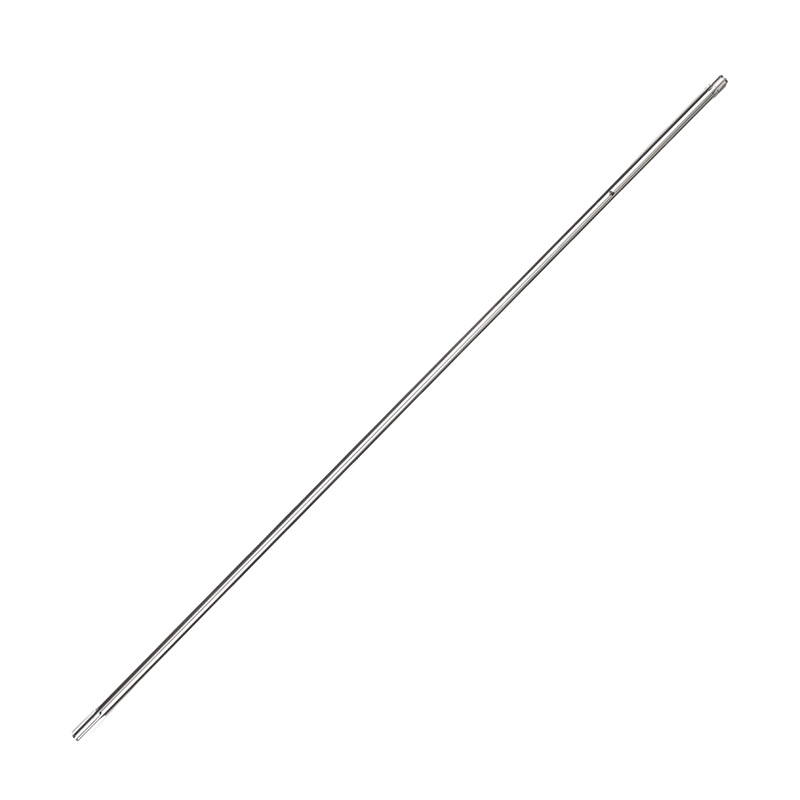
The shaft price is only one part of the purchasing decision.
A practical comparison includes:
> Total installed cost = shaft price + freight and duties + installation consumables + labor + associated repairs + downtime.
For illustration—not as market pricing—suppose a genuine shaft costs $600 and a replacement costs $420. The initial saving is $180. If an incorrect replacement requires $300 in additional labor, that saving disappears before other expenses.
The lesson is not that lower-priced replacements are poor choices. It is that fitment verification has financial value.
Genuine parts are not always slower to obtain, and replacements are not always immediately available.
Request written confirmation of:
- Actual stock status.
- Dispatch timing.
- Manufacturing lead time, if applicable.
- Inspection timing.
- Shipping arrangements.
- Return conditions for an incompatible part.
A confirmed, technically suitable shaft may be worth more than a cheaper quotation with an uncertain delivery date.
Parts warranties differ by brand, market, use, and purchasing channel.
For example, Yamaha's published information distinguishes pleasure-use and commercial-use parts coverage and states that its individual parts warranty does not cover costs beyond repairing or replacing the part. Mercury likewise publishes conditions for genuine Mercury and Quicksilver parts coverage.
These examples show why "under warranty" does not necessarily mean installation labor, troubleshooting, or vessel downtime is covered.
For either sourcing route, establish:
- Warranty duration and starting date.
- Recreational or commercial-use conditions.
- Authorized-channel requirements, where applicable.
- Installation and maintenance obligations.
- Labor, freight, and consequential-loss exclusions.
- Claim evidence and return procedures.
Do not assume that fitting a replacement automatically cancels every warranty, or that it cannot affect a claim. Check the applicable policy and obtain clarification for the intended repair.
Record complete identification details and check for modified assemblies.
Identify the specified part and any relevant supersession. Ask whether the newer reference is directly interchangeable or requires associated components.
Use a controlled drawing where available. An old shaft can provide useful information, but wear or previous modification may make it an unreliable master sample.
Confirm that the offered construction meets the application's requirements. Do not approve an unspecified "marine-grade" material.
Request records tied to the offered product or production batch, rather than unrelated sample reports.
Review bearings, seals, couplings, and other relevant components. For inboard systems, investigate alignment rather than assuming shaft replacement alone will remove vibration.
Retain the quotation, compatibility confirmation, drawing revision, inspection records, installation documentation, and warranty terms.
This process makes cross-reference purchasing more controlled and helps resolve discrepancies before the vessel returns to service.
A replacement purchase should begin with the question: why did the original shaft fail?
Consider an illustrative inboard repair—not a documented customer case. A boat develops vibration, and inspection reveals shaft damage. Installing a new shaft without investigating bearing alignment may leave the underlying problem unresolved.
Marine alignment guidance emphasizes that bearings must support the shaft along the correct centerline. Incorrect positioning can therefore undermine an otherwise suitable replacement.
Before ordering, have a qualified technician consider impact damage, corrosion, bearing condition, alignment, and associated-component wear.
This diagnostic step benefits both genuine and cross-reference purchases. Neither label compensates for an unresolved system problem.
Choose a genuine marine drive shaft when the original-brand support route, specified application coverage, or applicable warranty requirements are central to the decision.
Consider a cross-reference replacement shaft when compatibility is demonstrable, the supplier can support the specification, and the commercial terms improve the overall repair outcome.
For distributors, consistency across repeated orders also matters. Evaluate drawing control, batch identification, packaging protection, and how the supplier manages specification changes.
At Ningbo Gill Transmission Parts Co., LTD., we recommend starting with the application rather than the quotation.
Send our team your engine or drive identification, original part number, shaft photographs, available drawings, and required quantity. Request an application review and quotation, including confirmation of the proposed specification, available inspection documentation, lead time, and warranty terms before ordering.
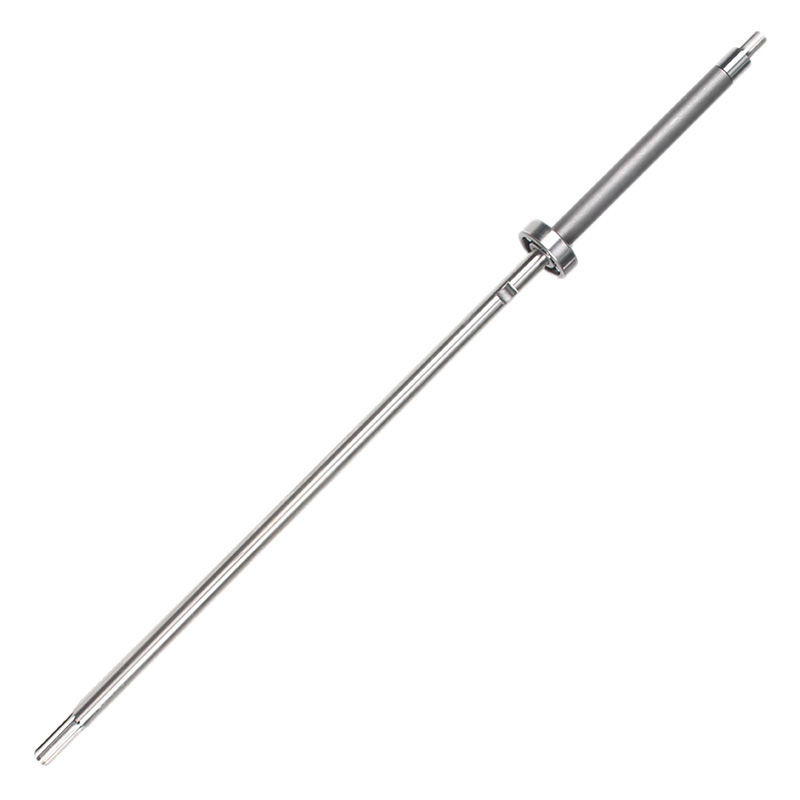
No. They are independently supplied alternatives. A cross-reference indicates a proposed application match, not original-brand status or automatic technical equivalence.
No. Model, identification number, installed drive configuration, shaft interfaces, and relevant part-number updates may all affect compatibility.
Not universally. Genuine supply offers an established brand-support framework. A replacement should be judged on verified suitability, manufacturing conformity, documentation, and support.
No. Splines, journals, shoulders, retention features, and other interfaces may differ even when overall length matches.
Not necessarily. Alignment, bearings, couplings, propeller condition, or other drivetrain issues may contribute. Diagnose the cause before replacing parts.
Provide the complete engine identification, installed assembly details, original part number, photographs, available drawings, quantity, operating application, and delivery requirements.
1. Mercury Marine. "Parts Finder." Original-brand resource for identifying application-specific replacement parts. [mercurymarine]
2. Yamaha Outboards. "FAQs." Includes engine identification information and conditions for individual genuine parts warranties. [yamahaoutboards]
3. Marine Machining & Manufacturing. "AQUAMET® 17." Material description, heat-treatment characteristics, and published mechanical properties. [aquamet]
4. Marine Machining & Manufacturing. "AQUAMET® 22." Material characteristics and discussion of pitting and crevice-corrosion resistance. [aquamet]
5. Steve D'Antonio Marine Consulting. "The Ins and Outs of Shaft Alignment, Part II." Technical discussion of shaft centerlines, bearing positioning, and alignment. [stevedmarineconsulting]
6. Mercury Marine. "Service & Support FAQs." Published information on genuine parts coverage and warranty limitations. [mercurymarine]


