
Views: 222 Author: Gill Transmission Parts Publish Time: 2026-06-19 Origin: Site


Content Menu
● What Do We Mean by "Hardened" vs "Standard" Marine Gears?
● Why Hardened Gears Matter Specifically in Outboard Gearcases
● Technical Comparison: Hardened vs Standard Gears in Marine Use
● How Hardened Gears Are Made – And Why It Matters
● Real-World Use Cases: When Hardened Gears Pay Off
● The Cost Question: Is the Extra Price Justified?
● Practical Checklist: Should *You* Choose Hardened or Standard Gears?
>> Choose Hardened Marine Gears If:
>> Standard Gears May Be Enough If:
● Expert Tips on Specifying Hardened Outboard Gears
● Maintenance Best Practices to Protect Any Gear Set
● Frequently Overlooked Factor: Corrosion vs Hardness
● How to Calculate the Real ROI of Hardened Marine Gears
● When Standard Gears Are Still a Smart Business Choice
● Actionable Next Step: Choose the Right Gear Strategy for Your Fleet
● FAQs About Hardened vs Standard Marine Gears
A hardened marine gear set is usually worth the extra cost for commercial users, heavy-duty applications, and boaters who keep their outboard engines for many seasons, while light recreational users may be fine with standard gears if they accept more frequent maintenance and earlier replacement. The real ROI comes from reduced wear, fewer failures offshore, and lower lifetime cost per operating hour, not just from the longer gear life itself. [eureka.patsnap]
As someone who has been helping OEMs and boat owners optimize drivetrain reliability for years, I've seen both hardened and standard marine gears fail—and succeed—in the real world. The pattern is clear: when torque, hours and seawater exposure go up, hardened gears stop being a luxury and start becoming cheap insurance. [ysamphy]
In this guide, I'll walk you through how hardened gears are made, how they actually behave in an outboard gearbox, where the extra cost pays off, and when a standard set is still a rational choice. I'll also share practical selection and maintenance checklists you can apply immediately, whether you're specifying gears as an OEM or choosing replacement parts as a serious boater. [amironic.co]
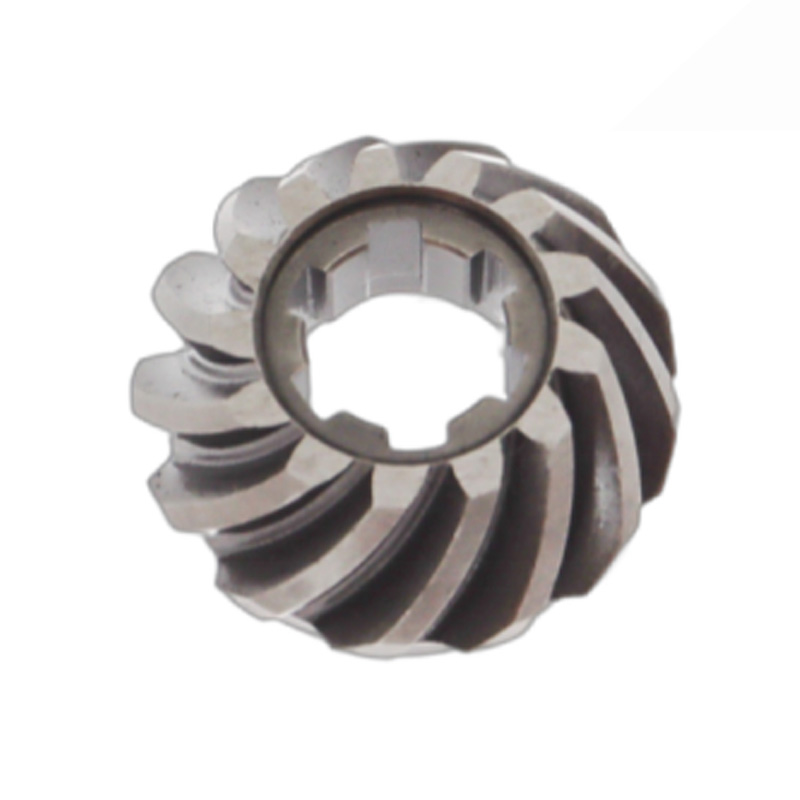
In marine drivetrains, "hardened gears" usually means gears made from alloy steel and then heat treated (case hardening, carburizing, nitriding) to significantly increase surface hardness and fatigue strength. "Standard gears" are typically through-hardened carbon or alloy steels, or even lower-grade steels, treated to basic strength levels but not optimized for maximum surface hardness and wear resistance. [eureka.patsnap]
From an engineering perspective, hardened gears are designed to handle:
- Higher tooth surface pressure (contact stress) before pitting starts. [amironic.co]
- Higher bending fatigue loads at the tooth root before cracking. [eureka.patsnap]
- Longer life under shock loads typical of marine starts, rapid throttle changes, and prop strikes on debris. [amironic.co]
Standard gears can work reliably in lighter-duty applications, but they reach their limits faster when operated near the torque capacity of the gearbox, in high-hour commercial cycles, or in corrosive conditions with imperfect lubrication. [ysamphy]
Outboard lower units present a tough environment for any gear set:
- High torque in a compact gearbox
- Constant exposure to seawater, humidity, and contamination
- Mixed-load cycles: idle, partial throttle, full load, rapid shifting
Industry data shows the marine supporting equipment market is growing at around 6–7% annually, driven by more powerful and efficient propulsion systems. As power density goes up, gear teeth are asked to carry more torque in the same or smaller space, which pushes standard gears closer to their stress limits. [datainsightsmarket]
In practice, that means:
- Higher risk of pitting, scuffing, and tooth spalling on standard gears under modern high‑torque outboards. [eureka.patsnap]
- More gearbox noise and backlash over time as wear accumulates. [amironic.co]
- Increased importance of hardness, surface finishing, and material choice for long-term reliability. [eureka.patsnap]
Hardened gears, if supported by proper materials (for example, hardened alloy steels and corrosion‑resistant options in seawater environments), are better aligned with these modern operating realities. [amironic.co]
Below is a simplified view of how hardened and standard gears typically compare in a marine gearbox context. [ysamphy]
| Factor | Hardened Marine Gears | Standard Gears |
|---|---|---|
| Tooth surface hardness | High for wear resistance and pitting delay. (eureka.patsnap) | Moderate, wears faster under heavy loads. (eureka.patsnap) |
| Load capacity (torque) | Higher, better for high‑power outboards. (eureka.patsnap) | Adequate for light/medium duty. (eureka.patsnap) |
| Shock load tolerance | Better resistance to impact and sudden loads. (eureka.patsnap) | More vulnerable to tooth damage. (eureka.patsnap) |
| Corrosion resistance | Depends on alloy/coatings; often combined with protective treatments. (amironic.co) | Often lower, especially in basic steels. (amironic.co) |
| Gearbox noise over time | Stays quieter longer if properly machined and aligned. (eureka.patsnap) | Noise increases faster as wear progresses. (eureka.patsnap) |
| Upfront cost | Higher due to material and heat treatment. (eureka.patsnap) | Lower initial purchase price. (eureka.patsnap) |
| Lifetime cost per operating hr | Often lower in high‑hour or commercial use. (eureka.patsnap) | Can be higher due to more frequent replacements. (eureka.patsnap) |
The takeaway: for light, low‑hour recreational use, standard gears can be acceptable; for high‑torque, high‑hour, or commercial use, hardened gears are usually the only option that makes economic sense. [marketresearchfuture]
From a materials and process standpoint, a typical hardened marine gear will go through:
1. Precision machining of the gear blank to tight tolerances.
2. Heat treatment such as carburizing, nitriding, or induction hardening to create a hard surface layer over a tougher core. [eureka.patsnap]
3. Grinding and finishing of the tooth profile to restore accuracy after heat treatment. [amironic.co]
4. Quality checks (hardness, microstructure, dimensional inspection) to verify case depth and performance. [eureka.patsnap]
Each step adds cost, but each is directly tied to:
- Better wear and pitting resistance in the gearcase.
- Lower risk of micropitting or scuffing under boundary lubrication.
- More stable tooth geometry under repeated loading, which protects the mating gear as well. [amironic.co]
For boat owners, the production details aren't just theoretical—they are the difference between a gear that holds alignment for thousands of hours versus one that gradually loses profile accuracy, increases noise, and eventually fails. [ysamphy]
Based on field data and industry observation, hardened gears are particularly valuable in the following scenarios: [marketresearchfuture]
- Commercial fishing boats and workboats
- Long daily operating hours, frequent shock loads, and high torque.
- Downtime costs (lost catch, missed contracts) dwarf the price difference in gear sets.
- High‑horsepower outboards and repowers
- Newer engines push more power through similar‑sized gearcases.
- Hardened gears help avoid early tooth wear and reduce warranty‑risk for OEMs.
- Charter and rental fleets
- Many different operators, often aggressive throttle use.
- Prioritizing predictable reliability and ease of maintenance.
- Warm saltwater and brackish environments
- Elevated corrosion risk and lubrication challenges.
- Pairing hardened gears with corrosion‑resistant materials or coatings (e.g., stainless or nickel plating, robust sealing) improves overall life. [amironic.co]
In these cases, users often report fewer unexpected gear failures and longer intervals between major lower‑unit overhauls when they switch to hardened gear sets. [ysamphy]
From an SEO perspective, many boat owners search exactly what this article asks: "Is the extra cost worth it?" The answer depends on total cost of ownership (TCO), not just the price tag of the parts. [ysamphy]
When evaluating hardened vs standard marine gears, consider:
1. Purchase price
- Hardened gear sets typically cost more because of higher‑grade materials and heat treatment. [eureka.patsnap]
2. Expected service life
- Under heavy loads, hardened gears can last significantly longer before pitting or tooth fatigue occurs. [eureka.patsnap]
3. Downtime and repair costs
- Haul‑out, labor, ancillary parts, and lost operating time often cost multiple times more than the gear set itself. [ysamphy]
4. Resale value and brand perception
- For builders and fleet owners, a reputation for robust drivetrains can improve resale and support premium pricing.
Market studies show the marine gearbox and supporting equipment segments are growing on the back of higher efficiency and reliability expectations, especially in commercial and heavy recreational sectors. In that context, the marginal cost of hardened gears is small relative to the value of stable uptime and fewer failures. [datainsightsmarket]
Short conclusion: If your engine runs many hours per year or operates near its rated torque in demanding conditions, the extra cost of hardened gears is almost always justified. [marketresearchfuture]
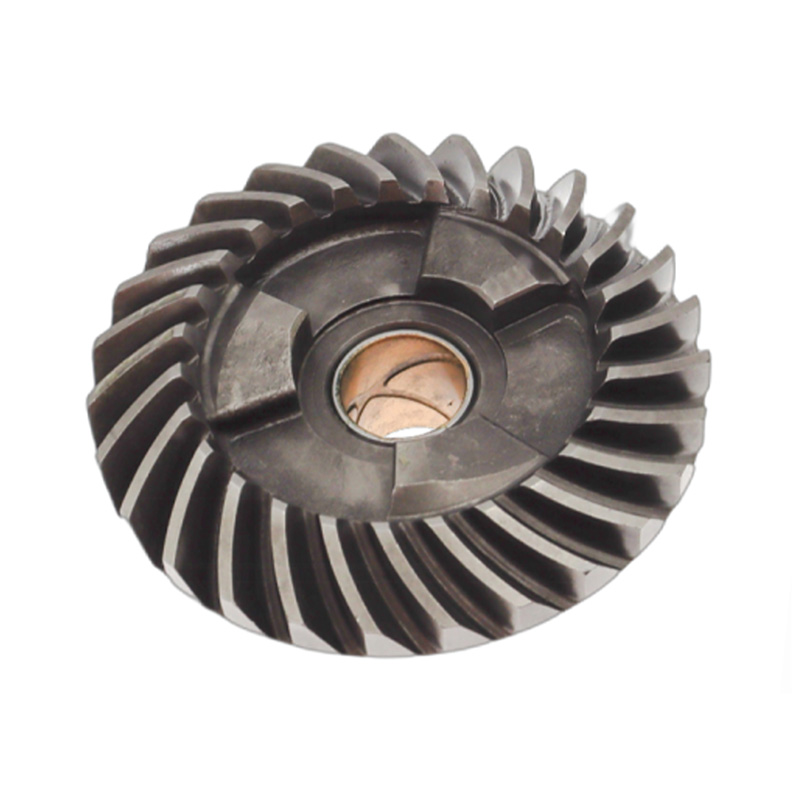
Use this simple decision checklist to guide your choice.
- Your outboard(s) log high annual hours (commercial, charter, patrol, or serious sportfishing). [ysamphy]
- You routinely operate at 70–100% of rated power for extended periods. [amironic.co]
- You run in heavy seas or with frequent rapid throttle changes, creating shock loads. [eureka.patsnap]
- Haul‑out and downtime costs are high, or lost trips are unacceptable. [ysamphy]
- You want to "over‑spec" critical components for peace of mind offshore.
- You are a weekend recreational boater logging modest annual hours.
- Your boat is underpowered or moderately powered relative to hull size.
- You operate mostly at cruise or part throttle in mild conditions.
- Your replacement and haul‑out costs are low, and you accept more frequent maintenance.
This trade‑off is ultimately about risk appetite vs operating profile: hardened gears reduce your mechanical risk, while standard gears reduce your upfront cost.
If you decide hardened gears are right for you, keep these expert selection tips in mind. [marketresearchfuture]
1. Start from operating conditions, not just horsepower.
Define torque, load cycles, typical RPM, duty cycle, and environment (freshwater vs saltwater). [amironic.co]
2. Ask for material and hardening details.
- Look for hardened alloy steels with documented case depth and hardness ranges.
- For harsh seawater, verify corrosion‑resistant materials or coatings: stainless 316, aluminum bronze, or suitable protective plating where applicable. [amironic.co]
3. Check manufacturing precision and QA.
- Ground tooth profiles, tight backlash control, and documented inspection processes matter for long‑term smoothness. [eureka.patsnap]
4. Confirm compatibility with your lower unit.
- Ensure correct gear ratios, shaft interfaces, and bearing fits to avoid misalignment and localized stress. [ysamphy]
5. Evaluate supplier experience and application history.
- Prior performance in similar horsepower classes and hull types is a strong indicator of real‑world reliability. [datainsightsmarket]
As a manufacturer with decades of experience in outboard gears and marine driveline components, a company like Ningbo Gill Transmission Parts Co., LTD. is positioned to optimize these variables for each application and support OEMs through the entire design cycle. [nbhanghui]
Even the best hardened gear can be destroyed by neglect. To maximize the value of your investment: [ysamphy]
1. Follow a strict oil inspection schedule
- Check gear oil level and condition at the intervals recommended by your engine manufacturer—or more often in heavy commercial use. [ysamphy]
- Look for metallic particles, discoloration, or water intrusion (milky oil), all of which indicate early problems. [ysamphy]
2. Use the correct lubricant
- Follow outboard manufacturer viscosity and spec guidelines.
- In harsh marine environments, high‑quality oils and additive packs can significantly reduce wear. [amironic.co]
3. Inspect seals and venting
- Seal failures let water in and accelerate corrosion and pitting, especially on standard gears. [amironic.co]
- Overfilling or blocked vents can increase pressure and push contaminants past seals.
4. Avoid abusive operating practices
- Minimize full‑throttle gear shifts and high‑RPM engagement.
- Avoid prop strikes by matching propeller diameter and pitch correctly and navigating cautiously in shallow or debris‑rich waters.
Applied consistently, these habits can extend the life of both hardened and standard marine gears and protect the rest of the gearcase. [ysamphy]
In marine environments, hardness alone is not enough—corrosion resistance is equally critical. While hardened steels offer excellent strength and wear resistance, they can be vulnerable to corrosion if not paired with correct materials, coatings, and lubrication practices. [amironic.co]
Industry guidance for gears in seawater exposure emphasizes: [amironic.co]
- Using stainless steels (e.g., 316), aluminum bronze, or nickel‑coated steels where appropriate. [amironic.co]
- Ensuring effective sealing and water exclusion.
- Maintaining a protective oil film to separate metal from seawater and oxygen.
So, a truly "marine‑ready" hardened gear solution balances high surface hardness, robust core toughness, and adequate corrosion defense rather than focusing on hardness alone. [amironic.co]
If you need to justify hardened gears to management, a boat owner, or a procurement team, structure your argument around ROI per operating hour rather than just part cost. [datainsightsmarket]
A simple framework:
1. Estimate annual operating hours and typical load (percentage of rated power). [marketresearchfuture]
2. Calculate the expected service life of standard vs hardened gears in hours under those conditions, using available data or conservative estimates. [eureka.patsnap]
3. Include all costs per replacement event:
- Gear set price
- Labor and haul‑out
- Lost revenue or lost-use value per day out of service
4. Compute total cost per hour for standard vs hardened gears over a realistic time horizon (for example, 3–5 years of operation).
In many commercial or high‑use recreational scenarios, this analysis shows hardened gears delivering lower total cost per hour, even if the initial gear set costs substantially more. [datainsightsmarket]
Despite the clear advantages of hardened marine gears, there are valid situations where standard gears remain a logical specification:
- Entry‑level boats and budget builds where keeping the initial purchase price competitive matters more than minimizing lifetime costs.
- Low‑hour, seasonal use in freshwater lakes, where corrosion loads and operating hours are both relatively low.
- Applications where the gearbox is designed as a low‑cost, easily replaceable unit, and user expectations align with more frequent replacements.
For these segments, the role of hardened gears can shift to premium upgrade options or OEM "heavy‑duty packages" rather than default equipment. [datainsightsmarket]
If you are an:
- OEM or boat builder: Review your current gear specifications against real‑world duty cycles and failure history, then introduce hardened gear options for high‑load, high‑hour applications. [marketresearchfuture]
- Fleet or charter operator: Audit your maintenance logs for gearcase failures and downtime costs, then model how hardened gear sets would alter replacement intervals and lost‑use days. [ysamphy]
- Serious recreational angler or offshore boater: Consider hardened gears as part of a reliability‑first package alongside quality props, proper lubrication, and scheduled maintenance.
If you are evaluating suppliers, work with a specialized marine gear manufacturer that can match hardened gear designs to your exact operating profile and provide ongoing technical support over the long term. [nbhanghui]
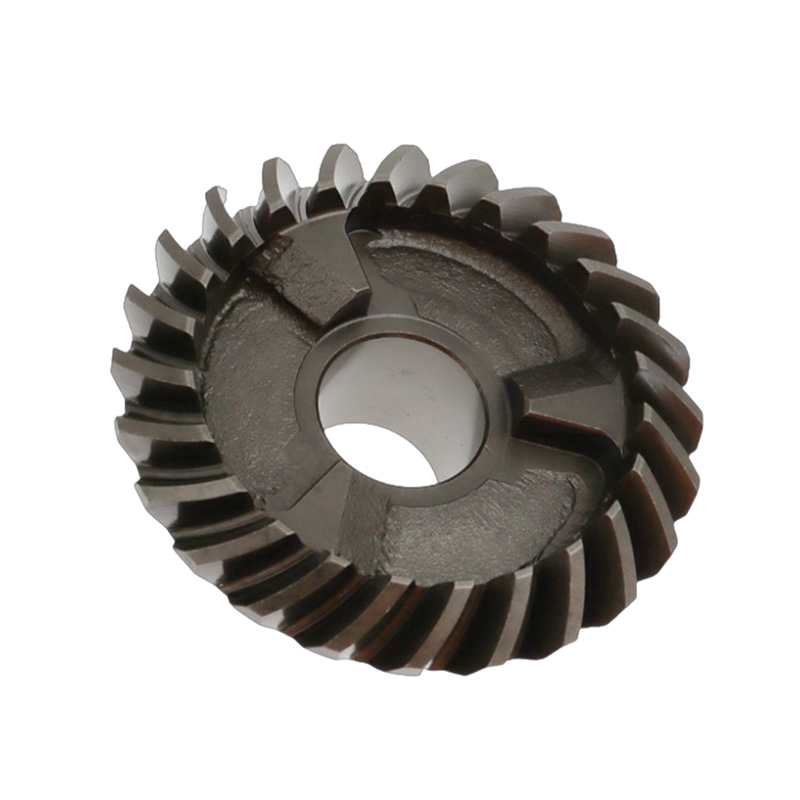
1. Will hardened marine gears make my outboard louder?
Properly finished hardened gears can actually run quieter for longer, because they maintain tooth geometry and backlash better over time; noise is more strongly affected by alignment, lubrication, and manufacturing quality than by hardness alone. [eureka.patsnap]
2. Do hardened gears always last longer than standard gears?
In high‑load or high‑hour use, hardened gears almost always outlast standard gears, but in very light duty conditions with good lubrication, the difference in total life can be smaller. [eureka.patsnap]
3. Are hardened gears more resistant to corrosion?
Not necessarily; hardness relates to wear and fatigue resistance, while corrosion resistance depends on material composition, coatings, and environmental protection. Hardened alloy steel must still be properly protected in seawater. [amironic.co]
4. Can I retrofit hardened gears into my existing outboard lower unit?
Often you can, as long as the replacement gear set is designed for your specific gearbox model and ratios; always confirm compatibility and consider having the installation performed by an experienced marine technician. [ysamphy]
5. How do I know if my current gears are failing?
Warning signs include increased gearbox noise, contaminated or metallic gear oil, difficulty shifting, and visible chipping or pitting on teeth during inspection. If you see these, plan a replacement before a catastrophic failure occurs. [ysamphy]
1. Hardened vs. coated gears and performance under heavy loads – *Eureka Patsnap*
<https://eureka.patsnap.com/article/hardened-vs-coated-gears-which-lasts-longer-under-heavy-loads> [eureka.patsnap]
2. Marine operations equipment selection: reliability, durability, and cost‑effectiveness – *Ysamphy*
<https://ysamphy.com/what-to-look-for-when-choosing-marine-operations-equipment/> [ysamphy]
3. Gear material selection for strength, wear, and corrosion in harsh environments – *Amironic*
<https://amironic.co.il/2026/02/22/gear-material-selection-guide-strength-wear-corrosion-environment-how-to-choose-correctly/> [amironic.co]
4. Marine supporting equipment market outlook and growth projections – *Data Insights Market*
<https://www.datainsightsmarket.com/reports/marine-supporting-equipment-632320> [datainsightsmarket]
5. Marine gearbox market size and trends – *Market Research Future*
<https://www.marketresearchfuture.com/reports/marine-gearbox-market-33187> [marketresearchfuture]
6. Precision transmission parts capabilities in Ningbo region – *Ningbo Lanshi Transmission Co., Ltd*
<https://nbhanghui.com> [nbhanghui]


