


close
Choose Your Site
Global
Social Media
Views: 236 Author: Gill Transmission Parts Publish Time: 2026-08-18 Origin: Site


Content Menu
● What Is a Marine Drive Shaft?
● Heavy-Duty vs Standard Duty Shafts
● Heavy-Duty Marine Drive Shafts: Built for Demanding Loads
>> Where Heavy-Duty Shafts Are Commonly Used
>> Key Features of Heavy-Duty Shaft Design
● Standard Duty Marine Shafts: Efficient for Controlled Service
>> Ideal Applications for Standard Duty Shafts
>> When Standard Duty Becomes a Risk
● Torque, Diameter, and Material: The Core Selection Factors
>> Material Selection Matters Beyond Strength
● The Hidden Factor: Alignment and Bearing Support
● Practical Selection Checklist for Buyers
● Manufacturing Quality That Influences Shaft Life
● Heavy-Duty or Standard Duty: Which Delivers Better Value?
● Work With a Marine Shaft Specialist
● FAQ
>> 1. What is the main difference between a heavy-duty and standard duty marine drive shaft?
>> 2. Can I install a larger marine drive shaft for extra safety?
>> 3. Does a more powerful engine always require a heavy-duty shaft?
>> 4. Why does marine shaft alignment matter?
>> 5. What information should I provide when requesting a custom marine shaft?
>> 6. How can corrosion affect a propeller shaft?
>> 7. Should commercial fishing vessels use heavy-duty marine drive shafts?
Choosing between heavy-duty marine drive shafts and standard duty shafts is not simply a matter of selecting the largest diameter or the strongest-looking material. The correct marine drive shaft must match the vessel's propulsion power, operating profile, shaft length, propeller load, bearing arrangement, alignment condition, and corrosion environment.
For nearly three decades, Ningbo Gill Transmission Parts Co., LTD. has focused on the development, production, and supply of marine transmission components, including marine drive shafts. From a manufacturing perspective, the right shaft selection starts with one question: what loads will the shaft experience throughout its actual service life—not only during normal cruising conditions?
A standard duty marine shaft can be highly effective for suitable vessels. However, a heavy-duty marine drive shaft is often the safer and more economical long-term choice when a vessel faces high torque, repeated acceleration, rough-water operation, towing load, commercial duty cycles, or demanding propulsion systems.
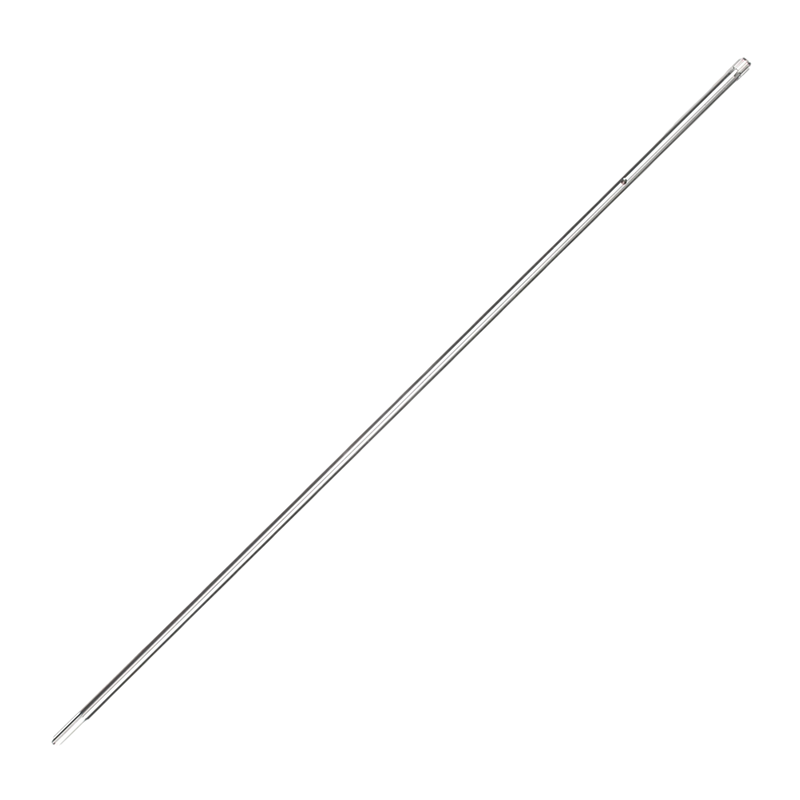
A marine drive shaft, also called a propeller shaft, transmission shaft, tail shaft, or propulsion shaft depending on its position in the drivetrain, transfers rotating power from the engine, gearbox, or transmission to the propeller.
Its basic job appears simple: transmit torque. In real operation, however, the shaft must also withstand multiple forces at once:
- Continuous rotational torque
- Peak torque during acceleration and reversing
- Propeller-induced thrust and vibration
- Torsional vibration from engine and gearbox operation
- Bending loads caused by shaft misalignment
- Corrosion from seawater, humidity, and dissimilar metals
- Wear at bearing, seal, coupling, and taper contact areas
This is why shaft selection cannot be based only on horsepower. Classification guidance for propulsion shafting considers power, shaft speed, material strength, torsional vibration, shaft design features, and operating conditions.
The main difference between a heavy-duty marine drive shaft and a standard duty shaft is their designed ability to tolerate higher and more frequent mechanical loads with a larger safety margin.
| Comparison Factor | Heavy-Duty Marine Drive Shafts | Standard Duty Marine Shafts |
|---|---|---|
| Intended operating profile | Commercial, high-load, high-hour, rough-duty service | Recreational, light commercial, moderate-load service |
| Torque capacity | Higher continuous and peak torque capability | Designed for normal rated torque and limited overloads |
| Shaft diameter | Usually larger for the required duty | Typically optimized for lighter loads and weight |
| Material specification | Often higher-strength alloy steel or specialized corrosion-resistant material | Common marine-grade stainless steel or carbon/alloy steel, depending on application |
| Fatigue resistance | Greater margin for repeated load cycles | Suitable for lower-to-moderate cyclic loading |
| Vibration tolerance | Usually designed with more conservative torsional considerations | Appropriate where vibration and operating range are controlled |
| Typical vessel use | Workboats, fishing vessels, patrol craft, tugs, ferries, heavy-displacement boats | Leisure boats, small cruisers, light-duty inboard vessels |
| Initial cost | Higher | Lower |
| Long-term value | Strong where downtime, repair cost, and overload risk are significant | Strong where operating conditions remain predictable |
The best option is not automatically the heavy-duty model. Oversizing without considering bearings, couplings, gearboxes, propeller fit, and alignment can create new installation problems. A shaft must function as part of a complete propulsion system.
A heavy-duty marine drive shaft is engineered for applications where the propulsion system regularly encounters high torque, shock loading, long operating hours, or difficult sea conditions.
Heavy-duty shafting is commonly specified for:
- Fishing vessels operating with loaded gear and frequent speed changes
- Tugs and workboats with towing or pushing duties
- Patrol boats and high-speed commercial craft
- Ferries with intensive daily operating schedules
- Offshore support vessels
- Large displacement vessels with high propeller loading
- Commercial vessels where unplanned downtime creates major cost exposure
- Vessels operating in rough water, shallow water, or debris-prone areas
In these applications, a shaft may face thousands of repeated loading cycles. The issue is not only maximum torque. It is also fatigue life, which depends on the magnitude, frequency, and variation of stress over time.
A heavy-duty marine drive shaft may incorporate:
- Increased shaft diameter
- Higher-strength forged material
- Improved surface finish in bearing and seal areas
- Larger safety margins for torque transmission
- More robust coupling interfaces
- Precision-machined tapers and keyways
- Greater resistance to torsional vibration stress
- Enhanced non-destructive inspection requirements
- Customized dimensions for vessel-specific propulsion layouts
For propulsion shaft systems, torsional vibration deserves special attention. International shafting rules establish permissible alternating stress limits for continuous operation, reflecting the fact that vibration can damage a shaft even when the nominal torque appears acceptable.
A standard duty shaft is not an inferior product. It is a cost-effective, practical solution when the vessel's power, operating hours, sea conditions, and propulsion loads remain within a controlled range.
Standard duty marine drive shafts are often suitable for:
- Recreational powerboats
- Small yachts and cruisers
- Inland-water vessels
- Light-duty passenger boats
- Low-to-medium horsepower inboard propulsion systems
- Vessels with predictable cruising speeds and limited daily operating hours
- Replacement projects where original shaft dimensions and performance are already proven
The strength of standard duty shafting is efficiency. It provides the required mechanical performance without adding unnecessary material cost, weight, or machining complexity.
A standard duty shaft may become a poor choice if the vessel's service conditions change after installation. Common examples include:
- A higher-output engine replaces the original engine
- The gearbox ratio changes
- A larger or more aggressive propeller is installed
- The vessel begins towing, fishing, or commercial work
- Operating hours increase sharply
- The boat operates more frequently in rough water
- Alignment issues create repeated bending stress
- The shaft is exposed to inadequate corrosion protection
In these cases, the shaft may still rotate normally for a period, but fatigue damage can accumulate gradually. Cracks, corrosion pitting, fretting around couplings, bearing wear, and taper damage can eventually lead to a costly failure.
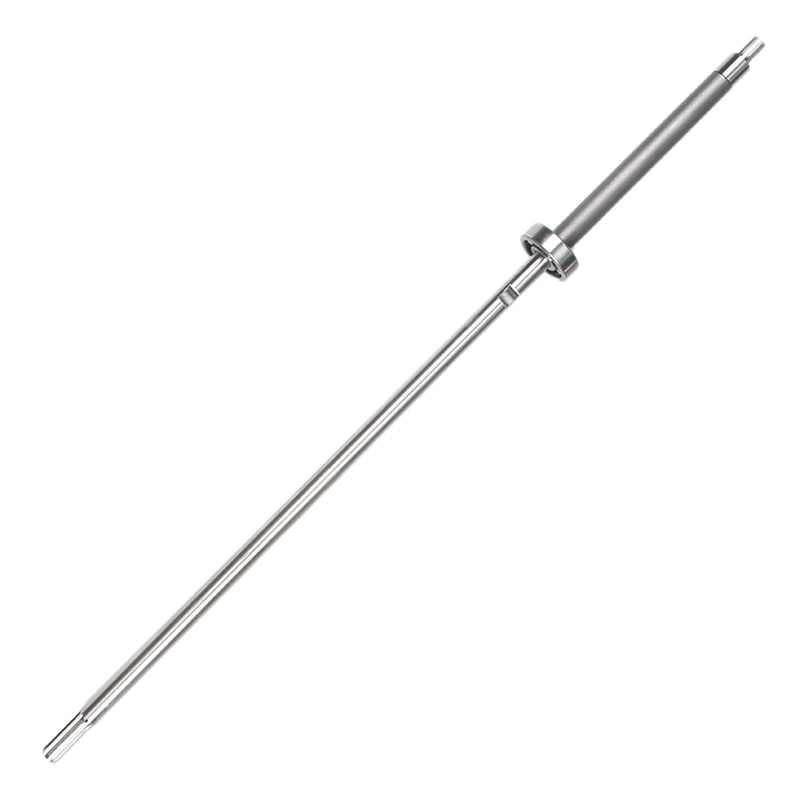
A marine drive shaft must safely transmit the required torque while maintaining acceptable stress levels. Torque rises when engine power rises or when shaft speed decreases. This is why low-speed, high-torque propulsion arrangements often require particularly robust shafting.
A practical engineering relationship is:
T=9550P/n
Where:
T = torque in N·m
P = power in kW
n = shaft speed in rpm
For the same power output, a lower shaft rpm produces higher torque. For example, a propulsion system delivering 300 kW at 300 rpm generates far more shaft torque than a system delivering 300 kW at 1,500 rpm.
Increasing shaft diameter improves torsional capacity, but the benefit is not linear. Shaft resistance to torsional loading rises rapidly as diameter increases. This is one reason heavy-duty shafting often uses a noticeably larger diameter rather than only a different material grade.
However, diameter must be coordinated with:
- Stern tube and bearing dimensions
- Shaft seals
- Coupling bore size
- Propeller hub taper
- Keyway design
- Gearbox output flange
- Available installation clearance
A poorly matched shaft diameter can force compromises elsewhere in the drivetrain. The best heavy-duty solution is therefore a system-matched solution, not just a larger shaft.
Marine shaft material selection involves more than tensile strength. The chosen material should also suit corrosion exposure, fatigue requirements, machining needs, surface finish expectations, and inspection procedures.
Common material considerations include:
- Stainless steel: Often selected for corrosion resistance in marine environments
- Carbon steel: Can be suitable where corrosion protection and application conditions are controlled
- Alloy steel: Often used when higher strength and fatigue resistance are required
- Duplex or high-alloy stainless grades: Considered for more demanding corrosion environments and specialized applications
Material certification and inspection are especially important for torque-transmitting components. ABS rules require materials for torque-transmitting parts—including shafts, clutches, couplings, coupling bolts, and keys—to meet approved specifications, while finished shafting is subject to surface examination and non-destructive testing requirements in applicable cases.
Even a correctly sized heavy-duty marine drive shaft can fail early if installation alignment is poor.
Shaft alignment affects how loads transfer through the gearbox, couplings, bearings, stern tube, and propeller. When alignment is outside acceptable limits, the shaft can experience bending stress in addition to normal torque. This may lead to:
- Premature cutless bearing wear
- Excessive seal wear or leakage
- Coupling fretting
- Shaft vibration
- Localized heat generation
- Fatigue cracking near shoulders, keyways, or transitions
- Gearbox output bearing damage
For high-duty vessels, alignment should be verified during installation and monitored after significant changes such as engine replacement, gearbox replacement, major hull work, grounding, or bearing renewal.
Classification guidance also treats shaft alignment as a controlled installation activity and recognizes the importance of bearing reactions and shaft loading conditions.
Before ordering a marine drive shaft, provide the manufacturer with complete operating information. A quotation based only on shaft diameter and overall length may not protect your vessel from design mismatch.
Use this checklist:
1. Confirm engine rated power and maximum continuous power.
2. Confirm gearbox reduction ratio and output shaft speed.
3. Identify the propeller type, diameter, pitch, and hub connection.
4. Provide shaft overall length, bearing locations, and stern tube dimensions.
5. State whether the vessel is recreational, commercial, fishing, towing, patrol, or offshore.
6. Estimate annual operating hours and typical load profile.
7. Identify the water environment: freshwater, brackish water, seawater, or mixed service.
8. Specify coupling type, flange dimensions, keyway requirements, and taper details.
9. Confirm whether classification, material certificates, dimensional reports, or non-destructive testing are required.
10. Discuss prior shaft failures, vibration issues, or abnormal bearing wear.
This information allows a manufacturer to recommend a standard duty or heavy-duty marine drive shaft based on real service demands rather than assumptions.
The difference between a reliable shaft and a high-risk shaft is often found in the details of manufacturing control.
Critical production steps include:
- Raw material traceability
- Chemical composition and mechanical-property verification
- Straightness control before and after machining
- Accurate machining of journals, tapers, threads, and keyways
- Surface finish control in bearing and seal contact areas
- Runout inspection
- Dimensional inspection
- Balancing where required by the propulsion arrangement
- Non-destructive examination for relevant shaft areas
- Protective packing for transport and storage
The propeller-to-shaft interface is particularly important. The shaft taper, hub bore, and keyway must match precisely. Guidance for propeller shaft installations emphasizes that shaft diameter and taper must match the propeller hub interface accurately.
The correct decision should be based on total lifecycle cost, not purchase price alone.
A standard duty shaft may offer better value when:
- The vessel has low annual operating hours
- Propulsion loads are stable
- The original drivetrain is unchanged
- The vessel is used primarily for leisure cruising
- Maintenance access is easy
- Downtime has limited commercial impact
A heavy-duty marine drive shaft may offer better value when:
- The vessel operates commercially
- The propulsion system runs for long daily periods
- Peak loading is frequent
- Failure would interrupt revenue-generating operations
- The boat works in rough or demanding conditions
- The vessel has undergone an engine or propeller upgrade
- Higher fatigue margin is needed
For a commercial operator, one avoided shaft failure may justify the additional investment. The costs of emergency hauling, missed charter days, gearbox damage, propeller damage, and schedule disruption can be far greater than the price difference between shaft categories.
Selecting a marine drive shaft should involve a technical discussion, not a catalog-only purchase. At Ningbo Gill Transmission Parts Co., LTD., our team supports customers with marine transmission component development and manufacturing experience built over 29 years.
Whether you need a heavy-duty marine drive shaft for high-load commercial service or a standard duty marine shaft for a proven recreational application, the goal is the same: deliver a shaft that matches your vessel, propulsion system, installation dimensions, and service conditions.
Send us your engine power, gearbox ratio, shaft drawing, propeller details, and operating requirements to receive a tailored marine drive shaft recommendation.
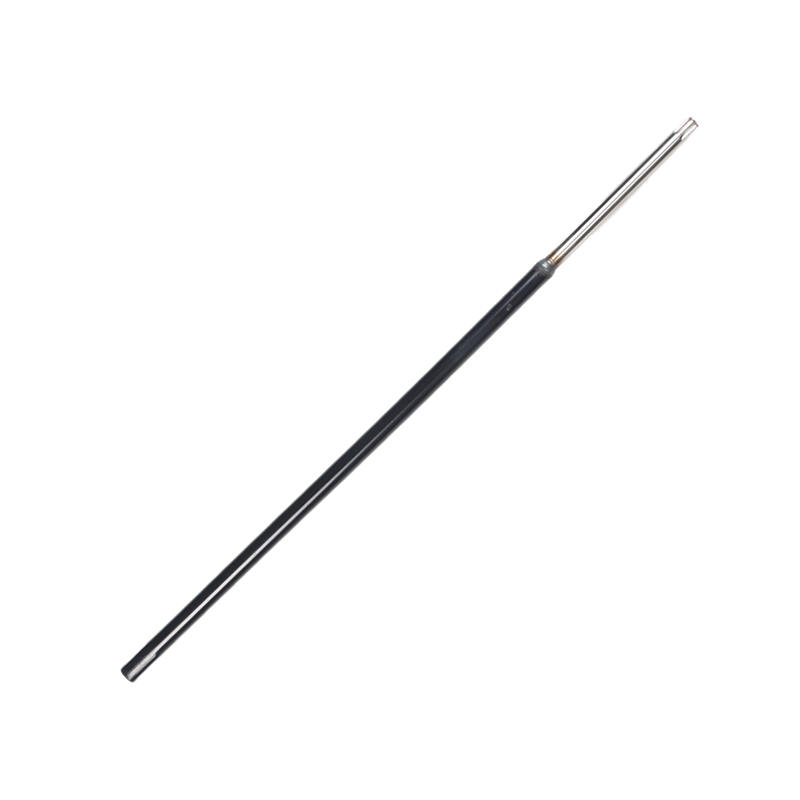
A heavy-duty marine drive shaft is designed for greater torque, repeated load cycles, harsher operating conditions, and a higher fatigue safety margin. A standard duty shaft is designed for normal propulsion loads in more controlled service conditions.
Possibly, but only after checking compatibility with the bearings, stern tube, seals, coupling, gearbox flange, and propeller hub. A larger shaft is not automatically safer if the full propulsion system is not designed around it.
Not always. Shaft selection depends on power, shaft rpm, gearbox ratio, propeller load, vessel duty cycle, material, shaft length, and vibration characteristics. However, an engine upgrade should always trigger a propulsion shaft review.
Misalignment creates additional bending loads, vibration, bearing wear, seal problems, and fatigue stress. It can shorten the service life of both heavy-duty and standard duty marine drive shafts.
Provide engine power, gearbox ratio, output rpm, shaft length, shaft diameter, bearing locations, coupling drawing, propeller taper details, keyway requirements, material preference, vessel type, and operating conditions.
Corrosion can create surface pitting, reduce fatigue resistance, damage seal and bearing contact surfaces, and accelerate crack initiation. Material selection, protective design, correct installation, and regular inspection are essential.
Many commercial fishing vessels benefit from heavy-duty shafting because they can experience high propeller loads, frequent speed changes, long operating hours, loaded conditions, and harsh marine exposure. Final selection should be based on the vessel's complete propulsion data.
1. American Bureau of Shipping, "Part 4: Vessel Systems and Machinery." Available at: [ABS Vessel Systems and Machinery Rules]
2. International Association of Classification Societies, "UR M68: Dimensions of Propulsion Shafts and Their Permissible Torsional Vibration Stresses." Available at: [IACS UR M68]
3. American Boat & Yacht Council, "ABYC P-6: Propeller Shafts, Propeller Shaft Bearings, and Propeller Shaft Seals." Available at: [ABYC P-6 Preview]
4. Nippon Kaiji Kyokai, "Shafting Systems." Available at: [ClassNK Shafting Systems Rules]
5. American Bureau of Shipping, "Rules Developed for Propellers." Available at: [ABS Propeller Rules]
6. Marine Diesel Basics, "Propeller Shaft Design and Installation." Available at: [Marine Diesel Basics Propeller Shaft Extract]


