


close
Choose Your Site
Global
Social Media
Views: 289 Author: Gill Transmission Parts Publish Time: 2026-10-02 Origin: Site


Content Menu
● What Turns the Propeller Shaft Under Power?
>> Why Can the Shaft and Propeller Appear to Turn Together?
● Can Water Turn the Propeller and Shaft?
>> Can the Propeller Turn with the Engine Off?
● Does Shaft Rotation Match Engine Rotation?
● What If the Shaft Turns but the Boat Does Not Move?
>> A Practical Fault-Finding Example
● How to Check a Propeller Shaft Safely
>> When Should You Stop Operating?
● What Shaft Buyers Should Confirm Before Ordering
● Get the Right Shaft Diagnosis
>> Does the engine turn the propeller shaft or vice versa?
>> Should a propeller shaft spin in neutral?
>> Can a propeller spin while the shaft does not?
>> Why does my engine rev but the boat barely accelerate?
>> Does a right-hand propeller always require a clockwise-turning engine?
>> Can a bent propeller make the shaft vibrate?
>> Can I replace the propeller shaft using diameter alone?
Does the boat propeller turn the shaft? During normal powered operation, the answer is no: the engine sends torque through the transmission and propeller shaft to turn the propeller. But when a boat moves through water with the engine off, water flow can sometimes turn the propeller and make the shaft rotate. The difference matters when diagnosing a shaft that spins unexpectedly, a propeller that fails to produce thrust, or a transmission that may not be engaged.
The first question to ask is not simply, "Is the shaft turning?" It is "What is driving it right now?" A shaft can rotate because the engine is powering the propeller, because moving water is driving the propeller, or because a component is slipping. Each situation calls for a different response.
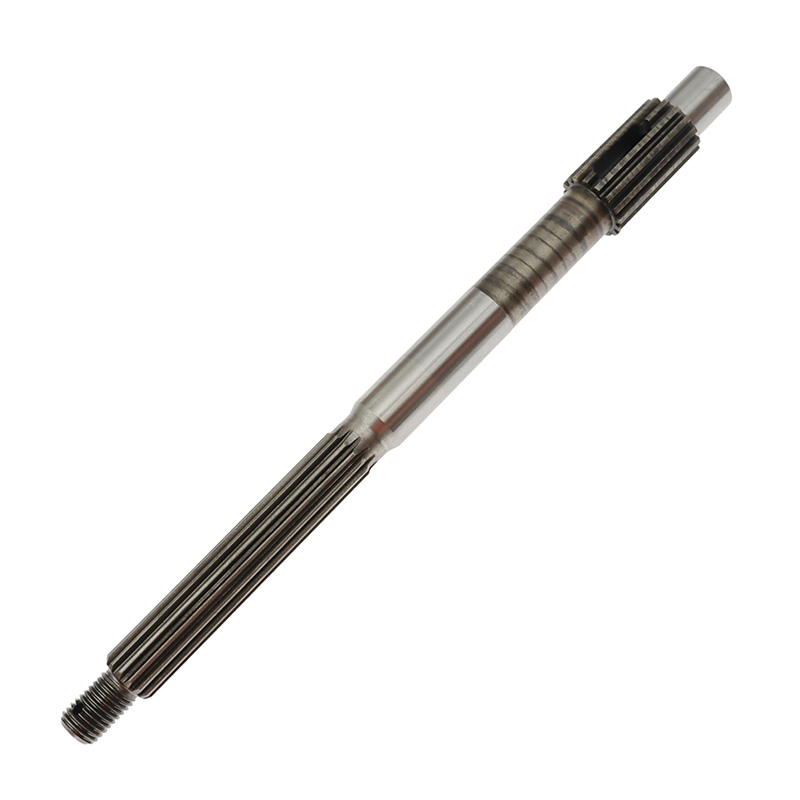
In a typical inboard shaft-drive boat, power follows this path:
Engine → marine gearbox → coupling → propeller shaft → propeller → water
The engine creates rotational power. The gearbox engages forward or reverse and transfers that power to its output. The coupling connects the gearbox to the propeller shaft. The shaft then turns the propeller, whose blades generate thrust in the water.
An outboard uses a different layout but follows the same basic principle. Engine power travels down the drive shaft into the lower unit. Its gears drive a horizontal propeller shaft, which turns the propeller through its hub. The propeller does not normally power the engine.
The word *shaft* can cause confusion. An outboard drive shaft and an outboard propeller shaft are different parts. An inboard propeller shaft may instead run from the gearbox toward the stern. Identifying which shaft you mean is the first step toward an accurate diagnosis.
When the propeller is securely fitted and the drivetrain is engaged, the propeller and its shaft normally rotate together. From outside the boat, that movement does not reveal which component supplied the torque.
Think of the distinction as power flow versus visible motion. Under engine power, torque travels toward the propeller. Under certain engine-off conditions, moving water can apply force to the blades and send rotation back toward the shaft. The parts may look similar in motion, but the cause has reversed.
Yes, under the right conditions. A sailboat moving under sail, or a vessel being towed, may have enough water flow over a fixed-blade propeller to make it rotate. If the propeller remains mechanically connected to the shaft, the shaft may turn as well. This is often called *freewheeling* or *windmilling*.
That observation does not automatically mean something is broken. Nor does it prove that freewheeling is permitted for your transmission. Gearbox designs, lubrication arrangements and propeller types differ. Some installations allow rotation in neutral; others have specific operating instructions or restrictions.
For example, advice that applies to one gearbox should not be transferred to another simply because both boats have fixed propellers. Check the exact transmission and propeller manuals before deciding whether to leave the control in neutral or engage a gear while sailing. If the manual is unclear, ask the equipment manufacturer or a qualified marine technician.
It can, but not in every installation or at every boat speed. Water flow, blade design, transmission position and drivetrain resistance all affect what happens. A folding propeller may behave differently from a fixed-blade propeller.
If you notice an engine-off shaft rotating, do not grab it or try to stop it by hand. Rotating couplings and shafts can cause serious injury. Observe from a safe position, record the operating condition, and consult the correct equipment instructions before changing how you run the boat.
Not necessarily. A marine gearbox can change both output speed and direction. Looking at the engine and assuming the propeller must spin the same way is an unreliable way to order a replacement propeller or shaft assembly.
Propeller handedness is commonly described while looking at the propeller from behind the boat toward the bow. A right-hand propeller turns clockwise in ahead gear from that viewpoint; a left-hand propeller turns counterclockwise. State the viewing direction whenever discussing rotation. "Clockwise" alone invites mistakes.
Reverse operation adds another distinction. On many fixed-pitch installations, changing gear reverses shaft and propeller rotation to produce astern thrust. A controllable-pitch propeller can instead change blade pitch to produce astern thrust while continuing to rotate in the same direction.
Before specifying a part, confirm the actual ahead rotation of the gearbox output and propeller. Do not infer it from engine rotation alone.
A rotating shaft is evidence of motion, not proof of useful thrust. The fault may lie between the shaft and propeller blades, or in how the propeller interacts with water. It may also be elsewhere in the propulsion system.
The table below is a starting point, not a final diagnosis.
| What you observe | Possible explanation | Sensible next check |
|---|---|---|
| Engine RPM rises, but boat speed barely increases | Slipping propeller hub, ventilation or another performance fault | Inspect the propeller and hub; record RPM and speed |
| Shaft appears to turn, but blades do not drive normally | Hub or propeller-to-shaft connection problem | Have the hub and mounting parts inspected |
| Engine runs, but shaft does not turn in gear | Gear engagement, coupling or drivetrain fault | Stop operation and arrange a qualified inspection |
| Shaft and propeller turn, but vibration increases | Blade damage, shaft runout, bearing wear or alignment issue | Inspect the whole shaft line |
| Shaft rotates while sailing with engine off | Water-driven freewheeling may be occurring | Check the exact gearbox and propeller instructions |
A spun propeller hub is especially important on outboards and sterndrives. The hub connects the propeller barrel to the splined shaft and may slip after impact, age-related deterioration or other damage. The shaft can still rotate while the blades fail to transmit enough thrust, particularly under higher load.
Do not confuse a spun hub with *propeller slip*. Propeller slip describes the difference between theoretical travel based on pitch and the boat's actual travel through water. Some slip is part of normal propeller operation. A failed hub is a mechanical connection problem.
Suppose an outboard accelerates normally at low speed. When the operator opens the throttle, engine RPM climbs sharply, but the boat does not gain the expected speed. That pattern can suggest a slipping hub. It does not prove one: propeller ventilation or another engine-and-boat setup issue can produce a similar complaint.
The useful next step is to record when the symptom occurs. Does it happen only while accelerating, only in turns, or throughout the speed range? Has the propeller struck an object? Is a blade visibly damaged? That information helps a technician separate a hub fault from a water-flow or drivetrain problem before parts are replaced.
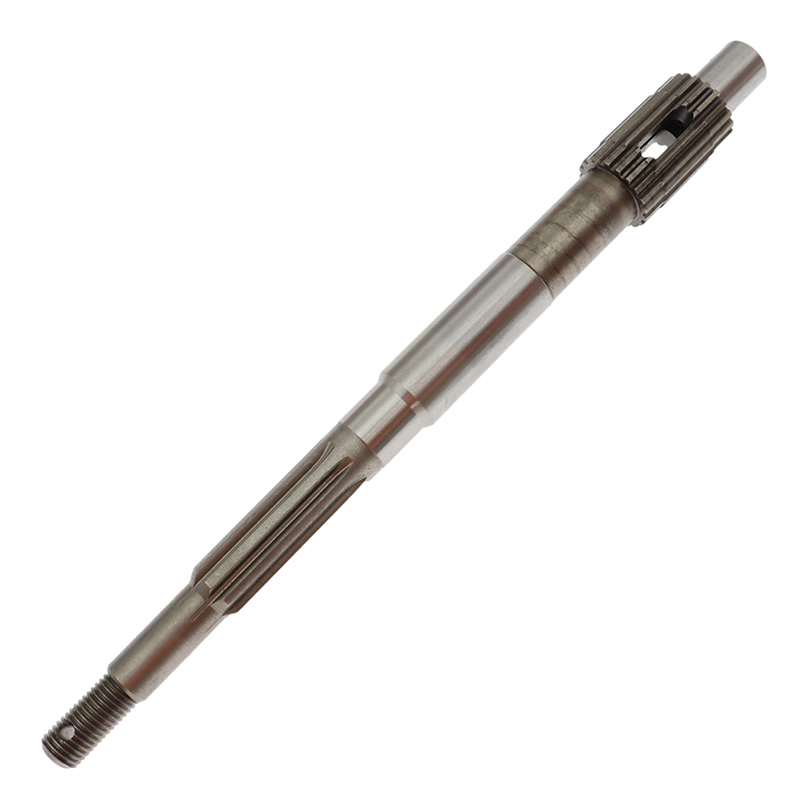
A reliable diagnosis separates an operating observation from a physical inspection. Never approach a moving propeller, reach near a rotating shaft, or perform a hands-on check while the engine could start unexpectedly.
1. Record the conditions. Note whether the engine is running, the control position, approximate RPM, boat speed, vibration and any recent impact.
2. Stop and secure the engine. Follow the vessel's shutdown procedure. Before handling a propeller or exposed shaft, prevent accidental starting according to the equipment manual.
3. Inspect visible damage. With the vessel safely secured, check blades, hub, retaining hardware and accessible shaft surfaces. Look for bends, cracks, loose parts or fishing line.
4. Check related components. An inboard inspection may involve the coupling, bearing, seal and engine mounts. An outboard inspection may focus on the propeller hub, splines and lower-unit seal area.
5. Measure rather than guess. If bending is suspected, have a qualified technician measure shaft runout with appropriate equipment and compare it with the applicable manufacturer's limits.
6. Investigate the cause before replacement. A new shaft will not correct a worn bearing, damaged propeller or misaligned installation.
This sequence protects both people and evidence. For example, replacing a visibly damaged propeller without checking the shaft after a hard strike may leave a second fault undetected. Conversely, replacing a shaft because the stern vibrates may waste time if the real cause is an unbalanced blade.
Treat new, severe vibration, abnormal noise, visible wobble, leakage or loss of thrust as reasons to stop and investigate promptly. Continued running can turn a manageable repair into damage involving bearings, seals, couplings or the gearcase.
A small change in sound can be harder to interpret. Record when it occurs and avoid assuming that the propeller shaft is at fault. A technician needs the full picture: operating conditions, maintenance history, recent impacts and measurements.
A replacement propeller shaft must match more than a nominal diameter. This is particularly important for repair yards, distributors and original equipment manufacturers ordering from a drawing or a sample part.
Provide the manufacturer with:
- Application details: Vessel or engine model, gearbox or lower-unit model, intended duty and operating environment.
- Connection geometry: Splines or coupling dimensions, propeller-end configuration, taper where applicable, keyway, threads and retaining hardware.
- Bearing and seal interfaces: Journal locations, diameters and required surface condition.
- Performance requirements: Material specification, shaft speed, relevant loads and any drawing-defined tolerances.
- Inspection requirements: Dimensional records, material documentation and runout checks where the project requires them.
A correct-looking shaft may still fit poorly at a seal, bearing, coupling or propeller hub. On an inboard installation, the shaft also depends on the surrounding system being correctly aligned. Manufacturing accuracy provides a sound starting point; installation quality determines how the assembled shaft line operates.
Ningbo Gill Transmission Parts Co., LTD. brings 29 years of stated experience in developing, manufacturing and supplying marine transmission parts, including propeller shafts. For a replacement inquiry, the most useful first step is to share the existing part number or drawing alongside the symptom. A request that says "shaft turns but boat does not accelerate" needs a different investigation from one that says "shaft bends repeatedly after installation."
The answer depends on the operating condition: under power, the shaft normally turns the propeller; with the engine off, moving water may turn the propeller and shaft. When performance is abnormal, identify the direction of power flow and inspect the whole connection before blaming the shaft.
If you are sourcing an OEM or replacement propeller shaft, contact Ningbo Gill Transmission Parts Co., LTD. with your part number or drawing, engine or gearbox model, propeller details and a description of the fault. Those details allow the team to discuss fit and manufacturing requirements without treating every rotating-shaft symptom as the same problem.
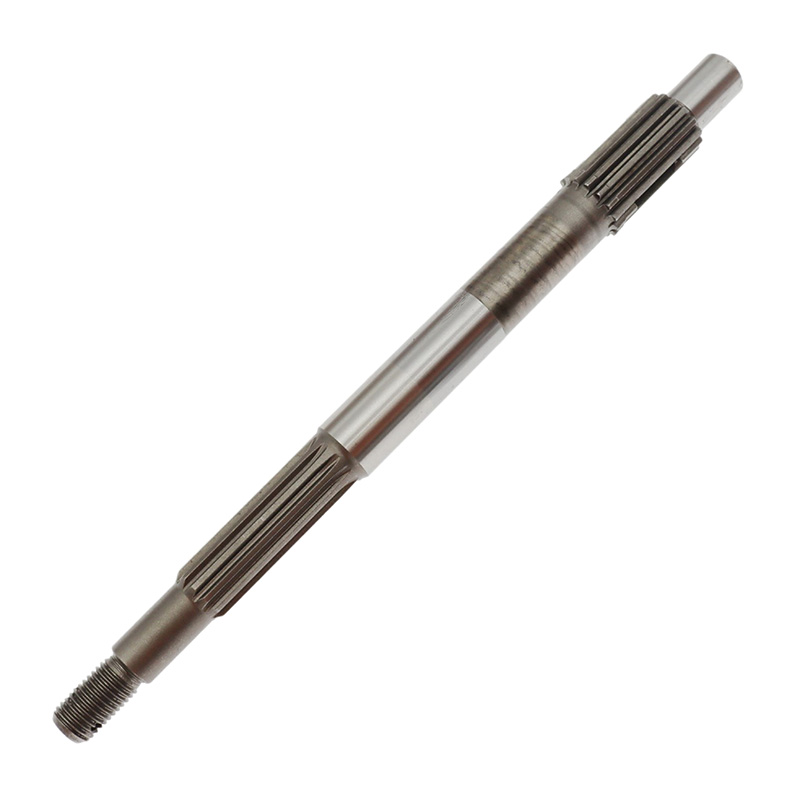
During normal powered operation, the engine drives the shaft, through a gearbox or lower-unit drivetrain. The shaft turns the propeller. With the engine off and the boat moving through water, a freewheeling propeller may turn the shaft in the opposite direction of power flow.
There is no universal answer. A shaft may turn because water is driving the propeller, but whether that is acceptable depends on the specific transmission, propeller and operating instructions. Check the exact manuals rather than relying on advice for another boat.
Unexpected relative movement can indicate a problem at a connection or hub, depending on the design. On an outboard or sterndrive, a slipping hub can prevent effective power transfer even when the propeller shaft turns. Have the actual assembly inspected before assuming which part has failed.
A spun hub is one possibility. Propeller ventilation, damage or a different performance fault can produce similar symptoms. Note the RPM, speed and conditions, inspect for obvious propeller damage, and seek a proper diagnosis before purchasing a replacement shaft.
No. Gearbox output rotation, not engine rotation viewed in isolation, determines the required ahead propeller rotation. Confirm both the viewing direction and the actual installed drivetrain configuration before ordering.
Yes. An unbalanced or damaged propeller can create vibration even if the shaft itself is straight. A hard impact can also damage the shaft. Inspect the propeller first, then measure shaft runout and check bearings and alignment if the problem remains.
No. Length, material, splines or coupling, bearing journals, seal surfaces, propeller fit and end geometry may all matter. Send a complete drawing or verified sample dimensions to the manufacturer, together with the vessel application.
1. [YANMAR Technical Review — "Marine Gears: Technology for Enhancing Vessel Comfort"]. Manufacturer technical explanation of engine-to-propeller power transfer, gear engagement and output rotation. [yanmar]
2. [Yachting Monthly — "How do boat propellers work?"]. Explanation of propeller handedness, viewing direction, pitch and the gearbox's effect on rotation. [yachtingmonthly]
3. [Solé Advance — "Neutral or Reverse While Sailing?"]. Manufacturer guidance explaining why engine-off freewheeling instructions depend on the transmission and propeller. [soleadvance]
4. [Mercury Marine — "How to Diagnose and Deal with a Spun Hub"]. Manufacturer explanation of hub construction, slipping symptoms and alternative causes of poor acceleration. [mercurymarine]
5. [Mercury Marine — "Prop Bite: Understanding Propeller Slip"]. Definition of propeller slip and its distinction from a mechanical hub fault. [mercurymarine]
6. [VETUS — "Six Essential Marine Engine Equipment Parts You Should Know Of"]. Description of the stern-gear system, including shafts, bearings, seals and couplings. [vetus]
7. [American Bureau of Shipping — *Guidance Notes on Propulsion Shafting Alignment*]. Engineering guidance on shaft-line alignment and bearing-clearance verification. [ww2.eagle]
8. [Ningbo Gill Transmission Parts Co., LTD. — "Precision Machined Propeller Shafts vs Standard Shafts"]. Company information and considerations for shaft geometry, fit, inspection and purchasing specifications. [gilltransmission]
9. [Ningbo Gill Transmission Parts Co., LTD. — "Bent Drive Shaft vs Damaged Propeller Shaft"]. Company guidance on symptom recording, runout measurement and whole-system fault finding. [gilltransmission]


