


close
Choose Your Site
Global
Social Media
Views: 289 Author: Gill Transmission Parts Publish Time: 2026-10-09 Origin: Site


Content Menu
● How Does the Propeller Shaft Exit the Boat Hull?
>> The Stern Tube Provides the Hull Passage
>> The Shaft Seal Controls Water Entry
>> The Bearing Supports the Shaft
● How Does a Boat Keep Water Out Around the Propeller Shaft?
>> Traditional Stuffing Boxes: Controlled Leakage
>> Mechanical Face Seals: Contact Between Two Faces
>> Stuffing Box vs. Dripless Shaft Seal
● Why Shaft Alignment and Surface Condition Matter
>> Inspect the Surface Where Sealing Occurs
>> Check Bearing Support Before Blaming the Seal
>> Do Not Use the Seal to Correct Alignment
● A Safe Five-Step Inspection of the Shaft Exit
>> 1. Identify the Installed Seal
>> 2. Inspect Accessible Components
>> 3. Separate Stationary Leakage from Running Leakage
>> 4. Record Evidence for the Technician
>> 5. Plan Repairs Before Opening the Assembly
● Water Supply and Relaunch Checks: An Often-Missed Detail
● What to Provide When Ordering a Replacement Propeller Shaft
● Discuss Your Propeller Shaft Requirements with Ningbo Gill
>> 1. What Is the Hole Where the Propeller Shaft Leaves the Boat Called?
>> 2. Does the Propeller Shaft Rotate Inside the Stern Tube?
>> 3. Is Water Dripping from a Stuffing Box Normal?
>> 4. Can a Dripless Shaft Seal Leak?
>> 5. Is a Cutlass Bearing the Same as a Shaft Seal?
>> 6. Can I Install a Replacement Shaft Seal with the Boat Afloat?
How does the propeller shaft exit the boat without letting seawater flood the hull? On a conventional inboard shaft-drive boat, the shaft passes through a hull-mounted passage called a stern tube or shaft log. A stuffing box or shaft seal controls water entry around the rotating shaft. Bearings support the shaft, while the propeller operates outside the hull. These components work together, but sealing and support are separate functions.
At Ningbo Gill Transmission Parts Co., LTD., our business focuses on the research, development, production, and sale of propeller shafts and other marine components. With 29 years of professional experience, we approach this question as a complete shaft-system issue—not simply a hole through the hull.
This guide explains the shaft's route, how the opening is sealed, and what owners and purchasing teams should check before maintenance or replacement.
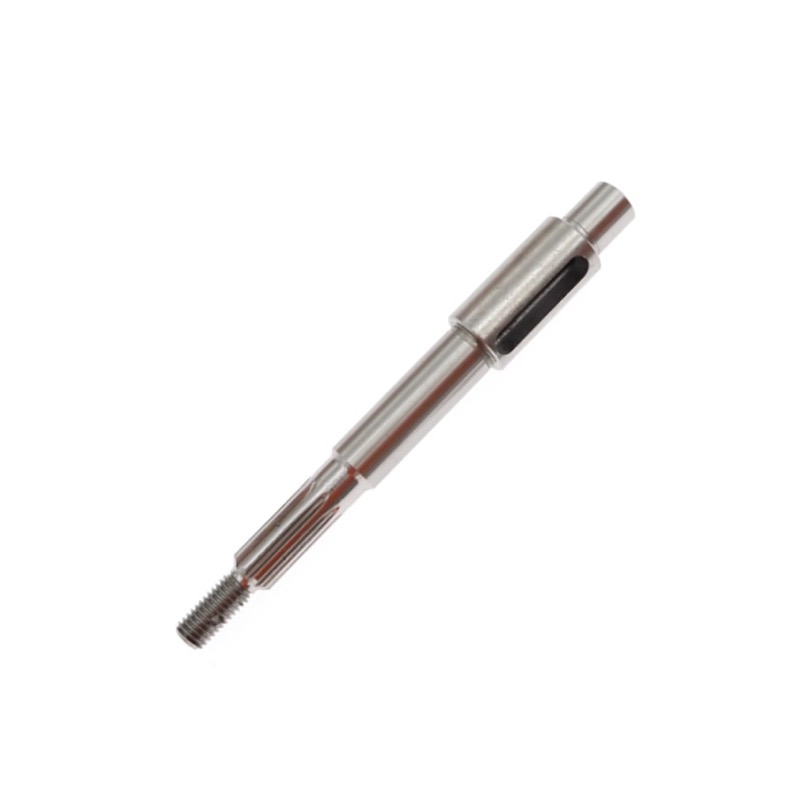
A conventional inboard installation follows this general arrangement:
Engine and transmission → shaft coupling → propeller shaft → sealed stern-tube passage → supporting bearing arrangement → propeller.
The exact positions of bearings and supports vary. Some boats carry a bearing within the stern tube; others use an external strut to support the shaft near the propeller.
The stern tube creates a passage through which the shaft can extend outside the boat. "Shaft log" is another term used for the hull passage or associated assembly, although terminology varies between installations.
The important distinction is that the tube itself does not automatically seal the clearance around a rotating shaft. A separate sealing arrangement controls water at the inboard end.
The shaft must rotate while the hull remains stationary. The sealing system accommodates that movement.
A traditional stuffing box compresses packing around the shaft. A mechanical face seal uses contacting stationary and rotating faces instead. Both address the same problem: controlling water entry where a rotating shaft crosses the hull boundary.
A bearing carries and guides the shaft; it should not be confused with the seal.
Many conventional installations use a water-lubricated, rubber-lined bearing in a stern tube or external strut. Its lining supports the shaft while water provides lubrication and cooling. Bearing wear can increase shaft movement and contribute to vibration or persistent packing leakage.
The answer depends on the sealing design. Two common arrangements are traditional packed stuffing boxes and dripless mechanical face seals.
A stuffing box contains rings of packing inside an adjustable gland. Tightening the packing nut compresses those rings around the shaft.
With conventional flax packing, a small amount of leakage during rotation is intentional. The water helps cool and lubricate the contact area. Tightening the gland until it is completely dry can create excessive friction and damage the shaft.
Published drip-rate guidance is not identical. West Marine describes two to three drops per minute during rotation, while Practical Sailor gives three to four. These figures are examples, not universal settings for every packing product and installation. Follow the instructions for the fitted packing and gland.
A PSS-style mechanical face seal uses a stainless-steel rotor attached to the shaft and a stationary carbon component connected to the stern tube through a flexible bellows.
The bellows maintains contact between the sealing faces as the shaft rotates. Water is necessary for correct operation, and the manufacturer explicitly warns against running the seal dry.
However, "dripless" does not mean maintenance-free. Bellows, clamps, fittings, sealing faces, and water-supply arrangements still require inspection according to the specific product manual.
| Consideration | Traditional packed stuffing box | PSS-style mechanical face seal |
|---|---|---|
| Sealing method | Packing compressed around the shaft | Rotating and stationary faces held together |
| Normal water behavior | Conventional packing allows controlled leakage during rotation | Designed to prevent routine leakage |
| Routine attention | Packing condition, gland adjustment, shaft surface | Bellows, clamps, faces, rotor security, water arrangements |
| Critical caution | Overtightening can cause friction and heat | Dry running can damage the seal |
These distinctions describe the systems' operating principles. Installation requirements and maintenance schedules must come from the relevant manufacturers, not from a generic comparison table.
A seal is only one part of the assembly. Replacing it without inspecting the shaft and bearings may leave the underlying problem unresolved.
Traditional packing needs an appropriate shaft-contact surface. Grooves or pitting in that area can prevent new packing from controlling leakage effectively.
For a PSS installation, the shaft also needs preparation so burrs or sharp keyway edges do not damage the rotor's O-rings during assembly. These are different sealing interfaces, so inspection should match the installed design.
From a procurement perspective, "correct diameter" is therefore only the starting point. A replacement inquiry should identify the sealing arrangement and the shaft surfaces that interact with it.
A worn bearing allows additional shaft movement. That movement can create vibration and interfere with the performance of a packed gland.
West Marine identifies bearing wear as a possible cause of persistent stuffing-box leakage that does not respond to adjustment. Repeatedly tightening the gland may treat the symptom while adding friction.
PYI's Type B instructions state that the shaft should be near-centered and parallel to the shaft log.
This requirement reinforces a useful system-level principle: a shaft seal is not a substitute for correct shaft positioning. Alignment, bearing condition, and sealing condition should be evaluated together by a qualified marine professional.
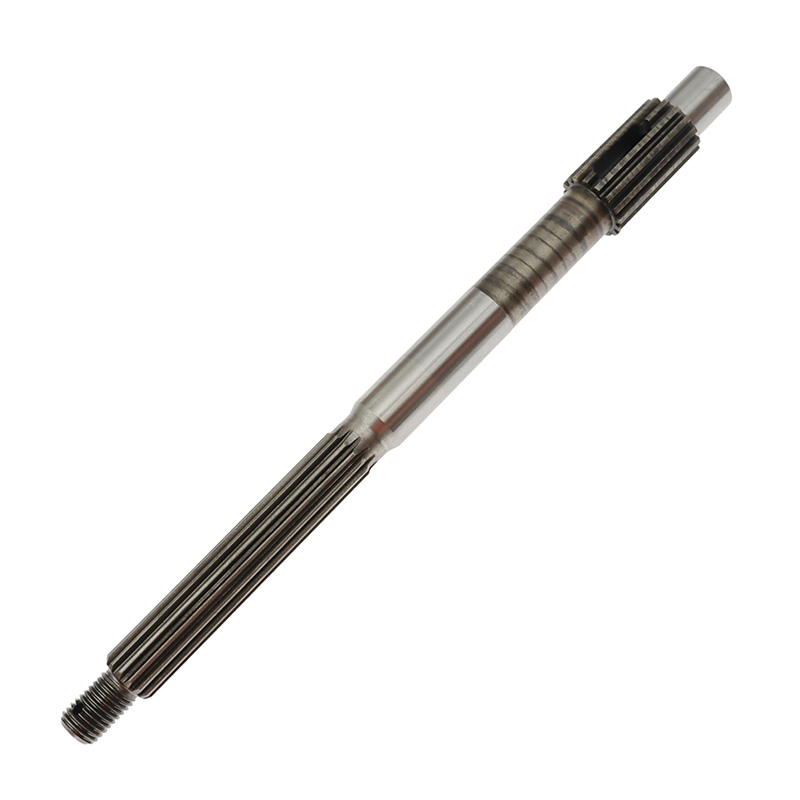
The following checklist is for observation and service planning, not underwater disassembly.
With the engine stopped and accidental starting prevented, locate the shaft's hull passage.
Record the seal manufacturer, model, shaft size, and any visible identification. Obtain the matching manual before deciding what leakage or maintenance is acceptable.
Look for:
- Cracked, split, or deteriorated hoses or bellows.
- Corroded fittings and damaged clamps.
- Water staining around connections.
- Loose-looking components or damaged water hoses.
PYI specifically requires regular bellows inspection and replacement when deterioration appears. Inspection should remain hands-off around moving machinery.
Note whether water appears with the shaft stopped, during rotation, or only under certain operating conditions.
A conventional packing gland and a mechanical face seal do not have the same expected leakage behavior. Identifying the system first prevents a normal packing drip from being mistaken for a defect—or a seal fault from being dismissed as normal.
Photograph the assembly while stopped. Record leakage observations, unusual noise, vibration, and recent maintenance.
Do not reach toward a rotating shaft, coupling, or seal. Any operating inspection must preserve safe separation from moving components.
Do not loosen or remove below-waterline sealing components as an exploratory check.
PYI requires its Type B seal installation to take place with the boat out of the water and recommends a qualified professional installer. If water entry is substantial or increasing, prioritize onboard safety procedures and professional assistance rather than continued testing.
Understanding how a propeller shaft exits the hull also means understanding how its seal receives water.
For example, PYI's Type B manual requires a water supply to cool and lubricate the seal. Its plumbing instructions address bearing arrangements and twin-engine installations, showing why a generic hose-routing rule is inadequate.
After a haul-out or prolonged dry period, commissioning must follow the fitted seal's instructions. West Marine highlights trapped air as a risk for PSS-style seals after relaunch, but owners should not assume every seal needs the same manual venting procedure.
A useful service handover should document:
- The exact seal model.
- Its water-supply or vent arrangement.
- Required checks after relaunch.
- Inspection and replacement intervals.
Even maintenance intervals can differ between sources. PYI's Type B manual specifies preventive bellows replacement no less than every eight years, whereas West Marine gives shorter general guidance. Apply the current instructions for the installed product rather than transferring one interval to all seals.
For purchasing teams, the most useful improvement is a complete specification package rather than a quotation request containing diameter alone.
We recommend preparing the following information for technical review:
| Information | What to document |
|---|---|
| Shaft dimensions | Diameter, overall length, and dimensioned drawing |
| End connections | Coupling details, keyways, taper, and thread |
| Sealing system | Manufacturer, model, and interface location |
| Bearing arrangement | Bearing locations, dimensions, and known condition |
| Application | Vessel type and available operating information |
| Replacement history | Reason for replacement and previous repair details |
Shaft seals and bearings have different dimensional requirements. West Marine notes that bearing selection involves shaft diameter, outside diameter, and length; PYI's installation instructions also require compatibility with the stern-tube connection.
Our recommendation is to submit drawings and assembly photographs together. That creates a clearer technical conversation than assuming the old shaft's diameter fully describes the replacement.
Planning a new build or replacing an existing marine propeller shaft?
Send Ningbo Gill Transmission Parts Co., LTD. your shaft drawing, dimensions, connection details, seal information, and bearing arrangement. Include the reason for replacement if the existing system has experienced leakage, wear, or vibration.
With 29 years of professional experience in marine components, we welcome detailed technical inquiries. A clearly documented shaft assembly provides a stronger starting point for discussing your production and purchasing requirements.
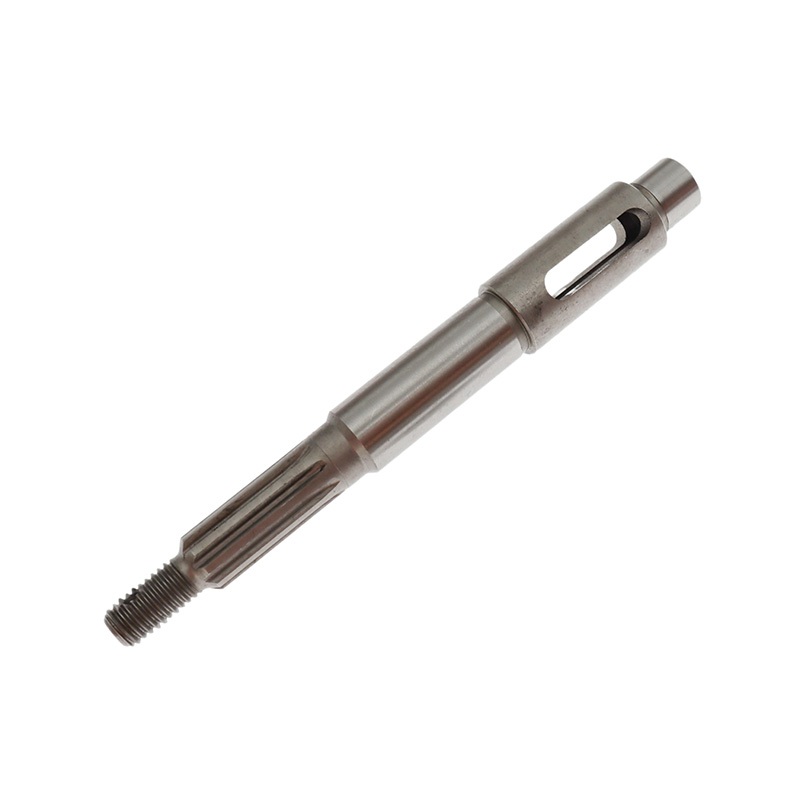
The passage is commonly called a stern tube or shaft log. Terminology varies, but it provides the shaft's route through the hull. A stuffing box or shaft seal controls water entry around the shaft.
Yes, in a conventional inboard shaft-drive arrangement. The shaft rotates through the passage, while the hull-mounted tube remains stationary. Bearings support rotation, and a separate sealing arrangement controls leakage.
A small controlled drip can be normal for conventional flax packing during rotation. Excessive leakage, increasing leakage, or overheating requires investigation. Use the fitted packing's instructions rather than applying a universal drip rate.
Yes. Although designed to prevent routine leakage, a mechanical face seal can develop problems. PYI's troubleshooting guidance identifies contamination between faces as a possible cause of leakage at rest and inadequate water supply as a possible cause of squealing.
No. The bearing supports the shaft and provides a lubricated running surface. The shaft seal controls water entry into the hull. Bearing wear can affect sealing performance, but the two components perform different jobs.
Do not assume this is safe. PYI explicitly requires Type B installation with the boat out of the water. Follow the installed product's manual and use a qualified marine technician for work that opens the below-waterline shaft passage.
1. PYI / PSS Seal, LLC. — [Type B Seal Installation Instructions]. Manufacturer instructions covering installation, water supply, shaft positioning, bellows inspection, replacement, and troubleshooting. The retrieved document carries a 2024 copyright notice.
2. Brian Gordon, West Marine — [Stuffing Boxes, Shaft Seals and Shaft Bearings]. Updated June 30, 2026. Used for packed-gland principles, bearing functions, shaft-surface condition, and maintenance considerations. Product-specific manufacturer instructions take precedence where guidance differs.
3. Practical Sailor — [Stuffing Box Care]. Used for locating the stuffing box and explaining controlled leakage with traditional packing.
4. AB Marine — [Stuffing Box]. Used for packing-gland terminology, construction, cooling, lubrication, and wear.
5. Good Old Boat — [Shaft Log 101]. Used for shaft-log terminology and the relationship between the hull passage, seal, and support arrangement.
6. Glen-L Marine — [Shaft Logs and Parts]. Used for the relationship between a shaft log and a hose-connected stuffing box.
7. Ningbo Gill Transmission Parts Co., LTD. — [Gill Transmission Parts]. 29 years of professional experience; focus on research, development, production, and sale of propeller shafts and other marine components. No public supporting page was supplied, and no additional company capabilities or customer results are asserted.


