


close
Choose Your Site
Global
Social Media
Views: 219 Author: Gill Transmission Parts Publish Time: 2026-10-16 Origin: Site


Content Menu
● What Is Stuffing Material in a Boat Shaft Seal?
>> Packing Is Different From a Dripless Shaft Seal
● How Long Does Boat Shaft Packing Last?
● What Determines Stuffing Box Packing Lifespan?
>> Shaft Operating Hours and Duty Cycle
>> Propeller Shaft Surface Condition
>> Alignment and Bearing Condition
● Signs That Boat Shaft Seal Packing Needs Replacement
>> Distinguish Adjustment Problems From Replacement Problems
● How Much Should a Traditional Stuffing Box Drip?
>> Temperature Matters Alongside Drip Rate
● How to Replace Stuffing Box Packing Correctly
>> Do Not Assume Every Gland Takes Three Rings
● Three Practical Ways to Improve Packing-Life Decisions
>> 1. Establish a Commissioning Baseline
>> 2. Investigate Short Life Before Buying "Better" Packing
>> 3. Coordinate Packing Inspection With Shaft Maintenance
● A Practical Boat Shaft Packing Maintenance Schedule
● Protect the Propeller Shaft, Not Just the Bilge
>> Can stuffing box packing last more than three seasons?
>> Should I replace packing every year?
>> Should a traditional stuffing box be completely dry?
>> Why does new packing still leak?
>> Is PTFE packing better than ordinary flax?
>> Can I change shaft packing while the boat is afloat?
Stuffing material in a boat shaft seal commonly needs replacement every one to three seasons in a traditional flax-packed stuffing box. However, this is a maintenance planning guideline—not a guaranteed lifespan. Operating hours, packing material, adjustment, cooling water, and propeller shaft condition determine when replacement becomes necessary.
For boat owners asking "how long does stuffing material last in boat shaft seal," the most useful answer is therefore two-part: use a reasonable replacement schedule, but let inspection and operating performance decide whether the packing should come out sooner.
At Ningbo Gill Transmission Parts Co., LTD., our focus is the complete shaft-and-sealing interface. With 29 years of experience in developing, manufacturing, and selling propeller shafts and marine components, we approach packing maintenance as more than a leak-control task. The objective is to protect the shaft while maintaining dependable sealing.
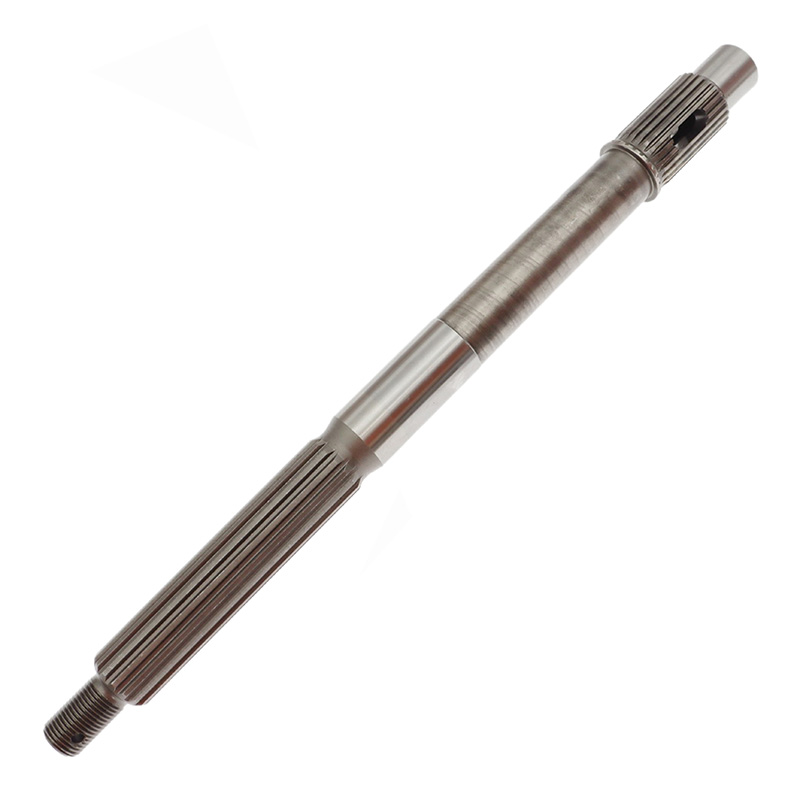
"Stuffing material" usually means the braided packing installed inside a conventional stuffing box, also called a packing gland or stuffing gland.
The packing forms separate rings around the propeller shaft. Tightening the packing nut compresses those rings against the shaft and housing, restricting water entry while allowing rotation.
Traditional packing normally permits a small amount of water to pass while the shaft turns. That water provides cooling and lubrication. Eliminating every drip by excessive tightening can produce frictional heat and damage the shaft.
Not every boat shaft seal contains stuffing material.
Mechanical face seals use contacting sealing surfaces rather than replaceable braided packing. Other designs use lip seals. Their inspection requirements and replacement intervals must come from the specific manufacturer.
Before buying replacement packing, identify the installed seal. Advice for a conventional stuffing box should not automatically be applied to a mechanical seal.
For traditional flax packing, one to three seasons is a useful starting point. Inspect it at each haulout and replace it earlier if leakage, overheating, or physical deterioration indicates a problem.
A season is not a standardized number of operating hours. A lightly used sailing boat and a frequently operated workboat can accumulate very different amounts of shaft rotation during the same calendar period.
| Packing category | Practical lifespan guidance | Main limitation |
|---|---|---|
| Traditional waxed flax | Plan around one to three seasons | Wear and lubricant loss can require earlier replacement |
| PTFE-impregnated flax | May outlast standard flax under comparable conditions | Still requires inspection and correct adjustment |
| Synthetic braided packing | Follow the product's marine-service instructions | Construction and lubrication differ between products |
| Graphite-containing packing | Evaluate compatibility before considering longevity | Potential galvanic interaction with shaft materials |
Improved packing materials can reduce friction or extend service, but the available guidance does not establish a universal multi-year replacement interval for every synthetic product. Graphite-containing packing also deserves particular caution because corrosion compatibility matters as much as thermal performance.
Avoid choosing packing solely because its advertisement promises longer life. A product must suit the shaft material, gland dimensions, shaft speed, and cooling arrangement.
Packing experiences friction whenever the shaft rotates. Consequently, calendar age alone cannot describe its working exposure.
Record engine hours as a practical indicator, while recognizing that engine hours and shaft-running hours are not always identical. Extended motoring, frequent maneuvering, and demanding commercial service justify closer monitoring.
The packing nut is an adjustment device, not a solution to every leak.
Too little compression can allow excessive leakage. Too much compression restricts cooling water and increases friction. Repeated tightening of deteriorated packing can eventually damage the shaft rather than restore a reliable seal.
Make adjustments in small increments according to the installed product's instructions. Check the resulting leakage and temperature before deciding whether another adjustment is necessary.
Packing needs a suitable running surface.
A scored, pitted, or grooved shaft can damage new packing and prevent stable sealing. If freshly installed rings begin leaking repeatedly, inspect the shaft instead of assuming the packing is defective.
From a shaft-manufacturing perspective, this is the central diagnostic question: is the packing worn out, or is the surface beneath it causing the wear?
Packing cannot compensate indefinitely for an unstable shaft.
A worn shaft bearing may allow movement that disrupts sealing. Side-loading or inadequate clearance within the stuffing box can also contribute to heat and abnormal wear.
Persistent leakage therefore warrants examination of the wider propulsion system, including bearing support, alignment, gland position, and hose condition.
Packing should be replaced based on condition when any of the following problems appears:
- Leakage remains excessive after careful, appropriate adjustment.
- The packing nut reaches the end of its useful adjustment travel.
- Removed packing is blackened, crumbly, or no longer structurally intact.
- The gland repeatedly overheats.
- Inspection reveals shaft grooves, pitting, or other damage.
One brief check at the dock is insufficient. Observe the gland at rest and under representative operating conditions, using safe access procedures.
| Observation | Possible explanation | Appropriate next step |
|---|---|---|
| Increasing leakage, otherwise stable operation | Packing wear or adjustment change | Inspect and make a small permitted adjustment |
| Leakage cannot be controlled without heat | Deteriorated packing or another fault | Investigate rather than tighten further |
| New packing leaks repeatedly | Shaft damage, sizing, installation, or bearing issue | Inspect the complete interface |
| Smoke, burning odor, or uncontrolled water entry | Serious overheating or sealing failure | Stop safely and obtain immediate assistance |
These are diagnostic directions, not a substitute for identifying the actual fault. Repeatedly unsuccessful repacking is a reason to broaden the inspection.
West Marine gives two to three drops per minute while the shaft rotates as a typical guideline for a conventional stuffing box. Other marine specialists emphasize that the correct balance depends on the packing and installation.
Do not treat a single drip count as a universal specification.
The goal is controlled leakage with adequate cooling—not the smallest possible number of drops at any cost.
Check gland temperature after sufficient operation, including at the boat's normal cruising conditions.
An infrared thermometer can help establish a repeatable baseline. Measure the gland body consistently; reflective shaft surfaces can produce misleading readings. Specialist guidance also differs on acceptable temperature rise, reinforcing the need to follow the applicable manufacturer's instructions rather than adopt one universal limit.
Keep hands, tools, clothing, and measuring equipment away from rotating machinery. Stop and investigate abnormal heating; do not continue operating simply because the drip count appears acceptable.
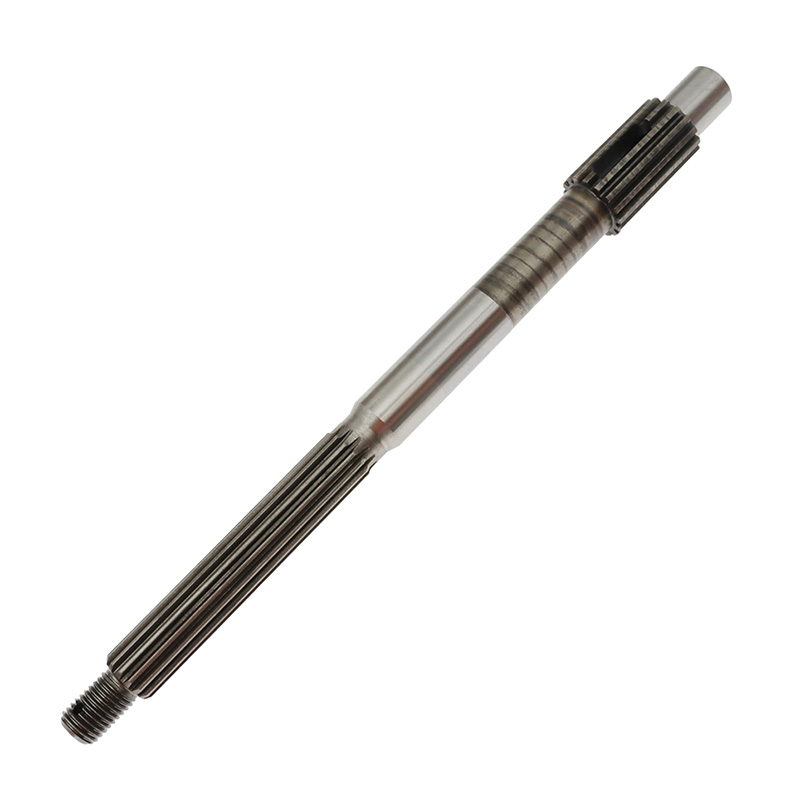
Repacking involves a hull penetration below the waterline. For inexperienced owners, carrying out the work with the boat hauled out is the safer approach. Removing packing afloat can admit water.
Use the following sequence as a planning checklist, with the gland and packing manufacturer's instructions controlling the details.
1. Identify the gland design and specified packing material.
2. Confirm the required packing cross-section and ring count.
3. Isolate the propulsion system before working near the shaft.
4. Remove all old rings and inspect the packing chamber.
5. Examine the shaft's sealing surface for damage.
6. Cut separate replacement rings using the prescribed joint method.
7. Seat each ring carefully and stagger the joints.
8. Reassemble without excessive initial compression.
9. Conduct a controlled operational check after launching.
10. Recheck leakage, temperature, and locking security after break-in.
Published instructions differ because stuffing boxes differ. Some arrangements use three rings; others accommodate four.
Follow the actual gland specification. Adding extra rings merely to stop a leak can compromise installation or cooling, and insufficient thread engagement creates another hazard.
Likewise, do not choose packing size from shaft diameter alone when the gland specification is available. The packing must fit the actual space between the shaft and packing chamber.
After installing and adjusting new packing, record:
- Installation date and operating hours.
- Packing brand, construction, and cross-section.
- Shaft speed during the check.
- Leakage at rest and while running.
- Gland temperature and surrounding water temperature.
- Any vibration or unusual noise.
This proposed maintenance record makes later inspections more useful. A change from the boat's established baseline often provides better diagnostic context than an isolated observation.
Consider a hypothetical boat that needs repacking twice in one season.
Premium packing may appear to be the obvious upgrade. However, if the shaft is pitted or the gland is side-loaded, the replacement material may encounter the same problem.
The useful sequence is to inspect the shaft and installation first, then select compatible packing. Frequent repacking can indicate an underlying mechanical or installation fault rather than normal consumable wear.
A planned haulout provides an opportunity to inspect the sealing surface, gland hose, clamps, and shaft-bearing condition together.
This does not mean every component needs replacement whenever packing is changed. It means the inspection should cover the parts that influence sealing reliability. Deteriorated hoses, corroded clamps, and worn bearings can create risks that fresh packing alone cannot resolve.
Use this proposed schedule as an organizing framework, not a replacement for manufacturer requirements:
| Maintenance opportunity | Inspection focus |
|---|---|
| Before departure | Unexpected leakage and abnormal bilge water |
| After initial repacking | Break-in behavior, temperature, and leakage |
| During routine operation | Changes from the established baseline |
| At each haulout | Packing condition, shaft surface, hose, clamps, and bearings |
| Before an extended passage | Resolve unexplained heat, leakage, or vibration |
Condition-based inspection should always override a calendar target. Packing that overheats or cannot control leakage should not remain in service simply because it is relatively new.
The best stuffing box maintenance protects both the boat and its propulsion components.
Packing is replaceable. Shaft damage may require more extensive investigation, machining assessment, or replacement. Continually tightening a leaking gland without identifying the cause can turn a manageable maintenance issue into a larger repair.
Contact Ningbo Gill Transmission Parts Co., LTD. when shaft inspection identifies wear or when planning propeller shaft replacement. Share your shaft drawing, dimensions, material requirements, seal arrangement, operating conditions, and photographs of the affected area. Our team can discuss your propeller shaft and marine-component sourcing requirements using the details of your installation.
Possibly, depending on material and service conditions. However, one to three seasons is a common planning interval for traditional flax. Continued service should depend on inspection, stable temperature, controlled leakage, and manufacturer guidance—not age alone.
Annual replacement is not a universal requirement. Annual inspection and inspection at haulout are more useful starting points. Replace sooner if the packing deteriorates, overheats, or cannot maintain acceptable leakage.
Not while rotating unless the specific system's instructions explicitly permit that operating condition. Conventional flax packing normally requires controlled water leakage for cooling and lubrication.
Possible causes include incorrect sizing, installation errors, shaft pitting, grooves, or bearing-related movement. Repeated tightening is not the correct response when those underlying faults remain unresolved.
PTFE-impregnated flax can reduce friction and last longer than standard flax. Nevertheless, correct sizing, shaft condition, installation, and cooling remain essential.
Experienced personnel sometimes do, but water can enter when the packing is removed. A hauled-out boat is the safer setting for an inexperienced owner. Arrange professional assistance if access or water control is uncertain.
1. Brian Gordon, West Marine, "Stuffing Boxes, Shaft Seals and Shaft Bearings," updated June 30, 2026. Supports the one-to-three-season planning interval, conventional drip guidance, replacement indicators, material comparison, and bearing-related diagnosis. [westmarine]
2. Steve D'Antonio, Steve D'Antonio Marine Consulting, "Conventional Wisdom for Conventional Stuffing Boxes," February 16, 2017. Supports shaft-surface diagnosis, gland inspection, temperature monitoring, repacking principles, and graphite compatibility cautions. [stevedmarineconsulting]
3. Marine How To, "Re-Packing A Traditional Stuffing Box." Supports installation details, packing sizing, joint staggering, cooling considerations, and the recommendation that inexperienced owners repack with the boat out of the water. [marinehowto]
4. Practical Sailor, "Stuffing Box Care," January 6, 2026. Supports packing deterioration, the limitations of repeated tightening, and the risk of shaft scoring. [practical-sailor]


