


close
Choose Your Site
Global
Social Media
Views: 222 Author: Gill Transmission Publish Time: 2026-05-05 Origin: Site


Reducing gear noise in outboard motors requires a combination of smart gear design, precision manufacturing, correct installation, and disciplined maintenance, especially when you work with high‑load marine applications like outboard gears. In this guide, I will walk through proven engineering methods, real‑world marine insights, and practical steps we use in Ningbo Gill Transmission Parts Co., LTD. to keep outboard gear units quiet, durable, and reliable. [techniconacoustics]
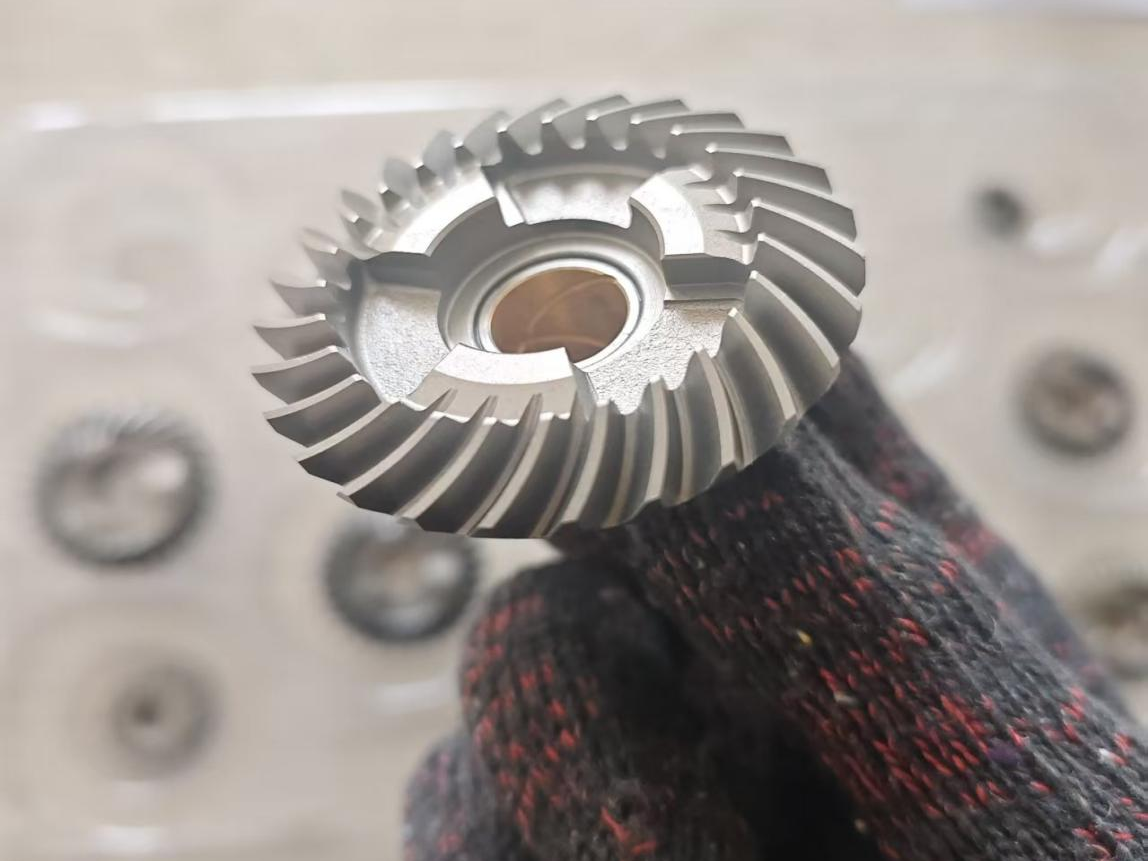
Gear noise is the audible vibration generated when gear teeth in your outboard's lower unit mesh under load. In outboard motors, this typically comes from the gear set that transmits power from the vertical driveshaft to the propeller shaft. [bdgears]
Common characteristics of outboard gear noise include:
- High‑pitched whine at constant cruising speed (mesh frequency related). [linkedin]
- Rumbling or growling when shifting between forward and reverse. [youtube]
- Clicking or knocking when the gear is not fully engaged. [youtube]
For boat owners, excessive gear noise is more than a comfort problem; it often signals premature wear, misalignment, or lubrication issues that can lead to costly lower‑unit failures if ignored. [bdgears]
On the water, noise is not just an annoyance; it affects safety, comfort, and even environmental compliance. [ww2.eagle]
Key reasons to control outboard gear noise:
- Comfort and fatigue – High noise levels increase operator fatigue and reduce the overall boating experience. [techniconacoustics]
- Perceived quality – A quiet gear train gives users confidence in build quality and precision. [linkedin]
- Durability indicator – Rising noise often precedes failures in bearings, gears, or shafts. [bdgears]
- Underwater noise impact – For commercial and research vessels, underwater radiated noise is an emerging regulatory and environmental concern. [ww2.eagle]
As a manufacturer of outboard gears and marine transmission parts, we treat noise as an engineering metric on the same level as torque capacity, efficiency, and lifespan. [linkedin]
Understanding the root causes is the foundation of any effective noise‑reduction strategy. [en.enplas]
Deviation from ideal gear geometry is one of the primary noise drivers: [bdgears]
- Pitch errors and tooth profile errors cause cyclic load variations and tonal noise. [bdgears]
- Runout and poor tooth alignment increase vibration and mesh impact. [linkedin]
- In bevel gear sets used in outboards, micro‑errors in tooth contact pattern can generate strong whine under load. [linkedin]
Rough tooth surfaces behave like a series of tiny ramps and pits, creating micro‑impacts during meshing. [en.enplas]
- Inadequate grinding or honing raises friction and noise. [bdgears]
- Poor finishing in high‑contact areas accelerates wear and changes the original contact pattern, further increasing noise. [linkedin]
Backlash and contact ratio define how smoothly the teeth engage. [bdgears]
- Excessive backlash leads to impact when the drive direction reverses or load fluctuates. [bdgears]
- Too little backlash risks jamming, thermal expansion issues, and noisy scuffing. [bdgears]
- Low contact ratio concentrates load on fewer teeth and amplifies noise. [linkedin]
The gear mesh may be well‑designed, but the structure around it can amplify noise. [ww2.eagle]
- Flexible shafts and housings allow misalignment and dynamic deflection. [linkedin]
- Thin or poorly damped gearcases radiate vibration into the hull. [techniconacoustics]
Lubrication is the first line of defense against gear noise in marine gearcases. [bauergmc]
- Low oil level or degraded lubricant increases sliding friction and whine. [bauergmc]
- Wrong viscosity reduces film thickness and raises metal‑to‑metal contact. [bauergmc]
- Water ingress (milky oil) destroys the oil film and accelerates pitting and noise. [youtube]
From a gear designer's and manufacturer's perspective, the quietest outboard gear is the one engineered for low noise at the design stage. [en.enplas]
We invest in high‑precision manufacturing to meet tight tolerances on: [linkedin]
- Pitch and profile accuracy
- Tooth alignment and runout
- Concentricity between gear and shaft
To achieve this, we rely on processes such as gear grinding and CNC finishing so that tooth engagement is as close to pure rolling contact as possible, minimizing vibration. [bdgears]
Tooth surface finish directly influences noise. [en.enplas]
- Grinding, honing, and superfinishing reduce surface roughness. [en.enplas]
- In some industrial applications, controlled run‑in with specialized abrasive oil is used to smooth micro‑asperities. [bdgears]
For outboard gears, we target a balanced finish that offers low noise and high load‑carrying capacity in mixed lubrication conditions. [en.enplas]
We carefully design backlash values and gear geometry to balance smoothness, durability, and manufacturability. [linkedin]
- Backlash is set to avoid both tooth impact and jamming, considering thermal expansion and housing deformation. [bdgears]
- Where appropriate, we design for higher contact ratios by choosing suitable pressure angles, tooth heights, and tooth counts. [bdgears]
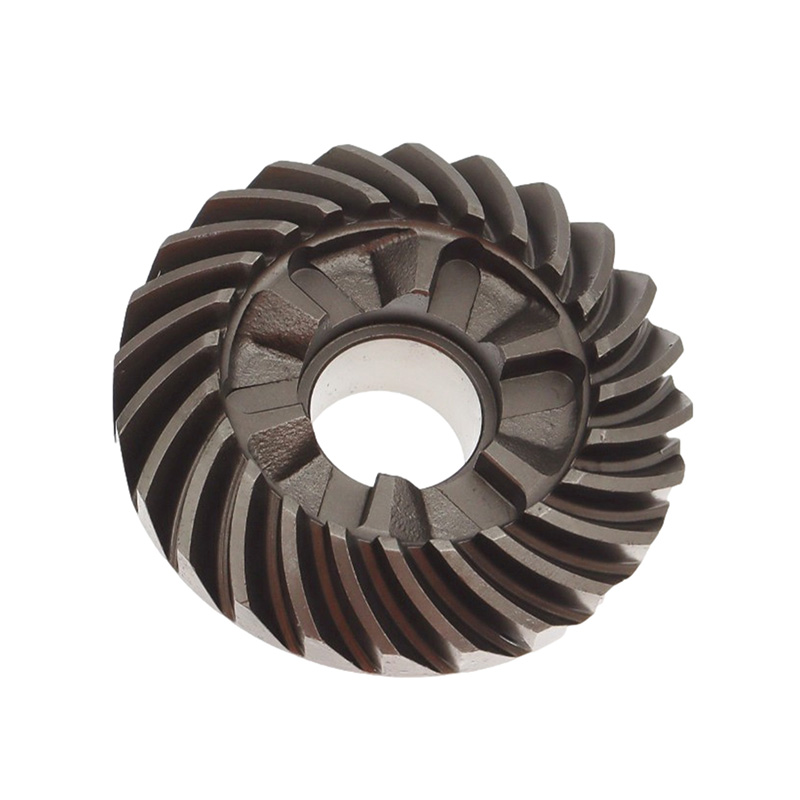
- Helical or spiral bevel teeth can significantly reduce noise compared with straight bevel designs due to gradual engagement and increased tooth overlap. [linkedin]
While outboard gears must typically be made from high‑strength steels, we can tune rigidity and damping through the overall design. [ww2.eagle]
- Increasing tooth width or shaft diameter improves stiffness and reduces deflection. [bdgears]
- Reinforcing the gearcase housing and adding ribs reduces radiation of vibration into the water and hull. [ww2.eagle]
- Where feasible, adding damping materials or acoustic treatments inside engine compartments further reduces perceived noise. [techniconacoustics]
In some lower‑load marine subsystems (controls, auxiliary drives), plastic gears can reduce noise thanks to their inherent damping. [en.enplas]
- Plastic drives are quieter under light loads and low speeds. [en.enplas]
- For main outboard propeller drives, we still rely on optimized steel or cast iron gears for strength, while using surface finishing and geometry to control noise. [en.enplas]
Noise performance depends on consistent, repeatable quality – not just on the nominal design. [en.enplas]
Key practices we follow:
- Tight process control on machining, heat treatment, and grinding to hold micro‑geometry targets. [linkedin]
- 100% inspection of critical dimensions and tooth contact patterns on master gears. [bdgears]
- Routine noise and vibration testing on sample gear sets to monitor manufacturing drift over time. [en.enplas]
By treating noise as a measurable output of the production line, we ensure our outboard gears deliver the same quiet performance unit after unit. [en.enplas]
Even the best‑designed gear set can become noisy if installed incorrectly. [youtube]
User and mechanic feedback shows that many "new" clicking or grinding sounds are related to linkage problems, not the gears themselves. [youtube]
- If the gear selector does not fully engage forward or reverse, the dog clutch or gears can hover between positions and click under load. [youtube]
- Correct adjustment in neutral, then in forward and reverse, is essential to avoid partial engagement noise and eventual tooth damage. [youtube]
Outboard gearcases rely on precise bearing preload to hold gears in correct mesh. [linkedin]
- Too little preload allows shaft movement, changing contact patterns and increasing noise. [linkedin]
- Too much preload raises temperature and can lead to noisy premature bearing failure. [linkedin]
During assembly or service, mechanics should follow OEM preload specifications with correct shims and torque procedures. [bdgears]
Service experience consistently highlights lubrication as a key noise lever. [bauergmc]
- Always use marine‑grade gear oil with the manufacturer‑recommended viscosity and additives. [bauergmc]
- Check that the oil level is correct and that no air pockets remain within the casing. [bauergmc]
- If the oil appears milky, water intrusion has occurred; the gearcase must be inspected and resealed to prevent severe noise and damage. [youtube]
Gear design is only one part of a holistic noise‑control strategy on a boat. [techniconacoustics]
- Acoustic insulation in engine compartments can significantly reduce airborne noise reaching the cabin or cockpit. [techniconacoustics]
- Polyester fiber composites and high‑quality damping liners outperform traditional foam in moist marine environments. [techniconacoustics]
- On larger vessels, underwater noise‑control strategies include hull form optimization, flow equalizers, structural damping tiles, and decoupling coatings to reduce radiated noise by several decibels across key frequency bands. [ww2.eagle]
For builders integrating our outboard gears into their boats, we recommend combining quiet drive design with modern acoustic materials and compartment design best practices. [ww2.eagle]
From a user‑experience standpoint, operators need clear, actionable steps. Below is a simple maintenance‑focused checklist that we share with many OEMs and fleet owners. [youtube]
1. Shift positively: Engage gear assertively rather than easing it in slowly to avoid prolonged grinding of the clutch. [youtube]
2. Monitor oil condition: Inspect for metal particles, discoloration, and milky appearance at regular intervals. [youtube]
3. Maintain oil level and quality: Use recommended marine gear oil, replacing it at least once per season or based on operating hours. [bauergmc]
4. Listen for new noises: Changes in tone at certain RPM ranges can indicate early misalignment or bearing problems. [linkedin]
5. Inspect seals and boots: Prevent water ingress that compromises lubrication and increases noise. [youtube]
These straightforward habits help keep even high‑power outboard gears running smooth and quiet season after season. [youtube]
Real‑world industrial gear applications provide useful parallels for marine environments. [en.enplas]
- An industrial plastic‑gear planetary gearbox achieved a noise reduction of around 12 dB by optimizing the gearbox structure and tightening tolerances on roundness, surface roughness, and profile. [en.enplas]
- In broader gearbox engineering practice, increasing contact ratio, improving stiffness, and using high‑viscosity lubricants are standard measures to reduce mesh noise. [bdgears]
- In marine hull noise research, applying structural damping tiles on steel plates can reduce vibration levels by approximately 3–10 dB, directly lowering radiated underwater noise. [ww2.eagle]
We apply the same principles to outboard gear design: micro‑geometry control, structural optimization, and smart lubrication choices to deliver quieter drives. [ww2.eagle]
| Factor | What It Affects | Typical Action To Reduce Noise |
|---|---|---|
| Gear geometry accuracy | Mesh smoothness and tonal whine bdgears | Tighten tolerances, use precision grinding bdgears |
| Tooth surface roughness | Friction and vibration bdgears | Hone or superfinish tooth surfaces bdgears |
| Backlash and contact ratio | Impact, load sharing, tonal peaks bdgears | Optimize backlash, increase contact ratio, use spiral bevel bdgears |
| Structural rigidity | Deflection and radiated noise bdgears | Reinforce housings, increase shaft stiffness bdgears |
| Lubrication | Sliding contact and wear noise bdgears | Use correct viscosity marine oil, maintain level bdgears |
| Shifter adjustment | Clicking and grinding youtube | Correct linkage settings, ensure full engagement youtube |
As a specialized manufacturer of outboard gears and marine transmission parts, we design our products around low noise, high durability, and marine‑specific load profiles. Depending on your project, we can support you with: [en.enplas]
- Application‑specific gear design (ratio, tooth form, and contact pattern) optimized for noise and efficiency. [linkedin]
- Precision‑machined spiral bevel gears tailored for outboard and sterndrive units. [bdgears]
- Engineering support on housing stiffness, lubrication strategy, and system‑level noise control in your hull or engine compartment. [techniconacoustics]
If you are an OEM, fleet operator, or marine engineer facing gear‑noise challenges, our engineering team can work with your test data and field feedback to create a quieter, more reliable outboard drive solution. [en.enplas]
If you are looking to reduce gear noise in your current outboard design or planning a next‑generation quiet marine drivetrain, contact Ningbo Gill Transmission Parts Co., LTD for an engineering review of your gear set, housing, and lubrication system. Together, we can define a clear, data‑driven path to quieter, longer‑lasting outboard performance. [ww2.eagle]
1. Why did my outboard suddenly become noisier at cruise speed?
A sudden increase in whine or rumble often indicates changes in bearing condition, alignment, or lubrication, such as deteriorated oil or water ingress into the gearcase. An immediate inspection of gear oil and seals is recommended. [youtube]
2. Can I reduce noise just by changing the gear oil?
In some cases, switching to the correct marine‑grade viscosity or refreshing degraded oil can noticeably lower gear noise by restoring proper film thickness. However, if the noise is caused by wear, misalignment, or improper backlash, oil alone will not solve the problem. [bauergmc]
3. Are spiral bevel gears always quieter than straight bevel gears in outboards?
Spiral bevel gears generally provide smoother, more gradual engagement and higher contact ratios, which typically reduces noise compared with straight bevel gears. That said, manufacturing accuracy, alignment, and lubrication must still be carefully controlled to realize those benefits. [en.enplas]
4. How do acoustic materials in the engine compartment affect perceived noise?
High‑quality marine acoustic liners and polyester fiber composites can significantly cut airborne noise reaching passengers by blocking and absorbing sound from the engine and gearbox. When combined with low‑noise gear design, this yields a much quieter onboard environment. [techniconacoustics]
5. When should I consult a gear manufacturer about noise problems?
You should involve a gear manufacturer whenever noise persists after basic maintenance (oil change, linkage adjustment, seal inspection) or when designing a new outboard or boat model where noise is a key selling point. Early collaboration allows optimization of gear geometry, housing stiffness, and system acoustics. [ww2.eagle]
1. Beyond Gears – "10 Ways to Reduce Gear Noise." [bdgears]
2. Technicon Acoustics – "The Best Marine Noise Reduction Materials." [techniconacoustics]
3. Enplas Global – "How Can I Reduce My Plastic Gear Noise?" [en.enplas]
4. YouTube – "Grinding your gearbox on an outboard engine." [youtube]
5. YouTube – "Boat Motor Clicking Noise, Propeller Clicking, Shift Linkage." [youtube]
6. Bauer GMC – "7 Ways To Reduce Gear Motor Noise During Operation." [bauergmc]
7. ABS Whitepaper – "Practical Considerations for Underwater Noise Control." [ww2.eagle]
8. LinkedIn Article – "Gearbox noise reduction: Causes, fixes & best practices." [linkedin]


