


close
Choose Your Site
Global
Social Media
Views: 294 Author: Gill Transmission Parts Publish Time: 2026-10-31 Origin: Site


Content Menu
● What Are Mercury Lower Unit Parts and Aftermarket Alternatives?
>> Genuine Mercury lower unit parts
>> Aftermarket Mercury lower unit parts
● Mercury Lower Unit Parts vs Aftermarket Alternatives: Comparison Table
● Fitment: Why Horsepower Alone Is Not Enough
● Materials and Manufacturing: What Buyers Should Actually Compare
>> Hardness alone does not establish quality
● Reliability Depends on the Entire Repair
>> Diagnose the failure before choosing a replacement
● Compare Total Repair Cost, Not Just Parts Prices
>> A practical quotation comparison
● Warranty and Support: Read Beyond the Headline
● A Six-Step Process for Evaluating Aftermarket Lower Unit Parts
>> 1. Establish the exact application
>> 2. Request written fitment confirmation
>> 3. Define the supplied scope
>> 4. Review relevant quality evidence
>> 5. Confirm installation requirements
>> 6. Agree on after-sales procedures
● When Genuine Mercury Parts Are the Better Choice
● When Aftermarket Alternatives Deserve Consideration
● Discuss Your Outboard Gear Requirements with Ningbo Gill
>> Are aftermarket Mercury lower unit parts as good as genuine parts?
>> Can I identify lower unit parts using horsepower alone?
>> Can genuine and aftermarket gears be mixed?
>> Are aftermarket lower unit parts always cheaper?
>> Does milky gear oil always mean water contamination?
>> Should I replace individual parts or the entire lower unit?
Choosing Mercury lower unit parts vs aftermarket alternatives comes down to three questions: Does the component fit the exact gearcase? What evidence supports its quality? What will the complete repair cost? Genuine Mercury parts offer manufacturer-backed identification and original-equipment specifications. Carefully selected aftermarket components can provide another purchasing option, but compatibility and manufacturing consistency require closer evaluation.
At Ningbo Gill Transmission Parts Co., LTD., our focus is the development, production, and sale of outboard gears and related marine transmission components. With 29 years of professional experience, we approach this comparison from a manufacturer's perspective: compatibility comes before purchase price.
For boat owners, repair shops, and marine-parts distributors, the better choice is not simply the cheaper or more familiar label. It is the option that delivers documented suitability, dependable installation, and manageable ownership costs.
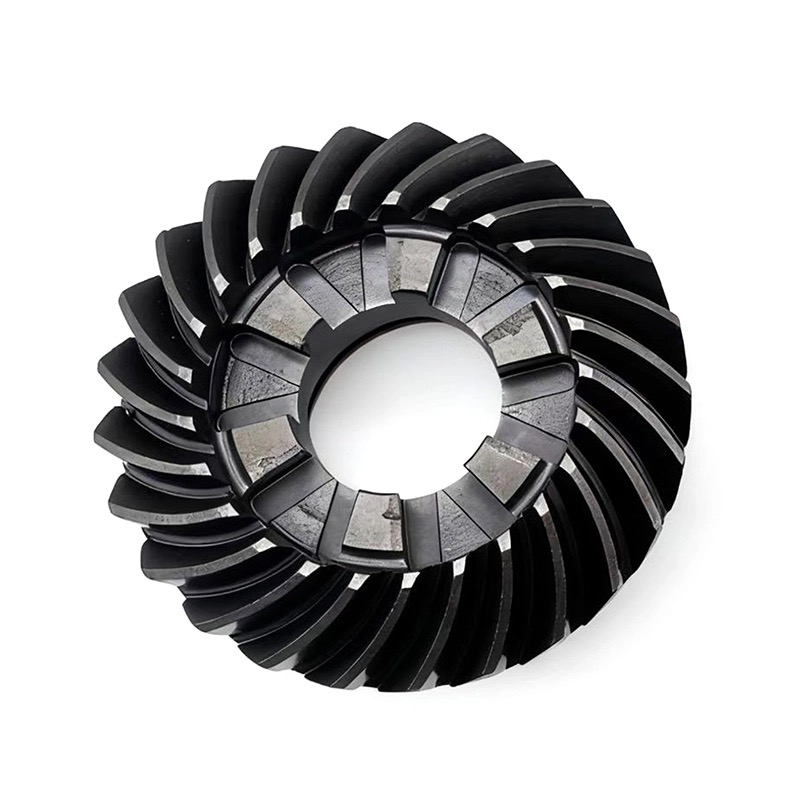
The lower unit transfers power from the engine to the propeller while supporting forward, neutral, and reverse operation. Its components include gears, shafts, bearings, seals, and associated hardware.
Genuine Mercury lower unit parts are supplied through Mercury's original-equipment parts system. Mercury describes its Precision Parts as exact replacements manufactured with the original materials, fit, and validated specifications.
For buyers, the main advantage is a clear identification route: locate the engine serial number, consult the parts catalog, and confirm the applicable component and any replacement part-number updates.
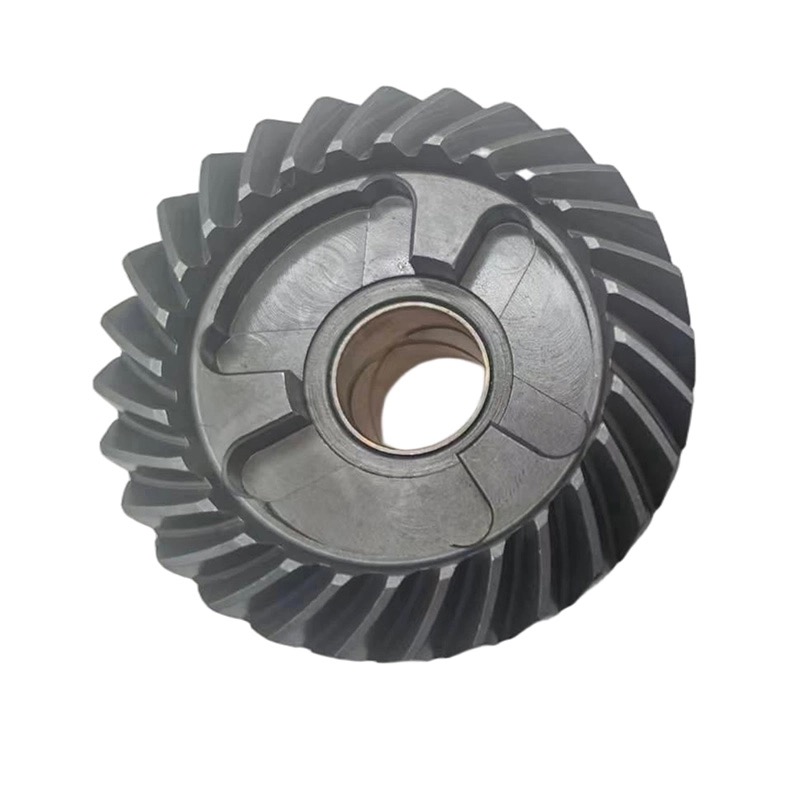
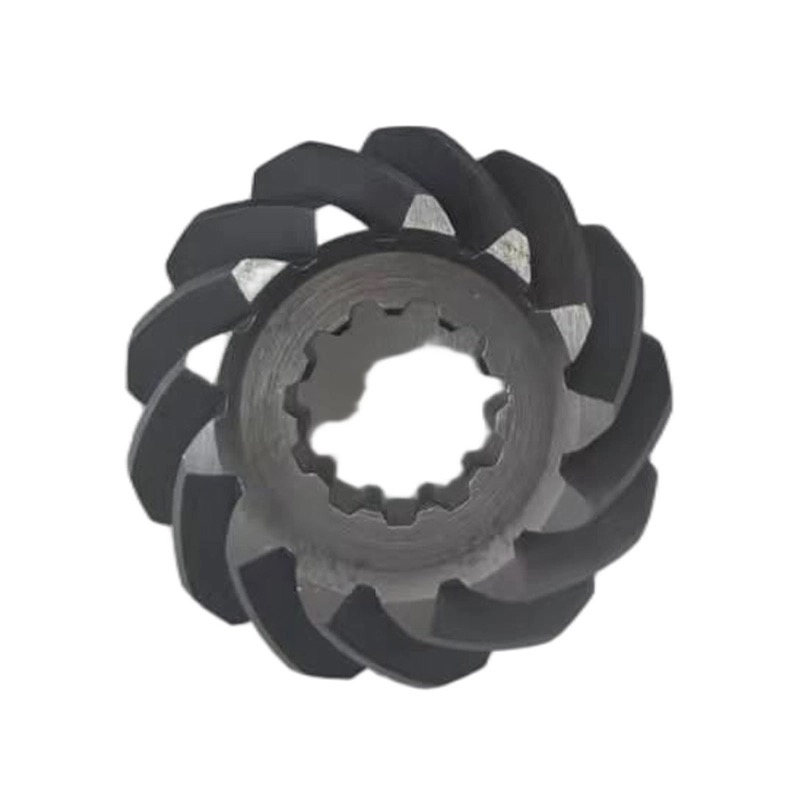
Aftermarket alternatives are replacement components sold outside the genuine Mercury parts offering. They range from individual seals and bearings to outboard gear sets, shafts, and complete replacement lower units.
This is not one uniform quality category. Suppliers differ in engineering capability, inspection practices, documentation, and support.
Terminology also deserves attention. Mercury itself describes Quicksilver as a premium aftermarket offering for various applications. Therefore, "aftermarket" does not automatically mean an unknown manufacturer or an inferior product.
The useful comparison is between identifiable products with verifiable specifications—not between two labels alone.
| Purchasing factor | Genuine Mercury parts | Aftermarket alternatives |
|---|---|---|
| Identification | Manufacturer catalog and serial-number lookup | Supplier cross-reference requiring verification |
| Specification basis | Original-equipment replacement specifications | Depends on the supplier and product |
| Quality evidence | Manufacturer validation and authorized support | Request relevant inspection and traceability records |
| Purchase price | Obtain a current, application-specific quotation | May offer savings; compare equivalent contents |
| Availability | Depends on dealer stock and part status | Depends on supplier inventory and production |
| Warranty | Written Mercury terms and regional conditions apply | Coverage and exclusions vary by supplier |
| Technical support | Authorized dealer network | Depends on supplier expertise and responsiveness |
| Best purchasing approach | Confirm the correct catalog application | Confirm application plus manufacturing evidence |
Neither column guarantees a successful repair without correct diagnosis and installation.
Two outboards with similar horsepower ratings do not necessarily use interchangeable lower unit components.
Before purchasing Mercury outboard lower unit replacement parts, confirm:
- Engine serial number and model designation.
- Existing gearcase identification, especially after previous replacements.
- Original part number and any superseding number.
- Gear ratio and rotation direction.
- Relevant shaft length, spline configuration, and dimensions.
- Included bearings, seals, hardware, and installation requirements.
Mercury recommends serial-number searching as the best way to identify parts. However, an engine's original catalog configuration should also be checked against the actual installed gearcase when its service history is uncertain.
A gear must work with its mating components, not merely fit inside the housing.
Tooth geometry, mounting position, bearing support, and operating clearance affect how the load passes through the gear mesh. A visually similar replacement is not sufficient evidence of compatibility.
For aftermarket outboard gears, ask whether the component is approved for use with the existing mating gears or must be supplied as a matched set.
Do not assume that gears from different manufacturers can be mixed. Obtain application-specific guidance before ordering.
A supplier's statement that a gear uses "premium steel" tells you little without supporting requirements.
From a manufacturing perspective, a more useful discussion covers:
1. Material specification and traceability.
2. Heat-treatment requirements and verification.
3. Tooth geometry and dimensional inspection.
4. Shaft interfaces, bearing seats, and runout.
5. Identification of the production batch.
These factors help distinguish documented manufacturing control from a broad marketing claim.
A gear's suitability cannot be judged by one hardness number.
For a case-hardened design, the hardened surface and supporting core perform different functions. Buyers should ask which hardness and effective case-depth requirements apply, how they are measured, and whether the results relate to the supplied batch.
Likewise, a dimensional report is only meaningful when its measurements correspond to an approved drawing or agreed specification.
Our purchasing recommendation is to request evidence proportional to the component's importance. A critical gear set deserves more technical scrutiny than routine noncritical hardware.
There is no defensible universal statement that every genuine component lasts longer than every aftermarket alternative.
The sources supporting this article do not provide a controlled, application-matched service-life comparison across the aftermarket category. Claims such as "twice the lifespan" therefore require product-specific testing.
Actual service performance also depends on:
- Correct gear and bearing adjustment.
- Lubrication and water exclusion.
- Shaft and housing condition.
- Operating loads and impact history.
- Installation workmanship.
Mercury distinguishes fine, powder-like metal particles associated with normal wear from metal chips that require gearcase disassembly and inspection.
Discolored lubricant also needs interpretation. White or cream-colored oil may indicate water, but Mercury notes that aeration and some assembly lubricants can affect appearance.
A practical diagnosis should investigate the cause rather than replace the most visibly damaged part.
For example, replacing gears without addressing a leaking seal or damaged bearing seat leaves a potentially important failure mechanism unresolved.
A lower quotation is useful only when it reduces the cost of a successful repair.
Compare these items on the same basis:
| Cost category | Questions to ask |
|---|---|
| Components | Are both quotations for the same scope? |
| Supporting parts | Are bearings, seals, shims, and hardware included? |
| Installation | Will either option require additional verification or adjustment? |
| Logistics | What are freight, duties, and return costs? |
| Downtime | When can the boat realistically return to service? |
| Warranty handling | Who pays for removal, inspection, and reinstallation? |
For commercial operators, downtime can change the purchasing decision. For recreational owners, installation support and straightforward returns may matter more.
Consider a repair shop comparing a genuine gear set with an aftermarket quotation.
The aftermarket price initially looks more attractive. However, the second quotation excludes supporting bearings and provides no written fitment confirmation.
The correct response is not to reject aftermarket parts automatically. It is to complete both quotations before comparing them.
This is an illustrative purchasing scenario, not a reported customer case or a measured savings claim.
Mercury's published information describes a limited 12-month warranty for genuine Mercury or Quicksilver Precision Parts against defects in materials and workmanship. Buyers should confirm current, local terms and application-specific conditions.
Aftermarket warranty arrangements vary. A longer advertised period does not necessarily cover more of the repair bill.
Ask both suppliers:
- Does coverage apply to this recreational or commercial application?
- Are labor, freight, and consequential expenses included?
- Must installation be performed by a particular service provider?
- What documentation is required?
- Must the component be returned before approval?
- What operating or installation conditions create exclusions?
Avoid assuming that an aftermarket component automatically cancels every aspect of an engine warranty. Equally, do not assume damage attributed to an unsuitable replacement will be covered. Obtain written clarification for the relevant product and jurisdiction.
Collect serial numbers, gearcase details, photographs, and the existing part number. Identify previous modifications or replacement assemblies.
Ask the supplier to confirm the specific application, rather than simply stating "fits Mercury outboards."
Clarify whether the offer covers one gear, a matched set, supporting components, or an assembled unit.
For critical components, request available material, heat-treatment, and dimensional documentation. Agree on acceptance criteria before a production order.
Use the applicable service information for shimming, backlash, bearing adjustment, sealing, lubricant selection, and testing. These are not universal settings.
Document inspection responsibilities, claim requirements, replacement arrangements, and freight obligations before payment.
For distributors, this process creates a repeatable purchasing standard instead of relying on appearance or a single successful sample.
Genuine Mercury lower unit parts are often the more straightforward option when:
- Original-equipment specification continuity is the main priority.
- Authorized dealer installation and support are important.
- The application is difficult to identify confidently.
- The buyer cannot independently evaluate an alternative supplier.
- Existing warranty or service arrangements require clarification.
Their practical value lies in reducing identification and support uncertainty—not in making diagnosis unnecessary.
Aftermarket Mercury lower unit parts deserve consideration when the supplier provides clear application confirmation, meaningful manufacturing evidence, and workable support.
They may suit repair businesses or distributors seeking an additional supply source, particularly when genuine-part availability or commercial terms do not meet project requirements.
However, do not approve a product solely because its dimensions appear similar or its supplier claims original-equipment equivalence.
The strongest alternative is a documented replacement with transparent limitations, not the one making the broadest promises.
At Ningbo Gill Transmission Parts Co., LTD., we bring 29 years of professional experience to marine transmission component development, production, and sales.
Our perspective is straightforward: start with the application, establish the specification, and discuss manufacturing requirements before comparing quotations.
For an outboard gear inquiry, send:
- Engine and gearcase identification.
- Original part numbers and clear photographs.
- Drawings or samples, where available.
- Required quantities and delivery destination.
- Inspection, documentation, and packaging requirements.
Contact our team to discuss whether your Mercury lower unit gear requirement falls within our available manufacturing scope. Product suitability should be confirmed individually; this article does not imply Mercury authorization or universal interchangeability.
Some may be suitable replacements, but the category cannot be judged uniformly. Compare application confirmation, relevant inspection evidence, warranty terms, and technical support for the specific component.
No. Start with the engine serial number and verify the installed gearcase. Part numbers, gear ratio, rotation, and configuration may also affect compatibility.
Do not assume they can. Obtain written guidance for the exact combination. Mating geometry and assembly requirements must remain compatible, and some replacements require matched components.
No. Prices vary, and a lower component price may exclude bearings, seals, freight, or support. Compare equivalent repair packages and the total installed cost.
Not necessarily. Mercury notes that water can cause white or creamy lubricant, but aeration and assembly lubricants can also change its appearance. Investigate the condition before deciding what to replace.
That depends on damage scope and repair economics. Individual replacement may suit localized damage; extensive gear, shaft, bearing, or housing damage warrants comparing a complete assembly quotation.
1. Mercury Marine — "Keep Your Mercury Engine All Mercury with Mercury Precision Parts." Manufacturer explanation of genuine replacement specifications, parts identification, and published warranty information. [mercurymarine]
2. Mercury Marine — "Mercury Parts Catalog." Official guidance on serial-number searches, engine diagrams, and part-number identification. [mercurymarine]
3. Mercury Marine — "Parts & Maintenance." Manufacturer information on parts validation, marine lubricants, and the Quicksilver aftermarket offering. [mercurymarine]
4. Mercury Marine — "Frequently Asked Questions." Technical guidance on lubricant appearance, metal particles, water contamination, and limited parts warranty coverage. [mercurymarine]
5. Sterndrive Engineering — "Frequently Asked Questions." An aftermarket supplier's published guidance on gear-set mixing, installation, maintenance, and product-specific operating requirements. Its instructions should not be generalized to every Mercury outboard application. [sterndrive]


