


close
Choose Your Site
Global
Social Media
Views: 202 Author: Gill Transmission Parts Publish Time: 2026-07-18 Origin: Site


Content Menu
● Why This Decision Matters in Marine Distribution
● What Counts as a New Crankshaft
● What Counts as a Rebuilt Crankshaft
● Cost and Margin Implications
● Quality Control Checklist for Distributors
● Distributor Scenarios That Matter
● Expert View from Manufacturing Practice
● Which Option Is Better for Distributors
● FAQ
For marine parts distributors, the choice between new marine crankshafts and rebuilt crankshafts is not only about unit price. It affects warranty exposure, customer trust, inventory turnover, downtime risk, and long-term profit.
A crankshaft is one of the most critical rotating components in a marine engine. If it fails, the result is often not a small repair bill, but a stranded vessel, an urgent service call, or a damaged distributor relationship. That is why distributors should evaluate crankshafts by total lifecycle value, not only by the purchase price.
From an industry perspective, the best distributors do more than move parts. They help buyers choose the right product based on engine condition, operating cycle, budget, and risk level. This matters especially in marine applications, where corrosion, vibration, load fluctuation, and saltwater exposure all increase the performance requirement.
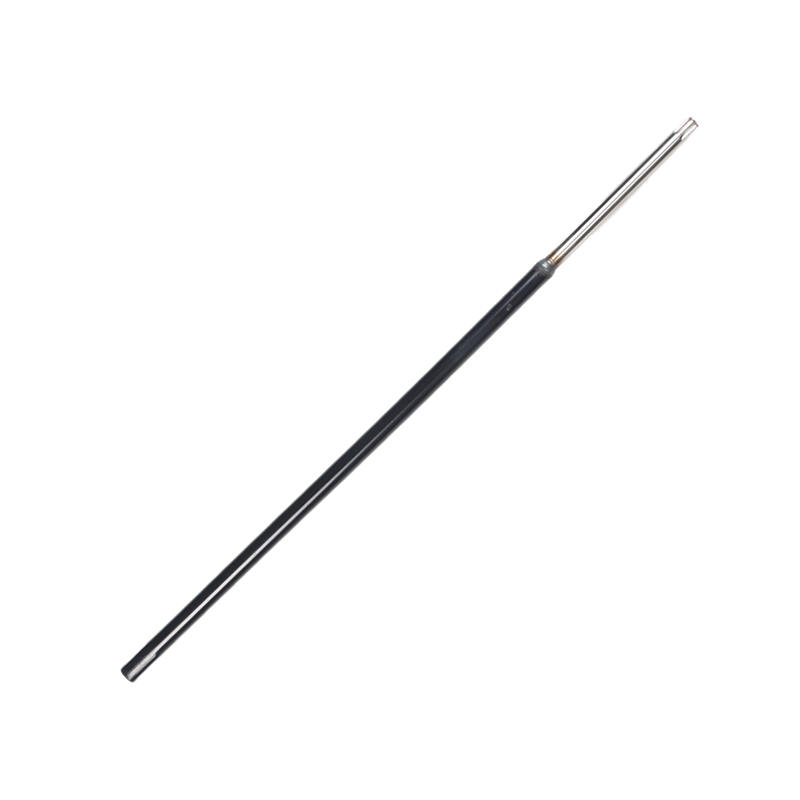
A new marine crankshaft is manufactured from fresh material and built to specification from the start. It usually offers the highest level of dimensional consistency, material traceability, and confidence in fatigue life. For distributors, that means a simpler sales story and lower after-sales uncertainty.
New crankshafts are often the preferred choice when customers want the safest option for high-value engines, warranty-sensitive repairs, or demanding commercial operation. They are also easier to position in premium markets because the value proposition is clear: full-service life, stronger confidence, and less inspection burden at the point of sale.
A rebuilt crankshaft is a used core that has been inspected, repaired, re-machined, and restored to usable condition. Depending on the rebuild standard, this may include crack detection, journal regrinding, straightness correction, balancing, polishing, and final inspection. In practice, the quality of a rebuilt crankshaft depends heavily on the rebuilder's process control.
For distributors, rebuilt products can open a valuable price-sensitive segment. They may be especially attractive for older engines, repair jobs with limited budgets, or customers who need a functional solution quickly. The challenge is that quality can vary widely, so product sourcing and documentation become critical.
| Factor | New Marine Crankshafts | Rebuilt Crankshafts |
|---|---|---|
| Initial cost | Higher upfront cost | Lower upfront cost |
| Material origin | Fresh material | Reused core |
| Dimensional consistency | Stronger and more predictable | Depends on rebuild quality |
| Warranty confidence | Usually stronger | Usually shorter or more limited |
| Supply positioning | Premium, low-risk | Value-driven, budget-focused |
| Customer appeal | Best for critical repairs | Best for cost-conscious buyers |
| Distributor risk | Lower returns risk | Higher sourcing and QA burden |
For marine engines, performance is not just horsepower. It includes vibration control, journal stability, bearing compatibility, fatigue resistance, and resistance to long-term wear. New crankshafts generally perform better here because they start with untouched material and factory-level machining.
Rebuilt crankshafts can still perform well when the original core is sound and the rebuild process is disciplined. However, any hidden crack, previous overload damage, or poor machining tolerance can shorten service life. That is why rebuilt parts should not be treated as a casual low-cost substitute; they should be treated as a managed-risk product.
From a distributor's perspective, new crankshafts usually support a premium pricing strategy and lower post-sale risk. They are easier to bundle with other high-value components and are better suited for customers who prioritize uptime over savings. This can improve order value and reduce complaints, especially in commercial marine channels.
Rebuilt crankshafts can increase sales volume in price-sensitive markets, but only if the distributor has strong quality control and clear warranty terms. If the rebuild standard is weak, the margin advantage can be erased by returns, shipping claims, and lost customer confidence. In other words, the cheapest product is not always the most profitable one.
Before adding rebuilt crankshafts to your catalog, your team should verify the following:
1. Crack detection records are available for every unit.
2. Dimensional inspection reports match OEM tolerance requirements.
3. Balancing and straightness checks are documented.
4. Surface finish and journal condition are acceptable for marine duty.
5. Warranty terms are written clearly and realistically.
6. Traceability exists for core source, rebuild process, and final inspection.
This checklist reduces the chance of selling a low-grade rebuilt part under a premium marine use case. It also gives sales teams a stronger technical basis when speaking with shipowners, repair yards, and trading companies.
One of the most important shifts is that buyers are becoming more documentation-driven. Across marine procurement, there is growing demand for traceability, inspection records, and fitness-for-service confidence rather than price alone. That trend benefits distributors who can prove quality, not just claim it.
At the same time, marine buyers increasingly compare suppliers by total ownership value, not just initial cost. That means distributors who can explain service life, downtime risk, and inspection standards have a strong commercial advantage. This is exactly where a manufacturer with long experience in marine crankshaft production can add credibility.
Here is a practical way to think about the sales decision:
- Choose new marine crankshafts when the customer operates commercial vessels, works in safety-critical environments, or wants the lowest failure risk.
- Choose rebuilt crankshafts when the customer owns older engines, needs a lower purchase price, or accepts a shorter service horizon.
- Offer both when serving mixed channels, because different buyers often want different risk profiles.
This scenario-based approach helps distributors avoid one-size-fits-all selling. It also improves the customer experience because buyers feel they are getting guidance, not a forced product push.
From a manufacturing standpoint, marine crankshafts demand tight control over material quality, machining precision, heat treatment, and inspection. That is true for both new and rebuilt products, but rebuilt components add another layer of uncertainty because the starting condition of the core is never identical.
In our experience as a marine transmission and crankshaft specialist, distributors often succeed when they separate products into clear tiers: premium new parts for critical applications, carefully controlled rebuilt options for value-driven buyers, and technical guidance for matching the right part to the right vessel. This tiered strategy is easier to sell and much easier to defend after delivery.
For most distributors, new marine crankshafts are the better strategic choice if the goal is stronger brand trust, lower claim risk, and higher long-term customer satisfaction. They are the safer recommendation for commercial, high-load, and uptime-sensitive customers.
Rebuilt crankshafts are better only when the distributor has strong inspection standards, trusted rebuild partners, and a customer base that actively wants a lower-cost alternative. In that case, rebuilt inventory can become a profitable secondary line rather than a risky main offer.
To improve conversion, frame the choice around buyer intent:
- For reliability-first buyers: lead with new crankshafts.
- For budget-first buyers: present rebuilt crankshafts with clear inspection data.
- For mixed buyers: compare both options in a simple spec table and explain the trade-off in service life and warranty.
This positioning makes your product pages more useful and your sales pages more persuasive. It also helps match the search intent of buyers looking for "new vs rebuilt marine crankshafts," "marine crankshaft distributor guide," and "best crankshaft option for marine repair."
If you are a distributor looking to improve product mix, reduce return risk, and strengthen buyer confidence, the smartest next step is to source both options from a manufacturer that can control quality from engineering to final inspection. A supplier with long-term marine manufacturing experience can help you build a cleaner, safer, and more profitable crankshaft portfolio.
1. Are new marine crankshafts always better than rebuilt ones?
Not always, but new crankshafts are usually better for critical marine applications because they offer stronger material certainty and lower failure risk.
2. When should a distributor recommend rebuilt crankshafts?
Rebuilt crankshafts make sense when the buyer wants a lower price and accepts a shorter or more conditional service life.
3. What is the biggest risk of selling rebuilt crankshafts?
The biggest risk is inconsistent rebuild quality, especially if crack detection, balancing, and dimensional checks are weak.
4. How can distributors reduce warranty claims?
They can reduce claims by sourcing from suppliers with documented inspection procedures, traceability, and stable manufacturing standards.
5. Which product is easier to market online?
New crankshafts are usually easier to market because the value proposition is clearer and the trust barrier is lower.
6. Can rebuilt crankshafts be a good business line?
Yes, if the distributor has strict quality control and sells them to the right customer segment.
1. [New vs Reconditioned Marine Engine Parts: How to Choose the Right Option for Your Vessel]
2. [OEM Outboard Motor Crankshafts vs Aftermarket Alternatives]
3. [Company Profile – Liaoning 518 Internal Combustion Engine Fittings Co., Ltd.]
4. [Magnetic Particle Inspection of Crank Shafts]
5. [Guidelines for non-destructive testing of hull and machinery steel forgings]


