
Views: 217 Author: Gill Transmission Parts Publish Time: 2026-09-19 Origin: Site


Content Menu
● What Are OEM and Aftermarket Lower Unit Parts?
● OEM vs Aftermarket Parts Comparison for Marine Dealers
● Why Lower Unit Components Need Extra Scrutiny
● When OEM Lower Unit Parts Are the Better Choice
>> Newer engines with limited cross-reference history
>> Complex, safety-sensitive, or proprietary systems
● When Aftermarket Lower Unit Parts Can Be Better for Dealers
>> Better support for older outboards
>> Improved lead-time flexibility
>> Potential material and design improvements
● The Real Risk: Not Aftermarket, but Unqualified Aftermarket
● A Practical Qualification Checklist for Aftermarket Suppliers
>> 1. Verify application accuracy
>> 2. Review manufacturing capability
>> 3. Request samples before major stocking
>> 4. Clarify warranty and claims handling
>> 5. Start with controlled inventory
● Dealer Decision Framework: Which Part Should You Sell?
● Installation Quality Still Determines the Outcome
● Expert View: Build Trust Through Choice, Not Pressure
● Conclusion: Choose the Right Source for the Repair
● FAQ
>> 1. Are aftermarket lower unit parts reliable?
>> 2. Do aftermarket outboard parts void an engine warranty?
>> 3. Are OEM lower unit gears always better than aftermarket gears?
>> 4. What should marine dealers check before buying aftermarket outboard gears?
>> 5. Should dealers stock OEM and aftermarket marine parts?
>> 6. Why do lower unit repairs fail after replacing a gear?
>> 7. How can a dealer reduce returns on aftermarket marine parts?
For marine dealers, the question is not simply whether OEM lower unit parts or aftermarket lower unit parts are better. The more useful question is: Which option gives the dealer the right balance of fitment confidence, repair reliability, margin, availability, warranty exposure, and customer trust for a specific outboard application?
After 29 years focused on the development, production, and supply of marine transmission components—including outboard gears—our team at Ningbo Gill Transmission Parts Co., LTD. has seen one consistent reality: the right sourcing decision depends on the part, the engine condition, the customer's usage profile, and the supplier's manufacturing discipline. A low-priced replacement can become expensive if it causes gear noise, poor engagement, water intrusion, or a return visit. At the same time, a carefully qualified aftermarket part can help a dealer shorten lead times, improve profitability, and support older engines where original components are difficult to obtain.
This guide compares OEM vs aftermarket marine parts from a dealer's perspective, with special attention to outboard lower unit parts, gears, gearcases, shafts, bearings, seals, clutch components, and related driveline products.
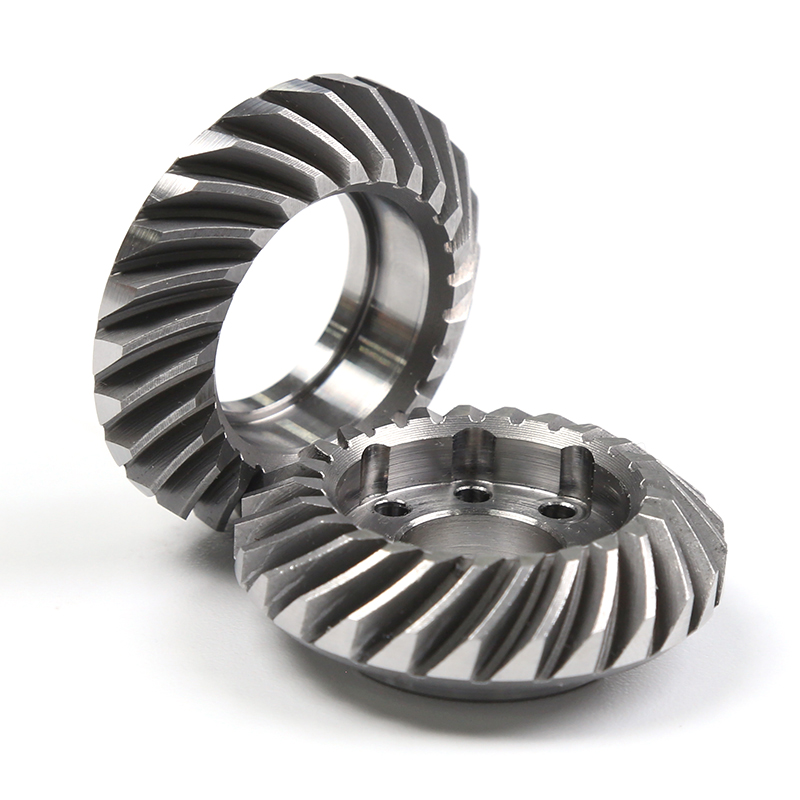
OEM parts are components produced by, or supplied under the branding and specification control of, the original outboard engine manufacturer. They are typically sold through authorized dealer networks and matched to the original engine's parts catalog, serial-number range, and engineering specification.
Aftermarket parts are replacement components made by independent manufacturers. Their quality range is broad. Some are engineered and tested by experienced marine-parts specialists; others are generic products with limited traceability, unclear materials, or inconsistent dimensional control.
For marine dealers, the most important distinction is not the label alone. It is the supplier's ability to provide:
- Accurate application data
- Stable materials and heat treatment
- Repeatable machining tolerances
- Reliable quality inspection
- Traceable batches
- Clear warranty handling
- Responsive technical support
A lower unit is a high-load assembly. It transfers torque from the driveshaft to the propeller shaft while operating in water, vibration, shock loads, and—in many markets—saltwater corrosion. Because of this, a gear, bearing, seal, or shaft that appears visually similar may still perform very differently in service.
The following comparison helps dealers evaluate the two sourcing routes beyond purchase price.
| Decision Factor | OEM Lower Unit Parts | Quality Aftermarket Lower Unit Parts | Dealer Consideration |
|---|---|---|---|
| Fitment confidence | Usually high when matched by serial number | High only when the supplier has verified cross-reference data | Always confirm engine model, year, serial range, and supersessions |
| Initial purchase cost | Often higher | Often lower | Compare total repair margin, not only unit price |
| Product consistency | Usually controlled within the original brand system | Depends heavily on manufacturer and batch control | Request inspection standards and traceability details |
| Parts availability | Can be limited for discontinued or older models | May be stronger for common legacy applications | Useful for repair shops serving aging outboards |
| Warranty alignment | Usually straightforward within the original brand network | Varies by supplier and distributor | Obtain written warranty terms before stocking |
| Technical documentation | Often extensive | Can range from excellent to minimal | Choose suppliers with drawings, measurements, and installation guidance |
| Customer perception | Strong brand recognition | Depends on dealer explanation and supplier reputation | Position premium aftermarket as a qualified repair option, not a "cheap substitute" |
| Product innovation | Usually follows original engineering updates | Can include upgraded materials or revised designs | Verify that improvements do not create fitment or compatibility problems |
| Margin opportunity | May be constrained by dealer pricing policies | Often more flexible | Build pricing around quality tier and warranty commitment |
OEM is usually the safest default for repairs under an active manufacturer warranty, highly specialized electronic systems, or parts with extremely tight brand-specific fitment requirements.
Quality aftermarket parts are often the stronger commercial option for routine wear parts, older engines, non-warranty repairs, price-sensitive customers, and applications where the dealer has validated a reliable supplier.
Not all marine parts carry the same risk. A cosmetic trim piece and a lower-unit gear should not be sourced using the same criteria.
Inside an outboard lower unit, components must work together under load. A gear set depends on correct tooth geometry, surface hardness, contact pattern, backlash, shaft alignment, bearing preload, lubricant condition, and seal integrity. A defect in one area can accelerate wear across the entire assembly.
For example, a forward gear with poor tooth finishing may initially run without obvious issues. However, under repeated acceleration, heavy loads, or shifting cycles, improper contact can increase localized stress. The result may be noise, pitting, metal debris in gear oil, difficult shifting, or premature gear failure.
Marine dealers should apply a higher qualification standard to these parts:
- Forward and reverse gears
- Pinion gears
- Driveshafts
- Propeller shafts
- Clutch dogs and shift components
- Bearing carriers
- Gearcase housings
- Oil seals and O-rings
- Needle bearings, tapered bearings, and thrust washers
A quality supplier should be able to explain how it controls material selection, gear machining, heat treatment, surface finishing, dimensional inspection, and corrosion protection. If a supplier cannot answer these questions, the product may not be suitable for professional dealer channels.
OEM parts remain the preferred choice in several important situations.
When an engine is under the original manufacturer's warranty, dealers should follow the manufacturer's approved service process and parts policy. Original manufacturers often connect warranty administration to authorized diagnosis, documentation, and approved replacement procedures.
Mercury Marine states that its genuine parts and lubricants are supported by its engineering, testing, and manufacturing standards, and its published warranty information identifies specific coverage periods for parts and accessories. For dealers, this makes OEM replacement especially practical when warranty eligibility and manufacturer support are central to the repair decision.
A newly released outboard platform may not yet have enough aftermarket validation. In these cases, OEM components can reduce uncertainty around design changes, serial-number breaks, updated part numbers, and revised assemblies.
Some customers want every replacement component to carry the original engine brand. This is common among owners of newer boats, commercial fleets with strict maintenance policies, or customers preparing a boat for resale. Offering OEM parts protects customer preference and can simplify conversations about repair expectations.
Electronic controls, integrated sensors, unique gearcase assemblies, and highly specialized components may require OEM sourcing. Dealers should be careful when a part affects engine calibration, warranty compliance, or a system where incorrect fitment can create a safety concern.
A reputable aftermarket supplier can give marine dealers meaningful commercial and operational advantages.
Many repair shops regularly service engines that are no longer supported as strongly through original distribution channels. In these cases, quality aftermarket gears, shafts, seals, and related components can keep customers on the water without forcing a costly engine replacement.
This is especially valuable in markets where older two-stroke and early four-stroke outboards remain common in fishing boats, workboats, tenders, and small recreational vessels.
A dealer loses revenue when a boat occupies a service bay while waiting for a backordered component. Building a qualified aftermarket supply base can help reduce downtime, particularly for frequently repaired lower-unit applications.
A practical stocking strategy may include:
- Fast-moving gears for popular outboard models
- Seal kits and bearing kits for common lower-unit repairs
- Driveshaft and propeller-shaft replacement options
- Water-pump service kits
- Shift components and clutch dogs
- Complete lower-unit assemblies for high-demand applications
Aftermarket options can improve gross margin, but only if the dealer avoids low-quality parts that generate callbacks. The correct goal is not to buy the cheapest gear. It is to purchase reliable, application-correct parts at a sustainable cost.
A dealer that uses a verified aftermarket supplier can offer customers more than one repair path:
1. OEM repair option for original-brand preference and warranty alignment
2. Premium aftermarket option for a cost-conscious but quality-focused repair
3. Complete assembly option when rebuilding the existing lower unit is no longer economical
This approach gives the customer transparency while allowing the dealer to protect both service revenue and reputation.
Some aftermarket manufacturers study common field failures and adjust designs accordingly. Improvements may include stronger corrosion coatings, revised seal materials, upgraded bearing specifications, or more consistent gear finishing.
However, dealers should not assume that "improved" automatically means better. Any claimed upgrade should be reviewed for compatibility with the original gearcase, lubricant requirements, installation procedures, and load conditions.
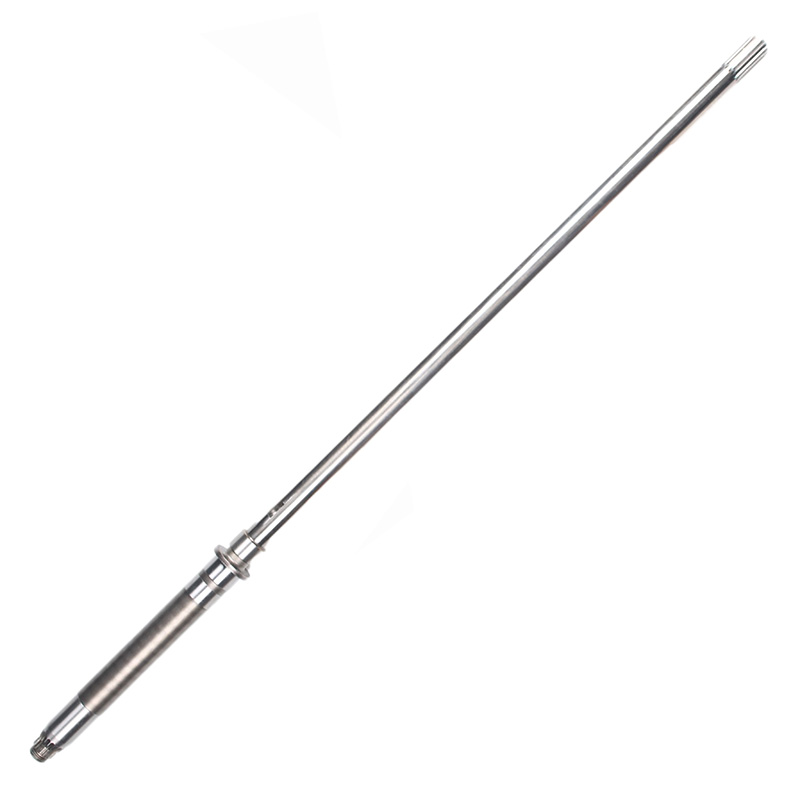
The biggest sourcing mistake is treating all aftermarket parts as one category.
There is a major difference between a manufacturer with controlled machining, heat-treatment records, inspection procedures, application engineering, and batch traceability—and a seller offering unverified components with only a broad compatibility claim.
Low-quality parts can create costs far beyond the invoice price. A failed lower-unit repair may lead to:
- Technician rework time
- Lost service-bay capacity
- Replacement freight costs
- Customer dissatisfaction
- Negative reviews and reduced referrals
- Damage to a dealer's reputation
- Disputes over labor reimbursement
- Potential damage to related internal components
For this reason, marine dealers should build an approved supplier list rather than purchasing only by catalog appearance or lowest quote.
Before bringing an aftermarket lower unit part into your product line, use a structured review process.
Ask for the exact cross-reference information. The supplier should identify the supported engine brand, horsepower range, year range, serial-number range, and original part number where applicable.
Do not rely only on descriptions such as "fits 40–60 HP outboards." A small design change can affect shaft length, spline count, gear ratio, shift mechanism, bearing location, or seal dimensions.
For outboard gears and transmission components, ask how the supplier controls:
- Raw-material sourcing
- Forging or casting process
- Gear cutting and tooth-profile accuracy
- Heat treatment and hardness verification
- Grinding or finishing process
- Dimensional inspection
- Surface protection and corrosion control
- Final packaging and identification
A capable manufacturer should be comfortable discussing its process at a professional level.
Install and inspect samples before placing a large order. Measure key dimensions, inspect splines and sealing surfaces, compare gear teeth with the original component, and test installation in a suitable assembly.
For gears, the dealer or rebuilder should also check contact pattern, backlash, bearing fit, and shifting performance during assembly.
A warranty is only valuable if the supplier can process claims efficiently. Confirm:
- Warranty period
- Covered failure types
- Required evidence
- Labor reimbursement policy
- Return-shipping responsibility
- Response time for technical claims
- Replacement-part availability
Do not place a large stocking order immediately. Begin with a limited group of fast-moving, lower-risk applications. Track return rates, installation feedback, customer complaints, and repeat demand before expanding the range.
Use this simple decision framework when choosing between OEM and aftermarket lower unit parts.
| Repair Situation | Recommended Path | Reason |
|---|---|---|
| Engine is under manufacturer warranty | OEM | Supports warranty process and original service requirements |
| New model with limited field history | OEM first | Reduces fitment uncertainty |
| Older engine with discontinued OEM availability | Premium aftermarket | Keeps repair practical and supports legacy engines |
| Customer wants original-brand documentation | OEM | Matches customer preference and resale expectations |
| Customer needs a budget-controlled repair | Qualified aftermarket | Can provide value without sacrificing reliability |
| Heavy-duty or commercial use | OEM or premium validated aftermarket | Choose based on proven material, inspection, and warranty support |
| Emergency repair with OEM backorder | Qualified aftermarket | Reduces vessel downtime if fitment is verified |
| Complete lower-unit rebuild | Mixed strategy | Use the best validated components for each critical position |
The key is to avoid a one-rule policy. Marine dealers should use a tiered sourcing strategy, not an OEM-only or aftermarket-only mindset.
Even the best lower-unit part can fail if installation is poor. Dealers should treat the rebuild process as a system, not a collection of individual replacement parts.
During a lower-unit repair, technicians should verify:
- Gearcase housing condition
- Driveshaft and propeller-shaft runout
- Bearing-seat condition
- Gear tooth condition and contact pattern
- Correct shim selection
- Backlash and preload
- Shift-dog engagement
- Seal installation depth
- Water-pump housing and impeller condition
- Gear-oil pressure or vacuum test results
- Proper marine gear lubricant
A common mistake is replacing one damaged gear while ignoring the cause of the damage. If water entered through a failed seal, if a bearing loosened, or if incorrect shimming caused poor gear contact, a new component alone may not solve the underlying problem.
For dealers, documenting these checks also improves customer confidence. A concise repair report with photos, serial-number details, replaced-part information, and pressure-test results can make a professional service operation stand out.
In our experience, customers respond best when the dealer explains the options clearly.
Instead of saying, "This aftermarket part is the same," a more professional approach is:
> "We have verified this replacement part for your engine application. It is supplied by a qualified marine-parts manufacturer, carries our stated warranty, and provides a more economical repair option. We can also supply the original-brand part if that is your preference."
This language is honest, specific, and customer-focused. It recognizes that OEM and aftermarket parts serve different needs.
For marine dealers, the strongest business model is usually a dual-source strategy:
- Maintain OEM access for warranty repairs, new engines, and customers who require original-brand parts.
- Partner with experienced aftermarket manufacturers for validated lower-unit components, legacy applications, and value-focused repairs.
- Use clear quality standards before placing any replacement part into inventory.
- Train service advisors to explain quality tier, fitment verification, warranty, and expected repair outcomes.
So, OEM lower unit parts vs aftermarket parts: which is better for marine dealers? Neither category wins in every case.
OEM parts provide strong fitment confidence, brand continuity, and a practical route for warranty-related or highly specialized repairs. Quality aftermarket parts can offer competitive pricing, better availability, broader support for older outboards, and healthy margins for dealers—provided they come from a technically capable, traceable supplier.
The real choice is between qualified sourcing and unqualified sourcing.
For gears, shafts, bearing-related components, and other critical lower-unit parts, marine dealers should prioritize manufacturing consistency, application accuracy, warranty support, and field performance. A well-chosen aftermarket component can be a valuable part of a dealer's service offering. A poorly controlled component can cost far more than it saves.
Looking for a dependable source of outboard gears and lower-unit transmission components? Contact Ningbo Gill Transmission Parts Co., LTD. to discuss part-number matching, technical specifications, OEM/ODM requirements, sample evaluation, and dealer supply programs for marine replacement parts.
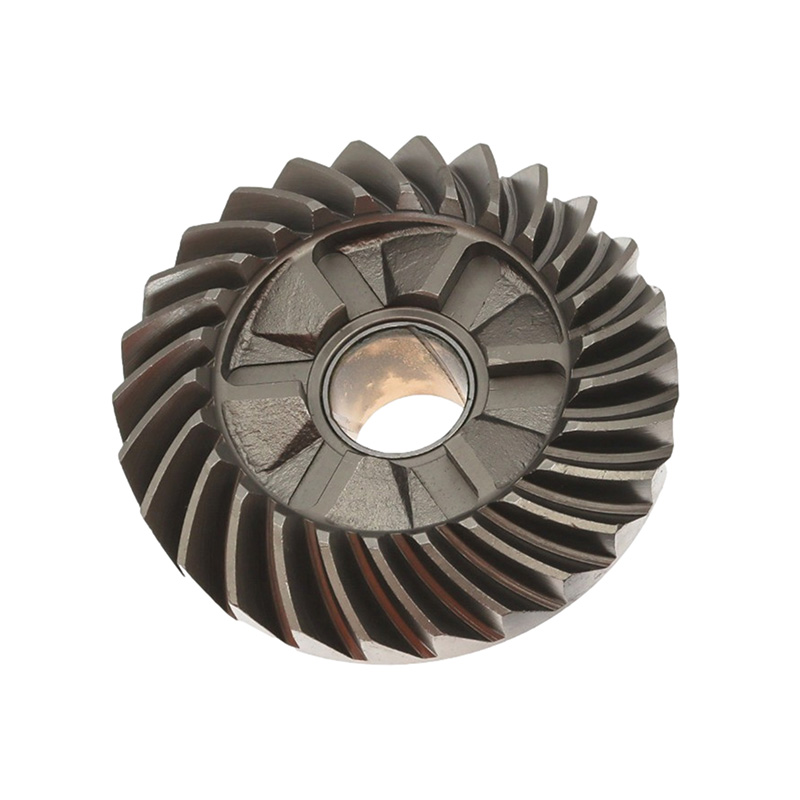
They can be reliable when they come from an experienced manufacturer with controlled materials, accurate machining, heat-treatment management, inspection procedures, and verified application data. Reliability varies significantly between suppliers, so dealers should qualify products before stocking them.
Warranty requirements depend on the engine manufacturer, the part involved, the installation, and the reason for the claim. For engines under active warranty, dealers should follow the manufacturer's approved parts and repair procedures. For non-warranty repairs, a qualified aftermarket component may be appropriate when fitment and quality are verified.
Not always. OEM gears are generally the safer choice for original-brand consistency, active warranty work, and newer applications. However, a premium aftermarket gear from a capable marine transmission manufacturer can perform well when it meets the required dimensions, material specifications, heat treatment, and inspection standards.
Dealers should verify original part numbers, engine model and serial range, gear ratio, spline details, critical dimensions, material and hardness controls, supplier warranty, product traceability, and sample inspection results. They should also confirm that the supplier can support technical questions and claims.
Yes. A dual-source inventory strategy gives dealers flexibility. OEM parts can support warranty work and customers who want original-brand components, while qualified aftermarket parts can improve availability and value for older engines and price-sensitive repairs.
A new gear may fail if the actual cause was not corrected. Common root causes include water intrusion, worn bearings, damaged shafts, incorrect shimming, poor backlash settings, improper preload, contaminated lubricant, or a worn gearcase housing.
Use approved suppliers, verify applications by serial number, inspect incoming products, test samples before large orders, follow proper installation procedures, document repairs, and keep records of failure rates by part number and supplier batch.
1. [Mercury Marine — Parts & Maintenance]
2. [Mercury Marine — Product Warranty Coverage Chart]
3. [National Marine Manufacturers Association]
4. [MarineEngine.com — Which Are a Better Buy, OEM or Aftermarket Parts?]
5. [MarineEngine.com — Mercury Outboard Motor Parts]


