


close
Choose Your Site
Global
Social Media
Views: 258 Author: Gill Transmission Parts Publish Time: 2026-10-08 Origin: Site


Content Menu
● What Are OEM Marine Parts and Aftermarket Marine Parts?
>> OEM Marine Parts: Original-Brand Replacement Components
>> Aftermarket Marine Parts: Independently Supplied Alternatives
● OEM Marine Parts vs Aftermarket Marine Parts: Comparison Table
● Quality and Reliability: Look Beyond the Label
>> Materials, Processing, and Inspection Matter
>> Separate Quality-System Evidence From Product Evidence
● Fitment: Why Drive Shafts Require Extra Attention
>> Horsepower Alone Is Not Enough
>> Check the Interfaces That Make the Shaft Work
● Price Comparison: Calculate Total Installed Cost
>> There Is No Universal Aftermarket Savings Percentage
>> Illustrative Repair Scenario
● Warranty: Separate Coverage From Assumptions
>> Aftermarket Parts Do Not Automatically Cancel Every Warranty
>> Understand What the Replacement-Part Warranty Covers
● When OEM Marine Parts Are Usually the Better Choice
● When Aftermarket Marine Parts Make Commercial Sense
● Three Practical Tools for Better Marine Parts Procurement
>> 1. Build an Application-Specific Approval Checklist
>> 2. Introduce a Traceable First-Order Process
>> 3. Investigate the Failure Before Choosing the Replacement
● A Manufacturer's Perspective: What Gill Brings to the Discussion
● Choose the Part You Can Verify
>> 1. Are OEM marine parts always better than aftermarket parts?
>> 2. Can aftermarket drive shafts match OEM fitment?
>> 3. Will aftermarket marine parts void my engine warranty?
>> 4. What information should I send a marine drive shaft supplier?
>> 5. Are aftermarket parts suitable for commercial boats?
>> 6. Should I replace associated bearings and seals with a shaft?
Choosing between OEM marine parts vs aftermarket marine parts involves more than comparing prices. For boat owners, repair workshops, distributors, and fleet operators, the right decision depends on fitment, technical documentation, warranty conditions, availability, and the consequences of failure.
OEM components often provide a straightforward route to brand-specific replacement. Qualified aftermarket components can offer competitive pricing, alternative supply, and support for older equipment. Neither label, however, replaces proper verification.
At Ningbo Gill Transmission Parts Co., LTD., our manufacturing roots date to 1997, representing 29 years of experience in marine transmission components. Our focus includes drive shafts, propeller shafts, outboard gears, and related accessories.
From a manufacturer's perspective, the most useful purchasing principle is verification: choose the component whose suitability you can establish, not simply the packaging you recognize.
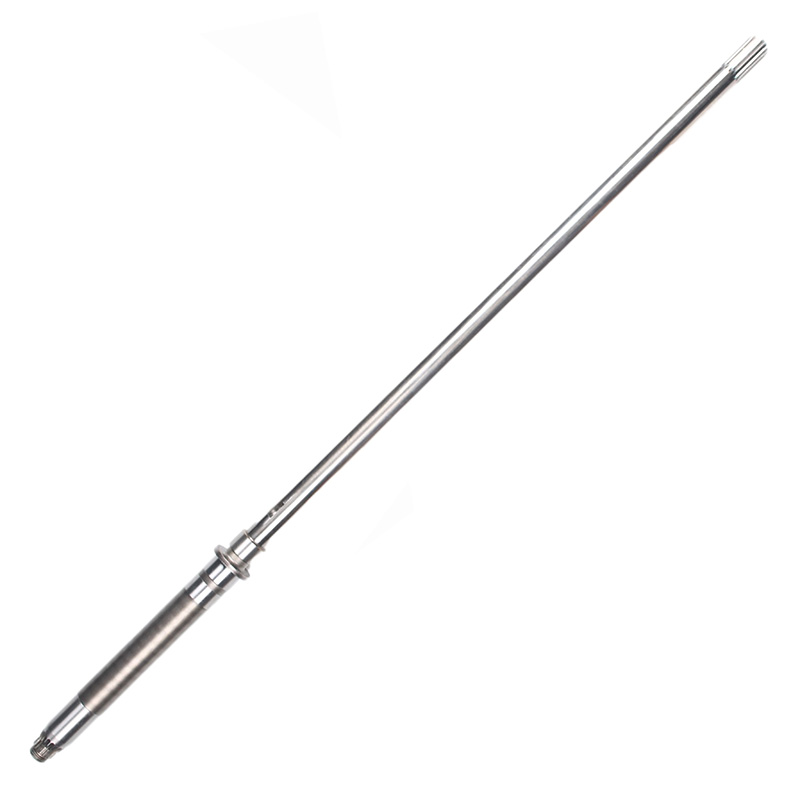
OEM stands for original equipment manufacturer. In marine replacement purchasing, buyers commonly use "OEM marine parts" to describe genuine components supplied or approved through the original engine or equipment brand.
These parts are typically identified through brand-specific catalogs, diagrams, and part numbers. They provide an established reference for restoring the original configuration.
However, the engine brand does not necessarily manufacture every component itself. Specialist suppliers may produce parts within its supply chain.
A factory's ability to provide contract manufacturing also does not automatically make its independently sold replacement parts genuine components of an engine brand.
Aftermarket marine parts are replacement components supplied outside the original brand's genuine-parts channel.
This category includes basic alternatives, professionally engineered replacements, and application-specific components. Quality, documentation, and support vary between suppliers.
For B2B buyers, "aftermarket" identifies a supply route—not a reliable quality grade.
The practical question is whether a particular component meets the requirements of the intended engine, transmission, and operating environment.
| Purchasing factor | OEM marine parts | Aftermarket marine parts |
|---|---|---|
| Identification | Original-brand catalogs and part numbers | Supplier cross-references requiring verification |
| Fitment | Established application references; model checks remain essential | Depends on accurate application data and manufacturing control |
| Quality evidence | Brand engineering and supply-chain requirements | Supplier-specific materials, inspection, and validation |
| Purchase price | May include brand distribution and support costs | Can offer savings; compare actual quotations |
| Availability | Depends on dealer stock and continued support | May provide alternative supply for selected applications |
| Warranty | Subject to brand, product, and regional terms | Subject to supplier terms; engine coverage requires separate review |
| Customization | Usually limited for catalog replacements | May be available from capable manufacturers |
| Best purchasing approach | Confirm the exact genuine part | Verify compatibility and supporting evidence |
Neither category guarantees immediate availability, lower lifetime cost, or unlimited service life. Evaluate the actual product and supplier.
Marine transmission components operate under demanding conditions. Their suitability depends on factors such as loading, corrosion exposure, lubrication, and manufacturing accuracy.
For marine drive shaft replacement, useful supplier questions include:
- What material specification applies?
- Which heat-treatment requirements are controlled?
- How are critical dimensions inspected?
- What straightness or runout requirements apply?
- Can inspection records be connected to a production batch?
A statement such as "premium marine steel" is less useful than an identifiable specification supported by appropriate records.
For shafts that require hardened surfaces, ask how hardness and case depth are controlled. Where corrosion resistance is important, request application-relevant evidence rather than relying on appearance.
A quality-management certificate can support confidence in a supplier's processes. It does not independently prove that a particular shaft fits your engine or will achieve a specific service life.
Likewise, an attractive sample does not establish consistency across repeated orders.
For ongoing procurement, evaluate both:
1. The supplier's ability to maintain controlled production.
2. The particular component's conformity to agreed requirements.
Keep initial sample approval, production inspection, and application validation separate. Each addresses a different risk.
Two outboards with similar horsepower may use different shaft lengths, spline arrangements, bearing interfaces, or production revisions.
Yamaha's official parts finder instructs buyers to reconfirm model, model year, and part numbers before ordering. This illustrates why genuine parts also require careful identification.
For OEM or aftermarket outboard parts, record:
- Engine manufacturer and complete model designation.
- Serial number or primary identification number.
- Applicable production range.
- Existing part number and any replacement number.
- Shaft length and relevant configuration.
- Clear photographs of the identification plate and removed component.
Treat a cross-reference as a starting point, not final approval.
A replacement drive shaft must match more than overall length.
Depending on the application, verify spline geometry, bearing journals, seal-running surfaces, shoulders, threads, retaining features, and straightness.
A shaft may enter an assembly yet still have an unsuitable interface. Incorrect dimensions can affect bearing support, sealing, or engagement.
Also distinguish an outboard's vertical drive shaft from an inboard propeller shaft. Their arrangements and design requirements differ. Do not transfer shaft-sizing guidance or installation limits between them without engineering review.
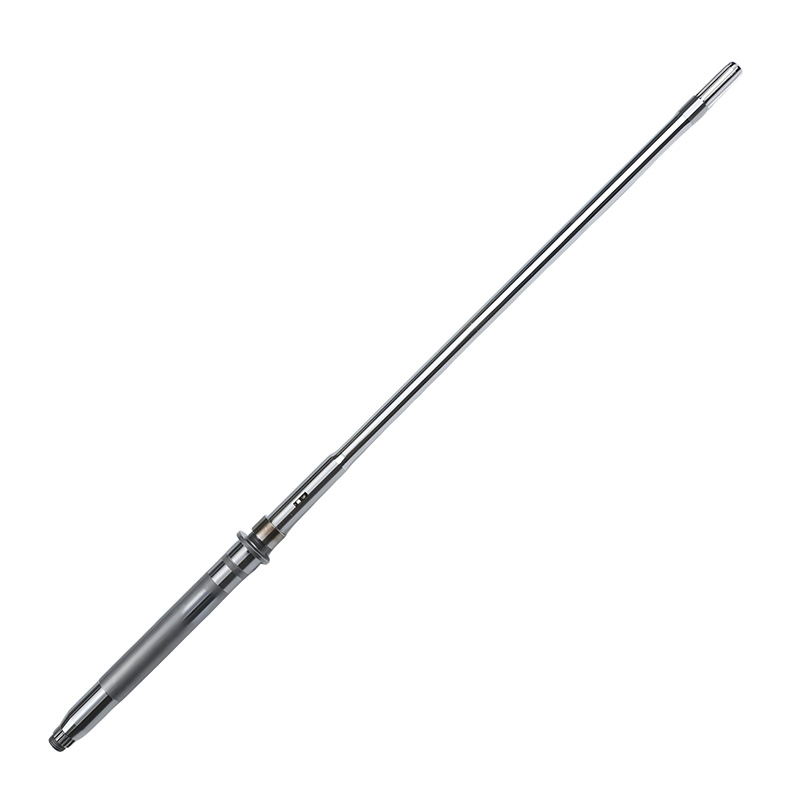
Aftermarket marine parts can cost less, but no single discount accurately describes every component or market.
Pricing changes with material, manufacturing complexity, quantity, freight, stock availability, and supplier support.
Compare quotations for the same application and documentation level. A low price with uncertain fitment is not equivalent to a verified replacement.
A practical purchasing model is:
Total installed cost = component price + freight and duties + installation labor + downtime + expected rework expense.
For commercial operators, downtime may outweigh the difference between two shaft quotations.
Consider two hypothetical replacement options:
| Cost item | OEM option | Qualified aftermarket option |
|---|---|---|
| Shaft purchase | $600 | $380 |
| Freight | $40 | $60 |
| Installation labor | $300 | $300 |
| Downtime expense | $200 | $200 |
| Total before unexpected rework | $1,140 | $940 |
These figures illustrate a decision method; they are not market averages or Gill quotations.
The aftermarket option saves $200 initially. If incorrect fitment causes $300 of additional labor, that advantage disappears before further downtime is counted.
The lesson is not to reject aftermarket components. It is to establish compatibility before committing installation time.
For covered U.S. consumer products, federal warranty rules generally prevent companies from denying coverage solely because a customer uses third-party parts or independent service.
However, coverage may be refused for damage caused by those parts or services.
Mercury's published support guidance similarly distinguishes damage or failures caused by components not manufactured or sold by the company.
These principles should not be treated as a worldwide guarantee. Consumer warranties, commercial contracts, extended service agreements, and regional laws may differ.
Before purchasing a critical replacement, review the applicable terms and seek written clarification when necessary.
Ask both OEM and aftermarket sellers:
- Is coverage limited to the replacement component?
- Are removal and reinstallation labor included?
- Who pays return freight?
- What evidence is required for a claim?
- Are commercial applications excluded?
- How are consequential damage and downtime handled?
A long warranty period may offer limited practical protection if expensive labor and related losses are excluded.
OEM marine engine parts are often the more straightforward option when:
- The repair follows an approved warranty procedure.
- Application details are incomplete or unusually complex.
- A revised component or assembly requires brand-specific guidance.
- Genuine stock is available within the required timeframe.
- The buyer prioritizes an established dealer support channel.
For a critical transmission repair with uncertain compatibility, resolving the application through an authorized channel may justify a higher purchase price.
Even then, confirm that the supplied part matches the engine and current catalog information.
Qualified aftermarket marine parts can be attractive when:
- The original component is unavailable or discontinued.
- A workshop needs an alternative supply source.
- A distributor requires repeatable batch purchasing.
- An older engine needs an economically proportionate repair.
- A supplier can substantiate materials, dimensions, and compatibility.
For B2B buyers, aftermarket sourcing can also support drawing-based development and agreed inspection requirements.
However, customization creates an additional validation responsibility. A modified shaft is not automatically interchangeable merely because it resembles the original.
Approve technical requirements before production, especially when changing materials, geometry, or manufacturing processes.
Before approving a new marine transmission parts supplier:
1. Establish the exact engine application and replacement reference.
2. Agree on critical dimensions and material requirements.
3. Request representative sample inspection results.
4. Conduct a controlled fitment check with qualified personnel.
5. Confirm installation and validation responsibilities.
6. Document acceptance criteria before ordering production quantities.
For drive shafts, prioritize functional interfaces over cosmetic appearance.
Where performance testing is needed, define operating conditions and acceptance criteria. A brief trial should not be presented as proof of long-term durability.
After sample approval, keep the first production order manageable.
Retain the approved drawing revision, sample records, purchase specification, batch identification, and inspection results.
Compare incoming components against the agreed requirements rather than an undocumented verbal understanding.
This process makes later investigation easier if a distributor reports fitment variation or a workshop encounters an installation problem.
Repeat orders should reference the approved specification—not simply "same as last time."
A damaged shaft may be the failed component without being the original cause.
Before ordering, have a qualified technician investigate relevant bearings, seals, lubrication, alignment, and evidence of impact or incorrect assembly.
Replacing the shaft alone may leave the underlying problem unresolved.
Follow the correct service manual for installation, adjustment, and any specified gearcase testing. Do not invent universal tolerances or torque values for different engine families.
Ningbo Gill Transmission Parts Co., LTD. specializes in the research, development, production, and sale of marine transmission components.
Our published company information describes machining centers, grinding equipment, gear-processing equipment, inspection capabilities, and sample-based development.
These capabilities are relevant to aftermarket sourcing because reliable replacement parts require controlled manufacturing—not simply copying external shapes.
For procurement teams, our recommendation is straightforward: begin with the application and technical requirements, then discuss samples, inspection, order quantities, and delivery.
Do not assume that manufacturing experience alone establishes compatibility with every engine. Each replacement project deserves its own verification.
OEM marine parts and aftermarket marine parts serve different purchasing needs. The strongest decision combines accurate identification, documented quality, realistic installed cost, and dependable support.
For your next marine drive shaft sourcing project, contact Ningbo Gill Transmission Parts Co., LTD. with your engine details, replacement reference, drawings or sample information, and order quantity. Request an application review and a quotation tied to clearly defined technical requirements.
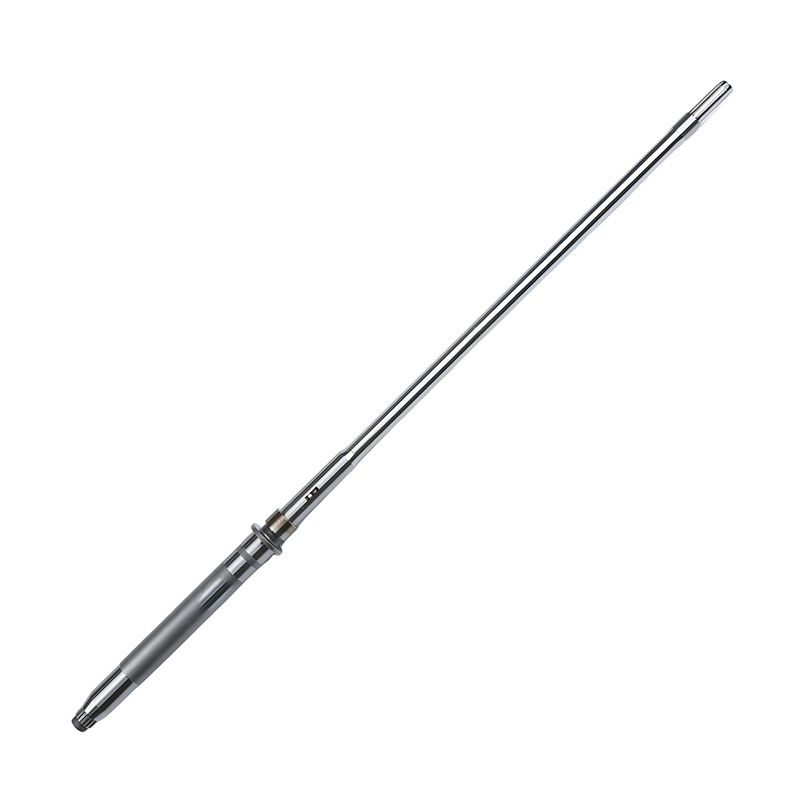
No. OEM parts offer an established brand-specific sourcing route. Aftermarket quality varies by supplier and product. Compare fitment, documentation, support, and application evidence rather than assuming either category always wins.
They can, provided the relevant dimensions, interfaces, materials, and processing requirements are correctly established and controlled. A cross-reference number alone does not prove this. Request supporting information and validate the intended application.
Not automatically in every situation. Applicable consumer protections and contract terms matter. Damage caused by an unsuitable component or improper installation may be excluded. Check the warranty for your product, region, and operating use.
Provide the engine model, serial number, existing part number, shaft configuration, photographs, quantity, and available drawings. Include the operating application and any previous failure information that could affect replacement selection.
Potentially, but commercial service requires careful assessment of duty cycle, failure consequences, support, and downtime. Choose documented, application-appropriate components and confirm whether the supplier's warranty covers commercial operation.
Inspect them according to the relevant service procedure. Replace damaged or unsuitable components and any items specified for replacement by the manual. Avoid assuming that every repair requires the same parts package.
The technical purchasing framework and illustrative cost scenario are editorial analysis, not published performance results. Company background comes from Gill's published information and the supplied 29-year experience statement. The following sources support the article's factual foundation:
1. [Ningbo Gill Transmission Parts Co., LTD. — About Us]. Company history beginning in 1997; marine gears and shafts; manufacturing equipment; inspection capabilities; and sample-based development. Company-reported information, not an independent factory audit. [gilltransmission]
2. [Yamaha Motor — Outboard Parts Finder]. Official U.S. parts-catalog guidance requiring reconfirmation of model, model year, and part numbers, with a notice that some older components are unavailable. [yamaha-motor]
3. [Mercury Marine — Parts & Maintenance]. Manufacturer description of genuine parts and its engineering, testing, and manufacturing standards. These statements describe Mercury's products rather than proving universal superiority over aftermarket alternatives. [mercurymarine]
4. [Mercury Marine — Service & Support FAQs]. Manufacturer guidance concerning warranty exclusions for damage or failures caused by parts or accessories not manufactured or sold by Mercury. [mercurymarine]
5. [Federal Trade Commission — FTC Says Companies' Warranty Restrictions Were Illegal]. Published July 7, 2022. Explains restrictions on tying covered consumer warranties to branded parts or authorized service, and the distinction involving damage caused by third-party components. [consumer.ftc]
6. [Marine Machining & Manufacturing — AQUAMET Shafting: Available Sizes]. Inboard propeller-shafting information addressing precision finish, straightness, shaft sizing, and service-dependent design considerations. Its guidance should not be treated as an outboard drive-shaft specification. [aquamet]


