


close
Choose Your Site
Global
Social Media
Views: 264 Author: Gill Transmission Parts Publish Time: 2026-10-24 Origin: Site


Content Menu
● What Are OEM Replacement Parts and Universal Outboard Parts?
>> Genuine OEM Parts vs OEM-Compatible Replacement Parts
>> What Does "Universal" Actually Mean?
● OEM Replacement Parts vs Universal Outboard Parts: Comparison Table
● Why Precision Outboard Components Need Application-Specific Verification
>> Outboard Gears: Matching Teeth Is Only the Beginning
>> Crankshafts: Fitment Includes Internal Geometry
>> Drive Shafts: Length Alone Does Not Establish Fit
>> Propeller Shafts: Inspect More Than the Propeller Spline
● Where Universal Outboard Parts Can Make Sense
● How to Compare Quality Without Relying on Labels
>> Ask for Evidence Relevant to the Component
>> Do Not Substitute General Claims for Specifications
● A Seven-Step Outboard Parts Compatibility Checklist
● Compare Total Repair Cost, Not Just the Part Price
● Practical Scenario: Replacing a Damaged Lower-Unit Gear Set
● Warranty and Installation: Check the Actual Terms
● Choosing a Marine Parts Manufacturing Partner
>> Are OEM Replacement Parts Always Better Than Universal Outboard Parts?
>> Can Aftermarket Outboard Gears Be a Reliable Choice?
>> Are Outboard Drive Shafts Interchangeable Between Brands?
>> How Do I Find the Correct Outboard Replacement Part?
>> Should Gears Be Replaced Individually or as a Set?
>> What Should I Send a Supplier for a Propeller Shaft Inquiry?
Choosing between OEM replacement parts vs universal outboard parts is not simply a question of price. It is a decision about compatibility, operating reliability, maintenance costs, and the consequences of getting the specification wrong.
For an accessory with clearly defined dimensions, a multi-application product may be practical. For these things, a part that looks similar is not enough.
At Ningbo Gill Transmission Parts Co., LTD., our perspective reflects 29 years of focus on developing, manufacturing, and supplying these marine transmission components. Our starting principle is verified compatibility: select parts by their documented application and engineering requirements, not by appearance or marketing terminology.
This guide explains where each option makes sense and how to evaluate replacement parts before placing an order.
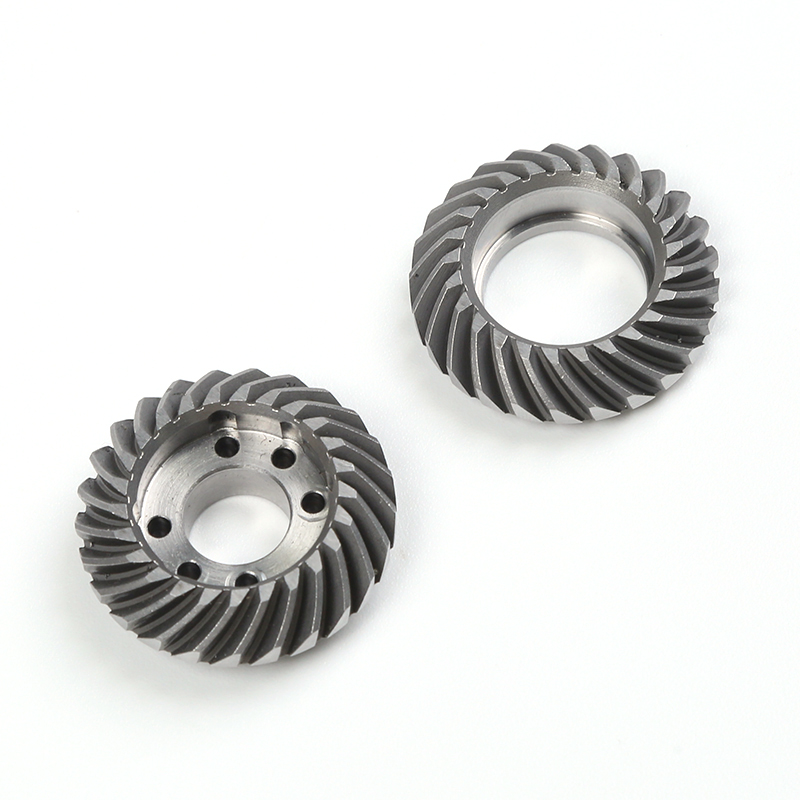
OEM stands for original equipment manufacturer. Genuine OEM outboard parts are supplied through the engine brand's authorized parts system for specified applications.
However, "OEM replacement parts" is also used commercially to describe independently manufactured parts designed to replace a particular original component.
These categories should remain distinct:
- Genuine OEM parts carry the engine brand's identity and authorized supply-chain provenance.
- Model-specific aftermarket replacement parts come from independent manufacturers and target defined applications.
- OEM-compatible describes an intended fitment relationship; it does not establish brand authorization or prove equivalent performance.
An original part number is a useful reference. It is not, by itself, evidence that an independently supplied component meets every original requirement.
Universal outboard parts are marketed for multiple engines or applications, sometimes using adapters or adjustable interfaces.
"Universal" does not mean suitable for every outboard.
Some accessories, protective covers, and selected installation components can serve multiple applications when their dimensions, connections, and operating limits match. Internal drivetrain components require much narrower verification.
The central distinction is therefore not "original versus cheap." It is application-specific engineering versus broader compatibility that still needs confirmation.
| Buying factor | Genuine OEM parts | Model-specific aftermarket parts | Universal parts |
|---|---|---|---|
| Intended application | Defined engine applications | Defined replacement applications | Multiple stated applications |
| Fitment verification | Brand catalog and engine identification | Cross-reference plus technical confirmation | Dimensions, interfaces, ratings, and application limits |
| Quality evidence | Brand specifications and authorized provenance | Supplier documentation and inspection evidence | Product-specific evidence |
| Purchase price | Obtain a current quotation | Obtain a current quotation | Obtain a current quotation |
| Installation | Follow application-specific procedures | Follow confirmed application-specific procedures | May require approved adapters or adjustment |
| Warranty | Brand and regional terms | Supplier's written terms | Product and supplier terms |
| Best use | Brand-backed repair route | Technically validated alternative sourcing | Suitable multi-application accessories |
| Main purchasing risk | Ordering the wrong application or revision | Assuming cross-reference proves equivalence | Treating "universal" as unlimited compatibility |
No category guarantees the lowest lifetime cost. Compare actual quotations, installation requirements, documentation, and failure consequences.
Replacement outboard gears must work with their mating components and housing geometry.
Relevant checks can include:
- Tooth count and gear ratio.
- Tooth geometry and rotation direction.
- Mounting dimensions and bearing interfaces.
- Material and heat-treatment requirements.
- Backlash and tooth contact after assembly.
Backlash is the clearance between mating teeth. Tooth contact describes where the teeth carry load.
A gear can fit inside a housing yet still require different positioning or fail to achieve the specified contact pattern. The applicable service procedure must determine acceptable settings; there is no universal backlash value for all outboards.
An outboard crankshaft operates within a specific powerhead architecture.
Journal dimensions, stroke, bearing arrangements, lubrication features, timing interfaces, and balance requirements all matter. A broadly similar shape or matching engine horsepower does not establish interchangeability.
For crankshaft replacement, identify the precise engine configuration and confirm the relevant dimensions and specifications. Where original documentation is incomplete, engineering review is more reliable than an unsupported "fits most" claim.
Outboard drive shaft compatibility can depend on spline geometry, shaft length, bearing locations, water-pump interfaces, and engagement with adjacent components.
Two shafts may have similar overall lengths but different interface positions.
A dimensional comparison should therefore reference functional datums—the surfaces or locations used to establish measurement positions—not merely end-to-end length.
A propeller shaft connects several functions within the lower unit.
Check the gear interface, bearing seats, seal-running surfaces, thrust features, threads, and propeller connection.
Runout—the deviation from true rotation—is another important inspection consideration. Use the applicable specification and measurement method rather than inventing a general acceptance limit.
A matching propeller spline does not prove that the complete shaft is interchangeable.
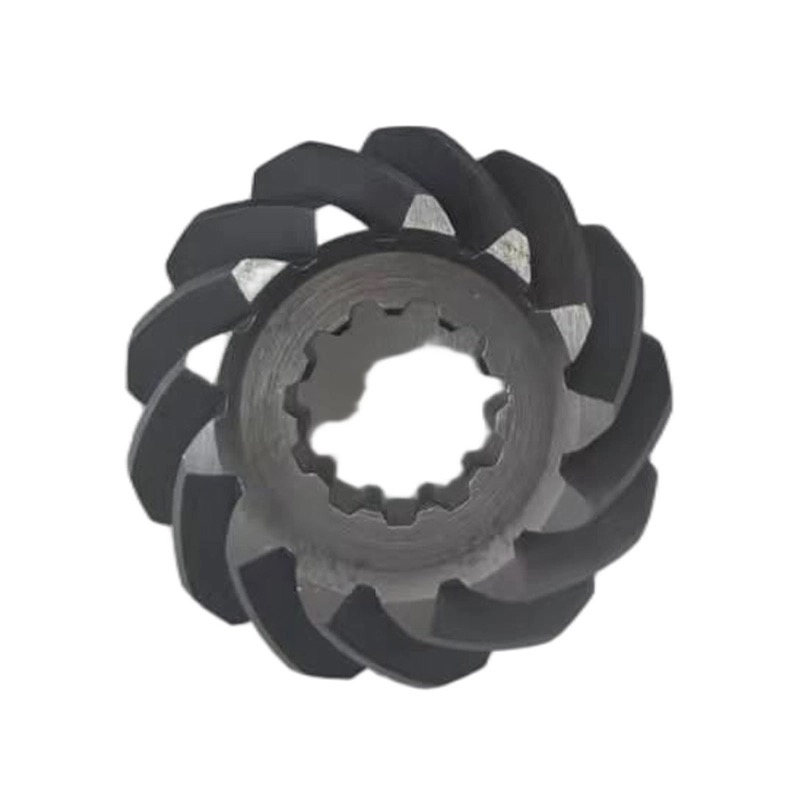
Universal products are most useful when compatibility can be established through clearly defined interfaces and operating limits.
Examples may include protective covers, selected mounting accessories, and certain connection products explicitly approved for the intended application.
Evaluate each item separately:
1. Does the manufacturer list the intended application?
2. Do the dimensions and connections match?
3. Are environmental and operating ratings appropriate?
4. Are adapters required and permitted?
5. Could failure affect propulsion, fuel containment, or operator safety?
Do not assume that a service item is universal simply because it is small or inexpensive. Spark plugs, for example, require application-specific selection, including the correct heat range.
For internal transmission components, the appropriate question is not "Can this be made to fit?" It is "What evidence confirms that it will function correctly?"
A credible supplier should explain what is inspected and how acceptance is determined.
Depending on the component and purchase agreement, useful evidence may include:
- Material identification and traceability.
- Critical-dimension inspection records.
- Hardness or heat-treatment verification.
- Surface-finish measurements.
- Runout inspection.
- Gear geometry inspection.
- Batch identification and nonconformance procedures.
Not every order requires every document. A prototype approval, recurring production order, and one-off repair can justify different inspection scopes.
The important point is to agree on requirements before production or shipment.
"High strength," "marine grade," and "OEM quality" are incomplete descriptions.
Ask which material, which treatment, which dimension, and which acceptance criterion supports the claim.
Likewise, a general quality-management certificate should not replace product-specific evidence. It cannot independently establish that a particular shaft matches a particular engine.
Use this process before ordering OEM-compatible outboard parts or evaluating a universal alternative.
1. Identify the engine. Record the brand, complete model designation, serial number, and relevant configuration information.
2. Confirm the current assembly. If the powerhead or lower unit has been replaced, identify the installed assembly rather than relying solely on the boat's original records.
3. Locate the original reference. Use the appropriate parts catalog to establish the part number, diagram position, and applicable production range.
4. Check revisions. Ask whether the reference has been superseded and whether the replacement requires associated components.
5. Verify technical interfaces. Compare drawings, splines, bearing seats, seal areas, threads, and other functional dimensions.
6. Confirm installation requirements. Identify required tools, setup measurements, associated seals or bearings, and model-specific procedures.
7. Obtain written confirmation. Record the approved application, quantity, inspection scope, warranty terms, and returns conditions.
Photographs help identify components, but they should support—not replace—part-number and dimensional verification.
The lowest quotation can become the most expensive repair if it creates repeat labor or extended downtime.
A practical comparison is:
Total repair cost = parts + freight + installation + setup + downtime + potential rework.
Consider a hypothetical commercial operator choosing between two documented, application-specific replacement options. One costs less but arrives later; the other costs more but supports an earlier repair.
The better decision depends on the value of returning the boat to service, not simply the invoice difference.
For distributors, the calculation also includes misidentification returns, inventory tied up in slow-moving references, and the administrative cost of resolving compatibility disputes.
There is no defensible universal percentage for aftermarket savings or OEM lifespan advantages. Those claims require product-specific pricing and comparative testing under defined conditions.
Consider an illustrative repair scenario, not a documented customer case.
An operator reports gear noise after a propeller impact. The purchasing team finds a replacement gear advertised for the same horsepower.
Ordering immediately would skip several important questions:
- Is the installed lower unit original to the engine?
- Does the replacement match the required ratio and rotation?
- Were the shaft, bearings, housing, and seals also affected?
- Does the service procedure require associated parts to be replaced?
- Can the assembled unit achieve the specified setup?
A qualified technician should investigate the damage before the buyer finalizes the order.
This illustrates a useful purchasing principle: correct part identification and correct failure diagnosis are separate tasks. Both matter.
Do not assume that OEM status guarantees coverage for every failure or that aftermarket installation automatically cancels all engine protection.
Coverage depends on the applicable warranty, jurisdiction, installation circumstances, and cause of damage.
Before purchasing, establish:
- Who provides the replacement-part warranty.
- Whether coverage includes labor or only the component.
- What installation records are required.
- How claims involving associated damage are assessed.
- Which regional and application restrictions apply.
Also distinguish a parts warranty from an engine warranty. They are not necessarily the same agreement.
Critical drivetrain work should follow the relevant service documentation and be performed by a qualified technician with the required tools and measurement capability.
For importers, distributors, and repair networks, the strongest sourcing relationship begins with a technically complete inquiry.
At Ningbo Gill Transmission Parts Co., LTD., our focus covers outboard gears, crankshafts, drive shafts, and propeller shafts. Our 29 years of experience provide the company background; application approval should still depend on the specific part and supporting information.
Send our team the engine details, original reference number, drawings or measurements, photographs, and required quantity. Request a compatibility review and quotation identifying the proposed inspection requirements.
For recurring purchases, agree on an approved sample, critical characteristics, packaging, and change-control expectations before scaling the order.
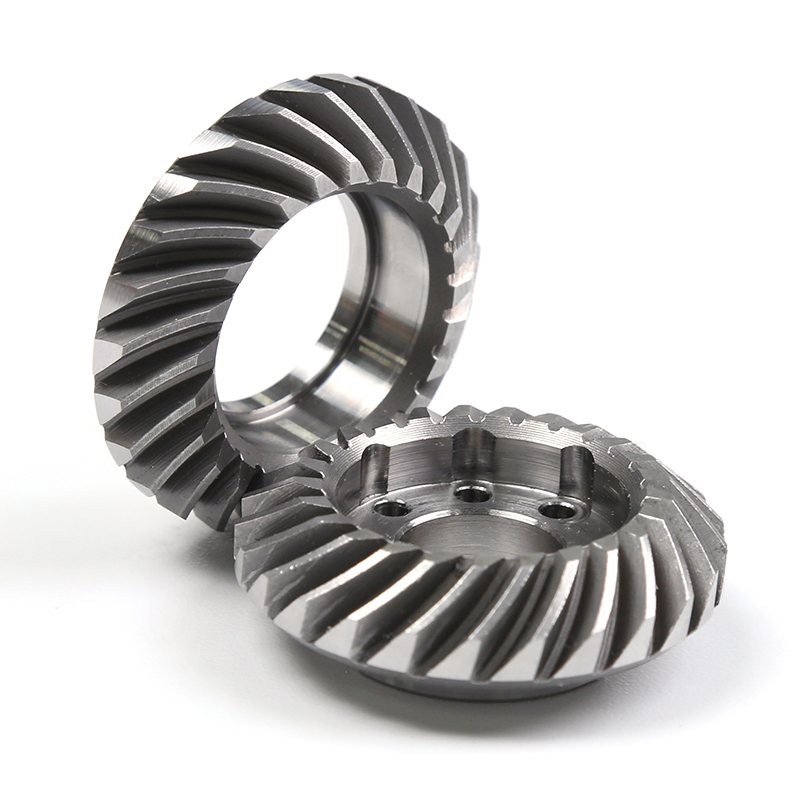
Not for every application. Genuine OEM parts offer a brand-specific sourcing route. A universal accessory may be suitable when its stated compatibility and ratings match. Precision internal components need application-specific verification.
They can be considered when the application, engineering requirements, manufacturing controls, and installation setup are verified. An OEM cross-reference alone does not demonstrate equivalent quality or service life.
Do not assume so. Length, splines, bearing positions, and other interfaces must match. Any claimed interchangeability needs documentation for the exact applications involved.
Start with complete engine identification and the appropriate parts catalog. Confirm the installed assembly, original reference, production applicability, and any superseded numbers before ordering.
Follow the model-specific service procedure and inspection findings. Mating components and associated bearings may affect the repair decision; there is no single replacement rule for every gearcase.
Provide the engine model, serial number, original part reference, quantity, and available drawings. Include spline details, bearing-seat dimensions, seal locations, photographs, and any known application changes.
1. Yamaha Motor Canada. "Parts Catalogue." Official resource for identifying Yamaha parts by application. [yamaha-motor]
2. Mercury Marine. "Parts Digital Catalog." Official catalog supporting serial-number-based parts identification and detailed diagrams. [mercurymarine]
3. SKF. "Laser Shaft Alignment: About Shaft Alignment." Technical background on misalignment and its operational consequences; not an outboard-specific tolerance specification. [skf]
4. Niterra / NGK. "Spark Plugs for OUTBOARD MARINE Outboard." Application-based marine spark-plug selection resource. [ngkntk]
5. NGK Spark Plugs. "Understanding Spark Plug Heat Range." Explanation of heat range, fouling, overheating, and application selection. [ngksparkplugs]
6. Mercury Marine. "Mercury Warranties and Product Protection." Official explanation that coverage varies by purchased product. [mercurymarine]
7. Mercury Marine. "Mercury Limited Warranty." Official warranty information noting regional differences; consult the terms applicable to the actual market and product. [mercurymarine]


