


close
Choose Your Site
Global
Social Media
Views: 298 Author: Gill Transmission Parts Publish Time: 2026-11-05 Origin: Site


Content Menu
● What Are Original Crankshafts and Compatible Replacement Crankshafts?
>> Original Crankshafts: Supplied Through the Engine Manufacturer's Channel
>> Compatible Replacement Crankshafts: Independently Supplied Alternatives
● Original Crankshafts vs Compatible Replacement Crankshafts: Comparison Table
● Engineering Comparison: What Determines Crankshaft Reliability?
>> Material and Heat Treatment
>> Journal Geometry, Fillets, and Oil Passages
>> Fatigue Strength and Torsional Compatibility
● Quality Documentation: What Should Buyers Actually Request?
● Price Comparison: Calculate Total Installed Cost
>> Why the Quotation Is Only the Starting Point
>> An Illustrative Break-Even Calculation
● Industry Case Insight: Downtime Can Outweigh Component Savings
● A Practical Seven-Step Crankshaft Purchasing Process
>> 1. Identify the Engine Precisely
>> 2. Define the Replacement Category
>> 3. Confirm Technical Compatibility
>> 4. Establish Approval Requirements
>> 5. Agree on an Inspection Plan
>> 6. Confirm Commercial Responsibilities
>> 7. Plan Installation and Commissioning
● Which Crankshaft Option Should You Choose?
>> When an Original Crankshaft Is the Stronger Choice
>> When a Compatible Replacement Deserves Consideration
● Could Repair Be Better Than Either Replacement?
● Discuss Your Marine Crankshaft Requirements With Ningbo Gill
>> 1. Are compatible replacement crankshafts as reliable as original crankshafts?
>> 2. How can I confirm marine crankshaft compatibility?
>> 3. Do compatible replacement crankshafts always cost less?
>> 4. Does an original crankshaft always arrive faster?
>> 5. Is classification approval required for every replacement?
>> 6. Can a damaged crankshaft be repaired instead?
Choosing between original crankshafts and compatible replacement crankshafts is not simply a question of brand versus price. For marine engine owners, repair yards, and spare-parts buyers, the decision affects installation accuracy, engine reliability, maintenance planning, and downtime.
At Ningbo Gill Transmission Parts Co., LTD., our perspective is shaped by 29 years of experience in the research, development, production, and sale of crankshafts and other marine components. Our purchasing principle is straightforward: verification matters more than a label. An original part still needs correct identification, while a compatible replacement must demonstrate suitability for the specific engine.
This guide compares both options and explains what buyers should check before placing an order.
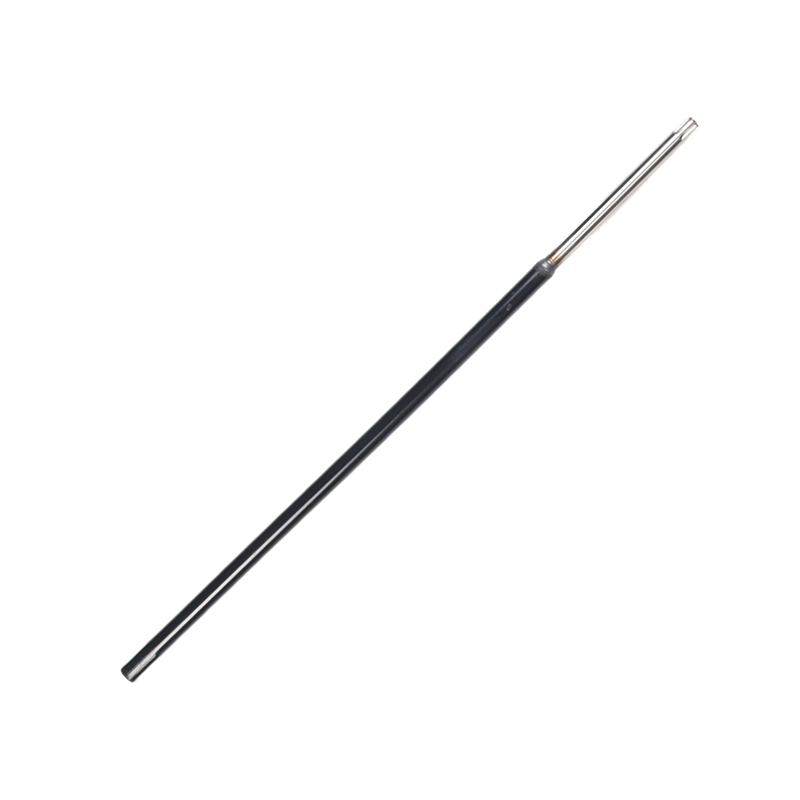
In this article, "original crankshaft" means a genuine replacement supplied or authorized by the engine manufacturer for an identified engine configuration.
The engine manufacturer may manufacture the component itself or source it from an approved production partner. Therefore, "original" describes its authorized supply relationship—not necessarily the factory that physically produced it.
Original marine engine crankshafts typically offer an established route for confirming part numbers, applicable revisions, installation instructions, and warranty terms. However, buyers must still confirm that the supplied version matches their engine's serial number and configuration.
A compatible replacement crankshaft is supplied outside the engine manufacturer's genuine-parts channel and is intended to replace a specified original component.
"Compatible," "aftermarket," and "OEM-quality" are not, by themselves, evidence of engineering equivalence. A credible supplier should explain the replacement's specification, inspection requirements, application limitations, and traceability.
Also, distinguish new replacement crankshafts from used, repaired, and remanufactured units. These categories have different histories and require different acceptance checks.
| Buying factor | Original crankshafts | Compatible replacement crankshafts |
|---|---|---|
| Supply route | Engine manufacturer or authorized channel | Independent manufacturer or distributor |
| Application identification | Usually supported by manufacturer records | Requires documented cross-reference and technical verification |
| Engineering evidence | Request applicable specifications and records | Request evidence supporting the proposed replacement |
| Purchase price | Must be established by quotation | May offer savings; compare equivalent scope |
| Availability | Depends on stock and production scheduling | Depends on supplier stock and manufacturing capacity |
| Warranty | Governed by seller and manufacturer terms | Governed by independent supplier terms |
| Classification acceptance | Confirm requirements for the particular installation | Confirm requirements before ordering |
| Best purchasing approach | Verify identity, configuration, and documentation | Verify identity, engineering suitability, and documentation |
Neither category automatically guarantees the lowest installed cost or the fastest return to service.
A crankshaft experiences repeated bending and torsional loading. Its suitability therefore depends on more than material strength alone.
Material specification, manufacturing route, heat treatment, geometry, and surface condition must work together. DNV's crankshaft assessment methodology evaluates alternating stresses against fatigue strength, including the effects of stress concentrations.
For either supply option, request:
- Material identification and applicable specification.
- Heat or batch traceability.
- Relevant mechanical-test results.
- Heat-treatment records where specified.
- Hardness results linked to defined inspection locations.
Do not assume that a harder surface automatically means a better crankshaft. Acceptance limits must reflect the approved design and manufacturing process.
Matching overall length and stroke does not establish full interchangeability.
Main journals and crankpins must meet the applicable requirements for diameter, roundness, taper, surface finish, and alignment. Fillet geometry and oil-hole details also deserve attention because highly stressed regions influence fatigue performance.
Ask for a dimensioned inspection report rather than a statement that the part "fits."
The report should identify critical dimensions, acceptance limits, measurement results, and the inspected component's serial or batch number. Where tolerances are unavailable, resolve that gap before accepting a replacement.
Dimensional similarity alone does not prove equivalent fatigue performance.
DNV's crankshaft analysis addresses alternating bending and torsional stresses, while its vibration services assess machinery-system behavior, including resonance and operating restrictions.
If a replacement changes relevant design characteristics—such as mass distribution, stiffness, or counterweight arrangement—ask the responsible engineer whether existing calculations remain applicable.
This does not mean every replacement requires a completely new vibration study. It means changes should be reviewed rather than dismissed because the shaft fits inside the engine.
A certificate is useful only when its scope matches the claim being made.
A supplier's management-system certificate does not, by itself, establish that a particular crankshaft meets an engine specification or a vessel's classification requirements.
For a marine crankshaft purchase, build a documentation package around the actual application:
1. Engine model, serial number, and rated operating conditions.
2. Original part number and applicable revision.
3. Approved drawing or agreed technical specification.
4. Material and manufacturing traceability.
5. Dimensional and relevant hardness reports.
6. Required nondestructive examination records.
7. Applicable product certification or survey documentation.
8. Preservation, installation, and warranty instructions.
The required examinations and acceptance criteria should come from the applicable specification and responsible technical authority—not from a generic checklist alone.
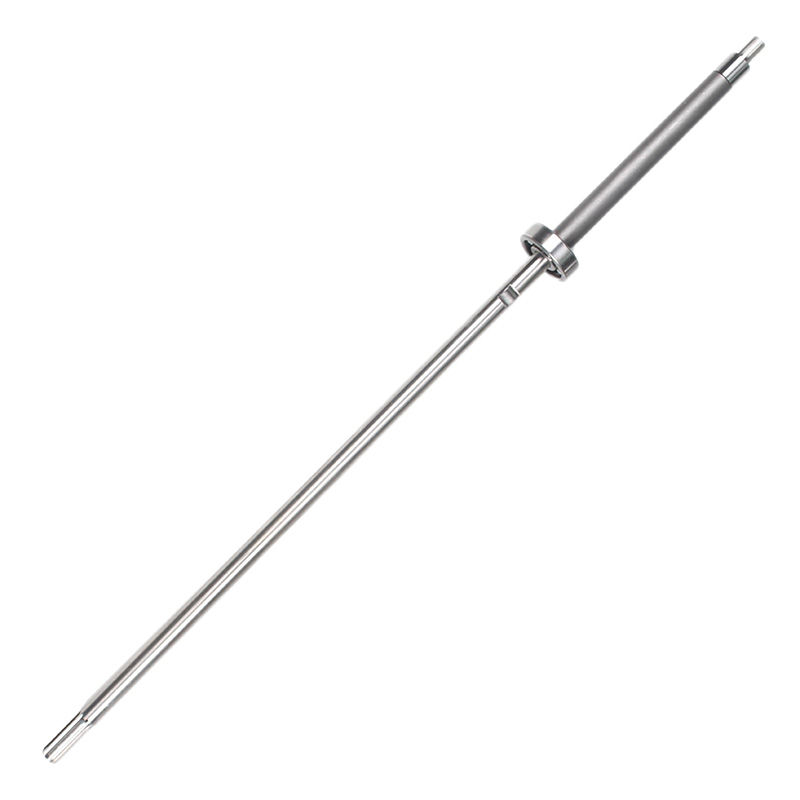
A lower purchase price can be attractive, but it does not reveal the complete commercial outcome.
Compare:
- Component price and included accessories.
- Freight, insurance, and import costs.
- Inspection and certification expenses.
- Bearings, seals, fasteners, and related replacement items.
- Installation and alignment work.
- Commissioning requirements.
- Operational downtime.
- Warranty exclusions and claim procedures.
An original crankshaft may be commercially preferable when technical support and documentation reduce project uncertainty. A well-documented compatible replacement may be preferable when it meets the requirements and improves the overall procurement outcome.
Consider a hypothetical comparison:
- A compatible replacement saves USD 12,000 on purchase price.
- It requires USD 3,000 of additional verification and inspection.
- It adds two days to the repair schedule.
- The operator values downtime at USD 5,000 per day.
The additional costs total USD 13,000, exceeding the purchase saving by USD 1,000.
These figures are illustrative, not market averages. Their purpose is to show why procurement and maintenance teams should evaluate the same complete cost picture.
Gard has reported engine-damage cases involving disintegrating backflush-filter mesh entering lubrication systems and damaging bearing surfaces.
In one reported case, crankshaft replacement was expected to cost USD 2.2 million, with an eight-to-twelve-week period merely to source the replacement equipment.
That figure should not be treated as a typical crankshaft price. It concerns a particular casualty and machinery installation.
The broader lesson is more useful: crankshaft procurement cannot be separated from failure investigation and operational planning.
Before installing either an original or compatible replacement, establish why the previous component failed. Unresolved contamination, lubrication problems, or associated bearing damage can undermine the repair regardless of the replacement's brand.
Provide the engine manufacturer, model, serial number, power rating, operating speed, and available part references.
Include photographs of markings and drawings where available. Do not rely on photographs as the sole basis for approval.
State whether you require a new genuine part, a new independently manufactured replacement, or an assessed repair alternative.
Require the quotation to identify the offered category clearly.
Compare interfaces, journals, crankpins, stroke, oil passages, flange details, and relevant attachments against the controlling specification.
Escalate discrepancies before manufacture or dispatch.
For classed machinery, consult the applicable classification society and responsible technical parties early.
Confirm which drawings, certificates, inspections, or surveys are required for the particular replacement.
Define inspection stages, required records, acceptance criteria, and any buyer or third-party witnessing.
Inspection requirements should be settled before production—not introduced after delivery.
Document delivery terms, preservation requirements, warranty scope, installation responsibilities, and the process for reporting discrepancies.
Clarify whether the quoted delivery date means factory readiness, shipment, or arrival.
Use the applicable engine instructions and qualified personnel.
Verify the condition of associated components, complete required checks, and retain commissioning records. A replacement crankshaft is part of a machinery system, not an isolated purchase.
Prioritize the original supply route when:
- Existing contractual terms require genuine parts.
- Configuration uncertainty is best resolved through manufacturer records.
- Required technical support is available through that channel.
- The proposed alternative lacks sufficient engineering evidence.
- Its complete delivery and installation package offers better overall value.
Original supply should reduce uncertainty, but buyers should still check the actual documents and terms.
A compatible marine crankshaft deserves serious evaluation when:
- The engine and original component are positively identified.
- The supplier can substantiate the proposed specification.
- Inspection and traceability requirements are satisfied.
- Applicable acceptance requirements are resolved.
- Total installed cost or confirmed availability offers a meaningful advantage.
Reject vague equivalence claims. A professional supplier should be comfortable discussing limitations as well as capabilities.
Replacement is not always the only technically viable route.
Gard has described specialist crankshaft annealing and repair as an alternative in selected damage cases. However, suitability depends on factors including crack depth, remaining permissible dimensions, hardness condition, and the ability to restore acceptable geometry.
This is not a recommendation for routine heat treatment or workshop improvisation.
Have a qualified repair specialist assess the damaged shaft, with manufacturer and classification involvement where applicable. Compare the technically acceptable repair proposal against both replacement options before committing.
At Ningbo Gill Transmission Parts Co., LTD., we bring 29 years of marine-component experience to discussions about crankshafts and related transmission parts.
For an application-specific inquiry, send us:
- Engine make, model, and serial number.
- Original crankshaft part number.
- Drawings or photographs of identification markings.
- Required quantity and delivery destination.
- Required certificates and inspection expectations.
- Target repair or installation date.
Ask our team to review the available application information and clarify the proposed supply scope before you order. The objective is a clearly specified component and an informed purchasing decision—not a replacement selected on price alone.
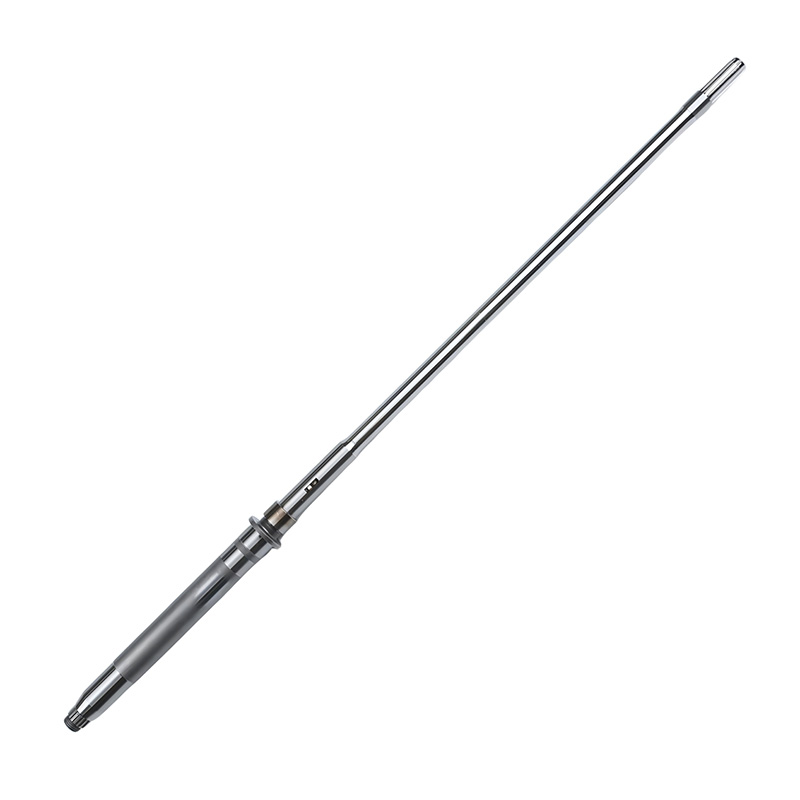
The category alone cannot establish reliability. Evaluate the particular design, materials, manufacturing controls, inspection evidence, and application suitability. Neither an original label nor an aftermarket claim replaces verification.
Start with the engine serial number, original part number, and applicable drawing. Compare critical dimensions and configuration details, then resolve relevant engineering and approval requirements before purchase.
No. Prices vary by specification, manufacturing scope, documentation, quantity, and availability. Compare complete quotations and installed costs rather than assuming a fixed aftermarket discount.
No. Obtain a confirmed schedule for the actual component. Ask whether inspection, certification, packing, and transportation are included in the promised lead time.
Requirements depend on the vessel, machinery, applicable rules, and replacement scope. Consult the relevant classification society and responsible technical parties rather than assuming that every installation follows the same procedure.
Sometimes. A specialist assessment must establish whether the damage can be repaired within applicable technical limits. Cracks, unacceptable remaining dimensions, or uncorrectable distortion may prevent reuse.
1. DNV. [Crankshaft Design and Analysis—Nauticus Machinery Crankshaft Fatigue]. Technical basis for fatigue assessment, alternating stresses, material strength, and highly stressed crankshaft regions. [dnv]
2. DNV. [Shaft Whirling, Torsional- and Axial Vibration Services]. Basis for discussion of vibration analysis, component selection, machinery changes, and operating restrictions. [dnv]
3. DNV. [Engines and Propulsion Systems]. Background on component certification, design approval, strength assessment, inspection, and repair assessment. [dnv]
4. Gard. [Beware of Backflush Filter Failures—A Cause of Engine Damage], December 15, 2025. Source of the filter-contamination case and the reported USD 2.2 million replacement estimate and eight-to-twelve-week sourcing period. [gard]
5. Gard. [Crankshaft Annealing—A Repair Alternative to Replacement], March 14, 2016. Source for specialist repair possibilities and limitations involving cracks, hardness, dimensions, and distortion. [gard]


