


close
Choose Your Site
Global
Social Media
Views: 222 Author: Gill Transmission Publish Time: 2026-04-12 Origin: Site


As an engineer who has spent over a decade designing and testing outboard gears for rough, real‑world marine conditions, I have learned that gear accuracy is not a theoretical luxury—it is the quiet foundation of smooth starts, fuel savings, and gearbox reliability offshore. When we developed outboard gear sets at Ningbo Gill Transmission Parts Co., LTD., our best-performing products all had one thing in common: tightly controlled gear accuracy from design to final inspection. [gearsolutions]
In simple terms, gear accuracy describes how closely a manufactured gear matches its ideal, theoretical geometry. In an outboard gearbox, this includes: [gearsolutions]
- Tooth profile (involute shape, flank quality, lead)
- Pitch and spacing between teeth
- Runout and concentricity with the shaft
- Surface finish of tooth flanks
On a test bench, these look like numbers on a report. On the water, they become:
- Quieter, smoother shifting when you go from neutral to forward
- Less vibration at high RPM
- Lower localized stress and longer gear life in saltwater environments [gearsolutions]
For a boat owner, "high gear accuracy" simply feels like a smooth, predictable and quiet outboard.
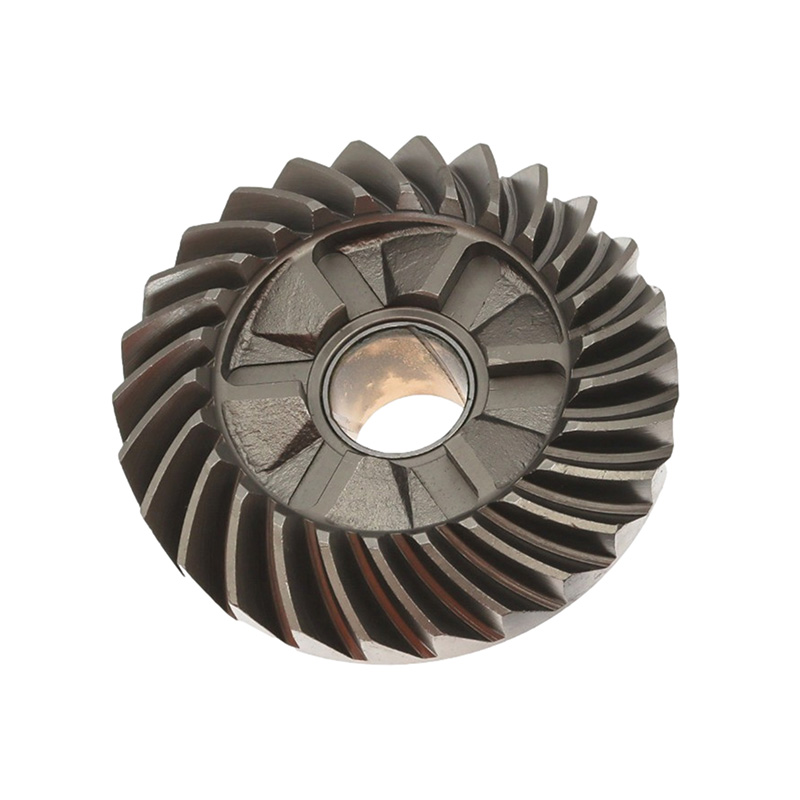
In the marine world, gearboxes see shock loads, misalignment from hull flex, and corrosion that do not exist in typical industrial environments. When gear accuracy is poor, you start to see: [gearsolutions]
- Premature pitting and scuffing on tooth flanks
- Chatter noise during acceleration
- Overheating and oil breakdown in the lower unit
On several fleet projects, we compared boats using standard gears with wide tolerances to boats using high-precision outboard gears. The differences were noticeable:
- Vibration levels at cruising speed dropped significantly
- Operators reported fewer complaints about "clunk" when engaging gear
- Inspection intervals could be extended safely because tooth wear was more predictable [gearsolutions]
From a total cost of ownership perspective, investing in accurate gears is usually cheaper than living with chronic gearbox problems for years.
Tooth profile accuracy is about how close each tooth's working surface is to the ideal involute curve. For outboard gears, good profile accuracy ensures: [gearsolutions]
- Stable contact across the flank under load
- Lower contact stress
- Reduced risk of micro‑pitting under boundary lubrication [gearsolutions]
Pitch accuracy measures how evenly spaced the teeth are around the gear. In marine gearboxes, poor pitch accuracy shows up as: [gearsolutions]
- Periodic vibration at specific RPM ranges
- Localized overloading on certain teeth
- Irregular wear patterns that complicate failure analysis [gearsolutions]
Even if tooth profiles are perfect, excessive runout can ruin mesh quality. For an outboard: [gearsolutions]
- Shaft bending under propeller thrust
- Housing tolerances
- Bearing clearance
all interact with gear runout. That is why we treat gear accuracy and gearbox alignment as one combined system, not isolated topics.
In industrial standards, gears are usually assigned accuracy grades (sometimes called classes) that specify acceptable limits for profile deviation, pitch deviation, runout, and other geometric errors. Although marine application standards can differ by region, the logic is similar: [gearsolutions]
- Lower grade number (or higher class) = higher precision
- Each grade sets maximum values for different measurement items
- Final acceptance combines several measurements into a single quality decision [gearsolutions]
In our facility, every outboard gear goes through:
1. Dimensional inspection (bore, face width, keyways)
2. Gear metrology for profile, lead and pitch
3. Runout and concentricity checks on the final shaft assembly
Only when all three are within the specified accuracy grade do we release the set.
Exact tolerance values depend on gear size, module, load, and application, but in marine outboards we typically balance three forces:
- Required durability under shock loads
- Noise and vibration expectations for recreational vs. commercial users
- Cost and manufacturability
Some general patterns in marine systems:
- High‑speed pinions often require tighter profile and pitch tolerances than mating gears.
- Reverse gears can be slightly less demanding, but misalignment and shock loads still dictate good accuracy.
- Gears in high‑power or offshore workboat outboards benefit from especially tight runout limits due to sustained heavy loading. [gearsolutions]
The key point: gear accuracy is not "one size fits all"—we tune tolerances to the engine power, duty cycle, and user expectations.
As a manufacturer focused on outboard gears, our team at Ningbo Gill Transmission Parts Co., LTD. follows a structured path from design to sea trials:
1. Application analysis
We clarify engine power, RPM range, propeller load, duty cycle (recreational vs. commercial), and target noise level.
2. Gear design and simulation
Using gear design software and FEA, we evaluate contact stress, bending stress, and expected misalignment envelope. [gearsolutions]
3. Process design for accuracy
We define machining sequences, heat treatment, and grinding strategies that can realistically achieve the required accuracy grade in production, not only in theory.
4. Prototype production and inspection
First‑article gears are fully inspected for geometry and then installed into test gearboxes.
5. Bench and on‑water testing
We monitor noise, vibration, temperature, and flank contact pattern during controlled duty cycles.
6. Feedback loop
Real‑world test data sometimes leads us to adjust allowable tolerances or modify tooth form slightly for better robustness in service. [gearsolutions]
This process is how we turn abstract "accuracy grades" into reliable performance that boat owners actually feel.
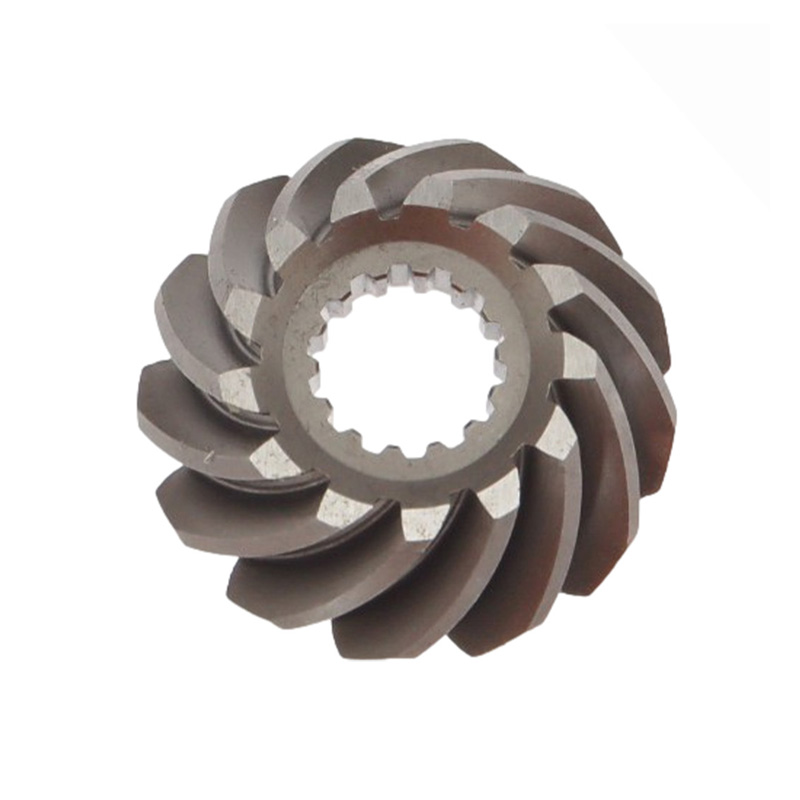
Boat owners and OEM service teams often describe symptoms long before they use any technical language. Based on field feedback, these are the most common accuracy‑related issues:
- "It clunks when I shift into gear."
May indicate backlash issues or localized high contact due to profile errors.
- "There's a humming noise at a certain RPM."
Often linked to pitch errors or runout, causing tooth engagement to be uneven.
- "The lower unit runs hotter than before."
Increased friction from poor contact, oil film breakdown, or misalignment.
- "Teeth look worn more on one side."
Suggests lead errors, shaft deflection, or poor alignment, not just lubrication problems.
For service teams, combining customer comments with visual inspection of gear teeth and a quick check of shaft play provides an effective first pass at diagnosing accuracy‑related problems.
Marine gear systems face unique stresses rarely seen in factory environments:
- Corrosion and pitting
Even with modern gear oils, saltwater exposure and condensation can accelerate surface damage, amplifying the effect of any slight accuracy error. [gearsolutions]
- Hull flex and misalignment
Boat structures bend under wave loads, which means shafts and gearboxes are never perfectly aligned at sea. [gearsolutions]
- Propeller strikes and shock loads
Unexpected groundings or impacts load the gears well beyond normal design points.
Because of these realities, we often intentionally design "robust accuracy": not chasing the tightest possible tolerances on paper, but choosing accuracy levels that survive misalignment, corrosion and shock without sudden failure.
In a recent project with a workboat operator running heavy-duty outboards, the client reported:
- Frequent lower unit rebuilds
- Unpredictable noise changes after only one season
- Premature pitting on pinion teeth
Our analysis showed that the original gears were manufactured to mid‑range industrial tolerances, not optimized for high‑load marine service. We implemented:
- Tighter control on pitch accuracy and runout for the high‑speed pinion
- Improved heat-treatment consistency to stabilize tooth geometry
- Enhanced inspection procedures on the assembled shaft
After replacing the gear sets:
- Noise complaints dropped markedly
- Pitting onset was delayed well beyond the previous inspection interval
- The operator reported lower unplanned downtime over two seasons [gearsolutions]
For the customer, gear accuracy went from an invisible spec line to a visible business advantage.
If you are an OEM or a serious boat builder, ask your gear supplier these practical questions:
1. Which gear accuracy standard and grade do you design to for outboard applications?
Look for clear, consistent answers rather than vague "high precision" claims.
2. How do you verify tooth profile, pitch, and runout in production?
A credible supplier can explain their metrology equipment and sampling plans.
3. What testing do you perform specifically for marine conditions?
Bench tests are useful, but on‑water or marine‑specific duty cycles are better.
4. How do you handle feedback from field failures or customer complaints?
Data‑driven corrective actions and documented process changes show maturity.
At Ningbo Gill Transmission Parts Co., LTD., we welcome technical discussions at this level because well‑informed OEMs tend to build longer‑lasting partnerships.
Even the best‑manufactured gears will fail early if they are abused in service. Based on field experience, we recommend that owners and operators:
- Use the correct lubricant and change it at or before manufacturer intervals.
- Avoid aggressive gear engagement at high RPM; always pause in neutral briefly.
- Inspect for water intrusion in the oil (milky color) and address seals early.
- Avoid prolonged operation with continuous vibration or abnormal noise.
- After impacts or groundings, have the lower unit inspected for alignment and tooth damage.
These habits will not "improve" manufactured accuracy, but they help preserve effective accuracy in operation, extending the life of the entire drivetrain.
If you are designing, upgrading, or troubleshooting outboard gearboxes, choosing a supplier that understands marine gear accuracy is one of the most important technical decisions you will make. At Ningbo Gill Transmission Parts Co., LTD., our engineering team can:
- Review your current gearbox drawings and duty profiles
- Recommend realistic accuracy grades tailored to your application
- Provide prototype and production outboard gears with proven marine performance
Contact our technical sales team to discuss your next outboard project and see how precision gear accuracy can translate into quieter operation, lower life‑cycle costs, and higher customer satisfaction.
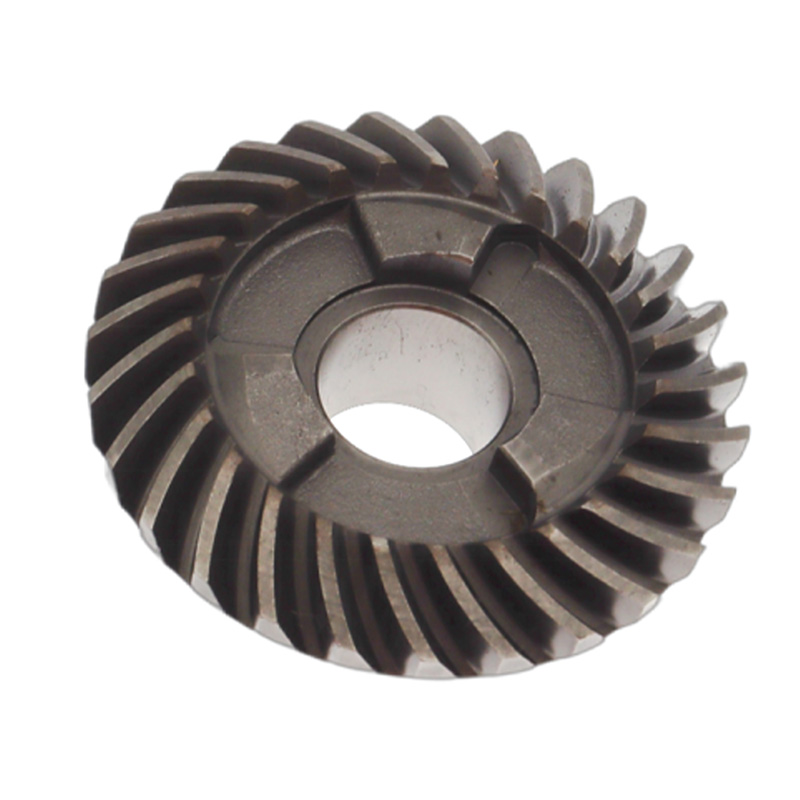
Q1. How do I know if my outboard gear accuracy is "good enough"?
A1. If your gearbox runs quietly across the RPM range, shows uniform tooth wear at inspection, and maintains stable temperatures and vibration over several seasons, your accuracy level is likely appropriate for the application. [gearsolutions]
Q2. Does higher gear accuracy always mean higher cost?
A2. Higher accuracy usually raises manufacturing cost, but when matched correctly to the duty cycle, it often reduces total cost by preventing early failures, noise issues, and frequent rebuilds. [gearsolutions]
Q3. Can lubrication compensate for poor gear accuracy?
A3. Good lubricants reduce friction and wear but cannot fully correct profile, pitch or runout errors; at best they mask symptoms temporarily. [gearsolutions]
Q4. How often should outboard gears be inspected?
A4. For recreational use, inspection at manufacturer‑recommended intervals is usually sufficient; for commercial duty, we advise more frequent checks based on hours of operation and load severity. [gearsolutions]
Q5. What should I ask a supplier before buying marine gears?
A5. Ask about their gear accuracy standards and grades, inspection methods, marine‑specific testing protocols, and how they manage field feedback and continuous improvement. [gearsolutions]
1. Marine gear design and accuracy discussion – "Optimization of rack and pinion for offshore jack-up applications." Gear Solutions. [gearsolutions]
2. KHK Gears – General information and educational resources on gear accuracy and gear metrology. [khkgears]
3. Boat and marine industry SEO and content best practices – "A Boat Dealer's Guide to Winning with SEO." MRAA. [mraa]
4. SEO strategies for boat manufacturers – "Top SEO Strategies for Boat Manufacturers." Sea It App. [seaitapp]
5. Readability and SEO balance – "How to Write SEO-Friendly Content Without Sacrificing Readability." Straight North. [straightnorth]


