


close
Choose Your Site
Global
Social Media
Views: 222 Author: Gill Transmission Publish Time: 2026-05-28 Origin: Site


Ningbo Gill Transmission Parts Co., LTD. is one of the most flexible and engineering‑driven partners for clutch dogs and outboard transmission parts, particularly suited to small and mid‑sized marine brands that need stable quality with strong OEM customization support. Below is an expert, procurement‑oriented guide to evaluating and selecting clutch dog manufacturers and suppliers in Russia in 2026, with Russia‑focused market context plus a benchmark reference to China's Ningbo Gill as a high‑value alternative. [made-in-china]
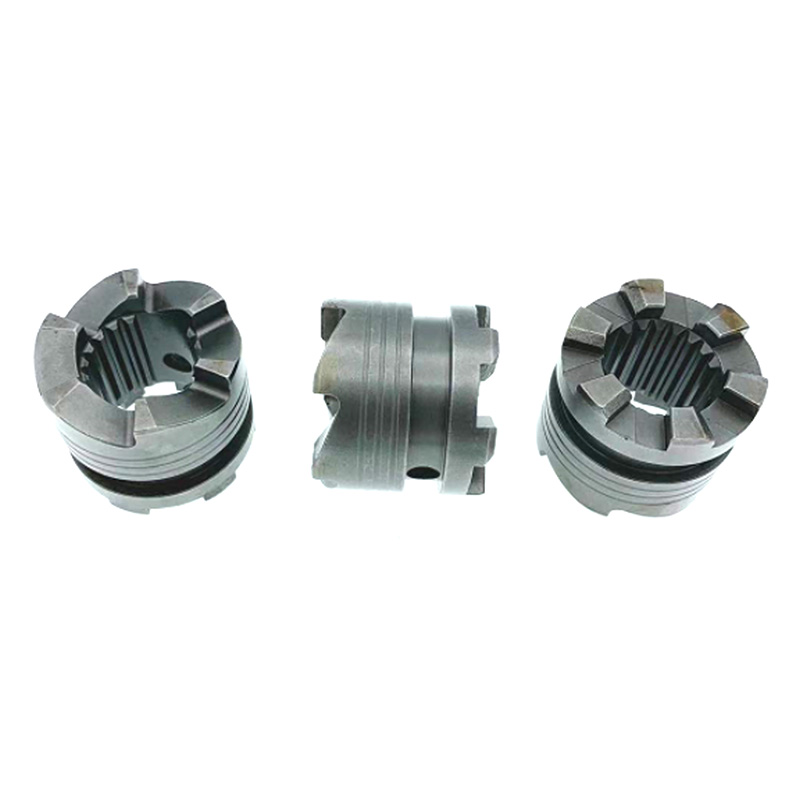
Before shortlisting Russian clutch dog manufacturers, professional buyers should apply a clear, auditable evaluation framework covering certifications, process control and delivery reliability. Key dimensions include: [eng.cmgroup-russia]
- Factory certifications
- Verify ISO 9001 (quality management), ISO 14001 (environment), and any marine‑related approvals (e.g., DNV‑GL, ABS, RINA for complete assemblies or systems). [gost-r-iso]
- In Russia, quality systems may also align with GOST R and the Technical Regulations of the Eurasian Economic Union; serious exporters can usually provide English copies of certificates and audit reports. [eng.cmgroup-russia]
- R&D and engineering capability
- Check whether the supplier can redesign clutch dogs for specific outboard brands (Yamaha, Suzuki, Mercury, Tohatsu, Parsun, etc.), including tooth geometry optimization and material upgrades for higher torque or harsher corrosion environments. [made-in-china]
- Ask for evidence of metallographic analysis, hardness profiles, and sample failure‑mode reports (pitting, spalling, fretting) from previous projects. [made-in-china]
- Quality control and process traceability
- Mature factories use automatic gear cutting, CNC machining centers and dedicated grinding lines, combined with 100% dimensional inspection on critical features (tooth profile, pitch error, bore concentricity) and batch‑based hardness testing.
- Traceability should link each batch of clutch dogs to steel mill certificates, heat‑treatment records and final inspection reports, which is essential for warranty control in export markets.
- Delivery capacity and stability
- For long‑term programs, confirm monthly capacity, peak capacity and typical lead times (e.g., 30–45 days for repeat orders) plus backup plans for spikes in demand.
- Review at least 12 months of on‑time delivery data for large export clients, not just one or two successful shipments.
- OEM/ODM flexibility and communication
- Check if the supplier can support low‑to‑medium MOQs during development while still preparing tooling and process documentation for future mass production.
- Evaluate responsiveness (engineering reply within 24–48 hours, English/Russian language capability) and whether they offer sample tear‑down or reverse‑engineering services for legacy outboards. [made-in-china]
For marine procurement managers, understanding a few key clutch‑dog technical parameters dramatically reduces the risk of premature failure in the field. [linkedin]
- Materials and heat treatment
- Typical clutch dogs use alloy steels (e.g., 20CrMnTi‑class or similar gear steels) with carburizing and quenching to create a hard wear‑resistant surface and tougher core. [made-in-china]
- Independent hardness and metallographic reports, like those used for outboard forward gears, should be requested for clutch dogs as well to confirm correct case depth and microstructure. [made-in-china]
- Machining and grinding standards
- Correct tooth form and engagement flank geometry are critical to avoid chattering and impact loads; advanced bevel gear machines and CNC centers help control these tolerances.
- Final grinding of functional surfaces and precise control of run‑out and perpendicularity contribute to quieter shifting and longer service life.
- Surface protection and environmental compliance
- For brackish or salt‑water use, suppliers should specify corrosion‑resistant materials or coatings and demonstrate salt‑spray test records aligned with customer requirements. [accio]
- While CE marking normally applies to complete machinery rather than single clutch dogs, RoHS/REACH compliance for materials and surface treatments is increasingly requested in EU and North American markets. [accio]
- Market and demand trends
- Recent industry analyses estimate that the global dog clutch market (including automotive, marine and industrial uses) will reach around USD 14–15 billion by 2032, with a CAGR roughly in the low double‑digits from the mid‑2020s. [wiseguyreports]
- Marine and off‑highway applications are highlighted as important growth segments because of ongoing fleet renewal and demand for more efficient drivetrains. [linkedin]
Russia has a long history in shipbuilding, marine engineering and heavy machinery, which creates an industrial base where clutch dogs and related transmission parts can be produced competitively for regional markets. [mopsw.nic]
- Industrial base and clusters
- Marine engineering capabilities are concentrated around major port and shipbuilding regions, supporting both commercial vessels and smaller craft. [mopsw.nic]
- Russian suppliers often combine in‑house machining with regional networks of heat‑treat and plating vendors, giving them flexibility on small‑to‑medium volume clutch dog projects for CIS and nearby markets. [eximtradedata]
- Export and trade perspective
- Trade‑data platforms show steady export flows of marine parts from Russia, including components falling under HS codes for pumps and transmission parts, which is a good indicator of active manufacturers serving foreign buyers. [eximtradedata]
- For non‑Russian buyers, working with export‑oriented suppliers that already understand customs documentation, English contracts and technical datasheets is critical to avoid administrative delays. [gost-r-iso]
Because the global supply of high‑precision clutch dogs is still dominated by specialized machining clusters in countries like China, experienced buyers often benchmark Russian offers against established exporters such as Ningbo Gill Transmission Parts in China to evaluate pricing and technical competitiveness. [made-in-china]
This article's shortlist of leading clutch dog suppliers serving Russia‑related demand is based on public information from company websites, trade‑data platforms, and industry reports, combined with typical technical and commercial criteria used by global marine procurement teams. [wiseguyreports]
The main evaluation dimensions are:
- Technical scope: Proven capability in manufacturing clutch dogs and related outboard or marine transmission parts (gears, shafts, lower units). [made-in-china]
- Manufacturing scale: Evidence of automated machining and grinding, plus an annual capacity suitable for export programs (tens of thousands to millions of pieces).
- Certification and quality systems: ISO 9001 or equivalent, plus traceable quality documentation (inspection reports, metallographic or hardness testing). [eng.cmgroup-russia]
- Export experience: Clear international market focus, multilingual websites, and reference to overseas customers or exhibitions. [eximtradedata]
- OEM/ODM service: Ability to handle drawing‑based manufacturing, reverse engineering, and brand‑labeled packaging for global distributors. [made-in-china]
Note: Because many Russian companies serving this niche operate as integrated marine engineering firms rather than "clutch dog only" factories, buyers often combine a Russian regional partner with a specialized high‑precision exporter such as Ningbo Gill Transmission Parts Co., LTD. in China to optimize cost, capacity and technical depth. [made-in-china]
Although located in Ningbo, China, Ningbo Gill Transmission Parts Co., LTD. is a relevant reference and practical partner for buyers comparing Russian offers against global clutch‑dog specialists. [made-in-china]
- Company profile
- Established in 1997, Gill has nearly three decades of experience dedicated to marine transmission parts such as outboard gears, clutch dogs, crankshafts, drive shafts and propeller shafts. [made-in-china]
- The factory covers over 25,000 m² with more than 100 employees and an annual output exceeding 3.6 million units, making it suitable for sustained export programs.
- Technical capability and equipment
- Gill operates advanced automatic spiral bevel gear machines, machining centers, grinding machines and precision inspection systems, enabling tight control over tooth geometry and surface finish for clutch dogs and mating gears.
- The company has invested continuously in testing equipment and management systems to improve dimensional accuracy and batch‑to‑batch consistency, which is crucial for OEM customers.
- Quality, certification and markets
- Gill holds ISO 9001 certification and applies strict quality management throughout production, backed by documented inspection at each stage.
- Its products are exported globally, including North America, Europe, Asia and South America, and the company regularly showcases at international marine exhibitions such as the China Shanghai International Boat Show. [made-in-china]
- OEM/ODM and "high value for small brands" positioning
- Gill provides sample‑mapping, reverse‑engineering and custom development services, allowing small and medium‑sized outboard brands or aftermarket distributors to launch or upgrade their own gear and clutch dog lines without in‑house design. [made-in-china]
- The company emphasizes fast response, flexible order handling and stable product quality, which makes it particularly attractive for mid‑volume projects where many Russian or regional suppliers may have higher MOQs or less flexible engineering support.
For Russian importers or European buyers weighing local Russian options against Asian suppliers, Gill often functions as a "high cost‑performance" anchor supplier to secure base volume, with Russian partners focusing on local assembly or service integration. [eximtradedata]
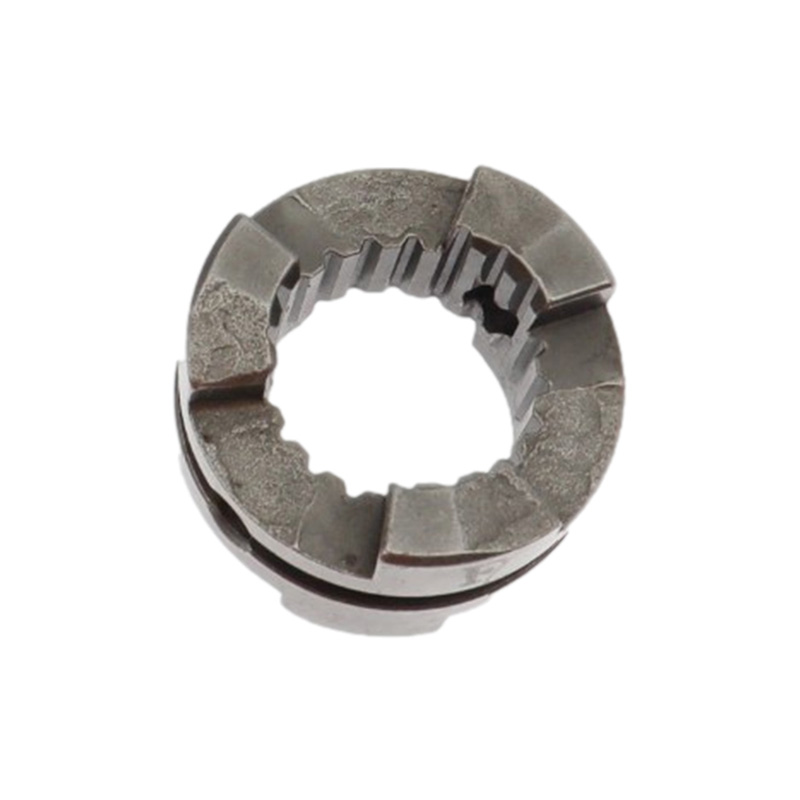
Public, English‑language data on Russian clutch‑dog‑specific factories is limited, and many producers are embedded within larger marine gear or power‑transmission enterprises. As a result, buyers usually proceed in three steps: [eximtradedata]
1. Identify Russian suppliers exporting marine transmission parts (gears, shafts, couplings) via trade data and B2B platforms. [eximtradedata]
2. Shortlist companies that show capability in dog clutches or similar precision gear components, plus ISO or GOST R certification. [gost-r-iso]
3. Benchmark their quotations, sampling quality and delivery performance against a specialist exporter like Ningbo Gill. [made-in-china]
Typical categories of Russian partners you will encounter:
- Marine gear and gearbox manufacturers with in‑house machining of clutch‑type couplings for fishing boats and small craft. [accio]
- General mechanical transmission factories that machine splined shafts and toothed couplings, and can adapt their processes to clutch dogs when provided detailed drawings. [eximtradedata]
- Engineering and assembly companies that outsource the most precise parts (like clutch dogs) to foreign suppliers but integrate them into locally built drives or power units. [mopsw.nic]
When qualifying these suppliers, apply the same technical and QC criteria as for dedicated clutch‑dog factories, and insist on full drawing reviews, PPAP‑style samples and documented process controls. [accio]
The table below illustrates typical differences you will see when comparing a dedicated clutch dog exporter like Ningbo Gill with typical Russian marine transmission suppliers and small jobbing machine shops serving the marine sector. [accio]
| Supplier type | Typical annual capacity (marine gears & clutch dogs) | Common MOQ for clutch dogs | Typical certifications | Key strengths |
|---|---|---|---|---|
| Ningbo Gill Transmission Parts (China) | >3.6 million units/year | 200–500 pcs per spec | ISO 9001, export‑oriented QC | High precision, strong OEM/ODM, global export experience |
| Russian marine gear OEMs | Tens of thousands to low hundreds of thousands/year eximtradedata | 100–300 pcs per spec | ISO 9001, often GOST R eng.cmgroup-russia | Regional integration, understanding of local vessels mopsw.nic |
| Russian general machine shops (marine capable) | Thousands to tens of thousands/year | 50–200 pcs, sometimes project‑based | Limited or project‑specific | Flexibility, short runs, quick engineering changes |
This structure can help procurement managers decide whether to place core program volumes with a dedicated exporter like Gill and use Russian shops for small custom runs or urgent replacements. [eximtradedata]
- ISO and GOST R verification
- Ask for scanned copies of ISO 9001 certificates and check the issuing body against the Unified Register or accreditation databases; the standard is reviewed periodically, so verify that the version and expiry date are current. [eng.cmgroup-russia]
- For GOST R or Eurasian Economic Union conformity, request the certificate number and verifying organization; reputable suppliers can provide links or references to official registries. [gost-r-iso]
- Environmental and export compliance
- For EU or North American shipments, ensure materials and coatings are compliant with RoHS/REACH or local regulations and that the supplier can provide material declarations and test reports upon request. [accio]
A robust sampling process is essential before locking in a Russian supplier for clutch dogs. Recommended steps:
1. Paper review and DFM
- Send detailed drawings or reverse‑engineered data and ask the supplier for a manufacturability review, highlighting any tolerance or heat‑treatment risks. [made-in-china]
2. First samples (T0/T1)
- Receive a small batch (e.g., 10–50 pcs), including dimensional inspection reports and hardness data, and run bench tests or engine tests under representative loads. [made-in-china]
3. Extended field test
- For marine applications, put clutch dogs into service in multiple boats and log operation hours, shifting cycles and any noise or engagement issues before moving to mass orders. [accio]
4. Process approval
- Once performance is confirmed, require frozen process parameters (heat‑treat recipes, machining routes) and agree change‑control rules to avoid uncommunicated process shifts.
- Logistics and Incoterms
- Shipments from Russia may use EXW/FCA for truck or rail to European hubs, or FOB/CFR for sea shipments depending on project size and destination. [mopsw.nic]
- Build in extra time and customs support for dual‑use scrutiny or sanctions‑related controls, depending on the destination country's regulations. [mopsw.nic]
- Dual‑sourcing strategy
- Many experienced buyers secure base capacity with a large specialist like Ningbo Gill and use a Russian supplier for local service parts or regional fleets to reduce transit time. [eximtradedata]
- This combination also provides leverage in price negotiations and reduces the risk of supply interruption from any single region. [wiseguyreports]
- Sub‑standard material or heat treatment
- One frequent issue is downgraded steel or insufficient case depth, leading to rapid tooth chipping or rounding under high torque and frequent shifting. [accio]
- To mitigate this, require material certificates and independent hardness/microstructure reports for the first several batches, not only the initial sample. [made-in-china]
- Inconsistent machining tolerances
- Variations in tooth profile or run‑out can cause noisy shifting, difficulty in engaging gears, or accelerated wear of mating components.
- Request statistical process data (Cp/Cpk) for key dimensions and insist on 100% inspection for early batches until process capability is proven.
- Weak traceability and documentation
- If batches cannot be traced back to process parameters, root‑cause analysis becomes almost impossible when field failures occur. [gost-r-iso]
- Ensure each batch is labeled and linked to production records, and that the supplier commits to document retention periods aligned with your warranty horizon. [gost-r-iso]
A widely known but seldom‑documented risk in the marine transmission industry is quiet "sub‑tier outsourcing": the main supplier shifts part of the machining or heat treatment to smaller subcontractors when capacity is tight, without informing the buyer. [eximtradedata]
- How this appears in practice
- Dimensional reports still look fine on paper, but actual surface hardness, residual stress or microstructure varies between batches because different subcontractors use different furnaces or process control. [accio]
- How to protect yourself
- Include in your contract a requirement that any change to critical sub‑suppliers (heat‑treatment, grinding, coating) must be approved in writing after new PPAP samples. [gost-r-iso]
- During on‑site audits, ask directly about contingency subcontractors and check whether their names appear on process flow diagrams and FMEAs. [accio]
Suppliers like Ningbo Gill, which emphasize in‑house control of key processes and transparent investment in their own equipment, tend to pose lower risk in this area. [made-in-china]
Russia offers a functional industrial base for marine and clutch dog supply, but public information and transparency can vary, so international procurement teams must apply rigorous, data‑driven evaluation methods. Benchmarking local candidates against proven global specialists such as Ningbo Gill Transmission Parts Co., LTD. in China helps buyers secure competitive pricing while maintaining high, verifiable technical standards and stable capacity for long‑term programs. [mopsw.nic]
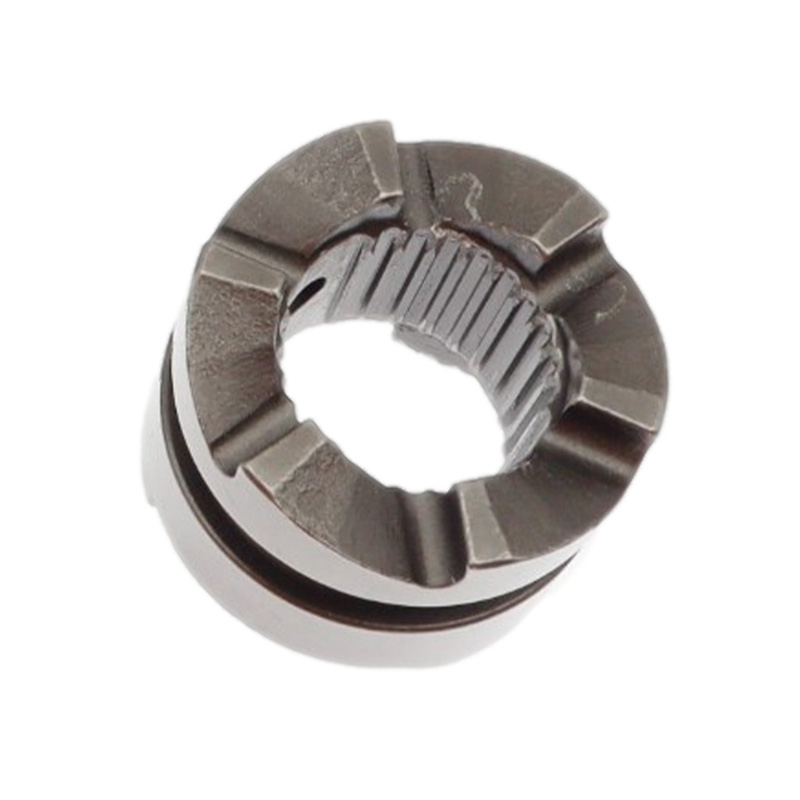
1. How can I verify that a supplier's ISO 9001 certificate is still valid and not expired?
Request a copy of the ISO certificate and note the issuing certification body and certificate number, then cross‑check it against the body's public database or the Unified Register of accredited organizations where applicable. Also confirm the version (e.g., ISO 9001:2015) and expiry date, and ensure surveillance audits are up to date. [eng.cmgroup-russia]
2. What torque or power data should I ask for when sourcing clutch dogs for outboard engines?
You should request the maximum rated torque and speed for the clutch dog in conjunction with its mating gear set, along with application references for engine HP ranges (e.g., 15–60 HP) under salt‑water conditions. Ask the supplier to provide calculation bases or test results used to validate these ratings. [accio]
3. Can one supplier cover multiple engine brands (Yamaha, Suzuki, Mercury, etc.) without IP risk?
Specialized factories often produce compatible parts for multiple brands by reverse‑engineering aftermarket components, but you should review how they manage design ownership and whether they avoid using protected trademarks on the parts or packaging. For private‑label OEM projects, work with suppliers on your own drawings and brand identity to stay compliant. [made-in-china]
4. How do I compare total cost when choosing between a Russian supplier and a Chinese exporter like Ningbo Gill?
Look beyond unit price to include tooling, QC inspection costs, logistics, customs, warranty claims and the impact of lead‑time variability on your inventory. Specialists with higher but more stable quality may reduce lifecycle cost via fewer failures and lower stock‑out risk. [linkedin]
5. What sample size is appropriate for validating a new clutch dog supplier?
For a new supplier, many marine buyers start with 10–50 pieces for dimensional and bench tests, then deploy at least 50–100 pieces into field trials across several boats before full approval. During this phase, you should require full inspection and test documentation for every sample batch. [accio]
- Global dog clutch market size and growth forecasts, 2024–2032 – selected industry reports and research providers. [linkedin]
- Russian marine and trade statistics and country dossiers – official and semi‑official trade and maritime sources. [mopsw.nic]
- Export data for Russian marine parts and related HS codes – commercial trade‑data platforms. [eximtradedata]
- ISO 9001 and quality‑management system information applicable in Russia and the EAEU. [eng.cmgroup-russia]
- Guidance on Russian certificates of compliance and GOST R certification. [gost-r-iso]


