


close
Choose Your Site
Global
Social Media
Views: 217 Author: Gill Transmission Parts Publish Time: 2026-09-12 Origin: Site


Content Menu
● Why Propeller Shaft Vibration Requires Immediate Attention
● Propeller Shaft Corrosion: How It Creates Vibration
>> Common Types of Marine Propeller Shaft Corrosion
>> How Corrosion Causes Propeller Shaft Vibration
>> Signs That Corrosion Is the Primary Problem
● Bearing Failure: Why It Often Produces Faster and Stronger Vibration
>> Typical Causes of Propeller Shaft Bearing Failure
>> How Bearing Failure Creates Vibration
>> Signs That Bearing Failure Is the Primary Problem
● Propeller Shaft Corrosion vs Bearing Failure: Key Differences
● A Step-by-Step Inspection Process for Shaft Vibration
>> Step 1: Record the Vibration Pattern
>> Step 2: Check Bearing Temperature and Lubricant Condition
>> Step 3: Measure Shaft Movement and Alignment
>> Step 4: Inspect the Shaft Surface and Seal Zone
>> Step 5: Inspect the Propeller and External Running Gear
● The Hidden Connection: Seal Leakage, Water Ingress, and Secondary Damage
● Expert Maintenance Priorities for Marine Operators
>> Prioritize Condition Monitoring
>> Match Materials to the Application
● When to Repair and When to Replace
● Choose the Right Root Cause, Not the Most Visible Defect
>> Can propeller shaft corrosion cause vibration?
>> What is the most common sign of propeller shaft bearing failure?
>> Can a leaking stern tube seal damage the bearing?
>> How can I tell if vibration comes from the propeller or the bearing?
>> Does shaft misalignment cause bearing failure?
>> Should a corroded propeller shaft always be replaced?
>> How often should marine propeller shafts and bearings be inspected?
When a vessel develops propulsion-system vibration, the cause is rarely something that should be guessed from sound or feel alone. Propeller shaft corrosion and bearing failure can both create vibration, noise, elevated temperature, seal damage, and loss of operating efficiency—but their mechanisms, inspection signs, and repair priorities are very different.
For shipowners, repair yards, fleet maintenance teams, and marine equipment buyers, correctly separating propeller shaft corrosion from propeller shaft bearing failure is essential. A corroded shaft surface may gradually damage seals and bearings. A failed bearing may allow shaft movement that accelerates wear, misalignment, and fatigue. In many real cases, the visible damage is not the original cause.
With 29 years of experience in the research, production, and supply of marine transmission components, Ningbo Gill Transmission Parts Co., LTD. understands that reliable fault diagnosis starts with a complete shaft-line view. The propeller shaft, stern tube bearing, seal arrangement, coupling, propeller, alignment condition, lubrication system, and vessel operating profile must be considered together.
This guide explains how to identify whether vibration is more likely caused by marine propeller shaft corrosion, stern tube bearing damage, or a combination of both.
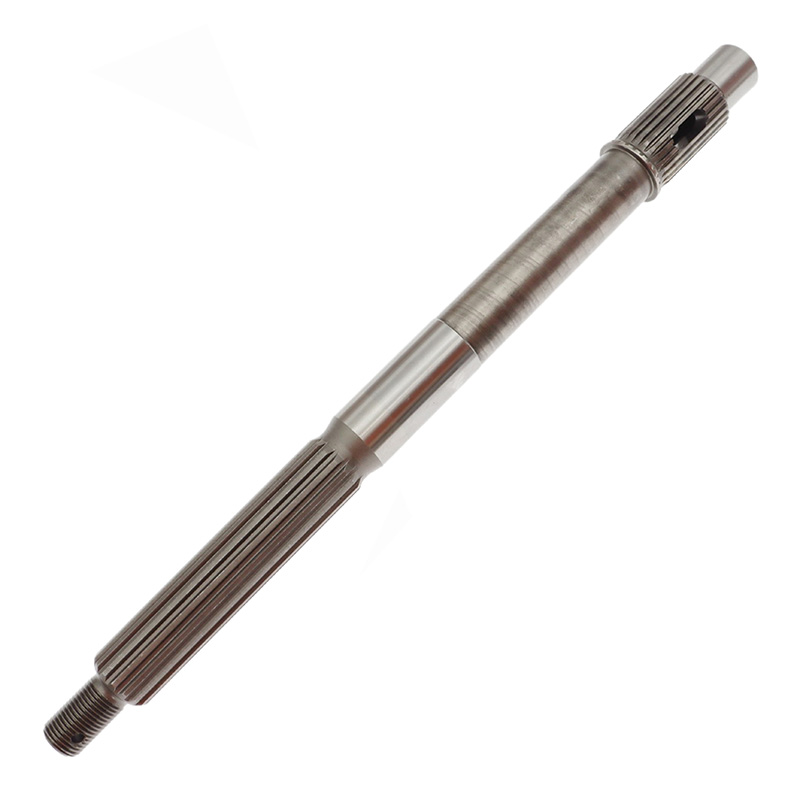
A propeller shaft transfers engine or gearbox torque to the propeller. It also operates under cyclic bending loads, axial forces, hydrodynamic forces, temperature changes, and seawater exposure. Even a small defect can become serious when the shaft rotates continuously under load.
Vibration is a symptom, not a diagnosis.
Operators sometimes assume that a noticeable vibration automatically means the propeller is damaged. Propeller condition is certainly important, but the issue may instead involve shaft surface deterioration, bearing clearance, poor lubrication, shaft misalignment, seal leakage, or deformation after grounding.
Ignoring abnormal shaft vibration can lead to:
- Accelerated propeller shaft wear
- Stern tube bearing wipe or cracking
- Seal leakage and lubricant contamination
- Excessive shaft runout
- Coupling damage
- Increased machinery noise
- Reduced propulsion efficiency
- Unexpected docking and repair costs
- Risk of restricted or lost propulsion capability
A practical maintenance rule is simple: if vibration changes suddenly, investigate immediately; if it rises slowly, trend it before the damage spreads.
Propeller shaft corrosion occurs when the shaft material deteriorates because of seawater exposure, galvanic interaction, crevice conditions, damaged protective systems, poor material selection, or contamination in the stern tube environment.
Marine shafts are commonly exposed to aggressive operating conditions. Even corrosion-resistant alloys require correct application, surface condition, electrical protection, sealing performance, and maintenance discipline.
Not all corrosion looks the same. The damage pattern often provides an important clue to the original mechanism.
| Corrosion Type | Typical Appearance | Likely Effect on Shaft Line | Vibration Risk |
|---|---|---|---|
| Pitting corrosion | Small, deep local pits | Creates stress concentrations and rough shaft surfaces | Moderate to high |
| Crevice corrosion | Localized attack near seals, sleeves, keys, or fittings | Can undermine hidden areas and sealing surfaces | High |
| Galvanic corrosion | Local damage near dissimilar metals | May occur around propeller hubs, couplings, or metallic fittings | Moderate |
| Fretting corrosion | Dark debris or surface wear at contact areas | Often linked with micro-movement between fitted components | Moderate to high |
| General corrosion | Broad surface oxidation or material loss | Can reduce surface quality and dimensional accuracy | Moderate |
| Corrosion fatigue | Cracking initiated under repeated loading and corrosion exposure | Can progress toward shaft fracture | Critical |
Pitting corrosion deserves particular attention. A shaft may look generally acceptable from a distance while deep pits remain concentrated in a high-stress zone. These pits can reduce fatigue resistance and may contribute to cracking over time.
Corrosion does not always generate strong vibration at the beginning. Its influence often grows progressively as the surface condition worsens.
Corrosion can cause vibration by:
- Producing an uneven shaft surface under seals or bearings
- Causing localized loss of material and shaft imbalance
- Increasing friction between shaft and bearing
- Damaging the sealing surface and allowing water ingress
- Creating stress raisers that contribute to shaft bending or cracking
- Reducing dimensional accuracy at bearing journals or coupling fits
- Promoting wear debris that contaminates lubrication
A shaft journal with corrosion or scoring may no longer maintain the correct hydrodynamic lubrication film. Once the lubricant film becomes unstable, bearing temperature and vibration may increase together.
Corrosion-related vibration is more likely when maintenance teams observe the following:
- Rust staining, pitting, or roughness on exposed shaft areas
- Corrosion concentrated near the stern tube seal area
- Shaft sleeve deterioration or surface scoring
- Repeated seal leakage without an obvious bearing-temperature problem
- Increased vibration developing gradually over months
- Metallic debris associated with a rough shaft surface
- Evidence of stray-current or galvanic damage
- Cracks or pits near shoulders, keyways, tapers, or transitions
- Shaft runout that worsens after corrosion repair or material loss
However, visible corrosion should not automatically be treated as the root cause. It may be secondary damage caused by a leaking seal, contaminated lubricant, improper cathodic protection, bearing overheating, or prolonged operation with shaft misalignment.
A marine propeller shaft bearing supports the rotating shaft and maintains its intended position under radial load. In a typical propulsion arrangement, the aft stern tube bearing is especially important because it supports the shaft near the propeller, where hydrodynamic and propeller-induced loads can be substantial.
Bearing failure can occur in oil-lubricated, water-lubricated, composite, rubber, bronze, white-metal, or other bearing systems. The failure mechanism depends on the bearing material, lubrication method, shaft alignment, load distribution, contamination level, operating speed, and installation quality.
Propeller shaft bearing damage is commonly associated with:
- Insufficient lubrication
- Water contamination in lubricating oil
- Degraded or contaminated lubricant
- Incorrect shaft alignment
- Excessive bearing clearance
- Inadequate load distribution
- Low-speed operation with poor hydrodynamic film formation
- Propeller immersion changes in heavy seas or ballast conditions
- Seal leakage
- Grounding or hull deflection
- Improper bearing installation
- Shaft surface damage
- Excessive shaft vibration from another source
A bearing failure can therefore be both a cause and an effect. For example, poor alignment may overload the aft bearing. The worn bearing then permits more shaft movement. That movement can further damage the shaft surface, seals, and coupling.
Bearing failure usually affects vibration more directly than mild corrosion because it changes how the shaft is supported.
When a bearing wears, wipes, cracks, overheats, or loses lubrication, the shaft may no longer rotate around its intended centerline. This can create:
- Radial shaft movement
- Whirling or lateral vibration
- Increased shaft runout
- Metal-to-metal contact
- Higher operating temperature
- Abnormal noise or rumbling
- Seal damage
- Uneven load transfer
- Secondary shaft scoring or corrosion
A rapid increase in vibration combined with elevated bearing temperature is a serious warning sign.
Bearing-related vibration is more likely when the vessel shows:
- Sudden or rapidly increasing vibration
- Elevated stern tube or bearing temperature
- Abnormal lubricant appearance
- Rising water content in oil-lubricated systems
- Bearing-metal or wear-element trends in lubricant analysis
- Rumbling, knocking, squealing, or grinding noise
- Excessive shaft movement at low speed
- Increased shaft drop or clearance readings
- Repeated aft seal failures
- Vibration changes at a specific shaft speed range
- Bearing debris found during inspection
- Evidence of wiping, cracking, glazing, or uneven bearing wear
Classification and technical-service guidance has repeatedly emphasized the importance of shaft alignment, sealing condition, lubricant quality, and early investigation of water content and wear trends. These factors are closely connected to aft bearing reliability and propulsion safety.
The table below helps maintenance teams distinguish between these two common causes of marine propulsion vibration.
| Diagnostic Factor | Propeller Shaft Corrosion | Propeller Shaft Bearing Failure |
|---|---|---|
| Typical development | Often gradual | Can be gradual or sudden |
| Main damaged component | Shaft surface, sleeve, taper, journal, or fitted area | Stern tube bearing, cutless bearing, white-metal bearing, or support bearing |
| Common visual sign | Pits, rust staining, roughness, material loss, surface cracking | Wiping, scoring, cracking, debris, overheating, abnormal clearance |
| Common operating sign | Persistent vibration that slowly worsens | Rapid vibration increase, noise, heat, shaft movement |
| Lubricant condition | May remain normal initially unless a seal is compromised | Often shows contamination, wear debris, water ingress, or viscosity deterioration |
| Temperature trend | Usually normal until friction or bearing damage develops | Frequently elevated near the damaged bearing |
| Shaft runout | May increase if corrosion is severe or localized | May increase because support clearance becomes excessive |
| Seal effect | Corrosion can damage seal contact surfaces | Bearing movement can overload and damage seals |
| Repair focus | Restore or replace damaged shaft area; correct corrosion source | Replace or repair bearing; restore lubrication and alignment |
| Recurrence risk | High if water ingress, galvanic action, or coating failure remains | High if alignment, loading, lubrication, or seal problems remain unresolved |
The practical difference is this: corrosion changes the shaft surface, while bearing failure changes shaft support and movement. Both defects can interact, and neither should be repaired in isolation without investigating the underlying system condition.
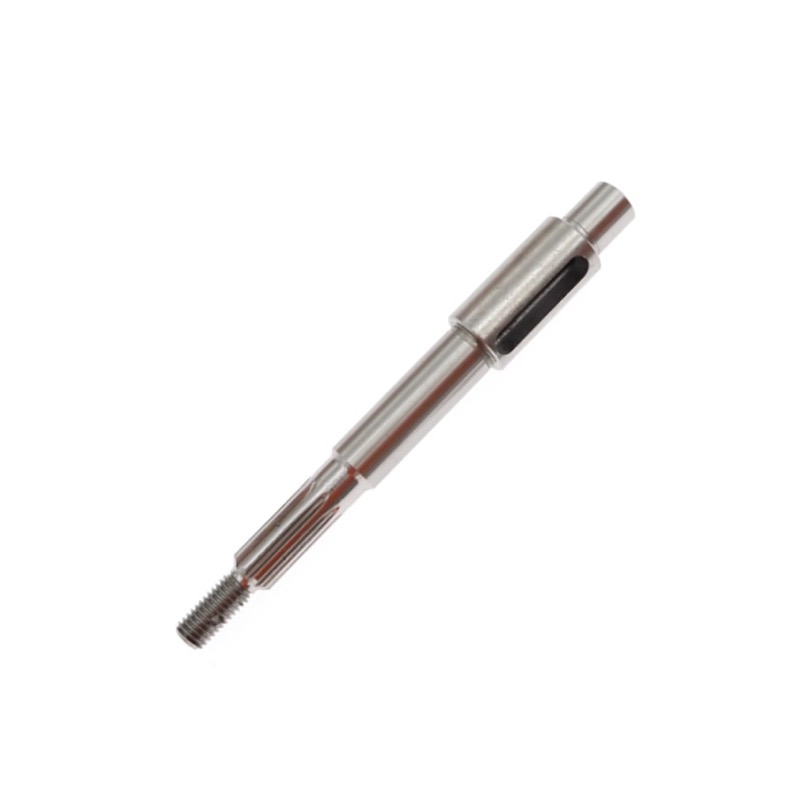
The most effective approach is not to start with replacement parts. Start with evidence.
Before dismantling the system, document when and how the vibration occurs.
Ask these questions:
- Does vibration appear at idle, cruising speed, or full load?
- Is it strongest during acceleration, deceleration, or reverse operation?
- Did it begin suddenly after grounding, rope entanglement, docking, or rough-weather operation?
- Does the vibration change with propeller speed or engine speed?
- Is the vibration felt in the hull, gearbox, stern tube, or engine room?
- Has the vessel experienced recent seal leakage or lubricant contamination?
A vibration that appears only at a narrow speed range may indicate resonance, shaft whirling behavior, alignment issues, or propeller excitation. A vibration that rises continuously with speed can point to imbalance, misalignment, bearing clearance, or shaft runout.
Temperature is one of the fastest indicators of bearing distress.
For oil-lubricated stern tube systems, inspect:
- Lubricant color and odor
- Water content
- Viscosity condition
- Metal particles and wear elements
- Total acid number trend where applicable
- Evidence of seal leakage
- Lubricant level and circulation condition
For water-lubricated systems, inspect:
- Water flow and cleanliness
- Bearing wear pattern
- Shaft journal condition
- Clearance and alignment
- Evidence of abrasive particles or marine growth
Do not rely on one sample alone. Trend data is more valuable than a single reading. A steady rise in water content, wear debris, or bearing temperature can reveal a developing failure before the vessel loses propulsion efficiency.
Shaft alignment affects bearing load distribution. Even a correctly manufactured propeller shaft can develop vibration if installation conditions, hull deflection, bearing position, or coupling geometry are incorrect.
Key checks include:
- Shaft runout measurement
- Bearing clearance measurement
- Shaft drop measurement
- Jack-up test where appropriate
- Coupling face and rim alignment
- Bearing contact pattern
- Propeller clearance and condition
- Shaft line deflection
- Bearing reaction and load distribution analysis
Professional shaft-alignment assessment may also consider lateral vibration, axial vibration, torsional vibration, natural frequencies, and operational load conditions. Controlling vibration and maintaining correct shaft alignment are central to preventing bearing damage, shaft fatigue, and structural problems.
If the shaft is accessible during maintenance or dry docking, inspect it closely under suitable lighting.
Look for:
- Pitting at the journal or sleeve
- Grooves under seal contact surfaces
- Corrosion at shaft tapers
- Cracks near shoulders and keyways
- Fretting at couplings or fitted components
- Surface scoring caused by debris
- Discoloration associated with overheating
- Uneven wear around the shaft circumference
Use appropriate non-destructive testing when cracks, fatigue, or serious pitting are suspected. Visual inspection alone may not reveal subsurface cracking or the full depth of localized corrosion.
Do not stop at the shaft and bearing. Propeller damage can imitate both corrosion-related and bearing-related vibration.
Inspect for:
- Bent or damaged blades
- Marine growth
- Missing material
- Rope or net entanglement
- Loose propeller fit
- Hub damage
- Uneven blade pitch
- Cavitation erosion
- Rudder or strut damage
- Poor shaft-to-propeller taper contact
A damaged propeller may create the initial excitation. The resulting vibration can then overload a bearing and eventually damage the shaft surface or seals.
One of the most important diagnostic insights is that a leaking aft seal can connect shaft corrosion and bearing failure.
In an oil-lubricated stern tube system, seal deterioration can allow seawater to enter the lubricant. Water contamination can reduce lubricant performance, affect film formation, promote corrosion, and increase bearing wear. If bearing surfaces are damaged, shaft movement may increase and place additional stress on the seal.
This creates a destructive cycle:
1. A seal begins to leak.
2. Water enters the lubrication system.
3. Lubricant quality declines.
4. Bearing load capacity decreases.
5. The bearing wears or wipes.
6. Shaft movement increases.
7. Seal damage worsens.
8. Shaft and bearing deterioration accelerate.
This is why replacing only the visible damaged part may not solve the vibration problem. A new bearing installed against a corroded shaft journal may fail prematurely. Likewise, a repaired shaft surface may deteriorate again if water ingress and poor bearing support continue.
Technical guidance from DNV notes that aft bearing damage can be associated with contaminated or degraded lubricant, seal leakage, alignment sensitivity, operational factors, fatigue, and events that affect shaft alignment.
From a component-manufacturing and field-diagnosis perspective, the most effective maintenance strategy is preventive rather than reactive.
Use a documented inspection plan that includes:
- Shaft vibration trend monitoring
- Stern tube bearing temperature checks
- Lubricant sampling and analysis
- Seal leakage inspection
- Shaft clearance measurement
- Alignment verification after major repairs
- Propeller inspection after impact or entanglement
- Corrosion inspection during dry docking
- Electrical bonding and cathodic-protection checks
The goal is to identify change early. The first warning may be a minor increase in vibration, a small temperature drift, or a gradual rise in water content. These signals are usually less expensive to investigate than a major shaft-line failure.
Marine propeller shafts and bearing systems should be selected based on real operating conditions, not price alone.
Consider:
- Vessel type and duty cycle
- Shaft diameter and torque requirement
- Sea-water exposure
- Lubrication method
- Bearing material compatibility
- Corrosion-resistance requirements
- Propeller weight and hydrodynamic loads
- Classification requirements
- Repair accessibility
- Availability of replacement components
A fishing vessel, workboat, tug, yacht, offshore support vessel, and commercial cargo vessel can place very different loads on a propulsion shaft system. The best shaft and bearing configuration depends on the full operating environment.
Repair may be appropriate when damage is limited, the remaining shaft dimensions meet engineering requirements, and the root cause has been corrected.
Potential repair options can include:
- Surface restoration or sleeve replacement
- Controlled polishing of minor scoring
- Seal running-surface restoration
- Bearing replacement
- Alignment correction
- Lubricant flushing and system cleaning
- Seal renewal
- Propeller balancing or repair
- Corrosion-protection improvement
Replacement should be considered when there is:
- Deep pitting in a critical shaft area
- Confirmed fatigue cracking
- Excessive shaft material loss
- Severe shaft runout
- Repeated bearing damage
- Journal dimensions outside allowable tolerance
- Major corrosion beneath sleeves or fittings
- Significant damage after grounding or impact
- Uncertain structural integrity
Never treat shaft replacement as a standalone decision. Before installing a new marine propeller shaft, verify alignment, bearing geometry, seal condition, lubricant system health, and propeller condition. A new component should enter a corrected system—not the same damaging environment.
Propeller shaft corrosion and bearing failure can both cause vibration, but they leave different evidence. Corrosion typically damages the shaft surface gradually. Bearing failure more directly changes shaft support, clearance, temperature, and movement. The most reliable diagnosis comes from combining vibration history, lubricant condition, temperature trends, shaft measurements, surface inspection, alignment checks, and propeller inspection.
For vessel operators, the key lesson is clear: do not replace a bearing just because it is worn, and do not repair a shaft just because corrosion is visible. Determine why the damage occurred first.
Ningbo Gill Transmission Parts Co., LTD. supports marine equipment buyers and maintenance teams with propeller shafts and related marine transmission components designed around dimensional accuracy, material suitability, reliable fitment, and practical service requirements. If your vessel is experiencing abnormal propeller shaft vibration, consult a qualified marine engineer and review the complete shaft-line condition before scheduling repair or replacement.
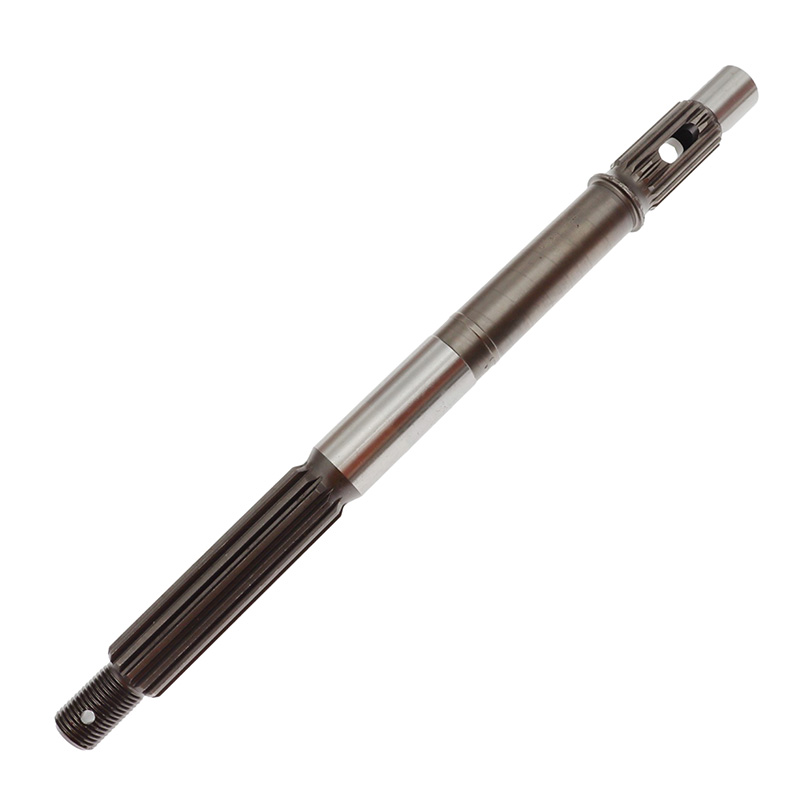
Yes. Severe pitting, uneven material loss, rough seal-running surfaces, corrosion fatigue, or damage at bearing journals can affect shaft balance, surface contact, lubrication performance, and runout. Mild surface discoloration alone may not produce noticeable vibration, but it should still be inspected.
Common signs include increased vibration, abnormal bearing temperature, lubricant contamination, excessive shaft movement, noise, wear debris, seal leakage, and enlarged bearing clearance. A sudden change in vibration under similar operating conditions should be treated as urgent.
Yes. A leaking stern tube seal may allow water into an oil-lubricated system. Water contamination can reduce lubricant effectiveness, disrupt the hydrodynamic film, promote corrosion, and contribute to bearing wear or wiping.
Compare the vibration pattern with shaft speed, engine speed, bearing temperature, lubricant condition, shaft movement, and propeller inspection results. Propeller damage often produces speed-related excitation, while bearing damage may also include heat, clearance growth, noise, and lubricant debris. A complete inspection is necessary because both faults can exist together.
Yes. Misalignment can concentrate load on part of the bearing surface, reduce lubrication-film stability, increase friction, and accelerate wear. It can also contribute to shaft vibration, seal damage, and fatigue over time.
No. The correct decision depends on corrosion depth, location, remaining dimensions, material condition, crack inspection results, and applicable engineering limits. Minor surface damage may be repairable, while deep pitting, cracking, major material loss, or excessive runout may require replacement.
Inspection frequency depends on vessel type, operating hours, shaft arrangement, lubrication system, classification requirements, and service history. In practice, operators should monitor vibration, temperature, lubricant condition, and seal performance routinely, then carry out detailed shaft-line inspections during planned maintenance and dry docking.
- [DNV — Safeguard Shaft Seals and Propeller Shaft Bearings: Avoid Costly Failures]
- [DNV — Shaft Alignment and Propulsion Shaft Bearings]
- [DNV — Shaft Whirling, Torsional and Axial Vibration Services]
- [DNV — Technical Root Cause Analysis]
- [DNV — Propulsion Shaft Bearings: Maintenance and Damage Handling]
- [Michell Bearings — Propeller Shaft Bearing and Thrust Block]


