


close
Choose Your Site
Global
Social Media
Views: 220 Author: Gill Transmission Parts Publish Time: 2026-09-15 Origin: Site


Content Menu
● Quick Answer: Repair or Replace a Propeller Shaft?
● Why Propeller Shaft Condition Matters
● When Repairing a Propeller Shaft Can Be Reliable
>> Minor Surface Damage Outside Critical Fits
>> Minor Runout Corrected by Controlled Straightening
● When Replacing a Propeller Shaft Is More Reliable
>> Cracks, Fatigue Marks, or Severe Impact Damage
>> Worn Splines and Gear Engagement Areas
>> Excessive Bending or Repeated Straightening
● Repairing vs Replacing: A Reliability Comparison
● A Five-Step Propeller Shaft Inspection Process
>> 1. Record the Failure History
>> 2. Inspect the Shaft Visually
>> 3. Measure Runout and Critical Diameters
>> 4. Check for Cracks and Hardness-Related Concerns
>> 5. Inspect Related Parts Before Reassembly
● Manufacturing Details That Influence Replacement Reliability
● Real-World Example: The "Small Bend" That Was Not Small
● Cost Should Include Downtime and Failure Risk
● How to Choose the Right Replacement Propeller Shaft
● Final Recommendation: Prioritize Proven Reliability
● FAQ
>> 1. Can a bent propeller shaft be repaired?
>> 2. Is it safe to use a propeller shaft with light corrosion?
>> 3. How do I know whether my propeller shaft is bent?
>> 4. Should I replace the seals when replacing a propeller shaft?
>> 5. Can a damaged spline on a propeller shaft be repaired?
>> 6. What causes a propeller shaft to fail?
>> 7. What information is needed to order a replacement propeller shaft?
A damaged propeller shaft can turn a routine service job into a major reliability decision. Repairing a propeller shaft may restore operation quickly and at a lower initial cost, but replacing a propeller shaft is often the more dependable option when the shaft has bending, cracking, spline damage, severe corrosion, or wear in critical sealing and bearing areas.
For boat owners, repair shops, distributors, and outboard-motor parts buyers, the right choice should never be based on price alone. A propeller shaft transfers engine torque to the propeller while operating under rotational load, vibration, water exposure, impact risk, and continuous stress. If it is not straight, properly hardened, accurately machined, and matched to the lower-unit assembly, the result may be noise, oil leakage, premature gear wear, vibration, or sudden loss of propulsion.
Ningbo Gill Transmission Parts Co., Ltd. has focused on the development, production, and supply of marine transmission parts, including propeller shafts, since 1997. From a manufacturing perspective, the most reliable decision depends on the location of the damage, the original shaft condition, the repair method, inspection results, operating duty, and the quality of the replacement part.
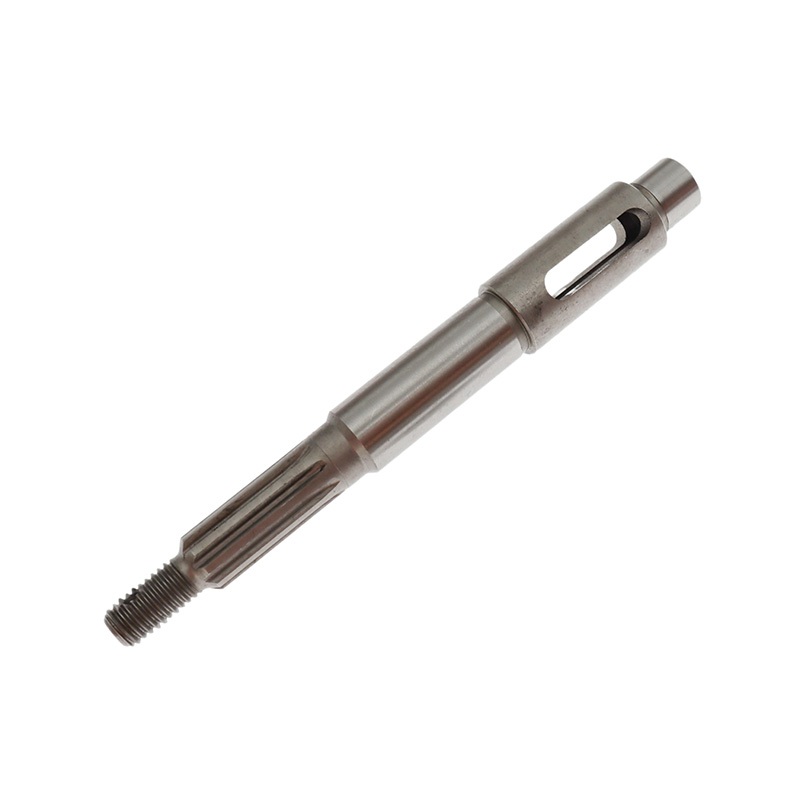
A propeller shaft repair can be reliable when damage is minor, localized, and verified through professional measurement and inspection. However, replacement is usually the safer long-term choice when the shaft has structural damage or wear in a precision-fit area.
| Decision factor | Repairing a propeller shaft | Replacing a propeller shaft |
|---|---|---|
| Initial cost | Usually lower | Usually higher |
| Downtime | Can be short if a qualified workshop is available | Depends on stock availability or production lead time |
| Reliability after major impact | Often uncertain | Generally higher with a correct new shaft |
| Suitability for bent shafts | Limited | Strongly recommended if straightness cannot be restored |
| Suitability for damaged splines | Limited and risk-sensitive | Usually recommended |
| Suitability for seal-surface wear | Possible only if dimensions can be restored correctly | Often the more dependable option |
| Suitability for cracks | Not recommended without engineering approval | Replacement is normally preferred |
| Long-term operating confidence | Depends heavily on repair quality | Depends on material, machining, heat treatment, and fitment quality |
The practical rule is simple: repair only when the work restores the shaft's functional geometry and does not create a new weak point. If that cannot be demonstrated, replacement is the more reliable decision.
A propeller shaft is not simply a steel rod between the engine and the propeller. In an outboard lower unit or marine drive assembly, it commonly includes several precision-critical features:
- Bearing journals
- Gear engagement areas
- Splines
- Seal-running surfaces
- Threads
- Shoulders and locating diameters
- Propeller mounting features
- Heat-treated load-bearing zones
Each area performs a different function. A small defect in one location can affect other components throughout the drive system.
For example, a rough or pitted seal surface may damage the oil seal lip. Water can then enter the gearcase. Once lubrication is contaminated, gears, bearings, clutch components, and other internal parts may wear much faster. What initially looked like a minor shaft defect can become a complete lower-unit overhaul.
This is why a reliable propeller shaft decision begins with diagnosis rather than with a quick choice between repair and replacement.
Repairing a propeller shaft can make sense when the damage is superficial and the repair process is controlled. The objective is not simply to make the shaft "look acceptable." The objective is to restore its original operating function within the necessary tolerances.
A repair may be reasonable when the shaft has light marks, small burrs, or minor corrosion in a non-critical area. For example, a shallow scratch outside the seal path, bearing journal, spline, or gear-contact surface may be carefully dressed without affecting performance.
However, the technician should first confirm that the damage is truly superficial. A visible mark can sometimes hide deeper corrosion, fatigue initiation, or distortion.
Minor damage at the threaded end of a propeller shaft may sometimes be corrected if the thread form can be restored without reducing engagement strength. This is more likely to be acceptable when:
- The thread damage is limited to the first few threads.
- The retaining nut can achieve full and secure engagement.
- The shaft end is not cracked or mushroomed.
- The repair does not reduce the shaft diameter below specification.
- The propeller and nut can be installed correctly.
If thread damage is extensive, replacement is usually the better decision. A failed nut or unsecured propeller can cause expensive secondary damage and a safety risk on the water.
A slightly bent propeller shaft may sometimes be straightened by a qualified specialist using appropriate fixtures, controlled force, and post-repair measurement. Yet this is one of the most misunderstood repairs in marine service.
Straightening should not be treated as a hammer-and-guess process. A professional repair requires:
1. Cleaning the shaft thoroughly.
2. Measuring initial runout at relevant positions.
3. Identifying the bend location.
4. Inspecting for impact marks, surface damage, and cracking.
5. Applying controlled corrective force.
6. Rechecking runout after straightening.
7. Inspecting bearings, seals, gears, and mating components.
8. Testing the assembled drive for vibration, noise, leakage, and smooth rotation.
A shaft that appears straight by eye may still have runout significant enough to cause vibration or seal wear. Measured straightness matters more than visual appearance.
Replacement becomes the stronger choice when the shaft's structural integrity, precision geometry, or mating surfaces cannot be confidently restored.
A cracked propeller shaft should be treated as a serious reliability concern. Cracks can grow under cyclic torque and vibration, particularly near shoulders, splines, keyways, threads, or areas affected by a propeller strike.
Even if a crack seems small, the shaft may fail unexpectedly under load. In most practical marine applications, a new shaft is more reliable than attempting to weld or cosmetically repair a cracked one.
If there is uncertainty about cracking, stop using the component until it is inspected.
Splines transfer torque. When spline teeth are worn, twisted, chipped, or rounded, the shaft may no longer engage correctly with mating components. This can produce backlash, knocking, poor load transfer, accelerated wear, or failure of the drivetrain connection.
Repairing splines can be technically possible in specialized environments, but it requires careful control of profile, hardness, concentricity, and fit. For many outboard propeller shaft applications, replacement is more predictable and economical than rebuilding heavily worn splines.
The seal-running surface is one of the most important areas on a propeller shaft. A groove, corrosion pit, rust scale, or out-of-round condition can prevent the seal from maintaining lubrication inside the gearcase.
A repair sleeve or precision rework may be considered in selected cases. But the repair must maintain the correct diameter, surface finish, concentricity, and seal compatibility. If the surface is deeply pitted or the shaft is already worn in multiple areas, replacing the propeller shaft is usually the more reliable solution.
A shaft that has experienced a hard propeller strike may be bent and may also have hidden damage. Repeated straightening can add uncertainty because the component has already undergone impact loading and corrective deformation.
Replacement should be strongly considered when:
- Runout remains outside the required tolerance after repair.
- The shaft has been straightened previously.
- The shaft has a visible kink rather than a gradual bend.
- The impact damaged nearby gearcase components.
- Bearings, seals, gears, or the propeller hub show related damage.
- The boat operates in commercial, high-speed, offshore, or high-load conditions.
The best choice is not always the lowest-cost option. A repair that saves money today may cost more later if it causes oil leakage, vibration, gear damage, or an unplanned service interruption.
| Reliability consideration | Repairing a propeller shaft | Replacing a propeller shaft |
|---|---|---|
| Material condition | Original material remains in service | New material condition |
| Hidden impact damage | May remain uncertain | Eliminated if the new shaft is correctly manufactured |
| Straightness control | Depends on workshop capability | Controlled through new-part machining and inspection |
| Seal performance | Depends on restored surface quality | New seal surface when specified correctly |
| Spline integrity | Difficult to restore after heavy wear | New spline geometry and engagement |
| Service history | Previous overloads may affect future life | Fresh component with no service fatigue history |
| Risk of repeat failure | Higher if root cause is not corrected | Lower when the root cause and fitment are addressed |
| Best use case | Minor, measurable, non-structural defects | Structural damage, precision-surface wear, unknown history |
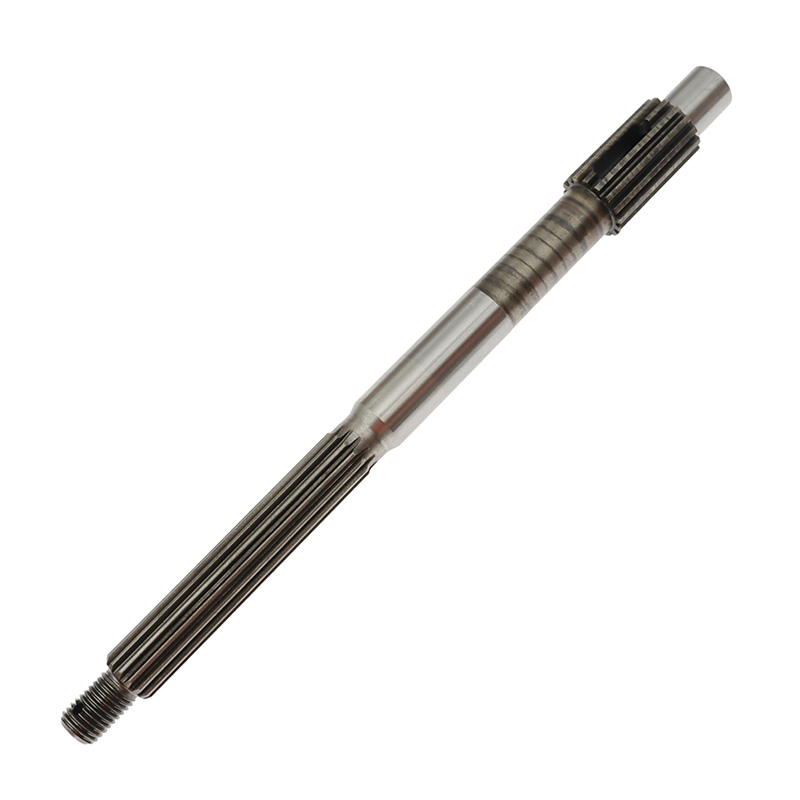
Before deciding whether to repair or replace a propeller shaft, use a repeatable inspection process. This helps avoid decisions based only on appearance.
Ask what happened before the problem was discovered.
Important questions include:
- Did the propeller hit a rock, sandbar, debris, or another object?
- Was there sudden vibration after an impact?
- Was gear oil milky or contaminated with water?
- Was there oil leakage around the propeller shaft seal?
- Has the lower unit overheated?
- Has the shaft been repaired or straightened before?
- Did the engine develop unusual noise when shifting or accelerating?
The cause of damage matters. Replacing a shaft without correcting the original cause may lead to another failure.
Clean the shaft before inspection. Look for corrosion, scoring, discoloration, pitting, impact marks, worn splines, damaged threads, and seal-track grooves.
Pay special attention to areas where diameter changes abruptly. Shoulders and spline transitions can be high-stress locations.
Use appropriate fixtures and measuring equipment to check straightness and runout. Also measure bearing journals, seal surfaces, splines, and gear-related dimensions against the requirements for the application.
A good inspection should answer more than "Is it bent?" It should determine:
- Where the shaft is bent.
- How much runout exists.
- Whether critical diameters remain usable.
- Whether the shaft rotates concentrically.
- Whether the shaft can support a reliable seal.
When impact, fatigue, or serious deformation is suspected, a non-destructive inspection method should be considered. The appropriate method depends on the material, shaft geometry, and workshop capability.
Also consider whether grinding, welding, or heating may have altered the original heat-treated condition. A shaft can be dimensionally correct but still have reduced durability if the surface or core properties were compromised.
A propeller shaft does not operate alone. Check the following components before fitting a repaired or new shaft:
- Propeller and propeller hub
- Propeller nut and washer
- Oil seals
- Bearings
- Gear engagement components
- Lower-unit housing
- Gear oil condition
- Water intrusion signs
- Retaining hardware
This system-level inspection is essential. A new propeller shaft can fail prematurely if the propeller is damaged, a bearing is loose, a seal is installed incorrectly, or debris remains inside the gearcase.
Not all replacement propeller shafts offer the same service life. A reliable new part depends on more than matching the general shape of the original.
When sourcing an outboard propeller shaft, buyers should evaluate:
- Material selection: The material must provide appropriate strength, toughness, wear resistance, and corrosion performance for the application.
- Machining accuracy: Bearing, seal, gear, spline, and propeller-mounting areas require controlled dimensions.
- Heat treatment: Critical load-bearing and wear surfaces may need specific hardness characteristics.
- Surface finish: Seal-running and bearing surfaces need a finish that supports component life.
- Concentricity and straightness: These directly influence vibration, sealing, and bearing performance.
- Spline precision: Proper engagement helps transfer torque without abnormal play.
- Application matching: Shaft length, diameter, spline design, gear interface, thread form, and propeller-end features must match the intended lower unit.
- Inspection discipline: Dimensional inspection before shipment helps reduce fitment problems.
For distributors and repair businesses, the lowest quotation is not always the lowest total cost. A shaft with poor dimensional control can create returns, warranty claims, installation delays, and reputational damage.
Consider a typical outboard motor that strikes submerged debris at moderate speed. The engine may still run, and the propeller may appear usable. A technician notices only slight vibration and assumes the shaft needs minor straightening.
After proper inspection, however, the shaft may show runout near the propeller end, a worn seal track, and a bearing that has begun to loosen. If only the bend is corrected, the repaired shaft may continue to rotate with imperfect concentricity. The seal may wear faster, water may enter the gearcase, and the resulting lubricant contamination may damage gears and bearings.
In this case, replacement is not simply a parts sale. It is a risk-control decision.
The lesson is clear: the visible defect is not always the full failure. The final decision should account for all damage caused by the event, not only the most obvious symptom.
Repairing a propeller shaft often appears cheaper because the immediate workshop bill is lower. Yet the total cost should include more than the repair invoice.
Consider:
- Labor for removal and reinstallation
- Inspection time
- Additional seal and bearing replacement
- Gear oil replacement
- Boat downtime
- Repeat repair risk
- Potential gearcase damage
- Lost operating time for commercial users
- Customer dissatisfaction for service businesses
For a recreational boat used occasionally in low-load conditions, a verified minor repair may be an efficient decision. For commercial fishing boats, rental fleets, high-speed applications, offshore operators, and customers who need dependable availability, a quality replacement shaft often provides better long-term value.
When replacing a shaft, confirm compatibility before ordering. Do not rely only on a product photo or a general engine family description.
Provide or verify:
1. Engine brand, model, horsepower, and production year.
2. Lower-unit or gearcase identification details.
3. Original part number, if available.
4. Shaft overall length and key diameters.
5. Spline count and spline dimensions.
6. Gear-end configuration.
7. Thread specification and propeller-end design.
8. Clear photos of the original shaft and damaged areas.
9. Whether the shaft is used in freshwater, saltwater, commercial, or high-load service.
For OEM, aftermarket, and custom projects, a manufacturer can also assess drawings, samples, dimensional data, and performance requirements before production.
Repairing a propeller shaft is worthwhile when the defect is minor, measurable, outside critical structural zones, and correctable without changing shaft geometry or material performance. A professional repair must be verified through inspection rather than assumed from appearance.
Replacing a propeller shaft is generally more reliable when damage affects straightness, splines, threads, bearing journals, seal surfaces, gear engagement areas, or structural integrity. It is also the stronger choice after severe impact, recurrent vibration, water intrusion, or unknown service history.
Ningbo Gill Transmission Parts Co., Ltd. supports customers who need dependable marine transmission components, including propeller shafts for outboard applications. Whether you require an aftermarket replacement, OEM production, or a custom shaft solution, share your sample, drawing, dimensions, and application details with our team. We can help evaluate the critical fitment points and provide a production solution designed for stable performance.
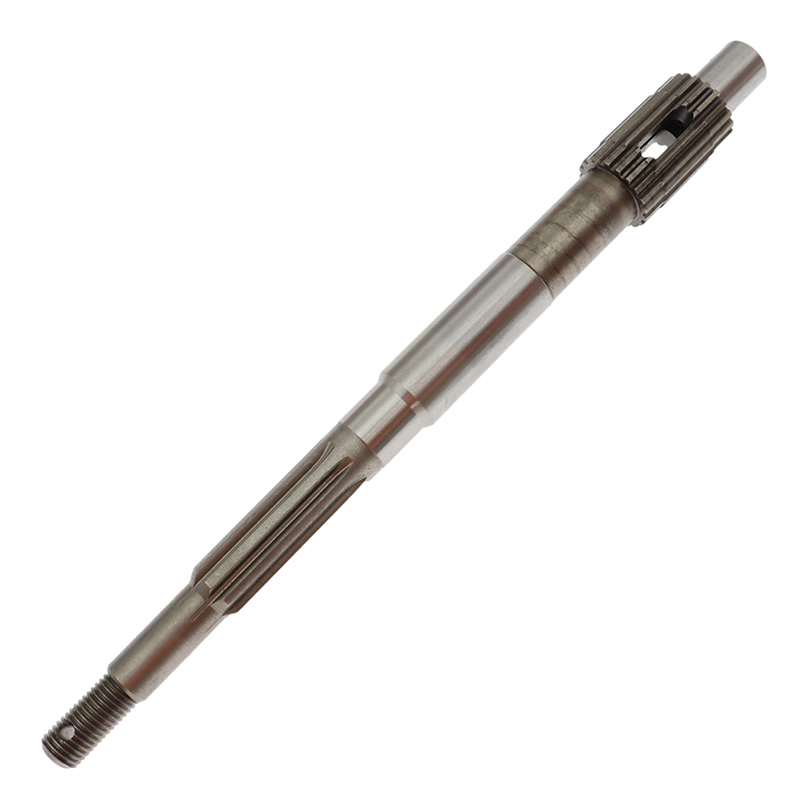
Yes, a slightly bent propeller shaft can sometimes be repaired through controlled straightening. However, the shaft must be inspected for cracks, measured for runout, and checked for damage to seal surfaces, splines, threads, and bearing areas. If structural damage is present, replacement is usually safer.
It depends on the corrosion location and depth. Light surface corrosion in a non-critical area may be manageable. Corrosion on the seal surface, bearing journal, spline area, or gear interface can cause leakage, poor fit, wear, and eventual failure. Clean and inspect the shaft before deciding.
Common signs include vibration, unusual noise, seal leakage, difficulty shifting, damaged bearings, and visible wobble during rotation. A proper diagnosis requires measuring shaft runout with suitable fixtures and gauges.
In most cases, yes. A new propeller shaft should be installed with properly matched seals, especially if the previous shaft showed leakage, corrosion, scoring, or water intrusion. The bearing condition and gear oil should also be checked.
Minor spline damage may be evaluated by a specialist, but heavily worn, twisted, chipped, or rounded splines are difficult to restore reliably. Because splines transfer engine torque, replacement is commonly the better choice when spline damage is significant.
Common causes include propeller strikes, impact with submerged objects, fishing-line damage to seals, water intrusion, poor lubrication, corrosion, bearing wear, incorrect installation, excessive vibration, and normal fatigue over time.
Provide the engine model, horsepower, year, lower-unit information, original part number if available, shaft dimensions, spline count, clear photos, and details of the gear-end and propeller-end configuration. A physical sample or technical drawing is especially useful for custom production.
1. [Ningbo Gill Transmission Parts Co., Ltd. — Company Profile]
3. [Ningbo Gill Transmission Parts Co., Ltd. — Product Overview]
4. [MarineShaft — Manufacturing New Propeller Shafts and Marine Shaft Components]
5. [BT Marine Propellers — Propeller Shaft Materials, Shaft Types, and Assembly Information]
6. [Somers Forge — Marine Forged Propeller Shaft Information]
7. [Ningbo Gill Transmission Parts Co., Ltd. — Propeller Shaft Supplier Evaluation Considerations]


