


close
Choose Your Site
Global
Social Media
Views: 282 Author: Gill Transmission Parts Publish Time: 2026-08-15 Origin: Site


Content Menu
● What Is the Main Difference Between Saltwater and Freshwater Drive Shafts?
● Why Saltwater Is Harder on Marine Drive Shafts
>> Crevice Corrosion in Low-Oxygen Areas
>> Galvanic Corrosion Between Different Metals
● Freshwater Drive Shafts: Lower Risk Does Not Mean No Risk
>> Common Freshwater Shaft Issues
● Saltwater vs Freshwater Drive Shaft Materials
● The Most Important Selection Question: Where Will the Vessel Actually Operate?
● Expert Inspection Checklist for Marine Drive Shafts
>> Warning Signs That Require Immediate Action
● A Practical Example: The Same Boat in Two Different Waters
● Can One Drive Shaft Be Used in Both Saltwater and Freshwater?
● Choosing a Marine Drive Shaft Supplier
● Get the Right Shaft Specification
>> 1. Are saltwater drive shafts different from freshwater drive shafts?
>> 2. Is 316 stainless steel suitable for a saltwater drive shaft?
>> 3. Why does a stainless steel shaft corrode in seawater?
>> 4. Which anode should be used in freshwater?
>> 5. Can I use a saltwater-rated shaft in freshwater?
>> 6. How often should a saltwater drive shaft be inspected?
>> 7. What is the most important corrosion area on a propeller shaft?
Yes—saltwater drive shafts and freshwater drive shafts face fundamentally different operating risks, even when they have the same dimensions, engine power, and installation layout. The main difference is not the shaft's basic function. It is the severity of corrosion exposure, the likelihood of galvanic attack, the material grade required, and the maintenance strategy needed to preserve shaft integrity.
For boat builders, repair yards, distributors, and vessel owners, selecting a marine drive shaft simply by diameter and length can create expensive downstream problems. A shaft that performs reliably in a freshwater lake may suffer pitting, crevice corrosion, or accelerated galvanic damage after prolonged service in seawater. At Ningbo Gill Transmission Parts Co., LTD., our 29 years of work in marine transmission parts has shown that the best shaft choice begins with a clear assessment of the vessel's actual water environment—not only its engine specification.
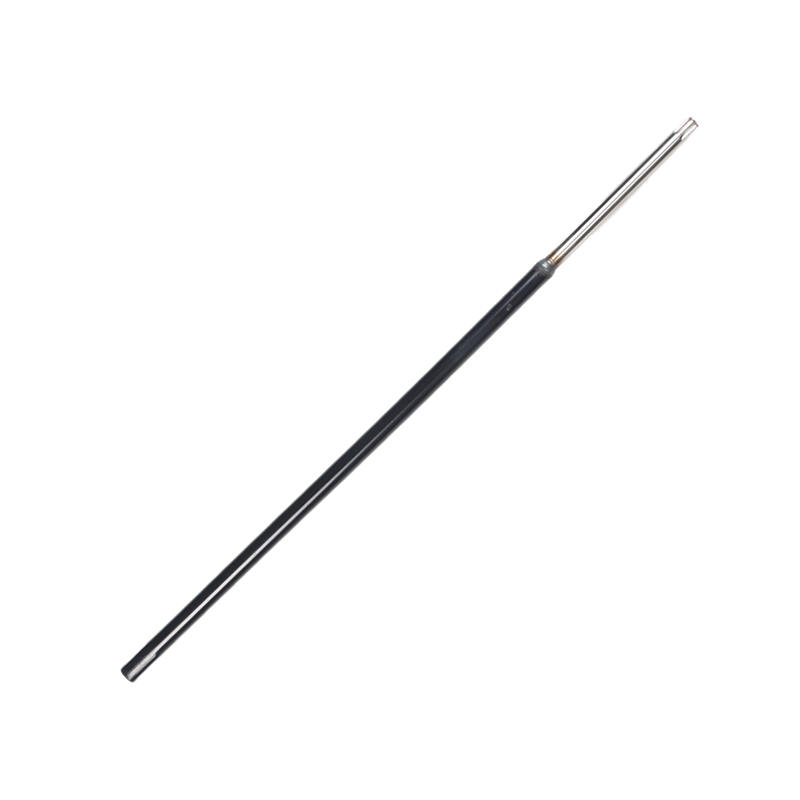
A drive shaft transfers engine torque to the propeller system. In marine applications, the shaft must withstand rotational load, alignment forces, vibration, abrasion, moisture, and chemical attack from the surrounding water.
Saltwater and freshwater shafts may look identical from the outside. However, they do not operate under identical electrochemical conditions.
Saltwater is a much more conductive electrolyte than freshwater. This higher conductivity allows electrical currents to move more easily between dissimilar metals. As a result, corrosion processes can become faster and more aggressive when a shaft, propeller, coupling, strut, fasteners, and anodes are electrically connected in seawater.
Freshwater is generally less conductive, but it is not corrosion-free. Long idle periods, trapped deposits, polluted water, oxygen-poor crevices, and incorrect anode selection can still damage a freshwater drive shaft.
| Factor | Saltwater Drive Shafts | Freshwater Drive Shafts |
|---|---|---|
| Water conductivity | High | Usually lower |
| Galvanic corrosion risk | High | Lower, but still possible |
| Pitting and crevice corrosion | More severe risk | Moderate risk depending on deposits and water quality |
| Material requirement | Often duplex or higher-resistance alloy | 316 stainless steel may be suitable in many conditions |
| Anode selection | Zinc or aluminum commonly considered | Magnesium is often used in clean freshwater |
| Inspection frequency | More frequent | Regular, but often less intensive |
| Typical service challenge | Chloride attack and galvanic corrosion | Deposit-related crevice corrosion and inactivity |
The practical conclusion is straightforward: a saltwater shaft should be specified for a harsher corrosion environment from the beginning.
Seawater contains dissolved salts, including chloride ions. Chlorides can compromise the protective passive film that gives stainless steel its corrosion resistance. Once that surface film is locally damaged, a small pit can develop and deepen below the surface.
This is why "stainless" does not automatically mean "maintenance-free" or "safe for permanent seawater exposure."
Pitting corrosion is a localized form of attack. It may begin as a small surface defect, but it can penetrate deeply into a shaft over time. This makes it particularly dangerous because the shaft can appear acceptable during a quick visual inspection.
Areas requiring close attention include:
- The shaft section near the cutless bearing
- Keyways and taper transitions
- Propeller hub contact areas
- Threads and locking hardware
- Shaft seals and stuffing box zones
- Areas covered by marine growth or stagnant deposits
For saltwater service, the shaft material needs strong resistance to chloride pitting. Molybdenum-containing stainless steels offer better protection than lower-alloy grades, while duplex stainless steels are frequently selected where higher corrosion resistance and strength are required. Duplex 2205/F51 stainless steel is widely recognized for combining high mechanical strength with improved resistance to pitting, crevice corrosion, and chloride stress-corrosion cracking.
Crevice corrosion often occurs where water becomes trapped and oxygen cannot circulate freely. Examples include the space beneath a bearing, around a propeller hub, inside a coupling area, or under deposits.
A shaft may be made from a suitable grade of stainless steel, but poor installation details can still create a corrosion trap. This is why shaft selection and drivetrain design should be considered together.
For example, a vessel used only on weekends may remain docked for long periods. In this situation, marine growth and deposits can hold stagnant saltwater against the shaft surface. A higher-grade shaft material can provide a valuable safety margin, but cleaning and inspection are still essential.
Galvanic corrosion occurs when different metals are electrically connected and immersed in the same conductive liquid. In a propeller system, the shaft may interact electrically with a bronze propeller, stainless hardware, aluminum components, and sacrificial anodes.
In seawater, the galvanic effect is usually more pronounced because seawater carries electrical current efficiently. The less noble metal can corrode preferentially.
A properly designed cathodic-protection system uses sacrificial anodes or impressed-current protection to reduce corrosion on protected components. Marine cathodic-protection guidance addresses the design, installation, and use of sacrificial-anode and impressed-current systems on boats.
Freshwater environments usually impose less aggressive galvanic conditions than saltwater. That does not mean a freshwater drive shaft can be specified without considering material, idle time, water quality, and nearby metals.
A freshwater boat may spend most of its life in a marina, river, reservoir, or inland lake. The shaft is still exposed to moisture, biological fouling, deposits, vibration, and mechanical wear.
Freshwater shaft failures often result from overlooked operating conditions rather than immediate salt exposure.
- Deposit accumulation: Sediment, biological growth, and mineral scale can trap water against the metal surface.
- Crevice corrosion: Low-oxygen zones beneath bearings, seals, and deposits can attack stainless steel.
- Stray-current corrosion: Faulty onboard wiring, marina electrical faults, or shore-power issues can cause rapid metal loss.
- Incorrect anodes: An anode designed for seawater may become ineffective in freshwater.
- Mixed-water operation: A boat may move between freshwater, brackish water, and coastal water, changing the corrosion environment.
Industry guidance notes that zinc anodes are generally intended for saltwater, while magnesium is commonly used in clean freshwater. It also warns that magnesium may be too active in polluted freshwater, brackish water, or saltwater, where it can overprotect certain components.
For a freshwater vessel that remains in the water for extended periods, molybdenum-containing Type 316 stainless steel can be a suitable baseline because it offers improved corrosion resistance compared with lower grades. However, application-specific evaluation remains necessary.
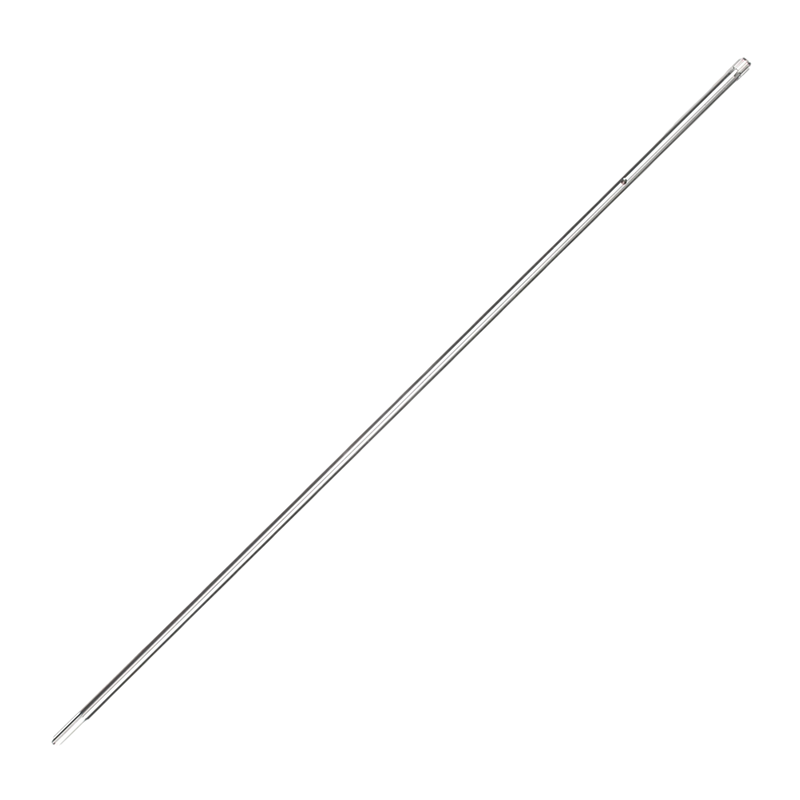
The right marine drive shaft material depends on more than water type. Shaft diameter, engine torque, propeller load, operating speed, vessel duty cycle, bearing arrangement, shaft length, and maintenance access all influence the final selection.
Still, the following guide provides a practical starting point.
| Material | Freshwater Suitability | Saltwater Suitability | Key Considerations |
|---|---|---|---|
| 304 stainless steel | Limited | Generally not preferred | Lower resistance to chloride-related corrosion |
| 316 stainless steel | Good for many applications | Moderate, depending on service conditions | Better corrosion resistance due to molybdenum content |
| 17-4 PH stainless steel | Application dependent | Application dependent | High strength, but corrosion performance must be evaluated carefully |
| Duplex 2205 / F51 | Excellent | Excellent for demanding service | High strength and strong pitting and crevice-corrosion resistance |
| Super duplex alloys | Excellent | Highly suitable for severe exposure | Premium option for demanding marine conditions |
| Bronze-based shaft alloys | Application dependent | Good in selected designs | Must be evaluated with the complete propeller system |
316 stainless steel remains a traditional and practical shaft material for many boats. Yet demanding seawater exposure, higher-speed operation, extended mooring, and more severe chloride conditions may justify moving to duplex stainless steel.
Duplex F51 is commonly positioned as a high-strength marine shafting option with improved crevice-corrosion resistance and corrosion-fatigue performance. Its higher strength can also support smaller shaft diameters in appropriate high-speed or high-power applications, potentially reducing underwater drag.
Instead of asking only, "Is this a saltwater or freshwater drive shaft?" ask the following:
1. Will the boat stay in seawater year-round?
2. Will it operate in brackish estuaries or move between inland and coastal water?
3. How long will it remain idle in the water?
4. Is the propeller bronze, nickel-aluminum bronze, stainless steel, or another alloy?
5. What anode material and bonding arrangement will be used?
6. Will the shaft operate at high rpm or under heavy commercial loads?
7. Are routine haul-out inspections easy or difficult?
8. Does the drivetrain include components with different galvanic potentials?
A shaft installed on a coastal fishing boat that remains afloat year-round should not be specified in the same way as a shaft for a trailered freshwater leisure boat. The nominal dimensions may match, but the lifecycle demands do not.
In our experience supporting marine transmission-part applications, corrosion problems are often found too late because inspection focuses only on visible shaft sections. A complete inspection should include the hidden interfaces where water, deposits, load, and dissimilar metals meet.
- Confirm shaft material grade and traceability.
- Verify straightness, surface finish, diameter tolerance, and taper dimensions.
- Check compatibility with the propeller, coupling, bearings, and anodes.
- Ensure keyways, threads, and machined transitions are free from machining damage.
- Review shaft-to-bearing and shaft-to-seal fit.
- Confirm the vessel's expected water environment.
- Inspect exposed shaft sections for discoloration, rough spots, pits, and staining.
- Examine the propeller hub and taper contact surfaces.
- Check anode consumption and replace anodes before they are excessively depleted.
- Inspect bonding conductors and shore-power protection.
- Remove marine growth and deposits from shaft-adjacent areas.
- Verify alignment if unusual vibration, seal leakage, or bearing wear is present.
A commonly cited maintenance practice is to replace sacrificial anodes when inspection shows they are more than 50 percent consumed.
Do not postpone inspection if you see:
- Deep pinhole-like marks on the shaft surface
- Brown or black staining around crevices
- Unusual propeller vibration
- Premature anode loss
- Shaft seal leakage
- Visible corrosion around the propeller hub
- Loose coupling hardware
- Electrical problems after connecting shore power
A small pit in a high-stress shaft zone can become a serious mechanical reliability issue. The appropriate response is not simply polishing the surface. The vessel owner or technician should determine the depth, location, cause, and remaining structural suitability of the shaft.
Consider two identical 9-meter workboats with the same diesel engine, propeller size, shaft diameter, bronze propeller, and annual operating hours.
Boat A operates in a clean freshwater reservoir and is hauled out every winter. Boat B stays in a coastal marina throughout the year and regularly operates in tidal, salty water.
Boat A may perform reliably with a correctly specified 316 stainless steel shaft, appropriate freshwater anodes, and seasonal inspection. Boat B faces much greater chloride exposure, higher galvanic risk, longer wet-storage periods, and a higher chance of localized corrosion beneath deposits or around the propeller assembly.
For Boat B, a duplex-grade shaft, carefully matched anode system, regular cleaning, and more frequent inspection are usually the more conservative long-term approach. This does not mean every saltwater vessel must use the same alloy. It means the design margin should reflect the actual environment and consequences of failure.
Yes, but it should be specified for the more demanding environment if the vessel will move between freshwater and seawater.
A shaft intended for mixed-water use should consider:
- Chloride resistance during coastal operation
- Suitable anode strategy for the vessel's main berth
- The potential need to change anode material when operating in different water types
- Compatibility with propeller and drivetrain metals
- Cleaning after saltwater exposure
- Inspection of seals, bearings, and propeller interfaces
For vessels that frequently transition between water types, product selection should not be based solely on the most common operating location. A short but repeated exposure to saltwater can still influence corrosion behavior, especially where salt deposits remain after the vessel returns to freshwater.
A reliable shaft supplier should do more than provide a standard bar, taper, or flange. The supplier should understand that a marine drive shaft is part of a complete propulsion system.
Look for a manufacturing partner that can support:
- Material selection based on water conditions and duty cycle
- Custom shaft diameter, length, taper, keyway, thread, and coupling details
- Dimensional control and surface-finish requirements
- Product traceability and inspection documentation
- Compatibility analysis with propellers, bearings, couplings, and anodes
- Communication for OEM, distributor, refit, and repair applications
At Ningbo Gill Transmission Parts Co., LTD., we apply 29 years of marine transmission-parts experience to help customers evaluate shaft configurations for their intended operating environment. Whether you need a replacement marine drive shaft, a customized propeller shaft, or a corrosion-conscious configuration for saltwater service, the correct solution begins with technical details—not assumptions.
Do not select a marine drive shaft based on size alone. Share your vessel type, engine power, shaft dimensions, propeller material, operating water, and required connection details with Ningbo Gill Transmission Parts Co., LTD. Our team can help you develop a tailored drive shaft solution for freshwater, saltwater, brackish-water, OEM, replacement, and customized marine applications.
They can be. The shaft geometry may be similar, but saltwater service usually demands stronger resistance to chloride corrosion, galvanic attack, and long-term wet exposure. Material grade, anode selection, and inspection requirements often differ.
316 stainless steel can be suitable for certain marine applications, but it may not provide sufficient margin for every saltwater operating condition. Long-term immersion, stagnant deposits, high chloride exposure, and high-consequence service may justify duplex stainless steel or another higher-performance alloy.
Stainless steel can corrode when chlorides damage its protective surface film, particularly in crevices, under deposits, or where oxygen is limited. Galvanic interaction with other metals and stray electrical current can also accelerate damage.
Magnesium anodes are often used in clean freshwater. However, the correct choice depends on water conductivity, pollution level, vessel materials, and electrical system design. Zinc is typically intended for saltwater use.
Yes. A higher-corrosion-resistance shaft can be used in freshwater. However, the complete protection system still matters. Anode selection, bonding, and electrical conditions should suit the water where the boat is berthed.
Inspect it at regular service intervals and whenever there are signs of vibration, leakage, unusual anode loss, or corrosion staining. Boats kept afloat in seawater year-round generally require more frequent checks than seasonally stored freshwater boats.
The most critical areas are often hidden: beneath bearings, near seals, at the propeller hub, around tapers and keyways, and at transitions where deposits can trap water. These zones should be inspected during haul-out or disassembly.
1. [A Comparative Study on Corrosion and Mechanical Properties of Duplex Stainless Steel]
2. [ABYC E-2 Cathodic Protection Standard Preview]
3. [Propelling the Boating World: Stainless Steel Boat Shafts]
4. [Marine Shafting Alloys: Duplex F51 Technical Information]
5. [Marine Corrosion Best Practices]
6. [ABYC Corrosion Protection Maintenance Guidance]


