


close
Choose Your Site
Global
Social Media
Views: 268 Author: Gill Transmission Parts Publish Time: 2026-11-01 Origin: Site


Content Menu
● What Do Zinc Anodes Do on an Outboard?
>> "Zinc" Does Not Always Mean Zinc
● Zinc vs. Aluminum Anodes for Saltwater Outboards
>> Why Aluminum Is Also Worth Considering
● How to Choose the Right Saltwater Outboard Anode
>> 1. Identify the Exact Engine
>> 2. Describe Your Actual Water Exposure
>> 3. Check the Complete Anode Arrangement
>> 4. Verify Material and Traceability
● Do Zinc Anodes Protect Outboard Gears?
>> External Protection and Internal Protection Are Different
● How to Inspect and Replace Outboard Anodes
>> Step 1: Make the Engine Safe
>> Step 2: Inspect Every Specified Location
>> Step 3: Replace Before the Anode Disappears
>> Step 4: Preserve Electrical Contact
>> Step 5: Leave the Anode Exposed
>> Step 6: Document the Installation
● What Anode Wear Can Tell You
>> Scenario A: The Anode Wears Gradually
>> Scenario B: The Anode Looks Almost New
>> Scenario C: The Anode Suddenly Disappears Faster
● Build a Practical Anode Monitoring Record
● Saltwater Maintenance Beyond Zinc Parts
>> Flush and Rinse as Directed
>> Protect Coatings Without Covering Anodes
>> Keep Lower-Unit Servicing Separate
● Choose Protection First, Then the Correct Replacement Parts
>> Can I Use Zinc Anodes on Any Outboard in Saltwater?
>> Are Aluminum Anodes Safe on an Aluminum Outboard?
>> How Often Should I Replace Outboard Zinc Anodes?
>> Should I Paint Zinc Anodes to Make Them Last Longer?
>> Can I Use Magnesium Anodes in Saltwater?
>> Why Is My Gearcase Corroding When the Anode Looks New?
>> Do New Anodes Fix Existing Corrosion Damage?
Yes—zinc sacrificial anodes can protect an outboard in saltwater when the engine manufacturer specifies them. However, zinc is not automatically the best choice for every motor. Many outboards use purpose-made aluminum-alloy anodes, which also provide saltwater corrosion protection. The right answer depends on your engine, its approved anode kit, and where you operate.
The important distinction is anodes: replaceable components designed to corrode instead of more valuable underwater metal. "Zinc parts" should not mean replacing gears, shafts, or other load-bearing components with zinc.
At Ningbo Gill Transmission Parts Co., LTD., our perspective comes from 29 years focused on developing, manufacturing, and selling outboard gears and related marine components. We approach corrosion protection as part of a larger maintenance system: protect the gearcase externally, preserve lubrication internally, and choose replacement parts by specification rather than appearance.
Saltwater conducts electricity. When electrically connected, dissimilar metals are exposed to it, they can form a galvanic cell. The more active metal corrodes while the less active metal receives protection.
An aluminum gearcase and stainless-steel propeller illustrate this relationship. Without suitable protection, the aluminum can suffer galvanic attack.
A sacrificial anode introduces a more active material into that system. It gradually dissolves, helping protect the connected underwater components.
Boat owners often call every sacrificial anode a "zinc," even when it contains an aluminum or magnesium alloy.
Do not identify the material by its gray appearance. Check:
- The engine's operation and maintenance manual.
- The replacement part number.
- The supplier's alloy identification.
- The intended water environment.
A listing labeled "outboard zinc" does not establish that the component contains zinc—or that it suits your motor.
Both zinc and suitable aluminum-alloy anodes can work in seawater. Magnesium is generally a freshwater option and should not be substituted for saltwater protection.
| Anode material | Saltwater suitability | Main consideration |
|---|---|---|
| Zinc | Suitable when specified | Confirm engine compatibility and replacement requirements |
| Purpose-made aluminum alloy | Suitable when specified | Useful for many saltwater and mixed-water applications |
| Magnesium | Generally unsuitable | Can produce excessive protection and damage aluminum components in seawater |
This table is a starting point, not permission to override the engine manufacturer.
Zinc remains a practical choice when your manufacturer specifies a zinc anode kit and your operating conditions match that recommendation.
The key is using an anode made for the application. A generic piece of zinc with approximately the right shape is not equivalent to a verified replacement.
Aluminum anodes use a specialized sacrificial alloy, not the same alloy as an aluminum gearcase. That difference allows one aluminum-based component to protect another.
Suitable aluminum anodes offer more electrochemical capacity per unit of weight than zinc and can serve across saltwater, brackish water, and some freshwater applications.
However, broad material advantages do not prove that every aluminum kit fits every engine. Confirm the approved application before switching.
When evaluating replacement anodes, I would prioritize compatibility over claims such as "heavy-duty," "premium," or "universal."
Record the brand, model, serial number, and relevant production details.
Similar-looking engines may use different anode arrangements. A replacement must match the designated location without interfering with nearby components.
A boat kept continuously in seawater has different exposure from one launched occasionally and stored ashore.
Also note whether you travel through estuaries or freshwater. Tell your parts supplier about the full operating pattern, not simply your home port.
An outboard may have several anodes around the gearcase, mounting bracket, or other locations. Some engines also have internal anodes.
Use the manual to find every specified position. Replacing the most visible anode does not compensate for an overlooked or missing one.
Ask for:
- Confirmed engine application.
- Anode alloy identification.
- A reference part number.
- Applicable material specification or supporting documentation.
- Installation instructions and hardware requirements.
From a manufacturing perspective, dimensional fit and material identity are separate requirements. You need both.
Not directly in the way many owners imagine.
External sacrificial anodes primarily protect electrically connected metal exposed to the surrounding water. They are not a replacement for gear lubricant, sound seals, or internal inspection.
Think of lower-unit maintenance as two related systems:
| System | Main protection measures |
|---|---|
| External gearcase and submerged hardware | Correct anodes, sound coatings, proper electrical contact |
| Internal gears and bearings | Correct lubricant, intact seals, prescribed servicing |
An intact anode cannot guarantee healthy gears. Likewise, new gears cannot correct an externally corroding gearcase.
Our manufacturing viewpoint is straightforward: do not treat one replaced component as evidence that the complete assembly is protected.
When evaluating lower-unit problems, keep corrosion damage, lubricant condition, sealing, and mechanical wear separate until inspection establishes a connection.
Always follow the engine's maintenance instructions. Access, torque values, and procedures vary by model.
Secure the boat and engine before working. Prevent unintended starting and follow the manufacturer's isolation procedure.
Do not work beneath an unsupported raised outboard.
Look for missing material, loose fasteners, marine growth, coatings, and damage around the mounting area.
Inspect the nearby gearcase for bubbling paint, exposed metal, or pitting. These signs deserve attention even when an anode remains attached.
Mercury recommends replacement when approximately 50% of the anode has been consumed.
Use your own manufacturer's instructions where they differ. Do not wait until only the mounting bolt remains.
An anode needs a sound electrical connection to the metal it protects.
Prepare the mounting interface as instructed. Paint, contamination, or corrosion between mating surfaces can interrupt that connection.
Do not add sealant, grease, insulating washers, or coatings unless the installation procedure specifically requires them.
Never paint an anode. Its working surface must contact the water.
When refinishing nearby areas, remove or mask the anode as directed, then reinstall it correctly.
Record the date, part number, material, and condition of the old anode. Photograph the new installation from a repeatable angle.
This simple record makes future inspections more informative than relying on memory.
Anode inspection is most useful when you compare changes over time.
The following examples are diagnostic scenarios, not reported customer cases.
Progressive consumption is consistent with sacrificial operation.
However, wear alone does not prove that every surface receives adequate protection. Continue checking the entire arrangement and nearby metal.
An apparently untouched anode is not automatically good news.
Possible explanations include limited immersion, poor electrical contact, surface deposits, or an unsuitable material. If the gearcase is deteriorating while the anode remains unchanged, investigate rather than celebrating its longevity.
A sharp change deserves attention, especially after moving marinas or changing electrical equipment.
Shore-power connections can link boats through grounding conductors and increase galvanic exposure. Electrical faults can create a different problem: stray-current corrosion.
Do not respond by attaching progressively larger anodes without diagnosis. Have a qualified marine technician inspect the electrical and corrosion-protection systems.
Never disconnect a protective shore-power grounding conductor as a corrosion remedy.
There is no universally reliable calendar interval for every boat. Immersion time, water conditions, electrical connections, and the protection arrangement all matter.
Start with the manufacturer's inspection schedule. Check more closely after changing anode material, operating location, or equipment.
A useful maintenance record includes:
| Record item | Why it helps |
|---|---|
| Installation date and part number | Establishes what was fitted and when |
| Water environment and immersion pattern | Adds context to consumption |
| Photographs | Makes changes easier to compare |
| Estimated material loss | Helps identify approaching replacement |
| Nearby coating condition | Tracks damage beyond the anode |
| Marina or equipment changes | Helps investigate sudden differences |
Treat this record as a trend-monitoring tool, not a measurement of protective voltage. A technician may need appropriate reference-electrode testing when the cause remains unclear.
Sacrificial anodes are one layer of protection, not a complete saltwater maintenance program.
Mercury recommends flushing and rinsing saltwater-operated outboards after use.
Follow your engine's procedure. Do not assume every flushing connection permits the engine to run, or that every model uses the same sequence.
Inspect damaged finishes and repair them using an approved system.
A good coating reduces exposed metal, while the anode provides electrochemical protection. They perform complementary roles; neither excuses neglecting the other.
Continue the prescribed gear-lubricant, seal, and mechanical maintenance regardless of anode condition.
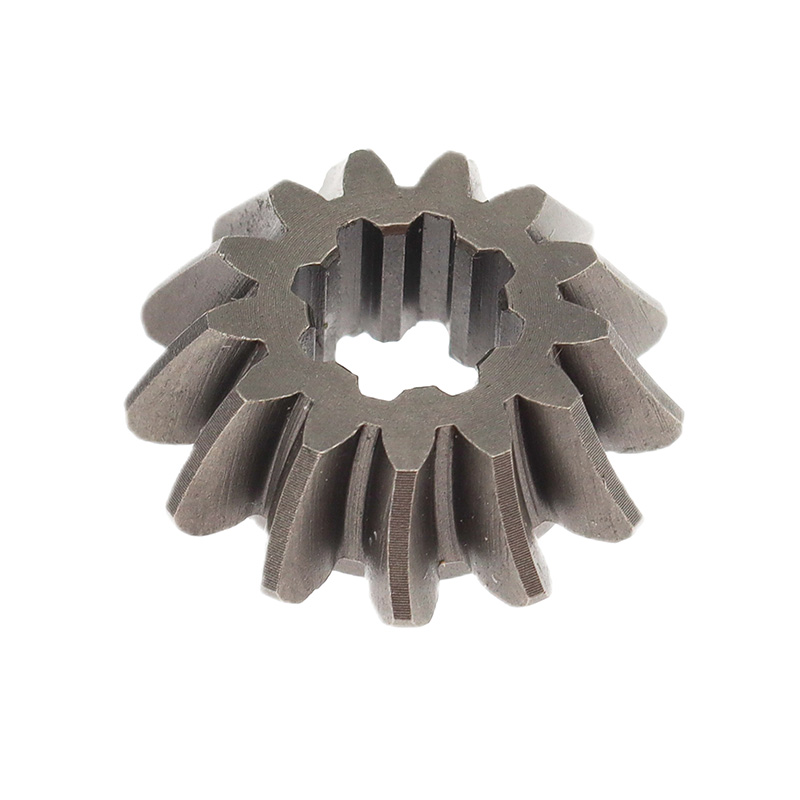
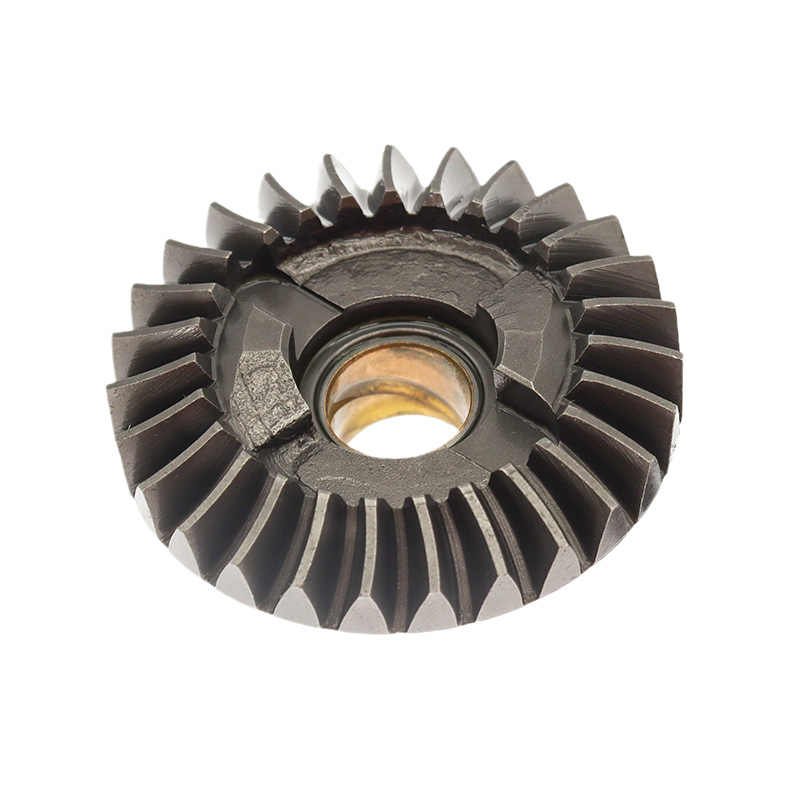
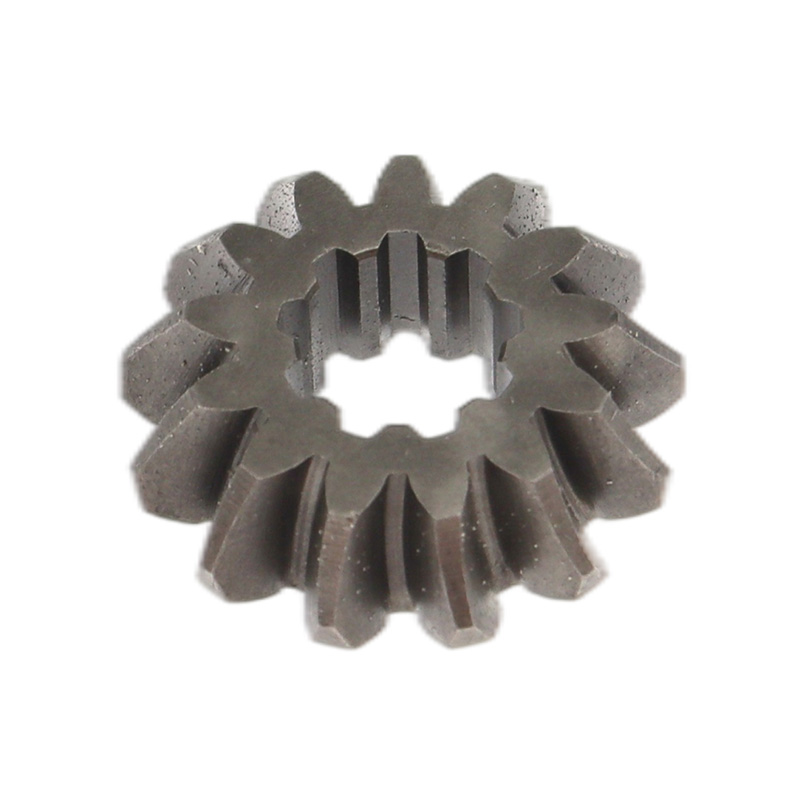
When ordering outboard gears or related transmission parts, establish exact compatibility first. Tooth configuration, mating components, dimensions, and engine application matter more than superficial resemblance.
For saltwater use, the best decision is not simply "buy zinc." It is "fit the correct approved anode system and maintain it."
Zinc can be appropriate. Purpose-made aluminum can also be appropriate. The engine specification and operating environment decide—not habit or a generic product description.
For buyers sourcing outboard gears and related marine transmission components, contact Ningbo Gill Transmission Parts Co., LTD. with your engine model, serial number, existing part number, and clear component photographs. Our 29 years of manufacturing experience provide a practical starting point for discussing replacement requirements. For anode selection and corrosion diagnosis, follow the engine manufacturer and a qualified marine service professional.
No. Zinc can suit seawater, but the anode must match the engine's specified material, geometry, mounting position, and protection arrangement.
Yes, when the correct sacrificial alloy is approved for the application. Anode aluminum differs from structural gearcase aluminum.
Follow the engine manual and inspect their actual condition. Mercury recommends replacement at approximately 50% consumption; do not assume every anode will last a full season.
No. Paint prevents the required contact with water and can stop the anode from protecting the surrounding components.
Generally, no. Magnesium can create excessive protection in seawater and damage aluminum components. Use the material specified for the engine and environment.
Possible causes include poor electrical contact, an unsuitable anode, surface deposits, missing anodes elsewhere, or an electrical problem. A new appearance does not establish effective protection.
No. They can help control further galvanic attack when correctly selected and installed, but they do not restore missing metal or repair damaged components.
1. [Mercury Marine — Preventing Corrosion]. Manufacturer guidance covering galvanic corrosion, anode inspection, replacement at approximately half consumption, flushing, rinsing, and leaving anodes unpainted. [mercurymarine]
2. [Mercury Marine — Quick Tip: How to Inspect and Replace Your Engine Anodes]. Supports the distinction between sacrificial anodes and protected submerged components, including the 50% replacement recommendation. [mercurymarine]
3. [BoatUS — Outdrive Corrosion Mysteries]. Explains anode materials, clean electrical contact, multiple anode locations, and shore-power-related corrosion exposure. [boatus]
4. [BoatUS — The Battle Against Underwater Corrosion]. Technical discussion of galvanic relationships, aluminum anode alloys, magnesium risks in seawater, and electrical corrosion mechanisms. [boatus]
5. [BoatUS — Boat Corrosion Protection With Anodes]. Explains sacrificial protection, aluminum's capacity advantages, mounting contact, and the significance of unexpectedly unworn anodes. [prod-boatus-cd2.boatus]


