


close
Choose Your Site
Global
Social Media
Views: 248 Author: Gill Transmission Parts Publish Time: 2026-08-06 Origin: Site


Content Menu
● What Are Solid and Hollow Drive Shafts
>> Torsional Strength and Weight
>> Critical Speed and Vibration
>> Corrosion and Material Behavior
● Solid vs Hollow Drive Shafts: Side-by-Side Comparison
● When to Choose a Solid Drive Shaft
● When to Choose a Hollow Drive Shaft
● Classification Society and Certification Standards
● Real-World Manufacturing Insight: What 29 Years of Production Data Shows
● Practical Selection Checklist
● Making the Right Call for Your Vessel
Choosing between solid drive shafts and hollow drive shafts for marine applications comes down to one core trade-off: raw torsional strength versus weight-optimized efficiency. After nearly three decades of manufacturing marine drive shafts at Ningbo Gill Transmission Parts Co., Ltd., we've seen this decision directly impact vessel performance, fuel consumption, and long-term maintenance costs.
This guide breaks down the engineering, cost, and operational differences so shipbuilders, marine engineers, and procurement teams can specify the right shaft for their propulsion system.
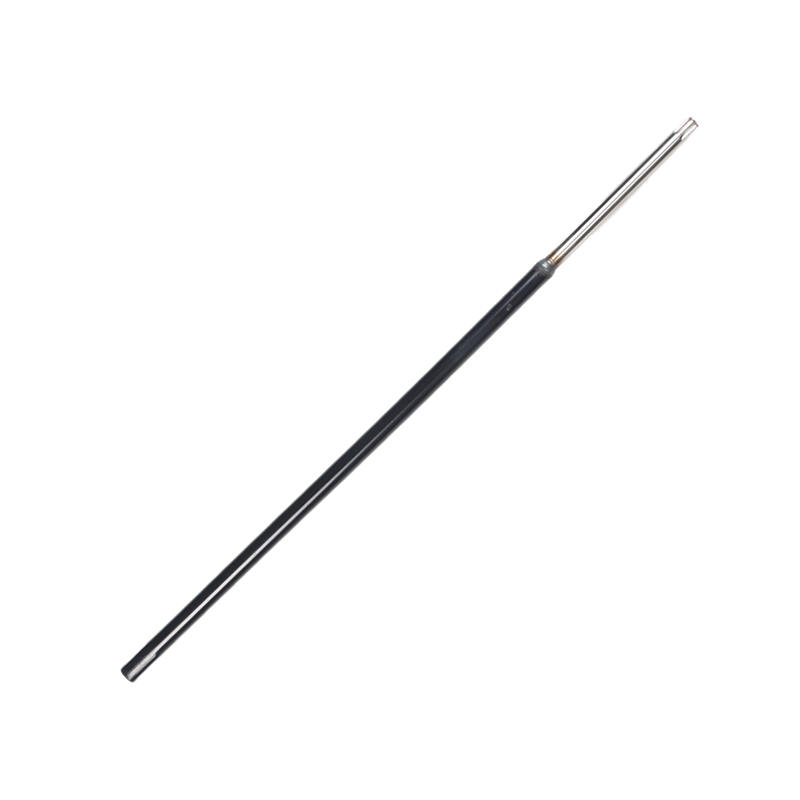
A solid drive shaft is a single, uninterrupted cylindrical bar of steel or alloy that transmits torque from the engine or reduction gearbox to the propeller. There is no internal bore — the entire cross-section is load-bearing material.
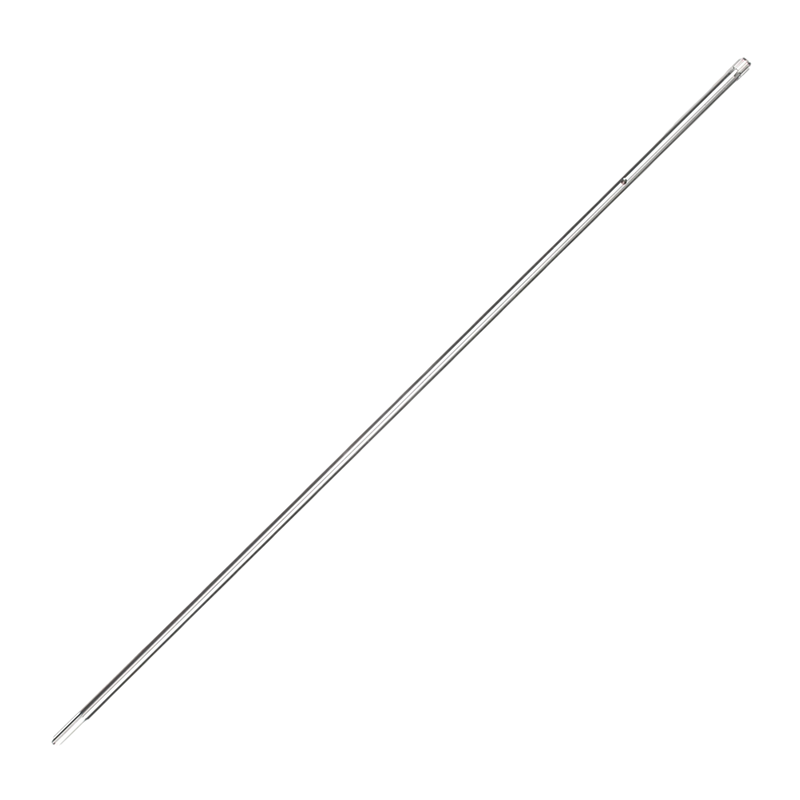
A hollow drive shaft, by contrast, has a machined or forged central cavity running along its length. This bore reduces mass while, in optimized designs, retaining a large share of the torsional stiffness of an equivalent solid shaft.
Both configurations are used across commercial vessels, fishing boats, yachts, and offshore support craft, but the right choice depends heavily on torque load, shaft length, vibration behavior, and budget.
Solid shafts generally offer higher raw torsional strength per unit diameter, which is why they remain the default choice in heavy commercial vessels and low-torque, cost-sensitive builds. Hollow shafts, when properly sized, can achieve 35–50% weight reduction for an equivalent torque rating in the 200–500 Nm range.
Below roughly 150 Nm, the weight savings from a hollow bore shrink to just 15–25%, because the minimum wall thickness required for safe bore machining — typically 6–8 mm — becomes a large share of the shaft's total cross-section. This is a critical detail many suppliers gloss over: a hollow shaft is not automatically the lighter or cheaper option at low torque levels.
Every rotating shaft has a natural (whirling) frequency. If operating RPM approaches this frequency, resonance can cause severe vibration and premature failure. Hollow shafts, because they shed weight while retaining much of their stiffness, generally exhibit a more favorable stiffness-to-weight ratio, which raises critical speed per kilogram of material. This matters most on longer shaft runs common in larger vessels, where critical speed becomes the limiting design factor rather than torque capacity alone.
Marine drive shafts operate in a uniquely hostile environment — constant saltwater exposure, cyclic loading, and biofouling risk. AISI 4140 chromium-molybdenum steel is a widely used material for both solid and hollow marine shafts because it combines a strong strength-to-weight ratio with reasonable atmospheric corrosion resistance. For higher-corrosion-risk applications, duplex stainless grades such as 2205 and super duplex 2507 deliver substantially better resistance to pitting and crevice corrosion, measured by their Pitting Resistance Equivalent Number (PRE).
Hollow shafts introduce an additional consideration: internal bore surfaces can be harder to inspect and protect from corrosion once in service, so sealing and material selection matter more than with solid designs.
| Factor | Solid Drive Shaft | Hollow Drive Shaft |
|---|---|---|
| Torsional strength (equal OD) | Higher | Slightly lower, but recoverable by increasing OD |
| Weight | Heavier | 35–50% lighter at 200–500 Nm torque range |
| Critical speed behavior | Lower stiffness-to-weight ratio | Higher stiffness-to-weight ratio, better for long shafts |
| Manufacturing cost (low volume) | Lower | 80–120% higher per unit due to bore machining and finishing |
| Vibration damping | No internal air cushioning | Internal air layer can absorb over 20% of vibration energy |
| Inspection and maintenance | Straightforward, fully accessible surface | Requires bore-specific inspection protocols |
| Best-fit applications | Heavy-duty commercial vessels, low-torque or budget-driven builds | Long shaft runs, weight-sensitive high-speed craft, vessels needing routed cabling/cooling |
Solid shafts remain the safer default in most commercial and heavy-duty marine applications. Consider a solid shaft when:
- Torque requirements fall below roughly 200 Nm and weight is not the primary design constraint.
- Budget and manufacturing simplicity are priorities — solid bar stock requires less specialized machining and offers more consistent quality control.
- The vessel operates in conditions where mechanical robustness and forgiveness to overload events matter more than efficiency gains.
- Classification society survey requirements favor simpler, well-documented shaft geometries for propulsion shafting approval.
Hollow shafts earn their premium price in torque-critical, weight-sensitive, or long-shaft-run applications. Consider a hollow shaft when:
- Torque requirements exceed roughly 250 Nm and weight reduction is a critical performance target — hollow shafts can deliver 30–50% weight savings above this threshold with minimal performance penalty.
- The vessel design benefits from internal routing — sensor cables, cooling lines, or monitoring equipment can pass through the bore, simplifying the overall drivetrain layout.
- High-speed craft need improved critical speed margins over long shaft spans.
- Total cost of ownership, not just upfront price, is the deciding metric — reduced rotating mass can lower fuel consumption over the vessel's service life.
Marine drive shafts destined for commercial vessels are not specified in isolation — they must satisfy classification society requirements from bodies such as DNV and ABS. DNV's rules for propulsion shafting, covered under design and follow-up requirements for shaft alignment and vibration torque limits, apply to both solid and hollow configurations. ABS similarly mandates specific survey and documentation requirements for propulsion shafts, couplings, and coupling bolts under its Guide for Dynamic Load Approach.
For manufacturers and buyers, this means any drive shaft — solid or hollow — must be dimensioned and documented against classification rules before it can be installed on a classed vessel. Skipping this step is one of the most common and costly mistakes in shaft procurement.
Across nearly three decades of producing marine drive shafts, several patterns consistently hold true in practice:
1. Bore diameter, not overall shaft diameter, drives the economics of hollow shafts. Specifying bore size based on packaging convenience alone — rather than working backward from torque and fatigue requirements — is the single most common design error we see from new clients.
2. Low-volume hollow shaft orders carry a real cost premium. At production volumes under roughly 5,000 units per year, hollow shafts typically cost 80–120% more per unit than solid equivalents, driven by additional CNC machining time, more complex heat-treat fixturing, and mandatory bore surface finishing.
3. Material selection matters as much as geometry. For vessels operating in warm, high-salinity waters, upgrading from standard 4140 steel to a duplex or super-duplex stainless grade often extends service life far more than switching between solid and hollow geometry alone.
Before finalizing a drive shaft specification, run through this sequence:
1. Determine the actual operating torque range and required safety margin.
2. Calculate the shaft's critical speed at maximum expected RPM.
3. Confirm classification society requirements applicable to the vessel type (DNV, ABS, or equivalent).
4. Select material grade based on operating environment — freshwater, coastal saltwater, or open-ocean exposure.
5. Compare total cost of ownership, not just unit price, between solid and hollow options at your production volume.
6. Request FEA (finite element analysis) stress and vibration data from your manufacturer before committing to tooling.
Skipping any of these steps increases the risk of premature fatigue failure or costly re-engineering after installation.
There is no universally "better" option between solid and hollow drive shafts — the right choice depends on torque demand, shaft length, vessel type, and budget realities. If your application involves heavy, low-speed commercial loads, a solid shaft remains the reliable, cost-effective choice. If your vessel demands weight savings, high-speed stability, or internal cable routing, a properly engineered hollow shaft can deliver measurable performance gains.
Ningbo Gill Transmission Parts Co., Ltd. has spent 29 years engineering both solid and hollow drive shafts to classification society standards for marine customers worldwide. Contact our engineering team today for a torque and critical-speed assessment tailored to your vessel's exact specifications — the right shaft design decision made now can save significant maintenance and fuel costs over your vessel's operating life.
Q1: Are hollow drive shafts always lighter than solid drive shafts?
Not necessarily at low torque. Below roughly 150 Nm, weight savings shrink to just 15–25% because minimum wall thickness requirements for bore machining offset much of the material reduction.
Q2: Which shaft type handles vibration better in marine applications?
Hollow shafts generally offer better critical speed characteristics on long shaft runs due to their favorable stiffness-to-weight ratio, and the internal air layer can absorb over 20% of vibration energy.
Q3: What material is most commonly used for marine propeller shafts?
AISI 4140 chromium-molybdenum steel is widely used for both solid and hollow marine shafts due to its strength-to-weight ratio and reasonable corrosion resistance. For higher corrosion resistance, duplex stainless grades like 2205 or 2507 are common upgrades.
Q4: Do classification societies require different documentation for hollow versus solid shafts?
Both configurations must meet the same underlying propulsion shafting rules from bodies like DNV and ABS, though hollow shaft designs typically require additional documentation around bore geometry and fatigue calculations.
Q5: Is it more expensive to manufacture a hollow drive shaft?
Yes, particularly at low production volumes. Hollow shafts typically cost 80–120% more per unit than solid shafts under 5,000 units per year, due to additional machining and finishing steps.
Q6: How do I prevent corrosion on a marine drive shaft?
Regular operation to prevent stagnant water exposure, avoiding contamination from mild steel tools, acid-passivation, and selecting a high-PRE material for warm or high-salinity environments all significantly reduce crevice and pitting corrosion risk.
1. Solid vs. Hollow Motor Shafts: Which Design Reduces Weight Better — https://www.researchgate.net
2. Marine Shaft Steels (AISI 4140 and AISI 5120) Predicted Corrosion Behavior, G. Vukelic — https://www.researchgate.net
3. 4140 Steel in Marine Propulsion System Components — https://www.theworldmaterial.com
4. Stainless Steel: A Modern Choice for Propellers — https://www.proptalk.com
5. Crevice Corrosion on Stainless Steel Propeller Shafts — https://www.aquamet.com
6. DNV Ship/HSLC Rules Pt.4 Ch.3 Rotating Machinery, Drivers — https://www.dnv.com
7. ABS Guide, Part 4 Vessel Systems and Machinery — https://www.eagle.org
8. What Is ABS and DNV Certification in Marine? — https://www.marineinsight.com
9. How to Calculate Propeller Shaft Critical Speed in Design — https://www.machinedesign.com
10. 空心轴vs实心轴对比分析 — https://www.baidu.com


