


close
Choose Your Site
Global
Social Media
Views: 212 Author: Gill Transmission Parts Publish Time: 2026-08-08 Origin: Site


Content Menu
● What Is the Difference Between Splined and Keyed Drive Shafts?
● Splined Drive Shafts: Strengths and Limitations
>> Why spline connections handle demanding torque
>> The practical challenges of splines
● Keyed Drive Shafts: Strengths and Limitations
>> Why keyed shafts remain widely used
>> The keyway issue: reduced shaft section
● Splined vs Keyed Drive Shafts: Performance Comparison
>> Torque capacity and fatigue resistance
>> Shock loads and torque reversal
>> Axial movement and installation flexibility
>> Cost and manufacturing lead time
>> Maintenance and field repair
● A Marine-Specific Selection Framework
● Expert Insight: Alignment Can Decide Connection Life
● When Should You Choose a Splined Drive Shaft?
● When Should You Choose a Keyed Drive Shaft?
● FAQs
>> 1. Are splined drive shafts always stronger than keyed drive shafts?
>> 2. Can a keyed drive shaft be used in marine propulsion?
>> 3. Do splined drive shafts require lubrication?
>> 4. What causes spline wear in marine applications?
>> 5. How do I select the right spline size?
>> 6. Can Ningbo Gill manufacture custom drive shafts from drawings?
Selecting between splined drive shafts and keyed drive shafts is not simply a question of torque capacity. In marine propulsion and auxiliary-drive systems, the best choice depends on cyclic loading, shaft diameter, hub length, installation accuracy, maintenance access, corrosion exposure, and the consequences of downtime.
After 29 years focused on transmission parts for marine applications, Ningbo Gill Transmission Parts Co., LTD. has seen a consistent pattern: splined connections are usually the stronger long-term solution for demanding, repeatedly loaded marine drives, while keyed connections remain practical for simpler, cost-sensitive, and space-constrained applications. The right answer comes from the full operating condition—not from one design feature alone.
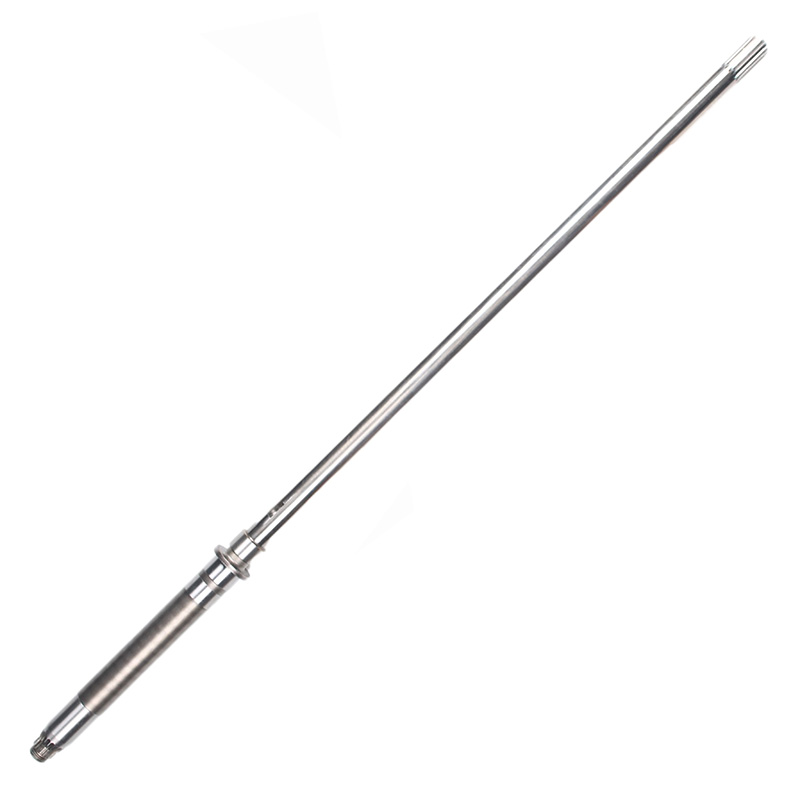
A splined drive shaft has multiple external teeth machined or formed around the shaft. These teeth engage with matching internal grooves in a hub, coupling, yoke, or sliding sleeve. Torque is distributed across several contact surfaces.
A keyed drive shaft uses one or more keys seated in keyways cut into the shaft and mating hub. The key provides a mechanical lock that transfers torque between the two components.
Both designs can be engineered for marine use. However, their load paths, stress concentrations, assembly requirements, and service behavior differ significantly.
| Feature | Splined Drive Shafts | Keyed Drive Shafts |
|---|---|---|
| Torque transfer | Shared across multiple teeth | Concentrated through one or more keys |
| Stress distribution | More even when correctly fitted | Higher local stress around keyway |
| Axial sliding capability | Excellent with sliding spline designs | Usually limited or requires another mechanism |
| Manufacturing complexity | Higher | Lower |
| Installation | Requires accurate spline fit and lubrication | Relatively straightforward |
| Frequent disassembly | Generally favorable | Can become difficult after fretting or corrosion |
| Compactness | Strong torque capacity for a given diameter | Useful for narrow hubs and simple layouts |
| Typical fit | High-load, cyclic, sliding, or serviceable systems | Moderate-load, economical, fixed-hub systems |
The principal advantage of a spline is load sharing. Instead of transmitting torque through a single key and its two loaded faces, a properly designed spline distributes load through several teeth. This can reduce local contact stress and improve resistance to repeated torque reversals.
That matters in marine service. Propeller loading changes with sea state, vessel speed, steering angle, hull condition, and engine operating range. Gear-driven auxiliaries may also experience start-stop cycles, shock loads, and torsional vibration. A multi-tooth connection gives designers more opportunities to manage these forces.
Splines are particularly suitable when the system requires:
- Higher torque transmission within a limited shaft diameter
- Repeated forward-reverse loading or fluctuating torque
- Controlled axial movement, such as telescopic shaft assemblies
- Easier removal of a coupling or hub during scheduled service
- More uniform torque transfer around the shaft circumference
A spline is not automatically better just because it has more teeth. Tooth profile, fit class, effective engagement length, hardness, surface finish, concentricity, lubrication, and corrosion protection all affect service life.
Poor fit can cause fretting, tooth wear, backlash, noise, and uneven load distribution. In a marine environment, water ingress and inadequate protective treatment may accelerate corrosion at the tooth flanks. A spline design also requires more advanced machining and inspection than a basic keyed arrangement.
For this reason, a supplier should not select spline count or tooth geometry by habit. The design should be matched to torque, rotational speed, duty cycle, material properties, hub length, and installation tolerances.
A keyed connection is familiar, economical, and easy to understand. For many moderate-duty transmission systems, it remains a reliable solution when the shaft and hub are sized correctly.
Keyed drive shafts can be a sensible choice where:
- The assembly uses a fixed hub rather than an axial sliding function
- Loads are moderate and operating conditions are predictable
- The hub is short or packaging space is restricted
- Replacement parts need to be manufactured or serviced quickly
- Initial cost is a primary selection factor
A key can provide good torque transfer in a well-made fit. It also allows a hub to be positioned at a specific angular orientation on the shaft, which may be useful in selected equipment layouts.
The keyway is the main engineering trade-off. Cutting a keyway removes material from both the shaft and hub, while the corners of the slot can act as stress raisers. Under cyclic torsion, bending, vibration, or reversing loads, this area requires careful attention.
This does not mean every keyed shaft will fail early. It means the connection must be designed conservatively enough for the actual duty. Key width, depth, length, fit, end geometry, shaft material, and hub-wall thickness all matter. Sharp edges, poor machining, loose keys, and incorrect assembly create avoidable risk.
In marine propulsion systems, alignment and vibration can magnify these issues. A connection that works in a stationary industrial machine may not be appropriate for a shaftline exposed to changing hull deflection, propeller forces, and prolonged cyclic loading.
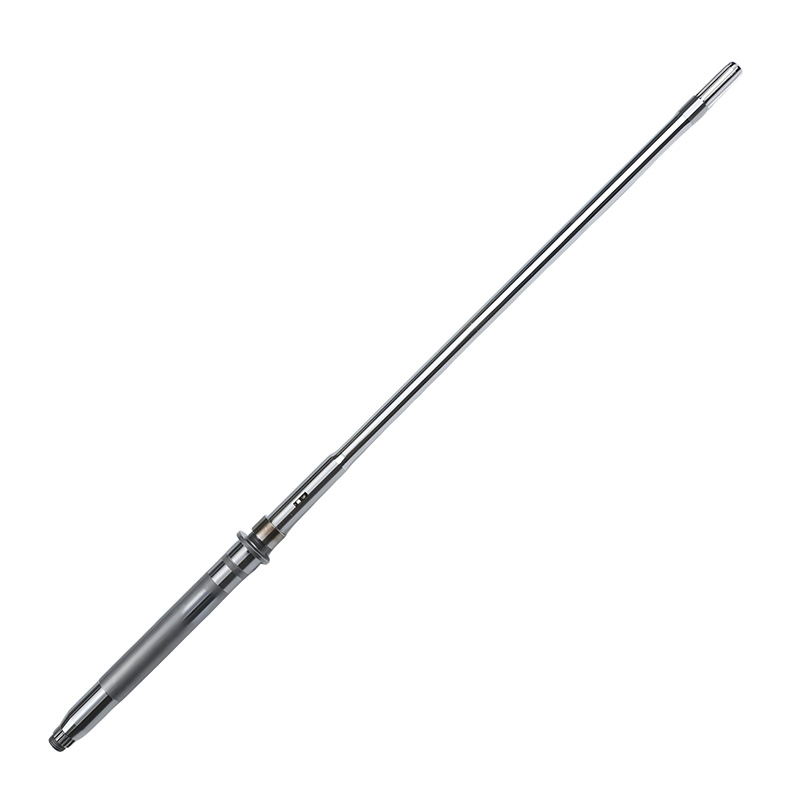
For comparable envelope dimensions, a well-designed spline normally offers better performance under high and variable torque because several teeth share the load. Its circular load path can also reduce the severe local effect associated with a single keyway.
A keyed shaft can still deliver high torque if it is increased in diameter, uses suitable material, and is carefully designed. However, this can make the assembly larger, heavier, or less attractive where installation space is limited.
Best choice for high cyclic torque: Splined drive shafts.
Marine systems are rarely exposed to perfectly steady torque. Maneuvering, changing propeller immersion, rapid throttle changes, gear engagement, and wave action can introduce transient loads.
Splines generally respond better to repeated torque reversal because the engagement is distributed around the shaft. However, backlash must be controlled. Excessive clearance between spline teeth can lead to impact loading, noise, and progressive wear.
Keyed shafts can handle shock loads in appropriately designed applications, but a loose key is especially problematic. Once movement begins between the key, shaft, and hub, fretting can enlarge the contact surfaces and accelerate failure.
Best choice for reversing or fluctuating duty: Splined drive shafts, with controlled fit and adequate engagement length.
A major advantage of splines is their ability to transmit torque while allowing controlled axial travel. This is valuable in telescopic drive shafts and installations where movement must be accommodated during assembly, operation, or service.
A conventional keyed connection is usually intended to fix the hub in position. It can support axial retention with shoulders, nuts, circlips, or other components, but it does not naturally provide smooth sliding transmission.
Best choice for sliding or telescopic movement: Splined drive shafts.
Keyed shafts are usually easier and less expensive to manufacture. Standard key sizes are widely available, and machining a keyway is less complex than producing precision external and internal splines.
Splines involve more demanding tooling, measurement, and quality control. The true cost comparison, however, should include service life, maintenance labor, downtime exposure, and replacement frequency—not only the purchase price.
Best choice for lowest initial cost: Keyed drive shafts.
Keyed connections can be straightforward to inspect and repair when corrosion is limited and access is good. Yet corrosion, galling, or fretting may make removal difficult. A damaged keyway may require substantial rework because the shaft itself has been affected.
Splined assemblies are often easier to remove and reinstall when they are protected, lubricated where appropriate, and manufactured with suitable fit. Their condition can be evaluated by checking tooth wear, backlash, corrosion, and contact pattern.
Best choice for planned, repeatable servicing: Usually splined drive shafts.
Choosing a marine drive shaft connection should begin with the operating system, not with a catalogue drawing. A marine shaftline is influenced by more than nominal engine power.
Review these six factors before making a decision:
1. Calculate the real torque spectrum. Include continuous torque, peak torque, starting torque, torque reversal, and expected shock loads—not only rated power.
2. Define the duty cycle. Consider hours of operation, frequency of maneuvering, vessel type, load variation, and whether the connection will experience repeated starts and stops.
3. Evaluate vibration and alignment. Shaft alignment should account for bearing reactions, hull deflection, propeller loads, and the effect of operating conditions from ballast to full load.
4. Confirm hub engagement length. A short hub changes the connection choice. A keyed arrangement may be practical in tight packaging, while a spline needs sufficient tooth engagement to distribute load effectively.
5. Plan corrosion control. Specify appropriate material, coating, sealing, drainage, and maintenance intervals for the operating environment.
6. Design for maintenance reality. Ask how the coupling will be inspected, removed, reinstalled, and verified onboard. A connection that is difficult to service can become expensive even when its purchase price is low.
The connection type cannot compensate for poor shaftline alignment. Even a robust spline can wear prematurely if misalignment creates uneven tooth contact, while a keyed connection can loosen if vibration and shaft bending repeatedly disturb the fit.
For marine shafting, alignment should be considered across realistic vessel conditions. Changes in loading, hull deflection, propeller hydrodynamic forces, bearing offset, and gearbox forces may alter the relationship between connected components.
This is why a complete drive-shaft project should include more than shaft dimensions. It should review the connected hub, coupling arrangement, bearing support, expected shaft movement, installation method, and inspection plan. System-level design produces more dependable results than selecting a connection in isolation.
Choose a splined drive shaft when the project involves high torque, cyclic loading, torque reversal, axial movement, frequent service, or a need to maximize torque capacity within a compact diameter.
Typical applications include:
- Marine propulsion and auxiliary transmission systems with variable loads
- Telescopic drive shafts requiring axial plunge
- Gearbox output connections requiring repeated disassembly
- Heavy-duty deck equipment and marine winch drives
- Systems where smooth, distributed torque transfer is a priority
A spline should be specified with the correct profile, tooth count, engagement length, material, heat treatment, fit, and anti-corrosion strategy. These details determine whether its theoretical advantage becomes real field performance.
Choose a keyed drive shaft when the application has moderate torque, a stable fixed-hub arrangement, limited budget, a short hub, or a preference for simple and familiar maintenance.
Typical applications include:
- Cost-sensitive marine auxiliary equipment
- Fixed pulleys, couplings, or gears in predictable-duty systems
- Replacement projects that must match existing keyed hubs
- Installations where a standard key and keyway simplify field servicing
The shaft should be sized for the reduced section at the keyway, not only for the plain shaft diameter. Use suitable corner radii, surface finish, key fit, axial retention, and corrosion protection to reduce fatigue and fretting risks.
For demanding marine transmission conditions, splined drive shafts generally perform better. Their multi-tooth engagement offers stronger load distribution, better fatigue potential, superior suitability for fluctuating torque, and the option of axial movement.
Keyed drive shafts remain a valid and effective choice when loads are moderate, the hub is short, the arrangement is fixed, and initial cost or simple replacement is the priority. They are not obsolete; they simply require more careful attention to stress concentration and fit under severe duty.
The most reliable choice is the one engineered around your actual torque, speed, hub geometry, installation space, corrosion exposure, alignment condition, and maintenance plan. Ningbo Gill Transmission Parts can help evaluate these factors and develop a marine drive shaft solution matched to your equipment rather than forcing your equipment to fit a standard shaft.
Contact Ningbo Gill Transmission Parts Co., LTD. to discuss your torque requirements, drawings, operating conditions, and custom drive shaft specifications.
Not always. A correctly sized keyed shaft can be highly reliable in moderate-duty applications. However, splines generally provide better torque distribution and fatigue performance when cyclic loads, torque reversal, or high torque density are involved.
Yes. Keyed shafts are used in marine equipment, especially in fixed-hub and moderate-load applications. The keyway, shaft diameter, material, fit, corrosion protection, and alignment must be designed for the actual service condition.
Some spline designs require lubrication to reduce wear and fretting, especially where axial sliding occurs. The correct approach depends on spline fit, speed, environment, sealing arrangement, material, and coating system.
Common causes include inadequate fit, misalignment, insufficient engagement length, lack of lubrication where needed, corrosion, contaminant ingress, excessive backlash, and loads beyond the original design condition.
Start with torque, peak load, shaft speed, duty cycle, available diameter, hub length, required axial travel, material, heat treatment, and service environment. A supplier should then determine the suitable tooth profile, number of teeth, engagement length, and fit.
Yes. Custom projects can be developed from drawings, samples, performance requirements, or installation dimensions. Providing torque, speed, hub details, operating environment, and expected service conditions helps achieve a more accurate design.
1. [Transverse Key vs Spline Shaft: Efficiency and Design] — comparative research on torque transmission, spline performance, narrow-hub applications, and design trade-offs. [reference-global]
2. [ABS Guide for Enhanced Shaft Alignment] — guidance on shaft alignment, hull deflection, propeller loads, bearing reactions, vibration analysis, and geared installations. [ww2.eagle]
3. [ABYC P-6: Propeller Shafting Systems] — guidance covering propeller shafts, couplings, keyways, hubs, bearings, and installation considerations for propeller-driven boats. [webstore.ansi]


