


close
Choose Your Site
Global
Social Media
Views: 233 Author: Gill Transmission Parts Publish Time: 2026-08-04 Origin: Site


Content Menu
● Why Drive Shaft Material Selection Matters
● Stainless Steel Drive Shafts: Strength Meets Corrosion Resistance
>> What Makes Stainless Steel the Marine Standard
>> The Hidden Weakness: Pitting Corrosion
● Carbon Steel Drive Shafts: Where They Still Make Sense
● Stainless Steel vs Carbon Steel Drive Shafts: Direct Comparison
● Galvanic Corrosion: The Factor Most Buyers Overlook
● Industry Data: Where the Market Is Heading
● Expert Recommendation: Matching Material to Vessel Type
Choosing between stainless steel drive shafts and carbon steel drive shafts determines how long your vessel's propulsion system lasts and how much you'll spend on maintenance. After 29 years of manufacturing marine transmission components, we've seen firsthand which material wins in real-world saltwater conditions—and it's not always the obvious choice.
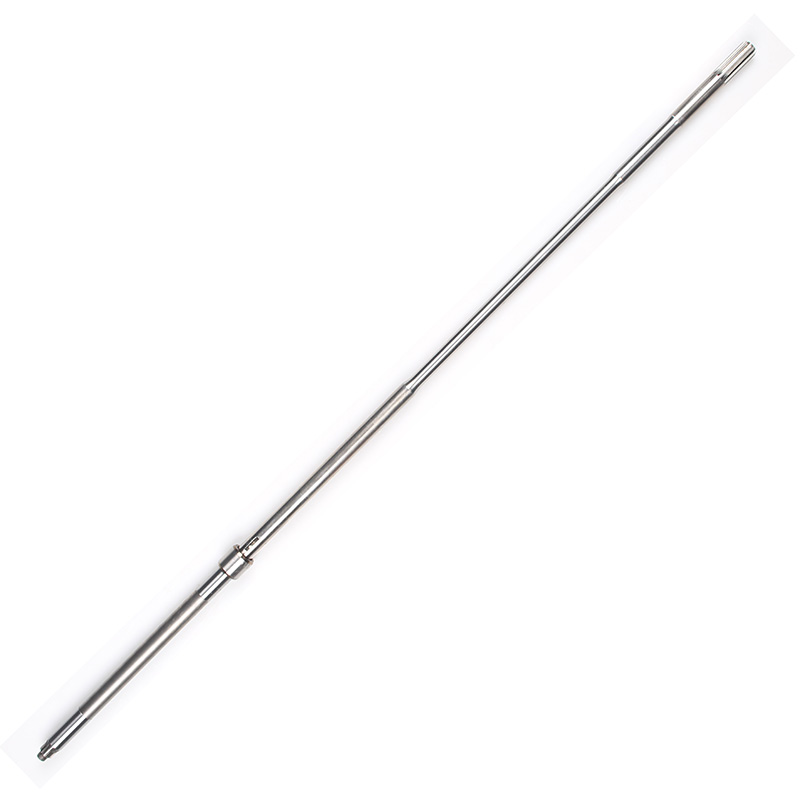
A drive shaft transfers rotational power from the engine to the propeller, and it does this while submerged in one of the most corrosive environments on earth: seawater. Galvanic corrosion occurs whenever two different metals are electrically connected and immersed in an electrolyte like saltwater, creating a current that deteriorates the less noble metal. This single fact explains most of the differences between stainless steel and carbon steel drive shaft performance offshore.
Get the material wrong, and you're looking at pitting, shaft failure, and unplanned haul-outs. Get it right, and your marine drive shaft can outlast the rest of the vessel.
Most premium marine propeller shafts use precipitation-hardening grades like 17-4 PH stainless steel, which combines high tensile strength (up to 190 ksi) with genuinely useful corrosion resistance. This alloy contains 15–17.5% chromium, the element primarily responsible for resisting attack from salty water.
Key advantages of stainless steel drive shafts:
- Superior corrosion resistance — 17-4 PH withstands general corrosion better than most standard hardenable stainless grades
- High strength-to-weight ratio — enables thinner shafts without sacrificing torque capacity
- Excellent fatigue resistance — critical for shafts under constant rotational stress
- Stress corrosion cracking resistance — proven performance in marine environments specifically
- Easy heat treatment — allows precise hardness tuning during manufacturing
Stainless steel isn't invincible. A well-documented failure analysis of a 17-4 PH sailboat propeller shaft found that pitting corrosion caused the eventual failure, and researchers recommended improving surface finish and sealing protection to mitigate this risk. Stainless steel relies on a passive oxide layer for protection; when that layer breaks down locally—often due to stagnant water, crevices, or poor bonding—pitting can start and progress quickly.
This is why surface finish quality and proper cathodic protection (zinc anodes) aren't optional extras for stainless shafts operating in saltwater—they're essential maintenance items.
Carbon steel remains the dominant material choice across the broader drive shaft market, accounting for roughly 63% of global sales by material type as of 2025. Its appeal is straightforward: carbon steel offers excellent strength and durability at a significantly lower cost than stainless alloys, making it a popular choice for heavy-duty, non-marine or freshwater applications.
Where carbon steel drive shafts perform well:
- Heavy-duty land-based and industrial machinery
- Freshwater vessels with minimal saltwater exposure
- Budget-sensitive projects where anode maintenance is rigorously scheduled
- Applications prioritizing raw torsional strength over long-term corrosion life
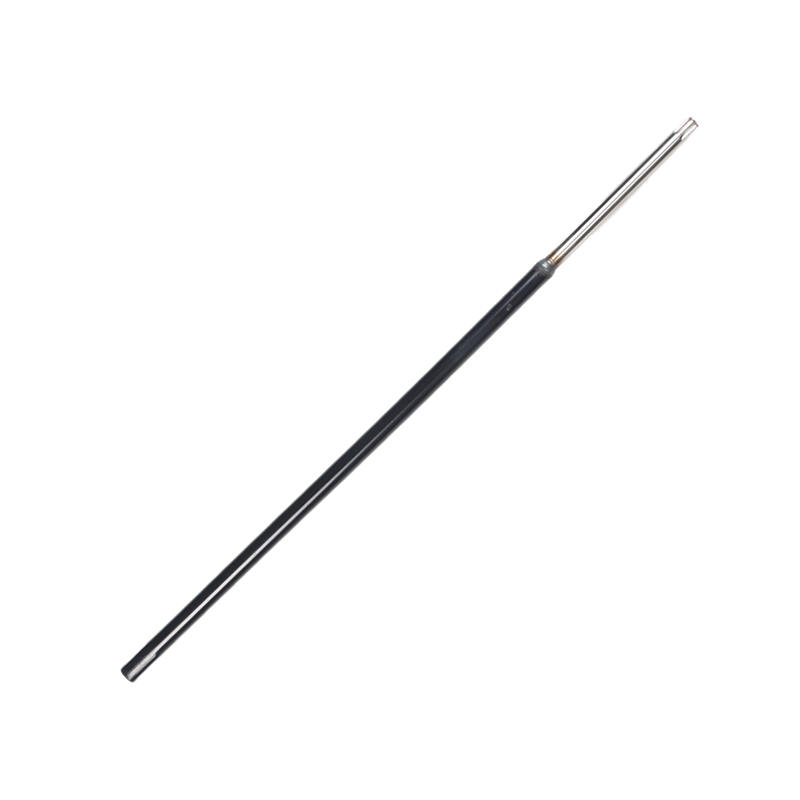
Carbon steel's fatal flaw in marine use is simple: it corrodes rapidly in salt water without robust protection. Mild steel and iron, positioned high in the galvanic series, corrode quickly when exposed to moisture—especially salt-laden moisture. Multiple marine engineers note that mild steel components will not last long in saltwater "anodes or not," meaning corrosion protection can slow but not eliminate the degradation.
For a component that sits permanently submerged, this makes uncoated or unprotected carbon steel a risky long-term investment in coastal and offshore boats.
| Factor | Stainless Steel Drive Shaft | Carbon Steel Drive Shaft |
|---|---|---|
| Corrosion resistance in seawater | High (with proper finish and anodes) | Low without heavy protection |
| Tensile strength | Up to 190 ksi (17-4 PH grade) | Generally strong but material-grade dependent |
| Upfront cost | Higher | Lower |
| Maintenance frequency | Moderate (anode checks, surface inspection) | High in saltwater use |
| Fatigue and stress corrosion cracking resistance | Excellent | Vulnerable in marine conditions |
| Best-suited environment | Saltwater, brackish water, coastal/offshore vessels | Freshwater, industrial, land-based applications |
| Long-term cost of ownership | Lower over vessel lifespan in marine use | Can rise sharply due to replacement cycles |
Whichever material you choose, galvanic corrosion risk doesn't disappear—it just changes shape. When two different metals are electrically connected in seawater, a galvanic cell forms and the less noble metal deteriorates first. This is precisely why sacrificial zinc anodes are installed near shafts, propellers, and outdrives: they corrode intentionally, protecting the more critical (and expensive) component.
Practical steps every boat owner should follow, regardless of shaft material:
1. Install sacrificial anodes (zinc for saltwater, magnesium for freshwater, aluminum for brackish conditions) near the shaft and propeller
2. Bond all underwater metal components electrically to equalize potential and reduce localized corrosion
3. Install a galvanic isolator on the shore power ground wire to block stray DC currents
4. Measure hull potential periodically with a multimeter—readings should stay no less than -200mV in saltwater
5. Inspect anodes on a fixed schedule and replace them once significantly consumed, not just when fully gone
The global drive shaft and propeller shaft market is projected to grow at a compound annual rate of roughly 12% between 2026 and 2033, driven partly by demand for lightweight, corrosion-resistant components. Within the broader industrial drive shaft category, marine applications represented approximately 9.8% of total market revenue in 2025, fueled by commercial shipping, naval defense, and recreational boating demand.
Manufacturers are also responding to sustainability pressure, with a growing focus on eco-friendly manufacturing processes and materials across the sector. For companies like ours that supply both material types, this trend reinforces what field experience already shows: buyers increasingly prioritize total lifecycle cost and corrosion performance over the lowest sticker price.
After nearly three decades producing drive shafts, gears, and propeller shafts for global marine markets, our engineering guidance is consistent:
- Choose stainless steel drive shafts for saltwater vessels, commercial fishing boats, and any application where downtime and shaft replacement costs outweigh the higher initial investment.
- Choose carbon steel drive shafts for freshwater use, budget-constrained builds, or land-based industrial transmission systems where corrosion exposure is minimal.
- Never skip corrosion protection, regardless of material—anodes, bonding, and isolators extend service life dramatically for both stainless and carbon steel shafts.
If your vessel operates in coastal or offshore saltwater conditions, the higher upfront cost of a properly specified stainless steel shaft—paired with correct anode maintenance—almost always produces a lower total cost of ownership than repeatedly replacing a corroding carbon steel shaft.
Need help specifying the right drive shaft grade for your vessel or application? Contact our engineering team at Ningbo Gill Transmission Parts Co., Ltd. for a material recommendation based on your operating environment, torque requirements, and budget.
Q1: Which lasts longer in saltwater, stainless steel or carbon steel drive shafts?
Stainless steel drive shafts, particularly 17-4 PH grade, last significantly longer in saltwater because of their inherent chromium-based corrosion resistance, provided anodes and proper surface finish are maintained.
Q2: Can carbon steel drive shafts be used on boats at all?
Yes, but primarily in freshwater or land-based applications; without heavy protective coatings and rigorous anode maintenance, carbon steel corrodes quickly in salt water.
Q3: Do stainless steel shafts still need sacrificial anodes?
Yes. Stainless steel components can still experience galvanic corrosion when connected to other metals in an electrolyte, so anodes remain necessary.
Q4: Why do stainless steel propeller shafts sometimes fail despite good corrosion resistance?
Failures are usually caused by localized pitting corrosion where the passive oxide layer breaks down, often linked to poor surface finish or inadequate sealing.
Q5: Is stainless steel or carbon steel more cost-effective overall?
Carbon steel has a lower upfront cost, but stainless steel typically offers a lower total cost of ownership in marine settings due to reduced replacement frequency.
Q6: What grade of stainless steel is best for marine drive shafts?
17-4 PH stainless steel is widely regarded as the marine industry standard due to its balance of high strength, hardness, and corrosion resistance.
1. ARMCO® 17-4 PH® Stainless Steel Datasheet: https://www.google.com/search?q=ARMCO+17-4+PH+stainless+steel+datasheet
2. Pros and Cons of Driveshaft Materials: Steel, Aluminum, Carbon Fiber: https://www.google.com/search?q=Pros+and+Cons+of+Driveshaft+Materials+Steel+Aluminum+Carbon+Fiber
3. Industrial Drive Shaft Market Research Report 2034: https://www.google.com/search?q=Industrial+Drive+Shaft+Market+Research+Report+2034
4. Galvanic Corrosion 101: Guide to Boat Anodes: https://www.google.com/search?q=Galvanic+Corrosion+101+Guide+to+Boat+Anodes
5. Failure of a 17-4 PH stainless steel sailboat propeller shaft (Arisoy et al.): https://www.google.com/search?q=Failure+of+a+17-4+PH+stainless+steel+sailboat+propeller+shaft
6. Corrosion and Electrolysis on Pleasure Boats: https://www.google.com/search?q=Corrosion+and+electrolysis+on+pleasure+boats
7. Prevent Galvanic Corrosion on Your Boat: Galvanic Isolators: https://www.google.com/search?q=Prevent+Galvanic+Corrosion+on+Your+Boat+Galvanic+Isolators
8. 7 Things You Did Not Know About 17-4 PH Stainless Steel: https://www.google.com/search?q=7+Things+You+Did+Not+Know+About+17-4+PH+Stainless+Steel
9. Automotive Drive Shaft Market Size & Share Analysis: https://www.google.com/search?q=Automotive+Drive+Shaft+Market+Size+Share+Analysis
10. Why 17-4PH Stainless Steel Outperforms Standard Grades: https://www.google.com/search?q=Why+17-4PH+Stainless+Steel+Outperforms+Standard+Grades
11. Corrosion in Workboats and Recreational Boats: https://www.google.com/search?q=Corrosion+in+Workboats+and+Recreational+Boats
12. Global Drive Shaft and Propeller Shafts Market Report: https://www.google.com/search?q=Global+Drive+shaft+and+Propeller+Shafts+Market+Report
13. How to Prevent Corrosion on Your Yacht: https://www.google.com/search?q=How+to+prevent+corrosion+on+your+yacht


