


close
Choose Your Site
Global
Social Media
Views: 277 Author: Gill Transmission Parts Publish Time: 2026-08-14 Origin: Site


Content Menu
● Quick Answer: What Shaft Length Does a Pontoon Boat Need?
● First, Identify the Shaft You Are Measuring
● How to Measure a Bow-Mount Trolling Motor Shaft
>> Bow-Mount Shaft Length Table
● How to Measure a Transom-Mount Trolling Motor Shaft
● Selecting an Outboard Shaft Length for a Pontoon Boat
>> Common Outboard Shaft Options
● Why Pontoon Boats Often Need Longer Trolling Motor Shafts
● The 12-Inch Submersion Check
● Inboard Propeller Shaft: Do Not Use a Generic Length Chart
● Common Shaft-Length Mistakes
>> Choosing by Boat Length Alone
>> Confusing Trolling Motor and Outboard Measurements
>> Ignoring Local Water Conditions
>> Treating a Propeller Shaft as a Universal Part
● Need Help With a Marine Shaft Project?
● FAQ
>> What is the most common trolling motor shaft length for a pontoon boat?
>> Is a 60-inch trolling motor shaft too long for a pontoon boat?
>> How deep should a pontoon trolling motor propeller sit?
>> Does a 24-foot pontoon always require a 25-inch outboard shaft?
>> Can I use a 48-inch trolling motor shaft on a pontoon boat?
>> How do I measure a replacement marine propeller shaft?
Choosing the right shaft length for a pontoon boat is not a matter of selecting the longest option available. The correct length depends on which shaft you mean—a trolling motor shaft, an outboard motor shaft, or an inboard propeller shaft—and on your actual mounting height, loaded waterline, and typical boating conditions.
At Ningbo Gill Transmission Parts Co., LTD., we have spent 29 years working with drive shafts, propeller shafts, and marine transmission components. One lesson remains consistent across vessel types: a shaft that is only "close enough" can create vibration, ventilation, poor control, accelerated wear, and avoidable operating risk. Measure the boat first. Then select the shaft around the real installation geometry.
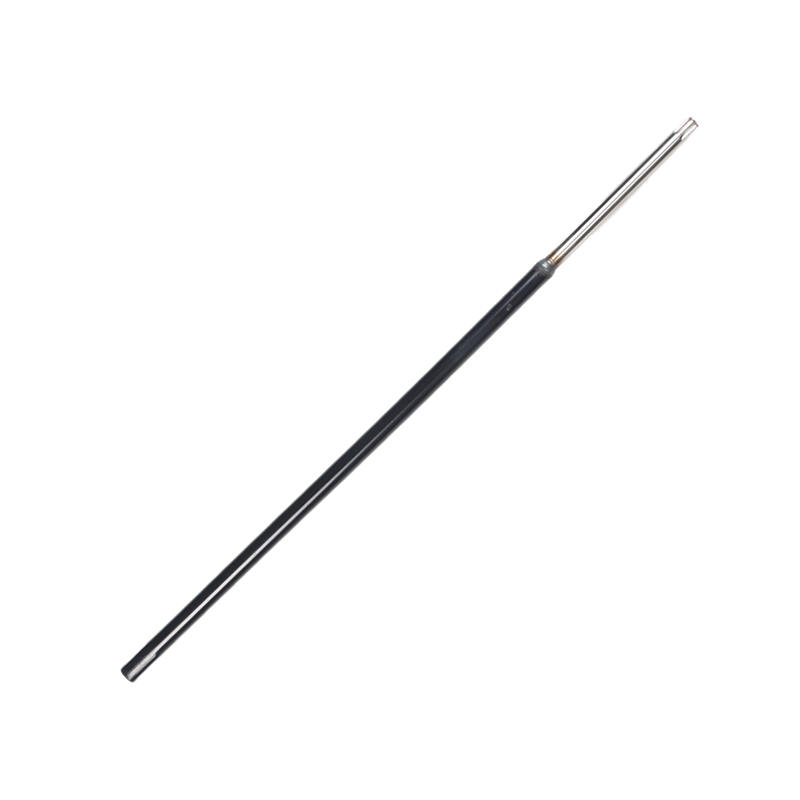
For most pontoon boats, the typical trolling motor shaft length is 54 to 60 inches for a bow-mounted setup. A 60-inch shaft is often the safer choice for pontoons with tall forward decks, changing passenger loads, or frequent use in choppy water.
For an outboard engine, many pontoons use either a 20-inch long shaft or a 25-inch extra-long shaft. The right choice depends on the height of the engine mounting position, not simply the boat's overall length.
For an inboard propulsion system, a propeller shaft is not selected by a standard pontoon chart. It must be engineered around the engine, gearbox reduction, shaft angle, hull layout, propeller, bearing support, and required coupling length.
| Shaft application | Typical pontoon range | Main measurement |
|---|---|---|
| Bow-mounted trolling motor | 54–60 in. | Bow mounting surface to waterline |
| Transom-mounted trolling motor | 42–55 in. | Transom mount to waterline |
| Outboard motor | 20 or 25 in. | Motor mounting height to hull bottom |
| Inboard propeller shaft | Custom engineered | Driveline and hull geometry |
The phrase "pontoon boat shaft length" can lead to expensive confusion because it may describe three completely different parts.
This is the vertical tube between the trolling motor head and its lower drive unit. Its job is to keep the propeller submerged while allowing the motor to steer and operate efficiently.
A trolling motor shaft that is too short can lift the propeller near the surface when the pontoon rises on a wake. The result may be air being drawn into the propeller, noisy operation, reduced thrust, and unstable heading control.
A shaft that is too long is usually less damaging than one that is too short, but it can be harder to stow, may interfere with deck space, and may be more exposed during transport.
An outboard's shaft length is measured differently. It refers to the vertical distance from the motor mounting bracket area to the anti-ventilation plate and lower unit. Common nominal sizes include 15-inch, 20-inch, 25-inch, and 30-inch versions.
On a correctly matched installation, the anti-ventilation plate should sit close to the hull bottom when the motor is trimmed into its normal operating position. If it is too high, the propeller can ventilate during turns or acceleration. If it is too low, the lower unit creates unnecessary drag and may reduce performance.
A marine propeller shaft transmits torque from the gearbox coupling to the propeller. It is a precision drivetrain component rather than a simple vertical-length choice.
Its final length should be determined only after confirming the engine and gearbox position, coupling faces, stern tube arrangement, shaft angle, strut or bearing location, propeller clearance, and allowance for installation and service. Never order an inboard propeller shaft using only a rough stern-to-engine measurement.
For many pontoon owners, a bow-mounted trolling motor is the most common application. Because pontoon decks usually sit higher above the water than the bow of a low-profile fishing boat, the shaft often needs to be longer.
Use this practical process before choosing a model.
1. Load the pontoon as you normally use it, including batteries, fuel, fishing gear, coolers, and a realistic passenger load.
2. Place the boat in calm water. Measurements taken on a trailer may not reflect the real operating waterline.
3. Measure vertically from the planned trolling motor mounting surface down to the waterline.
4. Add an allowance for wave movement, bow rise, passenger movement, and the required propeller submersion.
5. Select the next available shaft length that meets or exceeds your calculated requirement.
For example, if the distance from the bow deck to the waterline is 31 inches, a 54- to 60-inch shaft is typically the appropriate range. If you regularly fish in wind, boat wakes, or open-water chop, choose the longer option when the mounting system supports it.
| Bow mounting surface to waterline | Suggested shaft length | Typical use |
|---|---|---|
| Up to 22 in. | 42–45 in. | Lower-deck boats, calm inland water |
| 22–28 in. | 48–52 in. | Mid-height pontoons |
| 28–34 in. | 54–60 in. | Most modern pontoons |
| 34–52 in. | 72–87 in. | High decks, rough-water operation |
| Over 52 in. | 100 in. | Specialty high-freeboard applications |
A 60-inch model is often a practical choice for standard recreational pontoons because it gives reserve submersion without forcing the operator to use the motor at its lowest possible setting all the time.
A transom-mounted trolling motor may require less shaft length because the rear mounting location can sit closer to the water. However, do not assume this is true on every pontoon.
Some pontoons have raised engine pods, swim platforms, reinforced brackets, or rear-deck designs that place the mounting point significantly above the waterline. Measure at the exact location where the clamp or bracket will sit.
| Transom mounting point to waterline | Suggested shaft length |
|---|---|
| Up to 10 in. | 30 in. |
| 10–16 in. | 36 in. |
| 16–22 in. | 42 in. |
| 22–28 in. | 55 in. |
When the boat is heavily loaded aft, the transom may sit lower. When passengers move forward or the boat runs in waves, the stern can also rise and fall quickly. Test the installation at low speed before relying on the motor for precise position holding or docking.
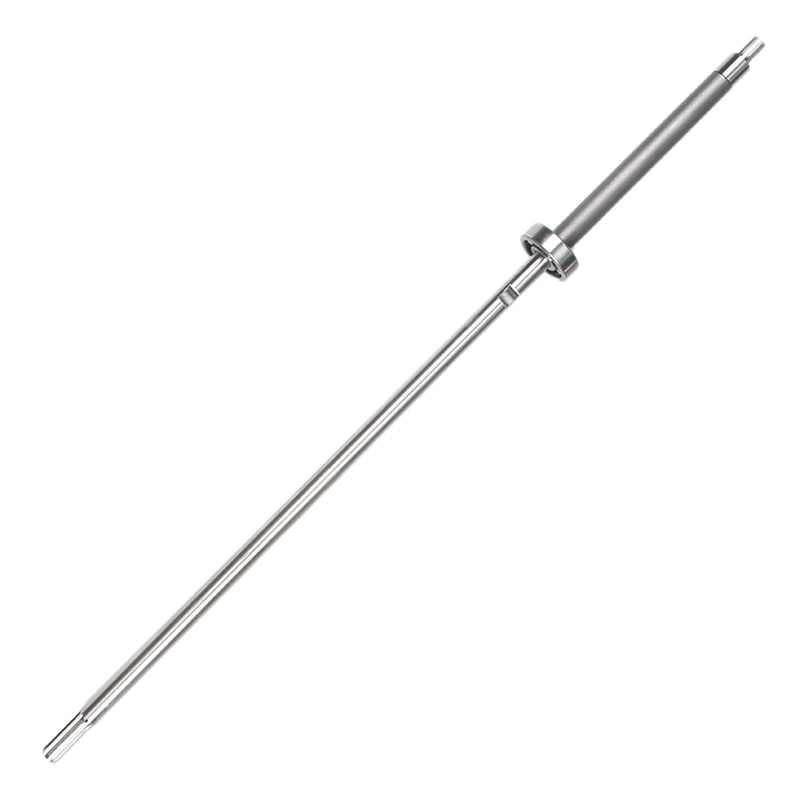
Pontoon buyers often hear that a 20-inch outboard shaft is "standard." That can be true, but it is not a rule that replaces measurement.
The engine pod design is the deciding factor. Measure from the top of the outboard mounting surface straight down to the lowest relevant hull-bottom reference at that installation point. Compare that measurement with the shaft lengths offered by your selected engine manufacturer.
| Outboard designation | Nominal shaft length | Typical pontoon use |
|---|---|---|
| Short | 15 in. | Uncommon for standard pontoons |
| Long | 20 in. | Many conventional engine pods |
| Extra-long | 25 in. | Higher pods and larger pontoons |
| Ultra-long | 30 in. | Specialized high-transom applications |
A 20-inch motor installed on a 25-inch mounting height may ventilate, particularly when turning or accelerating. A 25-inch motor installed too low can increase drag and change the running attitude. The correct setup positions the anti-ventilation plate near the hull-bottom line according to the engine manufacturer's installation guidance.
Before replacing an outboard, also check:
- The capacity plate and maximum horsepower rating
- The engine pod's structural condition
- Steering cable or hydraulic steering travel
- Battery, fuel, and passenger weight distribution
- Clearance for trim and tilt
- The original manufacturer's recommended shaft configuration
Pontoon boats create a specific shaft-length challenge. Their decks are commonly higher above the water than bass boats and many small aluminum boats. Their bow can also rise and fall as people move around, batteries are installed, or wind-driven chop hits the tubes.
A short shaft may appear acceptable while the boat is stationary. Problems become clear when the boat encounters a wake, rotates in wind, or uses position-holding functions. The motor's lower unit may come too close to the surface, causing the propeller to pull air and lose grip.
In practical terms, the shaft must provide enough depth for the propeller to work in undisturbed water—not just enough length to touch the water while the boat is tied to a dock.
This is why a 54-inch shaft may work well for one pontoon while another owner with the same boat length benefits from 60 inches. The deck height, mounting bracket, onboard load, water conditions, and preferred fishing style matter more than the boat's length alone.
After installation, inspect the trolling motor in the water. The lower motor section and propeller should remain sufficiently submerged during normal use.
A practical target is to keep the propeller tip at least 12 inches below the waterline. This helps reduce surface agitation and lowers the chance of ventilation. For rougher water, additional depth is advisable.
Check the following conditions:
- The boat is loaded as it would be during normal use
- The shaft collar is locked securely
- The motor can turn through its full steering range
- The propeller remains submerged when passengers shift position
- The motor does not strike a pontoon tube, deck edge, ladder, or trailer component
- Cables have enough slack for stow, deploy, steering, and trim movements
If the propeller breaks the surface in normal chop, the solution is generally a longer shaft or a revised mount—not simply running the motor deeper than its design allows.
If your pontoon uses an inboard or hybrid propulsion arrangement, its propeller shaft requires a different level of planning. The shaft must carry torque smoothly from the transmission to the propeller while remaining aligned through bearings, seals, couplings, and the stern tube.
An experienced marine drivetrain supplier will normally request:
- Engine output and maximum RPM
- Gearbox reduction ratio
- Propeller diameter, pitch, and rotation direction
- Shaft material and diameter
- Coupling type and bore details
- Distance between gearbox coupling and propeller hub
- Stern tube, cutless bearing, and strut arrangement
- Shaft angle and hull clearance
- Existing shaft drawings, photographs, or physical samples
For replacement work, do not measure only the exposed shaft. Measure from the coupling reference face to the propeller reference point, document all key diameters, and confirm the keyway, taper, thread, nut, and locking arrangement. A few millimeters of error can affect coupling engagement, bearing position, propeller clearance, and alignment.
A 22-foot pontoon can have a different deck height and motor pod configuration than another 22-foot pontoon. Boat length is only a starting reference.
Batteries, fishing equipment, fuel, coolers, and passengers change the waterline. Measure the boat in realistic operating condition.
A 60-inch trolling motor shaft does not correspond to a 60-inch outboard shaft. These are different products with different reference points.
Calm marina use requires less reserve depth than wind-exposed lakes, river current, or frequent wake traffic. Consider where and how you actually boat.
A marine propeller shaft must match the complete propulsion system. Material grade, straightness, taper geometry, coupling fit, and dynamic alignment are as important as length.
Before ordering any shaft-related component for a pontoon boat, prepare a simple measurement record. Include photographs with a tape measure visible in the image.
- Boat make, model, year, and pontoon length
- Motor type: trolling, outboard, or inboard propulsion
- Exact mounting location
- Vertical mounting-surface-to-waterline measurement
- Loaded and unloaded measurement, if possible
- Typical water conditions
- Existing component part number and dimensions
- Required corrosion resistance and operating environment
- Clear photos of the mount, coupling, propeller, and surrounding structure
This information turns a vague request—"What length shaft do I need?"—into a reliable engineering discussion. It also helps prevent a replacement part from arriving with the wrong geometry.
For a trolling motor, measure your bow or transom height and choose a shaft that keeps the propeller safely submerged in your normal conditions. For an outboard, match the engine shaft to the actual pod height. For a propulsion propeller shaft, confirm every critical dimension before manufacturing begins.
Ningbo Gill Transmission Parts Co., LTD. supports marine drivetrain projects involving drive shafts, propeller shafts, and related transmission components. Send your drawings, measurements, application details, and photos to our technical team for a fit-focused assessment before production.
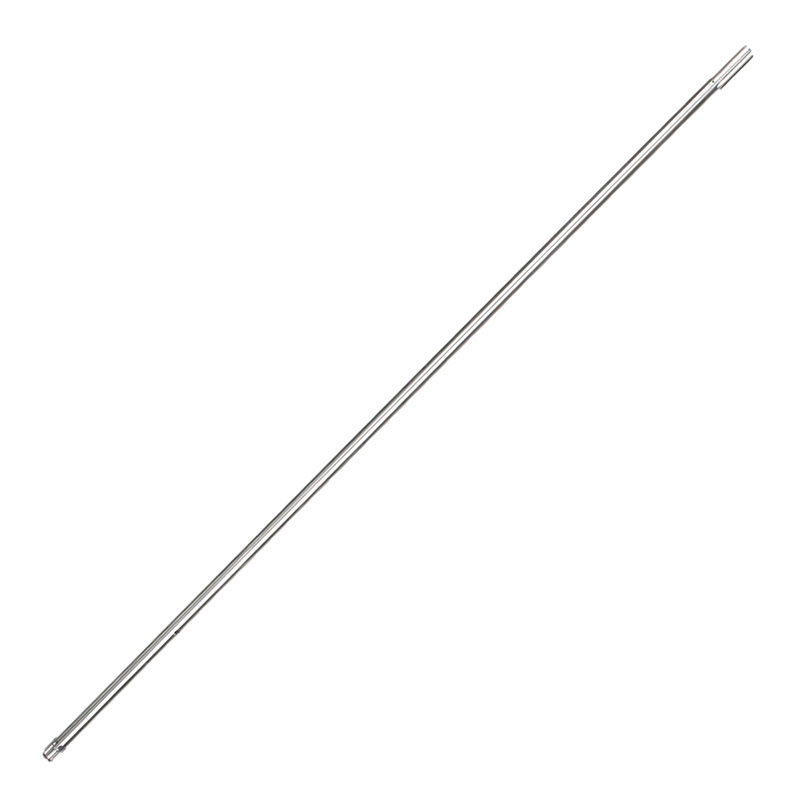
For many bow-mounted pontoon installations, 54 to 60 inches is the common range. A 60-inch shaft is often preferred for higher decks or variable water conditions.
Usually not. A longer shaft is generally preferable to one that allows the propeller to ventilate. Confirm that it can be stowed safely and adjusted without interfering with the deck or trailer.
Keep the propeller tip at least 12 inches below the waterline during normal operation. Use more depth when fishing in waves or wake-prone water.
No. The correct outboard shaft depends on the engine pod's mounting height. Measure the actual transom or pod before selecting between a 20-inch and 25-inch model.
It can work on a lower-deck pontoon with a short bow-to-waterline measurement. However, it may be too short for many modern pontoons, especially in rough water or with bow-mounted position-holding use.
Measure from defined coupling and propeller reference points, then record all diameters, taper dimensions, keyway details, thread specifications, bearing positions, and shaft material requirements. A drawing or sample shaft is strongly recommended.
- [Minn Kota, "Trolling Motor Selection and Boat Size Guide"] — bow- and transom-mount measurement ranges, submersion guidance, and rough-water allowance. [minnkota.johnsonoutdoors]
- [Mercury Marine, "How to Install a Kicker Motor on Your Boat"] — outboard shaft measurement reference and anti-ventilation plate positioning guidance. [mercurymarine]
- [MotorGuide, "Xi3 Press Release"] — examples of 48-, 54-, and 60-inch trolling motor shaft availability. [motorguide]
- [MotorGuide, "Xi3 Freshwater Product Sheet"] — shaft-length and thrust examples for 48- and 60-inch models. [motorguide]
- [Mercury Marine, "More Trolling Power, Better Trolling Control"] — 20- and 25-inch outboard shaft options for ProKicker models. [mercurymarine]
- [Aqualoy, "Marine Propeller Shafting"] — marine propeller-shaft material reference. [marskeel]


