


close
Choose Your Site
Global
Social Media
Views: 299 Author: Gill Transmission Parts Publish Time: 2026-11-10 Origin: Site


Content Menu
● Stainless Steel Marine Shafts vs Carbon Steel Shafts at a Glance
● 1. What Makes These Marine Shaft Materials Different?
>> Stainless Steel: Corrosion Resistance Built Into the Alloy
>> Carbon Steel: Performance Depends on Protection and Condition
● 2. Saltwater Corrosion: The Most Important Difference
>> Why 316 Stainless Steel Is Not Automatically the Best Shaft Material
>> Why a Docked Boat Can Present a Difficult Environment
>> Galvanic Compatibility Still Matters
● 3. Strength and Torque Capacity: Compare Specifications, Not Labels
>> Stainless Steel Is Not Always Stronger
>> Fatigue Deserves Separate Attention
● 4. Manufacturing Quality Can Change the Outcome
>> Machining Stainless Marine Shafts
>> Surface Cleanliness Is Part of Corrosion Control
>> Do Not Confuse Machinability With Marine Suitability
● 5. Lifecycle Cost: A Better Comparison Than Purchase Price
>> When Stainless Steel May Justify Its Premium
>> When Carbon Steel May Offer Better Value
● 6. Three Application Scenarios That Clarify the Decision
>> Scenario A: A Leisure Boat Kept in Warm Saltwater
>> Scenario B: A Protected Carbon Steel Shaft Arrangement
>> Scenario C: A Replacement Shaft With a Proposed Material Upgrade
● 7. A Six-Step Marine Shaft Purchasing Checklist
● 8. Work With Ningbo Gill on a Defined Shaft Specification
>> Are stainless steel marine shafts always better than carbon steel shafts?
>> Is 316 stainless steel suitable for every marine propeller shaft?
>> Can stainless steel shafts corrode while the boat is unused?
>> Does a higher-strength material allow a smaller shaft diameter?
>> What documents should buyers request?
>> Is a polished stainless shaft corrosion-proof?
Choosing between stainless steel marine shafts and carbon steel shafts means balancing corrosion resistance, mechanical performance, maintenance, and lifetime cost. For seawater-exposed propulsion systems, a properly specified stainless shafting alloy often offers a corrosion-resistance advantage. For protected installations, carbon steel can remain a technically sound, economical option.
At Ningbo Gill Transmission Parts Co., LTD., our 29 years of experience in developing, manufacturing, and selling drive shafts and marine components shape a practical approach: start with the operating environment, then evaluate the complete shaft system—not simply the material name.
The decisive factor is suitability. Neither "stainless" nor "carbon steel" is a complete engineering specification.
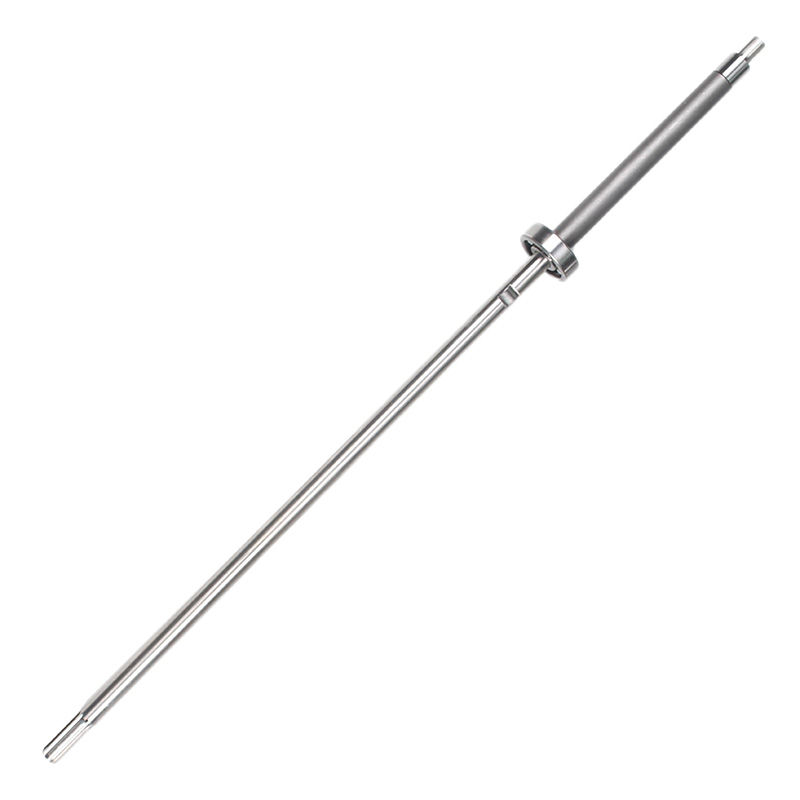
The comparison below provides a starting point. Actual performance depends on the alloy, shaft diameter, manufacturing condition, geometry, and protection system.
| Selection factor | Stainless steel marine shafts | Carbon steel shafts |
|---|---|---|
| Corrosion behavior | Grade-dependent resistance; localized corrosion remains possible | Typically requires protection wherever seawater exposure occurs |
| Mechanical strength | Varies substantially by grade, condition, and diameter | Varies with composition, processing, and heat treatment |
| Seawater exposure | Suitable shafting grades can offer substantial advantages | Requires an engineered protection arrangement |
| Manufacturing | Austenitic grades can work-harden during machining | Often comparatively straightforward to machine, depending on grade |
| Maintenance priorities | Inspect for pitting, crevice attack, and surface damage | Inspect protection systems, exposed steel, liners, and seals |
| Purchase cost | Often higher, particularly for specialized shafting alloys | Often lower initially, before protection and maintenance costs |
| Typical selection logic | Corrosion-resistant exposed shafting | Protected shafting where the complete arrangement supports its use |
Commercial marine shafting suppliers offer both carbon steel shafts with liners and several stainless shafting grades, confirming that neither material family universally replaces the other.
Stainless steels contain at least 10.5% chromium. Chromium enables a protective passive surface film to form. In suitable conditions, this film can re-form after surface damage when oxygen is available.
However, stainless steel is a family of alloys, not a single material. Austenitic, martensitic, precipitation-hardening, and duplex grades have different combinations of strength, corrosion resistance, and processing requirements.
For procurement, "stainless steel marine drive shaft" is therefore insufficient. The drawing or purchase specification should identify the exact grade, supply condition, mechanical requirements, and inspection criteria.
Carbon steel marine shafts remain commercially available, including arrangements using shaft liners where necessary.
The relevant comparison is not always bare carbon steel against bare stainless steel. It may be a protected carbon steel assembly against a corrosion-resistant stainless shaft. Liners, seals, and the exposure arrangement can change the decision considerably.
Our purchasing perspective is straightforward: compare complete, service-ready assemblies rather than raw-bar prices.
Type 316 is widely associated with marine service, but continuous seawater exposure is more demanding than coastal atmospheric exposure.
The British Stainless Steel Association states that 316 grades can suffer pitting and crevice corrosion in seawater. Stagnation, deposits, temperature, and restricted water movement influence the risk. It also advises against treating 304 or free-machining 303 as suitable choices for seawater service.
This distinction matters when comparing stainless steel propeller shafts with carbon steel alternatives. A generic "marine-grade stainless" description does not establish suitability.
For demanding service, consider dedicated shafting alloys and obtain application-specific engineering confirmation rather than assuming 316 is sufficient.
A vessel does not need to be operating for corrosion to develop.
Stagnant seawater and marine growth can create shielded areas that encourage localized corrosion. Shaft locations beneath deposits or within tight interfaces deserve particular attention.
AQUAMET 22, for example, is marketed as a high-alloy austenitic shafting material with resistance to pitting and crevice corrosion, including applications involving boats that spend extended periods docked. This is a grade-specific example, not a performance claim for every stainless shaft.
Stainless steel does not eliminate the need to evaluate connected metals.
In seawater, contact between stainless steel and less noble materials can protect the stainless at the other material's expense. The shaft, propeller, hull-related components, electrical continuity, and corrosion-protection arrangement therefore require coordinated assessment.
Material selection should support the vessel's protection strategy, not replace it.
"Which material is stronger?" cannot be answered reliably without naming the grades and conditions.
Published stainless shafting data demonstrate the importance of diameter. AQUAMET 22 lists minimum tensile strength of 145,000 psi for diameters from ¾ to 1¼ inches, compared with 100,000 psi for diameters over 3 through 12 inches.
These figures describe specified products and size ranges. They are not universal stainless steel properties or allowable design stresses.
When reviewing competing quotations, request:
- Minimum yield and tensile strength.
- Material grade and delivery condition.
- Properties applicable to the ordered diameter.
- Heat traceability and material certification.
- Confirmation against the project's design requirements.
A shaft's static strength does not, by itself, establish its fatigue performance.
Marine shaft design includes dedicated fatigue assessment methods. DNV's machinery training material specifically identifies shaft-fatigue calculations and relevant classification requirements as distinct engineering subjects.
From a manufacturing-review perspective, this means material selection must remain connected to shaft geometry, loading, surface condition, and the approved design—not just a tensile-strength figure.
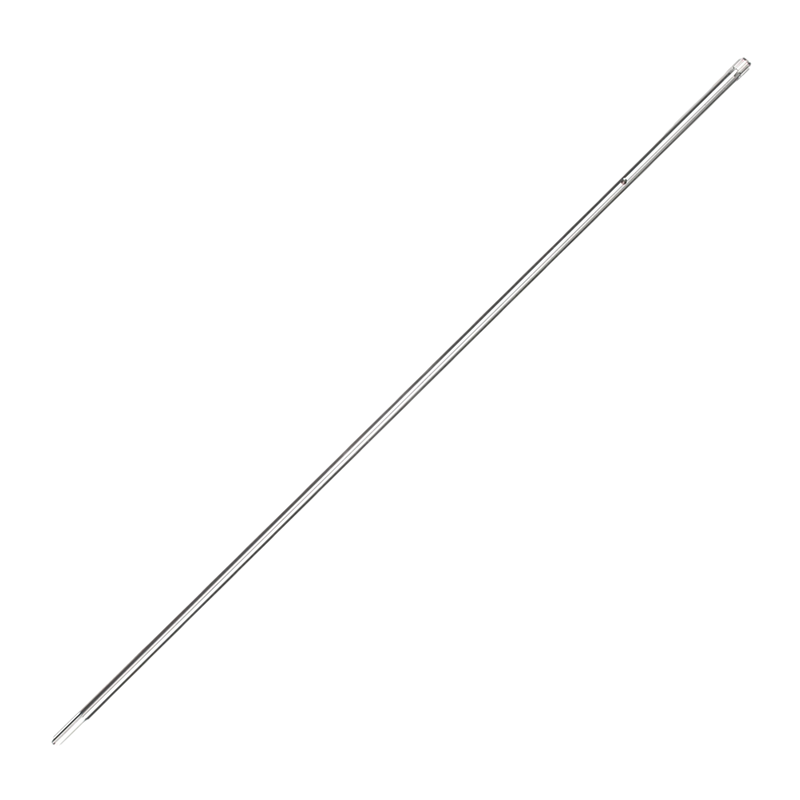
Austenitic stainless steels can work-harden during machining. Poor cutting practice can make subsequent machining more difficult and compromise process consistency.
Industry guidance emphasizes rigid equipment, suitable tooling, positive feeds, and avoiding conditions that repeatedly rub or dwell on a work-hardened surface.
For buyers, the useful question is not simply whether a supplier can machine stainless steel. Ask how the supplier controls the finished shaft's specified dimensions, surface requirements, and inspection records.
Stainless steel can become contaminated by carbon steel particles during fabrication or handling.
Fabrication guidance recommends dedicated tools and protection against contact with carbon steel handling equipment. Contamination should be removed using an appropriate restoration process.
A polished appearance alone does not prove that a shaft is correctly manufactured or ready for seawater service.
Some free-machining grades improve production efficiency but offer reduced corrosion resistance.
That trade-off matters in marine procurement. A material that reduces machining time may be inappropriate for the exposure conditions. Grade selection must come before production convenience.
A lower shaft price does not automatically produce a lower ownership cost.
For a practical quotation review, use this framework:
Lifetime cost = shaft purchase + protection + installation + inspections + maintenance + downtime + replacement.
This is a budgeting framework, not a prediction of service life.
A suitable stainless shafting alloy deserves close consideration when:
- Seawater exposure is unavoidable.
- Access for maintenance is difficult.
- The vessel spends long periods afloat.
- Downtime carries substantial commercial consequences.
- Maintaining a separate protection barrier would be challenging.
The corrosion advantage remains grade-dependent; stainless construction does not remove inspection requirements.
Carbon steel deserves consideration where the approved arrangement protects the shaft appropriately and maintenance access is practical. Commercial availability of carbon steel shafting with liners illustrates this established engineering route.
Avoid universal claims such as "stainless costs twice as much" or "carbon steel lasts five years." Comparable pricing and service expectations require actual dimensions, specifications, exposure conditions, and maintenance assumptions.
The following are illustrative selection scenarios, not documented customer case studies.
The shaft experiences prolonged immersion and limited operation.
Prioritize resistance to localized corrosion, assess shielded interfaces, and evaluate dedicated corrosion-resistant shafting grades. Selecting generic 316 solely because it is called marine-grade would overlook the documented risks of stagnant seawater.
The design incorporates protection appropriate to the installation, potentially including liners.
Here, carbon steel may remain viable. The review should assess the complete protection arrangement and its inspection requirements rather than rejecting the material simply because seawater exists elsewhere in the vessel.
The owner wants to replace an existing shaft with "stronger stainless."
Do not assume that a material change permits a smaller diameter or a direct substitution. Published shafting properties vary by alloy and size. Require an engineering review of the replacement specification before manufacture.
Use the following workflow to make supplier quotations more comparable.
1. Define the exposure.
Identify seawater, brackish water, freshwater, or protected service. Include expected idle periods and fouling conditions.
2. Provide the operating requirements.
Supply the shaft drawing, propulsion data, intended duty, and applicable project requirements.
3. Specify the complete material.
State the grade, condition, required properties, and relevant product specification—not merely "stainless" or "carbon steel."
4. Define protection and interfaces.
Clarify liners, seals, connected materials, and the vessel's corrosion-control arrangement.
5. Agree on acceptance criteria.
Identify required dimensional checks, surface requirements, traceability, and project-specific testing.
6. Compare equivalent scope.
Ensure quotations include comparable machining, documentation, protection components, inspection, and delivery requirements.
These steps help prevent a common purchasing error: comparing two prices for shafts that are not technically equivalent.
At Ningbo Gill Transmission Parts Co., LTD., our 29-year focus on drive shafts and marine components supports a specification-led conversation.
Send us your shaft drawing, material requirements, dimensions, operating conditions, and documentation expectations. Ask for a quotation that clearly identifies the proposed material, manufacturing scope, inspection requirements, and any assumptions requiring confirmation.
The objective is not to sell stainless steel instead of carbon steel. It is to establish a shaft specification appropriate to your application before production begins.
No. Suitable stainless grades can offer important corrosion advantages, while protected carbon steel shaft arrangements remain commercially established. The correct choice depends on exposure, mechanical requirements, protection, and maintenance.
No. Type 316 can experience pitting and crevice corrosion in seawater, especially under unfavorable stagnant or shielded conditions. Suitability requires an application-specific assessment.
Yes. Stagnant seawater and fouling can encourage localized corrosion. Long idle periods should therefore be included in material selection and inspection planning.
Not automatically. Material properties vary with grade and product size, while shaft design requires more than a static-strength comparison. Any diameter reduction needs engineering approval.
As a procurement baseline, request material identification, traceability, applicable mechanical-property records, dimensional inspection results, and the documentation required by the project specification.
No. Surface condition matters, but polishing does not eliminate grade limitations, crevice effects, or contamination risks. Corrosion resistance depends on the material and its actual service conditions.
1. British Stainless Steel Association. [Selection of 316, 304 and 303 Types of Stainless Steels for Seawater Applications]. Guidance on localized corrosion, stagnation, flow, and dissimilar-metal contact.
2. Marine Machining & Manufacturing. [AQUAMET 22]. Manufacturer's description of alloy characteristics and intended shafting applications.
3. Marine Machining & Manufacturing. [Grade Comparison]. Published minimum mechanical properties by shafting grade and diameter.
4. Pacific Marine & Industrial. [Marine Propeller Shaft]. Commercial examples of carbon steel, lined, and stainless steel shafting.
5. worldstainless. [Stainless Steel for Machining]. Technical guidance on machinability and work hardening.
6. worldstainless. [Practical Guidelines for the Fabrication of Austenitic Stainless Steels]. Guidance on machining, handling, and iron-contamination prevention.
7. worldstainless. [The Forming Potential of Stainless Steel]. Explanation of chromium content and the passive film.
8. DNV. [Nauticus Training Catalogue]. Overview of marine shaft-fatigue assessment training.


