


close
Choose Your Site
Global
Social Media
Views: 228 Author: Gill Transmission Parts Publish Time: 2026-10-19 Origin: Site


Content Menu
● Introduction: Why Source Boat Motor Drive Shafts from China?
● How We Selected These Manufacturers
>> 2. Manufacturing and Development Capability
>> 3. Quality Management and Traceability
>> 4. Capacity and Delivery Credibility
>> 5. Customization and Communication
>> 6. Application-Specific Compliance
● What the Latest Industry Statistics Actually Tell Buyers
● Manufacturer Comparison: Capacity, MOQ, and Certification
● The Top 10 Manufacturer Shortlist
>> 1. Ningbo Gill Transmission Parts Co., LTD.
>> 2. Suzhou Parsun Power Machine Co., Ltd. — PARSUN
>> 3. Hangzhou HIDEA Power Machinery Co., Ltd.
>> 4. Hangzhou SEANOVO Power Machinery Co., Ltd.
>> 5. Zhejiang Canglong Power Machinery Co., Ltd. — Calon Gloria
>> 6. Suzhou Allpass Machinery Co., Ltd. — Yamabisi
>> 7. Wuxi Yamarine Machinery Co., Ltd.
>> 8. Nanjing High Accurate Marine Equipment Co., Ltd. — NGC Marine
>> 9. Wärtsilä's Zhenjiang Propeller and Shaft-Line Manufacturing Operation
>> 10. Zhenjiang Tongzhou Propeller Co., Ltd.
● Technical Buying Guide: Specify the Shaft Before Comparing Prices
>> Distinguish Drive Shafts from Propeller Shafts
>> Define Material Grade and Heat-Treatment Condition
>> Control the Seal Surface, Not Just the Diameter
● The Often-Missed Procurement Trap: A Smooth Shaft Can Still Pump Oil Past the Seal
● A Practical Supplier Qualification and Sampling Process
>> Step 1: Verify the Contracting Factory
>> Step 2: Approve a Technical Sample Package
>> Step 3: Test the Assembly, Not Only the Loose Component
>> Step 4: Validate a Pilot Lot
>> Step 5: Protect the Shaft During Shipping
● Conclusion: Choose a Partner Whose Manufacturing Scope Matches Your Program
● Five Difficult Procurement Questions
>> 1. How Can I Check Whether a Supplier's ISO 9001 Certificate Has Expired?
>> 2. Can a Drive Shaft Fit Correctly but Still Fail Prematurely?
>> 3. Should Every Boat Motor Drive Shaft Have CE and RoHS Certificates?
>> 4. How Do I Establish Whether the Factory Really Makes the Shafts?
>> 5. How Can a Smaller Brand Negotiate MOQ Without Losing Quality?
China offers procurement teams access to specialist transmission-parts factories, complete outboard motor manufacturers, and larger marine propulsion engineering companies. However, these businesses serve different purchasing needs. A factory supplying replacement outboard drive shafts is not automatically interchangeable with a company producing commercial-vessel shaft lines.
For buyers, the first priority is therefore fit: fit with the engine platform, the technical specification, the order volume, and the required development support.
The supplier locations reviewed here show a useful concentration across Zhejiang and Jiangsu. Ningbo provides specialist outboard transmission manufacturing; Hangzhou and Haining host outboard engine producers; Suzhou and Wuxi add engine and aftermarket-parts capabilities; and Nanjing and Zhenjiang offer larger marine propulsion systems. This regional concentration gives buyers several supplier types to evaluate within the broader Yangtze River Delta manufacturing network.
This guide presents ten manufacturers and manufacturing-oriented candidates for further qualification. The first seven are more directly relevant to outboard engines and replacement components. The final three serve adjacent marine propulsion applications and are identified separately.
The order is an editorial shortlist, not a verified ranking by revenue, drive-shaft output, or independently tested product quality. Ningbo Gill Transmission Parts Co., LTD., the company commissioning this guide, appears first. Manufacturer statements are distinguished from independently verified certification status, and unavailable information is not replaced with estimates.
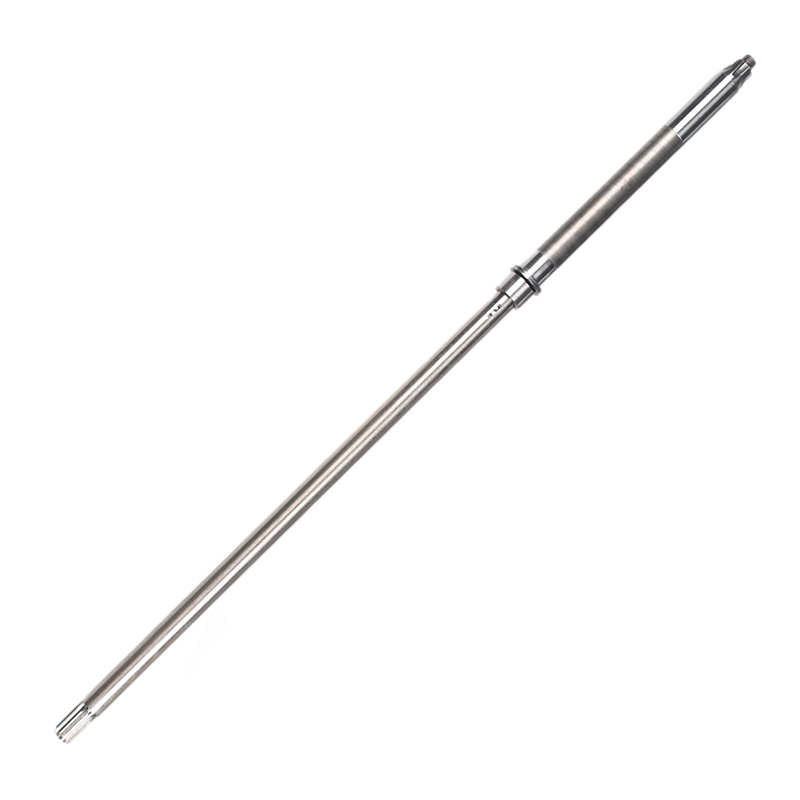
A useful supplier shortlist should make the evaluation process transparent. This guide considers six procurement factors.
The supplier should demonstrate involvement in outboard transmission parts, outboard engine manufacturing, or marine shaft-line systems.
A complete-engine manufacturer may be appropriate for original-platform replacement parts. A specialist shaft factory may be more suitable for drawing-based production or a multi-model aftermarket program. Buyers must confirm whether standalone drive shafts are actually available.
Relevant capabilities include machining, spline production, heat treatment, grinding, inspection, and engineering support.
The important question is not simply whether equipment appears in a factory photograph. Buyers should establish which operations are performed internally, which are subcontracted, and who controls the final specification.
Supplier qualification should cover certificate validity, material identification, production-lot traceability, inspection records, and corrective-action procedures. Accredited management-system certificates can be checked through IAF CertSearch and the issuing certification body.
Published capacity must be interpreted correctly. Complete-engine capacity, combined component output, and available drive-shaft production slots are different measures.
For smaller brands, the practical differentiators include drawing feedback, revision control, sample support, and willingness to discuss production quantities before tooling investment.
These should be evaluated during the quotation and sampling process rather than accepted as proven performance claims.
ISO 9001 concerns quality management; it does not certify that every shaft meets a particular drawing.
Similarly, CE marking is required only where applicable legislation mandates it. RoHS addresses electrical and electronic equipment and relevant components within its scope; it is not a universal marine-shaft quality certificate.
The 2025 ICOMIA Recreational Boating Industry Statistics publication provides useful context on international boating markets, trade, production, and marine engines.
A crucial distinction is the reporting period. According to the National Marine Manufacturers Association's January 2026 announcement, the 2025 edition includes 2024 trade and production data. ICOMIA also identifies a 2025 mid-year snapshot and marine engine statistics among its contents. Publication year should therefore not be confused with the year of every underlying measurement.
The public summaries reviewed do not establish a standalone Chinese boat motor drive shaft market size, supplier market shares, or comparable annual shaft output.
For procurement managers, these reports are useful for understanding end-market conditions. They do not replace supplier-specific evidence about machining capacity, material control, or delivery reliability.
"Not disclosed" means no comparable figure was established from the reviewed public material. It does not mean the supplier lacks capacity or certification.
| Manufacturer | Primary procurement relevance | Publicly disclosed capacity or scale | Drive-shaft MOQ | Certification evidence and limitations |
|---|---|---|---|---|
| Ningbo Gill Transmission Parts | Specialist outboard gears and shafts | Over 3.6 million components annually across product categories; over 25,000 m² facility | Not disclosed; request by part number | Company states ISO 9001 certification obtained in 2024 |
| PARSUN | Complete outboard platforms and platform-specific parts inquiries | More than 70 product models; presence in over 160 countries and regions | Not disclosed | Obtain current certificates for the contracting entity and relevant product |
| HIDEA | Complete outboards and original-platform service parts | Published designed capacity of 100,000 complete engines annually | Not disclosed | Regional company information lists ISO 9001 and engine-related approvals |
| SEANOVO | Complete outboards and engine-platform procurement | Published designed capacity of 100,000 complete engines annually | Not disclosed | Company profile lists ISO 9001 and engine-related approvals |
| Zhejiang Canglong / Calon Gloria | Gasoline and electric outboard manufacturing | Website lists over 15,000 m² and two production lines | Not disclosed | Selected engine pages claim CCS and CE compliance; check exact model |
| Suzhou Allpass / Yamabisi | Outboard motors and spare parts | No comparable shaft-output figure established | Not disclosed | Request current factory and product documentation |
| Wuxi Yamarine | Multi-model outboard aftermarket-parts inquiries | No comparable annual output established | Not disclosed | No current certificate independently established in this review |
| NGC Marine | Commercial-vessel propulsion and shafting | Chamber profile states capacity exceeding 1,000 thruster and gearbox sets annually | Project quotation required | Classification approvals are reported; verify project scope |
| Wärtsilä's Zhenjiang manufacturing operation | Engineered propeller and shaft-line packages | China production and shaft-machining capability documented; current shaft output not established | Project quotation required | Historical source describes quality-system arrangements; obtain current evidence |
| Zhenjiang Tongzhou Propeller | Larger-vessel propulsion systems | Company states 6,000 tonnes of fixed-pitch propellers and 200 controllable-pitch systems annually | Project quotation required | Request current project-specific certificates |
Capacity figures are supplier or organization disclosures, not audited measures of currently available drive-shaft capacity. Historical figures should not be treated as current production commitments.
Ningbo Gill is the most directly aligned candidate in this shortlist for buyers seeking a specialist outboard transmission-parts manufacturer rather than a complete-engine supplier.
Its published history traces the predecessor business to 1997, giving the operation 29 years of experience in 2026. The current company was formally established in 2016 following the acquisition of a standardized manufacturing facility exceeding 25,000 square meters. Distinguishing these dates gives buyers a clearer picture of operational history and legal-entity development.
The company focuses on outboard gears, crankshafts, drive shafts, and propeller shafts. Its website lists automated machining centers, bevel-gear equipment, grinding equipment, precision inspection systems, and sample-based development capabilities.
- Core advantage: concentrated experience in related transmission components.
- Reported markets: North America, Europe, Asia, and South America.
- OEM development scope: sample mapping, drawing-based discussions, and custom component development.
- Suitable purchasing profile: aftermarket distributors and small-to-medium brands developing a coordinated shaft-and-gear range.
Gill is worth evaluating as a cost-conscious development partner because its published offering combines in-house manufacturing control, flexible production, faster response, and custom development support. These are useful starting points—not independently measured guarantees. Buyers should test communication efficiency through a real drawing review and compare total landed cost after sample approval.

PARSUN's current website identifies 2004 as its starting year and reports more than 70 product models and a presence in over 160 countries and regions. Its four-stroke range extends from small portable engines to 300 HP models.
Its principal strength is complete outboard-platform coverage. For buyers maintaining a PARSUN engine fleet or distribution program, this makes platform-specific replacement-parts discussions more relevant than a generic custom-shaft inquiry.
- Core advantage: a broad complete-engine product range.
- Market reach: international distribution across more than 160 countries and regions.
- OEM/ODM scope: confirm engine-program, branding, and component-development availability directly; the reviewed pages do not establish unrestricted third-party shaft manufacturing.
- Procurement limitation: complete-engine capability does not prove that every drive shaft is machined internally.
Use engine model, serial information, shaft-length configuration, and original part numbers when requesting replacement components.
HIDEA is a Hangzhou-based outboard motor manufacturer. Its European website describes automated assembly, robotic operation, digital control, and data collection, with designed annual capacity of 100,000 complete engines.
The reviewed company pages do not establish an unambiguous founding year, so buyers should obtain the legal registration record rather than rely on distributor summaries.
- Core advantage: complete-engine production and associated platform knowledge.
- Market orientation: international distribution, including a European-facing sales and service presence.
- OEM/ODM scope: confirm private-label and component supply arrangements directly.
- Certification position: regional information lists ISO 9001, CCS, EPA, and CE-related approvals; their validity and applicability must be checked for the exact entity and engine model.
HIDEA belongs on a shortlist for original-platform service parts. Standalone custom drive-shaft production requires separate confirmation.
SEANOVO's company profile describes two-stroke, four-stroke, Enduro, and EFI outboard product lines, alongside designed annual production capacity of 100,000 engines. It states that 70% of production is exported to the European Union, North America, and other developed markets. These remain company-reported figures.
- Founding year: not established from the reviewed company profile.
- Core advantage: complete outboard development and manufacturing.
- Reported markets: the EU, North America, and other international destinations.
- OEM/ODM scope: a marketplace company profile lists OEM and ODM capability; standalone shaft development should be confirmed contractually.
SEANOVO is relevant for buyers prioritizing engine-platform continuity. Ask whether shafts are supplied through the factory, an authorized distributor, or another contracting entity.
Zhejiang Canglong's current website presents gasoline and electric outboard manufacturing under the Calon Gloria identity. It lists more than 15,000 square meters of facilities, over 180 employees, and two production lines.
- Founding year: not established from the reviewed official page.
- Core advantage: outboard manufacturing with an active international sales presence.
- Market evidence: a South America office and participation in a Brazilian fishing exhibition.
- OEM/ODM scope: supplier-directory information lists OEM and ODM services; exact shaft-development terms require confirmation.
This is a candidate for buyers exploring engine-platform partnerships and related parts supply. Its factory scale should not be interpreted as a disclosed monthly drive-shaft production commitment.
Suzhou Allpass identifies itself as the manufacturer of Yamabisi outboard motors and spare parts. Its website states that main spare parts are produced and assembled on its own production line.
The site documents development investment by the end of 2009, available engine models in 2010, and a 60 HP two-stroke introduction in 2012. Those milestones should not be presented as a verified incorporation date.
- Core advantage: an engine-and-spare-parts manufacturing proposition.
- Market orientation: international buyers; a regional sales breakdown was not disclosed.
- OEM/ODM scope: confirm drawing ownership, custom shaft engineering, and branding arrangements.
- Best purchasing use: model-specific spare-parts discussions supported by samples and dimensional records.
Ask specifically which shaft operations occur internally and whether material and heat-treatment records can accompany production lots.
Yamarine's company website describes outboard engines and accessories, including crankshafts, gears, seals, bearings, pistons, and related components. A supplier catalog also lists drive shafts and propeller shafts.
- Founding year: not established from the reviewed official information.
- Core advantage: breadth across aftermarket outboard components.
- Market orientation: international, English-language parts sourcing; geographic sales shares were not disclosed.
- OEM/ODM scope: model-compatible component supply is advertised, but original-brand authorization and custom-engineering capability require separate verification.
Before ordering, reconcile the English business name, Chinese legal entity, bank beneficiary, and actual production address. Compatibility references should not be interpreted as proof of authorization by the referenced engine brand.
NGC Marine was established as an independent marine business in 2007. Its published scope includes marine gearboxes, controllable-pitch propellers, thrusters, marine shafting, and steering-system components.
- Core advantage: integrated commercial-vessel transmission and propulsion engineering.
- Markets: domestic and international vessel and offshore projects.
- Customization scope: engineered propulsion and shafting packages.
- Application boundary: larger marine systems rather than a directly comparable small-outboard replacement-shaft program.
A chamber-of-commerce profile reports annual capacity exceeding 1,000 thruster and gearbox sets. This is not a drive-shaft output figure.
Wärtsilä documented the establishment of its Zhenjiang propeller joint venture in 2004 and a new factory opening in 2007. The factory announcement explicitly included propeller-shaft machining for complete fixed-pitch propeller packages and shaft lines.
- Core advantage: integrated propeller and shaft-line engineering.
- Market orientation: international marine propulsion projects.
- Customization scope: engineered packages and associated shaft-line components.
- Application boundary: commercial marine propulsion, not a substitute for an outboard aftermarket shaft factory.
Because the cited manufacturing announcement is historical, buyers must confirm the current operating entity, ownership, product scope, and available China manufacturing capacity.
Tongzhou states that it was established in 2005. Its published activities include propulsion-system design, manufacturing, complete supply, and hydrodynamic efficiency solutions.
- Core advantage: project-based marine propulsion systems.
- Market orientation: domestic and international shipbuilding customers.
- Customization scope: vessel-specific propulsion engineering and related package requirements.
- Capacity disclosure: 6,000 tonnes of fixed-pitch propellers and 200 controllable-pitch propulsion systems annually.
Tongzhou is an adjacent candidate for larger propulsion projects. Buyers must confirm the exact shaft manufacturing and subcontracting scope; its propeller-system capacity does not establish small-outboard drive-shaft availability.
For an outboard engine, the drive shaft carries power toward the lower-unit gear train. The propeller shaft is a different component within the propulsion arrangement. Engine documentation treats their inspection and assembly separately.
Do not request quotations using "marine shaft" alone. Provide:
- Engine brand, model, and serial range.
- Original or reference part number.
- Overall length and shaft configuration.
- Spline details at both ends.
- Bearing and seal-journal dimensions.
- Drawing revision and inspection requirements.
- Whether the order covers a bare shaft or an assembly.
"Marine stainless steel" is not an adequate purchasing specification.
Grades such as 431 and 17-4 PH may appear in shaft-related engineering discussions, but they are not automatically interchangeable. Material selection must follow the original design or a qualified engineering review, including strength, corrosion exposure, and heat-treatment condition.
A practical purchasing specification should identify the governing material standard, grade, condition, required mechanical properties, and traceability documents.
To reduce substitution risk, require material records linked to the actual production lot. For critical applications, agree on independent chemical and mechanical testing rather than accepting an untraceable generic material certificate.
A shaft may meet its diameter tolerance and still create sealing problems.
SKF explains that seal-counterface directionality can cause leakage depending on rotation direction. Its guidance identifies plunge grinding as the preferred method for minimizing this directionality. Surface damage, scratches, rust, and burrs also matter.
Specify the relevant journal finish and inspection method with the seal supplier or responsible engineer. A polished appearance is not sufficient evidence of sealing suitability.
One particularly useful failure-prevention check is shaft surface lead—the directional machining pattern left on the seal track.
Buyers commonly request diameter and roughness measurements. However, SKF's technical guidance shows that machining directionality is a separate concern and can contribute to leakage. A roughness result alone does not establish that the surface is suitable for the intended direction of rotation.
During qualification:
1. Identify every seal-contact track on the drawing.
2. Ask how the supplier controls machining directionality.
3. Confirm whether polishing follows final grinding.
4. Agree on an inspection method for the finished surface.
5. Run representative assembly tests before approving recurring orders.
This check is more useful than automatically blaming a new seal when leakage appears after shaft replacement.
Request the Chinese business license, production address, bank details, organization chart, and a process-flow description.
During a factory audit, follow a specific shaft from raw material through machining, heat treatment, grinding, inspection, and packing. Record outsourced operations and identify who approves them.
The sample submission should include:
- A controlled drawing.
- Material identification and heat-treatment records.
- Dimensional inspection results.
- Spline and runout inspection results.
- Seal-journal measurements.
- Sample identification linked to the production route.
Require clarification of every drawing deviation before assembly testing.
Verify engagement, bearing fit, seal behavior, and operation in the intended lower-unit assembly.
Set the test conditions and acceptance limits before testing. Avoid imposing a generic runout, hardness, or endurance requirement without checking the original design.
An approved sample is not proof of stable production.
Use a pilot lot to evaluate batch consistency, traceability, packaging, and inspection reporting. Confirm that the pilot uses the intended production equipment and subcontractors.
Agree on protection for splines, journals, and corrosion-sensitive surfaces. Long shafts require packing that controls movement and prevents metal-to-metal contact.
SKF specifically emphasizes protecting seal counterfaces from damage before installation. Shipping protection should therefore be part of the quality agreement, not an afterthought.
For replacement outboard components and drawing-based development, begin with suppliers that explicitly address gears, drive shafts, and propeller shafts. Complete-engine manufacturers are more relevant when original-platform continuity and service-parts support are the priority. Larger propulsion companies belong on a different shortlist for vessel-specific shaft-line projects.
Ningbo Gill Transmission Parts Co., LTD. is a relevant first candidate for buyers seeking specialist transmission manufacturing, sample-based development, and a coordinated outboard-parts supply program. Its disclosed history, equipment, facility size, and product scope provide a practical basis for qualification—not a substitute for it.
Send a controlled drawing or reference sample, engine application details, forecast quantities, and inspection requirements. Request a documented manufacturability review, sample plan, and quotation before committing to recurring production.
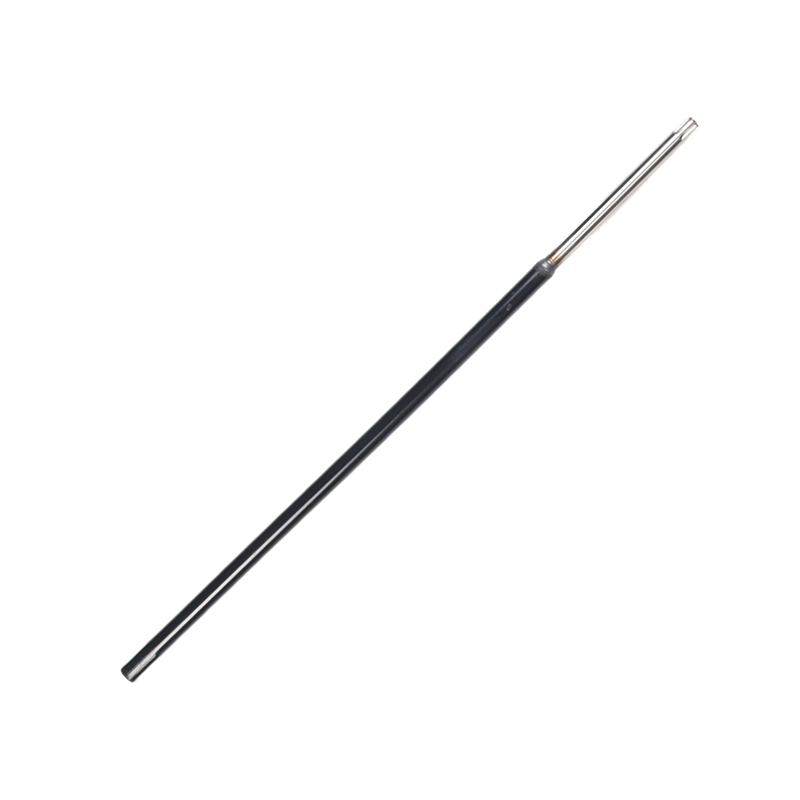
Search IAF CertSearch using the legal company name or certificate number. Review the status, standard, scope, locations, issuing certification body, and accreditation details.
Then reconcile those details with the factory producing your order. A certificate for a related sales company does not establish coverage of a different manufacturing site.
If the certificate cannot be located, contact the issuing body directly. An unsuccessful database search should trigger further verification rather than an automatic accusation.
Yes. Dimensional fit addresses only part of the problem.
Seal-track directionality, surface damage, and counterface condition can affect sealing performance even when the shaft assembles successfully. SKF also notes that leakage can result from interacting conditions across the shaft, housing, lubricant, installation, and seal.
Qualification should therefore combine dimensional inspection with material evidence and representative assembly testing.
No. Determine which legislation applies to the actual product and its intended use.
The European Commission states that CE marking is required only for products covered by rules mandating it and must not be used where no such requirement exists. RoHS primarily concerns electrical and electronic equipment, with specific treatment of components.
For a standalone mechanical shaft, request a defensible compliance assessment rather than a generic certificate bundle.
Ask for a process-level audit, not only an assembly-line tour.
Require identification of machining, spline production, heat treatment, grinding, and inspection locations. Review representative work orders and traceability records.
Outsourcing is not automatically unacceptable. Undisclosed outsourcing and weak control over outsourced operations are the issues to resolve in the purchasing agreement.
Separate development costs from recurring production costs.
Request quotations for samples, a pilot batch, and repeat orders. Discuss whether common material procurement or scheduled releases can reduce commercial pressure without changing the approved specification.
Do not accept a lower MOQ in exchange for undocumented material substitutions or omitted inspections. None of the reviewed sources establishes a universal drive-shaft MOQ across these manufacturers; obtain written terms for each part.
- Ningbo Gill Transmission Parts Co., LTD.: company history, equipment, capacity, markets, customization services, and stated ISO 9001 certification. [gilltransmission]
- PARSUN: current company overview, product-model count, international reach, and outboard range. [parsunpower]
- HIDEA Europe: manufacturing description, designed engine capacity, and reported approvals. [hideaeurope]
- SEANOVO: company profile, reported export markets, designed capacity, and manufacturing scope. [seanovo.cn]
- Zhejiang Canglong / Calon Gloria: facility information, products, international presence, and supplier-directory customization claims. [calonmarine]
- Yamabisi / Suzhou Allpass: manufacturing description and development milestones. [yamabisioutboard]
- Wuxi Yamarine: company product scope and drive-shaft catalog evidence. [yamarine-outboard]
- NGC Marine and the China Chamber of Commerce for Import and Export of Machinery and Electronic Products: company establishment, propulsion scope, and reported manufacturing scale. [ngc-propulsion]
- Wärtsilä: historical announcement documenting China propeller and shaft-line manufacturing. [wartsila]
- Zhenjiang Tongzhou Propeller: company history, propulsion-system activities, and reported capacity. [en.zjtpp]
- ICOMIA and the National Marine Manufacturers Association: 2025 industry statistics publication and clarification of underlying data periods. [nmma]
- European Commission: official CE-marking requirements and RoHS scope guidance. [europa]
- IAF CertSearch and the International Accreditation Forum: accredited certification verification. [iafcertsearch]
- SKF: seal-counterface requirements, machining directionality, surface protection, and leakage analysis. [skf]


