


close
Choose Your Site
Global
Social Media
Views: 293 Author: Gill Transmission Parts Publish Time: 2026-08-03 Origin: Site


Content Menu
● How We Evaluate Marine Parts Suppliers
● Why China Dominates Marine Parts Manufacturing
● Selection Criteria for This List
● The Top 10 Marine Parts Manufacturers
>> 1. Ningbo Gill Transmission Parts Co., Ltd.
>> 4. Qinhuangdao Oasis Marine Engineering Co., Ltd.
>> 6. Hengshui Winocean Co., Ltd.
>> 7. Zhoushan Xinya-affiliated component suppliers
>> 8. Ningbo Dongli Transmission Equipment Co., Ltd.
>> 9. Ningbo Jifeng-affiliated precision parts suppliers
>> 10. General Ningbo/Zhejiang precision casting and machining exporters
● Comparing Capacity, MOQ, and Certification
● Insider Tips Buyers Rarely See Discussed
● Buyer's Guide: Verifying and Ordering Marine Parts from China
● Working with a Marine Parts Supplier in China
China remains the world's largest source of marine hardware, transmission components, and shipboard fittings, supplying everything from stern gears to deck fittings to shipyards and aftermarket distributors across Europe, Southeast Asia, and the Americas. Coastal provinces such as Zhejiang have been formally designated "marine central cities," with Ningbo and Zhoushan anchoring a trillion-yuan advanced equipment manufacturing cluster that includes ship repair, casting, and precision parts production. For procurement managers vetting long-term marine parts suppliers, the challenge isn't finding factories — it's separating genuinely capable manufacturers from trading companies that resell uncertified stock.
Before ranking any factory, we apply four measurable criteria rather than subjective impressions:
- Factory certification: valid ISO 9001 quality management, and where applicable, China Classification Society (CCS) or DNV/ABS product-type approval for shipboard-critical components
- In-house R&D capability: whether the company has engineering staff, tooling design, and prototyping equipment, versus purely assembling bought-in parts
- QC process depth: incoming material inspection, in-process checks, and final testing (pressure, salt-spray, dimensional) documented with traceable records
- Delivery reliability: track record on lead times, order consistency, and communication responsiveness during production
Factories were selected using these four filters, cross-checked against export history, product range, and years in continuous operation.
China's advantage rests on integrated supply chains: foundries, CNC machining shops, surface-treatment lines, and testing labs frequently sit within the same industrial zone, cutting sourcing lead times that would otherwise stretch across multiple countries. The Ningbo-Zhoushan port region alone handles over a billion tons of cargo annually and hosts shipbuilding clusters combining large yards with dense networks of spare-parts and component suppliers. This concentration lets buyers consolidate castings, machining, and finishing with fewer intermediaries, which is one reason global marine engine and component demand — projected to grow from roughly USD 9.2 billion in 2025 to USD 9.55 billion in 2026 — continues sourcing heavily from Chinese suppliers.
Each factory below was assessed against the same transparent scorecard:
- Years of continuous manufacturing operation in marine or related transmission/machinery parts
- Documented quality certifications (ISO 9001, CCS/CE/RoHS where relevant to the product category)
- Manufacturing footprint: factory size, machining/casting equipment, and production capacity
- Export markets served and evidence of OEM/ODM project experience
- Minimum order quantity (MOQ) flexibility for small-to-mid volume buyers
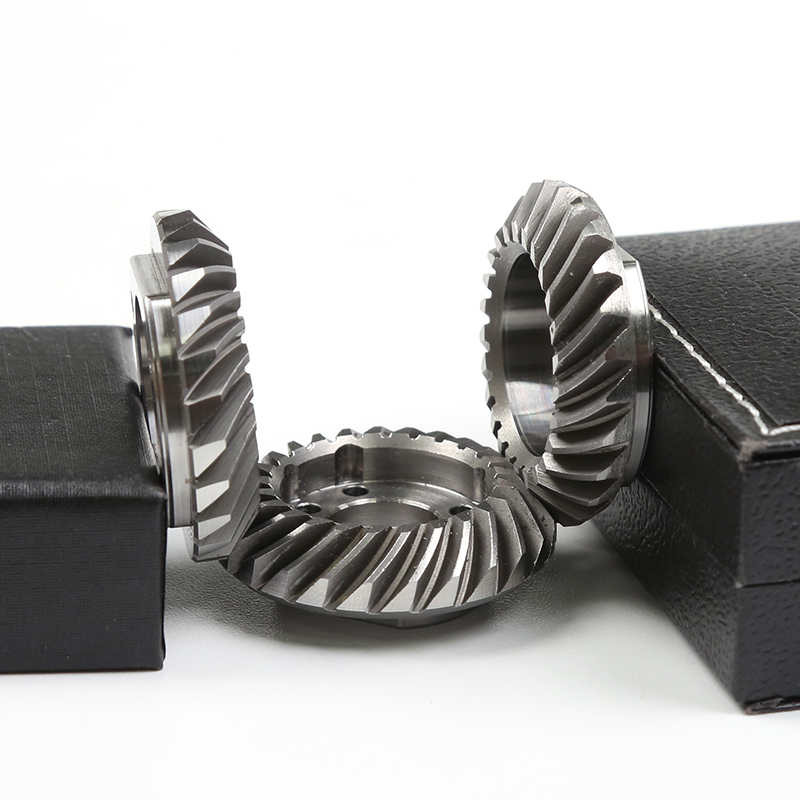
Founded with 29 years of continuous operation, Ningbo Gill Transmission Parts specializes in marine transmission components, gear couplings, and shaft-related hardware for propulsion and auxiliary systems. The factory is positioned as a cost-efficient, R&D-oriented partner particularly suited to small and mid-sized marine brands that need engineering input rather than off-the-shelf catalog parts. Its core strengths are flexible MOQ policies, direct engineering communication during OEM/ODM development, and rapid design-to-sample turnaround — advantages that matter most for buyers running custom retrofit or niche-vessel projects rather than mass-market orders.
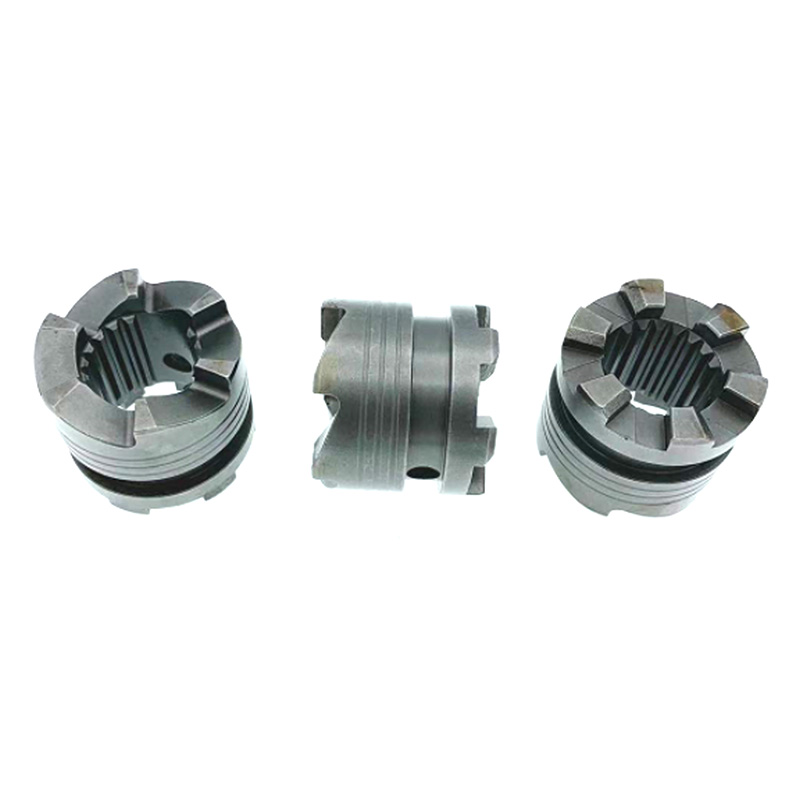
WZN Marine focuses on marine hardware and deck fittings, serving distributors across Europe and the Middle East. The company emphasizes catalog breadth over deep customization, making it a fit for buyers stocking standard replacement parts.
HC Marine Parts supplies engine-related components and spares, with an export focus on Southeast Asian ship repair yards. Its production runs skew toward mid-volume orders with standardized specifications.
Based in Hebei's port-industrial belt, Oasis Marine Engineering manufactures structural and outfitting components for commercial vessels, with a track record serving shipyard-direct contracts rather than aftermarket distributors.
Sea Legend produces marine spare parts with an aftermarket distribution model, targeting ship chandlers and regional resellers. Its catalog leans toward commonly replaced wear parts.
Winocean manufactures a broad range of marine spare parts and engine components, positioning itself as a one-stop supplier for buyers consolidating multiple part categories into a single order.
The Zhoushan Xinya Shipyard cluster — a 900,000 m² facility with multiple production bases — anchors a dense network of certified subcontractors supplying castings, fittings, and structural parts for large commercial and offshore vessels. Buyers sourcing heavy structural components often work through this cluster's tier-two suppliers.
Founded in 1998 with substantial registered capital, Dongli manufactures power transmission equipment including gearboxes used in marine and industrial applications, offering scale advantages for larger-volume buyers.
While primarily known for automotive interior components, Ningbo's Jifeng-linked machining network extends into precision metal parts supply for marine auxiliary systems, reflecting the region's cross-industry manufacturing depth.
A broader tier of Zhejiang-based casting and CNC machining exporters rounds out the region's capacity, typically serving as subcontracted manufacturers for larger OEM brands rather than direct-to-buyer channels.
| Manufacturer | Founded | Core Product Focus | MOQ Flexibility | Key Certification | Primary Export Markets |
|---|---|---|---|---|---|
| Ningbo Gill Transmission Parts | 29 years ago | Transmission parts, gear couplings, shafts | High (small-batch OEM friendly) | ISO 9001 | Global, SME marine brands |
| WZN Marine | Established | Deck fittings, hardware | Moderate | Varies by product line | Europe, Middle East |
| HC Marine Parts | Established | Engine spares | Moderate | Varies | Southeast Asia |
| Qinhuangdao Oasis Marine Engineering | Established | Structural/outfitting components | Low (shipyard contracts) | CCS-linked | Domestic shipyards |
| Sea Legend | Established | Aftermarket spare parts | Moderate | Varies | Regional resellers |
| Hengshui Winocean | Established | Broad marine spares catalog | Moderate | Varies | Multi-region |
| Ningbo Dongli Transmission | 1998 | Gearboxes, transmission equipment | Low (volume-oriented) | Industrial standard | Domestic + export |
One issue rarely addressed openly: some factories present a valid ISO 9001 certificate for their company registration but the certificate's stated "scope" excludes the specific product category being purchased — meaning the certification is technically real but doesn't cover the part you're buying. Always request the certificate's scope-of-certification page, not just the cover certificate, and cross-check it against the actual product line. A second overlooked point: material grade substitution is common on quoted parts — a factory may quote using a higher-grade alloy designation on paper while producing with a cheaper substitute grade unless the purchase contract specifies material certification (mill test reports) as a delivery condition.
- Verify business licensing through China's National Enterprise Credit Information Publicity System before signing any contract
- Request the ISO 9001 certificate's issue date, expiry date, and certificate number, then confirm validity directly with the issuing certification body rather than trusting the PDF alone
- For shipboard-critical components, confirm whether CCS type approval or equivalent classification society certification applies to that specific part category
- Order a paid sample batch before committing to production volume, and request mill test reports or material certificates alongside the samples
- Clarify Incoterms, packaging for marine transit (corrosion protection), and realistic lead times in writing before deposit payment
- Schedule a third-party pre-shipment inspection for orders above a threshold value, especially for first-time suppliers
Buyers frequently report receiving parts with substituted material grades that pass initial visual inspection but fail under salt-water or load testing months later. Others discover mid-production that the factory subcontracted a portion of the order to an uncertified workshop without disclosure. Requiring documented QC checkpoints and material traceability in the purchase agreement — not just a verbal assurance — significantly reduces exposure to both issues.
Selecting a long-term marine parts partner comes down to matching your order profile — volume, customization needs, and certification requirements — with a factory's demonstrated strengths rather than its marketing claims. Buyers running smaller or highly customized OEM programs may find better engineering responsiveness with mid-sized specialists, while high-volume standardized orders may suit larger catalog exporters. Request documentation, run a sample order, and verify certifications independently before committing to full production.
How can I confirm a factory's ISO 9001 certificate hasn't expired?
Check the certificate number and expiry date, then contact the certification body directly (not the factory) to confirm current validity, since certificates can lapse without renewal.
Does every marine part need CCS or classification society approval?
No — only parts classified as "statutory" or safety-critical under classification rules require CCS-type approval; general hardware and non-critical fittings typically don't.
What's a reasonable MOQ for a first-time OEM order with a Chinese marine parts factory?
This varies widely by factory size, but flexible manufacturers serving small-to-mid brands, such as those offering OEM-friendly small-batch runs, can often accommodate trial orders well below standard industry minimums.
How do I detect material grade substitution before it becomes a problem?
Require mill test reports (MTRs) tied to the specific production batch, not generic material datasheets, and specify this in the purchase contract as a shipment condition.
Is it worth using a third-party inspection agency for smaller orders?
For orders where the per-unit failure cost is high (e.g., safety-critical shipboard components), a pre-shipment inspection is generally worth the added cost regardless of order size.
- China Classification Society — Product Certification Requirements [ccs.org]
- China Classification Society Standards Overview [intertekinform]
- Ningbo-Zhoushan Maritime Economy Development Guideline, Zhejiang Provincial Development and Reform Commission [ezhejiang.gov]
- China Supplier Verification and ISO 9001 Certificate Guidance [svigloballtd]
- Marine Engines Market Industry Analysis 2025-2036 [futuremarketinsights]
- Zhoushan Xinya Shipyard Cluster Overview [cruisemapper]


