


close
Choose Your Site
Global
Social Media
Views: 298 Author: Gill Transmission Parts Publish Time: 2026-10-05 Origin: Site


Content Menu
● Why Source Marine Shafts from China?
>> A Large Shipbuilding Market Supports a Broad Supplier Ecosystem
>> Define "Marine Shaft" Before Comparing Suppliers
● How the Suppliers Were Selected
>> 1. Relevant Product Experience
>> 2. Manufacturing Responsibility
>> 3. Engineering and Customization Capability
>> 4. Quality-Control Documentation
>> 5. Capacity and Delivery Stability
>> 6. Certification Scope and Commercial Fit
● Comparison Table: Capacity, and Certification Evidence
● The Top 10 Marine Shaft Manufacturing and Supply Candidates
>> 1. Ningbo Gill Transmission Parts Co., LTD.
>> 2. Zhangjiagang Guangda Special Material Co., Ltd.
>> 3. Runchi
>> 4. Dalian Changtai Marine Propulsion Co., Ltd.
>> 5. Dalian Bosaidong Marine Technology Co., Ltd.
>> 6. Zhenjiang Supersoar Marine Propulsion Co., Ltd.
>> 7. Chongqing Hi-Sea Marine Equipment Import & Export Co., Ltd.
>> 8. Chongqing King-Sea Marine Equipment Co., Ltd.
>> 9. Shanghai Zhiyou Marine & Offshore Equipment Co., Ltd.
● Technical Buyer's Guide: What to Specify Before Requesting Prices
>> Specify Material Grade and Condition Together
>> Separate Management Certification from Product Approval
>> Treat CE and RoHS as Scope Questions
● Common Procurement Risks and How to Control Them
>> Material Substitution or Untraceable Stock
>> Unclear Manufacturing Responsibility
>> Capacity Claims That Do Not Match the Order
>> Certificates That Do Not Cover the Product
● An Overlooked Qualification Trap: Sample Route versus Production Route
● Factory Verification, Sampling, and Logistics
>> Verify the Contracting and Producing Entities
>> Use a Staged Sample-Approval Process
>> Define Transport Protection in the Purchase Order
● Conclusion: Match the Supplier to the Shaft, Then Verify the Process
● FAQs
>> 1. How Can I Check Whether a Supplier's ISO 9001 Certificate Has Expired?
>> 2. Does a Supplier's Classification-Society Approval Cover Every Marine Shaft?
>> 3. Can a Higher-Strength Steel Automatically Justify a Smaller Shaft Diameter?
>> 4. What Does a Supplier Mean by "EN 10204 3.1"?
>> 5. How Can a Smaller Buyer Negotiate a Manageable MOQ Without Losing Quality?
China offers a substantial supplier base for marine shafts, ranging from precision outboard transmission components to large forged propulsion shafts for commercial vessels. For international procurement managers, however, finding a suitable long-term partner requires more than comparing prices or collecting factory brochures.
The most useful starting point is traceability: can the supplier connect your approved drawing, material specification, manufacturing route, inspection results, and delivered shaft to the same identifiable production batch?
This guide examines ten China-based manufacturing and supply candidates, starting with Ningbo Gill Transmission Parts Co., LTD. It distinguishes outboard-component specialists, forging manufacturers, propulsion-system producers, and equipment suppliers rather than treating them as interchangeable businesses.
Selection is based on publicly available evidence of product relevance, manufacturing capabilities, customization support, and quality documentation. This is a procurement shortlist, not an independently audited ranking by sales, market share, or product performance. Supplier-reported capacities and certifications should be verified before contract award.
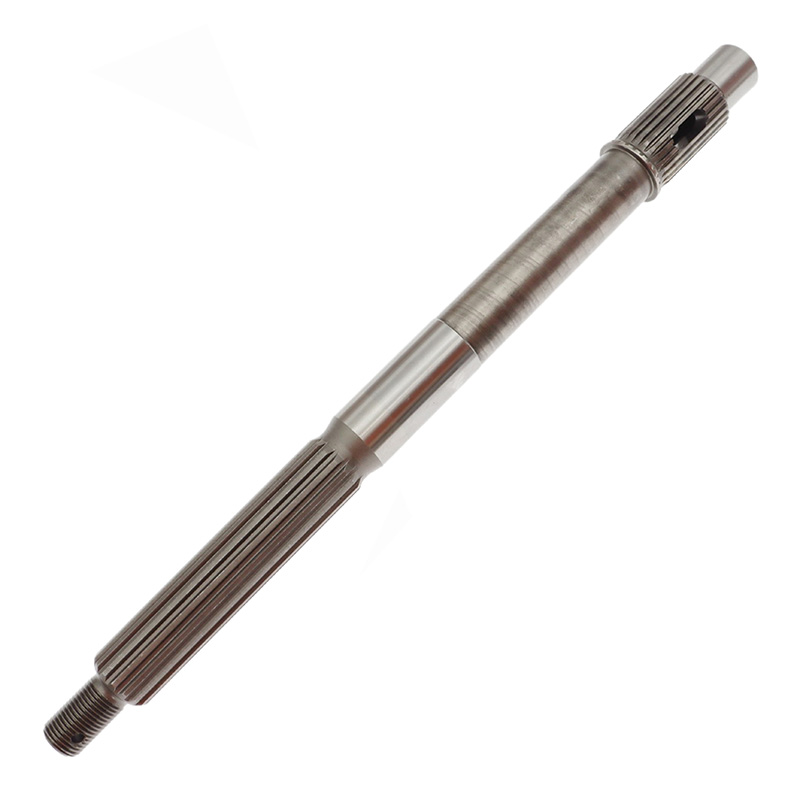
China's scale in shipbuilding provides important context for sourcing marine components. According to the Ministry of Industry and Information Technology figures published through China's government portal, the country completed 53.69 million deadweight tonnes of ships in 2025, an increase of 11.4% year over year and 56.1% of global output. Its year-end orderbook reached 274.42 million deadweight tonnes. These figures were released in February 2026.
These are shipbuilding statistics, not marine shaft production volumes or shaft export values. Nevertheless, they demonstrate the scale of the downstream industry that marine component suppliers serve.
The companies reviewed here also illustrate several geographically distinct sourcing bases:
- Ningbo, Zhejiang, for specialized outboard transmission components.
- Zhangjiagang and Zhenjiang, Jiangsu, for special materials, forgings, and propulsion-product supply.
- Dalian, Liaoning, for propellers and associated shafting systems.
- Zibo, Shandong, for custom open-die forgings.
- Shanghai and Chongqing for marine equipment supply and project coordination.
For buyers, this diversity creates a practical advantage: sourcing can be matched to the application rather than forced into a single supplier category.
The term marine shaft covers products with substantially different manufacturing requirements.
| Shaft category | Typical purchasing context | Primary qualification focus |
|---|---|---|
| Outboard propeller shaft | Replacement components, aftermarket brands, outboard assemblies | Drawing compatibility, machining consistency, batch inspection |
| Outboard drive shaft | Transmission-component sourcing | Interface dimensions, material condition, production repeatability |
| Vessel propeller or tail shaft | Shipbuilding, repair, propulsion projects | Forging route, material documentation, class requirements |
| Intermediate or thrust shaft | Engine-to-propeller shaftline projects | Approved design, mechanical properties, torsional assessment |
| Forged shaft blank | Downstream machining or equipment manufacture | Forging quality, heat treatment, machining allowance |
Gill's published specialization is outboard gears and shafts, while Runchi publishes a broader marine forging range covering propeller, intermediate, thrust, and coupling shafts. These are different sourcing propositions, not direct substitutes.
A buyer looking for a compact outboard propeller shaft should therefore use a different shortlist from a shipyard purchasing a large class-reviewed propulsion shaft.
A useful supplier evaluation should cover six dimensions.
Check whether the company actually supplies the shaft category required. An automotive propeller shaft listing does not, by itself, establish competence in marine propulsion shafting.
Request examples with comparable geometry, material requirements, manufacturing processes, and inspection scope.
Identify who performs:
- Material purchasing or melting.
- Forging.
- Heat treatment.
- Rough and finish machining.
- Surface treatment.
- Final inspection.
An equipment supplier can be a valuable procurement partner. However, its supply-chain management role should not be confused with ownership of all manufacturing operations.
For OEM work, look for drawing review, tolerance discussion, sample development, and documented change control.
For ODM work, clarify who owns the design, who validates performance, and who accepts responsibility for application suitability. Drawing-based manufacturing should not automatically be described as full design capability.
A purchasing specification should define the evidence required with delivery:
- Material certificate and heat identification.
- Heat-treatment records where applicable.
- Dimensional inspection report.
- Hardness and mechanical-property results where specified.
- Nondestructive examination reports where required.
- Product-specific classification documentation, if applicable.
Runchi explicitly lists chemical analysis, mechanical testing, metallographic analysis, ultrasonic examination, and magnetic-particle testing among its inspection capabilities. These are useful examples of the evidence a buyer can request.
Compare the capacity of the relevant production route, not simply factory area or total component output.
A manufacturer's annual gear-and-shaft output cannot be interpreted as annual marine propeller shaft capacity. Likewise, a forging supplier's tonnage does not reveal how many finished shafts it can deliver each month.
Confirm that management-system certificates cover the contracting entity, manufacturing location, and relevant activities.
Then evaluate practical fit: minimum order quantity, sample costs, communication ownership, engineering response, packaging, and repeat-order lead times.
| Company | Main sourcing focus | Published capacity or capability | Certification or documentation position |
|---|---|---|---|
| Ningbo Gill Transmission Parts Co., LTD. | Outboard gears, drive shafts, propeller shafts | Over 3.6 million units annually across multiple component categories; over 25,000 m² facility | Reports ISO 9001 certification obtained in 2024; verify current certificate |
| Zhangjiagang Guangda Special Material Co., Ltd. | Special steels and heavy forged components | Reports 500,000 tonnes annually across various forgings, not marine shafts alone | Lists ISO and several class-related qualifications; verify specific scope |
| Runchi | Custom marine shaft forgings | Publishes open-die forging and multiple inspection capabilities; product weight limits require clarification | Lists ISO 9001 and other qualifications; obtain current documents |
| Dalian Changtai Marine Propulsion Co., Ltd. | Propellers and associated shaft/rudder products | R&D, design, and production stated; annual shaft output not disclosed | Shaft-specific certification not established from reviewed source |
| Dalian Bosaidong Marine Technology Co., Ltd. | Propellers and integrated propeller-shaft supply | Publishes propeller design, manufacture, repair, and integrated supply capability | Verify project-specific documentation |
| Zhenjiang Supersoar Marine Propulsion Co., Ltd. | Shafting systems and propulsion-product sourcing | Publishes shafts up to 16,000 mm long and 500 mm diameter | References EN 10204 3.1 material documentation; verify actual delivery requirements |
| Chongqing Hi-Sea Marine Equipment Import & Export Co., Ltd. | Drawing-based shafting and broader marine equipment | Publishes propeller and intermediate shaft offerings | Lists class-certificate options; obtain product-specific confirmation |
| Chongqing King-Sea Marine Equipment Co., Ltd. | Marine equipment and propeller shaft supply | Marine propeller shaft product page available; annual output not established | Verify manufacturing site and certificate scope |
| Shanghai Zhiyou Marine & Offshore Equipment Co., Ltd. | Custom shaft systems and marine equipment | Publishes marine shaft systems and OEM/ODM offerings | Verify certificate scope and manufacturing responsibility |
| Weitong Marine | Marine equipment export and shaft sourcing | Marine propeller shaft offering published; annual shaft output not established | Verify shaft-specific inspection and approval package |
Do not use these figures as a like-for-like capacity ranking. Annual units, annual forging tonnage, maximum machining dimensions, and integrated supply capability measure different things.
Ningbo Gill is a relevant first candidate for buyers sourcing outboard propeller shafts, drive shafts, gears, and related transmission components.
Its manufacturing history dates to 1997, giving the business a 29-year operating heritage in 2026. The company's own timeline distinguishes that predecessor history from the formal establishment of Ningbo Gill Transmission Parts Co., Ltd. in 2016, when a standardized factory exceeding 25,000 square meters was acquired.
The company reports more than 100 employees and annual production exceeding 3.6 million units across gears, drive shafts, transmission shafts, and other components. It also lists automatic bevel-gear equipment, machining centers, grinding equipment, and precision inspection systems. These figures describe the broader operation, not propeller shafts alone.
Its published markets include North America, Europe, Asia, and South America. Customization capabilities include sample mapping and product development, making Gill worth evaluating for drawing-based OEM work and replacement-component development.
For smaller marine-parts brands, Gill's focused product range and published emphasis on flexible production offer a potentially useful alternative to large heavy-forging suppliers. However, cost effectiveness, communication speed, and low-volume flexibility should be demonstrated through quotations and trial projects—not assumed from marketing language.
Recommended purchasing checks:
- Compare sample and repeat-order pricing at several quantities.
- Request a named engineering and commercial contact.
- Confirm drawing-review response time.
- Establish who owns sample-derived drawings and tooling.
- Verify the current ISO 9001 certificate and manufacturing scope.
- Agree on measurable inspection criteria before sample production.
Gill is most appropriately positioned as an outboard-component OEM candidate, rather than as an unverified supplier of large commercial-vessel shaftlines.
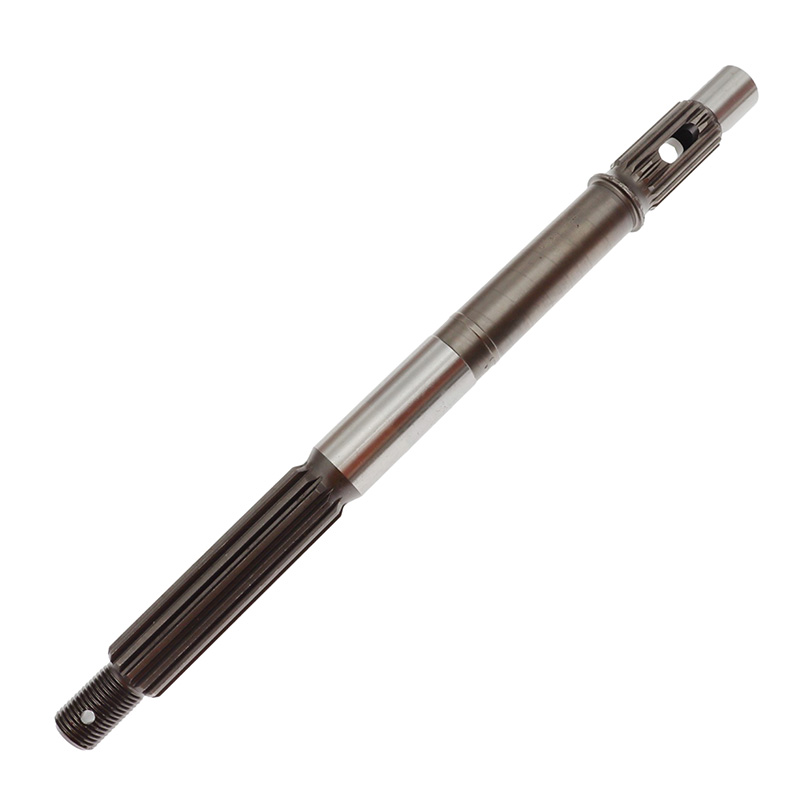
Established in 2003, Guangda publishes an integrated manufacturing route spanning melting, casting, forging, heat treatment, and precision machining. Its product listings include marine propeller shafts.
The company reports worldwide markets and an annual capacity of 500,000 tonnes for various open-die forgings and rolled rings. That figure covers multiple industries and product families; it should not be presented as dedicated marine shaft output.
Its core sourcing advantage is the potential to coordinate material production and downstream processing within an integrated industrial organization.
For OEM procurement, Guangda is a relevant candidate for special-material shafts, forged components, and projects requiring substantial upstream manufacturing control. Buyers should still establish whether a quotation includes a shaft blank, rough-machined forging, or fully finished shaft.
The company lists several classification and management-system qualifications. Procurement teams should request current certificates identifying the approved site, product scope, and any manufacturing limitations.
Runchi publishes custom marine shaft forging capabilities for propeller shafts, tail shafts, intermediate shafts, thrust shafts, coupling shafts, and rudder stocks. It offers delivery conditions ranging from as-forged material to heat-treated, rough-machined, and finish-machined components.
Its establishment year and principal sales territories were not established from the reviewed official pages. The manufacturing address is in Zibo, Shandong.
The company's main attraction for OEM buyers is drawing-based open-die forging combined with published testing capabilities. Its general website FAQ states a one-piece MOQ, which makes it worth investigating for replacement and project-based orders; confirm that this applies to the proposed marine shaft.
One qualification issue deserves attention: the website publishes different maximum-weight figures in different sections. Buyers should therefore obtain written confirmation of the approved forging and machining envelope for their exact component, rather than relying on a headline limit.
Its marine offering is principally build-to-spec manufacturing. Full shaftline design responsibility should be separately negotiated.
Dalian Changtai states that it was established in 2021 and operates in Zhuanghe, Dalian. Its published product scope includes fixed-pitch propellers, controllable-pitch propeller components, energy-saving devices, and supporting shaft and rudder products.
Its relevance lies in propulsion-package compatibility. Buyers sourcing a shaft together with propeller-related components may benefit from evaluating a company with a broader propulsion-product focus.
The reviewed source does not establish annual shaft output, principal export destinations, or shaft-specific certificate coverage.
For OEM or development projects, ask Changtai to define:
- Which shaft components it manufactures itself.
- Whether it supplies complete shafting or supporting parts.
- Who controls interface drawings.
- Which inspection and classification deliverables are included.
Published R&D and design capability should not be treated as proof that every proposed shaftline configuration has already been validated.
Dalian Bosaidong publishes the ability to design, manufacture, and repair fixed-pitch propellers, controllable-pitch propellers, stainless-steel propellers, and related energy-saving devices. It also states that it can supply integrated propeller-and-shaft packages.
Its founding year, main export markets, and annual shaft capacity were not established from the reviewed sources.
This company is relevant where the procurement objective involves coordinated propulsion components rather than isolated shaft production. Potential applications include replacement projects and purchases requiring propeller-shaft interface coordination.
For OEM/ODM discussions, distinguish propeller design capability from shaft design responsibility. Request a clearly defined supply boundary, identifying who manufactures the shaft, who approves its drawing, and who supplies the associated inspection documents.
Supersoar describes itself as a propulsion-products supplier and a subsidiary of Zhenjiang Supersoar International Trading Co., Ltd. Buyers should therefore assess its supply-chain role explicitly rather than assume complete in-house manufacturing.
Its shafting page publishes a maximum propeller shaft length of 16,000 mm and a maximum diameter of 500 mm. It also references EN 10204 3.1 documentation and a range of forging, heat-treatment, and machining processes.
Its establishment year and principal sales territories were not established in the reviewed sources.
The company may suit buyers seeking coordinated sourcing of shafting and associated propulsion products. Drawing-based customization should be discussed alongside the identity of the actual forging and machining facilities.
Ask for previous inspection packages covering comparable dimensions. Maximum stated dimensions do not establish achievable tolerance, delivery time, or class acceptance for every configuration.
Hi-Sea publishes both marine propeller shafts and intermediate shafts. Its intermediate-shaft listing identifies stainless steel, forged steel, and alloy steel, drawing-based manufacturing, and 100% ultrasonic flaw detection.
The reviewed pages identify an import-and-export company. Its founding year, dedicated shaft capacity, and principal market distribution were not established.
Its core value is potentially broader marine equipment coordination combined with customized shaft sourcing.
OEM support is described in terms of customer drawings and requirements. Buyers should determine whether engineering changes are reviewed by Hi-Sea, by the producing factory, or jointly.
Hi-Sea lists several classification societies as certificate options. That wording should be treated as a request for project-level confirmation, not proof that all listed approvals apply to every shaft.
King-Sea publishes a marine propeller shaft product page and a broad marine equipment portfolio covering deck machinery, mooring, anchoring, and outfitting equipment.
Its establishment year, shaft production capacity, and principal export markets were not established from the reviewed sources.
The company is worth evaluating when a buyer wants a shaft incorporated into a wider equipment purchasing package. That commercial role can reduce coordination points, provided manufacturing responsibility remains transparent.
Before discussing OEM or ODM terms, request the shaft-producing factory's identity, process route, sample documentation, and technical review procedure.
For a customized shaft, the key issue is not how many equipment categories the company supplies, but how effectively it controls the specific shaft order.
Zhiyou publishes marine shaft systems and drawing-based OEM/ODM offerings, including forged middle shafts and tail shafts. Its own description emphasizes a developed marine-product supply chain and customized integrated services.
Its published background contains an establishment-date inconsistency: one profile lists 2006, while the narrative refers to earlier factory operations and a company-development milestone in 2001. Buyers should confirm the legal entity's registration date rather than select a convenient year for promotional use.
The company lists worldwide markets, including European, Asian, South American, Middle Eastern, African, and Oceanian regions. These are supplier-declared territories rather than independently verified market shares.
Zhiyou is a relevant candidate for coordinated custom marine equipment sourcing. Its OEM/ODM scope should be broken down into drawing manufacture, engineering modification, and original design responsibility.
Weitong publishes a marine propeller shaft offering and positions itself as a global supplier of marine and offshore equipment. Its marketplace profile identifies Zhuhai Weitong Import & Export Co., Ltd. as the operating business.
A separate directory lists "China Weitong Marine Equipment Co., Ltd." as established in 2012. Because the legal naming differs, buyers should confirm which entity will sign the contract before adopting that date as the current company's establishment year.
Its value proposition is broad equipment sourcing and export coordination. Dedicated shaft production capacity and principal market shares were not established.
For OEM orders, request confirmation of the actual manufacturer, customization scope, inspection responsibility, and certificate chain. A shaft listing establishes product availability; it does not establish ownership of the shaft-manufacturing facility.
Avoid requests that state only "stainless steel" or "alloy steel."
The RFQ should identify:
1. Material standard and exact grade.
2. Required delivery condition.
3. Heat-treatment requirements.
4. Mechanical-property acceptance criteria.
5. Inspection and certificate requirements.
6. Applicable class or customer specifications.
Specialist marine shaft manufacturers publish materials such as C45, 42CrMo4, and duplex stainless steel 1.4462, illustrating the range of possible selections. These examples are not interchangeable recommendations for every shaft application.
For classed propulsion systems, shaft materials, construction, strength, and torsional vibration requirements must be considered together. ClassNK's explanation of IACS UR M68 makes this relationship explicit.
Do not approve a material substitution solely because the proposed alternative has a similar trade name or higher advertised tensile strength.
A management-system certificate is not a substitute for a shaft's manufacturing and inspection records.
Likewise, a general statement that a supplier "works with" classification societies does not establish that your particular shaft will receive the required documentation.
Before ordering, specify whether the project requires:
- Material documentation only.
- Manufacturer qualification evidence.
- Approved drawings.
- Witnessed tests.
- Product-specific certification.
- A combination of these deliverables.
CE marking is required only for products covered by applicable legislation. The European Commission explicitly states that not all products require CE marking and that it must not be affixed to products outside the relevant scope.
RoHS concerns electrical and electronic equipment within its defined scope. A standalone mechanical shaft should not automatically be assigned the compliance obligations of an electrical assembly.
These documents should therefore be requested only where applicable to the product or final assembly. Neither is a replacement for material traceability, dimensional inspection, or relevant classification requirements.
Risk: the delivered component cannot be linked convincingly to the approved material specification.
Recommended controls:
- Require heat-number identification.
- Connect that identification to the material certificate.
- Define whether independent testing is required.
- Prevent substitutions without written approval.
- Include traceability checks in pre-shipment inspection.
Risk: the buyer assumes all processing occurs at one factory, while key operations are outsourced.
Recommended controls:
- Obtain a process-responsibility map.
- Identify subcontracted heat treatment and inspection.
- Agree which subcontractor changes require approval.
- Audit the facility performing the critical operations.
Risk: total factory output is mistaken for available shaft capacity.
Recommended controls:
- Ask for the relevant machine route.
- Separate prototype lead time from repeat production.
- Confirm current loading.
- Establish a delivery schedule with defined approval dependencies.
Risk: a valid certificate is attached to the wrong entity, site, scope, or product category.
Recommended controls:
- Verify the exact legal name.
- Check manufacturing addresses.
- Review scope and validity.
- Confirm product-specific requirements with the issuer or classification society.
A practical qualification issue deserves more attention: an approved sample is not sufficient if routine production uses a different manufacturing route.
Treat the following as questions for the supplier, not assumptions:
- Was the sample made from the same material source planned for production?
- Will the same heat-treatment process be used?
- Were critical features measured using the same inspection method?
- Were any sample operations performed manually that will change in volume production?
- Will the same subcontractors remain involved?
Before approving the sample, attach a manufacturing-route record to the approval package. Identify the material, major processing stages, subcontracted operations, and final inspection method.
Then require written approval for changes affecting those elements.
This is particularly useful for OEM shaft projects because it moves sample approval beyond appearance and dimensional fit toward repeatable manufacturing.
Collect the supplier's legal registration details, manufacturing address, bank-account beneficiary, and certificate records.
Where a trading or equipment-supply company manages the order, identify the producing factory and document each party's responsibilities.
A live factory review should follow the proposed component through its actual process route, rather than rely solely on a general workshop tour.
A practical sequence is:
1. Submit the drawing and application requirements.
2. Review manufacturability and unresolved tolerances.
3. Agree on the inspection plan.
4. Produce samples.
5. Review dimensions and material records.
6. Conduct application testing appropriate to the project.
7. Approve a pilot batch.
8. Release repeat production under controlled revisions.
Record acceptance criteria before samples are produced. This reduces disputes over what "approved quality" means.
Include requirements for corrosion protection, protection of machined interfaces, lifting arrangements, packaging inspection, and receipt checks.
For solid-wood packaging entering or transiting the United States, USDA guidance requires compliant treatment and an appropriate ISPM 15 mark. The mark identifies the country, approved facility, and treatment type.
Ask for packaging photographs before dispatch and make the packaging specification part of the order, not an informal shipping instruction.
The right marine shaft partner depends on the application.
Ningbo Gill is a relevant starting point for outboard propeller shafts, drive shafts, and related transmission components. Guangda and Runchi merit consideration for forged-material and custom shaft projects. Dalian propulsion companies offer a different proposition centered on coordinated propeller and shaft supply. Equipment suppliers can also be useful partners when manufacturing responsibility and documentation remain transparent.
For buyers evaluating Gill, the next step is a structured RFQ: submit the drawing or sample, material requirements, annual demand, trial quantity, inspection expectations, and delivery destination. Request a technical review, sample-development proposal, and quotation that separates one-time engineering costs from repeat production.
That approach provides a credible basis for evaluating flexibility, communication efficiency, OEM support, and long-term purchasing value.
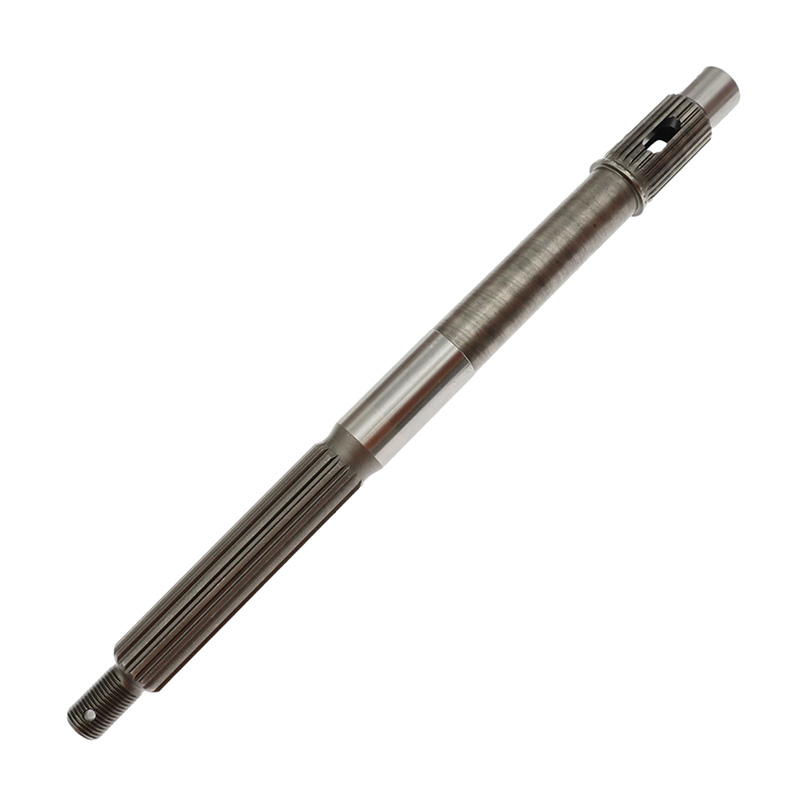
Search by the exact company name or certificate number in IAF CertSearch, then review status, scope, issuing body, and entity details. Its verification guidance distinguishes active, suspended, withdrawn, and expired certificates.
If the certificate cannot be found, seek confirmation directly from the issuing certification body. Do not treat the date printed on a PDF as the only verification step.
Do not assume so.
Ask for the actual document and confirm the manufacturer, location, product category, material scope, and relevant limitations. Then confirm the approval and inspection requirements for the specific purchase.
This matters because shafting requirements connect materials, construction, strength, and torsional behavior rather than relying on a generic supplier badge.
No. Under the cited IACS UR M68 provisions, material-strength limits apply when calculating allowable shaft dimensions and vibration stresses. Higher specified or actual tensile strength does not automatically permit reduced dimensions under those formulas.
Any proposed diameter reduction should be reviewed through the applicable design and approval process—not accepted as a quotation-stage cost-saving suggestion.
First, ask exactly which delivered item and material the document will cover.
Supersoar's product page references EN 10204 3.1 in connection with shaft materials. Procurement teams should convert that statement into a clear contractual deliverable identifying the material, heat number, required results, and connection to the delivered shaft.
Do not accept a generic certificate from an unrelated batch simply because its heading matches the requested standard.
Separate engineering costs from recurring unit costs.
Request quotations for a sample order, pilot batch, and repeat-order quantities. Ask which costs relate to programming, fixtures, material purchasing, and documentation.
Runchi publishes a general one-piece MOQ, while Gill publishes sample-based development and customization capabilities. Neither statement guarantees the same commercial terms for every shaft design. Obtain a product-specific offer and preserve the agreed inspection requirements at every quantity.
- [China government portal: 2025 shipbuilding statistics released in 2026] — national shipbuilding output and orderbook data, not a dedicated shaft export dataset. [english.www.gov]
- [ClassNK: shafting-system requirements and IACS UR M68 context] — background on shafting materials, construction, strength, and torsional requirements. [classnk]
- [European Commission: CE marking] — guidance on when CE marking applies. [single-market-economy.ec.europa]
- [European Commission: RoHS guidance] — scope guidance for electrical and electronic equipment. [environment.ec.europa]
- [IAF CertSearch: certificate verification] — checking certificate status, scope, and issuing-body details. [iafcertsearch]
- [USDA APHIS: wood packaging import requirements] — ISPM 15 requirements for applicable packaging. [aphis.usda]


