


close
Choose Your Site
Global
Social Media
Views: 231 Author: Gill Transmission Parts Publish Time: 2026-11-06 Origin: Site


Content Menu
● Why Source Marine Engine Crankshafts from China?
>> A substantial shipbuilding and equipment ecosystem
>> Manufacturing locations reflect different specializations
● How These Manufacturers Were Selected
● China Marine Crankshaft Manufacturers: Comparison Table
● The Top 10 Ship Engine Crankshaft Manufacturers in China
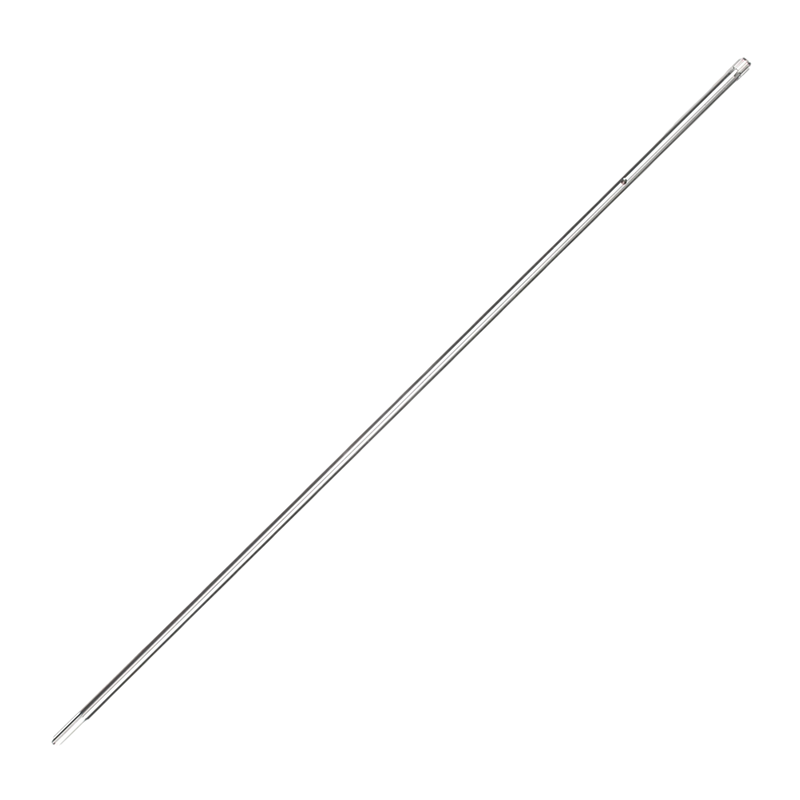
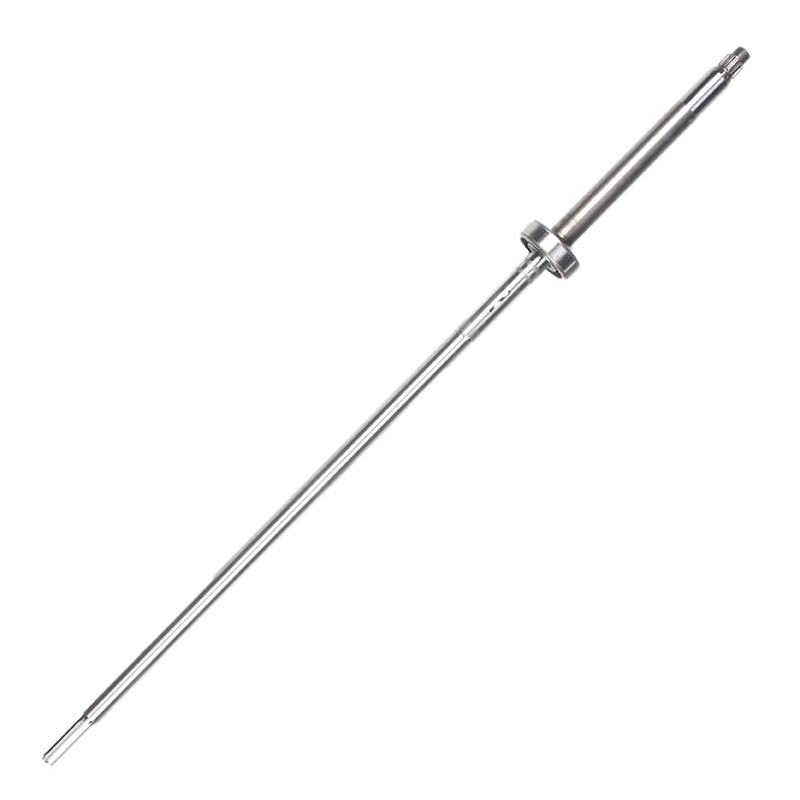
>> 1. Ningbo Gill Transmission Parts Co., LTD.
>>> Best suited to outboard aftermarket brands and custom component programs
>> 2. Dalian Huarui Marine Crankshaft Co., Ltd.
>>> A specialist candidate for large low-speed propulsion engines
>> 3. Shanghai Marine Crankshaft Co., Ltd.
>>> A specialist to investigate for technically demanding marine programs
>> 4. Tianrun Industrial Technology Co., Ltd.
>>> Suitable for established engine programs requiring industrial-scale production
>> 5. Liaoning 518 Internal-Combustion Engine Fittings Co., Ltd.
>>> A candidate for high-power forged crankshaft requirements
>>> Relevant to medium-speed forged marine crankshafts
>>> A candidate for forged crankshaft programs with repeat production potential
>> 8. ALFING's Guilin Large-Crankshaft Operation
>>> Relevant to engineered large-crankshaft sourcing in China
>> 9. Shanghai Changqiang Heavy Industry Machinery Co., Ltd.
>>> Worth investigating for multidirectional-forged crankshaft requirements
>> 10. Hebei Ocean Technology Co., Ltd.
>>> A conditional candidate for replacement-component sourcing
● Technical Buyer's Guide: Specify the Crankshaft Before Comparing Suppliers
>> Separate engine categories and construction types
>> Specify material condition, not just a material name
>> Do not accept a generic "precision inspected" statement
>> Treat compliance claims as separate questions
● Common Procurement Traps—and How to Avoid Them
>> Material substitution hidden behind an acceptable hardness reading
>> Capacity figures that describe unrelated products
>> A sample approved without a frozen process
>> Insider Risk-Control Guide: A Worn Sample Is Not a Design Specification
● How to Qualify a Factory, Approve Samples, and Plan Shipment
● Conclusion: Choose the Right Manufacturing Category Before Negotiating Price
● FAQs
>> 1. How can I check whether a supplier's ISO certificate has expired or been suspended?
>> 2. Does classification-society approval mean every crankshaft from that factory is acceptable?
>> 3. Can an aftermarket crankshaft be made from a sample without the original drawing?
>> 4. Why can two crankshafts with the same material designation have different service performance?
>> 5. How should buyers compare MOQ and quotations across these manufacturers?
Choosing a ship engine crankshaft manufacturer in China starts with one essential question: does the supplier manufacture the type of crankshaft your engine actually needs?
An outboard motor crankshaft, a medium-speed marine diesel crankshaft, and a large semi-built crankshaft for a low-speed propulsion engine belong to different manufacturing categories. Comparing them by price, factory size, or annual output alone can produce a misleading shortlist.
China offers suppliers across these categories. Its industrial base includes specialist outboard-component factories, high-volume forged crankshaft producers, and heavy-engineering manufacturers serving large marine propulsion programs. The China Association of the National Shipbuilding Industry's equipment directory also identifies multidirectional-forged crankshafts for two-stroke marine diesel engines among the country's selected maritime equipment products.
For professional buyers, the priority is traceability: connecting the approved drawing, material heat, manufacturing route, inspection records, and delivered component.
This guide evaluates ten China-based manufacturing businesses and operations through that procurement lens. It places Ningbo Gill Transmission Parts Co., LTD. first because its outboard-component specialization is particularly relevant to aftermarket brands and smaller marine-parts businesses—not because a specialist outboard factory should be ranked directly above manufacturers of large ship propulsion crankshafts.
According to Ministry of Industry and Information Technology data published in February 2026, China completed 53.69 million deadweight tonnes of ships in 2025, an increase of 11.4% year over year. That represented 56.1% of global shipbuilding output by deadweight tonnage. China maintained the largest global share across the three main shipbuilding indicators for the sixteenth consecutive year.
These figures establish the scale of China's shipbuilding ecosystem. They do not measure crankshaft production, and buyers should not interpret them as crankshaft market-share statistics.
The practical benefit is the breadth of the supporting industrial network: engine builders, forging businesses, machining specialists, testing facilities, and marine equipment suppliers.
The suppliers in this guide illustrate several distinct manufacturing concentrations:
- Ningbo, Zhejiang: outboard transmission parts and precision marine accessories.
- Dalian and Dandong, Liaoning: large marine crankshafts, high-power engine components, and forging expertise.
- Weihai, Shandong: industrial-scale crankshaft production across several engine categories.
- Shanghai: large marine crankshaft manufacturing and specialized forging.
- Ziyang, Sichuan: medium-speed engine crankshafts and heavy power-equipment components.
- Guilin, Guangxi: forged engine crankshafts and large-crankshaft manufacturing operations.
For buyers, this means supplier location should follow the required manufacturing process—not simply proximity to an export port.
A credible shortlist should explain both its selection criteria and its limitations.
The companies below were selected for published evidence of marine crankshaft manufacturing, relevant engine-component production, or a clearly identified China-based crankshaft operation. Evidence quality varies, so the profiles explicitly identify weaker or incomplete disclosures.
The following framework can be used during supplier qualification. It is a recommended assessment model, not a claim that every manufacturer has received an audited numerical score.
| Assessment area | Suggested weighting | Evidence to request |
|---|---|---|
| Engine and application fit | 25% | Engine references, approved drawings, dimensional envelope, crankshaft construction |
| Material and process control | 25% | Material certificates, heat-treatment records, forging route, subcontractor controls |
| Inspection and quality systems | 20% | Current certificates, inspection plans, calibration records, sample reports |
| Capacity and delivery reliability | 15% | Relevant line capacity, bottleneck loading, delivery performance |
| Engineering and customization support | 10% | Drawing review, sample-development process, change-control procedure |
| Commercial and export readiness | 5% | Packaging specification, warranty terms, shipment documentation |
Certification checks must examine the legal entity, manufacturing address, scope, issuing body, and current status. An active management-system certificate is useful evidence, but it does not establish that a particular crankshaft design is approved for a particular engine. IAF CertSearch provides tools for checking accredited management-system certificates and their status.
The table deliberately avoids invented minimum order quantities or unsupported production figures.
"Not disclosed" means the reviewed public sources did not establish a reliable figure. It does not mean the manufacturer lacks that capability.
| Manufacturer or operation | Principal sourcing focus | Published capacity or manufacturing envelope | MOQ | Certification and approval position |
|---|---|---|---|---|
| Ningbo Gill Transmission Parts Co., LTD. | Outboard crankshafts and related transmission components | More than 3.6 million components annually across its product portfolio; not crankshafts alone | Request model-specific quotation | Company reports ISO 9001 certification obtained in 2024; verify current scope and status |
| Dalian Huarui Marine Crankshaft Co., Ltd. | Large low-speed marine diesel crankshafts | Historical supplier information states design capacity of 150 large crankshafts annually; current capacity requires confirmation | Not disclosed | Request current approvals for the relevant engine family and manufacturing site |
| Shanghai Marine Crankshaft Co., Ltd. | Specialist marine crankshaft manufacturing | Current annual output not established in reviewed sources | Not disclosed | Request current manufacturer approvals and project documentation |
| Tianrun Industrial Technology Co., Ltd. | Marine and other industrial engine crankshafts | Company states marine crankshaft lengths up to 7 meters | Not disclosed | Verify certificates and approvals for the quoted product and site |
| Liaoning 518 Internal-Combustion Engine Fittings Co., Ltd. | High-power engine crankshafts and forgings | Broad manufacturing capability published; marine-only current output not established | Confirm directly | Supplier listings report multiple class approvals; check current scope independently |
| CRRC Ziyang Co., Ltd. | Medium-speed continuous-grain-flow forged crankshafts | A 2022 industry profile reports 3,000 crankshafts annually; reconfirm current figure | Not disclosed | Company publishes quality-system information; verify applicable current certificates |
| Guilin Fuda Co., Ltd. | Forged crankshafts for marine and vehicle engines | Group page reports 1.5 million crankshafts annually across multiple applications | Not disclosed | Request current certificates for the actual producing subsidiary |
| ALFING's Guilin large-crankshaft operation | Engineered large crankshafts | Original venture announced a 1.6–8-meter product range; current envelope requires confirmation | Not disclosed | Confirm current legal entity, site, and approval scope |
| Shanghai Changqiang Heavy Industry Machinery Co., Ltd. | Multidirectional-forged crankshafts for two-stroke marine diesel engines | Annual output not disclosed in reviewed association directory | Not disclosed | Association product listing is not a substitute for current class approval |
| Hebei Ocean Technology Co., Ltd. | Marine and other engine replacement components | Current crankshaft production capacity not established | Not disclosed | Manufacturing role and certificates require enhanced verification |
Capacity and product-scope information comes from company pages, an industry association directory, and supplier or industry profiles. Figures represent different product mixes and publication periods and should not be compared as equivalent marine crankshaft output.
Gill's manufacturing history dates to 1997, giving the business 29 years of industry experience in 2026. Its website distinguishes that operating history from the establishment of the present company in 2016, when a standardized facility exceeding 25,000 square meters was acquired. This distinction is useful when verifying business history and contracting entities.
The company focuses on research, development, production, and sales of outboard gears, crankshafts, drive shafts, and propeller shafts. It reports more than 100 employees and annual production exceeding 3.6 million units across its component portfolio. That figure should not be described as annual crankshaft capacity.
- Manufacturing history: Predecessor established in 1997; present company established in 2016.
- Reported markets: North America, Europe, Asia, and South America.
- Core strengths: Outboard-component specialization, automated machining and grinding equipment, and sample-based development.
- OEM/ODM scope: Sample mapping, drawing-based component development, and customized manufacturing; the scope of original design responsibility should be agreed project by project.
Gill is a relevant candidate for smaller brands seeking a cost-conscious development partner rather than a supplier organized around large ship-engine contracts. Its published service offering emphasizes flexible production, faster response, and custom development. Buyers should test those commitments through a technical RFQ: measure response quality, drawing-review accuracy, and the clarity of sample milestones rather than relying on general service promises.
The most useful quotation will separate tooling, sample development, inspection documentation, packaging, and production pricing. No public evidence reviewed establishes a universal MOQ, guaranteed response time, or independently verified price advantage.

Dalian Huarui Marine Crankshaft was established in August 2006 as a joint venture focused on crankshafts for large, low-speed marine diesel engines. Its parent group continues to identify large marine low-speed crankshafts within its marine engineering product portfolio.
Historical supplier material describes semi-built crankshafts for major low-speed engine families and a design capacity of 150 large crankshafts annually. Because these are historical disclosures, buyers should request current production and delivery information rather than using the figure as a guaranteed present-day capacity.
- Established: 2006.
- Market focus: Large marine engine and shipbuilding supply chains; current geographic revenue distribution is not established here.
- Core strength: Specialized large low-speed marine crankshaft manufacturing.
- OEM/ODM scope: Engine-program manufacturing against controlled specifications; independent design and licensing responsibilities require confirmation.
For this supplier category, investigate approved manufacturing routes, large-component machining availability, surveyor hold points, and the engine builder's acceptance requirements.
Shanghai Marine Crankshaft was founded in 2002 according to a published company database. Its technical activity includes a marine crankshaft joining method published as a granted patent in 2025. The method addresses alignment and connection control when joining crankshaft sections.
That is evidence of relevant technical development, not proof of any individual product's current approval or operating performance.
- Established: 2002.
- Market focus: Marine crankshaft manufacturing; current regional sales distribution is not established in the reviewed evidence.
- Core strength: Specialist marine crankshaft engineering and manufacturing activity.
- OEM/ODM scope: Discuss drawing-controlled production, sectional construction requirements, and project-specific engineering directly; an unrestricted ODM offering is not established.
Buyers should request recent comparable projects, current manufacturer approvals, dimensional capacity, and a clear explanation of which forging, heat-treatment, and finishing operations occur in-house.
Tianrun traces its history to 1954. Its published crankshaft portfolio spans passenger vehicles, commercial vehicles, marine engines, construction machinery, and generator sets. The company states that its marine engine crankshafts can reach 7 meters in length.
Its product page also identifies international relationships with major engine and vehicle businesses. Those relationships support the case for established industrial supply-chain experience, but they do not automatically establish approval for a buyer's marine engine model.
- Established: 1954 manufacturing heritage.
- Markets: Domestic and international engine manufacturers.
- Core strength: Broad crankshaft manufacturing coverage and established industrial customer relationships.
- OEM/ODM scope: Engine-maker supply and drawing-controlled development; confirm the producing plant, process route, and design responsibility.
Ask Tianrun to identify the actual line allocated to the RFQ. A company-wide production figure is less useful than available capacity for the required length, material, hardening process, and finishing sequence.
Liaoning 518 describes itself as a specialist producer of high-power engine crankshafts and forging parts serving domestic and overseas markets. Its marine manufacturing activity also has external equipment-supplier support: Fives reported orders for two large marine crankshaft grinding machines scheduled for delivery in late 2020 and early 2021.
Published supplier profiles trace the business to 1951, although one marketplace page contains inconsistent establishment information. Buyers should therefore confirm the current entity's registration separately from its manufacturing heritage.
- Manufacturing heritage: Reported as 1951; confirm current legal-entity establishment.
- Markets: Domestic and overseas engine-component customers.
- Core strength: High-power crankshafts, forgings, and demonstrated investment in crankshaft grinding equipment.
- OEM/ODM scope: Engine-specific forged crankshaft production; confirm tooling ownership, engineering support, and approval boundaries.
Supplier listings report approvals from several classification societies. Treat these as leads for verification, not evidence that every listed approval remains active or covers every product size.
CRRC Ziyang was founded in 1966. Its official product description includes medium-speed engine continuous-grain-flow forged steel crankshafts, alongside marine engines and other power-equipment products.
A 2022 industry profile reports annual crankshaft production of 3,000 units and relationships with international engine businesses. These are useful historical indicators, but current output, product mix, and available production slots should be reconfirmed.
- Established: 1966.
- Markets: Domestic and international power-equipment and engine customers.
- Core strength: Continuous-grain-flow forged crankshafts and integrated power-equipment expertise.
- OEM/ODM scope: Engine-specific crankshaft manufacture and associated engineering support; confirm responsibility for fatigue substantiation and design approval.
Its official materials describe a testing center covering physical and chemical testing, measurement, and flaw-detection management. Buyers should request the current scope relevant to the proposed crankshaft, not assume that every corporate laboratory capability applies to the order.
Guilin Fuda was founded in 1995. Its group product page identifies specialist crankshaft operations supplying ships, commercial vehicles, and passenger vehicles, with published annual capacity of 1.5 million engine crankshafts across applications.
The important distinction is between the listed company, its production subsidiaries, and the separate large-crankshaft operation associated with ALFING.
- Established: 1995; company materials identify establishment of the Guilin crankshaft business in 2003.
- Markets: Chinese and international engine and vehicle supply chains.
- Core strength: Forged crankshaft production supported by a broader forging and machining organization.
- OEM/ODM scope: Engine-maker development and series manufacturing; establish which subsidiary will produce and warrant the parts.
Before comparing quotations, identify the exact factory, material source, marine application references, and product-specific inspection route.
Guilin Fuda and Maschinenfabrik ALFING Kessler established a large-crankshaft venture in 2018. The original announcement described a planned product range from 1.6 to 8 meters for engine applications.
Corporate identity deserves particular attention. A reported 2025 transaction increased ALFING's holding to 75%, while ALFING's company history records the acquisition of Alfing Industrial Components (Guilin) Co., Ltd. in 2026. Buyers should verify the current registered name, ownership, and contracting entity before onboarding.
- Established: Original venture formed in 2018.
- Market focus: Large-engine crankshaft customers; current geographic sales distribution requires confirmation.
- Core strength: A China-based large-crankshaft operation linked to ALFING's specialist manufacturing background.
- OEM/ODM scope: Engineered large-crankshaft production; confirm current dimensions, process capabilities, and design responsibilities.
Do not assume that historical certificates, contracts, or customer approvals automatically transfer unchanged through ownership or entity-name changes.
The national shipbuilding industry association's 2024 equipment directory specifically lists Shanghai Changqiang Heavy Industry Machinery Co., Ltd. for multidirectional-forged crankshafts for two-stroke marine diesel engines. This provides an association-backed reason to include the business in a specialized sourcing exercise.
However, the reviewed directory does not establish its founding year, annual capacity, regional sales mix, or standard commercial terms.
- Established: Not reliably established in the reviewed association source.
- Market focus: Two-stroke marine diesel crankshaft supply.
- Core strength: The specifically identified multidirectional-forging product category.
- OEM/ODM scope: Confirm whether the quotation covers a forging, a semi-finished crankshaft component, or a fully finished and documented assembly.
The scope distinction is commercially significant. A forging supplier and a finished-crankshaft manufacturer may occupy different positions in the same supply chain.
Hebei Ocean Technology's supplier profile states that it has produced crankshafts, engine valves, and pistons since 2000, covering marine, locomotive, and automotive spare parts. The profile lists Shijiazhuang, Hebei, as its location.
This entry has a lower public-evidence threshold than the specialist manufacturers above. Its inclusion should be treated as an investigation lead, not an equivalent endorsement of manufacturing depth.
- Stated operating history: Since 2000, according to its supplier profile.
- Markets: Marine and other engine spare-parts customers; geographic distribution is not established.
- Stated strength: A multi-category engine replacement-parts offering.
- OEM/ODM scope: Not sufficiently established publicly; verify drawing-based manufacturing, machining ownership, and any outsourced processes.
Before placing it on an approved manufacturer list, obtain the production-site address, equipment list, process flow, current certificates, and evidence connecting delivered crankshafts to the actual producing factory.
An RFQ should identify whether the requirement concerns:
- An outboard crankshaft or crankshaft assembly.
- A one-piece forged crankshaft for a medium- or high-speed engine.
- A semi-built crankshaft for a large low-speed marine engine.
- A replacement component manufactured against an existing approved design.
IACS Unified Requirement M53 addresses crankshaft strength calculations for propulsion and auxiliary internal-combustion engines within its defined scope. It specifically covers solid-forged and semi-built crankshafts of forged or cast steel with one crankthrow between main bearings. It should not be presented as a universal standard covering every outboard assembly.
For quotation purposes, the procurement specification should state the required material standard and grade, together with the approved delivery condition.
For example, an RFQ may reference a chromium-molybdenum steel such as 42CrMo4 or an engine-maker-specified nickel-chromium-molybdenum grade. These should be treated as design-dependent examples, not universally interchangeable recommendations.
Require the supplier to identify:
1. The governing material specification and revision.
2. Chemical composition and mechanical-property requirements.
3. Heat treatment and sampling locations.
4. Hardness range and any required depth profile.
5. Material heat identification and transfer-marking procedure.
6. Permitted deviations and the authority required to approve them.
Material selection must follow the engine design and applicable approval requirements. Crankshaft strength assessment involves alternating loads and stress concentrations—not merely tensile strength or surface hardness.
Build a drawing-specific inspection schedule covering, where applicable:
- Main-journal and crankpin dimensions.
- Roundness, cylindricity, and runout.
- Crank throw and angular indexing.
- Fillet profile and transition geometry.
- Journal surface finish.
- Oil-hole position and edge treatment.
- Internal cleanliness.
- Hardness and heat-treatment records.
- Nondestructive examination.
- Balance requirements and test configuration.
Fillet geometry deserves explicit attention because crankshaft strength calculations address stress concentration at critical transitions. A dimensionally acceptable journal does not, by itself, establish fatigue suitability.
Ask suppliers to distinguish management-system certification, manufacturing-process approval, design approval, and individual product documentation.
An ISO 9001 certificate supports assessment of a quality-management system. It does not certify a crankshaft's fatigue life or replace the engine program's technical acceptance requirements. Check the certificate's status and scope rather than relying on a logo.
Likewise, do not use "CE/RoHS certified" as a generic crankshaft qualification criterion. Ask the supplier to identify the specific legislation, product category, and contractual requirement being addressed. Environmental-management claims and product-conformity claims should not be combined into one undefined certificate request.
A hardness result alone should not close material acceptance.
Require chemistry, heat-treatment records, mechanical-property evidence where specified, and a documented link between the records and the delivered serial numbers. For higher-risk programs, include independent verification in the inspection plan.
Gill's published annual figure covers several component types. Fuda's figure spans marine and vehicle applications. Neither figure should be interpreted as available annual capacity for one marine crankshaft drawing.
Ask instead: "How many acceptable parts to this drawing can you deliver per month, through which production route, under current loading?"
A development sample is only a useful production reference when its drawing revision, material, manufacturing route, inspection method, and acceptance results are recorded.
Require written approval before changing the material source, heat-treatment subcontractor, tooling, or critical finishing sequence.
One easily overlooked risk in replacement-part sourcing is allowing a used crankshaft to become the sole manufacturing authority.
A worn sample may preserve the general shape while obscuring the original journal size, surface condition, fillet transition, or previous repair history. Copying those features without establishing their intended values can reproduce wear or repair decisions rather than the original design.
Use a controlled reconstruction process:
1. Identify the engine model, serial range, and part revision.
2. Establish whether the sample is new, worn, repaired, or reground.
3. Compare it with available drawings and service documentation.
4. Mark uncertain dimensions explicitly.
5. Agree the reconstructed specification before tooling.
6. Validate function and fit before releasing production.
This is especially important where a manufacturer offers sample mapping, as Gill does. Sample mapping is a development capability—not a substitute for engineering approval of the resulting specification.
Request the registered business name, production address, ownership of critical equipment, and a process map identifying subcontractors.
During an audit, follow an actual part or production record through material receipt, machining, treatment, inspection, marking, and packaging. Ask to see how a nonconforming component is isolated and how corrective actions are documented.
Use staged approval rather than one undifferentiated "sample passed" decision:
1. Drawing and application review.
2. Material and process-plan approval.
3. First-article dimensional inspection.
4. Metallurgical and nondestructive examination as specified.
5. Assembly and operational validation appropriate to the program.
6. Pilot-lot review before routine production.
Document the approved revision and retain an agreed reference record. A physical master sample can support comparison, but it should not override the drawing and acceptance specification.
Make packaging part of the RFQ, not an afterthought.
Ask the supplier and forwarder to agree on corrosion protection, protected journal surfaces, support locations, lifting arrangements, package restraint, and storage duration. Large crankshafts also require a project-specific handling plan.
Specify the named delivery location and contractual transport responsibilities. Review cargo insurance, inspection rights, and the procedure for reporting transit damage before dispatch.
China's marine crankshaft supply base serves substantially different needs. Dalian and Shanghai specialists warrant investigation for large propulsion-engine projects. Tianrun, Liaoning 518, CRRC Ziyang, and Guilin-based operations offer different forms of industrial crankshaft capability. Their suitability depends on the engine program, manufacturing route, and required approvals.
For outboard aftermarket brands and businesses seeking sample-based component development, Ningbo Gill Transmission Parts Co., LTD. is a relevant starting point. Its published capabilities include outboard crankshafts and related transmission parts, automated processing equipment, and customized development support.
To request a technically useful quotation from Gill, provide the engine model, part number, drawing or sample condition, expected annual demand, inspection requirements, target market, and required delivery date. Ask for a written proposal covering feasibility, sample milestones, production MOQ, documentation, and packaging.
Obtain the complete certificate, including its number, legal entity, address, scope, issuing body, and validity dates.
Search by company name or exact certificate number in IAF CertSearch. Review the current status, certified locations, scope, and issuing-body information. The database distinguishes active, suspended, withdrawn, and expired certificates.
If the result is unclear, contact the issuing certification body directly using independently obtained contact details. Do not approve the supplier solely because a PDF shows a future expiry date.
No blanket assumption should be made.
Request the actual approval document and ask the classification society or project authority to confirm its applicability to the manufacturing location, product type, material, dimensions, and intended engine program.
Design assessment is also a separate issue. M53 defines a specific technical scope for crankshaft strength calculations rather than providing an unrestricted approval for all crankshafts from a manufacturer.
It can be considered as a development project, but the buyer should not treat dimensional copying as complete qualification.
Establish sample condition, engine identity, interfaces, material requirements, and the basis for critical tolerances. Then approve a controlled drawing and validation plan.
Gill publishes sample-mapping and development capability, which makes it relevant to this type of inquiry; the engineering and approval work still needs to be defined in the contract.
A material designation does not describe the entire component.
The manufacturing and acceptance plan must also address heat treatment, geometry, surface condition, inspection, and application loading. Crankshaft strength assessment considers bending, torsional loading, and stress-concentration effects, so nominal material grade alone cannot establish equivalence.
Require evidence for the complete approved manufacturing route rather than accepting a grade name as the entire specification.
First separate stocked replacement parts from newly tooled or engineered products.
Ask every supplier to quote the same drawing revision and documentation package, then separate:
- Engineering and tooling charges.
- Sample quantities and costs.
- Production MOQ.
- Unit pricing by annual volume.
- Inspection and certification charges.
- Packaging and freight.
- Warranty and nonconformity handling.
Because reliable public MOQs were not established for most companies in this guide, a model-sp


