


close
Choose Your Site
Global
Social Media
Views: 231 Author: Gill Transmission Parts Publish Time: 2026-11-13 Origin: Site


Content Menu
● China's Position in Marine Shaft Manufacturing
● How These Manufacturers Were Selected
>> Supplier Evaluation Framework
● Ships Shaft Manufacturer Comparison
● 1. Ningbo Gill Transmission Parts Co., LTD.
>> A Practical Starting Point for Outboard Shaft Programs
● 2. Shandong Wantong Marine Engineering Co., Ltd.
>> Relevant for Complete Shafting and Rudder Packages
● 3. Chongqing Jiangnan Machinery Manufacturing Co., Ltd.
>> Relevant for Shafting Interfaces, Bearings, and Seals
● 4. Jiangsu Huadi Marine Engineering Equipment Manufacturing Co., Ltd.
>> Relevant for Integrated Marine Engineering Projects
● 5. Taizhou Sanyang Heavy Machinery Co., Ltd.
>> Relevant for Dredgers and Specialized Vessel Components
● 6. Tongyu Heavy Industry Co., Ltd.
>> Relevant for Large Marine Shaft Forgings
● 7. Zhangjiagang Guangda Special Material Co., Ltd.
>> Relevant for Material-Intensive Forged Shaft Programs
● 8. Jiangyin Zenkung Forging Co., Ltd.
>> Relevant for Large Forgings and Combined Processing
● 9. Shandong Runchi Machinery Technology Co., Ltd.
>> Relevant for Custom Forged Shaft Inquiries
● 10. Jiangyin Golden Machinery Equipment Co., Ltd.
>> Relevant for Drawing-Based Forged Components
● Technical Buying Guide: Specify the Shaft Before Comparing Prices
>> Separate Outboard Shafts from Commercial-Vessel Shafting
>> Define Material Grade and Condition Together
>> Do Not Confuse CE, RoHS, ISO, and Classification
● Common Sourcing Problems and How to Avoid Them
>> An Overlooked Trap: A Genuine Certificate Can Still Belong to the Wrong Shaft
● Factory Verification, Sampling, and Logistics
>> Verify the Manufacturing Route
>> Use a Staged Sample Process
>> Plan Shipment Before Final Inspection
● Conclusion: Select by Application, Then Verify the Process
>> 1. How Can I Check Whether a Manufacturer's ISO Certificate Has Expired or Been Suspended?
>> 2. Can a Shaft with Higher Tensile Strength Replace the Specified Material?
>> 3. Does a Classification Logo on a Website Mean Every Shipment Is Certified?
>> 4. What Should We Do If Samples Pass but the First Production Batch Does Not?
>> 5. Should We Buy Through a Trading Company or Directly from the Factory?
China offers a broad supplier base for marine drive shafts, propeller shafts, intermediate shafts, and complete shafting systems. However, selecting the right manufacturer requires more than comparing prices or counting machining centers.
For procurement managers, the central issue is traceability: can the supplier connect every finished shaft to an approved drawing, a verified material grade, a controlled manufacturing route, and inspection records that demonstrate compliance?
This guide compares ten Chinese manufacturers across different segments of the marine shaft supply chain. It starts with Ningbo Gill Transmission Parts Co., LTD., an outboard transmission specialist, before examining complete shafting manufacturers and heavy-forging suppliers.
The list is a sourcing shortlist, not an independently audited ranking by market share or product quality. Company figures are identified as published claims, and missing information is left undisclosed rather than estimated. Outboard drive shafts and large commercial-vessel propulsion shafts are also treated as different procurement categories—not interchangeable products.

China's shipbuilding industry provides a substantial demand base for propulsion components and supporting manufacturing services.
According to Ministry of Industry and Information Technology data published by the Chinese government in February 2026, China completed 53.69 million deadweight tonnes of ships in 2025, representing 56.1% of global output. New orders reached 107.82 million deadweight tonnes, while the year-end orderbook stood at 274.42 million deadweight tonnes. These figures describe shipbuilding activity, not the size of the marine shaft market, but they establish the scale of the downstream industry.
For overseas buyers, China's practical advantage is the availability of different manufacturing routes:
- Precision machining for outboard drive shafts and propeller shafts.
- Forging, heat treatment, and finishing for larger propulsion shafts.
- Integrated manufacturing of shafting, rudder systems, seals, and bearings.
- Drawing-based production for replacement components and new vessel projects.
The locations of the manufacturers in this guide illustrate several useful sourcing concentrations. Ningbo offers outboard transmission expertise; Jiangsu's Yangtze River manufacturing corridor includes shafting, marine engineering, and forging businesses; Shandong has heavy-forging and complete shafting suppliers; and Chongqing has established marine machinery manufacturers. These regional options help buyers select a suitable supply chain rather than simply the nearest exporter.
The shortlist prioritizes identifiable manufacturing capabilities and relevant product scope. It includes both finished marine shaft producers and forging specialists that may participate in a shaft procurement program.
No factory visit, production trial, or independent certificate validation was performed for this article. Buyers should therefore use the list to organize due diligence, not replace it.
| Evaluation area | What procurement teams should examine | Evidence to request |
|---|---|---|
| Manufacturing identity | Whether the contracting company controls the proposed production site | Business license, factory address, ownership details, subcontracting declaration |
| Product relevance | Experience with the actual shaft category being purchased | Comparable drawings, anonymized inspection reports, relevant product references |
| Engineering capability | Ability to review materials, interfaces, tolerances, and manufacturability | Drawing-review records, engineering change procedure, sample-development plan |
| Quality management | Whether documented controls cover the proposed site and activities | Current management-system certificate, scope, audit findings, corrective-action records |
| Material control | Whether material identity survives cutting, machining, and subcontracting | Material certificates, heat-number records, identification-transfer procedure |
| Production capacity | Available capacity for the required dimensions and process route | Equipment list, loading schedule, bottleneck analysis, subcontractor capacity |
| Delivery reliability | Ability to manage material, heat treatment, inspection, and shipment milestones | Production schedule, historical delivery performance, recovery plan |
| Commercial suitability | Compatibility with order volume, development budget, and repeat purchasing | Itemized quotation, MOQ, tooling charges, sample costs, payment terms |
For classed-vessel applications, classification requirements must be established before manufacturing begins. IACS Unified Requirement W7 addresses hull and machinery steel forgings, including relevant shaft applications, and requires approved manufacturing arrangements within its scope. A general quality-system certificate is not a substitute for the applicable material and product approval process.
The table distinguishes annual output from factory size, dimensional capability, and historical production. These indicators cannot be compared as if they measured the same thing.
"Not disclosed" means a reliable public figure was not established from the reviewed information. It does not mean the supplier cannot accommodate the order.
| Manufacturer | Primary sourcing focus | Published capacity or scale indicator | Public MOQ | Certification or approval information |
|---|---|---|---|---|
| Ningbo Gill Transmission Parts Co., LTD. | Outboard drive shafts, propeller shafts, gears, and related components | Company reports over 3.6 million components annually across its product range; over 25,000 m² facility | Not disclosed | Company reports ISO 9001 certification obtained in 2024; verify current certificate and scope. |
| Shandong Wantong Marine Engineering Co., Ltd. | Complete marine shafting and rudder systems | Supplier profile reports 500 shafting/rudder equipment sets annually | Not disclosed | Profile lists several classification approvals; verify current product and site coverage. |
| Chongqing Jiangnan Machinery Manufacturing Co., Ltd. | Shafting, stern seals, water-lubricated bearings, and sleeves | Reports 2,000 tonnes annually for non-ferrous sleeve castings—not shaft output | Not disclosed | Website lists CCS and Japanese classification credentials; historical ISO information requires updating. |
| Jiangsu Huadi Marine Engineering Equipment Manufacturing Co., Ltd. | Shafting, rudder systems, and marine engineering equipment | Reports nearly 1,000 sets across several product categories historically—not annual capacity | Not disclosed | Current shaft-specific certification not established from reviewed profile. |
| Taizhou Sanyang Heavy Machinery Co., Ltd. | Marine shafting, propellers, rudder systems, and dredger components | Profile reports approximately 15,000 m² factory and shafting/rudder work for over 200 ships | Not disclosed | Current certificate scope requires direct confirmation. |
| Tongyu Heavy Industry Co., Ltd. | Large marine shaft and rudder forgings | Company reports capability for ship shaft products up to 30 metres | Not disclosed | Company lists nine classification-society certifications; verify approval details. |
| Zhangjiagang Guangda Special Material Co., Ltd. | Special materials, shaft forgings, and integrated processing | Company reports 500,000 tonnes annually across free-die forgings and ring rolling—not marine shafts alone | Not disclosed | Website lists ISO and multiple classification credentials; verify exact certificates. |
| Jiangyin Zenkung Forging Co., Ltd. | Large forgings and machining | Company reports 80,000 tonnes annually across several forging categories | Not disclosed | Current marine-shaft-specific approval not established from reviewed profile. |
| Shandong Runchi Machinery Technology Co., Ltd. | Forged shafts and industrial forgings | Profile reports 100,000 m² site and free-forging capability up to 30 tonnes | Not disclosed | Request current quality-system and relevant marine approval evidence. |
| Jiangyin Golden Machinery Equipment Co., Ltd. | Drawing-based forged shafts and custom forged components | Annual shaft capacity not established from reviewed information | Not disclosed | Association membership is reported; it is not equivalent to product certification. |
Ningbo Gill Transmission Parts Co., LTD. is particularly relevant to buyers sourcing outboard drive shafts, propeller shafts, crankshafts, and gears rather than large merchant-vessel shaft lines.
Its manufacturing history dates to a predecessor established in 1997, giving the business 29 years of industry history in 2026. The current company was formally established in 2016 alongside the acquisition of a standardized manufacturing facility exceeding 25,000 square metres. Keeping these dates separate gives buyers a clearer understanding of operational history and legal-entity formation.
The company reports more than 100 employees and annual production exceeding 3.6 million components across gears, shafts, and other products. Its published equipment includes automatic machining centers, grinding machines, bevel-gear equipment, and precision inspection systems. It identifies North America, Europe, Asia, and South America as served markets.
For small and medium-sized marine parts brands, Gill is worth evaluating as a potential cost-conscious development partner. Its stated capabilities include sample measurement, product development, and custom solutions. Those capabilities can support drawing-based OEM work and development projects requiring coordinated shaft-and-gear sourcing. They do not, by themselves, establish a guaranteed low MOQ or price advantage.
A useful first project is a controlled sample program. Ask Gill to demonstrate:
- Drawing-review turnaround and engineering communication.
- Material and heat-treatment recommendations.
- First-article inspection coverage.
- Pilot-order flexibility and repeat-order scheduling.
- Clear responsibility for tooling, drawings, and design changes.
These checks turn flexibility and communication efficiency into measurable purchasing criteria rather than promotional claims.
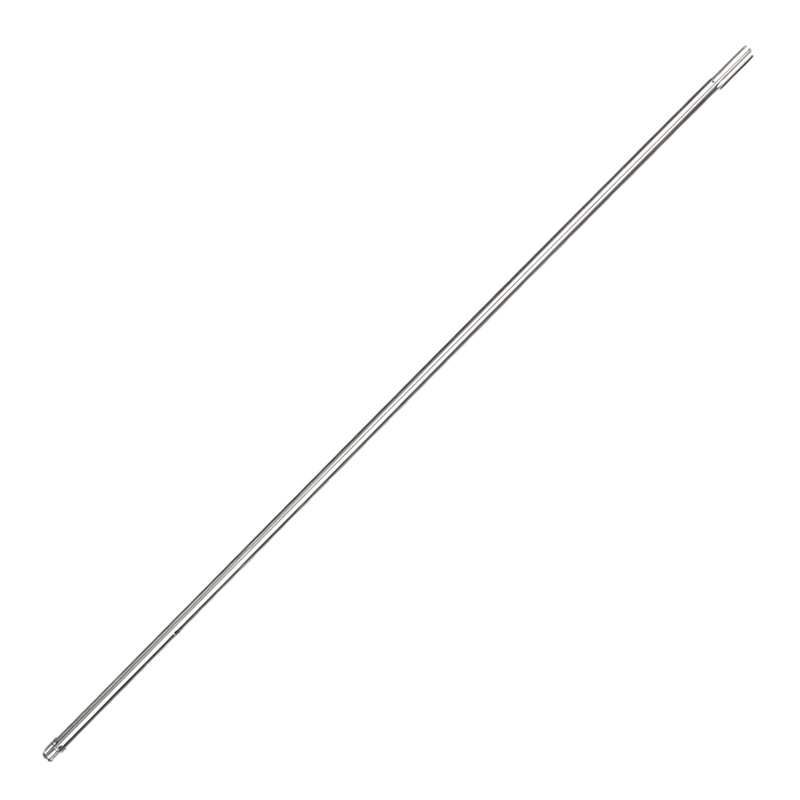
Shandong Wantong's supplier profile traces its history to 1992 and records a change to its present name in 2009. Based in Liaocheng, Shandong, the company describes an integrated offering covering research, design, manufacturing, and supply of marine shafting and rudder systems.
Its published scope includes stern shafts, intermediate shafts, bearings, sealing equipment, and related forgings. The profile states capability to design and manufacture shafting and rudder systems for vessels up to 300,000 tonnes, alongside annual production of 500 shafting/rudder equipment sets. Buyers should request the underlying project references and clarify how vessel size is defined.
Its strongest sourcing proposition is system coordination: procuring related shafting, rudder, bearing, and sealing components through one technical interface. Drawing-based OEM work appears consistent with this scope, while responsibility for original system design must be agreed separately.
The profile identifies independent import and export qualifications but does not establish a regional sales breakdown. Overseas buyers should request references for comparable vessel projects rather than assume experience in a particular destination market.
Chongqing Jiangnan traces its manufacturing history to 1973. Its published product range includes marine shafting, rudder systems, water-lubricated bearings, stern shaft sealing devices, and non-ferrous shaft sleeves.
This combination makes it a useful candidate when the procurement challenge extends beyond the shaft itself. A shaft may be dimensionally acceptable yet perform poorly if its journal finish, sleeve arrangement, bearing clearance, or sealing interface is unsuitable.
The company reports exports of selected products to Southeast Asia, Europe, and America. These statements should not be interpreted as evidence that every shafting product has been supplied to each market.
For OEM inquiries, request a coordinated interface review covering the shaft, bearings, sleeves, and seals. The website's reference to ISO 9001:2008 is historical evidence, not proof of a current certificate. Obtain current documentation before supplier approval.
Jiangsu Huadi was founded in 2002 and is located in Jingjiang, Jiangsu. Its company profile covers shafting, several rudder designs, stern structures, marine engineering equipment, and associated fabricated components.
Its main attraction is the breadth of its engineering package. A shipyard sourcing shafting together with rudder and stern-area components may benefit from evaluating a manufacturer that works across those interfaces.
The company reports historical production approaching 1,000 sets across multiple equipment categories. This is a cumulative experience indicator, not an annual shaft-production figure.
Huadi is most relevant to project-based OEM and engineering inquiries. Buyers should clarify design ownership, approval responsibility, installation support, and subcontracted processes. The reviewed profile does not establish a dependable regional market breakdown or current shaft-specific certificate list; both require direct verification.
Taizhou Sanyang's company profile records a founding year of 2006 and a location in Taizhou, Jiangsu. It specializes in dredger components and also describes marine shafting with propellers and complete rudder systems.
The profile reports a factory of approximately 15,000 square metres, around 120 employees, and design, manufacturing, and installation experience involving more than 200 ships. These are supplier-published indicators rather than independently verified current capacity figures.
Its product mix makes it especially relevant to specialized vessel and dredging-related inquiries. A buyer should assess whether its shafting experience matches the proposed operating environment, loading pattern, maintenance requirements, and vessel approval basis.
OEM scope should be defined around the specific component package. Regional sales exposure, current certifications, and available production capacity remain matters for direct confirmation.
Tongyu is a heavy-industry supplier with marine products including intermediate shafts, propeller shafts, rudder stocks, and rudder pins. Its company information describes an integrated route involving smelting, forging, heat treatment, and machining.
The business traces its origins to 1991, while corporate information identifies establishment of the later corporate entity in 2002. Buyers should distinguish business history from legal incorporation when completing vendor records.
Tongyu states that it can undertake ship shaft products up to 30 metres and lists nine classification-society certifications. This makes it a relevant candidate for large forged components, subject to confirmation of approved material grades, dimensions, manufacturing locations, and inspection scope.
Its OEM relevance lies in project-specific heavy forgings and machining. The reviewed information does not establish a marine-shaft regional sales breakdown, so request comparable overseas project references and identify the contracting and manufacturing entities.
Established in 2003, Zhangjiagang Guangda Special Material describes a manufacturing offering spanning special materials, shaft forgings, rough machining, heat treatment, and finish machining. Its company profile identifies worldwide markets.
Its reported annual forging and ring-rolling capacity is 500,000 tonnes across multiple industries. That figure indicates overall industrial scale, not available marine shaft capacity or guaranteed delivery performance.
Guangda is worth considering when material production and forging controls are central to the procurement decision. Its OEM scope includes customized forged components, but buyers must establish whether the quotation covers a forging blank, rough-machined shaft, or fully finished component.
The website lists several quality and classification credentials. Request the exact certificate numbers, approved facilities, product scope, and applicable dimensional limitations before treating them as evidence for a particular order.
Jiangyin Zenkung was established in 2005. Its company profile describes free forging, ring forging, rough machining, finish machining, heat treatment, and painting operations, with published annual capacity of 80,000 tonnes across its forging categories.
Its applications include marine forgings alongside wind-power, hydropower, mining, and other industrial components. This breadth makes it a candidate for forging-led procurement rather than an automatic substitute for a complete marine shafting specialist.
For OEM projects, ask whether Zenkung will supply the material blank, a partially machined component, or a finished shaft with the required inspection dossier.
The reviewed profile does not establish a clear regional market breakdown or current marine shaft approval scope. Buyers should obtain both, together with evidence that the proposed equipment can achieve the required finished-shaft geometry.
Shandong Runchi's company profile records establishment in 2004 and describes forging, heat treatment, and machining capabilities. It reports a site covering 100,000 square metres and free-forging capability up to 30 tonnes.
Its published product range includes shafts, rings, discs, blocks, and other industrial forgings. The company website also presents marine forging among its product categories.
Runchi is therefore a candidate for custom shaft-forging inquiries where the buyer has a defined drawing and acceptance specification. Its inclusion does not establish approval for every classed marine application.
The reviewed information does not provide a verified regional market breakdown or a current marine-specific certificate set. Before placing an order, confirm whether the proposed manufacturing route, testing capability, and external inspection arrangements satisfy the intended vessel requirements.
Jiangyin Golden's published company description gives an establishment year of 2011 and identifies custom fabrication of forged steel components to customer drawings and technical requirements. Products include forged shafts, hollow bars, rings, discs, and other special forgings.
Its potential value lies in drawing-based manufacturing rather than a publicly demonstrated complete propulsion-system offering.
For marine shaft work, buyers should first establish whether the company can provide the required material certification, heat-treatment control, machining accuracy, and inspection package. A custom forging capability alone does not prove qualification for safety-critical propulsion components.
The reviewed information does not establish annual marine shaft capacity, regional sales distribution, or current marine-specific approvals. Reported industry-association membership should not be treated as a replacement for those documents.
A request for "ships shaft" can describe very different products:
- An outboard drive shaft transferring power through a lower-unit assembly.
- An outboard propeller shaft incorporating gear and seal interfaces.
- An intermediate shaft connecting propulsion-line components.
- A large propeller shaft passing through stern bearings and sealing arrangements.
This distinction changes the supplier shortlist, manufacturing process, inspection plan, and approval requirements.
For conventional forged propulsion shafts within its scope, IACS UR M68 addresses shaft dimensions and permissible torsional vibration stresses. It should not be applied indiscriminately to every small marine drive shaft.
Avoid specifications such as "marine stainless steel" or "high-strength alloy steel" without a recognized grade and delivery condition.
The purchasing specification should identify:
- Material standard and grade.
- Required heat-treatment condition.
- Mechanical properties and hardness.
- Corrosion-protection arrangement.
- Applicable testing and acceptance criteria.
- Material identification and traceability requirements.
IACS W7 connects forging requirements with manufacturing controls, heat treatment, mechanical testing, and examination. Its published revision schedule also matters: the IACS page identifies Revision 5 as entering into force on January 1, 2027. Buyers should confirm the version applicable to their vessel contract and classification requirements rather than assume the newest publication automatically applies.
These terms answer different questions.
CE marking applies only where relevant European legislation requires it. The European Commission explicitly states that not all products must carry the mark and that it must not be affixed to products outside the relevant requirements. A standalone shaft should not automatically be required to carry CE marking.
RoHS addresses restrictions on hazardous substances in electrical and electronic equipment. It is not a universal marine shaft quality certificate. Applicability must be assessed for the actual product or assembly.
ISO 9001 concerns a quality-management system. Classification approval and product certification address different aspects of marine compliance. Procurement teams should request the documents relevant to the shaft's actual application—not collect unrelated logos.
| Sourcing problem | Why it can escape notice | Recommended purchasing control |
|---|---|---|
| Material substitution | Similar appearance conceals different composition or condition | Require heat-linked material records and agreed verification testing |
| Good dimensions but unsuitable heat treatment | A dimensional report does not demonstrate mechanical properties | Specify heat treatment, hardness, mechanical tests, and acceptance criteria |
| Uncontrolled subcontracting | A capable machine shop may outsource critical processes | Require an approved subcontractor list and change-notification procedure |
| Unsupported capacity claims | Total factory output says little about the required shaft | Request process-specific loading and a milestone schedule |
| Misleading certification claims | An approval may cover a different site, material, or process | Verify certificate number, status, scope, and product limitations |
| Successful sample but inconsistent production | Pilot parts may receive exceptional processing | Freeze the approved manufacturing route and define change controls |
| Transit damage | Precision surfaces and long shafts need tailored protection | Approve supports, corrosion protection, packing, and arrival inspection |
These controls should become contractual requirements where they affect acceptance, rather than remain informal questions asked during quotation.
One of the most important inspection questions is not whether a material certificate looks authentic, but whether it remains connected to the finished component.
A genuine certificate provides little assurance if its heat number cannot be traced through cutting, machining, subcontracted heat treatment, and final marking.
Include an identification-transfer procedure in the quality plan. Ask the supplier to show:
1. How incoming material is identified.
2. How identification transfers when stock is cut.
3. How subcontracted parts retain identity.
4. How finished serial or batch numbers connect to inspection records.
5. Where permanent marking is permitted without compromising the design.
This is a practical procurement safeguard consistent with the material and manufacturing controls required for relevant marine forgings. It should be checked on an actual production record, not only described in a procedure.
During an audit, follow a comparable component through the proposed process. Confirm which operations occur in-house and which are subcontracted.
Inspect the machines and measuring equipment relevant to the shaft's length, diameter, geometry, and surface requirements. For a long shaft, a general equipment list is less informative than evidence showing how the supplier controls and measures the finished part.
A practical approval sequence is:
1. Freeze the drawing revision and technical specification.
2. Review manufacturability and inspection methods.
3. Approve material and process documentation.
4. Produce and inspect first articles.
5. Complete the agreed fit or functional evaluation.
6. Release a controlled pilot batch.
7. Approve repeat production after reviewing pilot consistency.
For OEM and development projects, define who owns drawings, tooling, sample measurements, and engineering changes before development expenditure begins.
Agree on corrosion protection, support locations, protection of journals and splines, lifting arrangements, and packing responsibilities.
The purchase order should also identify the Incoterm, insurance responsibility, shipping-document requirements, and the deadline for reporting transit damage. Customs classification should reflect the actual product and be confirmed with the importer's broker rather than copied from an unrelated shipment.
The right Chinese marine shaft supplier depends on the component being purchased.
Ningbo Gill Transmission Parts Co., LTD. is a relevant first candidate for outboard drive shafts, propeller shafts, and related transmission components. Its published development capabilities and manufacturing scale make it worth evaluating for OEM programs and smaller-brand sourcing, with flexibility, responsiveness, and cost competitiveness tested through a real quotation and sample project.
Complete shafting manufacturers and heavy-forging specialists serve different requirements. Select them according to the vessel, shaft dimensions, engineering responsibility, and certification package—not their position in a general supplier list.
For an outboard shaft project, send Gill your drawing or reference sample together with the material requirements, expected annual volume, inspection criteria, and target delivery schedule. Request a documented technical review and sample-development proposal before committing to production.
Request the complete certificate number, legal company name, site address, scope, and issuing body.
Search the certificate through IAF CertSearch and review its status and scope. Confirm uncertain results directly with the issuing certification body, particularly when the supplier's name or factory address differs from the certificate. A future expiry date printed on a PDF does not establish that the certificate remains active today.
Not automatically. Material substitution can affect the design basis, heat treatment, fatigue behavior, corrosion performance, and approval requirements.
IACS UR M68 places limits on the tensile-strength values used in its shaft-dimension calculations. Higher specified or actual strength does not automatically justify a smaller shaft or higher permissible vibration stress under those formulas. Obtain written engineering and classification approval where applicable.
No. Ask whether the evidence concerns manufacturer approval, an approved process or material, or certification of the actual supplied component.
For relevant forgings, W7 includes manufacturer approval and inspection requirements. The procurement team should agree on the required certification and survey arrangements before production—not request them after the shaft has been completed.
Use the approved first-article records to identify what changed.
Compare material heats, heat-treatment batches, subcontractors, machining setups, inspection methods, and drawing revisions. Require containment of affected stock, a documented root-cause investigation, and corrective-action verification before releasing further shipments.
The purchasing agreement should define acceptance criteria and remedies in advance. A successful sample should approve a controlled production process, not merely one selected component.
Either arrangement can work if responsibilities remain transparent.
Direct purchasing may simplify engineering communication. A trading or integration company may coordinate multiple components and export activities. In either case, identify the actual manufacturer, approve critical subcontracting, and define who is responsible for material conformity, inspection, warranty, and corrective action.
For a shafting package, technical accountability matters more than the label used by the seller.
- China's State Council: 2025 shipbuilding output, new orders, and orderbook statistics, published February 2026. [english.www.gov]
- International Association of Classification Societies: UR W7, hull and machinery steel forgings, including revision implementation information. [iacs.org]
- ClassNK: Published IACS UR W7 Revision 4 technical requirements. [classnk.or]
- Türk Loydu: Published IACS UR M68 requirements for propulsion-shaft dimensions and torsional vibration stresses. [turkloydu]
- European Commission: Official guidance on CE marking and its applicability. [single-market-economy.ec.europa]
- European Commission: Official RoHS scope and restricted-substance guidance. [environment.ec.europa]
- IAF CertSearch: Certificate search and validation resources. [iafcertsearch]
- Ningbo Gill Transmission Parts Co., LTD.: Company history, equipment, capacity, markets, and development capabilities. [gilltransmission]
- Shandong Wantong Marine Engineering Co., Ltd.: Published supplier profile. [sdwt.goldsupplier]
- Chongqing Jiangnan Machinery Manufacturing Co., Ltd.: Company profile and product scope. [en.cqjn]
- Jiangsu Huadi Marine Engineering Equipment Manufacturing Co., Ltd.: Company history and engineering scope. [en.empiregroup.com]
- Taizhou Sanyang Heavy Machinery Co., Ltd.: Published company profile. [linkedin]
- Tongyu Heavy Industry Co., Ltd.: Marine manufacturing capabilities and corporate-history information. [en.tongyuheavy]
- Zhangjiagang Guangda Special Material Co., Ltd.: Company profile, forging capacity, and stated credentials. [guangda-specialmaterial]
- Jiangyin Zenkung Forging Co., Ltd.: Company profile and manufacturing capabilities. [chinaforgingsupplier]
- Shandong Runchi Machinery Technology Co., Ltd.: Published company profile and product-category information. [linkedin]
- Jiangyin Golden Machinery Equipment Co., Ltd.: Published company description and drawing-based forging scope. [goldenforgingmetal]


