


close
Choose Your Site
Global
Social Media
Views: 222 Author: Gill Transmission Publish Time: 2026-05-11 Origin: Site


Despite the disruption of recent years, Ukraine's industrial base in metals, machinery and engineering has remained active, with several plants still supplying shafts, heavy components and transmission parts to Europe, CIS and global buyers. Maritime trade has rebounded sharply, with Ukraine exporting about 129 million tons of goods in 2024, up from 100 million tons in 2023, driven largely by renewed seaborne exports. This recovery supports local shipbuilding, repair and marine service clusters that rely on precision shaft manufacturing and metalworking skills. [lb.kompass]
For propeller shafts and related transmission shafts, Ukraine offers a mix of legacy heavy‑industry plants and agile private manufacturers that can handle custom, small‑batch and replacement parts for marine and industrial applications. For global procurement managers, this means access to cost‑competitive machining and metalworking, but also a need for stricter due diligence around certification, logistics and continuity of supply. [shesterenka.com]
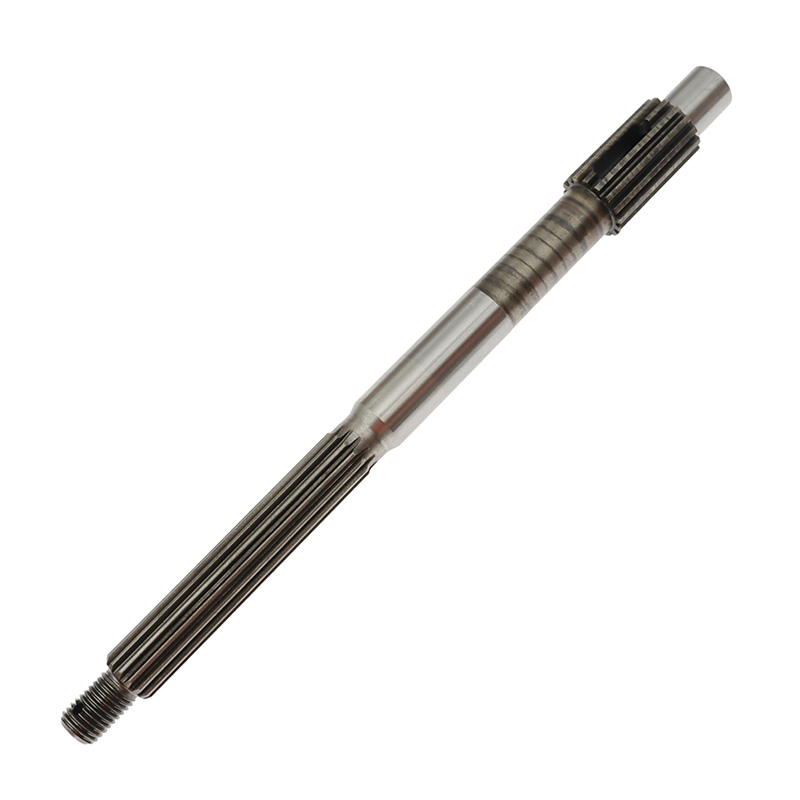
When shortlisting Ukrainian propeller shaft and shaft‑component suppliers, we applied criteria typically used by experienced marine buyers and OEMs.
- Valid ISO 9001 quality management certification, preferably verified through official databases such as IAF CertSearch. [trademo]
- Ability to supply material certificates (e.g., EN 10204 3.1) and test reports for each batch, including hardness and dimensional checks. [accio]
- Compliance with applicable CE/RoHS or similar environmental directives when shafts are integrated into systems destined for regulated markets. [accio]
- In‑house technical teams capable of reverse engineering, drawing optimization and tolerance analysis for complex shaft geometries. [bg.kompass]
- Experience with high‑precision machining (CNC, grinding, spline and keyway cutting) and dynamic balancing within ±0.01 mm where required. [bg.kompass]
- Ability to support OEM customization, including different splines, flanges, surface treatments and material upgrades.
- Incoming inspection of raw materials with traceable heat numbers and spectrographic analysis where applicable. [hrcak.srce]
- In‑process inspection (run‑out, straightness, concentricity, surface roughness) and final 100% checks for critical dimensions and key fits. [sjmarine-fitting]
- Documented control plans for known shaft issues: imbalance, misalignment, surface defects and corrosion resistance. [sjmarine-fitting]
- Clear annual capacity in shafts or shaft‑equivalents and realistic lead times for both samples and production batches. [lb.kompass]
- Evidence of export history and continuity of production despite recent regional disruptions. [maritime-executive]
- Redundancy in critical equipment (e.g., multiple CNC centers, alternative heat‑treatment partners) to reduce downtime risk. [lb.kompass]
- Dedicated English‑speaking sales and project teams, with responsive communication during design and sampling.
- Willingness to handle smaller MOQs for after‑market and mid‑size marine brands, and flexibility on engineering changes. [lb.kompass]
- Transparent documentation: drawings, PPAP‑style reports, packing standards and logistics coordination.
Marine propeller shafts are typically produced from alloy or stainless steels with high torsional strength, fatigue resistance and corrosion resistance in seawater environments. Common families include quenched‑and‑tempered alloy steels for strength, and stainless steel grades for high‑corrosion conditions or fast craft. [hrcak.srce]
Proper cleanliness of the melt, control of inclusions, and correct heat‑treatment cycles are essential to avoid defects like macroporosity, misruns, cold shuts and shrinkage cavities, which have been observed in ship propeller castings when process parameters are not optimized. Reputable suppliers preheat dies or molds and tightly control pouring temperature and venting to avoid such casting defects, then finish shafts through precise machining and grinding. [shesterenka.com]
Precision shaft manufacturers in Ukraine and elsewhere rely on CNC turning, milling, grinding and spline‑cutting to achieve tight tolerances and consistent fit with couplings and bearings. Dynamic balancing and strict control of run‑out are critical to avoid excessive vibration, which is one of the most common operational issues in propeller shaft systems. [shesterenka.com]
Misalignment between engine and shaft leads to uneven wear of bearings and seals, so accurate machining of journals and shoulders, as well as precise alignment during installation, are necessary to maintain long‑term reliability. [sjmarine-fitting]
For shafts integrated into marine systems sold in the EU or other regulated markets, buyers often require CE‑related documentation and confirmation that all components meet RoHS or similar directives where electronics or hazardous substances are involved. While the shaft itself is usually a machined steel component, the overall system and documentation still demand traceability, especially for OEMs shipping to Europe and North America. [accio]
Shesterenka is a Ukrainian manufacturer focused on custom transmission shafts, including gear shafts, helical shafts, hollow shafts, spline shafts and smooth shafts produced strictly according to customer drawings or samples. The company serves both domestic and export markets in CIS and Europe, providing flexible custom machining for power‑transmission applications where precise shaft geometry is required. [bg.kompass]
They guarantee full compliance with customer specifications on dimensions, material grade and hardness, and provide material quality certificates to support traceability and in‑house or third‑party verification. Typical lead‑time and pricing are confirmed within 2–3 working days after receiving drawings, which is attractive for after‑market or small‑batch marine shaft needs. [bg.kompass]
Core advantages:
- Strong custom shaft manufacturing capability with multiple shaft types and power‑transmission focus. [bg.kompass]
- Documented material and hardness conformity with certificates for each project. [bg.kompass]
- Short engineering response time (cost and lead‑time quote within a few days) suitable for urgent replacement shafts. [bg.kompass]
Example positioning: Suitable as a machining partner for custom propeller shafts and intermediate shafts when the buyer can supply detailed marine‑grade drawings and specifications.
JSC SMNPO Engineering in Sumy is a large engineering enterprise known for heavy machinery components and rotating equipment, frequently appearing in international trade statistics for shaft‑related exports. Its capabilities typically include large‑diameter shafts, turbine and compressor components, and precision machined parts for energy and process industries. [trademo]
While not purely marine‑focused, its heavy‑industry background and installed machining base make it a potential partner for large custom marine or industrial propeller shafts under specific projects. Buyers should, however, carefully check current operational status and export routes, given the evolving situation in the region. [trademo]
Core advantages:
- Experience with large and complex rotating components for energy and heavy machinery sectors. [trademo]
- Potential to handle large‑diameter or long shafts beyond the capacity of smaller shops. [trademo]
Example positioning: Consider for oversized marine shafts on special projects, particularly when heavy‑duty metallurgical and machining capabilities are required.
The Poltava Turbomechanical Plant has a long history in turbomachinery and precision shaft components, supporting turbine, pump and mechanical drive applications with high‑accuracy forgings and machined parts. Export records show shipments of shaft parts and rotating components, indicating a degree of experience with international buyers and documentation. [trademo]
Although its primary focus is energy and process equipment, the plant's ability to machine high‑precision shafts with strict run‑out and surface requirements can be aligned with marine propeller shaft projects where higher engineering complexity is acceptable. [trademo]
Core advantages:
- Established engineering background in turbine and high‑speed rotating shafts. [bg.kompass]
- Experience with international trade and complex technical documentation.
Example positioning: Suitable for high‑spec shafts in marine power‑generation modules, large vessels or auxiliary drives where turbine‑grade precision is requested.
Sumy Plant Energomash, another well‑known industrial player, supplies components for power engineering and heavy industry, including shaft‑type parts needed in pumps, compressors and mechanical drives. The plant has historically exported shaft parts, indicating active international cooperation and the ability to meet foreign documentation and packaging requirements. [trademo]
For marine buyers, the value lies in the ability to source robust industrial‑grade shafts, which may be adapted for certain propeller shaft or intermediate shaft duties after careful engineering validation. [trademo]
Core advantages:
- Strong heavy‑industry background and access to high‑strength material supply chains. [trademo]
- Experience exporting shaft parts and other rotating components.
Example positioning: Candidate for collaboration on industrial‑marine crossover projects where robust shaft sections and industrial standards are prioritized.
Several Ukrainian companies listed in global trade intelligence platforms, such as Dak Energetics LLC and Kredmash Impex, show export activity in shaft parts and related components. These firms often operate as integrated manufacturers or specialized exporters for machinery and automotive shafts, sometimes including cardan and propeller‑type shafts. [bg.kompass]
However, public information on dedicated marine propeller shaft lines is limited, so buyers should request detailed capability descriptions, sample reports and factory audit access before committing to critical marine applications. [bg.kompass]
Core advantages:
- Demonstrated export history with shaft‑related products.
- Potential for competitive pricing and flexible MOQs.
Example positioning: Consider as secondary or backup suppliers for non‑critical shaft components or when building a multi‑source strategy.
While not located in Ukraine, Ningbo Gill Transmission Parts Co., LTD. is highly relevant for buyers comparing Ukrainian options with alternative, stable supply hubs in Asia. Founded in 1997, Gill Transmission focuses on the R&D, production and sales of marine accessories such as outboard gears, crankshafts, drive shafts and propeller shafts, and operates a modern 25,000 m² facility with over 100 employees. [lb.kompass]
The company runs advanced automatic bevel gear machines, CNC machining centers, grinding machines and precision inspection systems, achieving an annual production capacity of more than 3.6 million units of gears and shafts. It holds ISO 9001 certification (obtained in 2024) and exports extensively to North America, Europe, Asia and South America, supporting customers with OEM and custom development capability and stable batch‑to‑batch quality. [lb.kompass]
Core advantages for mid‑size and emerging marine brands:
- Strong focus on outboard motor gears and propeller/drive shafts, with nearly three decades of marine transmission specialization. [lb.kompass]
- Flexible manufacturing and OEM support: sample mapping, reverse engineering from parts, customized splines and profiles, and tailored packaging. [lb.kompass]
- High cost‑performance ratio and willingness to support small and medium brands with manageable MOQs and responsive technical communication. [lb.kompass]
Example positioning: Ideal as a high‑value, R&D‑oriented partner for buyers who may source some shafts or pre‑machined blanks from Ukraine but want a stable, ISO‑certified marine specialist to secure long‑term supply, refine designs and support deeper OEM cooperation.
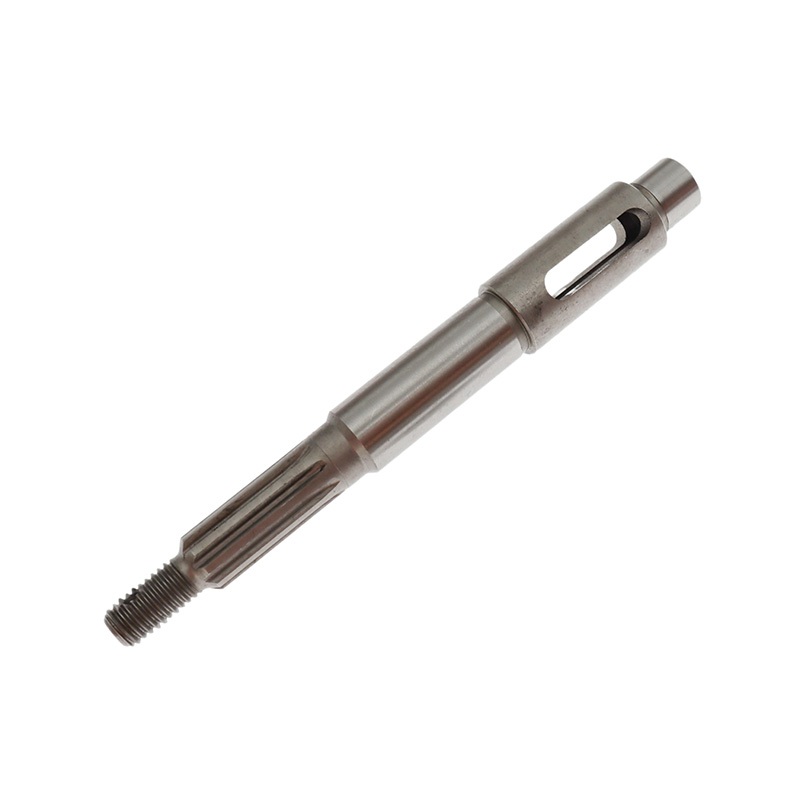
| Supplier / Region | Main focus | Typical project type | Capacity / scale (indicative) | OEM / custom strength | Certifications / quality signals |
|---|---|---|---|---|---|
| Shesterenka (UA) | Custom transmission shafts | Custom machined shafts per drawing for power transmission and possible marine uses | Medium – handles multiple shaft types; lead time quoted in 2–3 working days after drawings | Strong drawing‑based customization; supports different shaft geometries | Material and hardness certificates per job; compliance with drawing specs stressed bg.kompass |
| JSC SMNPO Engineering (UA) | Heavy machinery and rotating components | Large‑diameter shafts, energy and process‑industry rotating parts | Large – legacy heavy‑industry enterprise with broad machining base | Strong for large/complex shafts, project‑based OEM work | Established industrial reputation; buyers must verify current ISO and project references trademo |
| JSC Poltava Turbomechanical Plant (UA) | Turbine and precision shaft components | Turbine, pump and mechanical drive shafts | Large – turbomachinery background | High precision, suitable for high‑speed or critical shafts | Long operating history; buyers should confirm ISO and test procedures trademo |
| Sumy Plant Energomash (UA) | Power equipment and industrial shafts | Pump/compressor shafts and components | Large – integrated plant for power engineering | Strong in robust industrial shafts; custom potential for marine | Known exporter of shaft parts; quality level varies by project, verify case‑by‑case bg.kompass |
| Dak Energetics / Kredmash Impex + other shaft exporters (UA) | Shaft parts and components | Automotive/industrial shafts, potential cardan/propeller shafts | Small–medium – export‑oriented suppliers | Variable; must be assessed by samples and audits | Export track record; limited public data, so audits and ISO checks are crucial bg.kompass |
| Ningbo Gill Transmission Parts (CN) | Marine gears, drive shafts and propeller shafts | Outboard and marine propeller shafts for OEM/after‑market | Large – over 3.6 million units annual gear/shaft capacity, 25,000 m² plant | Very strong OEM/custom capability; sample mapping and co‑development | ISO 9001 certified; strict QC, automated machining and inspection for marine parts gilltransmission.com |
When building a shortlist of Ukrainian and international propeller shaft suppliers, professional buyers typically structure their RFQ and audit checklist around:
- Technical fit: Can the supplier meet your shaft length, diameter, material and tolerance requirements; do they have balancing and testing capability for your speed and load profile? [sjmarine-fitting]
- Process capability: Do they have appropriate CNC, grinding and inspection equipment for straightness, surface finish and spline accuracy? [lb.kompass]
- Quality system: Is there valid ISO 9001 certification and a documented QC plan for shafts (including control of common casting/machining defects)? [hrcak.srce]
- Delivery performance and risk: What are proven lead times, minimum order quantities, and contingency plans if logistics are disrupted? [maritime-executive]
- Service and engineering support: How quickly do they respond to technical questions, and can they support drawing optimization or failure analysis? [accio]
A frequent concern is whether a supplier's ISO or other certificates are valid and current. The recommended verification path is:
1. Request a copy of the ISO 9001 certificate and note the certificate number, issuing body and validity dates.
2. Search for the certificate and company through IAF CertSearch, the official global database for accredited certificates, which validates the certificate, the certification body and the accreditation body. [trademo]
3. If needed, contact the certification body named on the certificate and ask for written confirmation that it is still valid and not suspended.
4. For Ukrainian‑specific regulatory compliance (UkrSEPRO), ask for scanned certificates and cross‑check requirements with specialized agencies experienced in Ukrainian conformity procedures. [eastcertification]
- Start with a detailed RFQ package: 2D drawings, 3D models where possible, material standards, surface treatment requirements, performance context (RPM, torque, environment). [accio]
- Request 2–5 prototype shafts and a full inspection report per part, covering dimensions, hardness, surface roughness and run‑out, with accompanying material certificates. [sjmarine-fitting]
- Perform your own or third‑party inspection and, ideally, install at least one shaft in real operating conditions for field validation before mass production.
- Once approved, establish a control plan with agreed sampling levels, critical‑dimension checks and change‑management rules (e.g., no process or material changes without written approval).
Given the evolving security and infrastructure situation, shipping from Ukraine may involve route changes or reallocating to alternative ports and corridors over time. Buyers should: [maritime-executive]
- Confirm current export routes, typical transit times and Incoterms with each supplier.
- Consider dual‑sourcing critical propeller shafts between Ukraine and more stable hubs such as China to mitigate geopolitical and logistics risk. [maritime-executive]
- Require robust packaging and corrosion‑protection procedures (VCI paper, oiling, sealed crates) to prevent transit damage and rust, especially for sea freight. [sjmarine-fitting]
- Material downgrading or substitution: Using lower‑grade steel than specified can significantly reduce fatigue life and corrosion resistance of propeller shafts. [hrcak.srce]
- Insufficient control of casting and forging defects: Macroporosity, cold shuts and shrinkage cavities in propeller‑related castings are often caused by poor pouring conditions and lack of die preheating. [hrcak.srce]
- Inadequate balancing and alignment checks: Poor dynamic balancing leads to vibration, bearing failure and premature seal wear, especially at higher shaft speeds. [sjmarine-fitting]
- Expired or non‑accredited certifications: Suppliers may show ISO certificates from non‑accredited bodies or ones that are expired, creating a false sense of security.
One widely known but seldom documented practice among experienced marine buyers is to *always* request destructive testing results for at least one shaft per initial batch, even when the supplier resists. By cutting and testing a sacrificial shaft from the first production lot—checking core hardness, microstructure and possible internal defects—you gain real insight into material integrity and heat‑treatment quality that cannot be seen from external dimensions alone. [accio]
Veteran buyers also cross‑check shaft straightening procedures and heat‑treatment records during factory audits, knowing that some workshops rely heavily on post‑machining straightening instead of controlling distortion at the process design stage. When straightening is excessive, internal stresses can shorten service life and increase the risk of warping in service, especially under fluctuating thermal and mechanical loads. [hrcak.srce]
Ukraine's engineering and metalworking base still offers valuable options for propeller shafts and related transmission components, especially when buyers are prepared to manage certification verification, auditing and logistics more actively. By combining carefully selected Ukrainian partners such as Shesterenka and major engineering plants with stable, marine‑specialized suppliers like Ningbo Gill Transmission in China, procurement managers can build a resilient and cost‑effective shaft supply chain for both OEM and after‑market needs. [maritime-executive]
If you are planning to qualify new propeller shaft suppliers in 2026, a practical next step is to define your technical and compliance requirements, shortlist Ukrainian and alternative partners, and run a structured sampling and test program using the verification practices outlined above.[accio]
1. How can I verify whether a supplier's ISO certificate is genuine and not expired?
Use platforms like IAF CertSearch, where you can search by certificate number or company name to confirm that the certificate is valid, the certification body is accredited, and the accreditation body is recognized. If the result is unclear, contact the certification body directly and request written confirmation. [trademo]
2. What's the most effective way to detect internal defects in propeller shafts before approval?
Combine non‑destructive testing (e.g., ultrasonic testing) for all shafts with destructive testing of at least one unit from the first batch to evaluate core hardness, microstructure and potential internal porosity or shrinkage defects. This dual approach is far more reliable than relying solely on external inspection. [hrcak.srce]
3. How do I compare Ukrainian suppliers with alternatives like Chinese OEMs for long‑term shaft programs?
Build a comparative matrix covering machining capability, balancing tolerance, certifications, logistics risk, MOQs and engineering support, then weight criteria according to project priorities. Many buyers use Ukraine for cost‑effective and regional projects, while partnering with established marine specialists like Ningbo Gill Transmission for long‑term, high‑volume OEM programs. [accio]
4. What should I require in a propeller shaft supplier's QC documentation?
At minimum: material certificates (EN 10204 3.1 or equivalent), hardness results, dimensional reports for critical features, run‑out measurements, surface‑roughness values and NDT results where applicable. For critical marine shafts, also request process FMEAs or control plans that specifically address common defects like misalignment, imbalance and corrosion. [sjmarine-fitting]
5. How often should I re‑audit a propeller shaft supplier once production is stable?
Many professional buyers re‑audit every 12–24 months, or immediately after any major incident such as a non‑conformance spike, process change or significant personnel turnover. Given the regional context, Ukrainian suppliers may warrant more frequent remote or on‑site audits focused on logistics robustness, equipment maintenance and personnel stability. [accio]


