


close
Choose Your Site
Global
Social Media
Views: 257 Author: Gill Transmission Parts Publish Time: 2026-09-16 Origin: Site


Content Menu
● Why Choosing the Right Boat Motor Parts Supplier Matters
● Main Places to Buy Boat Motor Parts
● Where to Buy Outboard Motor Parts for Wholesale Supply
>> What a Professional Marine Parts Manufacturer Can Offer
● How to Identify the Correct Boat Motor Part Before Ordering
>> Essential Information to Send a Supplier
● A Buyer's Checklist for Drive Shafts and Lower Unit Parts
>> Check These Details Before Buying a Drive Shaft
● Questions to Ask Before Choosing a Supplier
>> Quality and Production Questions
>> Commercial and Supply Questions
● A Simple Process for Buying Boat Motor Parts Safely
>> Step 1: Define the Actual Failure
>> Step 2: Verify Fitment Using Multiple References
>> Step 3: Request a Sample for Important Orders
>> Step 4: Document Approved Specifications
>> Step 5: Start With a Controlled First Order
● Common Mistakes When Buying Marine Engine Parts
>> Assuming Similar Parts Are Interchangeable
>> Ignoring the Condition of Mating Components
>> Ordering Without a Clear Part Number
>> Skipping Incoming Inspection
● Why Factory Capability Matters for Marine Transmission Parts
● Choose Parts That Protect Your Reputation
>> Where is the best place to buy boat motor parts?
>> How do I find the right outboard motor part?
>> Can I buy aftermarket boat motor parts instead of original parts?
>> What information should I provide when requesting a drive shaft quotation?
>> Why do boat drive shafts fail?
>> Should I replace gears and shafts together?
>> Can a manufacturer create a custom boat motor part from a sample?
>> What should distributors inspect when receiving marine parts?
Knowing where to buy boat motor parts is not only about finding the lowest price. It is about finding the correct component, confirming fitment, understanding material and machining quality, and choosing a supplier that can support your repair business or marine-parts distribution program over time.
For boat owners, repair workshops, distributors, and importers, the wrong outboard motor part can lead to difficult installation, premature wear, gearbox damage, lost operating time, and expensive customer complaints. This is especially important for transmission-related components such as drive shaft, propeller shaft, pinion gears, forward gears, reverse gears, clutch dogs, and lower unit repair parts.
At Ningbo Gill Transmission Parts Co., Ltd., we have focused on the development, manufacturing, and supply of marine transmission components since 1997. Our work centers on precision outboard motor parts for aftermarket replacement, wholesale supply, and customized manufacturing requirements. With more than 25,000 square meters of production facilities, over 100 employees, and annual capacity exceeding 3.6 million units, we understand what professional buyers need before placing an order: stable dimensions, dependable material performance, repeatable quality, and clear communication.
This guide explains where to buy boat motor parts, how to compare suppliers, and how to reduce sourcing risk before you purchase.

A boat motor operates in a demanding environment. High torque, repeated shifting, vibration, impact loading, heat, moisture, and saltwater exposure all place stress on drivetrain components. A small dimensional error in a gear, spline, shaft, or engagement surface can create major problems inside the lower unit.
When buyers search for boat engine replacement parts, they often focus first on price and product photos. However, professional sourcing requires a broader evaluation.
A reliable supplier should help you confirm:
- Engine brand, model, horsepower, and production year
- Original equipment part number or cross-reference number
- Exact shaft length, spline count, gear tooth profile, and mounting dimensions
- Material, heat treatment, hardness, and surface finish requirements
- Compatibility with the lower unit or transmission assembly
- Batch consistency for repeat orders
- Packaging, labeling, and export support
- Availability of samples before larger purchases
For a single repair, the priority may be fast delivery. For a distributor or importer, the priority is different: dependable product quality across hundreds or thousands of units, predictable lead times, and a supplier that can develop new replacement parts as market demand changes.
The cheapest component is not always the lowest-cost solution. A lower purchase price can become expensive if the part causes returns, repair delays, warranty claims, or damage to connected components.
There is no single best place to buy boat motor parts for every buyer. The right purchasing channel depends on whether you need original branded parts, aftermarket replacements, wholesale inventory, or custom-made drivetrain components.
| Purchasing Channel | Best For | Main Advantages | Key Considerations |
|---|---|---|---|
| Authorized dealer network | Original replacement parts | Brand-backed fitment and official part identification | Often higher pricing and limited flexibility |
| Local marine repair shop | Urgent repairs and installation support | Fast access, practical repair advice, local service | Inventory may be limited |
| Online marine-parts retailer | Common maintenance and replacement parts | Convenient comparison and broad product selection | Buyer must verify fitment carefully |
| Marine parts distributor | Workshops and recurring purchasers | Stock availability and business support | Product range varies by distributor |
| Specialized manufacturer | Wholesale, aftermarket, custom projects | Direct pricing, technical communication, product development capability | Requires clear specifications and purchasing planning |
| Marine trade show or industry event | Importers and sourcing teams | Face-to-face supplier evaluation and product comparison | Requires time, travel, and follow-up verification |
For standard service items, such as spark plugs, filters, impellers, gaskets, and fuel-system components, a local dealer or established retailer may be suitable.
For outboard lower unit parts, especially drive shafts, propeller shafts, gears, clutch dogs, and transmission components, buyers often benefit from working directly with a manufacturer or specialized marine-parts supplier. These parts require closer attention to dimensional accuracy, material performance, and compatibility.
If you operate a marine-parts business, repair chain, ecommerce store, or import company, buying directly from a manufacturer can provide better control over product range and long-term supply.
A qualified manufacturer can support more than a one-time transaction. It can become part of your supply chain.
A capable factory should be able to provide:
- Standard aftermarket outboard parts for common engine applications
- OEM-style replacement components based on original samples or drawings
- Custom machining and sample mapping
- Consistent production for repeat orders
- Technical review before mass production
- Inspection records for critical dimensions
- Private-label packaging or customized labeling
- Export-ready packaging and documentation
- Responsive communication for new product development
Ningbo Gill Transmission Parts Co., Ltd. manufactures marine accessories including outboard gears, crankshafts, drive shafts, and propeller shafts. Our production equipment includes automatic spiral bevel gear machine tools, machining centers, grinding machines, and precision inspection equipment. This production capability is especially relevant when a buyer needs components that must work accurately with mating gears, bearings, splines, and clutch mechanisms.
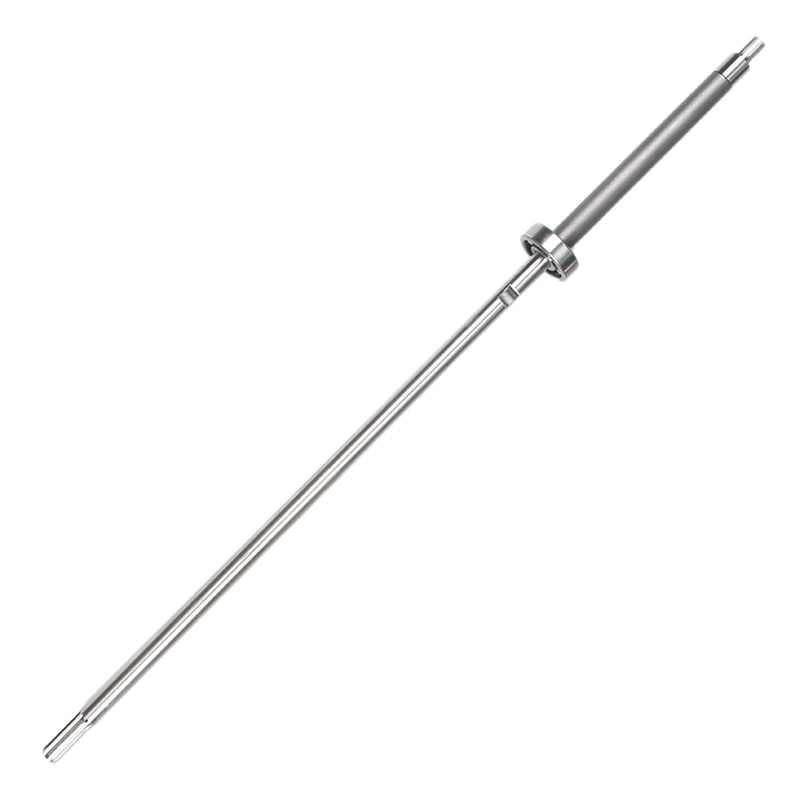
For example, a drive shaft is not simply a metal rod. Its splines must engage correctly, its straightness must support smooth rotation, its dimensions must match the intended lower unit, and its material treatment must withstand repeated torque loads. If any of these details are overlooked, the shaft may be difficult to install or may fail prematurely.
The most common purchasing mistake is ordering based only on an image or a broad product name. Terms such as "Yamaha drive shaft," "Mercury gear," or "Suzuki propeller shaft" are not specific enough for dependable fitment.
Before you buy, collect as much identification information as possible.
Prepare the following details before requesting a quotation:
1. Outboard engine brand
Examples include Yamaha, Mercury, Suzuki, Tohatsu, Parsun, Hidea, Hangkai, and Yamabisi.
2. Engine model and horsepower
A 40 HP engine and a 60 HP engine may use different transmission components even when the products look similar.
3. Model year or serial-number range
Parts can change across production years, revisions, and regional versions.
4. Original part number
The original-equipment number is usually the fastest way to identify a compatible replacement.
5. Clear photographs
Include multiple angles, close-ups of splines, gear teeth, markings, seals, and measurement points.
6. Critical measurements
For shafts, measure overall length, spline diameter, spline count, bearing-seat diameter, thread size, and key contact surfaces.
7. Sample part when available
A physical sample is often the best reference for custom development or replacement verification.
8. Application information
Explain whether the part is for a retail repair, workshop use, resale inventory, or a manufacturing project.
A professional supplier should review the information before recommending a part number. If a supplier promises compatibility without asking for engine details, part numbers, measurements, or photos, treat that as a warning sign.
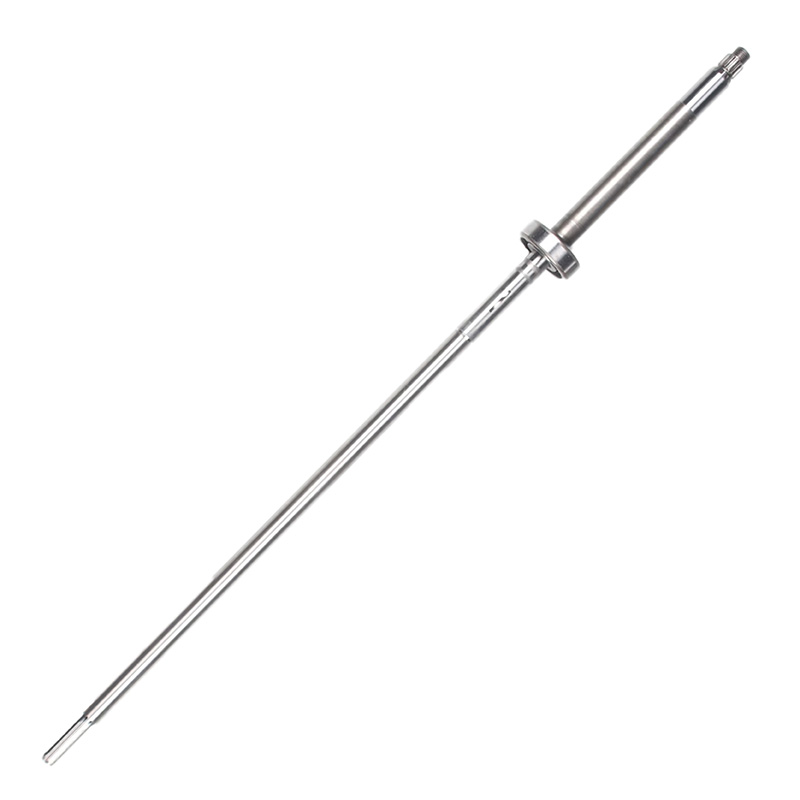
Transmission parts deserve additional attention because they operate as part of an assembled system. A shaft that looks correct can still create problems if spline geometry, hardness, straightness, or bearing locations are inaccurate.
- Overall length: Confirm the full shaft length and all stepped sections.
- Spline count and profile: Similar-looking splines may not engage correctly.
- Diameter tolerances: Bearing seats and seal-contact areas need accurate dimensions.
- Straightness: Shaft runout can contribute to vibration, seal wear, and bearing stress.
- Material specification: The selected steel must match the load and service environment.
- Heat treatment: Treatment affects wear resistance, fatigue life, and core toughness.
- Surface quality: Roughness or damage at sealing surfaces can cause water intrusion.
- Corrosion protection: Marine conditions require appropriate material and protective processes.
- Gear or crankshaft interface: Confirm the upper and lower engagement points.
- Packaging protection: Shafts should be protected against impact, scratches, and moisture during transit.
A drive shaft must be evaluated as part of the power-transfer system, not as an isolated spare part. Its performance depends on how it interfaces with the engine, gears, bearings, seals, and propeller-side components.
A strong supplier relationship begins with the right questions. Whether you are buying one component or building a wholesale product line, these questions can reveal how seriously a supplier manages quality and technical support.
- Do you manufacture the part in-house or source it from another factory?
- What material grade is used for this component?
- Is the part hardened, carburized, ground, or otherwise heat-treated?
- What dimensions are inspected during production?
- Can you provide sample approval before a bulk order?
- How do you control batch consistency?
- Can you provide product photos, inspection information, or material documentation when required?
- Do you have quality-management certification?
- How do you handle a confirmed quality issue?
- What is the minimum order quantity?
- What is the sample lead time?
- What is the production lead time for repeat orders?
- Can you produce customized packaging?
- Can you add a private label, barcode, or customer part number?
- What shipping terms are available?
- Can you support consolidated orders across multiple marine parts?
- Are replacement parts available for repeat purchase after the initial order?
Ningbo Gill Transmission Parts Co., Ltd. reports ISO 9001 quality-management certification and states that its production process includes precision inspection equipment and controlled manufacturing steps. For purchasers, these capabilities are meaningful only when they are combined with practical verification: sample testing, clear technical specifications, and ongoing communication about fitment and quality requirements.
Buying marine parts becomes more reliable when the process is structured. The following method works for repair shops, retailers, distributors, and importers.
Do not replace a part only because it appears worn. Identify the source of the problem.
For example, a lower-unit vibration may come from:
- A bent propeller
- A bent propeller shaft
- Worn bearings
- Damaged gear teeth
- Incorrect shaft alignment
- Fishing line or debris behind a seal
- Water contamination in gear lubricant
- A damaged drive shaft or spline connection
Replacing the wrong part wastes time and may leave the real issue unresolved.
Use at least two sources of confirmation whenever possible:
- Original part number
- Engine model and serial number
- Service manual reference
- Supplier cross-reference
- Physical sample comparison
- Dimensional measurement
- Repair technician confirmation
This approach reduces the risk of confusing similar components across horsepower ranges or production years.
For wholesale purchasing or a new supplier relationship, sample approval is one of the most valuable risk-control steps.
Inspect the sample for:
- Visual finish
- Markings and packaging
- Dimensions
- Spline fit
- Gear engagement
- Bearing and seal-seat fit
- Material appearance
- Installation performance
For critical drivetrain components, test fitting is preferable to visual inspection alone.
Once a sample is approved, document the purchasing standard. Include product photos, part numbers, measurements, packaging requirements, inspection points, and acceptable tolerances where applicable.
This creates a consistent reference for future orders and helps prevent misunderstandings when purchasing volumes increase.
A smaller initial order allows you to evaluate product quality, packaging, shipment condition, customer response, and supplier communication before committing to larger volumes.
A controlled first order is particularly useful for new aftermarket part numbers or customized components.
Many sourcing problems can be avoided by recognizing a few common mistakes early.
Very low pricing may indicate simplified machining, inconsistent materials, limited inspection, or inadequate packaging. Price matters, but it should be compared alongside quality evidence and expected service life.
Two shafts or gears may look almost identical but differ in tooth count, spline profile, length, hardness, or interface dimensions. Always confirm the specific application.
A new gear installed against a severely worn mating gear may fail early. A new shaft used with worn bearings, damaged seals, or incorrect alignment can also develop problems quickly.
Photos are helpful, but they are not enough for every application. Use part numbers, measurements, and engine identification details whenever possible.
Distributors should inspect shipments before putting them into inventory. Confirm quantities, part numbers, packaging, visible condition, and sample dimensions before parts are sold onward.
Marine transmission components require more than basic metalworking. Their reliability depends on the full manufacturing chain: raw-material control, machining accuracy, heat treatment, grinding, inspection, packaging, and process consistency.
Ningbo Gill Transmission Parts Co., Ltd. has operated in the marine-parts sector since 1997 and specializes in components used in outboard motor transmission systems. The company's stated manufacturing scope includes gears, drive shafts, transmission shafts, propeller shafts, and related outboard motor components.
For professional buyers, a specialized production partner can provide important advantages:
- Technical understanding of lower unit components
- Ability to compare samples and develop replacement parts
- Better control over critical machining processes
- More stable supply for repeat orders
- Support for product-line expansion
- Flexible production for market-specific requirements
- Direct communication with a team familiar with marine applications
For a distributor, this can mean building a more reliable catalog of replacement parts. For a repair workshop, it can mean access to components that are harder to source through standard local channels. For a brand owner, it can mean developing a private-label product range with clearer quality and packaging standards.
When deciding where to buy boat motor parts, start with the part's application, not the supplier's advertisement. Confirm the engine information, verify dimensions, examine the quality controls behind the product, and select a supplier that understands the operating demands of marine transmission systems.
For basic maintenance items, local retailers and authorized dealers may be the most practical choice. For outboard drive shafts, propeller shafts, gears, clutch components, and lower unit replacement parts, a specialized manufacturer can offer stronger technical support, more consistent supply, and greater flexibility for wholesale or custom requirements.
Ningbo Gill Transmission Parts Co., Ltd. supports customers looking for dependable marine transmission parts, including standard replacement products and custom-developed components. If you need help identifying a drive shaft, gear, propeller shaft, or lower-unit part, send your part number, engine model, photos, and measurements for a detailed compatibility review and quotation.
The best place depends on the part and your purchasing needs. Authorized dealers are suitable for branded original parts, local marine shops are useful for urgent repairs, and specialized manufacturers are often a better option for aftermarket transmission parts, wholesale programs, and custom sourcing.
Start with the engine brand, model, horsepower, serial number, and original part number. Then compare photos and critical measurements. For shafts and gears, confirm spline details, length, tooth profile, and bearing-seat dimensions before ordering.
Yes, aftermarket parts can be a practical choice when they are manufactured to suitable specifications and verified for the intended application. For critical drivetrain components, request fitment confirmation and inspect a sample before placing a large order.
Provide the engine brand, model, horsepower, year or serial-number range, original part number, clear photos, overall length, spline count, key diameters, and a physical sample if available. This information helps a supplier identify the correct component.
Common causes include corrosion, impact damage, bent shafts, worn splines, inadequate lubrication, water intrusion, bearing failure, misalignment, and fatigue from repeated torque loads. A full lower-unit inspection is often needed to identify the root cause.
Not always, but you should inspect the mating components. A new gear or shaft may not perform well if connected parts are worn, damaged, misaligned, or contaminated. Replace related components when inspection shows they are outside acceptable condition.
Yes. A specialized manufacturer may be able to develop a replacement component through sample mapping, dimensional measurement, material selection, machining, and sample approval. The process is most effective when the buyer provides a complete sample and clear application information.
Check part numbers, quantities, labels, packaging condition, visible finish, critical measurements, and sample fitment. For recurring orders, compare the new delivery against the approved sample and documented product standard.
2. [Gill Transmission — Outboard motor parts and lower-unit solutions]
3. [Gill Transmission Products — marine gears, shafts, lower unit parts, and technical articles]
5. [Gill Transmission — Can a Boat Propeller Shaft Use U-Joints?]
6. [Gill Transmission — Bent Propeller Shaft vs Bent Propeller: How to Tell the Difference]


