


close
Choose Your Site
Global
Social Media
Views: 222 Author: Gill Transmission Publish Time: 2026-05-02 Origin: Site


Vietnam's marine manufacturing sector has emerged as a strategic hub within Southeast Asia's maritime supply chain, with the country's total trade turnover reaching US$920 billion in 2025 and marine propulsion components playing an increasingly vital role. The boat propeller shafts market, valued at $8.6 billion globally in 2025, is projected to grow at a CAGR of 14.01% through 2033, positioning Vietnam as a competitive sourcing destination for international buyers seeking quality marine transmission components. This guide identifies leading propeller shaft manufacturers and suppliers in Vietnam based on rigorous industry criteria, providing procurement professionals with actionable insights for supplier selection. [linkedin]
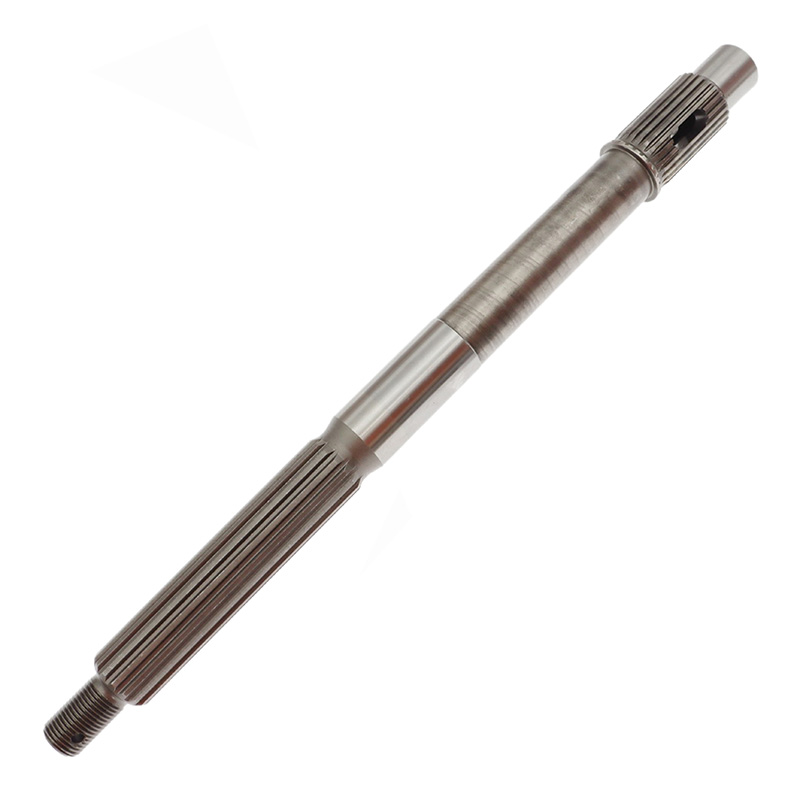
Vietnam has strategically positioned itself within the global maritime supply chain, leveraging its extensive coastline and growing industrial capabilities. The country's marine propulsion engine market experienced consistent growth of 11.40% in 2025, projected to reach 13.65% by 2029, driven by expanding shipping sectors and modernization initiatives in commercial fishing fleets. Vietnam's manufacturing exports in the first ten months of 2025 reached US$391 billion, representing a 16.2% year-on-year increase, with the FDI sector accounting for over 75.6% of national export value. [6wresearch]
The marine component manufacturing sector benefits from Vietnam's industrial park infrastructure, including specialized zones equipped with advanced machining capabilities and quality control systems. Major industrial clusters are located in Dong Nai Province, Binh Duong, and northern regions like Bac Ninh, where manufacturers have established ISO-certified facilities with modern production equipment. [trademo]
Professional procurement requires transparent evaluation standards that go beyond marketing claims. Our assessment methodology incorporates five critical dimensions used by experienced marine component buyers:
Manufacturing Capabilities & Certifications: We prioritized suppliers holding ISO 9001:2015 quality management certification, IATF 16949 for automotive-grade standards, and compliance with international marine standards such as ISO 22554 for propeller shaft components and ISO 10817 for shaft condition monitoring. Facilities with advanced CNC machining centers, automated bevel gear machines, and precision grinding equipment received higher rankings due to their ability to maintain tight tolerances critical for marine applications. [angst-pfister]
Material Quality & Technical Specifications: Propeller shafts must utilize corrosion-resistant materials including marine-grade stainless steel (316L) or high-grade alloys capable of withstanding saltwater environments. We evaluated manufacturers' material sourcing practices, heat treatment capabilities, and surface finishing processes that impact durability and torque resistance. [marinetechq]
Production Scale & MOQ Flexibility: Annual production capacity, measured in units per year, indicates a supplier's ability to handle both bulk orders and accommodate growing accounts. We assessed minimum order quantities (MOQ) to identify manufacturers serving different buyer segments, from large shipping companies to emerging marine equipment distributors.
Quality Control Infrastructure: Rigorous inspection protocols at multiple production stages—including incoming material verification, in-process dimensional checks, and final product testing—separate professional manufacturers from basic fabrication shops. We examined whether suppliers employ coordinate measuring machines (CMM), hardness testers, and vibration analysis equipment to ensure shaft balance and alignment precision. [marinetechq]
Export Track Record & Compliance: Suppliers with established export operations to North America, Europe, and other regulated markets demonstrate familiarity with international shipping documentation, certification requirements, and customer service standards. We reviewed whether manufacturers work with classification societies such as ABS, DNV-GL, Lloyd's Register, and Bureau Veritas for marine product approvals. [haiphongmarine]
Haiphong Marine Services operates as a certified marine spare parts supplier across Vietnam, providing deck gear, engine components, and transmission shaft solutions for various vessel types. The company maintains partnerships with class-certified engineers ensuring compliance with ABS, DNV, Lloyd's Register, and ISO standards. HMS offers custom-cut propeller shaft solutions with guaranteed compatibility and certification, critical for fluid transfer, air systems, and hydraulic operations onboard commercial vessels. [haiphongmarine]
Their service coverage includes marine supply at anchorage locations throughout Vietnam, supported by logistics networks and launch boat delivery services that enable rapid parts replacement for vessels in port. This operational capability addresses a common pain point for ship operators requiring emergency component replacements during tight turnaround schedules. [haiphongmarine]
Based in Ho Chi Minh City's industrial zones, Saigon Precision Co., Ltd. has established a presence in precision shaft manufacturing with export volumes of 142,161 units annually according to trade data. The company operates facilities in the Saigon-Linh Trung Industrial Park, equipped with multi-axis CNC machining centers capable of producing shafts with complex geometries required for marine transmission applications. [trademo]
Their production infrastructure supports both prototype development and volume manufacturing, making them suitable for marine equipment OEMs requiring iterative design refinement before mass production. The company serves regional markets across Southeast Asia and has developed expertise in aftermarket replacement parts for Japanese and European marine engine brands.
While primarily focused on sealing solutions, APVN Sealing's expertise in precision manufacturing extends to marine transmission component support systems. Established in 2023 as a fully-owned subsidiary of the Angst+Pfister Group, the company operates a 4,500 square meter facility at Ho Nai Industrial Park in Dong Nai Province equipped with 24 advanced injection molding presses. [angst-pfister]
The facility holds ISO 9001:2015, GMP, and IATF 16949 certifications, demonstrating commitment to automotive-grade quality standards applicable to high-performance marine components. Their technical capabilities in custom sealing solutions complement propeller shaft assemblies, where shaft seal integrity directly impacts operational reliability and prevents seawater ingress into bearing housings. [angst-pfister]
Although headquartered in Ningbo, China, Ningbo Gill Transmission Parts Co., LTD. maintains substantial business relationships with Vietnamese marine equipment distributors and represents a viable alternative for buyers seeking established manufacturing expertise with flexible order terms. Established in 1997 with over 28 years of specialized experience in outboard motor transmission components, the company operates a 25,000 square meter facility with annual production capacity exceeding 3.6 million units. [trademo]
Gill Transmission's core strength lies in their comprehensive in-house manufacturing control, from raw material processing through final assembly. Their equipment portfolio includes advanced spiral bevel gear machines, CNC machining centers, automated grinding systems, and precision inspection instruments that enable them to maintain tolerances within ±0.01mm for critical shaft dimensions. This level of precision is essential for propeller shafts, where even minor imbalances create vibration issues that accelerate bearing wear and reduce component lifespan. [trademo]
The company achieved ISO 9001 certification in 2024, formalizing quality management systems developed over decades of production experience. Their technical team provides OEM and custom development capabilities, including reverse engineering from customer samples—a valuable service for buyers needing to replace obsolete components without original technical drawings. Gill Transmission demonstrates particular strength in serving mid-sized marine equipment brands and aftermarket distributors who require batch consistency without the high MOQs demanded by larger Chinese manufacturers. [trademo]
For procurement managers evaluating cross-border suppliers, Gill Transmission offers English-speaking technical support, flexible payment terms, and experience navigating export documentation for Southeast Asian markets. Their product range encompasses drive shafts, transmission shafts, precision gears, and crankshafts compatible with major outboard engine brands including Yamaha, Tohatsu, Suzuki, and Mercury—indicating their manufacturing versatility across different shaft specifications. [trademo]
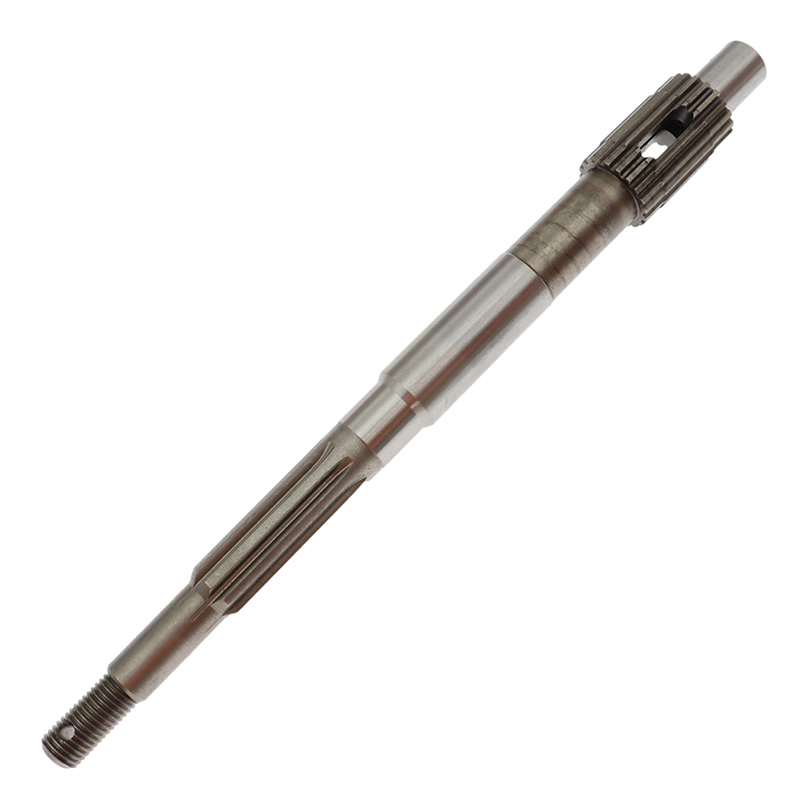
The broader Vietnamese manufacturing ecosystem includes numerous small-to-medium enterprises specializing in precision machining services for marine components. Industrial parks in Binh Duong Province, such as the Vietnam-Singapore Industrial Park, host facilities operating CNC machining centers and heat treatment equipment capable of producing propeller shafts to customer specifications. [trademo]
These contract manufacturers typically serve as secondary suppliers for established marine equipment brands or fulfill smaller production runs for specialized vessel types. While they may lack the extensive quality certifications of larger operations, their lower overhead structures often translate to competitive pricing for buyers willing to implement more rigorous incoming inspection protocols.
| Manufacturer | ISO Certification | Production Capacity | MOQ Flexibility | Primary Market Focus | Technical Customization |
|---|---|---|---|---|---|
| Haiphong Marine Services | ISO + Class Society Approvals | Medium (Service-oriented) | High (spare parts) | Vietnam domestic + regional | Custom-cut solutions |
| Saigon Precision Co., Ltd. | ISO 9001 (inferred) | 142K+ units/year | Medium | Southeast Asia export | OEM prototype to production |
| APVN Sealing | ISO 9001:2015 + IATF 16949 | High (component focus) | Medium-Low | Global (Group network) | Precision sealing integration |
| Ningbo Gill Transmission | ISO 9001 (2024) | 3.6M+ units/year | High (OEM + aftermarket) | Global marine aftermarket | Full reverse engineering |
ISO certification claims require verification beyond reviewing certificates displayed on websites. Request the complete ISO registration number and certifying body name, then cross-reference through the issuing organization's online registry. The International Accreditation Forum (IAF) maintains a database of accredited certification bodies—certificates issued by non-accredited entities lack international recognition and indicate potential quality control deficiencies.
For marine applications, confirm whether the manufacturer works with classification societies (ABS, DNV, Lloyd's Register, Bureau Veritas) and request recent survey reports or product type approvals. These third-party validations provide independent verification of manufacturing processes and material compliance that internal quality documents cannot match. [mermaid-safety]
Critical Verification Question: Request batch testing reports from recent production runs showing dimensional measurements, material composition analysis (via spectrometer readings), and hardness test results. Legitimate manufacturers maintain this data as part of their quality control procedures and can provide it within 24-48 hours.
A common industry pitfall involves suppliers substituting lower-grade stainless steel to reduce costs while claiming marine-grade material compliance. Marine propeller shafts require 316L stainless steel with molybdenum content of 2-3% for corrosion resistance in saltwater environments. Request material certifications from the steel mill showing chemical composition analysis—these should accompany every significant order. [marinetechq]
For high-performance applications, consider duplex stainless steels (2205, 2507) offering superior strength-to-weight ratios and enhanced resistance to stress corrosion cracking. However, these materials require specialized welding procedures and heat treatment protocols that not all manufacturers can properly execute. Verify the supplier's experience with these advanced alloys through references from similar projects.
Professional buyers implement structured sample testing before committing to production orders. A comprehensive propeller shaft sample evaluation should include:
Dimensional Verification: Measure all critical dimensions using calibrated micrometers and dial indicators. Compare measurements against technical drawings to verify the supplier's ability to hold specified tolerances. Pay particular attention to shaft straightness (runout) when rotated in V-blocks—excessive runout indicates machining defects or material internal stresses.
Material Hardness Testing: Use a portable hardness tester to verify surface hardness meets specifications. Propeller shafts typically require Rockwell C hardness of 28-35 depending on the application. Values outside this range suggest improper heat treatment.
Surface Finish Analysis: Examine machining marks under magnification. Rough surfaces or visible tool chatter marks create stress concentration points that can initiate fatigue cracks under cyclic loading conditions common in marine propulsion systems.
Vietnam's port infrastructure has improved significantly, with major shipping hubs in Haiphong, Ho Chi Minh City (Saigon), and Da Nang offering regular container services to global destinations. However, procurement managers should factor in lead times of 45-60 days for ocean freight to North American and European ports, plus additional time for customs clearance. [tradeint]
Consider consolidating shipments with other marine components to optimize container utilization and reduce per-unit freight costs. Many Vietnamese manufacturers can coordinate with nearby suppliers to provide consolidated shipping services, though this requires careful quality control oversight to ensure mixed-supplier shipments meet specifications.
Customs Classification: Propeller shafts typically fall under HS Code 8483 (transmission shafts and cranks) or more specific marine equipment codes depending on end-use application. Verify the correct classification with your customs broker to avoid delays and ensure accurate duty calculations.
Initial orders from new Vietnamese suppliers should utilize letters of credit (L/C) or escrow services that provide payment protection contingent upon meeting agreed specifications. While many suppliers request 30-50% deposits for custom production runs, structure these payments around milestone achievements—material procurement, completion of machining, final inspection clearance—rather than arbitrary time-based schedules.
For ongoing relationships with verified suppliers, consider transitioning to net-30 or net-60 payment terms that improve cash flow management. However, maintain quality inspection protocols regardless of payment structure—financial trust should not replace technical verification.
A rarely-discussed challenge in marine component sourcing involves "tolerance creep," where manufacturers gradually relax dimensional controls as production volumes increase and buyer inspection frequency decreases. This phenomenon occurs because maintaining tight tolerances requires frequent tool replacement and machine recalibration, both of which reduce profitability.
Combat tolerance creep by implementing random batch inspections throughout the supplier relationship, not just during initial qualification. Specify in purchase contracts that you reserve the right to conduct on-site inspections with 48 hours' notice and that discovered non-conformances trigger automatic batch rejections plus rework costs borne by the supplier.
Experienced procurement teams also request witness testing where the buyer's quality representative observes final inspections at the supplier's facility before shipment authorization. This practice, common in aerospace and defense procurement, has proven equally valuable in marine component sourcing where component failures carry significant safety and financial consequences.
1. How can I verify that a supplier's ISO 9001 certification hasn't expired or been suspended?
Request the complete certificate number and certifying body name, then contact the certification body directly through their official website. Most accredited bodies maintain online verification databases where you can enter the certificate number to confirm current status. Additionally, check that the certifying organization appears on the International Accreditation Forum (IAF) list of recognized bodies—certificates from non-accredited entities lack credibility. Request annual surveillance audit reports, which ISO 9001 holders must undergo to maintain certification validity.
2. What are the realistic MOQ expectations for custom propeller shafts from Vietnamese manufacturers?
MOQ varies significantly based on shaft complexity and diameter. For standard marine propeller shafts (25-50mm diameter, simple geometry), expect MOQs of 50-100 units from mid-sized suppliers and 200-500 units from larger operations focused on volume production. Custom shafts with specialized material grades, complex geometries, or unique surface treatments typically require higher MOQs of 100-300 units to justify tooling investments and setup costs. Suppliers serving the aftermarket segment, like Ningbo Gill Transmission, often demonstrate greater MOQ flexibility (potentially 20-50 units) because their business models accommodate smaller batch diversity. [trademo]
3. How do I assess whether a manufacturer has genuine marine industry experience versus general machining capabilities?
Request references from current customers operating vessels in saltwater environments and verify these references through independent contact. Ask potential suppliers to explain specific challenges in marine propeller shaft manufacturing—experienced manufacturers will discuss topics like material selection for corrosion resistance, shaft balancing tolerances to prevent vibration, and inspection procedures for detecting micro-cracks. Review their quality control documentation for marine-specific testing protocols such as salt spray testing (ASTM B117) or seawater immersion trials. Manufacturers serving primarily automotive or general industrial markets may lack understanding of marine environmental factors that impact component longevity.
4. What lead times should I anticipate when ordering custom propeller shafts from Vietnam?
Typical lead times encompass three phases: engineering and sampling (2-3 weeks for first articles), production (3-6 weeks depending on order volume), and shipping (5-7 weeks ocean freight to North America/Europe). Total timeline from purchase order to delivery ranges from 10-16 weeks for initial orders. Established supplier relationships with approved specifications can reduce this to 6-10 weeks by eliminating the engineering phase. Expedited air freight is available for urgent requirements but increases costs by 300-500% compared to ocean shipping. Factor in additional time for customs clearance and domestic transportation to your final destination.
5. How can I identify whether a supplier is substituting lower-grade materials while claiming compliance with specifications?
Implement a three-layer verification approach: First, require mill test certificates (MTCs) for all raw materials showing chemical composition analysis via spectrometry. These documents should include the steel mill's name, heat number, and complete elemental breakdown. Second, conduct independent material testing on sample shipments using X-ray fluorescence (XRF) analyzers or send samples to accredited metallurgical laboratories for composition verification. Third, perform hardness testing on received components—materials with incorrect composition often exhibit hardness values outside specified ranges even if dimensions appear correct. Establish in your purchase contract that material substitution constitutes grounds for full order rejection plus compensation for testing costs and schedule delays.
Vietnam Government Trade Statistics
- General Statistics Office of Vietnam - Import/Export Data: https://www.nso.gov.vn/en/import-export/ [nso.gov]
- Vietnam National Trade Repository: https://vntr.moit.gov.vn/news/post/Statistics [vntr.moit.gov]
- ASEAN Connect Vietnam Trade Portal: https://asemconnectvietnam.gov.vn [asemconnectvietnam.gov]
International Standards Organizations
- ISO 22554:2023 - Propeller Shaft Revolution Indicators: https://www.iso.org/standard/82081.html [iso]
- ISO 10817 - Onboard Condition Monitoring Standards: https://www.testinglab.com/iso-10817-onboard-condition-monitoring-of-propeller-shafts [testinglab]
Industry Analysis and Market Reports
- Vietnam Marine Propulsion Engine Market Outlook (2025-2031): https://www.6wresearch.com/industry-report/vietnam-marine-propulsion-engine-market-outlook [6wresearch]
- Marine Propeller Shaft Market Trends 2026: https://www.linkedin.com/pulse/marine-propeller-shaft-market-trends-size-strategic-s6daf [linkedin]
- Boat Propeller Shafts Market Analysis (2025-2033): https://www.linkedin.com/pulse/boat-propeller-shafts-market-swot-region-2025-vietnam-koctf [linkedin]
Marine Industry Associations and Suppliers
- Vietnam Maritime Company Directory: https://www.maritimeinformed.com/companies/viet-nam-marine-companies/directory.html [maritimeinformed]
- IMPA Member Marine Suppliers Vietnam: https://haiphongshiprepair.com/partners/impa-member-marine-supply-vietnam-n247.html [haiphongshiprepair]
- Haiphong Marine Services: https://haiphongmarine.com/marine-suppliers-vietnam-a10.html [haiphongmarine]
Manufacturing and Export Data
- Vietnam Export Data Analysis 2025: https://tradeint.com/insights/vietnam-export-data/ [tradeint]
- Vietnam Manufacturing Tracker April 2026: https://www.vietnam-briefing.com/news/vietnam-manufacturing-tracker.html/ [vietnam-briefing]
- Manufacturing & Supply Chain Industry Report: https://ceecvn.org/wp-content/uploads/2025/08/Chapter-1-3.pdf [ceecvn]


