


close
Choose Your Site
Global
Social Media
Views: 277 Author: Gill Transmission Parts Publish Time: 2026-08-07 Origin: Site


Content Menu
● How the Boat Motor Shaft Works
● Drive Shaft vs. Propeller Shaft: What Is the Difference?
● Materials: Choosing the Right Shaft for the Marine Environment
● Recognizing Shaft Problems Before They Cause Damage
● Industry Data: Why Drive Shaft Demand Keeps Growing
● Maintenance Best Practices for Long Shaft Life
● What 29 Years of Manufacturing Teaches About Shaft Reliability
● Take the Next Step Toward a Reliable Shaft System
The shaft on a boat motor is the rotating metal rod that transfers power from the engine to the propeller, converting engine torque into the thrust that moves a vessel through water. Commonly called a propeller shaft, drive shaft, or tail shaft, this component sits at the heart of every inboard propulsion system, and understanding how it works helps owners avoid costly breakdowns. After nearly three decades supplying drive shafts and propeller shafts to shipyards and boatbuilders worldwide, we have seen firsthand how a well-specified shaft extends the life of an entire drivetrain.
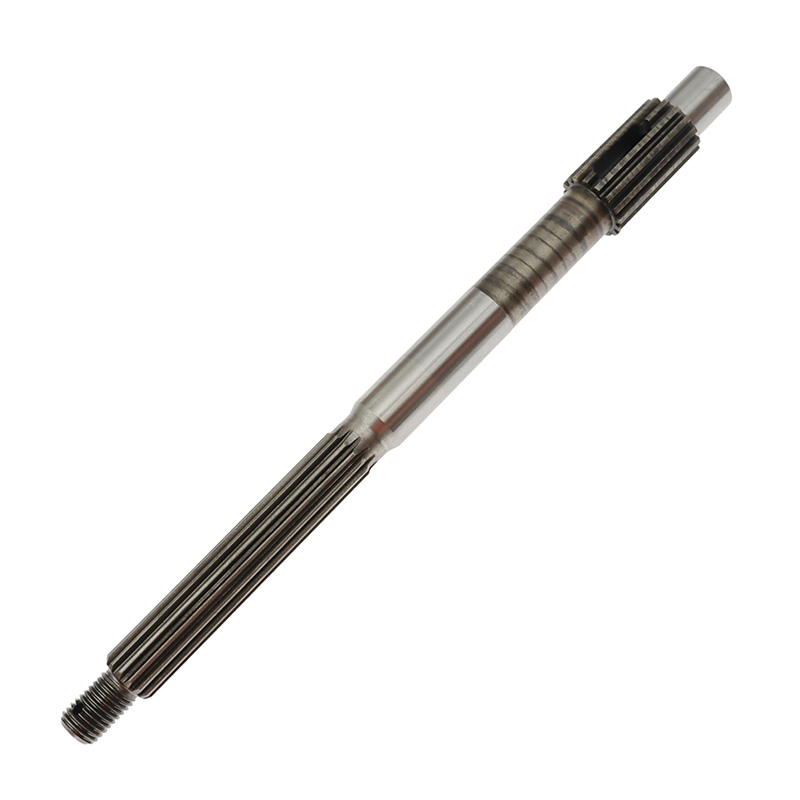
The shaft connects the engine, usually through a gearbox or transmission, to the propeller mounted at the stern. As the engine generates rotational power, the transmission adjusts the speed and direction before sending that force down the shaft, which spins and drives the propeller blades. The spinning blades push water backward, creating the forward thrust that propels the boat.
A complete shaft system is not a single part; it is an assembly of several coordinated components:
- Shaft – the long, cylindrical rod that physically carries torque from the transmission to the propeller
- Coupling – joins the shaft securely to the transmission output for efficient power transfer
- Stuffing box (or shaft seal) – prevents water from entering the hull where the shaft exits the boat
- Bearings (including the cutless bearing) – reduce friction and keep the shaft rotating true within its housing
- Intermediate shafts and thrust block – on larger vessels, additional shaft sections and a thrust block support the line between the engine and the tailshaft
Owners often use these terms interchangeably, but there is a practical distinction worth understanding.
| Term | Primary Role | Typical Location |
|---|---|---|
| Drive shaft | General term for any shaft transmitting rotational power from a power source to a driven component | Between engine/transmission and driven part |
| Propeller shaft | Specific type of drive shaft dedicated to spinning the propeller | Runs from the transmission, through the stern tube, to the propeller |
| Tailshaft | Industry term for the outboard-most section of a propeller shaft system | Exits the hull near the propeller |
In short, every propeller shaft is a drive shaft, but not every drive shaft drives a propeller. This distinction matters when sourcing replacement parts, since specifications for length, taper, and coupling type vary between applications.
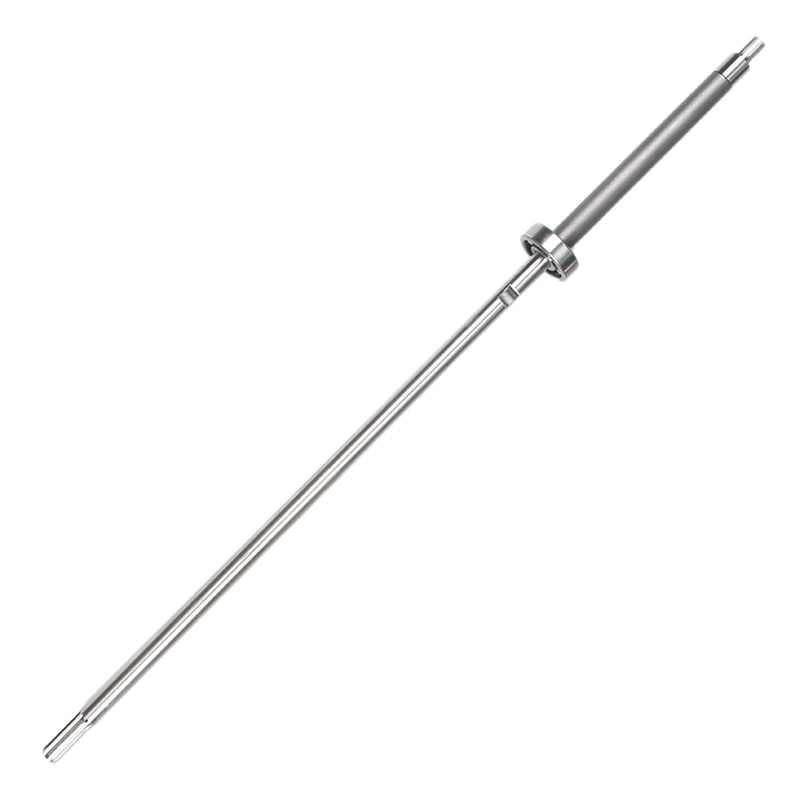
Shaft material directly affects strength, corrosion resistance, and service life. The two dominant choices in recreational and commercial marine work are stainless steel and bronze-based alloys.
Stainless steel (commonly grade 316) is now the industry standard for most shafts because it offers roughly double the stiffness of bronze, higher tensile strength, and strong resistance to bending under load. Aluminum-bronze alloys such as Nibral remain popular for propellers themselves because of their corrosion resistance and machinability, though bronze shafts are less common today due to cost and lower strength compared to stainless. Aluminum is occasionally used in lighter propeller applications but has lower yield strength and corrodes faster in saltwater, making it less suitable for continuous-duty shafts.
| Material | Strength | Corrosion Resistance | Best Use Case |
|---|---|---|---|
| 316 Stainless Steel | High, stiffest option | Very good in properly maintained systems | Most recreational and commercial inboard shafts |
| Bronze / Nibral | Moderate | Excellent | Propeller castings, lower-load shafts |
| Aluminum | Lower | Fair, prone to corrosion | Light-duty, budget propellers |
A shaft rarely fails without warning. Recognizing early symptoms can prevent a minor repair from becoming a full driveline replacement.
1. Vibration at specific RPM ranges often signals propeller imbalance, shaft runout, or bearing wear, and should be logged by RPM and load condition.
2. Repeated seal leakage at the stuffing box points to shaft movement, a worn journal, or a bearing support issue.
3. Warm stern tube or strut bearings indicate excessive bearing load, poor lubrication, or misalignment.
4. Uneven bearing wear shows the shaft is not running centrally, often overloading one side.
5. Audible thunks or visible wiggle when shaking the propeller are classic signs the cutless bearing needs replacement.
A useful field test: grasp the propeller and firmly shake it up and down. Slight play of around 1/16 inch may be borderline acceptable, but visible wiggle or a knocking sound confirms the bearing is due for service. After any grounding, propeller strike, or engine replacement, a structured shaft inspection—checking straightness, coupling condition, and bearing clearance—should always follow, since a bent shaft can silently overload seals and bearings even when the coupling alignment looks fine.
Demand for drive shaft components extends well beyond recreational boating. The broader drive shaft market, which includes marine, automotive, and industrial applications, was valued at approximately USD 85.69 billion in 2026 and is projected to grow at a compound annual growth rate of 6.5% through 2033. This growth reflects rising global shipbuilding activity, expanding commercial fleets, and increased retrofit and maintenance work on aging vessels—trends that directly shape sourcing decisions for boatbuilders and repair yards selecting shaft suppliers today.
Consistent care keeps a propeller shaft running smoothly for years and protects the surrounding bearings and seals from premature wear.
- Inspect regularly for corrosion, pitting, scoring, or misalignment, particularly after groundings or propeller impacts
- Keep bearings lubricated to minimize friction and prevent overheating during extended running
- Maintain the stuffing box so it seals properly without excessive water intrusion
- Measure shaft straightness with dial indicators during haul-outs, since a bent shaft can overload the entire drive line
- Schedule professional service at least annually, especially before extended cruising seasons
Manufacturing drive shafts and propeller shafts for nearly three decades has shown that most premature failures trace back to two root causes: incorrect material selection for the operating environment, and skipped alignment checks after routine maintenance work like engine swaps or propeller repairs. A shaft engineered with the correct taper, coupling fit, and stainless steel grade for its specific vessel class will consistently outlast a generic replacement, even when the generic part appears identical at a glance. This is why coupling face inspections, keyway condition, and bolt torque are treated as mandatory checkpoints in every quality shaft installation, not optional extras.
A boat is only as dependable as its weakest drivetrain component, and the shaft carries the full load of every voyage. Ningbo Gill Transmission Parts Co., LTD. has spent 29 years engineering precision drive shafts and propeller shafts built for demanding marine conditions. Contact our engineering team today to specify the right shaft material, dimensions, and coupling configuration for your vessel or production line.
What is the difference between a drive shaft and a propeller shaft on a boat?
A drive shaft is any shaft that transmits rotational power from a power source to a driven component, while a propeller shaft is a specific type of drive shaft dedicated to turning the propeller.
What material is best for a boat propeller shaft?
316 stainless steel is the current industry standard due to its higher stiffness and tensile strength compared to bronze, though bronze and Nibral remain common in propeller castings.
How do I know if my boat's shaft bearing needs replacement?
Grab the propeller and shake it firmly; visible wiggle or an audible thunk indicates the cutless bearing is worn and needs replacement.
What causes vibration in a boat propeller shaft?
Vibration at specific RPM ranges commonly results from propeller imbalance, shaft runout, bearing wear, or misalignment, and should be checked systematically.
How often should a propeller shaft be inspected?
Shafts should be visually inspected regularly and professionally serviced at least once a year, with additional checks after any grounding, propeller strike, or engine replacement.
Why is the drive shaft market growing?
The global drive shaft market is projected to grow from roughly USD 85.69 billion in 2026 to USD 133.16 billion by 2033, driven by expanding shipbuilding, fleet growth, and rising maintenance demand.
1. Boat Life Masters, "What Is The Propeller Shaft?" – https://boatlifemasters.com
2. Market Research Report, "Automotive Drive Shaft Market Size & Share Analysis" – https://www.mordorintelligence.com
3. Marine Insight, "3 Important Marine Propeller Shafts: Diagram, Parts" – https://www.marineinsight.com
4. Marine Engineering Reference, "Propeller Shaft" (thrust shaft, intermediate shaft, tailshaft system) – https://www.marineengineering.co.uk
5. Boating Forum Discussion, "Props: Stainless Steel or Bronze" – https://www.boatdesign.net
6. Boat Building & Maintenance Forum, "Boat Propeller and Shaft Alignment: Practical Warning Signs" – https://www.boatbuildingandmaintenance.com
7. Boat Building & Maintenance Forum, "Stainless vs Aluminium Boat Propellers" – https://www.boatbuildingandmaintenance.com
8. Prop Shaft Discussion, "Stainless Steel vs. Bronze Prop Shaft" – https://www.cruisersforum.com
9. Propeller Industry Article, "Still In The Bronze Age: Why Is Bronze The Go-To Industry Standard" – https://www.propellersdirect.co.uk
10. Boat US Magazine, "Prop and Shaft Check" – https://www.boatus.com
11. Market Research Report, "Automotive Drive Shaft Market Size & Forecast, 2026-2033" – https://www.coherentmarketinsights.com


