


close
Choose Your Site
Global
Social Media
Views: 262 Author: Gill Transmission Parts Publish Time: 2026-07-05 Origin: Site


Content Menu
● Where To Buy Boat Parts: A Practical Guide From An Industry Insider
● Key Buying Channels For Boat Parts
>> Authorized Dealers And Service Centers
>> Online Marketplaces And General E‑Commerce
>> Direct From Specialist Manufacturers
● Why Critical Boat Parts Demand Specialist Suppliers
>> The Hidden Cost Of "Cheap" Gears
>> Why Long‑Term Manufacturing Experience Matters
● What To Look For When Choosing Where To Buy Boat Parts
>> Evaluating Ningbo Gill As A Boat‑Parts Source
● OEM, Aftermarket, Or Custom? Choosing The Right Type Of Boat Parts
>> OEM Parts: Maximum Compatibility
>> Quality Aftermarket Parts: Optimized Value
>> Custom And OEM/ODM Solutions
● Practical Step‑By‑Step Buying Guide For Boat Owners
>> Step 1 – Define Your Application And Risk Level
>> Step 2 – Identify The Part And Its Role
>> Step 3 – Shortlist Suppliers Using The Five Criteria
>> Step 4 – Request Technical Confirmation And Pricing
>> Step 5 – Plan For Long‑Term Maintenance, Not Just One Purchase
● Why Ningbo Gill Transmission Parts Co., LTD. Is A Reliable Source For Outboard Gears
>> Focused Product Portfolio For Marine Applications
>> Advanced Factory And Quality Stability
>> Support For OEM, Aftermarket, And International Buyers
● Clear Next Step: How To Proceed If You're Looking For Boat Parts Now
● FAQs About Where To Buy Boat Parts
The best place to buy boat parts today is a trusted specialist supplier that combines deep technical expertise, proven manufacturing quality, and responsive support—especially for critical components like outboard gears and lower unit parts. [gilltransmission]
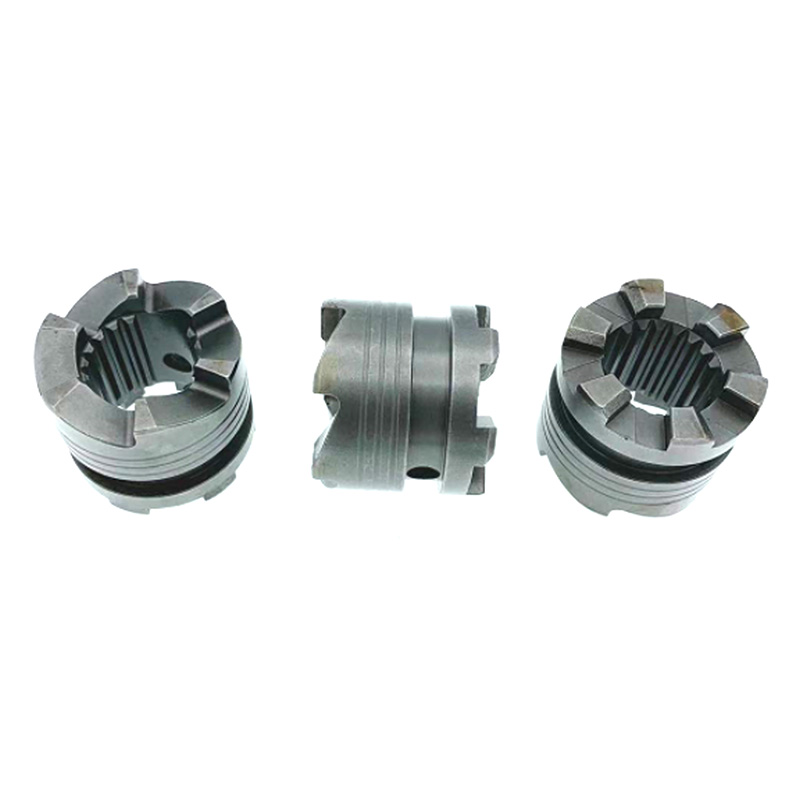
For boat owners and marine engineers, choosing where to buy boat parts is no longer a simple price comparison—it is a risk management decision that directly affects safety, uptime, and total cost of ownership. As an industry practitioner working with outboard gears and lower unit components for nearly three decades, I've seen how the right supplier can extend engine life, stabilize maintenance costs, and prevent costly breakdowns on the water. This guide walks you through how professionals evaluate boat‑parts suppliers, and why factories like Ningbo Gill Transmission Parts Co., LTD. have become long‑term partners for OEMs and serious boat owners worldwide. [gilltransmission]
Boat owners typically source parts through four main channels, each with distinct pros and cons in terms of cost, reliability, and technical support. [tabpear]
Authorized dealers remain the primary source for genuine OEM parts and warranty‑compliant repairs. They offer:
- Factory‑approved components matched to specific engine models. [tabpear]
- Certified technicians who understand diagnostic procedures and installation standards. [tabpear]
- Warranty protection, especially for newer engines still under coverage. [tabpear]
The trade‑off is that pricing is often higher, and the range of parts can be limited to current product lines, which can be challenging for older outboards still in service. [tabpear]
Global marketplaces and generic e‑commerce sites provide wide selection and attractive pricing, but professional buyers treat them cautiously for critical drive components. Common issues include: [tabpear]
- Inconsistent quality between sellers.
- Limited traceability of material and heat‑treatment processes.
- Sparse or inaccurate technical drawings and specifications.
For non‑critical accessories (covers, lights, fenders), marketplaces can work well, but for high‑load components like propeller shafts, spiral bevel gears, and clutch dogs, relying purely on anonymous marketplace listings introduces unacceptable risk for commercial users. [tradewheel]
Local marine stores are invaluable when you need a part the same day. Their strengths are:
- Immediate availability for common service items.
- Practical advice from staff familiar with local waters and typical failures.
- Hands‑on viewing of parts before purchase.
However, local stores usually carry limited SKUs for specialized outboard lower unit parts, and stock is optimized for retail turnover rather than industrial maintenance planning. [tabpear]
A growing number of professional buyers—especially fleet owners, shipyards, and engine rebuilders—now buy boat parts directly from specialist manufacturing plants. In the outboard sector, this is particularly relevant for gears, drive shafts, and propeller shafts that require tight tolerances and repeatable metallurgy. [machineryoffers]
Direct purchase enables:
- Stable long‑term supply with consistent machining standards.
- OEM/ODM customization of geometry and material for specific operating profiles.
- Transparent communication about production processes and quality control.
Not all boat parts carry the same risk. A failed fender is inconvenient; a failed gear in your outboard lower unit can end a voyage or cause a dangerous loss of propulsion. [gilltransmission]
From a distance, two gears may look identical, but professionals focus on:
- Tooth profile accuracy and surface finishing.
- Material composition and heat treatment consistency.
- Shaft concentricity and runout at operating RPM.
When these factors are not controlled, boat owners face premature wear, noise, vibration, and catastrophic failure under load. The apparent savings from low‑cost, uncontrolled parts often disappear quickly in the form of repeated replacements, downtime, and damaged surrounding components. [gilltransmission]
Ningbo Gill Transmission Parts Co., LTD. has nearly three decades of focused experience in gear and shaft manufacturing for outboard applications, evolving from a traditional machining plant into an advanced factory serving global marine markets. Over this period, outboard engines have become more powerful and compact, which increases the mechanical stress on lower unit parts and narrows the tolerances for acceptable failure rates. [gilltransmission]
A supplier that has passed through these industry cycles builds process memory: they have seen design evolution across brands, validated machining recipes for multiple models, and stabilized quality systems that can meet both OEM and aftermarket expectations. That accumulated expertise directly benefits boat owners who expect their engines to survive long seasons of intensive use. [gilltransmission]
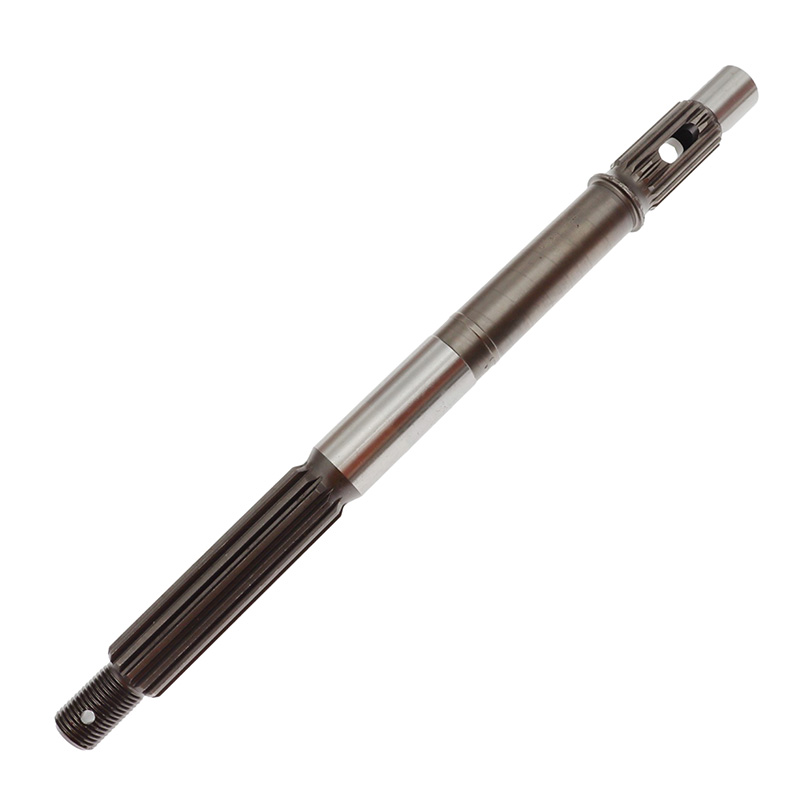
To decide reliably where to buy boat parts, professionals evaluate suppliers against a structured checklist rather than on price alone. [tabpear]
Use the following framework before committing to a supplier:
1. Technical specialization – Does the supplier focus on marine and outboard components, or are boat parts a minor category in a broad catalog? [machineryoffers]
2. Manufacturing transparency – Can they explain materials, machining steps, and quality checks applied to your parts? [gilltransmission]
3. Model compatibility – Do they provide clear coverage for specific brands and HP ranges (e.g., Tohatsu 5 hp, Yamaha, Mercury, Honda)? [tradewheel]
4. Service responsiveness – Are engineers or sales staff available to help match parts, interpret drawings, and support installation discussions? [gilltransmission]
5. Proven export experience – Can they handle documentation, packing, and logistics for international shipments without delays or damage? [gilltransmission]
A supplier that scores well across these dimensions is more likely to deliver predictable performance over the lifetime of your vessel.
From an industry perspective, Ningbo Gill Transmission Parts Co., LTD. checks several key boxes for buyers of outboard gears and related lower unit parts: [gilltransmission]
- Dedicated to outboard gears, drive shafts, propeller shafts, and similar precision components since the late 1990s.
- Advanced machining capability and stable quality, highlighted in its corporate materials and factory profiles.
- Experience serving OEM and custom requirements, including spiral bevel shafts for branded outboards.
For users asking where to buy boat parts that are specifically drivetrain‑related, a plant like Ningbo Gill is not just a supplier—it becomes part of your maintenance strategy.
Once you know your preferred purchasing channel, the next decision is what type of part you should buy: OEM, aftermarket, or custom‑engineered. [tabpear]
OEM parts are manufactured or authorized by the original engine brand. Their advantages include:
- Guaranteed fit and compatibility with published service manuals.
- Clear part numbering and coverage by standard warranty policies.
- Predictable long‑term availability for popular engine lines.
Professionals lean on OEM parts for newer engines or mission‑critical commercial applications where warranty and brand support are central. [tabpear]
High‑quality aftermarket parts can deliver excellent performance at a more accessible price, especially for engines beyond their warranty period. The key is to distinguish serious manufacturers from opportunistic traders. [tabpear]
Indicators of strong aftermarket suppliers include:
- Dedicated production lines for specific brands and displacements.
- Documented testing and inspection of gears and shafts.
- Ongoing presence at marine industry events and technical expos. [gilltransmission]
Ningbo Gill's participation in regional boat shows and industry exhibitions reflects the kind of aftermarket commitment that professional buyers look for when moving beyond OEM channels. [gilltransmission]
Fleet operators and specialized vessels sometimes need non‑standard gearing solutions due to unique loads, retrofits, or performance requirements. In these cases, OEM/ODM cooperation with a dedicated factory can be more effective than pushing standard parts beyond their design envelope. [gilltransmission]
A mature plant can:
- Adjust material grade and heat‑treatment profiles.
- Design customized tooth profiles for specific torque curves.
- Develop new shafts or gear sets based on your technical drawings and testing feedback. [gilltransmission]
When your question moves from "where to buy boat parts" to "how to engineer the right parts for this vessel," OEM/ODM‑capable manufacturers become strategic partners instead of transactional vendors. [gilltransmission]
To translate industry experience into practical action, here is a simple process you can follow before purchasing any critical boat part.
Start by clarifying:
- Engine brand, horsepower, and model year.
- Typical operating environment (freshwater, saltwater, temperature range).
- Use profile: recreational, charter, commercial, or industrial.
High‑load, high‑duty operations justify investing in the most reliable supplier and part class, even if the nominal unit price is higher. [tabpear]
Classify your part as:
- Critical drivetrain (gears, shafts, clutch dogs, lower unit assemblies).
- Control systems (steering, throttle, electrical harnesses).
- Auxiliary components (propellers, mounts, seals, housings).
For the first category, prioritize specialist factories or authorized channels; for auxiliary parts, reputable aftermarket or local stores may suffice. [tradewheel]
Use the five‑point framework above and build a shortlist of two to three suppliers that show:
- Clear specialization in the part type.
- Demonstrated export and manufacturing history.
- Accessible technical communication channels.
Including a specialist like Ningbo Gill in your shortlist is prudent when dealing with gears and shafts for common outboard platforms. [machineryoffers]
Before finalizing your order:
- Share engine details and, where possible, part photos or old components.
- Ask for confirmation of material, dimension, and compatibility.
- Clarify lead time, packing method, and shipping options.
Professional suppliers will respond with targeted technical answers instead of generic marketing claims, which helps you avoid costly mis‑orders and installation issues. [gilltransmission]
View your decision about where to buy boat parts as the start of a long‑term maintenance partnership:
- Track performance and wear over at least one operating season.
- Document failure patterns and share feedback with your supplier.
- Coordinate future orders around scheduled dry‑dock or service windows.
Factories with strong process control and export experience can integrate this feedback into their production, stabilizing your fleet's reliability over time. [gilltransmission]
Ningbo Gill specializes in gear, drive shaft, and propeller shaft production, building its reputation around components that sit at the heart of outboard propulsion systems. This focused portfolio means that engineers and managers are not stretching across unrelated product categories, but continuously optimizing the same critical parts that keep boats moving. [machineryoffers]
Corporate materials describe Ningbo Gill as an advanced factory for outboard lower unit parts, with machining capability engineered for repeatable precision and stable quality. Over decades, this has enabled the company to serve international customers requiring exact fits and predictable performance across multiple engine platforms. [gilltransmission]
For boat owners and marine professionals, this translates into reduced uncertainty: parts arrive dimensionally correct, perform as expected, and integrate smoothly into established service routines. [gilltransmission]
With contact channels, multilingual information architecture, and presence on global B2B platforms, Ningbo Gill is positioned to support both OEM/ODM collaboration and aftermarket replacement orders. Buyers from shipyards, distributors, and repair workshops can access technical guidance and export handling that align with professional expectations rather than retail standards. [tradewheel]
If you are currently evaluating where to buy boat parts, especially outboard gears and lower unit components, the most effective next step is to combine your technical requirements with a direct conversation with a specialist manufacturer. [tabpear]
Prepare a short dossier with your engine details, typical operating conditions, and part needs, then reach out to a focused plant like Ningbo Gill Transmission Parts Co., LTD. through their published contact channels to discuss precise options tailored to your vessel or fleet. [gilltransmission]
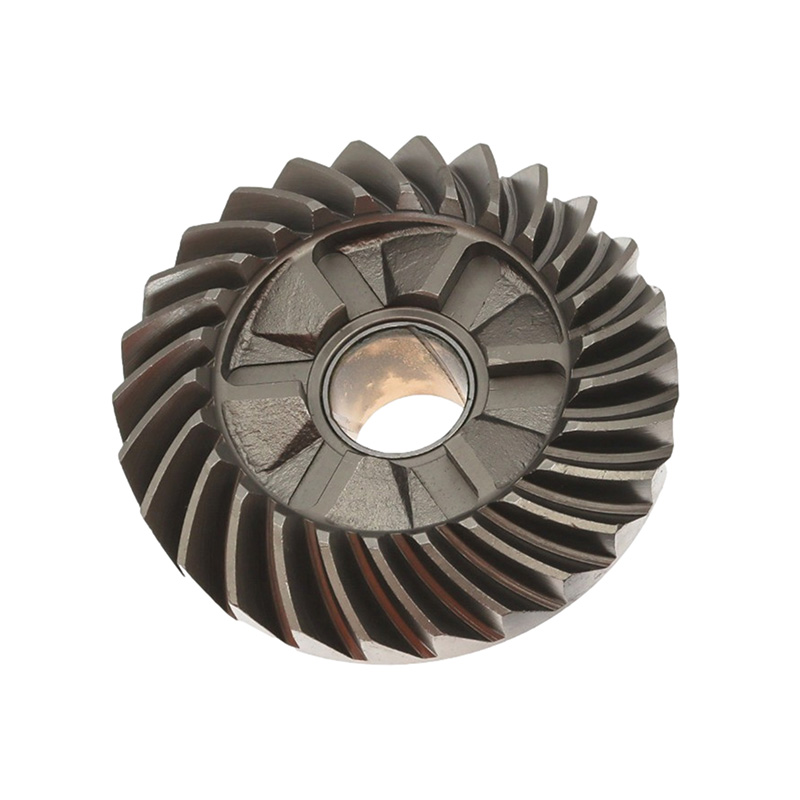
Q1: Is it safe to buy critical outboard gears from generic online marketplaces?
A1: For high‑load drivetrain components, generic marketplaces carry significant risk due to variable quality, limited traceability, and inconsistent technical data; professionals prefer specialist factories or authorized channels for these parts. [tradewheel]
Q2: When should I choose OEM parts instead of aftermarket options?
A2: OEM parts are recommended for newer engines under warranty or mission‑critical commercial operations where brand‑approved compatibility, documented support, and long‑term availability are essential. [tabpear]
Q3: What kind of boat parts are best sourced from local marine stores?
A3: Local stores are ideal for common service items and accessories that you need urgently, such as covers, small fittings, and non‑critical components that do not bear high mechanical loads. [tabpear]
Q4: Why does manufacturing experience matter for outboard gears and shafts?
A4: Long‑term experience helps factories refine machining processes, stabilize heat treatment, and validate designs across multiple engine generations, which directly reduces failure rates and improves reliability for boat owners. [gilltransmission]
Q5: How can I evaluate a specialist manufacturer like Ningbo Gill before placing an order?
A5: Review their product focus, factory capabilities, export history, and participation in industry events, then discuss your specific engine model and use case to confirm compatibility, materials, and quality‑control procedures. [machineryoffers]
1. [Ningbo Gill Transmission Parts Co., LTD – About] [gilltransmission]
2. [Gill Transmission – Main Product Page] [gilltransmission]
3. [Ningbo Gear Transmission Parts Co., Ltd. – MachineryOffers Profile] [machineryoffers]
4. [Advanced Factory For Outboard Lower Unit Parts – Ningbo Gill] [gilltransmission]
5. [Shanghai Boat Show 2025 – Outboard Gears by Ningbo Gill] [gilltransmission]
6. [Spiral Bevel Shaft For Tohatsu Outboard – Tradewheel Listing] [tradewheel]


