


close
Choose Your Site
Global
Social Media
Views: 229 Author: Gill Transmission Parts Publish Time: 2026-08-09 Origin: Site


Content Menu
● Start With Your Mercury Outboard Serial Number
● Where Can You Buy Mercury Outboard Parts Near You?
>> Buy From an Authorized Dealer for Genuine Parts and Diagnosis
>> Use Marine Repair Shops When Installation Matters
>> Search Online, but Treat Listings as Leads—not Proof
● Genuine, Aftermarket, Remanufactured, or Used?
● How to Buy Lower-Unit Gears and Shafts With Confidence
>> A Practical Inspection Checklist
● Three Mistakes That Cause Wrong-Part Orders
>> 1. Ordering by Horsepower Alone
>> 2. Replacing Only the Failed Component
>> 3. Ignoring the Supplier's Technical Questions
● A Fast Method to Find the Right Supplier
● When a Manufacturer Is the Better Long-Term Choice
>> 1. Where is the best place to buy Mercury outboard parts near me?
>> 2. Can I find Mercury parts using only the engine horsepower?
>> 3. Where do I find my Mercury outboard serial number?
>> 4. Are aftermarket Mercury outboard parts reliable?
>> 5. Should I replace seals when replacing a propeller shaft or drive shaft?
>> 6. What information should I send when asking for a lower-unit gear or shaft quotation?
>> 7. Can a worn propeller shaft damage other lower-unit components?
Searching "where to buy Mercury outboard parts near me" usually means one thing: your boat needs attention, and you need the correct part without losing valuable time on the water.
The best place to buy depends on what you need. For routine maintenance items, a nearby authorized dealer or reputable marine-parts retailer may be the fastest choice. For hard-to-source lower-unit components, replacement gears, drive shafts, propeller shafts, or customized transmission parts, working directly with an experienced marine-parts manufacturer can offer more options, especially for marine repair businesses, distributors, and fleet operators.
The essential rule is simple: identify your engine by serial number before ordering anything. A Mercury outboard model name, horsepower rating, or production year alone may not be enough to confirm compatibility.
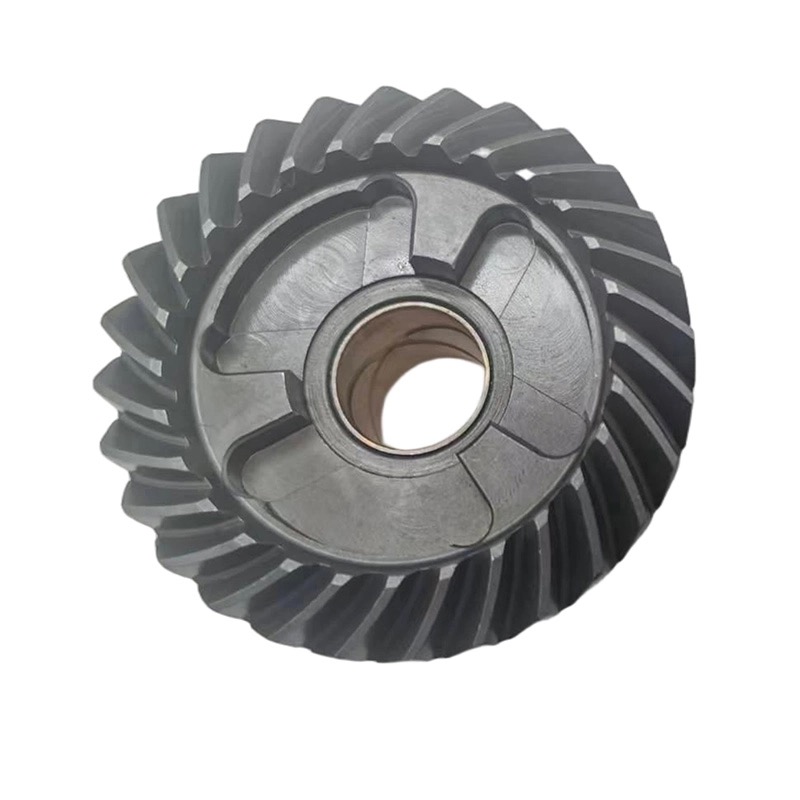
Before searching local shops, marketplaces, or suppliers, locate and record your outboard's serial number. Mercury's parts catalog uses this number to show the applicable exploded diagrams and part numbers for a specific engine configuration.
For many Mercury outboards, the serial-number label is on the transom bracket. On engines of 8 hp and above, it is commonly found on the starboard side of the transom assembly, below the powerhead. Smaller engines may place the label on top of the swivel bracket.
Take a clear photo of the label and keep it on your phone. A useful request to a supplier should include:
- Engine serial number
- Horsepower and engine family
- Part number, if available
- A photo of the failed or worn component
- Gearcase or lower-unit details for transmission-related parts
- Quantity required
- Your delivery location and required arrival date
This information prevents a common and costly mistake: ordering a component that looks similar but has a different spline count, gear ratio, shaft length, tooth profile, or mounting configuration.
There is no single best channel for every repair. Choose based on the urgency, component type, budget, and level of technical support needed.
| Buying option | Best for | Main advantage | What to verify |
|---|---|---|---|
| Authorized local dealer | Genuine service parts, diagnostics, warranty-related work | Model-specific support and local service | Dealer authorization, part availability, lead time |
| Independent marine repair shop | Installation, troubleshooting, urgent repairs | Practical repair experience and labor support | Whether the shop supplies the part and guarantees its work |
| Marine-parts retailer | Filters, impellers, plugs, anodes, oils, common service kits | Convenient catalog search and shipping options | Serial-number fitment, stock status, return policy |
| Online marketplace | Non-urgent comparison shopping | Broad selection and price visibility | Seller credibility, actual part number, return terms |
| Specialist manufacturer | Gears, shafts, clutch components, lower-unit parts, volume sourcing | Technical production capability and custom solutions | Drawings, measurements, material, inspection process, MOQ |
A local authorized dealer is often the safest choice when you need genuine Mercury parts, technical diagnosis, warranty-related support, or installation by trained technicians. This is particularly important for electronic systems, fuel-injection components, control systems, sensors, rigging, and parts that require calibration or diagnostic tools.
Ask the dealer to confirm the part using your serial number rather than making a decision based only on the engine's advertised horsepower. Two engines with the same horsepower can use different components because of production changes, shaft variations, control-system updates, or regional specifications.
A dealer is also useful when the underlying problem is uncertain. For example, a shifting issue may not be caused by the shift linkage itself. It could relate to a worn clutch dog, damaged forward or reverse gear, improperly adjusted cables, contaminated lubricant, or a bent propeller shaft. Replacing a visible component without diagnosing the assembly can create a second repair.
A marine repair shop may be the right local option when the part is only one part of a larger job. Water-pump kits, propeller replacements, steering components, lower-unit seals, and gearcase repairs often require careful disassembly, torque procedures, pressure testing, or alignment checks.
Before authorizing the repair, ask four direct questions:
1. Can you confirm fitment from the engine serial number?
2. Is the quoted part genuine, aftermarket, remanufactured, or used?
3. What additional seals, fasteners, lubricants, or wear items should be replaced during the job?
4. Does the estimate include labor, testing, and any post-repair adjustment?
A detailed answer is a good sign. A repair professional should be comfortable explaining the scope of work without relying on vague descriptions such as "it should fit" or "they are all basically the same."
Online retailers and marketplaces can be useful when nearby inventory is limited. They are especially practical for commonly replaced maintenance components, including fuel filters, spark plugs, anodes, impellers, gaskets, thermostats, and propeller hardware.
However, never treat a product title as final proof of compatibility. Listings may include multiple horsepower ranges, years, and engine versions in one headline. The part may physically resemble your original but differ in a dimension that affects performance or safety.
Before checkout, compare:
- The stated original-equipment part number
- Engine serial-number range
- Photographs of splines, gear teeth, threads, keyways, and mounting holes
- Package contents
- Brand and material description
- Warranty and return conditions
- Whether the seller can provide technical confirmation in writing
For lower-unit components, also confirm the gear ratio and mating-part relationship. A gear, shaft, bearing, or clutch component must work as part of a complete system. An isolated "close enough" replacement can accelerate wear and damage more expensive parts.
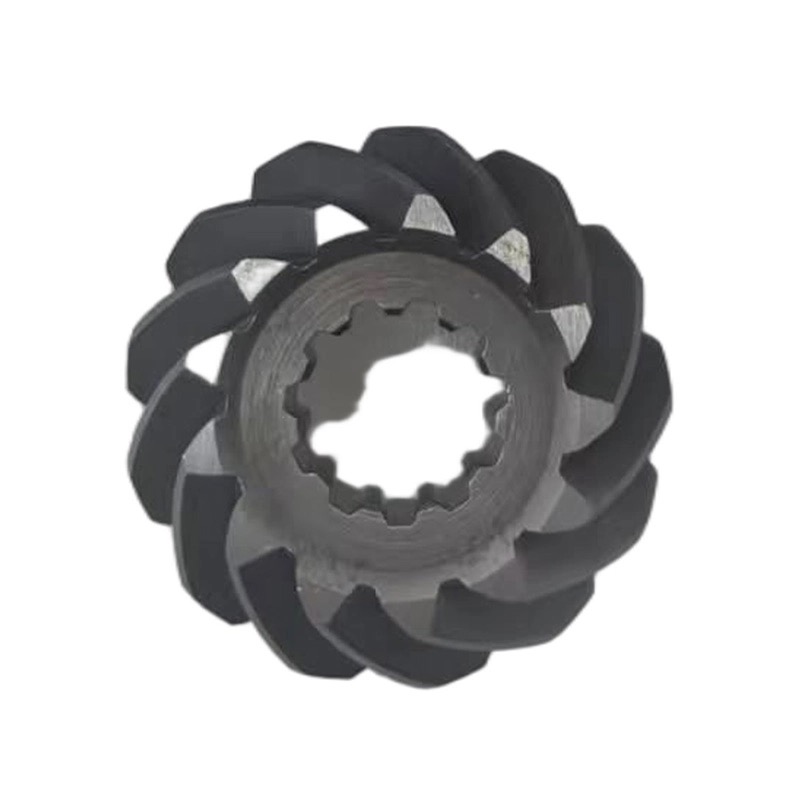
The right category depends on your repair objective. There is no universal answer, but there should always be a clear reason for the choice.
| Part type | Suitable situation | Buyer consideration |
|---|---|---|
| Genuine part | Warranty work, critical electronic parts, exact factory restoration | Usually offers the most direct original-specification route |
| Quality aftermarket part | Planned maintenance and cost-conscious repairs | Confirm serial-number compatibility and supplier quality controls |
| Remanufactured part | Major assemblies where a qualified rebuild is available | Review rebuild scope, replaced components, and warranty |
| Used part | Temporary repair or discontinued legacy equipment | Inspect condition carefully; unknown wear can create repeat failure |
| Custom-manufactured part | Specialized applications, obsolete parts, commercial volume needs | Supply a sample, drawing, dimensions, and performance requirements |
For critical drivetrain parts, the purchase decision should focus on more than price. Material selection, heat treatment, dimensional consistency, machining accuracy, surface finish, and inspection standards all affect durability.
A lower unit works under repeated load, water exposure, heat, vibration, and shock. A low-cost component that fails early can turn a small parts purchase into a gearcase rebuild, missed charter, delayed shipment, or lost boating season.
Lower-unit components require a more disciplined sourcing process than general maintenance items. If you are replacing a gear, drive shaft, propeller shaft, or clutch component, verify the full application rather than ordering from a photo alone.
At Ningbo Gill Transmission Parts Co., LTD., our work has focused on the research, production, and supply of outboard transmission components since 1997. Our manufacturing scope includes outboard gears, crankshafts, drive shafts, propeller shafts, and related lower-unit components. With a production facility exceeding 25,000 square meters and stated annual output above 3.6 million units, we support customers that need consistent supply for marine repairs, distribution, and equipment production.
For a serious lower-unit inquiry, prepare the following technical file:
- Engine brand, model, and serial number
- Existing part number or exploded-diagram reference
- Clear photos from several angles
- Total length, diameter, spline count, and key dimensions
- Gear tooth count and ratio requirements where applicable
- Material or hardness requirements, if known
- Sample quantity and projected annual demand
- Packaging, labeling, and destination requirements
This process is useful for both a single difficult-to-find part and a long-term procurement program. It reduces back-and-forth communication and lets the supplier assess whether the required component can be confirmed, manufactured, or customized.
Before installing a new lower-unit part, compare it with the removed component under good lighting. Check the measurements and functional details, not merely the general shape.
Look for:
- Matching spline profile and spline length
- Correct shaft diameter and shoulder locations
- Matching thread direction and thread size
- Correct gear tooth geometry
- Matching keyways, grooves, and retaining features
- No visible chips, corrosion, burrs, or transit damage
- Proper packaging that protects precision surfaces
If the new part differs from the original in any uncertain way, stop before installation and ask the seller or manufacturer for technical confirmation. Forcing an incompatible part into position can damage seals, bearings, gears, housings, or splines.
"Mercury 60 hp" is not a complete identification. Production changes can affect the applicable parts. The serial number is the stronger reference because it identifies the engine configuration more precisely.
When a gear, shaft, or clutch component fails, inspect related bearings, seals, oil condition, mating gears, shift mechanisms, and housing surfaces. The visible broken part may be the result of a deeper issue.
For example, metal debris in gear lubricant can indicate wear beyond a single gear. Installing one replacement part without correcting the source of contamination may cause the new part to fail quickly.
A supplier that asks for measurements, photos, model confirmation, or original part numbers is often trying to prevent an incorrect match. These questions are not unnecessary delays; they are part of responsible fitment verification.
Use this five-step method when you need Mercury outboard parts near you or need a part shipped quickly.
1. Document the engine: Photograph the serial-number label, the damaged part, and the installation area.
2. Identify the component: Use an official parts diagram to locate the correct reference number.
3. Choose the source: Use a local authorized dealer for genuine parts and service, a repair shop for installed repairs, or a specialist supplier for lower-unit and volume requirements.
4. Request a written confirmation: Ask the seller to confirm part number, compatibility basis, stock status, price, delivery time, and return terms.
5. Inspect before installation: Compare the delivered part with the removed item and keep all packaging until fitment is confirmed.
This method is faster than repeatedly ordering uncertain parts. It also creates a useful record for future maintenance and repeat purchasing.
If you operate a marine repair business, spare-parts distribution company, boatyard, fleet, or engine-service network, local retail purchasing may not always meet your needs. You may require stable inventory, private labeling, bulk packaging, repeatable quality, or technical support for hard-to-source components.
Gill Transmission works with global customers seeking outboard lower-unit transmission parts, including products compatible with major outboard applications such as Mercury, Yamaha, Suzuki, and Tohatsu. Our team can review samples, drawings, part references, and quantity requirements for gears, shafts, and related components.
Send your serial number, part number, photos, and required quantity to Gill Transmission for a practical fitment and sourcing discussion. Whether you need a replacement transmission component or are building a long-term marine-parts supply program, accurate identification should come first.
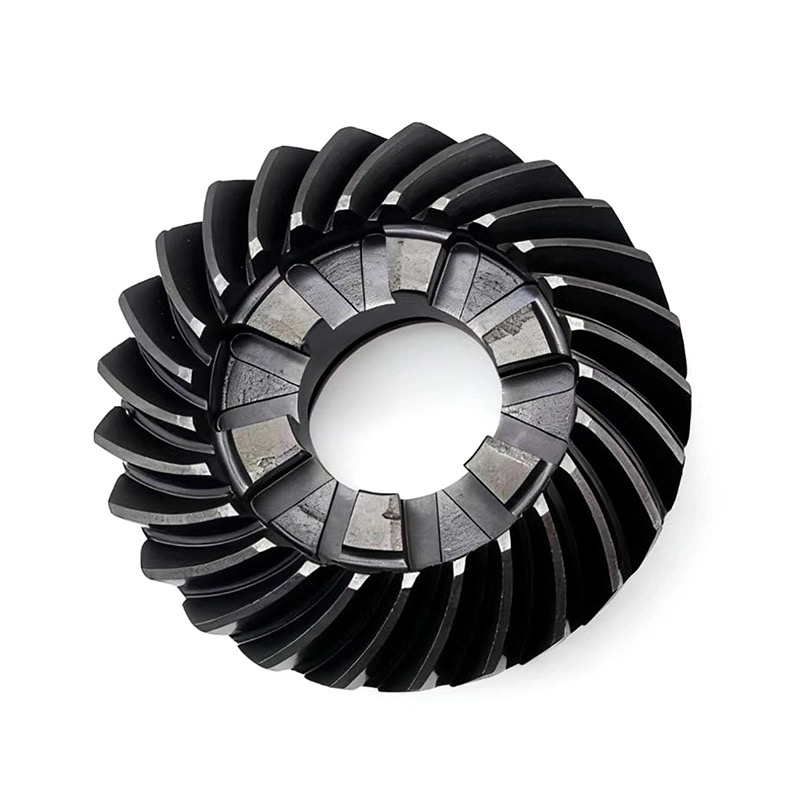
For genuine parts and professional diagnosis, start with an authorized local Mercury dealer. For installation work, a reputable marine repair shop may be the better option. For transmission components or bulk sourcing, contact a specialized marine-parts manufacturer with technical production experience.
You can begin a search with horsepower, but do not place an order based on it alone. Use the engine serial number to confirm the exact configuration and applicable part number.
For many outboards, the serial-number label is on the transom bracket. Engines of 8 hp and higher commonly place it on the starboard side of the transom assembly. Check your owner's manual for your specific engine.
Some aftermarket parts can be a suitable option when they are correctly matched and supplied by a credible manufacturer or distributor. Evaluate the fitment information, material, production controls, warranty, and technical support rather than choosing solely by price.
In many cases, yes. Shaft-related work commonly involves seals, bearings, gaskets, and lubricant. Review the applicable service procedure and inspect related components to avoid repeat disassembly or water intrusion.
Send the engine serial number, part number, photos, dimensions, spline count, gear details, required quantity, and delivery location. If available, include an original sample or technical drawing.
Yes. A bent, worn, or corroded propeller shaft can affect seals, bearings, gear alignment, and water resistance. Continued operation may increase repair costs, so it should be inspected promptly.
- [Mercury Marine Parts Catalog — serial-number search, diagrams, and part-number lookup] [mercurymarine]
- [Mercury Marine Dealer Locator — authorized dealer search] [mercurymarine]
- [Mercury Marine guide to locating an engine serial number] [mercurymarine]
- [Mercury Marine guide to parts lookup by serial number] [mercurymarine]
- [Ningbo Gill Transmission Parts Co., LTD. — company profile and manufacturing capabilities] [gilltransmission]
- [Gill Transmission — outboard gears, drive shafts, propeller shafts, and custom manufacturing] [gilltransmission]


