


close
Choose Your Site
Global
Social Media
Views: 222 Author: Gill Transmission Publish Time: 2026-05-24 Origin: Site


In involute gears, the base circle is the geometric reference circle from which the involute tooth profile is generated, not a physically visible diameter on the gear itself. It plays a critical role in defining tooth shape, contact ratio, and meshing smoothness, especially in high‑load applications such as marine gearboxes and outboard gears. [chamolgear]
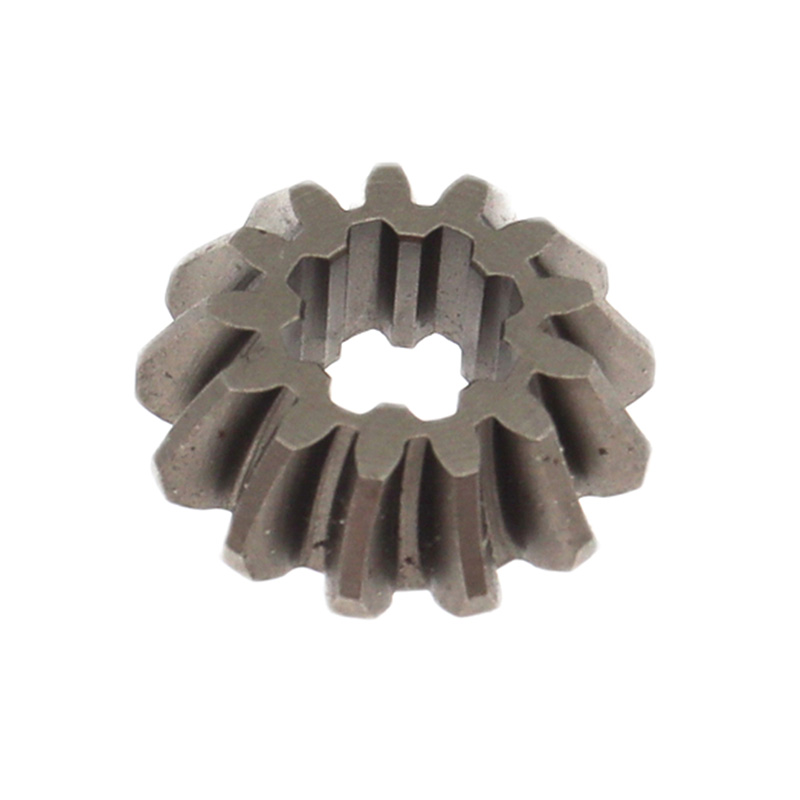
From a marine transmission engineer's perspective, the base circle is one of the least visible yet most consequential parameters in gear design. While customers see tooth count, module, and material, the base circle quietly controls how smoothly torque is transferred inside a marine or outboard gearbox. In applications like outboard gears, where high torque, shock loads, and saltwater corrosion coexist, getting the base circle right often determines whether a gear set runs quietly for thousands of hours or fails prematurely. [gilltransmission]
For Ningbo Gill Transmission Parts Co., LTD., this parameter is central to the performance of involute outboard gears used in marine engines, stern drives, and auxiliary marine equipment. When you understand how base circle geometry drives involute tooth behavior, you can better evaluate suppliers, interpret drawings, and troubleshoot gear noise or wear issues in real-world marine applications. [scribd]
In involute gears, the base circle is the imaginary circle from which the tooth flank profile is generated by "unrolling" a straight line without slipping. You can imagine wrapping a taut string around a circle and then unwinding it; the path traced by the string end is the involute, and the circle you start from is the base circle. [youtube]
Key characteristics of the base circle:
- It is a geometric datum, not a machined or visible feature on the gear. [chamolgear]
- It exists only for involute gears, not for cycloidal or other tooth forms. [en.wikipedia]
- Its diameter directly influences the curvature and steepness of the involute tooth flank. [youtube]
For marine and outboard gear designers, this circle is essential because it anchors how teeth engage under load, especially when operating continuously at high torque and variable speed. [academia]
Many engineers new to gear design confuse the base circle with the pitch circle, but they serve different functions. [chamolgear]
- Pitch circle: Reference circle that defines gear size and gear ratio, where tooth spacing is specified. [en.wikipedia]
- Base circle: Reference circle for generating the involute tooth profile. [en.wikipedia]
- Addendum circle: Circle at the tooth tips (outer diameter). [youtube]
- Root circle: Circle at the tooth bottoms. [youtube]
In involute gearing:
- Power is transmitted through the involute region outside the base circle; the involute does not exist inside the base circle. [youtube]
- Base pitch (tooth spacing measured along the base circle) remains constant and is fundamental to smooth meshing. [youtube]
For outboard marine gears, correctly distinguishing these diameters is critical when checking drawings, tolerances, or troubleshooting misalignment and abnormal wear. [gilltransmission]
The involute tooth profile is created by unrolling a straight line around the base circle without slipping. Each point on this line traces a smooth curve that becomes the working flank of the gear tooth. [en.wikipedia]
In practice:
1. Define the base circle based on the pressure angle and reference (pitch) circle. [youtube]
2. Unroll a straight line (often visualized as a ruler or string) around the base circle. [youtube]
3. Trace the path of a point on that line to form the involute tooth flank. [en.wikipedia]
Because all involutes derived from different base circle diameters are geometrically similar, the shape is scalable, allowing designers to keep the same pressure angle while changing size or module. This property is heavily used in profile-shifted gears to optimize load distribution and contact ratio in compact marine gearboxes. [academia]
In marine and outboard applications, gear sets often operate at high RPM, under fluctuating torque, and in contaminated lubrication environments. The base circle affects several performance aspects that directly matter on the water: [gilltransmission]
- Contact ratio and smoothness: A properly chosen base circle supports a favorable contact ratio and avoids undercutting, reducing vibration and noise in marine gearboxes. [chamolgear]
- Tooth bending and load distribution: Base circle size adjusts the curvature of the involute, influencing how loads spread along the tooth flank. [chamolgear]
- Backlash and efficiency: Consistent base pitch helps maintain controlled backlash, which is vital for efficient torque transfer in outboard gears that reverse frequently during docking. [academia]
For manufacturers such as Ningbo Gill Transmission Parts, fine-tuning base circle geometry is part of delivering low‑noise, high‑reliability outboard gears that can withstand harsh marine operation cycles. [gilltransmission]
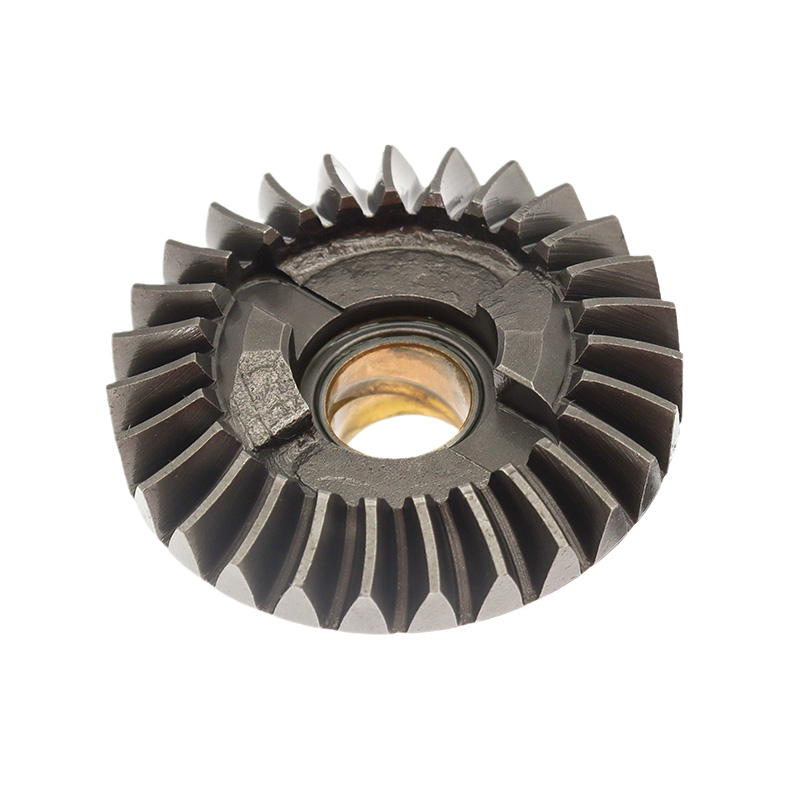
Consider a typical outboard gear set where a pinion drives a larger gear in a compact marine gearbox. Both pinion and gear must have compatible base circles so that their involute profiles mesh smoothly across the line of action. [scribd]
If the base circle is miscalculated or inconsistent with the specified pressure angle:
- The resulting contact becomes non-involute over part of the mesh, increasing noise and pitting risk. [chamolgear]
- Base pitch mismatch can cause cyclic transmission errors and vibration that the boat operator feels as harsh shifting or whining. [scribd]
By contrast, optimised base circles keep the line of action straight and ensure constant velocity ratio, which is essential in marine drivetrains where load changes rapidly with wave impacts and throttle movements. [academia]
Even experienced practitioners sometimes misunderstand how the base circle behaves in real designs. [chamolgear]
Typical misconceptions:
- "The base circle is a physical step on the gear." – In fact, it is an imaginary geometric circle, not directly measurable on the gear surface. [chamolgear]
- "Pitch circle and base circle are interchangeable." – They have different roles; one defines ratio and size, the other defines tooth shape. [chamolgear]
- "Base circle is relevant for all gear tooth forms." – It is unique to involute teeth and does not apply to cycloidal or arc tooth profiles. [en.wikipedia]
Design pitfalls when base circle is mishandled:
- Undercutting at the tooth root, especially in small‑tooth‑count pinions. [youtube]
- Excessive noise and vibration in high‑speed marine gearboxes. [scribd]
- Poor load sharing and early pitting or scuffing under marine loads. [academia]
In practice, marine gearbox designers carefully coordinate pressure angle, module, and base circle to avoid these issues, then validate results with FEA and bench testing. [scribd]
From both an engineering and manufacturing perspective, several best practices emerge for outboard gear design:
- Maintain a consistent pressure angle across mating gears to keep base circle geometry compatible. [youtube]
- Check for undercutting at low tooth counts and adjust profile shift or base circle accordingly. [chamolgear]
- Validate base pitch to ensure that tooth spacing measured on the base circle remains constant through the mesh. [youtube]
- Correlate theory with testing, especially for marine gear sets subject to high shock loads and reversing duty cycles. [scribd]
Manufacturers specialising in marine and outboard gears typically integrate these checks into their design workflow, combining classical gear theory with practical feedback from field performance in commercial and recreational vessels. [gilltransmission]
Q1. Is the base circle visible on a finished gear?
No. The base circle is a geometric reference used in design and calculation; it does not correspond to a machined step or surface on the gear. [chamolgear]
Q2. Does the base circle matter in non‑involute gears?
The base circle is specific to involute gears and does not apply to cycloidal or other tooth profiles. [en.wikipedia]
Q3. How does base circle size affect gear noise?
Base circle size influences involute curvature and contact pattern; inappropriate base circle geometry can reduce contact ratio and increase noise in high‑speed gearboxes. [chamolgear]
Q4. Can you change the base circle without changing the gear ratio?
Gear ratio is determined by pitch circle diameters and tooth counts, while the base circle depends on pressure angle; you may adjust tooth form via pressure angle or profile shift within limits while keeping ratio fixed. [en.wikipedia]
Q5. Why is the base circle so important in marine and outboard gears?
Marine gears operate under high torque, variable load, and harsh environments; stable involute contact based on correct base circle geometry is essential for durability, low noise, and smooth shifting. [academia]
1. Chamol Gear – *What Is the Base Circle in a Gear?* [https://www.chamolgear.com/base-circle-in-a-gear/] [chamolgear]
2. Wikipedia – *Involute gear* [https://en.wikipedia.org/wiki/Involute_gear] [en.wikipedia]
3. Involute gear geometry video – *Geometry of involute gears | What is an involute* [https://www.youtube.com/watch?v=_C8hu5aZjCA] [youtube]
4. Marine gear profile article – *Involute Gear Profile For Marine And Outboard Gears* (Ningbo Gill Transmission Parts Co., LTD.) [gilltransmission]
5. Marine gearbox design and geometry guide – *Marine Gearbox: Gear Geometry & Design Math* [scribd]
6. Marine gearbox design study – *Design of gear for marine engine gearbox* [academia]
7. E‑E‑A‑T guidance for technical content – WG Content, *E‑E‑A‑T for content quality* [https://wgcontent.com/blog/eeat-content-quality-seo-geo/] [wgcontent]
8. Google E‑E‑A‑T practice overview – Innovation Visual, *Google's EEAT Guidelines – How To Remain Compliant* [https://www.innovationvisual.com/knowledge-hub/resources/google-eeat-guidelines-how-to-remain-compliant] [innovationvisual]


