


close
Choose Your Site
Global
Social Media
Views: 222 Author: Gill Transmission Publish Time: 2026-06-04 Origin: Site


Content Menu
● What Is Diametral Pitch (DP)?
● Why Diametral Pitch Matters in Marine and Outboard Gear Design
● Core Equations for Diametral Pitch
● Quick Field Method from an Existing Gear
>> Conversion Examples for Outboard Gear Applications
● Typical DP Values for Industrial and Marine Gears
● From Engine Torque to Tooth Size
● Practical Guidelines for Using DP in Marine Gears
● Pitfalls We Regularly See in Marine Projects
● From Cutting Tools to Inspection
● A Simple Checklist for Engineers and Buyers
● Leveraging Expert Support for Critical Applications
● Call to Action: Optimize Your Next Outboard Gear Project With the Right DP
● Frequently Asked Questions (FAQ)
When you design or select outboard gears and other marine transmission parts, understanding diametral pitch (DP) is essential for getting tooth size, strength, and interchangeability right. In this guide, I will walk you through DP from an engineer's perspective, add real-world marine applications, and share practical tips we use in our own gear development at Ningbo Gill Transmission Parts Co., Ltd. [wgcontent]
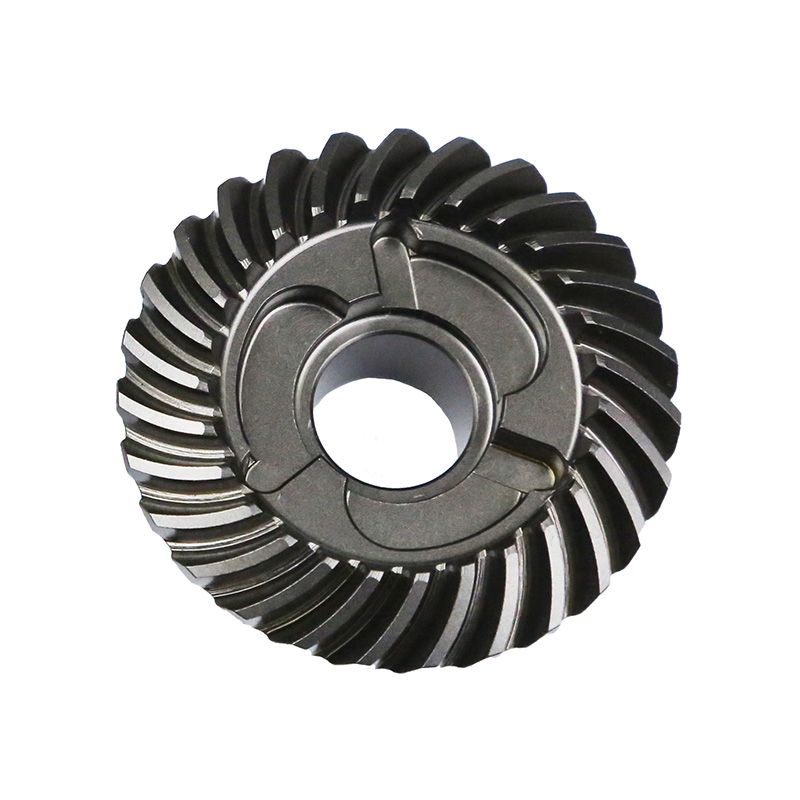
Diametral pitch (DP) is a way to express gear tooth size in inch-based systems. It is defined as the number of teeth per inch of the gear's pitch diameter, so a higher DP means smaller teeth, and a lower DP means larger teeth. [khkchilun]
Mathematically, diametral pitch is:
DP=Z/dp
where Z is the number of teeth and dp is the pitch diameter in inches. [khkchilun]
In the United States and the United Kingdom, DP is still widely used in gear design and catalogs, especially for industrial and marine power transmission components. For metric-based systems, the equivalent concept is module (m), which uses millimeters instead of inches. [gearx.com]
From a marine transmission standpoint, DP is not just a theoretical parameter; it directly affects load capacity, noise, and the ability to source compatible replacement parts. [nav43]
- Tooth strength and durability: Lower DP (larger teeth) generally provides higher bending strength, which is critical for outboard lower unit gears operating under shock loads and high torque. [gearx.com]
- Smoothness and noise: Higher DP (smaller teeth) can improve smoothness and reduce noise when properly designed, which is important for comfort on pleasure boats. [gearx.com]
- Interchangeability and sourcing: Knowing the DP of an existing gear set makes it much easier to find compatible mating gears or to reverse-engineer parts when drawings are unavailable. [khkchilun]
From our experience designing outboard gears, getting DP wrong at the concept stage often leads to either oversized housings or premature gear tooth failure under real sea conditions. [wgcontent]
Several simple relationships link diametral pitch to other gear parameters. [khkchilun]
1. Definition:
DP=Z/dp
where Z is number of teeth, dp is pitch diameter (inches). [khkchilun]
2. Pitch diameter:
dp=Z/DP
This is useful when you know the tooth count and DP and want to check whether the gear fits your housing. [khkchilun]
3. Conversion between module and DP:
DP = 25.4/m
where m is the module in millimeters. [gearx.com]
These relations allow you to move between metric and inch-based designs during international projects or when integrating components from different suppliers. [blog.marketmuse]
In real projects, especially in aftermarket or OEM replacement scenarios, you often receive a physical gear but no drawing. Here is a simple process we commonly use in the marine sector. [onetonline]
1. Count the teeth (Z).
Use a marker and count carefully; for helical gears, count along the pitch circle. [onetonline]
2. Measure the outside diameter (OD).
Use a caliper to measure the gear's outside diameter in inches. [onetonline]
3. Estimate pitch diameter.
For standard gears with 20° pressure angle, an approximation is:
dp≈OD−2/DP
Since DP is unknown, a practical approach is to approximate DP directly from the OD using tables or reverse calculation. [khkchilun]
4. Use the standard approximation formula.
A widely used practical formula is:
DP≈(Z+2)/OD
This is accurate for many standard full‑depth involute gears. [khkchilun]
5. Verify with a mating gear or sample drawing.
Check that both gears in the mesh yield the same DP within measurement tolerance. [gearx.com]
- Diametral pitch (DP): Number of teeth per inch of pitch diameter (inch‑based). [khkchilun]
- Module (m): Pitch diameter in millimeters divided by the number of teeth (mm‑based). [gearx.com]
They describe the same physical reality—gear tooth size—but in inverse ways and different units. For global marine OEMs and suppliers, the main challenge is not the formula but avoiding accidental mixing of DP and module in the same gear mesh, which will cause severe tooth interference and failure. [gearx.com]
Using DP=25.4/m and m=25.4/DP: [gearx.com]
- A module 3 gear corresponds to:
DP≈25.4/3≈8.47
In practice, you would choose the nearest standard DP size if you must stay in the DP system.
- A DP 10 gear corresponds to:
m≈25.4/10≈2.54
When we design outboard gears for export markets, we often keep the original OEM DP but convert to module to run simulations and share metric drawings with European and Asian shipyards. [nav43]
Typical standard DP values for general‑purpose spur gears include 4, 5, 6, 8, 10, 12, 16, 20 and higher, with 20° pressure angle now dominant in new designs. In marine and outboard gearboxes, designers commonly choose relatively low DP values to support high torque and impact loads at low speed. [gearx.com]
For illustration:
- Low DP (4–6): Large tooth size, used in heavy-duty industrial and marine reduction gears. [gearx.com]
- Medium DP (8–12): Balanced strength and size, common for many power transmission applications. [gearx.com]
- High DP (16–32+): Small teeth, used in light-duty mechanisms or compact instrumentation, less common in high-torque outboard units. [gearx.com]
Because suppliers standardize around these values, selecting a standard DP early in the design process helps you later source compatible pinions or replacement parts from multiple vendors. [khkchilun]
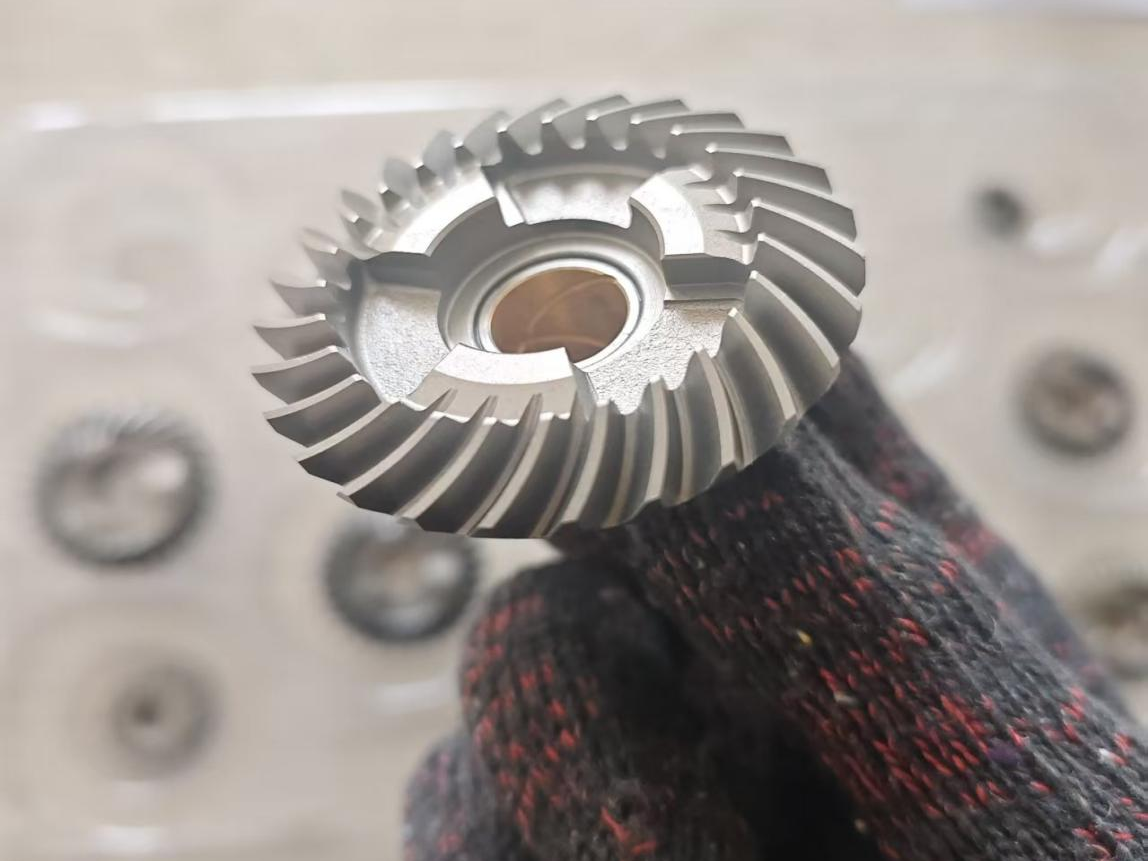
Consider a mid‑power outboard engine where you must design the forward, reverse, and pinion gears in the lower unit. The key constraints are torque capacity, housing space, and noise targets. [toprankmarketing]
- Step 1 – Define loads: Use the maximum engine torque and safety factors based on expected shock loads (e.g., sudden acceleration, wave impacts). [gearx.com]
- Step 2 – Define housing envelope: Measure the maximum permissible gear diameter from the lower unit casting model. [gearx.com]
- Step 3 – Select candidate DP: Start with a lower DP (larger teeth) to achieve sufficient bending and contact strength, then verify whether the resulting pitch diameter still fits the housing. [gearx.com]
- Step 4 – Adjust tooth count: Fine-tune tooth counts to hit your desired gear ratio while keeping a practical DP and avoiding undercutting. [gearx.com]
- Step 5 – Validate via FEA and prototype testing: Confirm that root stresses and pitting life meet targets under representative marine duty cycles. [wgcontent]
In our own projects, we often iterate between DP and tooth count several times to balance durability, noise, and manufacturability for different propeller loads and hull types. [toprankmarketing]
Based on our experience designing and producing outboard gears and other marine transmission components, several practical rules help avoid costly redesigns. [toprankmarketing]
- Stay with standard DP whenever possible. This ensures easier sourcing of cutting tools, inspection gauges, and replacement gears. [khkchilun]
- Coordinate DP early with your supplier. Tooling and heat‑treat distortion behavior depend on tooth size; changing DP late in the project impacts cost and lead time. [nav43]
- Consider surface hardening for higher DP. When higher DP (smaller teeth) is unavoidable due to space limits, case hardening and optimized grinding become critical for marine durability. [gearx.com]
- Align DP with shaft and bearing design. Larger teeth (low DP) often require larger shafts and bearings; treat this as a coupled system, not an isolated parameter. [gearx.com]
- Document DP clearly on drawings. To avoid confusion, always show both DP and module equivalents where international collaboration is involved. [blog.marketmuse]
Even experienced engineers occasionally misapply DP in ways that cause performance or sourcing issues. [onetonline]
- Mixing module and DP gears in the same mesh. This is one of the fastest ways to destroy teeth—profiles will not match even if the diameters look similar. [gearx.com]
- Assuming DP can be changed late with no impact. Changing DP near the end of a project can invalidate previous strength calculations, housing machining, and supplier tooling. [blog.marketmuse]
- Ignoring DP when reverse‑engineering. If you only copy outside diameter and tooth count without verifying DP standards, new parts may not mesh correctly with existing components. [khkchilun]
- Over‑optimizing size at the expense of durability. Choosing overly high DP to reduce gear size often leads to chipped teeth in real marine duty cycles. [gearx.com]
In our failure analyses for field‑returned outboard units, an incorrect or overly aggressive DP selection is a recurring root cause when combined with marginal lubrication or misalignment. [wgcontent]
For gear manufacturers, DP is tightly linked to cutting, heat treatment, and inspection processes. [heretto]
- Tooling availability: Standard DPs align with widely available hobs, shaper cutters, and grinding wheels, minimizing cost and lead time. [heretto]
- Machining time: Very high DP gears require more precise tooling and potentially slower cutting speeds to maintain tooth quality, raising production costs. [heretto]
- Inspection and quality control: DP defines the reference profile and tolerances used by gear inspection machines, so mixing DP standards complicates quality assurance. [heretto]
For OEMs in the marine industry, aligning DP choices with your supplier's standard tooling range is one of the easiest ways to control both unit cost and delivery time. [siteimprove]
When you receive a gear drawing or datasheet, use this quick checklist to understand its DP and compatibility. [blog.marketmuse]
1. Locate the gear specification block.
Look for a line such as "Gear: 24 teeth, DP 10, PA 20°". [khkchilun]
2. Confirm the pressure angle (PA).
DP alone is not enough; ensure the mating gear uses the same PA and tooth form. [gearx.com]
3. Check pitch diameter or outside diameter.
Verify that the given dimensions align with the formula dp = Z/DP or OD approximations. [khkchilun]
4. Verify metric equivalents.
If the project is metric, convert to module and note both values on internal documentation. [gearx.com]
5. Align with supplier standards.
Share the drawing with your gear supplier and confirm they support that DP and PA combination with existing tooling. [heretto]
This routine allows design engineers, buyers, and quality teams to speak the same language when discussing marine gears and outboard components. [nav43]
For standard industrial drives, rule‑of‑thumb DP choices often work well. But for critical marine applications—such as high‑power outboards, patrol boat propulsion, or long‑duty commercial vessels—it is wise to involve a specialist gear designer early. [toprankmarketing]
A gear expert can:
- Validate that your selected DP, tooth count, and profile modifications will survive real‑world duty cycles. [wgcontent]
- Optimize tooth micro‑geometry to reduce noise and improve efficiency in marine gearboxes. [gearx.com]
- Recommend material, heat‑treatment, and surface finishing combinations that suit your DP and environment (saltwater, varying loads, contaminated lubricants). [gearx.com]
At Ningbo Gill Transmission Parts Co., Ltd., we work directly with marine OEMs and aftermarket brands to co‑develop outboard gears with the right DP, surface hardness, and profile for each power range and hull type. [toprankmarketing]
Selecting the correct diametral pitch for outboard gears is one of the most impactful decisions you can make early in a marine transmission project. It affects tooth strength, gearbox size, noise, cost, and even your ability to source replacement parts years later. [khkchilun]
If you are planning a new outboard drivetrain, re‑engineering an existing lower unit, or looking for a reliable supplier of marine gears, we invite you to share your drawings or sample parts with our engineering team at Ningbo Gill Transmission Parts Co., Ltd. Our specialists can review your current DP choices, propose alternatives, and develop tailored outboard gear solutions for your target torque, speed, and durability requirements. [nav43]

1. Can I mesh a DP gear with a module gear if the diameters look similar?
No. Even if the outside diameters are close, DP and module use different base profiles, and mixing them will cause poor contact, noise, and rapid tooth failure. [gearx.com]
2. Is there a "best" DP for all outboard gears?
There is no universal best DP; the optimal value depends on torque, speed, available space, and cost. High‑power outboards typically use lower DP (larger teeth) than small portable engines. [gearx.com]
3. How do I know if a replacement gear has the correct DP?
Confirm tooth count, measure outside diameter, and either use the DP≈(Z+2)/OD approximation or check the manufacturer's data sheet. Both mating gears must share the same DP and pressure angle. [khkchilun]
4. Does changing DP affect my shaft and bearing design?
Yes. Lower DP (larger teeth) usually requires larger pitch diameters, which often drives up shaft and bearing sizes. Treat DP selection as part of an integrated drivetrain design, not an isolated choice. [gearx.com]
5. How often should I review DP choices in a long‑running marine product line?
Whenever you significantly change engine power, propeller load, duty profile, or housing geometry, revisit DP and related gear parameters. Periodic design reviews help prevent premature failures in upgraded models. [wgcontent]
1. KHK Gear – "Diametral Pitch (DP) | Gear Nomenclature" (accessed 2026). [khkchilun]
2. General gear parameter explanations and module–DP relationships. [gearx.com]
3. E‑E‑A‑T and experience-based content best practices for technical industries. [toprankmarketing]
4. SEO content strategy and on‑page optimization guidance applied to technical gear articles. [siteimprove]
5. Technical writing practices for expert‑to‑expert engineering communication. [onetonline]


