


close
Choose Your Site
Global
Social Media
Views: 224 Author: Gill Transmission Parts Publish Time: 2026-09-26 Origin: Site


Content Menu
● What Makes a Lower Unit Gear "Genuine" or "Compatible"?
● Genuine Lower Unit Gears vs Compatible Replacement Gears at a Glance
● Why Exact Gearcase Fitment Matters More Than a Part Label
>> Can Two Gears With the Same Tooth Count Still Differ?
● How Do Quality and Durability Really Compare?
>> What Should a Buyer Ask the Supplier to Document?
>> Why Does Installation Quality Affect Both Options?
● Which Option Costs Less Over the Full Repair?
>> When Is the Genuine Part the Safer Purchasing Choice?
>> When Does a Compatible Gear Make Sense?
● A Five-Step Purchase and Installation Check
● The Often-Missed Question: Why Did the Original Gears Fail?
● A Practical Recommendation for Marine Buyers
>> Are compatible replacement gears the same as genuine gears?
>> Can I select a lower unit gear using horsepower alone?
>> Does a lower-priced compatible gear always reduce repair cost?
>> Should I replace only the visibly damaged gear?
>> Does buying a genuine gear guarantee the repair?
>> What does milky lower unit oil mean?
>> What should I send when requesting a compatible gear quotation?
Genuine lower unit gears vs compatible replacement gears is not simply a choice between a higher and a lower price. The right choice depends on exact gearcase fitment, gear geometry, installation quality, warranty terms, and the cost of having the boat out of service. A genuine gear is supplied through the engine maker's parts system. A compatible replacement gear is made by an independent supplier for a specified application. Either can be a sensible purchase—but neither should be ordered on engine horsepower alone.
For boat owners, repair shops, and marine-parts buyers, the most useful question is: Can this gear be identified, inspected, installed, and supported for this exact lower unit? This guide compares the two options from that practical standpoint and explains what to ask before placing an order.
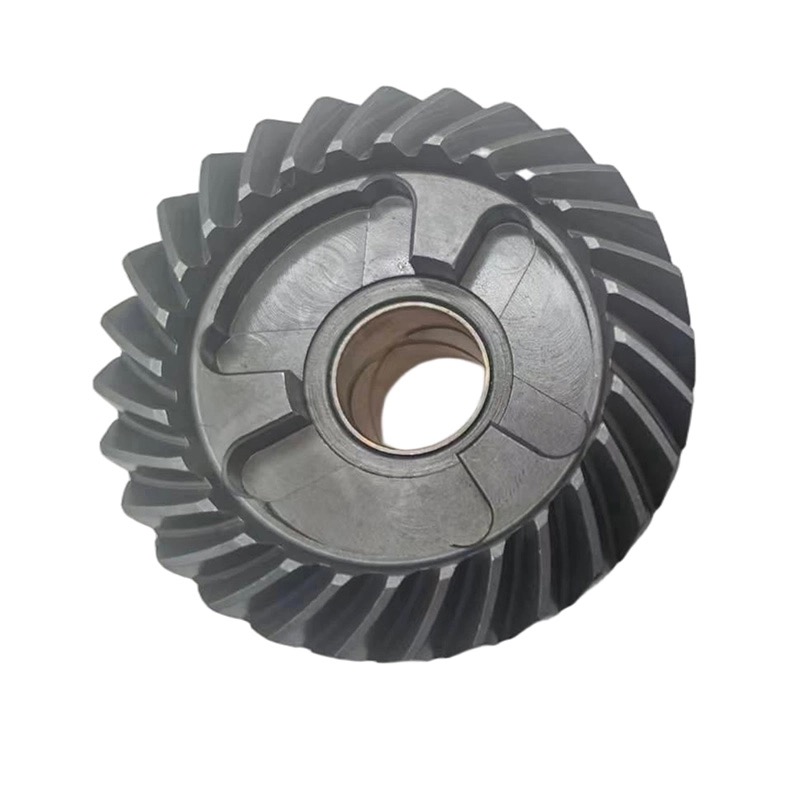
A genuine, or original-equipment, replacement is supplied under the engine manufacturer's parts program. Mercury Marine, for example, describes its Precision Parts as replacements validated by Mercury for the intended application. Its digital catalog lets buyers search by engine model or serial number to identify parts and diagrams.
A compatible replacement is produced by a company other than the engine maker and offered for a stated model or original part number. Compatible does not automatically mean inferior, just as "fits" does not prove that every dimension or operating characteristic matches. Independent products vary by supplier, specification, inspection, and application coverage. Mercury itself cautions that some broadly marketed "will fit" parts may differ from the originals they replace.
There is also an important distinction between a gear and a complete lower unit. This article addresses internal replacement gears. Buying an assembled gearcase raises additional questions about its housing, shafts, bearings, seals, ratio, and assembly work.
| Buying factor | Genuine lower unit gears | Compatible replacement gears |
|---|---|---|
| Source | Engine maker's authorized parts channel | Independent manufacturer or distributor |
| Fitment starting point | Manufacturer's catalog and current part identification | Supplier's application list and cross-reference, which still need verification |
| Specification visibility | May be supported by dealer and manufacturer documentation | Depends on what the supplier will disclose and document |
| Price | Obtain a model-specific quote; do not assume a fixed premium | Obtain a like-for-like quote, including freight and related parts |
| Availability | Depends on the model and local parts network | May offer another sourcing route, especially when an original part is difficult to obtain |
| Warranty | Governed by the relevant manufacturer's terms | Governed by the independent supplier's written terms |
| Best decision test | Correct part, sound gearcase, qualified installation, acceptable total cost | The same test, plus clear evidence of dimensional and application compatibility |
The table describes purchasing considerations, not measured performance rankings. Without controlled, application-specific testing, no responsible supplier should claim that one entire category lasts longer or runs quieter than the other.
The lower unit transfers engine power to the propeller shaft. Its gears operate within an assembly that also depends on shafts, bearings, lubricant, seals, and correct setup. A replacement gear must therefore suit the specific gearcase configuration, not merely an outboard that shares the same advertised horsepower. Yamaha describes the lower unit's role in driving the propeller shaft and emphasizes the importance of its lubricant and seals.
Start with the engine's model and serial number, then identify the existing gearcase and the part being replaced. Record the original part number where available. If a number has been superseded, verify the replacement through the relevant catalog or dealer rather than assuming the old and new numbers describe interchangeable parts in every configuration. Mercury's catalog supports model- and serial-number searches for precisely this identification step.
The technician or supplier should also check the gear ratio, rotation and gear arrangement, mating components, and any model-specific dimensions. Ratio is not a minor catalog detail: Mercury lists a 1.75:1 ratio for a particular TorqueMaster gearcase application, illustrating why the gearcase configuration must be identified rather than inferred from the engine family alone.
Yes. Tooth count is necessary information, but it is not a complete fitment specification. Gear geometry and mounting conditions affect how teeth meet under load. In its bevel-gear technical material, KHK warns that even gears with the same module and number of teeth are not necessarily interchangeable across product series. Its guidance also discusses tooth-contact patterns, mounting distance, and backlash. These are general gear-engineering principles; the outboard service manual remains the authority for an individual repair.
This is why a photograph and an approximate diameter should not be the sole basis for an order. Ask for a positive application match and confirm which accompanying components must be replaced or inspected.
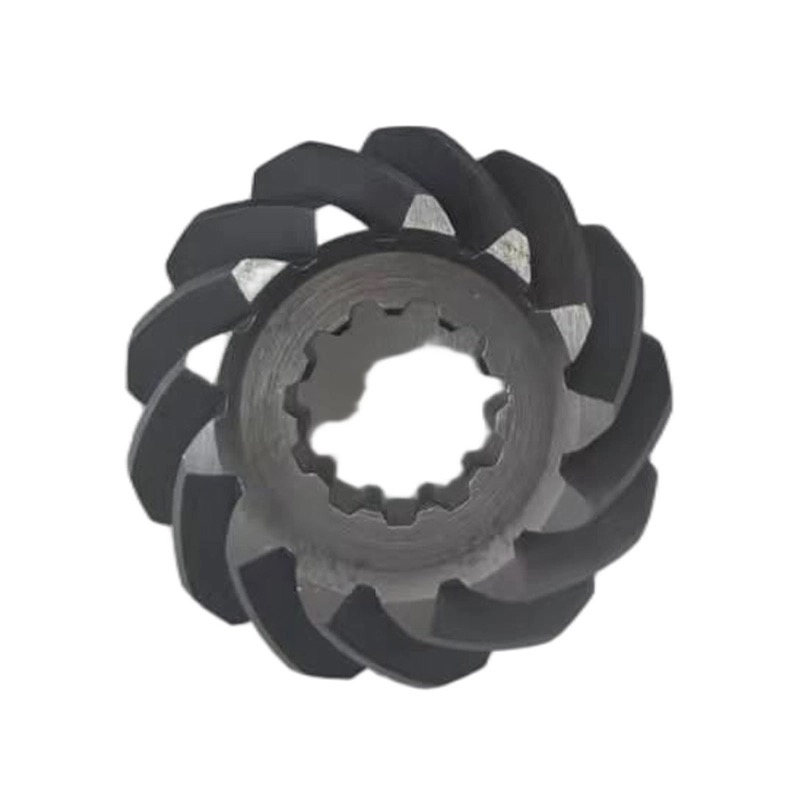
A genuine part offers a clear route back to the engine manufacturer's stated replacement specification and support network. For a buyer who wants the least ambiguity in identifying a current replacement, that is a meaningful advantage. It is not, however, a guarantee against damage from poor installation, contaminated lubricant, an unsuitable mating part, or an underlying gearcase fault.
A compatible gear can be a practical option when the supplier demonstrates the intended application and provides useful inspection or manufacturing information. For commercial buyers, the most persuasive evidence is specific: a drawing or controlled specification, an original-part cross-reference, the material and heat-treatment requirements where applicable, dimensional inspection records, and an agreed process for handling a mismatch.
Request information that can actually be checked against the order and repair:
- Identification: Supplier part number, intended original part number, model coverage, and any exclusions.
- Configuration: Gear type, tooth count, ratio-related details, and specified mating parts.
- Inspection: Relevant dimensions and documented checks for the supplied gear.
- Traceability: Batch or production identification, where offered.
- Support: Written warranty scope, claim procedure, and the person who will resolve a fitment question.
This is a procurement checklist, not a claim that every supplier routinely provides every document. A refusal or inability to establish the intended application is a reason to pause, regardless of how attractive the price looks.
Even a correctly specified gear may perform poorly if its assembled tooth contact and backlash are wrong. KHK's technical guidance explains that mounting errors can create uneven contact, noise, and wear; it also advises checking backlash, contact, fastening, and lubrication before operation. Those principles reinforce the need for a technician to follow the exact engine-maker service procedure and specifications, rather than copying settings from another gearcase.
An installation quote should therefore cover more than fitting the new gear. It should address inspection of the mating gear and related components, the condition of the housing, required setup checks, seals, and a suitable lubricant. If damage extends beyond an individual gear, ask the repairer whether rebuilding the assembly remains appropriate.
The shelf price is only one line in the repair bill. A more useful comparison is:
Total repair cost = gear price + related parts + labor + freight + expected downtime + potential rework.
That formula is a decision framework, not an industry cost statistic. It helps prevent a misleading comparison between one quoted gear and a complete, installed repair. A lower-priced component can still be the more economical choice if it is correctly matched, competently installed, and supported. Conversely, a small purchase-price saving may not justify uncertain fitment when a vessel's missed operating days are costly.
For example, a repair shop comparing two quotations should put both on the same basis: the identified application, the same list of associated parts, shipping date, installation work, and written warranty. Only then can the customer see whether the apparent saving survives the full calculation.
Favor the genuine route when the engine maker's catalog identifies a current replacement, the application is difficult to verify independently, or the owner places particular value on manufacturer-backed parts support. It may also simplify discussions when an engine or repair is subject to specific warranty terms. Read the actual terms rather than assuming that purchasing a genuine gear makes the whole lower unit—or the installation—warranted. Mercury, for instance, describes warranty coverage for its own precision parts, but that statement should not be generalized to every brand or repair.
Consider a compatible replacement when the supplier can establish the exact application, explain what is supplied, provide meaningful quality documentation, and state its warranty and response process in writing. It may be particularly worth evaluating when procurement lead time matters or a buyer manages repeated repairs across a known fleet of gearcases.
For fleet and distributor buyers, consistency matters as much as one successful fit. Ask whether the supplier can keep the same specification and identification process across subsequent batches. Do not treat an initial fit check as proof of long-term service life; keep installation and service records so future purchasing decisions rest on observed results.
1. Identify the unit. Record the engine make, full model, serial number, gearcase identification, and original gear part number if available. Confirm whether the needed item is one gear, a specified set, or a larger assembly.
2. Check the existing damage. Have a qualified technician inspect the mating components and investigate why the original gear failed. Replacing a damaged gear without addressing the cause risks repeating the repair.
3. Compare complete quotations. Ask each seller for the exact supplied items, application confirmation, dispatch timing, freight, return conditions, and warranty wording.
4. Confirm the repair procedure. The technician should use the applicable service instructions for assembly checks, seals, lubricant, and testing. General gear guidance cannot substitute for model-specific settings.
5. Keep the evidence. Save part numbers, supplier documents, installation records, and the findings from the original failure. They make a later support claim or repeat order much easier to assess.
A particularly useful handover record notes the removed part number, the replacement part number, the gearcase identification, and the technician's completed checks. This small administrative step prevents a future buyer from relying on an engine description that may not fully identify its lower unit.
A damaged tooth does not, by itself, explain the failure. Before choosing genuine or compatible replacement gears, examine the condition of the lubricant, seals, mating parts, and gearcase. Yamaha advises checking for fishing line near the propeller shaft because it can damage seals and permit water entry. It also says milky gear lubricant indicates water contamination and calls for seal inspection and pressure testing. Larger metal chips found during a lubricant change warrant professional inspection.
Mercury likewise advises investigating creamy or white gear lubricant and seeking a gearcase pressure check when water intrusion is suspected. It recommends checking the propeller shaft area for line that can compromise its seal. Neither a genuine nor a compatible gear fixes a leaking gearcase.
Maintenance guidance is model-specific. As examples—not a universal interval—Yamaha recommends lower-unit lubricant replacement after the first 20 hours on a new outboard and every 100 hours thereafter; Mercury advises checking the owner's manual and describes a 100-hour or seasonal gear-lube change in its maintenance guidance. Use the schedule and lubricant specified for the engine being serviced.
Choose genuine lower unit gears when manufacturer part identification and support are the priorities, especially if an independent match remains uncertain. Choose compatible replacement gears when a supplier can demonstrate precise application coverage and provide the documentation and service terms needed to make the purchase accountable. In both cases, commit to the repair only after the gearcase condition and installation requirements are understood.
Ningbo Gill Transmission Parts Co., LTD. describes its business as having 29 years of experience in the research, production, and sales of outboard gears and other marine parts. Buyers considering a compatible replacement can send the company their engine and gearcase identification, original part number, photographs, and required quantity for an application review. Ask for the proposed replacement identification, available specification and inspection information, lead time, and written warranty terms before approving an order. The company's public supplier listing identifies outboard gears among its products; the 29-year figure is supplied by the company for this article.
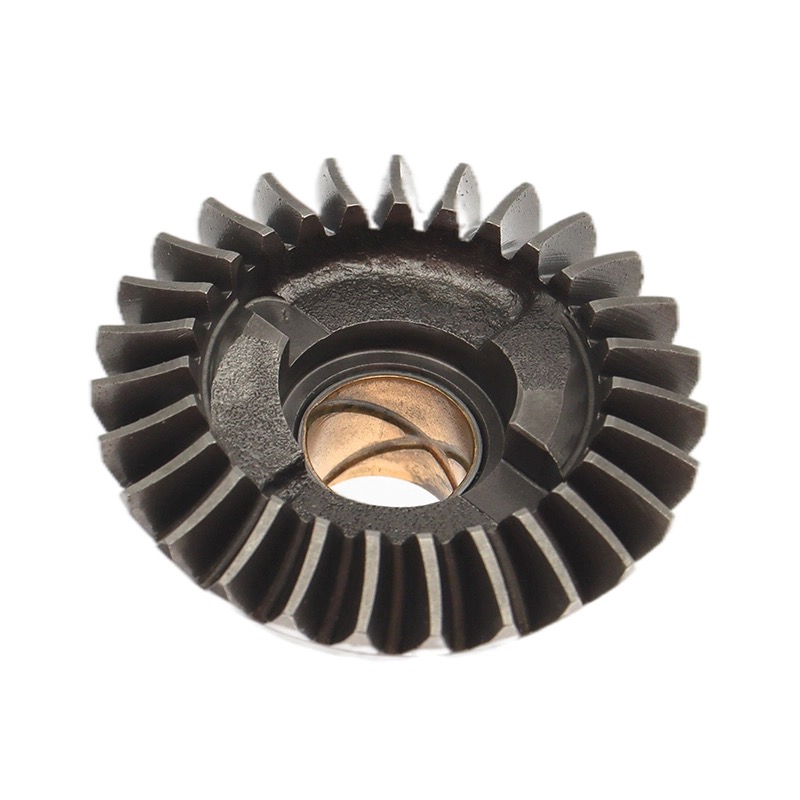
No. A genuine gear comes through the engine maker's parts system; a compatible gear comes from an independent supplier for a stated application. "Compatible" should be verified against the exact gearcase and part requirements, not taken to mean identical manufacturing or validation.
No. Start with the full model, serial number, gearcase identification, and relevant part number. Manufacturer catalogs can use serial-number searches to narrow down the correct diagrams and parts.
No. Compare the installed repair cost, including related parts, labor, freight, downtime, and the possibility of rework. The lowest component quote is not necessarily the lowest total-cost choice.
Do not make that decision from appearance alone. Have the mating gear and surrounding components inspected, determine the cause of damage, and follow the service procedure for that gearcase.
No. Part warranties have specific terms, and repair quality depends on diagnosis and installation as well as the component. Obtain written coverage details for the part and the work before authorizing the job.
It is a warning sign of water in the lubricant. Yamaha recommends having the seals inspected and the lower unit pressure-tested where necessary; do not assume that changing gears alone resolves the problem.
Send the engine make, full model and serial number, gearcase identification, original part number if known, clear photographs, required quantity, and destination. Ask the supplier to confirm the proposed application and supplied components in writing.
1. [Mercury Marine — *Keep Your Mercury Engine All Mercury with Mercury Precision Parts*]. Manufacturer explanation of genuine parts, aftermarket distinctions, and its stated parts warranty. [mercurymarine]
2. [Mercury Marine — *Parts Digital Catalog*]. Model- and serial-number-based parts identification. [mercurymarine]
3. [Mercury Marine — *Pro XS 175–300hp Outboard Motor*]. Example of a gearcase-specific published gear ratio. [mercurymarine]
4. [Yamaha Outboards — *Lower Unit Maintenance*]. Lower-unit operation, lubricant, water intrusion, inspection, and Yamaha maintenance guidance. [yamahaoutboards]
5. [Mercury Marine — *How to Winterize Your Outboard*]. Gear-lube checks, seal concerns, propeller-shaft inspection, and maintenance guidance. [mercurymarine]
6. [KHK Gears — *Miter Gears: Technical Information and Application Hints*]. General bevel-gear guidance on interchangeability, mounting, tooth contact, and backlash; not an outboard-specific service manual. [khkgears]
7. [Ningbo Gill Transmission Parts Co., LTD. — Public Supplier Listing]. Public listing of the company and its product categories; the 29-year experience statement was provided separately in the company brief. [jecd.en.alibaba]


