


close
Choose Your Site
Global
Social Media
Views: 288 Author: Gill Transmission Parts Publish Time: 2026-10-15 Origin: Site


Content Menu
● Marine Engine Parts vs Outboard Parts: The Core Difference
>> What Are Marine Engine Parts?
>> Why These Categories Overlap
● Marine Engine Parts and Outboard Parts: Comparison Table
● How Propulsion Layout Changes Parts Selection
>> Inboard Marine Engine Parts
● Outboard Drive Shafts vs Propeller Shafts
>> Why Shaft-Length Descriptions Are Not Enough
● Materials, Corrosion, and Manufacturing Quality
>> "Marine Grade" Needs Supporting Detail
>> Hardness Is Only One Part of Quality
>> Corrosion Protection Is a System-Level Issue
● OEM vs Aftermarket Marine Parts: What Buyers Should Compare
● A Seven-Step Checklist for Buying Marine Replacement Parts
>> 1. Identify the Propulsion System
>> 2. Record the Identification Numbers
>> 3. Find the Correct Catalog Reference
>> 4. Describe the Exact Component
>> 5. Provide Technical Evidence
>> 6. Confirm the Supplied Scope
>> 7. Review Installation Requirements
● Expert Procurement Insight: Build a Shaft Acceptance Plan
● Illustrative Buying Scenario: Same Horsepower, Wrong Shaft
● Maintenance and Total Ownership Cost
>> Use the Correct Maintenance Schedule
>> Compare Cost Beyond the Purchase Price
● Get a More Accurate Marine Transmission Parts Quotation
>> Are Marine Engine Parts and Outboard Parts the Same?
>> Can Inboard Parts Be Used in an Outboard?
>> Is an Outboard Drive Shaft the Same as a Propeller Shaft?
>> Is Horsepower Enough to Identify Replacement Parts?
>> Are Aftermarket Outboard Parts Always Lower Quality?
>> What Should I Send When Requesting a Drive Shaft Quotation?
Marine engine parts and outboard parts overlap, but they are not interchangeable purchasing categories. Marine engine parts is the broader term; outboard parts serve a specific propulsion system mounted outside the boat's hull. Understanding that relationship helps buyers avoid incorrect orders, installation delays, and unnecessary repair costs.
At Ningbo Gill Transmission Parts Co., LTD., our perspective comes from 29 years of specialization in marine transmission components, including drive shafts, propeller shafts, crankshafts, and gears. Established in 1997, our company focuses on their research, development, production, and sales.
For distributors, repair workshops, and boat owners, the most important question is not which category sounds better. It is compatibility: does the component match the exact engine, drive assembly, and operating requirements?
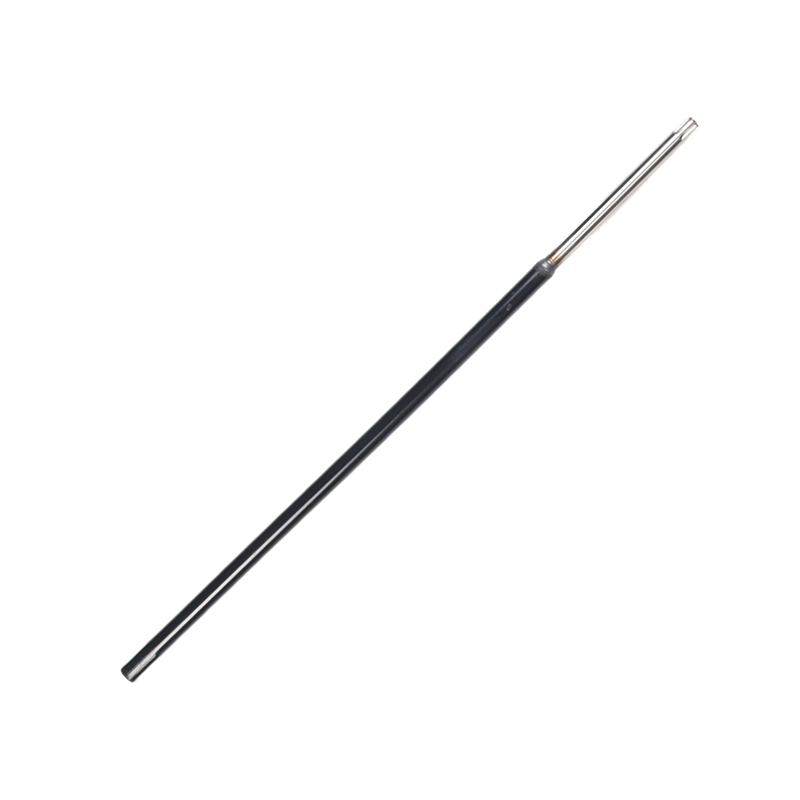
Strictly speaking, marine engine parts are components of engines designed or adapted for marine use. Examples include pistons, crankshafts, cylinder heads, fuel-system components, and cooling-system components.
However, suppliers often use the phrase more broadly to include associated transmission and propulsion components. A catalog may therefore place gears, shafts, and drive-unit components under "marine engine parts," even when those items sit outside the engine itself.
Buyers should establish what the supplier means before comparing quotations.
Outboard parts are replacement components for an outboard motor: a propulsion package attached to the boat's transom.
This category includes:
- Powerhead components, such as pistons and crankshafts.
- Midsection and mounting components.
- Lower-unit gears, bearings, shafts, and seals.
- Fuel, electrical, cooling, and trim-system components.
An outboard drive shaft belongs to the outboard transmission system. It is not the same component as the propeller shaft, even though both transmit rotational power.
Outboard engine components are marine engine parts. However, not every marine engine part fits an outboard, and not every outboard part is an engine component.
For purchasing purposes, separate the application from the component function. "Marine" identifies the operating environment; "outboard" identifies the propulsion arrangement.
| Buying factor | Marine engine parts: broad category | Outboard parts: specific application |
|---|---|---|
| Application | Can cover inboard, sterndrive, and outboard engines | Designed for outboard motor assemblies |
| Catalog scope | Engine internals, fuel systems, cooling, and sometimes drivetrain items | Powerhead, midsection, lower unit, mounting, and controls |
| Identification | Engine details plus relevant transmission or drive identifiers | Exact model, serial number, and component reference |
| Shaft terminology | May describe several different propulsion arrangements | Drive shaft and propeller shaft have distinct roles |
| Installation access | Depends on engine location and vessel layout | Depends on the component and motor configuration |
| Corrosion exposure | Varies by location, materials, and cooling arrangement | External assemblies and internal water passages need attention |
| Maintenance basis | Applicable engine and drivetrain manuals | Applicable outboard owner and service manuals |
| Purchasing risk | Ordering from an overly broad description | Assuming equal horsepower means equal fitment |
Neither category is inherently cheaper, stronger, or easier to maintain. Those judgments require a specific component and application.
A conventional shaft-drive inboard installation places the engine inside the hull. Power travels through a transmission and shaft to the propeller.
The engine, transmission, coupling, shaft, and supporting hardware form an interconnected system. Consequently, an engine model alone may not identify every drivetrain component.
For an inboard shaft inquiry, buyers should clarify whether they need a coupling-related component, an intermediate shaft, or the propeller shaft itself.
A sterndrive combines an engine inside the boat with an external, steerable drive unit at the transom.
This creates two identification tasks: the engine and the drive assembly. A component compatible with the engine does not automatically fit the drive.
When requesting sterndrive parts, provide the drive identification wherever applicable rather than relying exclusively on engine horsepower.
An outboard packages its engine and drive system into a transom-mounted assembly.
In a typical outboard layout, the drive shaft transfers rotation downward from the powerhead into the lower-unit gear arrangement. The gears redirect power to the propeller shaft.
This compact arrangement makes accurate component matching essential. Shaft length, spline geometry, bearing locations, and seal interfaces must agree with the specified assembly.
The outboard drive shaft carries power between the engine and lower-unit gearing.
When evaluating a replacement outboard drive shaft, buyers should request confirmation of:
- Overall length and relevant stepped diameters.
- Spline geometry at both ends.
- Bearing and seal contact locations.
- Straightness and specified runout.
- Material and applicable heat treatment.
- Compatibility with the relevant gearcase version.
These are drawing-dependent characteristics, not universal dimensions shared by every motor of a particular horsepower.
The propeller shaft transfers power from the lower-unit gearing to the propeller.
Its purchasing specification may include bearing journals, seal surfaces, splines, threads, and the propeller attachment arrangement.
Do not identify a shaft solely from a photograph. Two components can look similar while differing at a critical bearing seat or sealing surface.
Descriptions such as "long shaft" identify an outboard configuration, but they do not replace a component drawing or verified part reference.
Yamaha explains that its Primary Identification Number can identify model type, drive-shaft length, and production information. That makes identification data more useful than a seller's informal description.
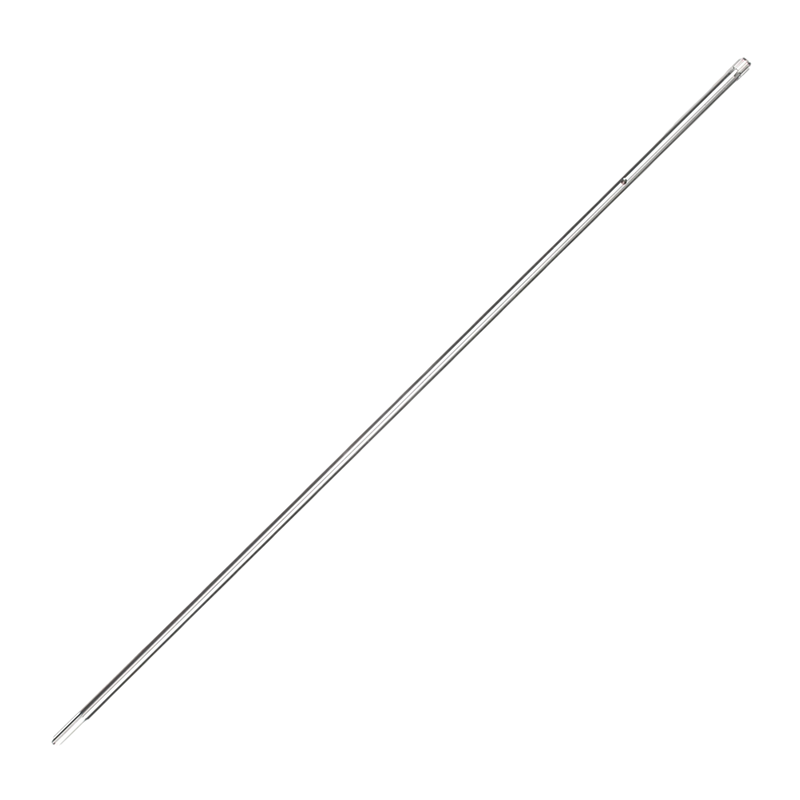
"Marine grade" is not a complete purchasing specification.
Ask what material is supplied, which manufacturing requirements apply, and how conformity is checked. For shafts and gears, useful evidence may include material documentation, dimensional inspection, and relevant hardness results.
The correct specification depends on the application. A material description alone does not demonstrate correct fit, fatigue performance, or sealing compatibility.
A high hardness reading is not automatically proof of a better shaft or gear.
Where heat treatment is specified, buyers should consider the required surface condition, effective hardened depth, and properties of the underlying material. Geometry and finish remain important.
The practical purchasing lesson is simple: evaluate the complete specification rather than selecting a supplier from one impressive test value.
Saltwater creates demanding conditions, but freshwater operation does not eliminate corrosion risk.
Yamaha also identifies stray electrical currents around docks as a potential contributor. Protection therefore involves more than selecting a corrosion-resistant component.
Appropriate anodes, intact protective finishes, suitable maintenance, and attention to electrical conditions all matter. Follow the equipment manufacturer's instructions; do not substitute a universal corrosion routine for model-specific guidance.
Original equipment parts offer an established route to application identification and manufacturer support. Aftermarket marine parts may provide alternative availability, pricing, or sourcing options.
However, neither the label nor the price proves suitability.
Compare both options using the same questions:
1. Is the part reference verified against the actual assembly?
2. Is the intended application clearly documented?
3. What dimensional and material evidence is available?
4. Are installation requirements explained?
5. What warranty, return, and technical-support terms apply?
For aftermarket outboard parts, distinguish the supplier's compatibility claim from the engine manufacturer's approval. They are not equivalent.
Likewise, custom manufacturing requires an agreed specification. Producing a component from a sample does not, by itself, establish suitability for every related engine model.
Confirm whether the application is outboard, conventional shaft-drive inboard, or sterndrive.
Photograph the identification plate and record the complete serial number. Include separate drive or transmission identifiers when relevant.
Use the applicable manufacturer's parts catalog. Mercury provides model- and serial-number-based catalog searches with diagrams and part numbers.
Specify whether the requirement concerns a drive shaft, propeller shaft, gear, bearing, seal, or complete assembly.
Submit clear photographs and an approved drawing where available. For an obsolete component, ask the supplier to identify what additional measurements are needed.
Check whether the quotation covers the bare component or includes associated hardware. Clarify packaging, quantity, inspection documents, and delivery terms.
Check the applicable service instructions before purchase. Confirm whether specialized tools, setup procedures, or qualified technician involvement will be necessary.
This workflow turns a vague inquiry into an actionable specification.
For distributors and repair businesses, a documented acceptance plan can be more useful than another general promise of "high quality."
Define the required checks before placing an order.
| Check | Evidence to request | Purchasing purpose |
|---|---|---|
| Application match | Verified reference and identification details | Reduces incorrect selection |
| Critical dimensions | Inspection against the agreed drawing | Supports assembly compatibility |
| Spline fit | Agreed inspection method or functional check | Evaluates the mating interface |
| Runout | Results against a specified limit | Checks rotational geometry |
| Heat treatment | Applicable hardness or treatment records | Verifies agreed processing requirements |
| Identification | Supplier traceability information | Supports investigation and repeat orders |
Acceptance limits must come from the applicable specification, not from generic internet advice.
For repeat purchases, retain the approved drawing revision and inspection requirements. A previous successful order should not become an excuse to omit documentation.
Consider a workshop replacing an outboard drive shaft. The inquiry lists the brand and horsepower but omits the serial number and configuration.
The supplier offers a visually similar shaft. During installation, the workshop discovers that the length or mating interface does not match.
This is an illustrative scenario, not a documented customer case. It highlights a preventable process failure: purchasing from an incomplete description.
A better inquiry includes:
- Engine identification photographs.
- Existing part markings.
- The manufacturer's catalog reference.
- Relevant configuration information.
- Clear photographs of both shaft ends.
The lesson is not to measure everything independently. It is to combine authoritative identification with component-specific verification.
Maintenance requirements vary by model, operating conditions, and component.
Yamaha distinguishes ongoing tasks, such as flushing, from interval-based servicing. It also identifies procedures that should be handled by an authorized dealership.
Avoid applying one manufacturer's flushing method or service interval to every outboard. Consult the relevant manual.
A useful purchasing framework is:
Total installed cost = part price + freight + associated components + installation + downtime + potential rework.
This is a budgeting framework, not a published industry benchmark.
A cheaper shaft can become more expensive if it requires replacement, additional labor, or another shipment. Conversely, a higher price does not guarantee better performance.
For commercial buyers, prioritize verified fitment, dependable documentation, and predictable supply alongside price.
Ningbo Gill Transmission Parts Co., LTD. specializes in marine transmission components, including drive shafts, propeller shafts, crankshafts, and gears.
Send our team your engine model, serial number, part reference, photographs or drawing, required quantity, and delivery expectations. For custom projects, include the applicable material, dimensional, and inspection requirements.
A detailed inquiry gives our team a stronger basis for reviewing your requirement and preparing a quotation.
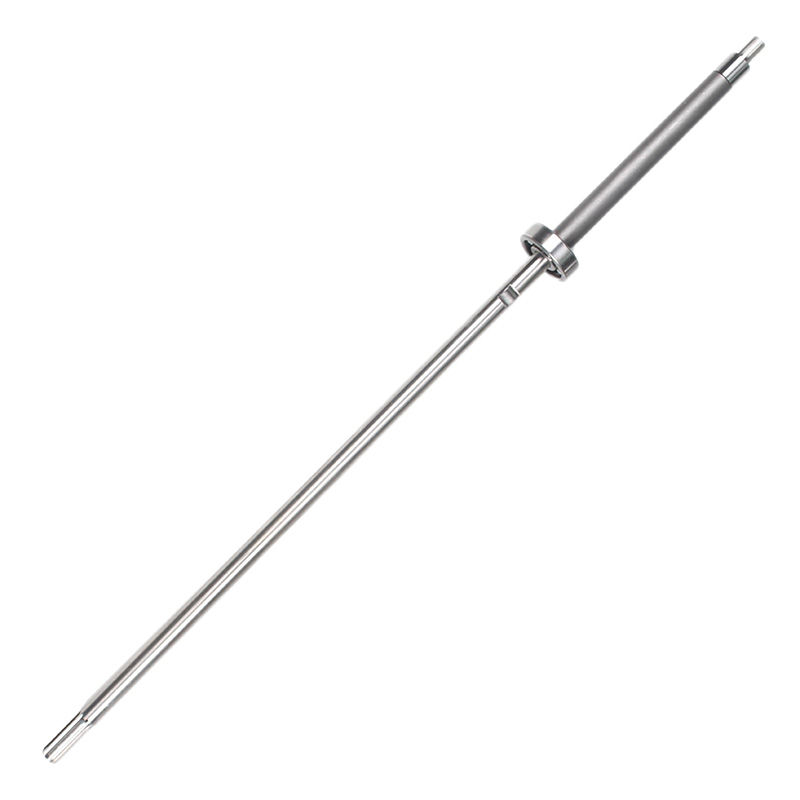
They overlap but are not identical. Marine engine parts is a broader category, while outboard parts include components throughout a specific propulsion assembly.
Do not assume interchangeability. Use a verified manufacturer cross-reference or application-specific technical confirmation before considering a substitution.
No. The drive shaft transfers rotation from the powerhead toward the lower-unit gearing. The propeller shaft transfers rotation from that gearing to the propeller.
No. Provide the exact model and serial number, then verify the component reference. Configuration and production differences can affect selection.
No blanket conclusion is justified. Assess fitment evidence, manufacturing requirements, inspection documentation, support, and warranty terms for the specific product.
Send the engine identification, part reference, quantity, photographs, and any available approved drawing. Add delivery requirements and requested inspection documentation.
1. Ningbo Gill Transmission Parts Co., LTD. — "About Us." Company establishment in 1997, specialization, and product categories. [gilltransmission]
2. Mercury Marine — "How to Choose: Comparing Inboard, Sterndrive and Outboard Power." Explanation of propulsion layouts and power-transfer arrangements. [mercurymarine]
3. Mercury Marine — "Parts Digital Catalog." Model and serial-number searches, diagrams, and component references. [mercurymarine]
4. Yamaha Outboards — "Owner Resources FAQs." Primary Identification Number information and corrosion considerations. [yamahaoutboards]
5. Yamaha Outboards — "Maintenance FAQs." Maintenance planning and procedures requiring dealership involvement. [yamahaoutboards]
6. Yamaha Outboards — "Maintenance Matters." Continuous-use and interval-based maintenance guidance. [yamahaoutboards]
7. Yamaha Outboards — "How to Prevent Corrosion on Your Outboard." Corrosion locations, inspections, anodes, and manufacturer-specific flushing guidance. [yamahaoutboards]
8. Ningbo Gill Transmission Parts Co., LTD. — "Splined Drive Shafts vs Keyed Drive Shafts: Which Performs Better?" Spline geometry, engagement, fit, hardness, and surface considerations. [gilltransmission]


