


close
Choose Your Site
Global
Social Media
Views: 238 Author: Gill Transmission Parts Publish Time: 2026-09-24 Origin: Site


Content Menu
● What Is Included in a Lower Unit Replacement?
● New Lower Unit: What You Are Paying For
>> Key Advantages of a New Lower Unit
● Remanufactured Lower Unit: What "Remanufactured" Should Mean
>> Key Advantages of a Remanufactured Lower Unit
>> The Critical Limitation: Quality Variation
● New vs Remanufactured Lower Unit Cost Comparison
>> Understanding Total Installed Cost
● When a New Lower Unit Is Worth the Extra Cost
● When a Remanufactured Lower Unit Is the Better Value
● Hidden Costs That Change the Decision
>> Installation Parts and Labor
● Expert Inspection Checklist Before Buying
>> Step 1: Confirm the Failure Source
>> Step 2: Record Engine Identification Data
>> Step 3: Ask for Technical Evidence
● Practical Example: Choosing by Operating Profile
● How to Protect Either Choice After Installation
● Final Verdict: Which Lower Unit Offers Better Value?
● FAQ
>> 1. Is a remanufactured lower unit as reliable as a new lower unit?
>> 2. How much cheaper is a remanufactured lower unit?
>> 3. Should I replace my lower unit after hitting a rock?
>> 4. What does milky lower-unit oil mean?
>> 5. Do I need the engine serial number to buy a lower unit?
>> 6. Does a remanufactured lower unit include a water pump?
>> 7. Can I install a lower unit myself?
>> 8. What should I ask a remanufactured lower-unit supplier before ordering?
When an outboard gearcase fails, the decision is rarely limited to "What does the replacement unit cost?" The more useful question is: Which lower unit delivers the lowest total ownership cost for this specific engine, boat, operating environment, and downtime requirement?
For boat owners, marine repair shops, distributors, and fleet operators, the choice between a new lower unit and a remanufactured lower unit can affect upfront spending, reliability, installation time, resale confidence, and the risk of another failure during the season. A new unit offers an entirely unused assembly built to the engine maker's original configuration. A properly remanufactured lower unit can provide a strong value alternative when it has been fully dismantled, accurately measured, rebuilt with suitable replacement parts, tested, and protected by a clear warranty.
At Ningbo Gill Transmission Parts Co., LTD., our 29 years of experience in marine transmission components and outboard gears have taught us a practical lesson: the lowest purchase price is not always the lowest-cost solution. Gear condition, shaft alignment, sealing quality, bearing preload, gear contact pattern, water-pump condition, and exact application matching all matter as much as the invoice price.
This guide compares new and remanufactured lower units from the perspective of cost, performance, risk, lifecycle value, and purchasing strategy.
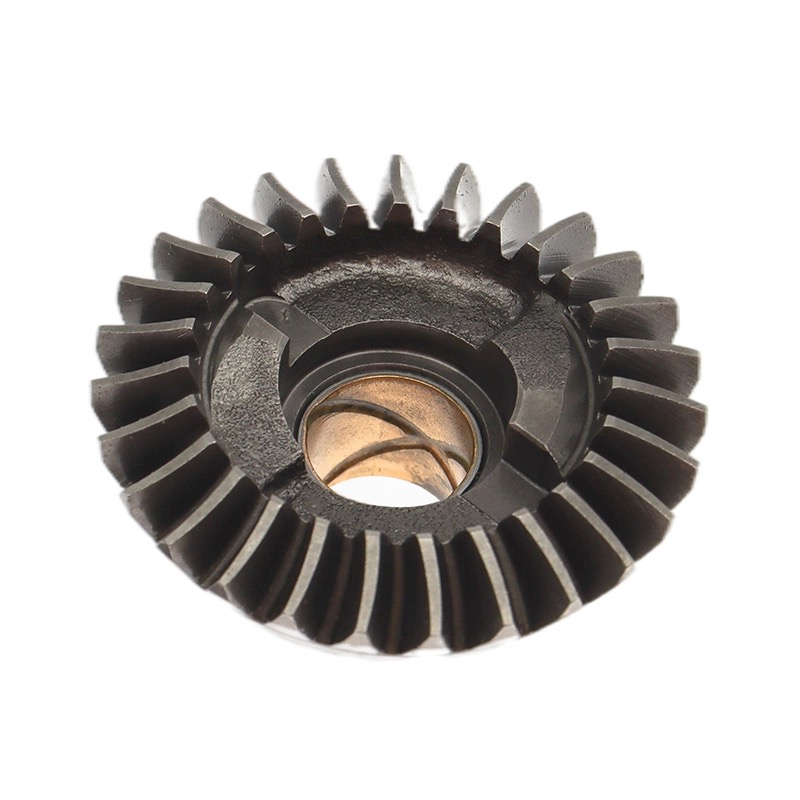
The lower unit, also called a gearcase, transfers engine power through a set of gears and shafts to turn the propeller. It also supports critical systems such as forward-neutral-reverse shifting and, on many outboards, the water pump that supplies cooling water to the engine.
A typical outboard lower unit assembly may include:
- Gearcase housing
- Driveshaft
- Propeller shaft
- Shift shaft and shift mechanism
- Pinion gear, forward gear, and reverse gear
- Bearings, races, thrust washers, and shims
- Oil seals, O-rings, gaskets, and drain/fill plug seals
- Water-pump housing, impeller, wear plate, and related seals
- Skeg, gearcase nose, and anti-ventilation plate structure
The exact scope varies by manufacturer, horsepower range, shaft length, generation, and whether the product is sold as a complete assembly or a partial gearcase. This is why buyers should never select a lower unit based only on engine horsepower.
Serial-number verification is essential. Two engines with the same brand, horsepower, and model-year range may use different gear ratios, driveshaft lengths, shift configurations, propeller shafts, water pickups, or mounting arrangements.
A new lower unit is a newly manufactured gearcase assembly. In many cases, it is supplied by the original engine manufacturer or through an approved distribution channel. It is designed to match the engine's original specification for fit, gear ratio, shift function, cooling-water routing, and load capacity.
The biggest advantage is straightforward: every internal component begins with zero service history.
A new lower unit is usually the preferred option when the boat owner wants the most predictable starting point, especially for a newer engine or a commercially important vessel.
- Unused gears, shafts, bearings, and seals reduce uncertainty about previous impact damage or corrosion history
- Original factory specification supports reliable fitment when the correct serial number is used
- Consistent assembly control can simplify installation and warranty handling
- Strong resale perception may benefit a newer boat or premium outboard package
- Lower evaluation burden because the buyer does not need to assess the quality of a prior rebuild
- Suitable for high-value applications, including newer offshore boats, professional guide boats, and vessels with demanding operating schedules
New OEM lower units are built by the engine manufacturer with OEM components and are presented as fully compatible with the specified engine application. However, buyers should still confirm exactly what is included, because water-pump components, shift hardware, mounting accessories, and propellers may not be included in every package.
The trade-off is the upfront price. A new lower unit often carries the highest purchase cost because the buyer is paying for a complete unused assembly, original supply-chain distribution, brand positioning, and factory warranty coverage.
For an older outboard, the price of a new unit can become disproportionate to the remaining market value of the engine. In that situation, the decision should be based on the condition of the entire motor—not only the failed gearcase.
For example, if an older outboard has low compression, corrosion around the exhaust system, recurring electrical faults, or an uncertain service history, installing the most expensive available lower unit may not produce the best overall return.
A remanufactured lower unit is not simply a used gearcase with fresh paint. A high-quality remanufacturing process should involve a complete teardown, cleaning, inspection, measurement, replacement of worn or damaged components, reassembly to correct tolerances, sealing verification, and functional testing.
The word "remanufactured" is sometimes used loosely in the market. Therefore, buyers must ask how the unit was rebuilt rather than relying on the label alone.
A credible remanufactured lower unit program typically includes:
1. Complete disassembly of the core unit
2. Cleaning and inspection of the housing, gear train, shafts, bearings, and shift components
3. Measurement of wear-critical dimensions
4. Replacement of damaged or out-of-specification components
5. Installation of new seals, gaskets, and often new bearings
6. Gear backlash, bearing preload, and shim adjustment
7. Pressure and vacuum testing to confirm gearcase sealing
8. Water-pump inspection or replacement, where applicable
9. Final shift and rotation checks
10. Protective coating or corrosion-resistant finishing
One established remanufacturer states that its units receive new bearings, gaskets, seals, water-pump housings and impellers where applicable, while gears are replaced with OEM components and shafts and clutches are inspected before tolerance checks. That level of process transparency is the standard buyers should look for.
A correctly rebuilt lower unit can be a practical option for price-sensitive customers and for engines that still have many useful operating hours remaining.
- Lower initial purchase cost than a comparable new assembly
- Potentially faster availability for older or discontinued engine platforms
- Reuse of serviceable housings and structural components can reduce material waste
- Good fit for older engines where a new unit may be difficult to justify financially
- Value opportunity for dealers and repair shops serving budget-conscious customers
- Potential for near-new function when rebuilt with quality parts and precise procedures
Some suppliers position remanufactured units as an option that provides near-new performance at a lower price than a new OEM lower unit, with warranties commonly ranging from one to two years depending on the supplier and application.
The remanufactured category has a wider quality range than the new category. One supplier may conduct full inspection, pressure testing, precise gear setup, and comprehensive component replacement. Another may only replace visibly failed parts.
This difference has direct consequences. A lower unit can look clean externally while still carrying hidden risks, such as:
- A bent propeller shaft from a prior impact
- Pitting in bearing surfaces
- Corrosion inside the gearcase
- Damaged gear teeth or poor gear engagement
- Incorrect shimming or preload
- Worn shift components
- A hairline crack in the housing
- Old seals that allow water intrusion
- Improperly installed water-pump parts
Therefore, a remanufactured unit should be evaluated by its process, parts policy, testing method, warranty terms, and supplier support, not just by price.
The following comparison shows why the purchase price alone is an incomplete measure of cost.
| Cost Factor | New Lower Unit | Remanufactured Lower Unit | What It Means for Buyers |
|---|---|---|---|
| Initial purchase price | Usually highest | Usually lower | Remanufactured units often reduce immediate spending |
| Internal component history | All components are new | Mix of renewed and inspected reusable components | New has less unknown history |
| Application availability | Strong for current engine models | Often useful for older models | Remanufacturing can extend the life of aging outboards |
| Compatibility confidence | High when correctly matched | High only when the remanufacturer uses accurate specifications | Serial-number matching remains necessary |
| Warranty structure | Often manufacturer-backed | Varies significantly by supplier | Read coverage, exclusions, duration, and labor policy |
| Installation labor | Similar | Similar | Labor savings are usually limited unless fitment problems occur |
| Core charge or core return | May apply | Often applies | Include return freight and core-condition requirements |
| Long-term risk | Generally more predictable | Depends on rebuild quality and testing | A low-cost unit can become expensive if it fails early |
| Resale value impact | Often strongest | Can be positive if documentation is available | Keep invoices, warranty records, and installation reports |
| Best use case | Newer, high-value, high-demand applications | Cost-sensitive repairs and well-maintained older engines | Match the unit to the full condition of the boat and engine |
A better formula is:
Total Installed Cost=Unit Price+Freight+Core Charge+Installation Labor+Related Parts+Downtime Cost+Expected Risk Cost
The last two items are frequently ignored.
For a recreational owner, downtime may mean missing a weekend trip. For a charter operator, fishing guide, rental fleet, or commercial workboat, downtime can mean canceled bookings and lost revenue. In those cases, the most economical solution may be the one that can be accurately matched, delivered, installed, and supported fastest—not necessarily the one with the lowest catalog price.
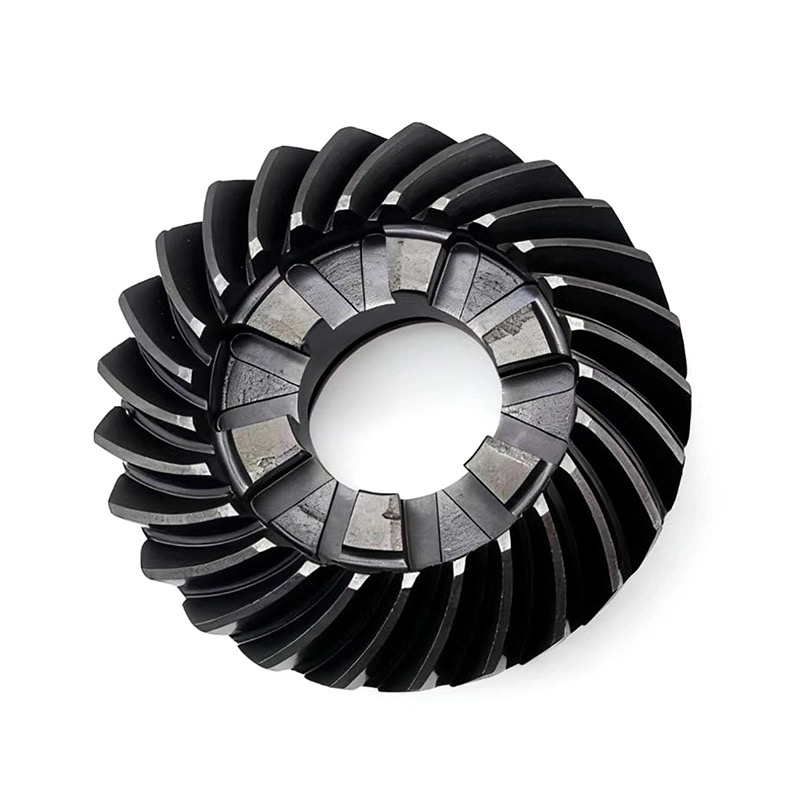
A new lower unit is often the right choice when the engine is relatively new, valuable, or central to daily operations.
Choose a new lower unit when:
- The outboard is still within a broader engine warranty period
- The boat is used commercially or produces income
- The engine has a high resale value
- The original gearcase suffered severe collision damage
- The boat operates offshore, at high speed, or under sustained heavy load
- The owner prioritizes maximum predictability over upfront savings
- The insurance claim supports a new OEM replacement
- The correct remanufactured option is unavailable or poorly documented
A new assembly is also a sensible choice after severe impact damage. A propeller strike can transmit load into the propeller shaft, gears, bearings, driveshaft, and housing. If the gearcase has a cracked casting, distorted bearing bore, heavily damaged gears, or extensive saltwater corrosion, replacement with a new unit can reduce the chance of rebuilding around a compromised foundation.
A remanufactured lower unit can be the stronger financial decision when the engine itself remains healthy and the supplier can demonstrate a disciplined rebuilding process.
Choose a remanufactured lower unit when:
- The engine has good compression, reliable ignition, and a sound service history
- The boat is older but still actively used
- The owner wants reliable operation without the full cost of a new assembly
- The lower unit model is discontinued or difficult to source new
- The supplier provides serial-number confirmation
- The unit is pressure-tested and supported by a meaningful warranty
- The rebuild includes new sealing components and appropriate internal replacements
- The buyer can inspect or verify the supplier's technical standards
A remanufactured option is especially attractive when the original problem was localized. For instance, if the housing remains structurally sound but the gear train has suffered bearing failure or water-related damage, a thorough rebuild may restore the unit to dependable operation at a lower total cost.
The key word is thorough. A gearcase with fresh oil and paint is not automatically a reliable remanufactured unit.
The most expensive lower-unit replacement is often the one that needs to be removed and replaced again. Before comparing quotations, include the hidden costs that can materially change the result.
A lower unit installation may require additional items beyond the main assembly:
- Water-pump kit or impeller
- Mounting gaskets and seals
- Shift-shaft hardware
- Gear lubricant
- Propeller hardware
- Drain and vent plug gaskets
- Corrosion protection products
- Replacement propeller if the original impact caused blade damage
A damaged or unbalanced propeller should not be reused without inspection. It can generate vibration that places unnecessary stress on the propeller shaft, bearings, seals, and gears.
Many remanufactured programs use a core-return system. The buyer may pay a core charge upfront and receive credit after the old lower unit is returned and inspected.
Before ordering, confirm:
- The core charge amount
- The deadline for return
- Who pays return freight
- Whether a cracked or incomplete housing is accepted
- Whether missing gears, shafts, or water-pump parts reduce credit
- Whether severe corrosion or collision damage makes the core non-returnable
A low advertised price may become less attractive if the old core is rejected.
Warranty length matters, but warranty scope matters more. Some warranties exclude impact damage, fishing-line damage, overheating, improper installation, racing, commercial use, lack of maintenance, corrosion, or water intrusion caused by an external issue.
For example, warranty periods can differ sharply between recreational and commercial applications. One supplier lists 12 months for recreational use but only 60 days for commercial, rental, charter, towing, or high-performance use.
Before purchase, ask these questions:
1. Is the warranty for parts only, or does it include labor?
2. Does coverage include shipping costs?
3. Is the warranty transferable if the boat is sold?
4. Are commercial applications covered?
5. Does the warranty require professional installation?
6. What maintenance records are required?
7. Are impact and corrosion excluded?
8. What is the claim process and expected response time?
From a transmission-component perspective, the buying decision should begin with diagnosis—not with a product search.
Do not assume the lower unit is the only problem. Check for symptoms and identify the root cause.
Common warning signs include:
- Milky or cloudy gear lubricant
- Metal particles on the drain-plug magnet
- Gear oil leaking around the propeller shaft
- Grinding, rattling, or clicking noises
- Hard shifting or failure to engage forward or reverse
- Excessive propeller shaft play
- Vibration after striking an underwater object
- Overheating caused by water-pump failure
- Cracked or damaged gearcase housing
Water contamination deserves immediate attention. Milky gear oil commonly indicates water intrusion, which can damage bearings and gears if the leak source is not found and corrected.
Provide the supplier with:
- Engine brand
- Model number
- Serial number
- Horsepower
- Year or production range
- Shaft length
- Gear ratio, if known
- Rotation direction, where relevant
- Drive type and control configuration
- Photos of the existing lower unit and mounting area
Never assume that an engine's horsepower alone is enough to identify a replacement gearcase.
For a remanufactured lower unit, request clear answers about:
- Which components are always replaced
- Whether gears are new, reused, or replaced only if damaged
- Whether bearings and seals are always new
- Whether driveshaft and propeller shaft runout is measured
- Whether the housing is inspected for cracks and corrosion
- Whether pressure and vacuum tests are completed
- Whether gear backlash and bearing preload are set to specification
- Whether the water pump is included
- Whether test records or inspection documentation are available
A professional supplier should be comfortable explaining the process. Vague claims such as "fully rebuilt" or "tested" are not enough without detail.
Consider two boat owners with the same 150 HP outboard and a damaged gearcase.
Owner A operates a three-year-old offshore fishing boat. The engine has low hours, strong resale value, and frequent long-distance use. The boat is used for planned offshore trips where a gearcase failure could create safety and scheduling problems. In this case, a new lower unit may justify its higher cost because predictability, original configuration, and long-term value are priorities.
Owner B owns a well-maintained ten-year-old family fishing boat used on inland water several times per month. The engine compression is healthy, the electrical system is reliable, and the owner wants to keep the boat for several more seasons without overspending. A documented remanufactured lower unit with new seals, bearings, appropriate gears, pressure testing, and a clear warranty may provide the better value.
The right decision is not universal. It depends on engine condition, operating load, replacement urgency, risk tolerance, and supplier capability.
Whether you choose a new lower unit or a remanufactured lower unit, maintenance determines much of its real service life.
- Change gear lubricant according to the engine maker's service schedule
- Inspect the drained lubricant for water contamination and metal particles
- Replace drain and vent plug sealing washers when servicing gear oil
- Check the propeller shaft area for fishing line
- Inspect the propeller after every strike or grounding event
- Flush the outboard after saltwater operation
- Monitor water-pump performance and cooling-water discharge
- Investigate shifting difficulty, vibration, and abnormal noise immediately
- Perform a pressure test if water intrusion is suspected before major damage develops
Fishing line behind the propeller can damage propeller-shaft seals and create a path for water to enter the gearcase. This is one reason routine propeller removal and seal-area inspection are valuable preventive practices.
A new lower unit provides the clearest path to unused components, original factory configuration, and predictable ownership—making it the preferred solution for newer, high-value, commercial, and high-demand outboards.
A remanufactured lower unit can offer excellent value when it comes from a technically capable supplier with transparent rebuilding standards, correct parts selection, rigorous testing, reliable fitment verification, and warranty support. It is often the smarter option for healthy older engines where controlling the initial repair budget matters.
The best comparison is not "new versus remanufactured" in isolation. It is:
New or remanufactured lower unit + correct fitment + professional installation + documented inspection + preventive maintenance.
Ningbo Gill Transmission Parts Co., LTD. supports marine transmission and outboard gear requirements with nearly three decades of focused manufacturing experience. If you are sourcing outboard gears, lower-unit components, or marine transmission parts, provide your engine model, serial number, target application, and technical drawings or samples where available. Our team can help evaluate component compatibility and develop a supply solution aligned with your quality, cost, and delivery requirements.
It can be reliable when it is fully disassembled, inspected, rebuilt with suitable replacement parts, correctly shimmed, pressure-tested, and supported by a clear warranty. However, quality varies substantially between suppliers. A new unit has less uncertainty because all components are unused.
The price difference varies by brand, horsepower, age, availability, and warranty. Remanufactured units are generally positioned as a lower-cost alternative to new OEM assemblies, but buyers should compare total installed cost, core charges, freight, related parts, and warranty coverage rather than looking only at the unit price.
Not always, but the unit should be inspected promptly. A strike can bend the propeller shaft, damage gears, crack the housing, affect bearing alignment, or compromise seals. A pressure test, gear-lubricant inspection, propeller-shaft runout check, and professional assessment can help determine whether repair, remanufacturing, or complete replacement is appropriate.
Milky, cloudy, or creamy gear oil commonly indicates that water has entered the gearcase. The source may be a damaged seal, fishing line around the propeller shaft, a bad plug washer, a crack, or other sealing failure. The problem should be diagnosed quickly because water contamination can damage bearings and gears.
Yes, whenever possible. The serial number is one of the most reliable ways to confirm the correct lower-unit configuration. Horsepower and model year alone may not identify gear ratio, shaft length, shift arrangement, water-pump design, or mounting details accurately.
It depends on the supplier and the unit design. Some remanufactured programs include a new water-pump housing and impeller where applicable, while others may not. Confirm the exact included components before ordering.
Experienced technicians and capable boat owners may perform the installation, but correct installation requires proper alignment, torque procedures, shift-linkage adjustment, sealing, gear-lubricant filling, and post-installation checks. Professional installation is advisable if you are uncertain, especially because installation errors may affect warranty eligibility.
Ask about serial-number fitment confirmation, replacement-part policy, new bearing and seal policy, gear inspection, shaft measurement, pressure and vacuum testing, water-pump inclusion, warranty duration, commercial-use exclusions, core-return requirements, and technical support after delivery.
1. [JASPER Marine — Boat Lower Units]
2. [US Boatworks — Lower Units, Gear Cases, Outdrives: New, Remanufactured, and Aftermarket Options]
3. [SeaSierra — Outboard Lower Unit Leak: Finding and Fixing the Source]
4. [Outboard Marine LLC — Remanufactured Gearcases and Limited Warranty Information]
5. [Boaters World — Signs of a Bad Outboard Lower Unit]
6. [Go2Marine — How to Determine Whether a Lower Unit Is Failing]


